标签: Haiti

海地

  • Monitoring of the Reform of public finances and economic governance in Haiti

    Monitoring of the Reform of public finances and economic governance in Haiti

    Against the backdrop of over 20 years of incremental but uneven efforts to overhaul Haiti’s public financial and economic management systems, a high-stakes working session was convened this week to assess progress, address persistent bottlenecks, and map out the next phase of reform. Hosted by Sandra Paulemon, Haiti’s Minister of Planning and External Cooperation, the gathering brought together senior members of the country’s Commission for Public Finance Reform and Economic Governance (CRFP-GE) to align stakeholders around a renewed push for systemic change.

    Opening the session, CRFP-GE coordinator Charles Cadet offered a retrospective on the decades-long reform trajectory that Haiti has pursued in the public finance and economic governance space. He walked attendees through the commission’s core priority areas, and summarized the outcomes of years of implementation efforts, which he characterized as mixed — acknowledging incremental gains while noting major unmet goals that have held back broader progress.

    Much of the session was dedicated to technical, in-depth discussions centered on the reform initiative’s six foundational pillars. These pillars cover critical domains of public financial management: boosting domestic revenue mobilization to reduce reliance on external funding; upgrading integrated systems for statistics collection, strategic planning, program development, and public budgeting; modernizing public treasury operations and standardizing public accounting practices; strengthening governance and oversight of local public finances; enhancing regulatory control, increasing government transparency, and expanding anti-corruption enforcement; and advancing the development of the national State Finance Information System.

    In addition to progress updates on each pillar, technical leads outlined an ongoing comprehensive review of the entire national reform strategy, a process that is being carried out with targeted technical and financial support from the European Union. This review is intended to address existing gaps in the current framework and align the reform agenda with Haiti’s pressing economic and governance challenges.

    In her closing remarks to the working group, Minister Paulemon outlined clear expectations for accelerated, tangible outcomes from the reform process. She emphasized that a well-defined, structured, and impact-focused action plan is non-negotiable for driving meaningful change, and called for far stronger coordination across all public and private stakeholders involved in the initiative.

    Paulemon specifically advocated for improved synchronization across all public institutions that play a role in public finance management, stressing that systemic reform depends on enhanced connectivity and interoperability between agency systems and workflows. “Sustainable, long-lasting results from this reform simply cannot be achieved without effective alignment across all actors,” she noted, pushing for the creation of integrated institutional mechanisms that streamline information sharing, unify policy action, and create a more cohesive, harmonized governance framework for Haiti’s entire public finance system.

    The working session concluded with concrete next steps to advance the reform agenda, most notably the announcement that the first statutory meeting of the reform’s Strategic Steering Committee (COPIL) will be held in the near term to formalize the revised strategy and approve the new action plan.

  • The agroforestry fair in Limbé keeps its promises

    The agroforestry fair in Limbé keeps its promises

    Scheduled across four days from April 7 to 10 2026, the annual Limbé agroforestry fair, hosted at twin venues in Camp-Coq and Acul Jeannot, has fully met all pre-event expectations, emerging as a key milestone for Haiti’s national push to cut household food insecurity and strengthen smallholder agricultural productivity.

    The second day of the event drew a high-profile guest of honor: Aubourg Marcelin, Haiti’s Minister of Agriculture, Natural Resources, and Rural Development, whose presence underscored the Haitian government’s commitment to advancing rural development across the country’s northern and northeastern regions. Opening his remarks at the Camp-Coq venue, Minister Marcelin paid public tribute to small-scale agricultural producers across Limbé and Camp-Coq, framing them as core collaborative partners for the Ministry in advancing national food security goals.

    This public-private partnership between the state and local farming communities takes tangible form on two fronts: the government provides targeted support to registered smallholders, including subsidized agricultural inputs and on-the-ground technical guidance, while local producers have turned out in high numbers and with clear enthusiasm to engage with the fair’s programming. Unlike many top-down agricultural initiatives, this event puts choice directly in the hands of farmers: beneficiaries can select their preferred inputs from a roster of 12 independent local suppliers operating at the venue.

    Initial turnout data from the fair’s opening day confirms strong community buy-in, with roughly 250 registered farmers traveling to Camp-Coq to collect inputs allocated based on the size of their working farm plots. Under the current allocation scheme, a farmer working a 0.5-hectare plot is eligible to receive 500 yam seedlings, 400 banana suckers, and 250 sugarcane cuttings. Across the full four-day event, organizers project 1,093 registered beneficiaries will access subsidized inputs across both venues. For Camp-Coq participants alone, that adds up to a total distribution of 8,500 yam tubers, 3,500 banana suckers, and 4,000 sugarcane cuttings, sourced from 49 verified local agricultural suppliers. All inputs are reserved for pre-registered smallholders who hold active agricultural land to plant the received materials.

    Beyond distributing critical growing materials, Minister Marcelin used the event to articulate the government’s core vision for the initiative: encouraging smallholders to ramp up production both to meet their own household food needs and to generate surplus for commercial sale, building long-term economic stability for rural families across the region. This aligned directly with the Haitian government’s official national mission to reduce widespread household food insecurity across the country.

    The fair also served as a platform to highlight broader ongoing rural development work under the government’s Program to Support Agricultural and Fisheries Productivity and the Improvement of Rural Infrastructure for Market Access (PAPAIR), a multi-component initiative designed to remove systemic barriers to smallholder success. One of PAPAIR’s flagship projects is the rehabilitation of 75 kilometers of rural roads across Haiti’s North and Northeast departments, which will dramatically improve smallholders’ ability to transport harvested crops to regional markets in Limbé municipality. Currently, construction work on the road network is ongoing under the oversight of the United Nations Office for Project Services (UNOPS), with full project funding provided by the Inter-American Development Bank (IDB).

    Marcelin also outlined two additional critical components of the PAPAIR program targeted at reducing systemic waste and boosting year-round productivity. The initiative is currently addressing widespread post-harvest losses, which the Ministry estimates reach 25% of total annual production across the region, as well as persistent gaps in consistent food stock availability after harvest seasons. To tackle these challenges, the government is already rolling out targeted support including the distribution of crop drying racks to help farmers preserve harvests, as well as water pumps to expand reliable irrigation for commercial plantations.

    As the fair concludes, organizers and government officials report that the event has delivered on all its core commitments, providing tangible support to smallholders while advancing long-term goals for Haitian agricultural development and food security.

  • 2027 World Cup Qualifier : Big victory of Haiti over Anguilla [5-0]

    2027 World Cup Qualifier : Big victory of Haiti over Anguilla [5-0]

    In a dominant display of attacking soccer on April 9, 2026, Haiti’s senior women’s national team, the Grenadières, secured a lopsided 5-0 victory over Anguilla during Matchday 4 of the 2026 CONCACAF Women’s Championship, the regional qualification tournament for the 2027 FIFA Women’s World Cup. The match was hosted at the Roger Zami Stadium in Guadeloupe.

    Grenadières head coach Pia Sundhage fielded a revised starting lineup with multiple tactical adjustments, while keeping the team’s core goal firmly in sight: securing a spot at the 2027 World Cup. The starting eleven featured Kaina César V. Pietrus (Lipscomb University, USA), Jennyfer Limage (RC Lens, France), Tabita Dougenie Joseph (Olympique de Marseille, France), Maudeline Moryl (Olympique de Marseille, France), team captain Deborah Bien-Aime (AS Saint-Étienne, France), Sherly Jeudy (RC Lens, France), Roseline Eloissaint (FC Nantes, France), Amandine Pierre-Louis (AS Saint-Étienne, France), Darlina Florsie L. Joseph (Toulouse FC, France), Chelsea A. Domond (En Avant Guingamp, France) and Anyssa Ibrahim (Le Mans FC, France). Four substitutions were made through the match: Alyssa Manasse replaced Tabita Joseph and Nérilia Mondésir replaced Anyssa Ibrahim at halftime; Joséphine Vanuxeem and Betina Petit-Frère came on for Roseline Éloissaint and Jennyfer Limage respectively in the 64th minute; Claire Constant replaced Amandine Pierre-Louis in the 79th minute.

    Haiti controlled the match from kickoff, holding 84% of total possession and denying Anguilla any chance to build attacking threats, with the underdog side failing to record a single shot attempt over the full 90 minutes. The scoring opened in the 15th minute, when Darlina Joseph slotted a right-footed shot into the net from the center of the 18-yard box off a clinical pass from Roseline Éloissaint, putting Haiti up 1-0. Six minutes later, Chelsea Domond doubled the lead, finishing from the center of the box into the bottom right corner to make it 2-0. Sherly Jeudy extended the advantage in the 33rd minute, striking a right-footed shot from outside the penalty area into the bottom left corner for Haiti’s third goal.

    After halftime, the Grenadières kept pressing, adding a fourth goal in the 60th minute. Darlina Joseph scored her second of the match, heading a cross from Domond into the bottom right corner to push the score to 4-0. Substitute Claire Constant capped off the dominant win with the fifth goal 19 minutes later, nodding a close-range cross from Sherly Jeudy (off a set piece) into the top corner of the net to seal the 5-0 result.

    The blowout win improves Haiti’s record in Group D to three wins from three matches, lifting the side to 9 points and putting them provisionally atop the group standings. Entering the final group match against second-place Dominican Republic scheduled for April 17 at the same Roger Zami Stadium in Guadeloupe, Haiti now controls its own qualification fate. A win or draw will send the Grenadières through to the 2026 CONCACAF Gold Cup, the 2027 Women’s World Cup and the 2028 Olympic Games. For the Dominican Republic, who sit second on 7 points with an undefeated record so far, only a win will secure their place in the next round.

    Current Group D Standings:
    1. Haiti: 3 matches, 9 points, 16 goals scored, 0 goals conceded, 3 wins 0 draws 0 losses
    2. Dominican Republic: 3 matches, 7 points, 16 goals scored, 3 goals conceded, 2 wins 1 draw 0 losses
    3. Suriname: 3 matches, 4 points, 5 goals scored, 5 goals conceded, 1 win 1 draw 1 loss
    4. Belize: 2 matches, 0 points, 1 goal scored, 15 goals conceded, 0 wins 0 draws 2 losses
    5. Anguilla: 3 matches, 0 points, 1 goal scored, 16 goals conceded, 0 wins 0 draws 3 losses

  • Quiz : Did You Know ? #13

    Quiz : Did You Know ? #13

    As part of its ongoing monthly general knowledge series “Did You Know?”, the popular free quiz platform Quiz.HaitiLibre has released its 13th installment, focusing on a hidden historical gem of Haiti that ties together national heritage and revolutionary legacy: Fort Ogé in Jacmel.

    Perched on the elevated Cap-Rouge hills overlooking Haiti’s southern coast, the fort carries the name of Vincent Ogé, one of the earliest martyrs who fought for civil and political rights for freedmen in the colonial era of Santo Domingo, the precursor territory to modern Haiti. Constructed shortly after Haiti gained independence in 1804, the installation was originally a core component of Jean-Jacques Dessalines’ national defense strategy, tasked with monitoring Caribbean waters to fend off potential colonial reconquest invasions.

    Architecturally, Fort Ogé follows the standard defensive design of early 19th-century Haitian fortifications, built with dry stone and mortar to maximize structural durability and unobstructed strategic visibility across the coast. The decision by Haiti’s founding leaders to name the fort after Ogé was no accident: it was a deliberate choice to anchor the young nation’s new built heritage to the heroes who paved the way for revolution before independence was achieved.

    Today, the fort serves two key roles for Haitians and visitors alike: it offers sweeping, unrivaled panoramic views of the Caribbean Sea, while also acting as a living educational landmark that connects younger generations to the sacrifices made by the earliest pioneers of Haitian freedom.

    This little-known historical fact is pulled from the answer key accompanying the 13th entry in Quiz.HaitiLibre’s popular series. The free, no-registration platform caters to knowledge seekers of all backgrounds, offering dozens of quiz games covering topics from Haitian history and culture to global current events, with three adjustable difficulty levels – normal, intermediate, and advanced – and full support for both French and English languages.

    As part of its scheduled April 2026 monthly update, 28 brand new quiz games were added to the platform on Wednesday, April 8, expanding the already extensive library of content available to users. Curious readers and knowledge enthusiasts can explore the full collection of quizzes, including previous installments of the “Did You Know?” series, by visiting the official Quiz.HaitiLibre website at https://quiz.haitilibre.com/en.

  • CARIFTA Games 2026

    CARIFTA Games 2026

    The 2026 edition of the CARIFTA Games, one of the Caribbean’s most prestigious youth athletic competitions, broke with tradition this year by spreading its two core disciplines across two separate island host locations. From April 4 to 8, the CARIFTA Aquatics Championships welcomed over 500 regional swimmers to the Le Lamentin facility in Martinique, a French overseas department, while track and field events unfolded between April 4 and 6 at Grenada’s iconic Kirani James Stadium.\n\nFor Team Haiti, the 2026 Games will go down in history as a breakthrough performance, with the nation securing a total of six medals: two gold, two silver, and two bronze across swimming and athletics. The highlight of Haiti’s campaign came in the pool, where a small three-person delegation delivered the country’s best ever swimming results at the regional competition.\ Seventeen-year-old Christian Jérome emerged as Haiti’s undisputed star of the Games, claiming two gold medals and one silver in butterfly events. Jérome clocked 55.23 seconds to take top honors in the men’s 100m butterfly, followed by a winning time of 2:07.75 in the 200m butterfly. He added a silver medal in the 50m butterfly with a finish of 24.9 seconds, and further cemented his status as a rising Haitian swimming star by breaking his own country’s national record in the 50m backstroke, posting a new benchmark time of 28.97 seconds. Jérome’s two teammates, Jude Jérome and Mayah Chouloute, also turned in strong performances, both hitting new personal best times over the course of the aquatics competition.\n\nOn the track in Grenada, Haiti’s seven-member all-female athletics delegation exceeded pre-Games expectations by meeting the Haitian Athletics Federation’s explicit target of at least three podium finishes, adding one silver and two bronze medals to the country’s overall count. In the under-17 women’s 400m hurdles, Hope Edwards claimed silver with a time of 1:02.48. Breanne Barnett took bronze in the under-20 women’s 200m sprint with a 23.49-second finish, while Aisha Wajid rounded out the athletics medal haul with bronze in the under-17 women’s 800m, clocking 2:14.96.\n\nThe historic six-medal performance marks a new milestone for Haitian youth sports, highlighting the emergence of talented young athletes across both swimming and track disciplines at one of the Caribbean’s most competitive regional youth sporting events.

  • Over 520 million gourdes for the Grenadiers (video)

    Over 520 million gourdes for the Grenadiers (video)

    Haiti’s national football team, the Grenadiers, has received landmark financial backing from the country’s government to fuel their 2026 FIFA World Cup campaign, with a total of more than 520 million Haitian gourdes committed in a formal ceremony held Wednesday, April 8, 2026. The event took place at Port-au-Prince’s Villa d’Accueil, under the official patronage of Haitian Prime Minister Alix Didier Fils-Aimé, who presided over the presentation of two separate 264 million gourde checks—equaling just over 2 million USD combined—to the Normalization Committee of the Haitian Football Federation (FHF).

    The two tranches of funding serve distinct, critical purposes for the historic World Cup run. The first check is designated as a qualification bonus for the players, rewarding their achievement of earning a spot in the world’s most-watched sporting tournament. The second allocation is earmarked exclusively for pre-tournament preparation, designed to give the squad access to top-tier training resources, logistics, and support to compete at their best on the global stage. This dual investment reflects the Haitian government’s structured, ambitious commitment to elevating the national team’s performance this summer.

    In his keynote remarks at the ceremony, Prime Minister Fils-Aimé extended warm congratulations to the Grenadiers for their historic qualification, noting that this milestone is more than a sporting win—it is a powerful representation of the courage and resilience that defines the Haitian nation. This appearance will mark only the second time Haiti has qualified for the FIFA World Cup in the country’s entire history, making the achievement all the more meaningful for fans across the nation. The Prime Minister emphasized that the public funding represents the government and the Haitian people’s unwavering confidence in both the national team and the broader cohort of young Haitian athletes. To ensure every Haitian can share in the excitement of the tournament, Fils-Aimé also announced plans to install public viewing screens across all regions of the country, giving all segments of the population access to watch the Grenadiers compete.

    Monique André, president of the FHF Normalization Committee, delivered remarks on behalf of the federation, expressing profound gratitude to the Haitian government for the critical investment. André noted that the funding fills key gaps in the team’s preparation budget, removing financial barriers that would otherwise hinder the squad’s ability to train and compete at the highest level. As a gesture of appreciation, André officially presented the Prime Minister with the official game jersey the Grenadiers will wear during their 2026 World Cup matches, capping the celebratory ceremony.

  • The CEP warns of significant impacts on the election schedule in Haiti

    The CEP warns of significant impacts on the election schedule in Haiti

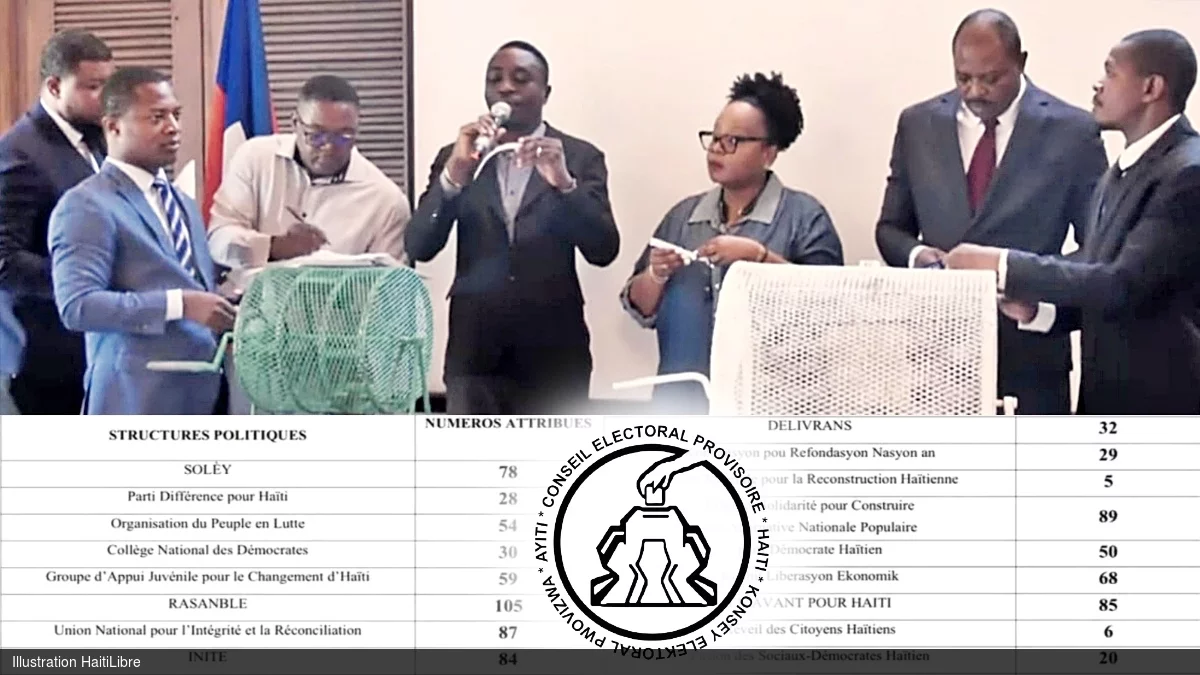
    Haiti’s Provisional Electoral Council (CEP) has issued a formal public warning that ongoing adjustments to national election regulations will cause substantial delays to the country’s upcoming electoral timeline, forcing the postponement of two critical pre-voting processes.

    In an official statement released Wednesday, April 8, 2026, the CEP drew public and political stakeholder attention to a March 24, 2026 Ministerial Order that revises Article 3 of an earlier September 18, 2024 order. That original legislation established the CEP’s membership structure and outlined the terms of service for its council members.

    Under the terms of the updated Ministerial Order, the CEP is mandated to execute all necessary actions within its authority to put into effect the rules laid out in Articles 12 and 14 of the National Pact for Stability and the Organization of Elections, a national framework designed to guide the country’s democratic transition. Currently, the electoral body is working through the technical process of aligning the December 1, 2025 Electoral Decree with the requirements specified in those two articles of the stability pact.

    “This harmonization process significantly impacts the electoral calendar,” the CEP emphasized in its statement. As a direct consequence of the ongoing alignment work, the council has formally delayed two key steps that were already on the schedule: voter registration, which was originally set to launch on April 1, 2026, and candidate registration, which was scheduled to begin April 13, 2026. The CEP confirmed that revised timelines for both processes will be shared with the public as soon as the harmonization work reaches a key milestone, without providing an exact date for the new announcement.

    In closing, the CEP reaffirmed its longstanding commitment to overseeing Haiti’s upcoming electoral process in full alignment with its status as an independent institution. The body pledged to uphold international democratic standards throughout the process, committing to run inclusive, impartial, and fully transparent elections for the Haitian people.

  • FLASH 28 new games on «Quiz.HaitiLibre» (April 2026)

    FLASH 28 new games on «Quiz.HaitiLibre» (April 2026)

    Three months after its official launch in January 2026, HaitiLibre’s popular interactive quiz platform Quiz.HaitiLibre has rolled out its latest monthly content update, adding 28 brand-new general knowledge games to its growing library for April 2026. Designed to be accessible to audiences of all ages and skill levels, the platform stands out for its user-focused structure: all games are completely free to play, require no account registration, and offer three adjustable difficulty tiers to match different experience levels. They are also fully available in both French and English, serving a broad cross-section of users in Haiti and across the globe.

    Unlike many general knowledge quiz platforms that focus on narrow topic ranges, Quiz.HaitiLibre was built to offer diverse learning and entertainment opportunities for curious players. While it features a dedicated content category focused on Haitian history, culture and current affairs, its content extends far beyond national borders to cover global topics of all kinds. Each quiz is crafted to deliver an immersive learning experience, rather than just a quick game: after every question, players receive a detailed explanatory blurb that contextualizes the correct answer, turning a simple trivia session into a chance to pick up new, factual knowledge.

    To help players navigate the expanding library, the platform organizes all content into three distinct thematic worlds. The first, the “Haiti” menu, invites users to explore or revisit the history, culture, geography and unique heritage of Haiti. The second “World” menu opens up exploration of global cultures, geography, history and current events, allowing players to test their knowledge of the wider planet. For seasoned trivia lovers who crave more rigorous challenges, the “Expert” menu houses advanced quizzes designed to test even the most knowledgeable participants.

    Consistent monthly updates have been a core part of the platform’s strategy since launch, ensuring returning players always have fresh content to explore and new knowledge to gain. With the addition of 28 new games this April, the platform’s total library now stands at nearly 100 quizzes, with more new content scheduled to arrive in future months. The platform’s development team encourages all users to share feedback, comments and suggestions for new topics or features directly through the site, and invites existing players to share the free resource with friends, family and fellow trivia enthusiasts. Anyone can access the updated platform at https://quiz.haitilibre.com/en, and the team invites players to visit regularly to enjoy new content and expand their knowledge.

  • USA : A Haitian savagely kills an innocent mother with a hammer

    USA : A Haitian savagely kills an innocent mother with a hammer

    A shocking broad-day murder at a Florida gas station has reignited fierce debate over U.S. immigration policy, after authorities announced the arrest of an irregular Haitian migrant who had been ordered deported years before the killing. On August 4, 2026, the U.S. Department of Homeland Security confirmed that Immigration and Customs Enforcement agents partnered with the Fort Myers Police Department to take 38-year-old Rolbert Joachim into custody at a residence on Fort Myers’ Mango Street, just four days after the fatal attack.

    The incident unfolded on April 3, when local first responders rushed to a 911 emergency call at a neighborhood gas station in Fort Myers. Surveillance footage from the location captured the unprovoked attack: Joachim first shattered the windshield of the victim’s parked vehicle, then approached the woman — identified locally as a 32-year-old mother of two — and struck her repeatedly in the head with a claw hammer in full view of other civilians at the station. First responders pronounced the victim dead at the scene, marking the end of an innocent life in what investigators have called a senseless, unprovoked homicide.

    Once the FMPD identified Joachim as the primary suspect, the department requested operational support from ICE to track down the fugitive. The joint operation led to his arrest without incident on Mango Street, and a subsequent review of his immigration history uncovered a years-long paper trail that has drawn sharp criticism from top Homeland Security officials.

    Records show Joachim first entered the United States at a southern border port of entry in August 2022, and was granted admission into the country under border policies implemented by the Biden administration. By the end of that same year, a federal immigration judge issued a final, enforceable deportation order requiring Joachim to leave U.S. territory immediately. However, the administration granted him Temporary Protected Status (TPS), a designation that allows eligible migrants from crisis-affected countries to remain and work in the U.S., that extended his stay until 2024. TPS had expired nearly two full years before the 2026 killing, yet Joachim remained in the country unlawfully.

    Acting Assistant Secretary of Homeland Security Lauren Bis, who has been a vocal critic of the administration’s border policies, framed the killing as a direct consequence of lax enforcement. “This illegal alien barbarically hit this woman in the head multiple times with a hammer. This heinous murderer was released into the country by the Biden administration. Not only did the Biden administration release him into the country, but they then gave him Temporary Protected Status. Their reckless immigration policies cost this woman her life,” Bis said in a statement following the arrest.

    ICE officials confirmed that a formal detainer has been placed on Joachim, who is currently held at the Lee County Jail awaiting trial on first-degree murder charges. Agency spokespersons added that regardless of the outcome of his criminal trial, Joachim will be processed for deportation to Haiti immediately after his criminal case is concluded. The killing has already prompted renewed calls from congressional Republicans for sweeping reforms to TPS and border entry policies, with many arguing that long-standing enforcement backlogs and discretionary protections put dangerous criminals in positions to harm innocent U.S. residents.

  • Mexico : Excellence scholarships, call for applications

    Mexico : Excellence scholarships, call for applications

    In a collaborative announcement released through Haiti’s Ministry of Foreign Affairs, the Mexican government and El Colegio de la Frontera Norte (El COLEF), a leading Mexican higher education institution, have officially opened applications for a competitive excellence scholarship program targeted at graduate students for the 2026-2027 academic year.

    The initiative, designed to support advanced academic study at the master’s and doctoral levels, offers a diverse range of discipline-specific programs aligned with pressing global and regional challenges. At the master’s level, eligible fields of study include regional development, applied economics, cultural studies, integrated water management, public action and social development, and comprehensive environmental governance. For doctoral candidates, the program features a Doctor of Philosophy in Social Sciences with a specialized concentration in Regional Studies.

    Admitted scholars will receive substantial financial support to facilitate their studies: all recipients are granted full exemption from tuition fees, alongside a living stipend to cover basic subsistence costs during their program of study, in line with current institutional scholarship regulations.

    Prospective applicants have access to full program details and official registration through El COLEF’s dedicated graduate admissions portal, available at https://posgrado.colef.mx/ingreso/. All application documentation must be submitted no later than the May 15, 2026 deadline. The 2026-2027 academic year is scheduled to kick off on September 1, 2026 for all successful candidates.