标签: Haiti

海地

  • 223rd anniversary of the death of Toussaint Louverture, Speech by the Prime Minister of Haiti (video)

    223rd anniversary of the death of Toussaint Louverture, Speech by the Prime Minister of Haiti (video)

    On April 7, 2026, Haiti gathered in solemn commemoration to mark 223 years since the passing of Toussaint Louverture, the foundational leader of the Haitian independence movement who died in French captivity on the same date in 1803. Louverture, who led an armed resistance against Napoleon Bonaparte’s plan to reinstate chattel slavery in the former colony, was imprisoned on Napoleon’s orders at Fort de Joux in eastern France, where he spent his final days.

    The official commemoration ceremony, held at the Toussaint Louverture monument located in the heart of Port-au-Prince’s Champ de Mars, drew Prime Minister Alix Didier Fils-Aimé, senior members of his cabinet, and Marie Elisabeth Régine Joseph Haddad, Secretary General of the Haitian Presidency. Following a formal wreath-laying at the monument’s foot, the Prime Minister delivered an address that carried deep historical and national resonance. The event marked a dual celebration, also honoring the 43rd anniversary of the founding of the Museum of the Haitian National Pantheon (MUPANAH), the country’s leading institution preserving Haitian independence heritage.

    In his remarks, Fils-Aimé framed Haiti’s existence as a deliberate, revolutionary milestone rather than a historical footnote. “Haiti is not an accident of history; it is a founding act born of the courage, resistance, and quest for dignity of a people determined to break the chains of slavery,” he told attendees. The Prime Minister emphasized that Louverture’s legacy of anti-colonial resistance and fight for self-determination remains a vital source of inspiration for both current and future generations of Haitians.

    He used the occasion to call for urgent national unity, collective accountability, and a national reconstruction effort rooted in the core values that Louverture fought for: freedom, justice, and full national sovereignty. Fils-Aimé stressed that the annual commemoration goes far beyond a simple ceremonial tribute to the past. Instead, he argued, it represents an ongoing act of loyalty to Haiti’s revolutionary origins and a shared responsibility to uphold the founding promises of the nation. “It is not simply a matter of honoring, but of renewing a vow,” he added, underscoring the ongoing relevance of Louverture’s mission for modern Haiti.

  • Haiti : Creation of the Commission for Planning and Organization of State Examinations

    Haiti : Creation of the Commission for Planning and Organization of State Examinations

    In an official administrative update dated April 7, 2026, Haiti’s Ministry of National Education and Vocational Training (MENFP) has announced the formation of a dedicated ministerial body tasked with overseeing the full lifecycle of state-held academic examinations.

    The new Commission for Planning and Organization of State Examinations was formalized through Circular No. C-11828, issued by MENFP Minister Vijonet DEMERO. This specialized commission brings together 16 senior education officials and administrative leaders from across the ministry’s different departments and directorates to address gaps in exam administration and ensure consistent, secure delivery of national assessments.

    The commission has been assigned a broad, comprehensive 16-point mandate covering every stage of the examination process. Core responsibilities include verifying that all candidate registrations are correctly entered into the ministry’s centralized SIGE digital registry, conducting needs assessments for all logistics and resources required for exam administration, and drafting a detailed operational budget to support all related activities. The body is also tasked with ensuring all third-party service contracts for examination delivery are fully executed and compliant before testing begins.

    Beyond pre-exam preparation, the commission will oversee the smooth running of all test sessions, and is required to build out a formal security framework to protect the integrity of the entire examination process, from question paper production to grading. It will also serve as a central coordination hub, streamlining communication between the multiple government and local entities involved in exam administration. Additional mandates include the secure transportation and storage of examination papers and answer copies, the rational management of all on-the-ground logistics, and the organization of weekly progress check-in meetings with regional and departmental education directors. The body will provide end-to-end support and monitoring for all state examinations, covering the period before, during, and after test administration.

    To lead the new body, the commission will operate under a co-chairmanship model, with the role shared by Osny JEAN MARIE, Director General of MENFP, and Woodly SIMON, Chief of Staff to the Minister. Commission members will select an internal secretary to handle administrative operations, including meeting minutes tracking and correspondence management. The full 16-member roster includes senior leaders from across the ministry: Ecclesiaste THÉLÉMAQUE, Director of the Minister’s Office; Nadine HENRY, Chief General Inspector; Jean Wilnor PIERRE, Coordinator of the Coordination Unit of Departmental Directorates of Education; Gérald BÉLIZAIRE, Director of BUNEXE; Kendy NICOLAS, Director of the Directorate of Fundamental Education; Miguel FLEURIJEAN, Director of the Department of Secondary Education; Rousseau Dumond LARIONNE, Director of Administrative Affairs; Renan MICHEL, Inspector General; Norton LOUISIUS, Coordinator of the Security Unit; Donnky Nélio EMMANUEL, Coordinator of the Procurement Unit; André Louis Sammuel ESTRIPLET, Inspector General; Etienne Louisseul FRANCE, Departmental Director of Education for the West; Jean Ricot DOCTEUR, Director of Human Resources; and Joseph Job MAURICE, Coordinator at the General Management.

    Under the terms of the founding circular, the commission has a six-month window to complete its assigned mandate and deliver a fully organized, secure framework for state examination administration. The move marks a targeted effort by Haiti’s education leadership to strengthen governance of national academic assessments, a critical component of the country’s education system.

  • End of IMF Mission to Haiti (3rd Review Staff-Monitored Program)

    End of IMF Mission to Haiti (3rd Review Staff-Monitored Program)

    Between March 23 and April 1, 2026, an International Monetary Fund (IMF) team led by Camilo E. Tovar completed a virtual assessment of progress under Haiti’s third review of the Staff-Monitored Program (SMP), holding productive discussions with senior Haitian officials including Minister of Economy and Finance Serge Gabriel Collin and Central Bank of Haiti Governor Ronald Gabriel. The IMF delegation thanked Haitian authorities for their transparent cooperation throughout the mission.

    In his closing statement, Tovar outlined the cascading crises weighing on Haiti’s macroeconomic outlook, noting the country is grappling with a worsening security landscape, overlapping domestic and external shocks, and a fragile political transition that paves the way for the first national elections in a decade later this year. The most acute recent pressure has come from a global oil price shock tied to Middle East conflict, which has sharply inflated Haiti’s fuel import costs and implicit subsidy burdens, further eroding an already precarious fiscal position. This shock compounds the damage from Hurricane Melissa, which struck in October 2025, disrupting economic output and worsening already critical humanitarian needs.

    Economic data confirms the depth of Haiti’s ongoing contraction: real GDP shrank for the seventh consecutive year in fiscal year 2025. While headline inflation has pulled back rapidly from its 32% peak at the end of FY2025 to 22.1% year-on-year in recent months, price growth is expected to remain elevated through the coming year. Amid weak economic activity and widespread policy uncertainty, financial intermediation has continued to contract. While this pullback in bank lending has driven a modest improvement in non-performing loan ratios, and capital adequacy levels remain comfortably above regulatory minimums, the contraction has restricted access to credit for households and businesses across the country.

    Against a deteriorating global backdrop, Haiti’s external reserve position has held up better than expected. Spiking oil prices have placed heavy pressure on the country’s external balance, but strong remittance inflows have partially offset these pressures, even amid uncertainty over the future of Haiti’s Temporary Protected Status (TPS) in the United States. The current account is projected to remain near balance in FY2026, while gross international reserves are expected to hit $3.4 billion by the end of the fiscal year – enough to cover more than seven months of projected goods and service imports. The nominal exchange rate has also stayed broadly stable, though high inflation has driven an appreciation of the real exchange rate.

    Fiscal policy remains severely constrained by persistent insecurity, long-standing institutional weaknesses, and limited policy space. Revenue collection in FY2026 has underperformed, reflecting security-related disruptions to economic activity, administrative fragility, and institutional paralysis triggered by the expiration of the Transitional Presidential Council’s mandate. Rising global oil prices are expected to add further pressure via growing implicit subsidy costs, while budget implementation has been uneven due to capacity constraints and pervasive uncertainty. These challenges have sharpened trade-offs for policymakers, underscoring the urgent need to prioritize spending while protecting support for low-income and vulnerable households.

    Overall, risks to Haiti’s economic outlook are firmly tilted to the downside, Tovar emphasized. A further deterioration in security, combined with sustained high global oil prices, could suppress economic activity, push up food prices to worsen humanitarian conditions, and intensify fiscal strain. A shift in U.S. immigration policy that cuts remittance inflows would also weaken Haiti’s external position. That said, there are limited upside risks: the planned deployment of a UN-backed Gang Suppression Force could restore security, boost business confidence, and support a nascent economic recovery.

    Encouragingly, all quantitative and structural program targets set for the end of December 2025 were met. Net international reserve accumulation hit $1.76 billion by the end of 2025, while targets for revenue collection, the primary fiscal balance, and social spending all remained on track. The monetary financing target was also achieved despite shrinking fiscal space, and the broader reform agenda covering governance, public financial management, and data transparency continues to advance, albeit with delays in some priority areas.

    Moving forward, the SMP will prioritize six core policy pillars to support macroeconomic stability and institutional rebuilding. First, the program will focus on strengthening governance to address systemic fragility and rebuild public trust in state institutions. Reforms centered on the IMF’s Governance Diagnostic Report aim to improve public financial management transparency, strengthen revenue administration safeguards, and expand anti-corruption and anti-organized crime frameworks. Critical progress on anti-money laundering and counter-terrorism financing (AML/CFT) rules, including publication of a new national risk assessment, will also support Haiti’s efforts to exit the Financial Action Task Force (FATF) grey list.

    Second, the program will step up support for revenue mobilization to address Haiti’s chronically low revenue base and growing security and development needs. Spiking oil prices have squeezed fiscal space, making accelerated tax and customs reforms – including full implementation of the new tax code, expanded digital infrastructure, and improved tax compliance among large taxpayers – all the more urgent. The IMF welcomed Haitian authorities’ recent decision to raise domestic fuel pump prices, which will reduce revenue lost to implicit subsidies, alongside a new decree establishing a more predictable fuel price adjustment framework. The IMF also stressed the need for a robust public communication strategy to build broad support for the reform, and reiterated the importance of protecting vulnerable households through remaining resources from the 2023 IMF Food Shock Window.

    Third, reforms will prioritize improving budget execution to ensure limited public resources are directed to high-priority social, humanitarian, and security spending. Following recent IMF technical assistance recommendations, this will require stronger cash management, tighter spending commitment controls, and improved project prioritization for public investment. These changes will enable more timely delivery of public assistance, strengthen social spending implementation, and improve overall spending efficiency to support reconstruction amid constrained resources.

    Fourth, the program will support efforts to consolidate the Central Bank of Haiti (BRH)’s policy framework and strengthen its institutional credibility. The BRH remains committed to preserving price and exchange rate stability, a commitment that has anchored macroeconomic performance under the SMP. Stable exchange rates have provided a critical nominal anchor for the economy, supported by sustained prudent reserve accumulation. Governance at the central bank has already improved via adoption of a new reserve management framework, updated investment policies aligned with core safety and liquidity objectives.

    Fifth, the program will advance reforms to strengthen financial system regulation and supervision. Haitian authorities are making progress rolling out risk-based banking supervision, expanding on-site inspections and upgrading off-site monitoring of bank risk profiles. Work is ongoing to operationalize the new supervisory framework, integrate modern risk assessment tools into the BRH’s governance structure, and finalize a standardized chart of accounts for all financial institutions. These changes will boost financial stability and strengthen banking sector resilience amid a challenging operating environment.

    Sixth, the program will continue efforts to improve the quality and timeliness of economic data. Following the successful audit and publication of the BRH’s FY2023 financial statements, work is now underway to audit FY2024 statements. Continued implementation of IMF safeguards assessment recommendations will further strengthen central bank governance and risk management, while progress is also being made to align data reporting with international standards, including the IMF’s International Reserves and Foreign Currency Liquidity template and external sector statistics frameworks. Further alignment of government finance and financial soundness indicator reporting with international standards will improve fiscal transparency and financial oversight.

    Finally, the IMF will continue to collaborate closely with international development partners to help Haiti manage fiscal risks and preserve macroeconomic stability. Amid rising oil price pressures, growing financing gaps could lead to unsustainable domestic debt accumulation that damages public sector balance sheets. The IMF recommends that external support be provided primarily as grants rather than non-concessional borrowing to preserve debt sustainability, paired with rigorous appraisal and transparency requirements for donor-funded projects. Aligned with the IMF’s strategy for fragile and conflict-affected states, the Fund will continue working alongside partners to support governance building and institutional capacity development in Haiti.

    For context, a Staff-Monitored Program is an informal agreement between national authorities and the IMF that allows the Fund to monitor the implementation of the country’s home-grown economic reform agenda. Successful implementation under an SMP helps authorities build a track record of policy delivery that can open the door to future IMF financial assistance through upper credit tranche arrangements.

  • World Cup Brazil 2027 Qualifiers : D-2 List of senior Grenadières convened

    World Cup Brazil 2027 Qualifiers : D-2 List of senior Grenadières convened

    With just two matches remaining in the first round of CONCACAF qualifying for the 2027 FIFA Women’s World Cup set to be hosted in Brazil, Haiti’s senior women’s national team, the Grenadières, has officially announced its full roster under newly appointed, world-renowned head coach Pia Sundhage. The two upcoming fixtures, both set to kick off at 2:00 p.m. local time at Guadeloupe’s Stade Roger Zami, will see Haiti face off against Anguilla on April 9, 2026, followed by a decisive clash against the Dominican Republic on April 17, 2026. Currently sitting atop Group D, with the Dominican Republic trailing behind them, the Grenadières enter these final matches in a strong position to secure progression to the next qualifying phase, and Sundhage has opted to mix fresh talent and returning experience to bolster the squad’s chances.

    Among the new call-ups to the senior roster are young prospects Raphino Cyrenie and Océane Toussaint, who will get their first chance to compete at this critical qualifying stage alongside several familiar faces who have earned their way back into the national setup. Veterans Kethna Louis and Roselord Borgella mark their return to the Grenadières squad, while Alyssa Manassé Somer retains her spot in the roster after receiving her first call-up during the team’s most recent training camp.

    The full 25-player roster spans top club leagues across North America, Europe, and Mexico, highlighting the global spread of Haitian women’s football talent. In goal, the squad features Kaina César V. Pietrus (Lipscomb University, USA), Océane Toussaint (Paris Saint-Germain, France), and Naila Louissaint (Concordia Stingers, Canada). The defensive line includes Kethna Louis (Montpellier Hérault SC, France), Jennyfer Limage (RC Lens, France), Betina Petit Frère (En Avant Guingamp, France), Amandine Pierre-Louis (AS Saint-Étienne, France), Tabita Dougenie Joseph (Olympique de Marseille, France), Claire Constant (DC Power FC, USA), and Alyssa S. Manasse (Blue/Somerset, USA).

    In midfield, Sundhage has called up Deborah Bien-Aime (AS Saint-Étienne, France), Sherly Jeudy (RC Lens, France), Melchie D. Dumornay (OL Lyonnes, France), Maudeline Moryl (Olympique de Marseille, France), Anyssa Ibrahim (Le Mans FC, France), Dayana Pierre-Louis (Utah Royals FC, USA), and Josephine Vanuxeem (LOSC Lille, France). The attacking corps is made up of Chelsea A. Domond (En Avant Guingamp, France), Darlina Florsie L. Joseph (Toulouse FC, France), Cyrenie Raphino Brittany (Sporting CP, Portugal), Roseline Eloissaint (FC Nantes, France), Roselord Borgella (Club Tijuana, Mexico), Nerilia Mondesir (Seattle Reign FC, USA), and Lourdjina Etienne (FC Fleury, France).

    For the Grenadières, these two matches are far more than routine qualifying fixtures: the team’s overarching goal is to secure a spot in the 2027 Women’s World Cup and mark a return to the global tournament after previous appearances. The current campaign has already seen positive results, including a 2-0 win over Suriname and a dominant 9-0 victory against Belize in earlier qualifying rounds, building momentum for the squad as they enter these final first-round matches under new leadership.

  • Legacy of April 3, 1986 : Message from Minister Saint Jean in Haiti

    Legacy of April 3, 1986 : Message from Minister Saint Jean in Haiti

    Four decades after one of the most consequential mass demonstrations in Haitian history, the country marked the National Day of the Haitian Women’s Movement on April 3, 2026, with Pedrica Saint Jean, Minister for the Status of Women and Women’s Rights, delivering a heartfelt tribute to the trailblazing activists who reshaped the nation’s push for democracy.

    On April 3, 1986, thousands of women from every administrative department of Haiti joined together in a historic mobilization that remains etched into the country’s collective memory. Their march through the streets came at a pivotal moment of nationwide political transition, as the nation moved to dismantle long-standing authoritarian rule. The demonstrators gathered not only to condemn generations of systemic violence, gender-based discrimination, and social exclusion, but to claim their full and equal place in Haiti’s political future. They carried with them a rallying cry that retains all its urgency today: “There is no democracy without women.”

    That 1986 demonstration transformed the national conversation, centering women’s demands for recognition as full citizens and legitimate political actors with an equal stake in shaping the country’s trajectory. Beyond protesting injustice, the mobilization laid out a clear vision for a new Haiti: one where women’s practical needs and strategic interests are treated as non-negotiable pillars of an equal, just society.

    For 2026’s commemoration, the anniversary stands as a renewed call to honor the legacy of the 1986 activists and amplify the ongoing work of Haitian women’s rights organizations that continue to advocate, support, and defend gender equity across the country. That same spirit of resistance has sustained Haitian women’s movement into the present day: during the General Assembly on Women’s Political Participation and Electoral Violence held in December 2025, delegates from all 10 of Haiti’s departments forcefully reaffirmed the iconic rallying cry that first united women 40 years prior.

    April 3 remains a powerful symbol of courage, cross-regional solidarity, and unyielding resistance. Every gain made for women’s rights in Haiti over the past four decades has been built on the foundation of that 1986 demonstration. Minister Saint Jean acknowledged that while meaningful progress has been achieved, deep-seated challenges persist. Addressing these barriers, she emphasized, requires coordinated action, unwavering political will, and collective commitment from every sector of Haitian society.

    Against the backdrop of Haiti’s ongoing humanitarian and security crisis, the fight against gender-based violence in all its forms—political, social, economic, and digital—remains a top national priority. The Ministry for the Status of Women and Women’s Rights has reaffirmed its pledge to implement key recommendations emerging from recent National Consultations, focusing on four core priorities: expanding women’s political participation at every level of government; guaranteeing robust protection from violence, particularly surrounding electoral processes; addressing gender-based harassment and abuse across digital social platforms; and cultivating women’s leadership to ensure equal representation in every sector of national life.

    Minister Saint Jean closed by emphasizing that respect for women’s rights is a non-negotiable obligation for any society working to build sustainable democracy, lasting peace, and equal justice. She issued a urgent, unifying call to all segments of Haitian society—public institutions, private industry, civil society groups, religious communities, and individual citizens—to stand in solidarity with women’s movements. Only through collective action can the legacy of April 3, 1986, continue to guide progress and inspire coming generations of Haitian activists.

  • Nippes now has qualified staff and a medical entomology laboratory

    Nippes now has qualified staff and a medical entomology laboratory

    A landmark advancement in Haitian public health infrastructure has been completed in the Nippes department, where local health authorities now boast both a fully trained team of medical entomology specialists and a purpose-built, functional medical entomology laboratory. The milestone comes as a direct outcome of longstanding bilateral health cooperation between Haiti and Cuba, with medical experts from the Cuban Medical Brigade in Haiti leading hands-on training for a cohort of emerging local healthcare professionals.

    Over the course of several months, roughly 10 participating healthcare workers completed a rigorous program of technical and scientific instruction. The training equipped participants with core competencies across every key domain of medical entomology, from accurate species identification and laboratory analysis to the development and execution of targeted vector control strategies.

    This capacity-building initiative aligns with the core public health vision laid out by Haiti’s Minister of Public Health, Dr. Sinal Bertrand, who has prioritized expanding access to high-quality, locally accessible healthcare services for all Haitian communities. The project was executed under the direct leadership of Dr. Esther Ceus Dumont, Departmental Health Director of Nippes, whose ongoing work has centered on strengthening the resilience and operational capacity of the department’s local health system.

    Public health experts emphasize that the new local capacity addresses a long-unmet critical need in Nippes. Prior to this initiative, the department lacked on-site specialized personnel to proactively manage the threat of vector-borne diseases, which remain a persistent public health risk across much of Haiti. Today, the trained team based at Sainte-Thérèse Hospital is fully prepared to detect, respond to, and contain outbreaks of high-burden vector-borne illnesses including dengue fever, malaria, and chikungunya.

    Beyond the certified professional workforce, the project’s most transformative tangible achievement is the newly established entomology laboratory housed within Sainte-Thérèse Hospital. The modern facility is purpose-built to support routine entomological analysis, ongoing regional disease surveillance, continuing professional education for local health staff, and rapid deployment of field intervention teams when vector-borne disease cases are detected.

    With trained staff in place, lab infrastructure fully operational, and a dedicated new public health service ready to serve community members directly, Nippes has crossed a major threshold in its efforts to build a robust, responsive local health system. The project sets a model for bilateral cooperation to address unmet public health needs across other regions of Haiti.

  • Crisis in Haiti : Meeting of the Dominican National Security and Defense Council

    Crisis in Haiti : Meeting of the Dominican National Security and Defense Council

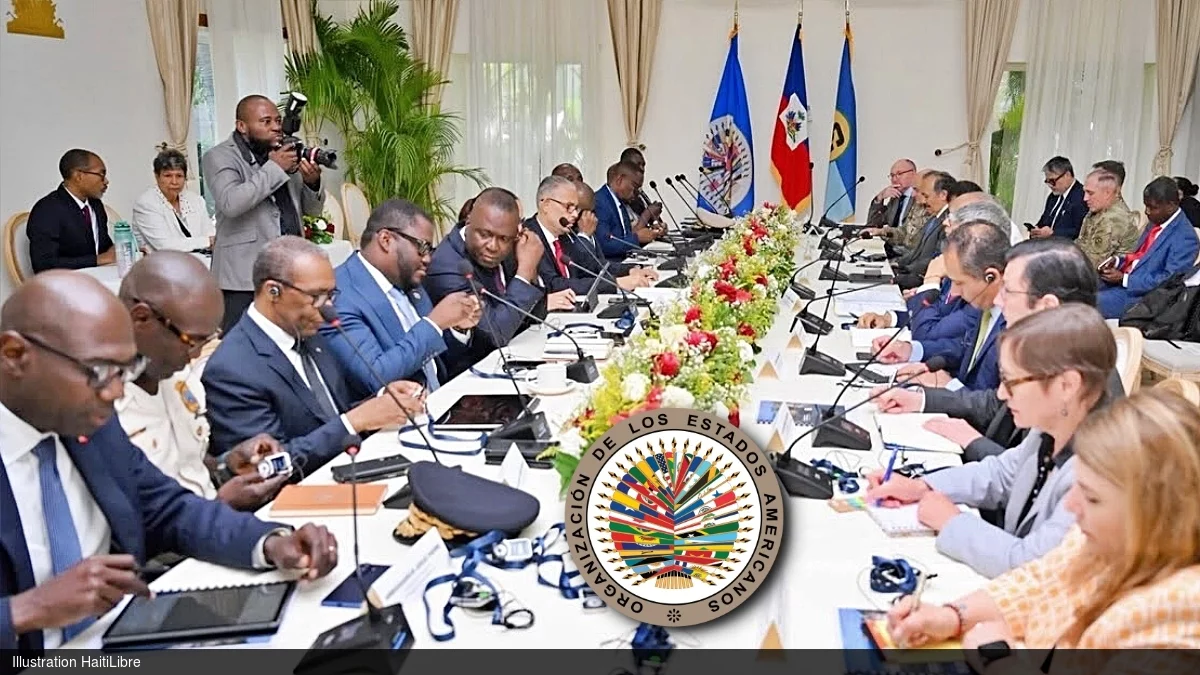
    As instability and violence continue to escalate across neighboring Haiti, the Dominican Republic has moved swiftly to shore up its national security defenses, convening a high-stakes emergency gathering of top government and military officials on Sunday, April 5, 2026.

    Called directly by Dominican President Luis Abinader, the meeting of the National Security and Defense Council stretched more than an hour, bringing together the nation’s most senior security leaders. Attendees included Defense Minister Lieutenant General Carlos Antonio Fernández Onofre, Interior and Police Minister Faride Raful, and National Police Director Major General Andrés Modesto Cruz Cruz, all of whom centered their discussions on mitigating risks stemming from Haiti’s rapidly deteriorating security landscape.

    The gathering came just hours after Haiti’s High Command of the Armed Forces (FAd’H) issued a formal announcement activating the country’s highest “Level D” alert status, effective Monday, April 6. The unprecedented alert level was triggered by a sharp surge in gang-related violence and civil unrest that has left much of Haiti in chaos in recent weeks.

    Following the closed-door meeting, Abinader addressed reporters in a brief press briefing to outline the Dominican government’s immediate actions. He confirmed that security forces have already ramped up monitoring and patrols along the 392-kilometer shared border between the two nations, which share the island of Hispaniola. The president also highlighted the integration of newly acquired surveillance technology, much of which supports the Dominican military’s domestically produced armored vehicle fleet, to boost situational awareness along the frontier.

    Abinader stressed that all branches of the Dominican armed forces are now “ready, fully deployed, and on high alert” to respond to any cross-border spillover of violence or displacement that could threaten Dominican national security. As of Sunday evening, government officials had not released detailed information on additional specific policy changes or new operational measures approved during the meeting. However, senior government sources indicated that formal announcements of expanded border security protocols are expected in the coming hours, as authorities work to insulate Dominican territory from the growing fallout of Haiti’s ongoing crisis.

  • Distribution of 10,000 food kits in the Southern Department of Haiti

    Distribution of 10,000 food kits in the Southern Department of Haiti

    Against a persistent backdrop of widespread food insecurity plaguing vulnerable communities across Haiti, state-backed social assistance agencies launched a major food distribution mission during the 2026 Easter holiday period, rolling out 10,000 emergency food kits to households in the country’s South Department.

    Ahead of the field deployment, Jean Sadrack Jean François, director of Haiti’s Directorate for the Fight Against Poverty (DLCP), led a high-level coordination meeting at the Departmental Emergency Operations Center (COUD) based in Fonfrède. The gathering brought together key stakeholders from multiple government agencies to iron out operational logistics, ensuring the aid would reach intended recipients efficiently and without disruption. Attendees included Kesner Romilus, director general of the Economic and Social Assistance Fund (FAES, the lead implementing body for the mission); Lincosld Charles, the South Department’s regional government delegate; Pierre-Marie Boutin, FAES’ regional coordinator; Abner Jean-Charles, regional coordinator for the Directorate General of Civil Protection (DGPC); and Yacinthe Germain, regional coordinator for the Ministry of Social Affairs and Labor (MAST).

    The distribution operation, which ran from April 2 to April 6, forms a core component of the national Multisectoral Emergency Program, an initiative overseen by MAST and managed by FAES that is explicitly designed to combat the severe food insecurity that has pushed thousands of Haitian households into food instability.

    Beyond the food kit rollout, the interagency delegation conducted an inspection visit to the under-development Southern Rehabilitation Center in Madame Combe. The facility is set to welcome nearly 2,000 vulnerable Haitians in the near future, and the visit allowed officials to assess infrastructure and operational needs for a new on-site community restaurant scheduled to open its doors on April 6.

    This latest regional relief effort is part of a far larger, ongoing national social assistance commitment by the Haitian government. Through FAES, the administration currently provides 48,000 prepared meals every day to internally displaced persons across the country, with the allocation broken out across three major regions: 2,000 meals for Artibonite, 9,000 for the Centre region, and 37,000 for the country’s most populous region, West. In addition to fixed-site meal programs, 36,000 additional meals are served daily via mobile canteen operations across Port-au-Prince, Delmas, and Pétion-ville, reaching low-income and food-insecure residents in dense urban areas that have been disproportionately impacted by ongoing economic and humanitarian instability.

  • «Konbit Haiti Zero Waste» : 15,200 m3 of waste collected in the metropolitan area

    «Konbit Haiti Zero Waste» : 15,200 m3 of waste collected in the metropolitan area

    Haiti’s national clean environment initiative, “Konbit Haiti Zero Waste”, has delivered strong early results in the country’s metropolitan region, with project officials announcing this week that more than 15,200 cubic meters of solid waste have been collected across five participating municipalities since the program launched. Minister of the Environment Valéry Fils-Aimé, who unveiled the program at its official launch, reported that the first phase of on-ground interventions has already mobilized more than 1,500 local workers to support waste collection efforts. All participating workers have received full compensation for 10 days of work completed over the 2026 Easter holiday period, with payments disbursed entirely via the MonCash digital payment platform as of April 2, 2026, according to the ministry.

    Data compiled by two technical bodies under the Ministry of the Environment — the National Solid Waste Management Service (SNGRS) and the Living Environment and Sanitation Directorate (DCVA), which coordinate and oversee all sanitation work for the initiative — confirms the impressive early output of the program. Working with a fleet of 23 heavy-duty vehicles including waste trucks, compactors, and dump trucks contributed by partner institutions, organized into five rotating work teams, the initiative has covered 30 collection roads split evenly across five target municipalities: Pétion-ville, Delmas, Tabarre, Cité Soleil, and Port-au-Prince. Over 23 days of active collection work, teams have pulled in an average of 632 cubic meters of waste per day, totaling the milestone 15,200 cubic meters reported this week.

    The Ministry of the Environment has publicly praised the cross-sector collaboration that made these early gains possible, extending sincere gratitude to all institutional partners that contributed equipment, coordination, and labor to the first phase. Minister Fils-Aimé specifically highlighted the dedication of the SNGRS team led by Director Daril Balthazar, as well as the consistent on-the-ground support from leaders and staff at the five participating municipalities. The ministry also commended the Haitian public for its widespread commitment to the initiative’s goals and the positive reception the program has received since it rolled out.

    Looking ahead, the Haitian government confirmed that the program will continue expanding its reach across the country, with preparation work already underway to extend services to two additional major Haitian cities: Cap-Haïtien in the north and Ouanaminthe on the Dominican border.

    First launched by the Ministry of the Environment, Konbit Haiti Zero Waste was designed to revitalize and reenergize Haiti’s fragmented solid waste collection and management systems. Operated under the ongoing direction of SNGRS with active input and participation from local municipal authorities, the initiative carries two core overarching goals: to improve public health and quality of life for Haitian communities, and to strengthen consistent presence of state public services across the country.

    In a closing statement, the Ministry of the Environment reiterated the core philosophy guiding the program, noting: “It is important to never forget that beyond large-scale government policies, a clean, healthy, and sustainable environment can only be achieved through the consistent daily actions of every individual.”

  • Advanced Tactical Training : Graduation in Haiti of the 2nd Class

    Advanced Tactical Training : Graduation in Haiti of the 2nd Class

    On April 3, 2026, Haiti marked a key milestone in its ongoing battle against widespread gang violence with the graduation of the second cohort of specialized police officers from the country’s new anti-gang tactical training facility. The ceremony, held at the purpose-built Anti-Gang Training Center in Morne Casse, was led by Inspector General Jacques Joël Orival, Central Director of Haiti’s Administrative Police, and capped off a rigorous training program that concluded with a large-scale simulated assault exercise demonstrating trainees’ new capabilities.

    Thirty police officers drawn from across all of the Haitian National Police (PNH)’s elite specialized units completed the program. Participants represented the force’s SWAT team, the Anti-Gang Unit (UTAG), the Counter-Ambush Unit (CAT), the Departmental Operations and Intervention Brigade (BOID), and the Research and Intervention Brigade (BRI). Unlike previous training initiatives that often trained separate units in isolation, this advanced tactical course brought cross-unit officers together under unified, harmonized training standards, a design specifically intended to strengthen inter-unit coordination during high-stakes field operations.

    The program was delivered through a collaborative partnership between international specialized instructors and Haitian national trainers, all of whom are themselves graduates of the same advanced tactical program. Upon completing all required coursework and practical assessments, each graduate received an official certification confirming that they have acquired the upgraded tactical skills needed to confront Haiti’s evolving complex security challenges.

    Against the backdrop of persistent insecurity driven by armed gang activity across Haiti, this training initiative fills a critical operational gap. Local security conditions frequently demand joint responses from multiple specialized PNH units across different jurisdictional boundaries, and the shared training framework directly addresses the coordination gaps that have hampered past anti-gang operations. Officials frame the graduation of this second cohort as a critical step toward strengthening the PNH’s overall operational capacity to combat armed gangs, reduce community insecurity, and stabilize the country amid ongoing crisis.