标签: Guyana

圭亚那

  • Time for constitutionally guaranteed financial independence of judiciary- Chancellor

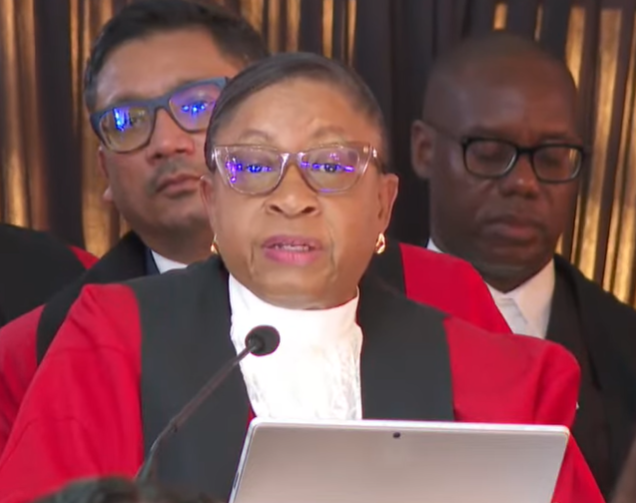
    Time for constitutionally guaranteed financial independence of judiciary- Chancellor

    Guyana’s Chancellor of the Judiciary Roxane George-Wiltshire has issued a compelling appeal to the government, urging full compliance with constitutional provisions guaranteeing financial independence for the judicial branch. The call came during her address at the ceremonial opening of the 2026 Law Year, attended by government officials including Attorney General Anil Nandlall.

    Chancellor George-Wiltshire emphasized the critical need for implementing Article 122(a) of Guyana’s Constitution, which mandates that all courts shall be administratively autonomous and funded through direct charges upon the Consolidated Fund. This constitutional provision further establishes that judicial entities must operate under sound financial and administrative management principles while maintaining complete independence from political, executive, or any other form of direction and control.

    The judiciary head highlighted Guyana’s pioneering role within the Caribbean Community (CARICOM), noting that the nation was the first to grant such autonomy to its judicial system. She stressed that full implementation of these fiscal management provisions is essential not only to fulfill constitutional obligations but also to maintain regional leadership in judicial independence.

    George-Wiltshire’s address specifically called for the judiciary’s return to being a fully self-accounting entity that manages its own tender processes while maintaining accountability to Parliament regarding expenditure of its budgetary allocation. This move would reinforce the separation of powers and ensure the judiciary’s ability to function without external influence or financial constraints that might compromise its independence.

  • Guyana begins conversation on continuing legal education, stronger regulation of lawyers, judges

    Guyana begins conversation on continuing legal education, stronger regulation of lawyers, judges

    In a significant move to modernize its judicial system, Guyana has launched a comprehensive initiative to overhaul the regulation of its legal profession. The proposed reforms, announced during the opening of the 2026 Law Year, center on establishing mandatory continuing legal education and strengthening disciplinary mechanisms for both lawyers and judges.

    Attorney General and Minister of Legal Affairs Anil Nandlall emphasized the urgent need for “a system of rigid and accountable continuing education” during his address. He revealed plans to collaborate with Guyana Bar Association President Kamal Ramkarran later this month to restructure the regulatory framework, responding to growing public concerns about professional conduct within the legal community.

    Mr. Ramkarran expressed serious concerns about the current state of professional regulation, noting the complete absence of continuing education requirements. “If a lawyer never wanted to read another law book or judgment after law school, it would be completely open for that lawyer to do so,” he stated. The Bar Association president also proposed a graduated induction system for new lawyers rather than burdening recently graduated counsel with full responsibilities immediately.

    The judiciary leadership strongly endorsed these reform efforts. Chancellor of the Judiciary Roxane George-Wiltshire recommended amending the Legal Practitioners Act—originally drafted in 1897 and last updated in 2010—to require annual registration contingent on completing minimum hours of continuing education. “An educated and regulated legal profession will increase the efficiency and integrity of the administration of justice,” she asserted, offering the judiciary’s collaboration in developing legislative reforms.

    Chief Justice Navindra Singh welcomed the newfound consensus on continuing education, recalling his unsuccessful attempt to introduce similar measures a decade ago that faced resistance from the legal community. “I’m glad that they now recognize that continuing legal education is not for us. It is for all. It is for the judges and the lawyers and it is for the litigants to enjoy proper representation,” he remarked.

    The reform discussions also addressed significant gaps in disciplinary processes. Mr. Ramkarran revealed that no lawyer has faced suspension or removal proceedings in over 25 years, despite persistent complaints about case delays caused by unprepared attorneys frequently seeking adjournments. He called for “open and transparent systems to deal with misbehavior of judges and lawyers in a proper and fair manner.”

    While Attorney General Nandlall acknowledged the possibility of maintaining self-regulation for the profession, he emphasized that this privilege must be matched by responsibility and accountability. The proposed reforms represent the most substantial potential changes to Guyana’s legal governance structure since the country’s independence in 1966.

  • Ali to visit Belize, ink agreements

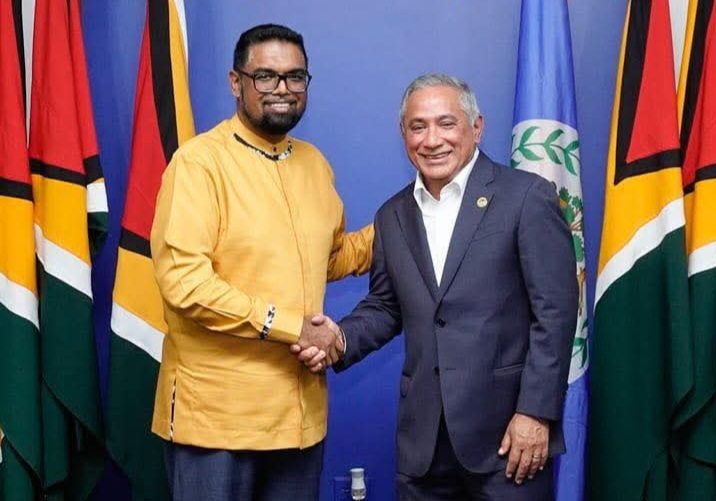
    Ali to visit Belize, ink agreements

    In a significant diplomatic development, Guyanese President Irfaan Ali is scheduled to undertake an official state visit to Belize from February 1-3, 2026. The Central American nation’s Prime Minister’s Office confirmed the high-level visit, which marks a strengthening of bilateral ties between the two nations.

    President Ali, who serves as the Caribbean Community’s (CARICOM) lead head of government for agricultural affairs, will engage in comprehensive bilateral discussions with Belizean Prime Minister John Briceño and Governor-General Dame Froyla T’zalam. The visit includes a notable address by President Ali at the opening ceremony of Belize’s new parliamentary session, underscoring the importance both nations place on this diplomatic engagement.

    The cornerstone of the visit will be the signing of multiple cooperation agreements designed to enhance regional collaboration, stimulate investment opportunities, and expand trade relationships. These agreements reflect both countries’ commitment to regional solidarity and economic integration within the Caribbean basin.

    Prime Minister Briceño’s office emphasized the historically robust relations between Belize and Guyana, noting their shared dedication to regional development initiatives. The visit gains additional significance against the backdrop of recent economic developments, including a United States company’s decision to establish sugar refineries in both nations, potentially creating new agricultural synergies.

    This diplomatic mission represents a strategic effort to strengthen Caribbean partnerships while addressing regional agricultural challenges and opportunities through multilateral cooperation.

  • High Court orders DPI, AG to pay Alexander GY$10M for defamation; Alexander to pay cost to Jagdeo because remark was privileged

    High Court orders DPI, AG to pay Alexander GY$10M for defamation; Alexander to pay cost to Jagdeo because remark was privileged

    In a landmark ruling with significant implications for free speech and government accountability, the Guyana High Court has delivered a mixed verdict in a high-profile defamation case involving Vice President Bharrat Jagdeo and opposition figure Vincent Alexander.

    Justice Fidela Corbin-Lincoln ruled Monday that the Department of Public Information (DPI) and Attorney General Anil Nandlall must pay Alexander GY$10 million (approximately US$48,000) in damages for publishing defamatory statements that questioned his integrity and implied financial misconduct. The court additionally ordered the state entities to remove the contested content from their website by January 16, 2026, and pay Alexander GY$500,000 in legal costs.

    The case centered on an August 2022 interview published on DPI’s official platform where Jagdeo accused Alexander and other officials of the International Decade for People of African Descent Assembly-Guyana (IDPADA-G) of exploiting the Afro-Guyanese cause for personal enrichment using public funds.

    Justice Corbin-Lincoln determined the allegations portrayed Alexander as “dishonest, lacking integrity, and engaged in unethical, unscrupulous conduct for personal financial benefit.” She emphasized the particularly damaging nature of the publication given its official state media origin, which would “command a high degree of respect” among the public regarding matters of public fund usage.

    In a simultaneous ruling, the court found that Vice President Jagdeo’s comments, while defamatory and unsubstantiated, were protected by qualified privilege due to his position as a public official. The judge noted that Jagdeo had a “duty to inform the public about the use and potential misuse of public funds,” and the public had a “corresponding right to know.” Since Alexander failed to prove malice in Jagdeo’s statements, the court ordered Alexander to pay Jagdeo GY$350,000 in legal costs.

    The judgment highlighted the ongoing nature of the harm, as the defamatory content remained accessible worldwide on the government website throughout the litigation process, with no retraction or apology offered by the defendants.

  • Guyana’s population almost 1 million- prelim census report

    Guyana’s population almost 1 million- prelim census report

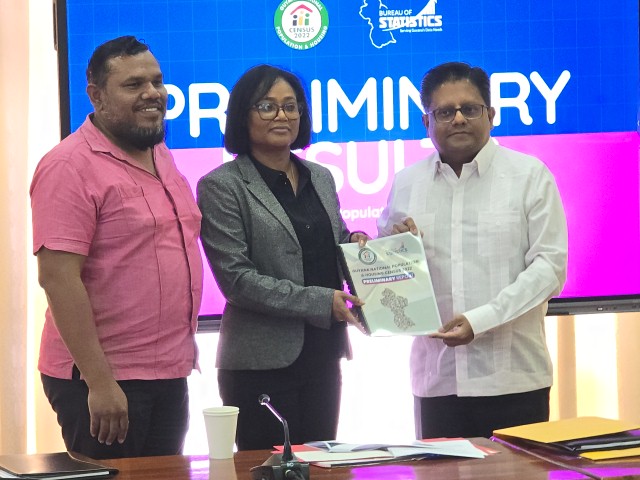
    Guyana is experiencing its most significant demographic surge since World War II, with new census data revealing a nation on the cusp of a major population milestone. According to preliminary findings from the 2022 Population and Housing Census released by the Bureau of Statistics, the country’s official population stood at 878,674 as of September 2022, with estimates projecting growth to approximately 956,044 by the end of 2024.

    The comprehensive survey, presented by Chief Statistician Errol La Cruez and Deputy Chief Statistician Vanessa Profitt, indicates an 89% household coverage rate despite challenges in reaching certain segments of the population. La Cruez attributed the coverage success to sophisticated statistical methods while acknowledging difficulties in accessing some migrant communities, particularly undocumented individuals who may avoid official engagement.

    This demographic expansion represents a dramatic increase from the 746,955 residents recorded in the 2012 census, marking the highest population growth rate in over seven decades. Finance Minister Dr. Ashni Singh highlighted how regional migration patterns, particularly from neighboring countries, have substantially altered the nation’s demographic composition. The foreign-born population has increased to approximately 3%, while the percentage of locally-born citizens has experienced a corresponding slight decrease.

    Region Three (West Demerara-Essequibo Islands) has emerged as a particular growth hotspot, with its population now surpassing that of Region Six (East Berbice-Corentyne) due to extensive new housing developments and land openings. This residential expansion is reflected in a 42% increase in building stock in recent years, signaling a nationwide construction boom.

    The census also revealed evolving household dynamics, with average family size decreasing significantly from 4.7 persons in 1991 to 3.23 in 2022. Minister Singh credited this shift to increased home ownership stimulated by government incentives, including the removal of Value Added Tax on certain building materials.

    While the political opposition has called for more immediate and comprehensive data release, government officials emphasized that both private sector stakeholders and public infrastructure planners will find the census information invaluable for future development strategies. A more detailed preliminary report is scheduled for publication on the Bureau of Statistics website, with a final comprehensive analysis to follow in due course.

  • Man killed, brother injured in Region 7

    Man killed, brother injured in Region 7

    A violent altercation at Barakat Landing on the Cuyuni River has resulted in a tragic outcome, with one man deceased and his brother critically wounded. The incident, which transpired on the evening of Sunday, January 11, 2026, is now under active investigation by police from Regional Division #7.

    According to initial reports from the Guyana Police Force, the two victims, both employed as pork knockers in the local mining area, became engaged in a heated dispute with another male individual. The confrontation escalated dramatically when the alleged assailant reportedly seized a pair of scissors and launched a brutal attack, stabbing both brothers multiple times across their bodies.

    Following the violent assault, the suspect immediately fled the scene and has successfully evaded capture thus far. Law enforcement authorities have confirmed that intensive efforts are currently underway to locate and apprehend the individual responsible for this deadly attack.

    The remote location of Barakat Landing presents unique challenges for investigators operating in the Region #7 jurisdiction. The community, situated along the Cuyuni River, represents one of many mining areas where such violent incidents occasionally occur, highlighting ongoing security concerns in Guyana’s interior regions.

    Police have not yet released the identities of the victims pending notification of their families, nor have they disclosed potential motives behind the altercation that turned fatal. The investigation remains ongoing as authorities work to piece together the precise sequence of events that led to this tragic outcome.

  • CANU issues national early warning alert for ecstasy after seizure

    CANU issues national early warning alert for ecstasy after seizure

    Guyana’s Customs Anti-Narcotics Unit (CANU) has activated a nationwide emergency alert system following the successful prosecution of a significant ecstasy trafficking case. The alert targets public awareness, law enforcement agencies, and healthcare providers in response to the confirmed presence of high-risk MDMA tablets in circulation.

    The agency confirmed the conviction of Devon Grant, who received a 12-month prison sentence and a GY$300,000 fine after pleading guilty to trafficking 164 grams of ecstasy. Co-defendant Lily Wills maintained her innocence and was released on GY$100,000 bail pending her February 2 court appearance. A third suspect was released due to insufficient evidence.

    According to CANU’s operational report, the arrests resulted from intelligence-driven surveillance that led to the interception of a vehicle at Movietowne, Turkeyen in Greater Georgetown. Officers discovered multiple ziplock bags containing brightly colored pills that were subsequently confirmed by the Guyana Forensic Science Laboratory to contain MDMA.

    Health authorities have been instructed to monitor for ecstasy-related medical emergencies, particularly symptoms including severe dehydration, hyperthermia, tachycardia, confusion, agitation, and collapse. CANU emphasized that seized tablets showed significant variation in potency and likely contained dangerous adulterants.

    The agency specifically warned young adults about the elevated risks of combining MDMA with alcohol or other substances, noting that most emergencies occur in nightlife environments. CANU has implemented enhanced monitoring of entertainment districts, improved surveillance of micro-distribution networks, and strengthened collaboration with venue security teams.

    Public cooperation is actively sought, with CANU urging parents, nightlife operators, and community leaders to report any suspicious activities or unfamiliar pills circulating among youth populations.

  • Ali accepts Rodrigues’ explanation about her assets

    Ali accepts Rodrigues’ explanation about her assets

    Guyanese President Irfaan Ali has publicly expressed his full confidence in Tourism, Industry and Commerce Minister Susan Rodrigues, affirming his acceptance of her detailed explanation regarding her acquisition of high-value assets. This endorsement comes amid intensified scrutiny from opposition figures questioning how the minister financed a Florida property valued at over US$500,000 on a government salary.

    President Ali addressed journalists on Saturday, stating that Minister Rodrigues had sufficiently demonstrated the legitimate sources of her wealth. “The minister has demonstrated. I have no question when the minister has demonstrated. Allegations are always made,” the President remarked, dismissing concerns raised by political opponents.

    The controversy emerged when We Invest in Nationhood (WIN) party leader Azruddin Mohamed challenged Rodrigues to account for her property purchases, suggesting possible corruption connections. The minister responded by revealing she had secured a mortgage from AD Mortgage, a US financial institution, and that the property was being rented out to service the loan debt.

    Rodrigues provided documentation showing an outstanding mortgage principal of US$378,000 as of December 31, 2024, though she did not confirm the exact purchase price cited by Mohamed. While denying ownership of three properties as alleged, the minister acknowledged having shares in a company that owns one of the addresses mentioned by the opposition.

    President Ali emphasized that all members of his administration had complied with transparency measures by submitting their asset declarations to the Integrity Commission, contrasting this with what he described as the opposition’s lack of similar accountability.

  • Reis says local stock exchange undervaluing Banks DIH shares, Ali promises reform this year

    Reis says local stock exchange undervaluing Banks DIH shares, Ali promises reform this year

    Guyana’s financial markets are facing serious credibility challenges following explosive allegations by Banks DIH Chairman Clifford Reis, who claims the local stock exchange is dramatically undervaluing his company’s shares while showing preferential treatment toward competitors.

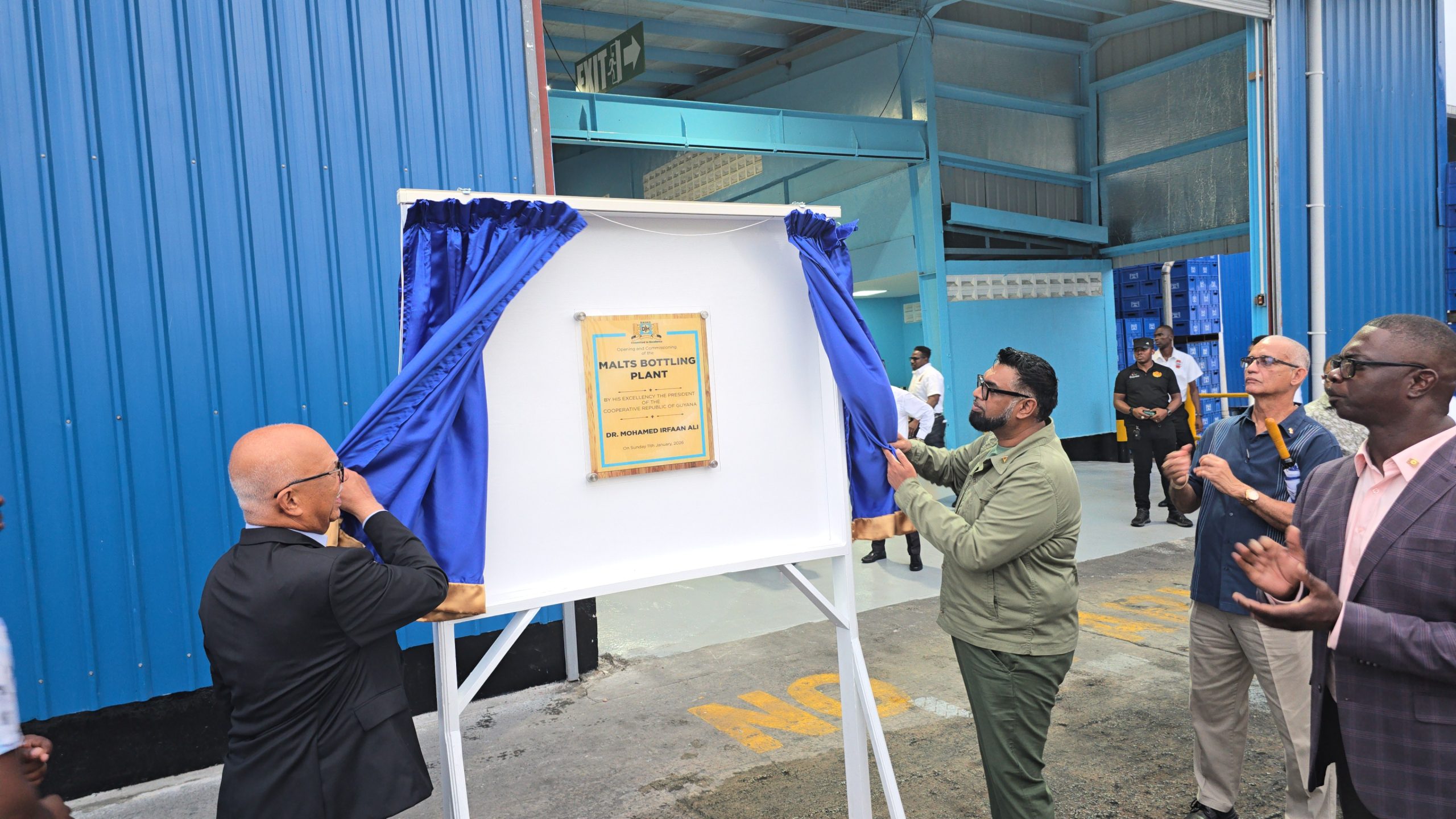
    Speaking at the commissioning of the company’s new GY$13.7 billion malt bottling facility in Thirst Park, Reis presented compelling financial data suggesting systemic market failures. Despite Banks DIH’s shares trading at GY$155, the chairman asserted their true value should range between GY$400-450 based on performance metrics that significantly outpace competitors.

    The controversy centers around glaring disparities: while a competitor’s shares trade at GY$200, Banks DIH demonstrates superior financial health with revenues surging 45% and profits increasing 54% between 2021-2025. The company reported a staggering GY$10.5 billion net profit—nearly double the competitor’s GY$5.5 billion—while maintaining a zero debt-equity ratio and funding its massive new plant entirely through internal cash flow.

    Reis raised alarming questions about potential conflicts of interest, demanding transparency regarding broker company shareholders and their valuation methodologies. “Any reasonable person will consider that the stock market in Guyana cannot be taken seriously,” he stated, highlighting how a mere GY$1.00 price drop per share could wipe out GY$849 million in market capitalization.

    The situation has reached the highest levels of government, with President Irfaan Ali—a former Banks DIH employee—pledging comprehensive stock market reforms. The President confirmed ongoing consultations would lead to modernization of Guyana’s financial architecture, including establishing a junior stocks exchange and ensuring fair valuation mechanisms that properly reflect company growth and asset values.

    The newly commissioned facility itself represents a significant manufacturing advancement, capable of producing 400,000 beer cases monthly on single shift operations, with storage capacity for 900,000 cases, positioning Banks DIH for continued market dominance despite the current valuation controversies.

  • WIN rides on western nations’ calls for Opposition Leader

    WIN rides on western nations’ calls for Opposition Leader

    Guyana’s principal opposition faction, We Invest in Nationhood (WIN), is capitalizing on mounting international pressure from Western powers to secure parliamentary recognition for its leader, Azruddin Mohamed. The political standoff centers on the delayed election of an Opposition Leader, a constitutional requirement that remains unfulfilled more than four months after September’s general elections.

    WIN issued a formal statement demanding that Speaker of the National Assembly Manzoor Nadir convene a meeting of the 29 opposition parliamentarians to resolve the leadership impasse. The party asserts that Mohamed, whose coalition secured 109,075 votes, represents the legitimate choice of the electorate and must be permitted to assume his constitutional role.

    The diplomatic community has intensified pressure on Guyana’s political institutions, with British and Canadian high commissioners alongside European Union and United States ambassadors collectively urging the appointment of an Opposition Leader as essential to democratic functionality. These interventions occurred within a critical 72-hour window preceding WIN’s statement.

    Complicating the political calculus are serious legal challenges facing Mohamed and his father, Nazar “Shell” Mohamed, both subjects of United States extradition proceedings related to alleged mail fraud, wire fraud, and money laundering charges. A committal hearing is currently underway in a magistrates court.

    WIN alleges that the ruling People’s Progressive Party (PPP) intentionally obstructs the opposition leadership process, fearing Mohamed’s potential to introduce rigorous legislative scrutiny and his perceived resistance to political influence. The party contends that Guyana’s democracy suffers from unprecedented parliamentary inactivity, with only one assembly session convened since the elections.

    President Irfaan Ali has dismissed allegations of governmental interference as “absolutely ridiculous,” maintaining that the selection of opposition leadership remains exclusively the concern of opposition parliamentarians. His comments, delivered during a public engagement in Ogle, East Coast Demerara, emphasized administrative non-involvement in the opposition’s internal decisions.