标签: Guyana

圭亚那

  • Guyana to perform world’s longest distance robotic heart surgery today

    Guyana to perform world’s longest distance robotic heart surgery today

    As Guyana marked the eve of its 60th anniversary of independence on May 26, 2026, President Irfaan Ali announced a groundbreaking medical milestone that the South American nation is set to achieve, catapulting it onto the global stage of innovative healthcare.

    Speaking at the national flag-raising ceremony hosted on Fort Island along the Essequibo River — the same location where Guyana first gained independence 60 years prior — Ali outlined the historic procedure: on the same day as his anniversary address, a team of Guyanese surgeons using the cutting-edge Mantra Freedom 60 robotic system would conduct a remote cardiac surgery on a patient based thousands of kilometers away in India. If successful, the procedure will officially enter the history books as the longest-distance remote surgery ever conducted by humanity.

    For Ali, the ambitious procedure is far more than a one-off medical experiment; it is a public declaration of Guyana’s strategic vision to embrace cutting-edge technology as a core driver of national development. The president emphasized that Guyana is actively pursuing every available technological tool to not just secure a place in the global economy, but to establish itself as a competitive, forward-thinking leader that contributes to global stability, systemic resilience, and shared prosperity across nations.

    This historic surgery is not an out-of-the-blue initiative, but the culmination of months of policy focus on digital innovation in healthcare from Ali’s administration. In recent months, the Guyanese leader has repeatedly highlighted the transformative potential of robotics and artificial intelligence to expand access to care and upgrade the country’s health sector, framing technology adoption as a key pillar of the nation’s 60-year new chapter of independence and growth.

  • National flag stuck at Independence anniversary ceremony

    National flag stuck at Independence anniversary ceremony

    On the occasion of Guyana’s 60th Independence Anniversary, a symbolic midnight celebration hosted on Fort Island in the Essequibo River took an unexpected turn shortly after President Irfaan Ali delivered a forceful reaffirmation of Guyana’s territorial sovereignty over the contested Essequibo region. The event, which was attended by senior regional and international dignitaries including CARICOM Secretary-General Dr Carla Barnett, Barbados Prime Minister Mia Mottley, and former St Vincent and the Grenadines Prime Minister Dr Ralph Gonsalves, was derailed when a large version of Guyana’s national flag, the Golden Arrowhead, became stuck while being hoisted up an extra-tall flagstaff.

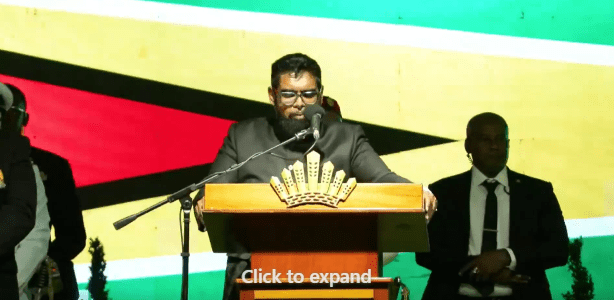
    President Ali opened the ceremony with uncompromising remarks, leaving no room for ambiguity regarding Guyana’s claim to the territory. “My language cannot be ambiguous. The Essequibo is Guyana’s. It has never been Venezuelan nor was it ever Spanish,” he told the assembled crowd of dignitaries, government officials, military leaders and special guests.

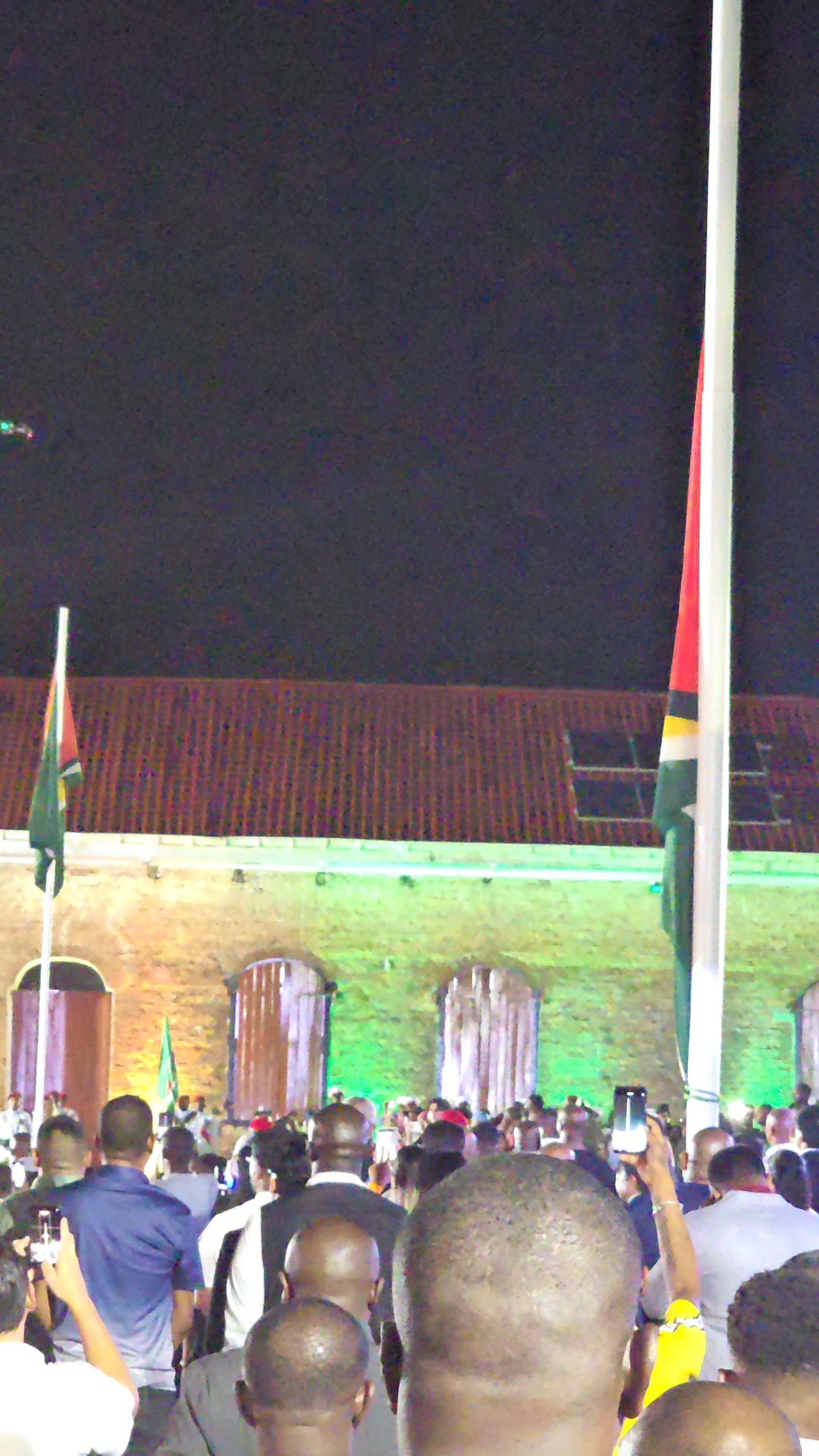
    Following the address, members of the Guyana Defence Force launched repeated attempts to raise the oversized national flag, but the symbol of Guyanese nationhood could not be pulled past a position just below half-staff. For more than 30 minutes, the entire audience of senior officials and guests stood patiently watching as soldiers worked frantically to untangle the tangled halyard from the flag fabric. When it became clear that an immediate fix was impossible, event organizers pivoted to a contingency plan, switching to a shorter substitute flagpole.

    At 12:43 AM, a smaller Golden Arrowhead was successfully raised. The moment was immediately followed by a fireworks display whose explosions echoed across the entire three-square-mile Fort Island, located roughly 10 miles upstream from the mouth of the Essequibo River.

    Beyond the ceremonial mishap, President Ali used his keynote address to call out neighboring Venezuela over its ongoing challenge to Guyana’s territorial claim, noting that Caracas has refused to abide by binding directives issued by the International Court of Justice (ICJ) in the ongoing border dispute. The long-running disagreement centers on the 1899 Arbitral Tribunal Award that established the land boundary between the two South American neighbors; Venezuela’s acting President Delcy Rodriguez has repeatedly stated her government will not recognize any ICJ ruling on the award’s validity. Ali called this stance unacceptable, noting “this is not the language of a neighbour, international law or peace.”

    The Guyanese President emphasized that his country remains fully confident in the strength of its legal case before the ICJ, and vowed that the nation would defend its territorial integrity against any act of aggression. He reaffirmed that for more than 125 years, since the 1899 award formalized the border, Essequibo has been an undisputed part of Guyana, and will remain Guyanese in perpetuity. Ali closed his remarks by thanking the United States, the Caribbean Community, the Commonwealth, the Organisation of American States, and all other international partners that have stood in solidarity with Guyana, and reiterated that Venezuela’s threats to the country’s sovereignty will not be tolerated.

  • CCJ awards Trinidadian political activist US$30,000 in compensation following unlawful detention in Suriname

    CCJ awards Trinidadian political activist US$30,000 in compensation following unlawful detention in Suriname

    PORT OF SPAIN, Trinidad – May 25, 2026 – In a landmark ruling that clarifies core human rights and free movement protections for CARICOM nationals across the regional bloc, the Caribbean Court of Justice (CCJ) has ordered Suriname to pay US$30,000 in damages to Derek Ramsamooj, a Trinidad-based political analyst and consultant who was unlawfully detained between 2020 and 2022.

    Ramsamooj first brought his case before the CCJ after he was held by Surinamese law enforcement from October 2020 through September 2022. He argued that his prolonged detention violated fundamental protections guaranteed to him under the Revised Treaty of Chaguaramas (RTC), the binding legal agreement that underpins the Caribbean Community (CARICOM) regional integration project, enshrining the free movement of persons across member states.

    In its ruling delivered Monday, the CCJ drew on precedent from the European Court of Human Rights case *Sardouz v. Turkey*, which established that timely, unimpeded access to legal representation is a foundational structural safeguard for fair judicial proceedings. The court found that Suriname’s domestic law – specifically Article 40 of the Suriname Code of Criminal Procedure (SCCP) – violates regional community law. The provision allows authorities to deny detainees access to legal counsel during the investigative stage of a case without putting in place compensatory measures to protect a defendant’s right to a fair defense. This gap, the court ruled, unlawfully restricts the free movement of CARICOM nationals and falls far short of the minimum human rights standards required by regional treaty law.

    The court further emphasized that a claimant does not need to prove discriminatory treatment based on nationality to establish a violation of the rights laid out in the RTC. This marks a key clarification of regional treaty obligations for member states.

    Addressing longstanding legal precedent on CARICOM free movement rules, Justice Anderson noted that the CCJ reaffirmed the core principle established in *Gilbert v. State of Barbados*: that the right to free movement under the RTC does not grant CARICOM nationals immunity from legitimate law enforcement action in host member states. However, the court distinguished the Ramsamooj case from the Gilbert precedent, noting that the domestic law applied in the Gilbert case was already consistent with RTC requirements. In contrast, the domestic Surinamese law authorizing Ramsamooj’s detention is itself incompatible with the regional treaty, as it fails to meet mandatory minimum human rights standards. This places the current case in line with existing precedent set in the *Mariline* line of court rulings.

    The ruling also sharply narrows the circumstances under which member states can invoke Article 226 of the RTC to justify violations of treaty-based rights. Justice Anderson explained that Article 226, which allows member states to reference domestic legal procedures to justify state action, has an extremely limited role in such disputes. Only in the rarest of circumstances can a member state rely on the provision to excuse conduct that erodes the core substance of treaty-guaranteed rights when its domestic procedures fail to meet the minimum human rights standards required by CARICOM community law.

    The decision is being widely viewed as a significant reinforcement of human rights protections for CARICOM citizens exercising their right to free movement across the region, setting a clearer legal standard for how member states must align domestic law with regional treaty obligations.

  • Prosecutors recommend jail term for Guyana-born former US public schools superintendent

    Prosecutors recommend jail term for Guyana-born former US public schools superintendent

    DES MOINES, Iowa — As former Des Moines Public School Superintendent Ian Roberts, a Guyana-born immigrant, prepares for his federal sentencing this Friday, federal prosecutors have formally submitted a court memorandum calling for a 37-month, or three-year, prison term, the maximum within the recommended guideline range for his two convictions.

    Roberts’ legal troubles began in September 2025, just a few weeks after the 2025-2026 academic year got underway, when federal immigration agents took him into custody. He later entered a guilty plea to two federal charges: making a false statement in connection with his employment, and unlawful possession of a firearm by an undocumented immigrant. As part of his plea deal, prosecutors agreed to drop any additional potential charges and extend a measure of leniency in their sentencing recommendation, even as the two charges on the record carry a combined maximum statutory sentence of 20 years behind bars.

    In the sentencing memorandum filed last week with the U.S. District Court for the Southern District of Iowa, prosecutors argued that the former top school administrator deserves a top-of-guideline 37-month sentence, rooted in the nature of his offenses: Roberts falsely claimed U.S. citizenship to secure his job, and was found to illegally possess four firearms.

    U.S. sentencing guidelines set a recommended range of 30 to 37 months for Roberts, after accounting for two key factors: he has no prior felony criminal record, and he was found in possession of four illegal firearms rather than a smaller number. Prosecutors are pushing for the full 37-month term specifically because Roberts engaged in more than 15 years of unauthorized, deceptive employment in the district’s top leadership role.

    Court documents confirm that after Roberts completes his prison sentence, he will be turned over to immigration authorities and deported from the United States.

  • US Navy, GDF in joint security exercises

    US Navy, GDF in joint security exercises

    In a major display of deepening defense cooperation between the United States and Guyana, the U.S. Navy has deployed the iconic Nimitz-class nuclear-powered aircraft carrier USS Nimitz to participate in joint military drills with the Guyana Defence Force (GDF) as a core component of the 2026 Southern Seas security initiative. The landmark deployment marks a significant step forward in the two nations’ shared commitment to upholding regional stability, according to official statements from the U.S. Embassy in Georgetown.

    The drills are designed to strengthen bilateral military alliances, enhance joint operational capabilities, and build shared capacity to respond to evolving cross-border security threats. One day after U.S. Ambassador to Guyana Nicole Theriot and Guyanese President Irfaan Ali toured the carrier anchored off Guyana’s coast, the embassy released Theriot’s remarks via its official Facebook page. Theriot emphasized that the U.S. and Guyana share unwavering dedication to advancing regional security and shared prosperity. “The visit of the USS Nimitz demonstrates our commitment to working hand-in-hand with Guyana and our Caribbean partners to address shared challenges and build a safer, stronger hemisphere for all our citizens,” Theriot said.

    President Ali echoed that sentiment in his own separate Facebook post, noting he was deeply honored to join senior military and civilian officials aboard one of the U.S. Navy’s most formidable vessels. “We celebrate partnership, friendship, and our collective goal of ensuring a region built on peace, democracy, and the shared values of the members of the Shield of the Americas,” Ali wrote. He added that a day aboard the carrier offered a striking view of the extraordinary professionalism, discipline, and unwavering dedication of the more than 4,000 service members assigned to the USS Nimitz, saying he holds unlimited respect for every crew member serving on board.

    Ali also highlighted a personal point of connection during the tour: he had the opportunity to meet four of the five Guyanese service members who are currently part of the USS Nimitz’s deployed crew. Joining Ali and Theriot on the tour were multiple senior Guyanese government officials, including Home Affairs Minister Oneidge Walrond, Foreign Affairs Minister Hugh Todd, Finance Minister Ashni Singh, Chief-of-Defence Staff Brigadier Omar Khan, National Security Adviser Gerry Gouveia, and several other top civilian and security leaders. Guyanese naval Lieutenant Commander Clint Venture, who previously completed a six-month Embarked International Staff assignment aboard the Nimitz, also joined the official delegation, supporting the planning and execution of the carrier’s engagements with partner nations across the U.S. Southern Command (SOUTHCOM) area of operations.

    U.S. officials stressed that the bilateral security partnership extends far beyond this round of joint exercises. Under an existing ship-rider agreement between the two nations, Guyanese law enforcement personnel regularly deploy aboard U.S. law enforcement vessels to carry out joint counter-narcotics patrols, targeting drug traffickers that attempt to escape into Guyanese territorial waters. “This arrangement is a testament to our collaborative approach to combating transnational organized crime,” the embassy noted.

    After completing exercises in Guyanese waters, the USS Nimitz – which operates a fleet of some of the world’s most advanced military aircraft – sailed onward to neighboring Suriname to conduct a similar series of joint security engagements. The U.S. Embassy emphasized that the carrier’s deployment through the region underscores both American naval excellence and the United States’ unwavering long-term commitment to deepening security cooperation across the Western Hemisphere. Guyana’s status as a founding member of the Shield of the Americas Coalition further aligns the two nations’ shared priorities for advancing collective hemispheric security.

  • Guyana health minister urges global health overhaul as funds tighten

    Guyana health minister urges global health overhaul as funds tighten

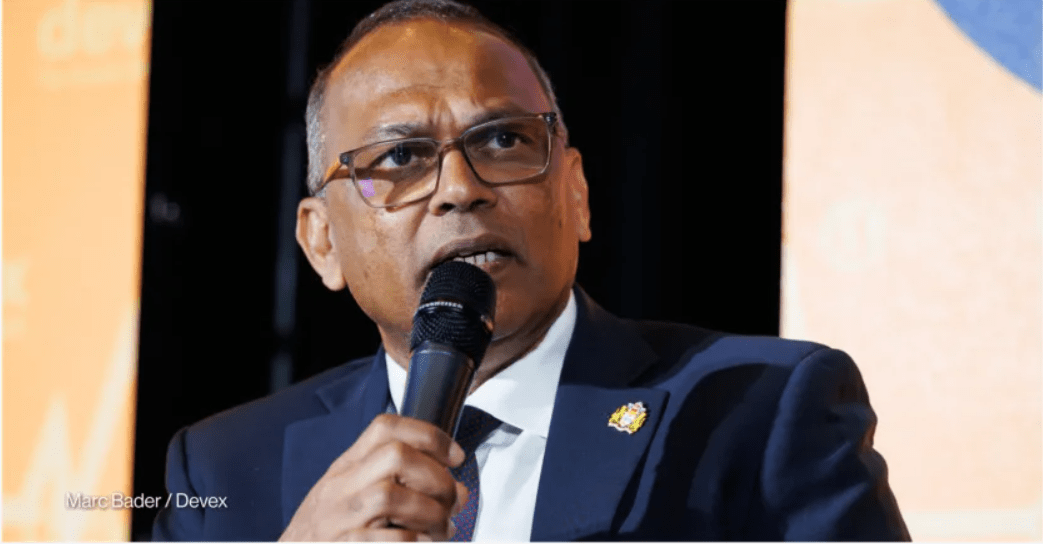
    In remarks delivered at the Devex Impact House on the sidelines of the annual World Health Assembly on Thursday, Guyana’s Minister of Health Dr. Frank Anthony has issued a urgent call for a fundamental reimagining of global health governance, arguing that decades of institutional bloat have left major international health bodies too slow, bureaucratic, and unresponsive to the needs of low-income and small developing nations — a gap that has been amplified by a growing global funding crisis that leaves no room for delay.

    Anthony argued that incremental tweaks to existing structures are no longer sufficient, as mounting financial constraints have forced the global health community to pursue sweeping restructuring regardless of institutional preference. “If we don’t want to restructure, we are being forced to restructure, because it’s not an environment where there’s a lot of money available,” he told attendees. “There’s no other way around this.”

    The debate over global health reform comes as World Health Organization (WHO) member states deliberate a new joint framework to assess the future of global health architecture, with ongoing discussion over whether the system requires deep institutional consolidation, revised mandates, or full-scale institutional reform. Anthony emphasized that the core problem extends far beyond insufficient funding: it centers on whether existing institutional structures are actually designed to deliver effective results for vulnerable populations.

    “We need to look internally at the organization and whether the structure that we currently have is really fit for purpose,” he said. “And if it’s not, then we need to have a major overhaul.” He also raised accountability concerns about regional health bodies nested within the global governance system, noting that in many cases, regional entities operate in silos with overlapping mandates and no clear reporting mechanisms to global oversight bodies. Disputes over equitable funding distribution across regions have further compounded systemic inefficiencies, he added.

    For small, low-income countries like Guyana, the outcome of these reforms carries uniquely high stakes, Anthony argued. Too often, the needs and perspectives of lower-income nations are sidelined in global health decision-making, despite facing the most acute barriers to care. “They need to get their voices heard in the global environment, and people really need to listen to them, because they have major challenges,” he said. “If we’re not listening to them and working for them, then who are these organizations really working for?”

    Looking ahead to the upcoming selection of the next WHO Director-General, Anthony outlined the core qualifications the next leader must bring to the role: sharp political acumen, deep technical expertise, and a proven ability to address the organization’s persistent financial challenges. “Whoever is coming in will have a lot of work to do,” he said. “You will have to be very politically savvy.” The next leader must also prioritize securing sustainable new funding streams for the WHO while breaking down internal silos to leverage the organization’s technical expertise quickly and effectively when crises emerge, he added.

    While calling for global change, Anthony also highlighted the domestic health reforms Guyana has implemented over recent years to expand access to high-quality care even amid limited national resources, offering a model for how constrained systems can innovate. A core pillar of Guyana’s reform effort has been a national telemedicine program that now operates across 150 rural and remote sites, equipping community health workers with satellite connectivity, solar power, solar-powered medical refrigerators, and internet-enabled diagnostic tools that allow local providers to share ultrasound and ECG readings with specialist doctors in urban centers for real-time consultations.

    “It’s hard for us to put maybe a doctor in every remote community, but using telemedicine, we are able to offer high-quality advice to our patients,” Anthony explained. “The doctor doesn’t have to be physically present.” He described the program as a transformative shift for care access, particularly for Indigenous communities and remote populations that previously faced years-long wait times and limited access to specialized care and clinical training.

    Guyana’s public health system operates on a model of free universal care for all citizens, with a tiered referral network spanning 460 facilities across its 10 regions — from small community health posts to regional and national tertiary referral hospitals. Under the tiered system, patients begin care at the local community level and are transferred upward to higher-acuity facilities only when specialized care is required, including air medevac for urgent cases in remote regions. “We have that tiered system, and we refer upwards, and I think by and large it has been working,” Anthony said.

    The system still faces significant headwinds, most notably a persistent human resources crisis driven by the outmigration of trained nurses and clinical specialists to higher-income countries. To address this gap, the Guyanese government has added more than 5,000 new health workers to the public system over the past three years and expanded domestic training programs. A key initiative is a hybrid nursing training program hosted on Coursera, developed in partnership with a WHO collaborating center in Brazil; its first cohort of 600 nursing students is set to graduate in July, a expansion Anthony called “quite a big number for us.”

    The government has also expanded undergraduate medical training at the University of Guyana, doubling annual intake from 60 to 120 students, and launched domestic residency programs to train clinical specialists locally, reducing the need for trainees to go abroad. In parallel, Guyana has invested heavily in infrastructure: six new 75-bed hospitals opened in 2025, with eight more currently under construction, with the goal of bringing secondary and tertiary care closer to patients’ home communities.

    “Primary care can only give you so much,” Anthony noted. “It will help you with the prevention, but when people really get sick, you also have to provide hospital care or secondary, tertiary care, and you need to invest there as well.”

    These infrastructure and program investments are also targeted at addressing Guyana’s growing burden of noncommunicable diseases (NCDs), which has emerged as the leading public health challenge as life expectancy rises and lifestyles shift with growing economic prosperity. While the country continues to make progress on eliminating infectious diseases including leprosy, leishmaniasis, Chagas disease, malaria, and mother-to-child transmission of HIV, rates of cardiovascular disease, stroke, diabetes, chronic respiratory illness, and kidney disease have risen sharply in recent years.

    “With some amount of growing prosperity, people are eating the wrong things,” Anthony said. “Our diet is shifting with prosperity. People have stopped walking and exercising naturally.” Four years ago, the Ministry of Health launched a dedicated national NCD control program to target these conditions and expand prevention and early treatment services.

    Another key efficiency innovation has been the rollout of a national electronic health record (EHR) system, which assigns every citizen a unique health card that providers across all public facilities can use to access up-to-date patient records instantly. Before the EHR rollout, patients often waited hours for staff to locate paper files, but in facilities that have already adopted the new system, patients are seen within 10 to 15 minutes of their scheduled appointment. “That has really helped a lot of people, rather than coming and sitting there for the whole day without getting care,” Anthony said. “This kind of patient-centric approach is extremely important.”
  • Indian quarry workers to be paid before month-end, no word on return airfares

    Indian quarry workers to be paid before month-end, no word on return airfares

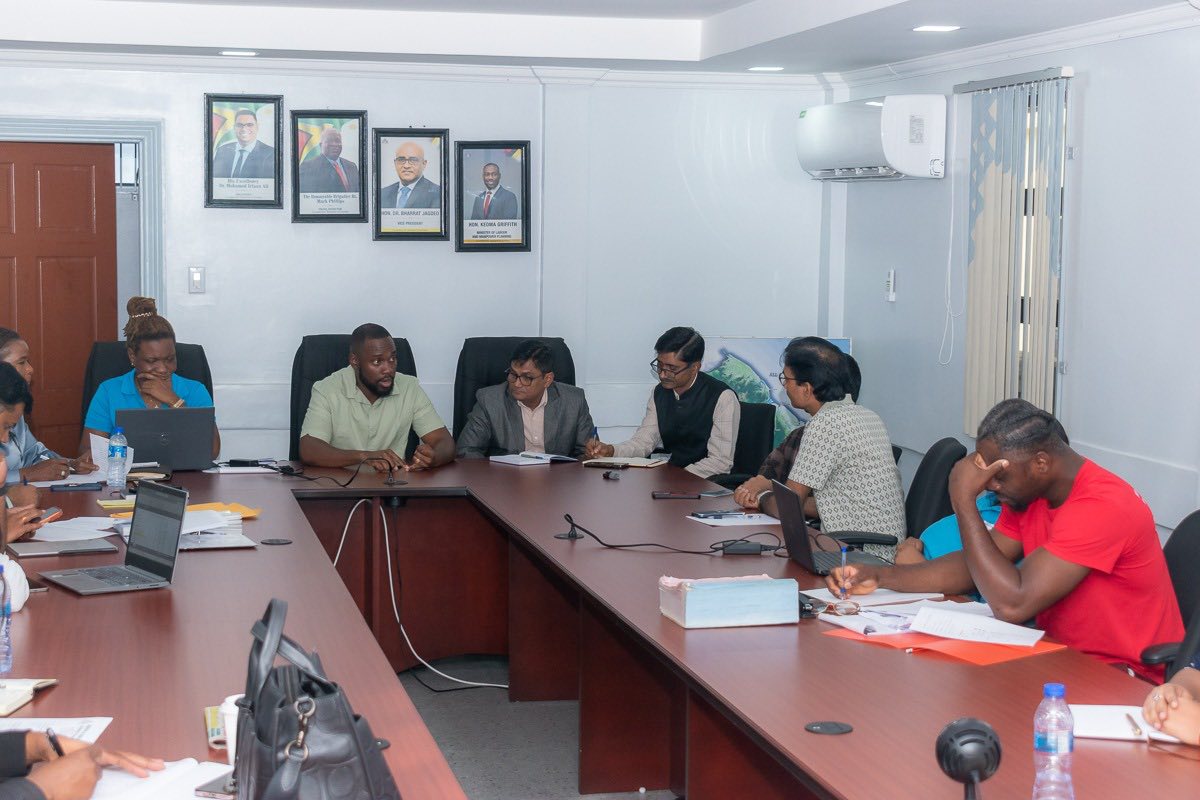
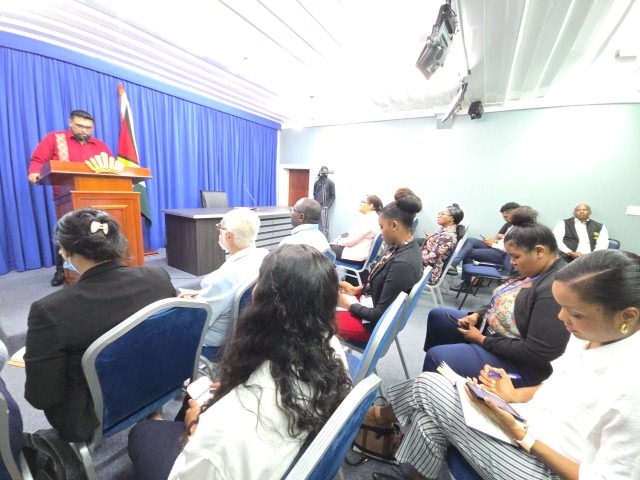
    On May 23, 2026, new developments emerged in a high-profile labour dispute involving 37 Indian migrant workers at a Batavia quarry in Guyana’s Region Seven (Cuyuni-Mazaruni), after the workers came forward with serious allegations of abusive working and living conditions. Officials from Guyana’s Ministry of Labour, senior government representatives from multiple domestic agencies, and India’s acting Deputy High Commissioner held multi-stakeholder consultations at Guyana’s Labour Ministry to address the workers’ grievances.

    Following the closed-door talks, the Labour Ministry announced in an official statement that EKAA HRIM Earth Resources, the India-headquartered firm that operates the quarry, has formally committed to disbursing all unpaid salaries and wages owed to the 37 workers no later than May 27, 2026. During the negotiations, both the workers and company representatives raised additional unresolved issues, and both sides have agreed to submit supporting documentation for these outstanding matters when talks resume next week. No further details on these additional claims have been released to the public.

    The agreement on back pay does not extend to return airfares for most workers, however, according to Guyana’s Opposition Leader Azruddin Mohamed, whose opposition WIN party first brought the workers’ plight to public attention. Mohamed told local outlet Demerara Waves Online News that the company has refused to cover the cost of return flights for the majority of the aggrieved workers, arguing that most breached the terms of their employment contracts. EKAA HRIM has only offered to pay for tickets for five to eight workers who have completed three-year tenures at the quarry, Mohamed said. To date, the Labour Ministry has not issued a formal decision on the airfare dispute.

    Talks are set to resume next Monday morning, when workers will submit pay slips to corroborate additional claims beyond unpaid April salaries. The workers allege the company made unauthorized deductions from their wages that were held as unreturned security deposits, and have stated they never received formal pay slips for their work at the quarry. In a sharp rebuke of Labour Minister Keoma Griffith’s handling of the case, Mohamed criticized the minister for failing to uphold his mandate to protect worker rights, pointing to multiple documented labour violations at the EKAA quarry.

    The situation took an unusual turn when police officers called to the Labour Ministry blocked Mohamed from attending the stakeholder negotiations, barring him from the meeting boardroom. After the workers left the quarry, Mohamed has housed and fed the group at one of his personal properties.

    The case also includes serious allegations of human trafficking tied to the company’s retention of the workers’ passports. Mohamed confirmed that legal counsel has been engaged to pursue these claims. Earlier this week, EKAA HRIM consultant Yoganand Persaud defended the company’s actions, claiming the workers voluntarily surrendered their passports to the company for safekeeping. After intervention from Labour Minister Griffith and India’s acting High Commissioner, all passports were returned to the workers.

    Guyana’s Labour Ministry has confirmed it is continuing to investigate allegations of labour law breaches and occupational safety and health violations at the quarry, stating that all proceedings will follow due process and adhere strictly to Guyana’s national labour regulations.

  • 10 AK-47 assault rifles found on Corentyne public road; one arrested, two vehicles held

    10 AK-47 assault rifles found on Corentyne public road; one arrested, two vehicles held

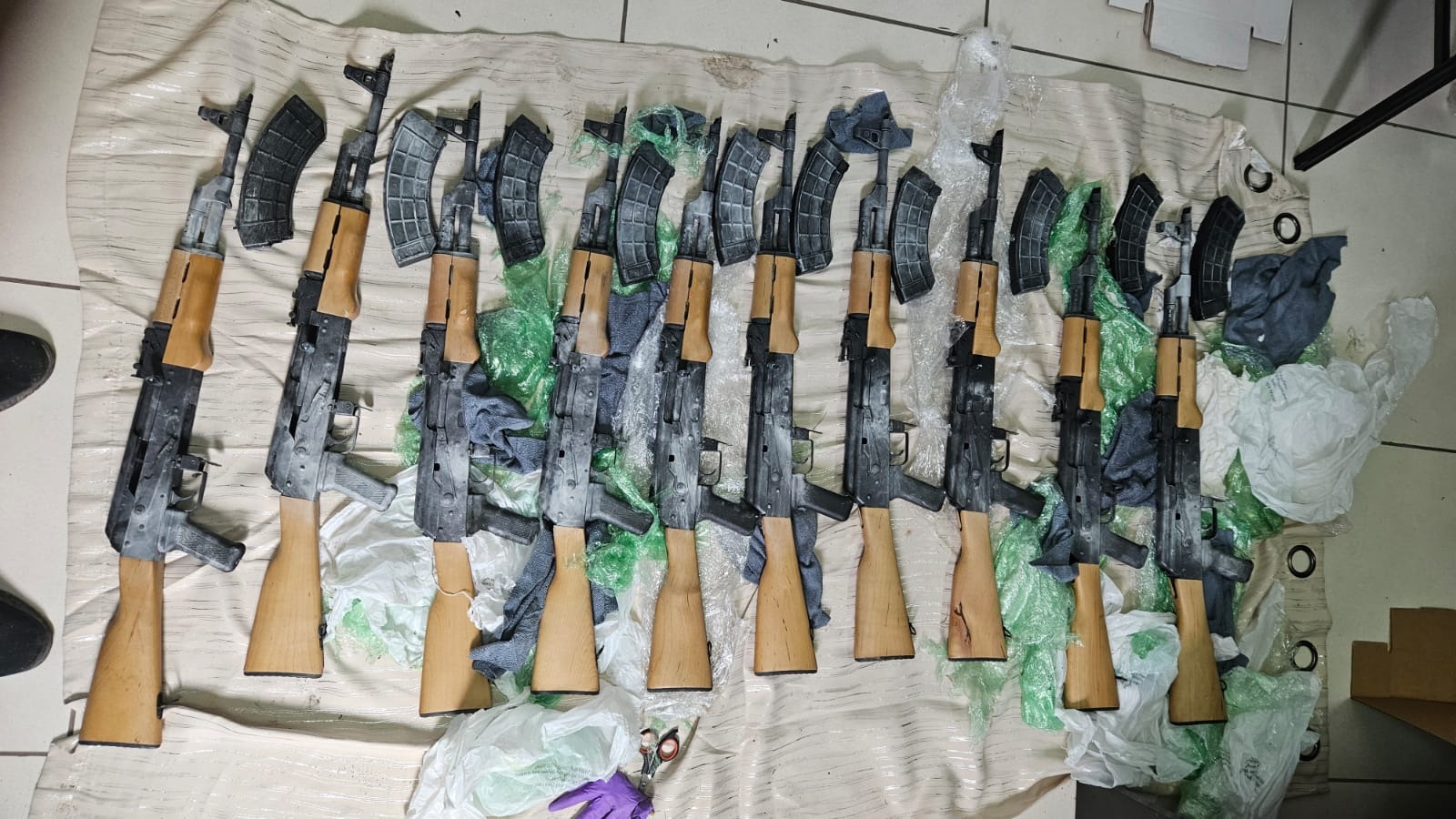
    A major seizure of illegal firearms has been carried out by law enforcement authorities in Guyana, with 10 modified AK-47 assault rifles recovered and a suspect taken into custody following a multi-location search operation, the Guyana Police Force announced in an official statement Saturday. The incident was first detailed by local outlet Demerara Waves Online News, with the latest update published by Denis Chabrol on May 23, 2026.

    The operation unfolded during a routine stop-and-search security exercise conducted along the Berbice River Bridge Access Road between the hours of 1 a.m. and 4:30 a.m. Friday. As officers carried out patrol checks, they attempted to pull over a black Toyota Fielder Wagon, registered under the plate HC 9018. Instead of complying with the police order, the vehicle’s driver fled the scene, speeding eastward to evade detainment.

    Acting on actionable intelligence gathered after the escape, investigative teams expanded their search to the No. 11 Village Public Road in Corentyne, Berbice. It was at this location that officers uncovered the cache of assault rifles: the 10 weapons were carefully wrapped in layers of plastic and cloth, intentionally concealed from discovery.

    Forensic preliminary examination of the seized firearms confirmed they are chambered for 7.62x39mm ammunition, matching the specifications of standard AK-47 rifles. Investigators also noted clear evidence of tampering: sections of the weapons had been altered in an attempt to remove or obscure the original manufacturer serial numbers, a common tactic used by illegal arms traffickers to prevent weapons from being traced.

    Following the recovery, the entire cache was transported under armed escort to the Central Police Station, where the weapons have been secured as evidence pending the outcome of ongoing investigations. In the hours after the seizure, law enforcement tracked down the identity of the fleeing driver, confirmed to be a 33-year-old taxi driver resident in Goed Fortuin, West Bank Demerara.

    The suspect was subsequently located and intercepted in the same black Toyota Fielder Wagon at Nabaclis, located on the East Coast of Demerara, and taken into police custody without further incident. Investigators also identified a second vehicle believed to be linked to the weapons smuggling operation: a white Toyota Runx registered under plate PSS 4272. The second vehicle was found abandoned at Second Street in Savannah Park, New Amsterdam, Berbice, around 6 a.m. Friday and was also impounded by authorities.

    As of Saturday’s update, the detained suspect remains in police custody, with investigators continuing to piece together details of the cache’s origin, intended destination, and any potential co-conspirators linked to the illegal weapons network.

  • Consultations on modernising copyright and intellectual property laws to be held- Ali

    Consultations on modernising copyright and intellectual property laws to be held- Ali

    GEORGETOWN, Guyana – May 22, 2026 – For nearly 60 years after gaining independence from Britain, Guyana has relied on outdated 1956 colonial-era copyright legislation to govern intellectual property rights. Now, amid growing pressure from local creators, innovators, and international stakeholders, President Irfaan Ali has announced that broad public consultations on updating the country’s IP framework will launch in the near term. The announcement comes just one day after the administration identified creative and digital industries as priority growth areas for new public financing, spotlighting the gap between economic development ambitions and outdated legal protections.

    Speaking to reporters from Demerara Waves Online News on Friday, Ali confirmed that the government would prioritize stakeholder input to shape the future of copyright regulation in the South American nation. He specifically highlighted a desire to center perspectives from Guyana’s artistic community, and suggested initial discussions could open on social media platforms to expand accessibility. “Maybe, we should move this up on the agenda and start the consultation on that,” Ali stated.

    The president’s commitment follows remarks Tuesday from Government Efficiency Minister Zulfikar Ally, who named creative and digital sectors among the key industries that will access financing from the upcoming Guyana Development Bank during an address to the Guyana Manufacturing and Services Association (GMSA) business luncheon. When pressed for details on how the government would address widespread gaps in creative work IP protection, Ally only acknowledged the sector is under active review, offering no concrete timeline or policy details.

    Guyana’s failure to modernize intellectual property law stretches back decades. The country has never replaced the 1956 British Copyright Act it inherited at independence in 1966. Previous efforts to pass updated IP legislation in the 2000s collapsed due to lack of political will. While the ruling People’s Progressive Party Civic promised copyright reform as a core 2025 election pledge, no legislative action has been taken to date. The opposition coalition A Partnership for National Unity (APNU) has already tabled a motion calling for a bipartisan select committee to advance reform with a clear legislative timeline, but the National Assembly has yet to take up the proposal.

    International pressure for reform has also mounted in recent weeks. During an official visit to Guyana on May 13, 2026, U.S. Under Secretary of State for Economic Affairs Jacob Helberg emphasized that strong intellectual property protections, as a component of private property rights, are critical to unlocking private investment and realizing Guyana’s goal of becoming one of the Western Hemisphere’s most prosperous economies, driven in large part by its emerging oil sector.

    “In order to do that, certain conditions have to be met, including the right to private property, including respecting intellectual property, including different kinds of principles of governance that the private sector necessarily needs in order to have the confidence, the predictability, and the certainty to deploy and invest a lot of money. And so we focused on the goal. We agreed on the goal,” Helberg told reporters following meetings with Guyanese leadership.

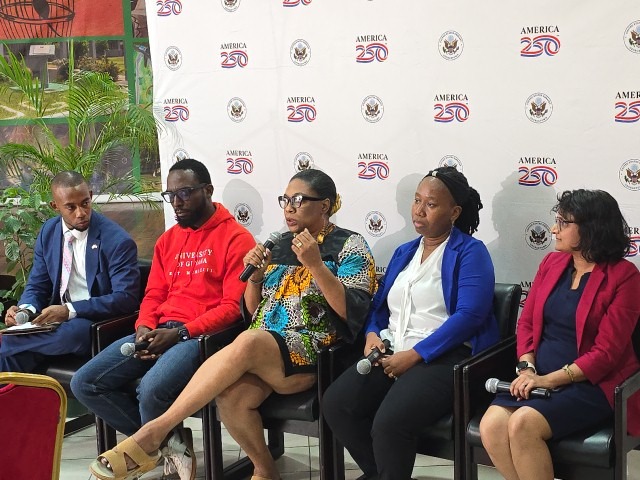
    Local innovation leaders have echoed these calls, warning that weak IP protections are stifling homegrown creativity and technological development. Dr. Karen Abrams, founder and executive director of STEM Guyana, outlined the risks of the current legal framework during a U.S. Embassy-hosted panel on STEM education and innovation held at the University of Guyana.

    Abrams described Guyana’s current innovation ecosystem as a shallow market constrained by a small population, widespread poverty, and no legal guardrails to protect original literary, artistic, and technological creations. “For innovators, the minute you throw out an innovation, there’s no protection, no IP protection. It’s co-opted by the powerful entities,” she told attendees.

    To address gaps in the current system, Abrams proposed the creation of a national science foundation that would provide dedicated research funding for university faculty and students, while establishing clear IP frameworks for publicly supported work. She also advised local innovators to pursue IP protection in foreign jurisdictions in the near term, noting that “there’s not a whole lot of protection for ideas in Guyana but wherever you look overseas, those markets do offer protection for your ideas.”

    Beyond legal reform, Abrams emphasized that long-term innovation capacity depends on addressing foundational gaps in Guyana’s education system. She noted that half of Guyana’s children struggle with basic math and literacy, and 50 percent drop out of secondary school by the ninth grade. “You can’t develop an innovative ecosystem if you lose half of your children in a tiny country where you need them to not only develop the oil industry, you need them to be thinking in 2046, what are those industries?” she said.

    The opposition’s reform plan, tabled earlier this year by APNU parliamentarian Nima Flue-Bess, mirrors many of these stakeholder priorities. Flue-Bess’s motion calls for a special select committee to audit the existing 1956 copyright law, map gaps in digital rights and enforcement, and hold targeted consultations with creative industry stakeholders to ensure new legislation reflects on-the-ground needs. Under the opposition proposal, a draft updated copyright bill would be submitted to the 65-seat National Assembly for debate within six months of the committee’s work concluding.

  • Mobile AI system to track, intercept traffic ticket evaders

    Mobile AI system to track, intercept traffic ticket evaders

    On Friday, May 22, 2026, Guyanese President Irfaan Ali announced a sweeping transformation of the country’s law enforcement and traffic management infrastructure, centered on cutting-edge artificial intelligence integration, during a public press briefing. The ambitious initiative kicks off with an AI-enabled vehicle tracking system designed to automatically identify and intercept motorists with outstanding unpaid traffic tickets, a tool that already delivered tangible results in an early pilot held earlier this week.

    During the pilot deployment, President Ali explained, mobile AI-powered scanning units detected 250 vehicles carrying unaddressed traffic penalties, all of which were subsequently detained. Unlike traditional manual traffic enforcement, which relies on officer discretion and manual checks, the new system is engineered to be fully tamper-resistant, with built-in protocols to flag any attempts at technological manipulation. “No human can interfere with the system,” Ali emphasized, underscoring the government’s goal of eliminating bias and corruption in routine traffic enforcement.

    The AI policing rollout extends far beyond traffic ticket enforcement, with plans to expand the technology to public safety monitoring for pedestrian areas and large public gatherings. The system will be capable of analyzing crowd movement patterns and identifying potentially high-risk behavior to preempt public safety incidents. To support this expanded capability, the government will add at least 25,000 new CCTV cameras across the country, creating a fully interconnected national monitoring network.

    Mobile scanning units can be positioned at any fixed or moving location, delivering 360-degree panoramic coverage of surrounding traffic to flag a wide range of moving violations in real time. President Ali noted that this deployment places Guyana at the forefront of adopting modern law enforcement technology in the Caribbean region.

    As part of the broader smart infrastructure upgrade, the existing national CCTV network will be fully integrated with the new intelligent traffic system, augmented by sensor-enabled road infrastructure. These sensors will power adaptive traffic light management that automatically adjusts signal timings based on real-time vehicle volume, a feature scheduled to be fully installed across the country by the end of 2026. The upgrade is expected to cut chronic traffic congestion in urban centers and cut down on commute times for local residents.

    The government also plans to digitize front-end police services, replacing in-person front desk operations at police stations with a multilingual digital application. The app will allow residents to file crime reports online, track the progress of their reports electronically, and generate official case documents. For residents without reliable internet access, self-service kiosks will be installed at stations to process applications for police clearance certificates and other official law enforcement documents, streamlining what has historically been a time-consuming, in-person process.

    To ensure the initiative delivers on its efficiency and security goals, President Ali confirmed that Guyana will partner with international security and technology stakeholders, including INTERPOL, the Regional Security System, and United States technological partners. These collaborations will bring technical expertise and additional resources to refine the system and align it with global best practices for modern, rights-respecting law enforcement technology.

    The announcement marks one of the most significant overhauls of Guyana’s public security and traffic management systems in recent decades, as the government pushes to modernize infrastructure to keep pace with the country’s rapid economic growth in recent years.