标签: Grenada

格林纳达

  • Building water security together

    Building water security together

    In a significant move toward climate adaptation, Grenada’s G-CREWS Project and national government have finalized comprehensive rainwater harvesting regulations following extensive public consultation. The newly developed framework addresses water security concerns while incorporating community feedback on affordability and implementation practicality.

    The regulatory structure establishes minimum building size thresholds at 250 square feet—a consensus figure determined through stakeholder engagement—with special provisions for villa developments and multi-unit properties. Notably, the regulations feature a five-year implementation window, allowing homeowners and businesses adequate time for system installation while authorities develop monitoring capabilities.

    Core exemptions protect vulnerable households facing financial constraints or spatial limitations, with graduated penalty systems ensuring equitable enforcement based on individual circumstances. The regulations explicitly permit unlimited rainwater collection without licensing requirements, focusing instead on safety standards and public health protection.

    Drawing from World Health Organization guidelines, the framework mandates water treatment standards for commercial human consumption while recognizing traditional practices in Carriacou and Petite Martinique through specific exemptions. Implementation relies on visual inspections rather than specialized equipment, maintaining system maintenance as owner responsibilities.

    The regulations prioritize flexibility, allowing homeowners to determine tank sizes beyond minimum requirements and choose aesthetic preferences while ensuring overflow management contributes to erosion reduction and flood mitigation. This initiative positions Grenada alongside Caribbean neighbors like Bermuda in adopting proactive water security measures against climate-induced rainfall pattern changes.

    While current regulations don’t include subsidy provisions, the framework allows for future fiscal incentives through relevant ministries. Educational resources and technical guidance will be provided through G-CREWS initiatives and Physical Development Authority channels, supporting community-wide climate resilience efforts through responsible water resource management.


  • Statement on hostilities in the Middle East

    Statement on hostilities in the Middle East

    The Caribbean nation of Grenada has issued a formal statement expressing profound apprehension regarding the recent intensification of military confrontations in the Middle East. Through its Prime Minister’s Office, the government highlighted particular alarm about retaliatory operations impacting Gulf region territories, warning that such developments threaten to amplify regional instability while creating perilous conditions for civilian populations and critical infrastructure.

    Grenada’s administration emphatically appealed to all involved factions to abstain from initiatives that could intensify regional turbulence or worsen existing humanitarian crises. The statement specifically encouraged exercising utmost restraint, avoiding additional military maneuvers that might jeopardize civilian safety or expand the geographical scope of conflict.

    Reaffirming its commitment to international norms, Grenada emphasized the fundamental necessity of honoring all nations’ sovereignty and territorial integrity according to established principles within the United Nations Charter. The government positioned diplomatic dialogue and systematic de-escalation as the exclusively viable mechanisms for reestablishing stability and mitigating further humanitarian consequences.

    The Caribbean nation confirmed its continued dedication to bolstering multinational initiatives directed toward conflict resolution, peace preservation, and civilian protection. Grenada’s leadership encouraged all relevant actors to resume productive negotiations, underscoring that peaceful discourse remains the most sustainable approach to resolving geopolitical tensions.

  • Greython Construction Ltd. vacancy: Project Manager

    Greython Construction Ltd. vacancy: Project Manager

    A prominent developer in the luxury hospitality sector has announced an opening for an experienced Project Manager to spearhead high-end resort construction initiatives. The position entails comprehensive oversight of all construction operations from pre-construction phases through final handover, targeting professionals with extensive background in premium hospitality developments.

    The successful candidate will assume responsibility for multiple critical functions including program management, financial oversight, contract administration, and subcontractor coordination. The role demands rigorous quality assurance maintenance aligned with luxury brand standards while ensuring strict adherence to health, safety, and environmental compliance protocols.

    Key operational duties encompass leading on-site delivery teams for luxury hospitality projects, managing project timelines and critical path sequencing, administering complex contract conditions (including FIDIC/NEC frameworks), controlling budgets and cash flow, and facilitating change management processes. The position also requires coordination among consultants, subcontractors, and suppliers while maintaining comprehensive client reporting and stakeholder communication channels.

    Ideal applicants must possess degree qualifications in Construction Management, Engineering, or related disciplines, complemented by minimum seven years’ experience delivering large-scale hospitality or resort projects. Essential qualifications include demonstrated expertise in contract administration, commercial management, and leadership of multidisciplinary site teams. Preference will be given to candidates with specific experience in concrete frame construction and high-specification finishing works, alongside proven communication and stakeholder management capabilities.

    The application window remains open on a rolling basis until March 13, 2026. Interested professionals should submit cover letters with curriculum vitae via email to the specified address, including ‘Project Manager – High-End Resort Construction’ in the subject line. The organization acknowledges all applications but will contact only shortlisted candidates.

  • GFNC: Poor handling of fish leads to nutrient loss and illness

    GFNC: Poor handling of fish leads to nutrient loss and illness

    The Grenada Food and Nutrition Council (GFNC) has released comprehensive guidance on maximizing the health benefits of the nation’s abundant seafood supply. Grenada’s waters provide a diverse array of species including yellowfin and blackfin tuna, mahi-mahi, king mackerel, marlin, and various shellfish such as lobster and shrimp. These marine resources offer substantial nutritional value through high-quality protein, omega-3 fatty acids for cardiovascular and cognitive health, and essential vitamins that support immune function.

    The Council emphasizes that these health benefits can only be preserved through proper handling techniques from point of purchase to preparation. Unlike many other food products, fish is particularly susceptible to rapid quality deterioration due to bacterial proliferation and enzymatic activity when exposed to elevated temperatures.

    Critical recommendations include transporting freshly purchased fish in insulated coolers with adequate ice to maintain temperatures below 4°C during transit. This initial chilling phase represents one of the most effective interventions for preventing nutrient degradation and reducing foodborne illness risks.

    Upon reaching the kitchen, immediate processing is advised. Fish should be cleaned, portioned, and either refrigerated near 0°C or frozen at -18°C without delay. Temperature control remains paramount throughout handling, as pathogens including Salmonella, E. coli, and Aeromonas pose significant health threats if allowed to multiply.

    The GFNC addresses seasoning practices, noting that while immediate pre-cooking seasoning generally yields optimal texture and flavor, pre-seasoning before freezing can be safe if performed hygienically and followed by immediate freezing. Research cited from the International Journal of Food Science & Technology indicates that certain herbs and spices—including thyme, garlic, ginger, turmeric, and rosemary—may provide additional preservation benefits through their antimicrobial and antioxidant properties during chilled storage.

    The Council frames proper fish handling not merely as a culinary concern but as a fundamental public health investment. When handled correctly, Grenada’s seafood resources represent a powerful nutritional asset for building healthy families and communities.

  • Republic Bank reaffirms commitment to 18 community partners in 2026

    Republic Bank reaffirms commitment to 18 community partners in 2026

    In a significant demonstration of corporate citizenship, Republic Bank has reinforced its multi-decade commitment to grassroots development in Grenada through continued alliances with 18 community organizations. The financial institution formalized these partnerships during a ceremonial event at the Grenada Olympic Centre on February 26, highlighting its conviction that sustained collaboration generates profound societal transformation.

    Kathleen Harris-Forrester, Manager of Retail Services at Republic Bank, addressed representatives from various organizations, praising their persistent efforts in supporting marginalized populations, educational access, healthcare enhancement, and environmental conservation. ‘Today, we reaffirm our commitment to you and to the vital work you undertake,’ Harris-Forrester declared. ‘Republic Bank takes pride in maintaining financial backing for your organizations, standing with you as partners in advancement.’

    The bank additionally urged its partners to leverage both traditional and digital media platforms to disseminate their success stories and broaden their impact. This visibility strategy aims to attract additional support from corporate entities, individual donors, and international development agencies.

    Dr. Sonia Nixon of the Grenada Cancer Society expressed appreciation for the bank’s enduring support, simultaneously advocating for early cancer screening to facilitate prompt treatment and better health outcomes. Marva Gilkes, President of the Grenada National Patient Kidney Foundation, highlighted the financial challenges of providing dialysis services to increasing patient numbers and called for enhanced public assistance.

    These partnerships form the cornerstone of Republic Bank’s corporate social responsibility framework, operating primarily through its ‘Power to Make A Difference’ program. This initiative is structured around four foundational pillars: The Power to Learn, The Power to Care, The Power to Help, and The Power to Succeed. This strategic approach has enabled the bank and its partners to transcend social, economic, and cultural barriers, consistently producing tangible improvements in community welfare and quality of life.

    As a foremost financial institution in the region, Republic Bank maintains that investing in community initiatives translates to investing in human potential, opportunity creation, and Grenada’s collective future.

  • Grenada taxi driver became vital part of UN’s response to Hurricane Beryl

    Grenada taxi driver became vital part of UN’s response to Hurricane Beryl

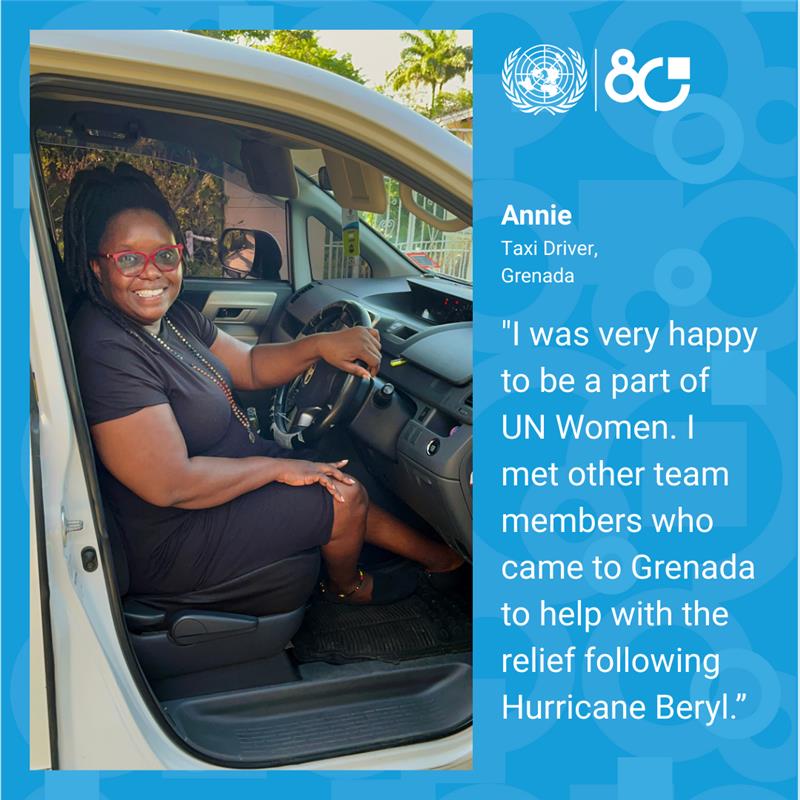
    In the wake of Hurricane Beryl’s devastating impact on Grenada in 2024, an extraordinary partnership emerged between international organizations and local citizens that transformed disaster response. Annie, a Grenadian taxi driver, became an instrumental figure in the United Nations’ recovery operations, demonstrating how grassroots collaboration can drive meaningful change.

    The UN Women Multi-Country Office for the Caribbean initiated a strategic approach that blended immediate humanitarian assistance with sustainable economic development. By engaging local entrepreneurs like Annie, the program created a dual-impact model that addressed both urgent needs and long-term community resilience. This innovative methodology ensured that recovery efforts were not merely temporary fixes but catalysts for enduring empowerment.

    Annie’s journey from transportation provider to community leader exemplifies this transformative approach. Initially unfamiliar with UN Women’s mission, she quickly became an integral part of the relief operations, working alongside international team members who arrived to assist following the catastrophic hurricane. Her story now features prominently in the ‘Shared Lives, Shared Future’ exhibition, commemorating eight decades of United Nations global impact across all 193 Member States.

    The collaboration represents a paradigm shift in disaster response, moving beyond traditional aid models to create partnerships that value local knowledge and entrepreneurship. By integrating community members into the recovery framework, UN Women Caribbean and United Nations Caribbean have established a blueprint for future disaster response that strengthens livelihoods while building robust community networks capable of withstanding future challenges.

  • Major drive to form chess clubs in schools

    Major drive to form chess clubs in schools

    In an unprecedented educational initiative, Grenada is poised to distribute more than 400 professional-grade chess sets valued at EC$30,000 to primary and secondary schools across the nation. This ambitious project marks the centerpiece of the inaugural Chess Week scheduled for March 2026, potentially establishing the first event of its kind in both the Organization of Eastern Caribbean States (OECS) and the broader Caribbean region.

    The Grenada Chess Federation (GCF), organizer of the landmark event, has confirmed that Chess Week 2026 will run from March 2-7, culminating with the Independence Chess Tournament finals. Federation members will conduct parish-by-parish visits to educational institutions, delivering the specialized tournament equipment while introducing fundamental chess principles and facilitating the establishment of school chess clubs.

    Strategic priority will be given to secondary schools during the initial phase, aligning with GCF’s objective to launch the first Inter-Secondary School Chess Tournament by late 2026. Each participating institution will receive a minimum of five chess sets and identify at least ten students to form club nuclei, with additional sets to be provided as membership expands. Critical to the program’s sustainability is the designation of at least one teacher per school to oversee club operations and subsequent online training initiatives.

    The comprehensive national rollout ensures complete geographic coverage, including the islands of Carriacou and Petite Martinique. Any schools not reached during the designated week will be visited by the end of March 2026, according to federation representatives.

    This groundbreaking educational endeavor enjoys full support from Grenada’s Ministry of Education and the National Sports Council (NSC), which plans to incorporate chess into its inaugural National Games parish competitions by 2027. The GCF leveraged its affiliations with the International Chess Federation (FIDE) and the Confederation of Chess for the Americas (CCA) to procure the professional tournament equipment necessary for the nationwide initiative.

    Research consistently demonstrates chess’s cognitive benefits, including enhanced memory capacity, prolonged attention spans, improved problem-solving capabilities, strengthened critical thinking skills, and increased disciplinary focus among young participants.

  • Grenada Building & Loan Association vacancy: Director

    Grenada Building & Loan Association vacancy: Director

    The Grenada Building & Loan Association has announced a significant opportunity for seasoned professionals to join its governing board as Director. This prestigious role calls for an individual of high principle and extensive experience to help steer the financial institution’s strategic course and ensure its continued prosperity.

    The successful applicant will be tasked with collaborating closely with both fellow directors and executive leadership to maintain the association’s commitment to its membership base while adhering to all regulatory and statutory mandates. Central to the position is the responsibility to actively participate in formulating and monitoring corporate strategy, offering expert guidance, and exercising independent judgment.

    Prospective candidates must demonstrate proven leadership capabilities at senior or board levels, preferably within the financial services sector or similarly regulated environments. Essential qualifications include comprehensive knowledge of corporate governance protocols, risk management systems, and regulatory compliance frameworks. The role demands exceptional integrity, professional independence, and sophisticated commercial insight.

    The Director will oversee critical areas including financial performance metrics, capital adequacy assessments, and compliance with International Financial Reporting Standards alongside the Society’s Ordinance. Furthermore, the position requires upholding the association’s core values and ethical standards while maintaining focus on member interests.

    Interested parties who are current members of the association must submit their curriculum vitae and a detailed cover letter demonstrating their suitability for this governance role. Applications should be directed to The Chairman at the Grenada Building & Loan Association’s Church Street headquarters in St. George’s or via email to the provided address. The application deadline is set for March 31, 2026.

  • Grenada secures major financing for battery energy storage project

    Grenada secures major financing for battery energy storage project

    The Grenadian government has obtained substantial international financing totaling $8.7 million to deploy a transformative Battery Energy Storage System (BESS), marking a significant advancement in the nation’s sustainable energy infrastructure. Through its Ministry of Finance, the Caribbean nation will receive this support comprising a $5.7 million loan alongside $3 million in grants.

    This financial package, facilitated through the Caribbean Development Bank’s Special Funds Resources, features collaborative contributions from global partners including the Government of Canada, the United Kingdom, and the European Union. These funds fall under broader regional initiatives promoting sustainable energy development across the Caribbean region.

    The pioneering BESS project represents a strategic infrastructure investment designed to revolutionize Grenada’s power grid. Implementation will enhance electrical reliability, facilitate greater integration of renewable energy sources, and substantially strengthen national resilience against climate-induced disruptions to energy supply.

    Mike Sylvester, Permanent Secretary at the Ministry of Finance, endorsed the project approval, emphasizing its alignment with governmental priorities. “This initiative constitutes a monumental investment in Grenada’s energy future,” Sylvester stated. “It will reinforce grid stability, accelerate renewable energy expansion, and propel our national commitment toward establishing a resilient, sustainable economy.”

    The Ministry of Finance is currently finalizing the requisite Loan and Grant Agreements to ensure prompt project execution. Government officials expressed gratitude to international partners for their support in modernizing climate-responsive infrastructure, advancing clean energy adoption, and fostering sustainable national development.

  • Carriacou students swap single-use plastic for sustainable water supply

    Carriacou students swap single-use plastic for sustainable water supply

    Windward Aid has launched a comprehensive initiative addressing both water scarcity and plastic pollution on the Caribbean island of Carriacou. The program represents a strategic expansion of the organization’s 2026 recovery and resilience framework across Grenada and surrounding regions.

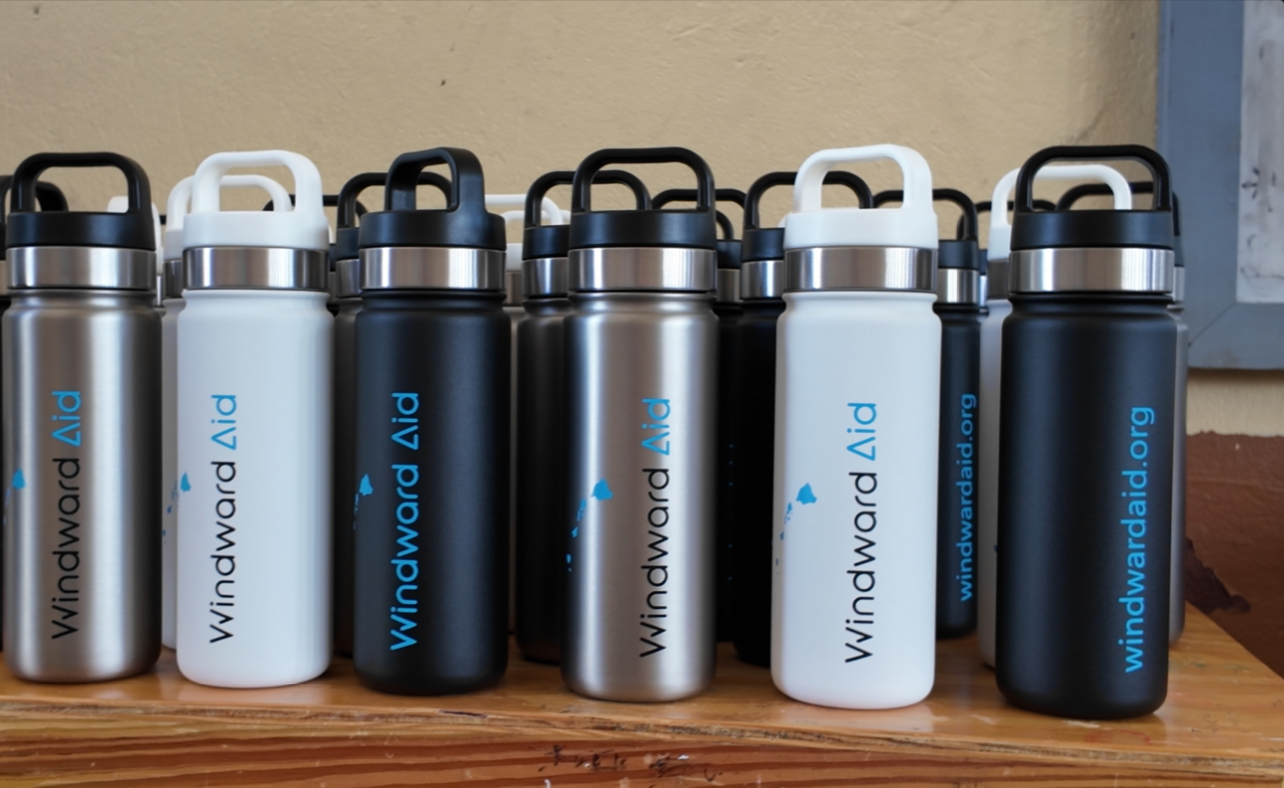
    The intervention unfolds through two parallel components: Edu Aid Phase 11 and Aqua Aid Phase 11. The educational arm has deployed reusable metal flasks and water dispensers across 18 schools and early childhood institutions, fundamentally transforming hydration practices for students. This systematic shift eliminates dependence on single-use plastic bottles while ensuring consistent access to potable water throughout the academic calendar.

    Environmental implications are particularly significant for small island developing states like Grenada, where plastic waste frequently ends up incinerated or marine-bound, threatening both ecological systems and tourism economies. The problem intensifies during dry seasons when bottled water consumption typically spikes.

    Simultaneously, the humanitarian response scales household water support from 100 to over 200 families during the current dry season. This expansion operates through community-led identification processes targeting vulnerable households.

    The timing proves critical given compounding challenges. Hurricane Beryl’s July 2024 passage damaged rainwater harvesting systems across Carriacou, with many cisterns remaining underfilled despite recent roof reconstructions. Further exacerbating shortages, the National Water and Sewerage Authority (Nawasa) has faced approximately two months of desalination production halts due to technical failures at its plant.

    Implementation relies on partnership with Boley Springs, which manages water quality assurance, sanitization protocols, and weekly distribution logistics meeting national potability standards. Weekly deliveries now transport up to 360 five-gallon bottles to educational institutions, with empties collected for professional sanitization and refilling.

    Education officials emphasize the program’s dual significance. Principal Kerwin Noel of Mt Government School noted the long-term environmental benefits, stating plastic reduction lessons ecological burdens for future generations. Carriacou District Education Officer Delon Moses characterized the intervention as ‘high priority’ amid persistent water scarcity following Hurricane Beryl.

    Windward Aid representative Alana Clement emphasized care maintenance for distributed equipment during handover ceremonies, noting the particularly harsh dry season conditions.

    Beyond immediate crisis response, the initiative models integrated resilience linking climate recovery with environmental stewardship. Each refillable bottle now symbolizes reduced landfill burden, diminished marine pollution, and classroom-based climate adaptation progress.