
Santo Domingo – In a significant move to protect consumer rights, the National Institute for the Protection of Consumer Rights (Pro Consumidor) has initiated a large-scale monitoring operation for ticket sales to Bad Bunny’s upcoming concerts. The highly anticipated events are set to take place on November 21 and 22 at the Félix Sánchez Olympic Stadium. Pro Consumidor’s initiative seeks to ensure fair practices and safeguard the economic interests of concertgoers. Executive Director Eddy Alcántara emphasized that the operation will involve teams from the Inspection, Surveillance, Advertising, and Prices departments, who will oversee the entire sales process from Friday through the concert dates. The monitoring effort aims to identify and prevent any practices that could violate consumer rights, as outlined in Law 358-05, which grants Pro Consumidor authority over national market surveillance. Alcántara revealed that the institution has already engaged with all stakeholders to preempt potential violations. Additionally, Pro Consumidor inspectors will be stationed at stadium entrances during the concerts to supervise ticket verification and ensure a smooth, transparent entry process for attendees.
标签: Dominican Republic
多米尼加共和国
-

Police and military agents are the main perpetrators of femicides in the Dominican Republic
A recent study titled ‘Femicide in the Dominican Republic during 2024: An X-ray of Femicide Violence 2016-2024’ has uncovered alarming trends in gender-based violence. The report reveals that active or inactive members of military institutions and armed forces, including the National Police and the Army of the Dominican Republic, are the primary perpetrators of femicide in the country. In 2024 alone, 73 women were violently killed by 74 men, with the majority of these crimes committed by police officers and military personnel against their partners or ex-partners. Shockingly, 67% of these cases involved the use of service firearms, and 83% of the perpetrators chose to take their own lives with the same weapon after committing the crime. The victims, predominantly aged between 25 and 31, left behind an average of one to four children, resulting in 77 children orphaned in 2024. Over the past nine years, femicides have orphaned 1,072 children, with 524 being children of female victims, 418 of perpetrators, and 130 shared by both. Tragically, 21 children were killed during violent conflicts between their parents. The study highlights the devastating physical and emotional consequences of femicide, particularly on children and adolescents, and underscores the urgent need for systemic change to address this crisis.
-

Nearly three million Dominicans live outside the Dominican Republic. Where are they?
The Dominican diaspora has grown significantly, with nearly three million Dominicans now residing outside their homeland. According to the 2024 Sociodemographic Registry Report of Dominicans Abroad, published by the Institute of Dominicans Abroad (Index), the total number of Dominicans living abroad has reached 2,874,124. This marks an increase of 27,408 individuals compared to the previous year, reflecting a growth rate of nearly 1%. The registry, updated until December 2024, spans 119 regions, including 95 sovereign states and 24 dependent territories, with new additions such as Egypt, the United Arab Emirates, and Qatar. Women constitute the majority of the diaspora, accounting for 53.5% (1,480,252), while men represent 46.5% (1,284,882). The youth demographic, aged 25 or younger, makes up 37.2% of the total, whereas those aged 55 and older account for 19.1%. Geographically, the Americas host the largest share of the diaspora, with 89.9% (2,580,924) of Dominicans residing there, followed by Europe with 10% (288,515). The United States remains the top destination, home to 2,398,009 Dominicans, followed by Spain (201,162), Italy (29,791), Chile (22,836), Canada (22,125), the Netherlands (17,979), and Venezuela (11,399). Other countries with notable Dominican populations include Mexico (10,539), Panama (8,785), France (8,699), the United Kingdom (8,149), Argentina (7,817), and Germany (6,580). Within the United States, New York has the highest concentration of Dominicans (848,560), followed by New Jersey (380,143) and Florida (312,604). In Spain, Madrid (68,448) and Barcelona (40,353) are the primary hubs for the Dominican community.
-
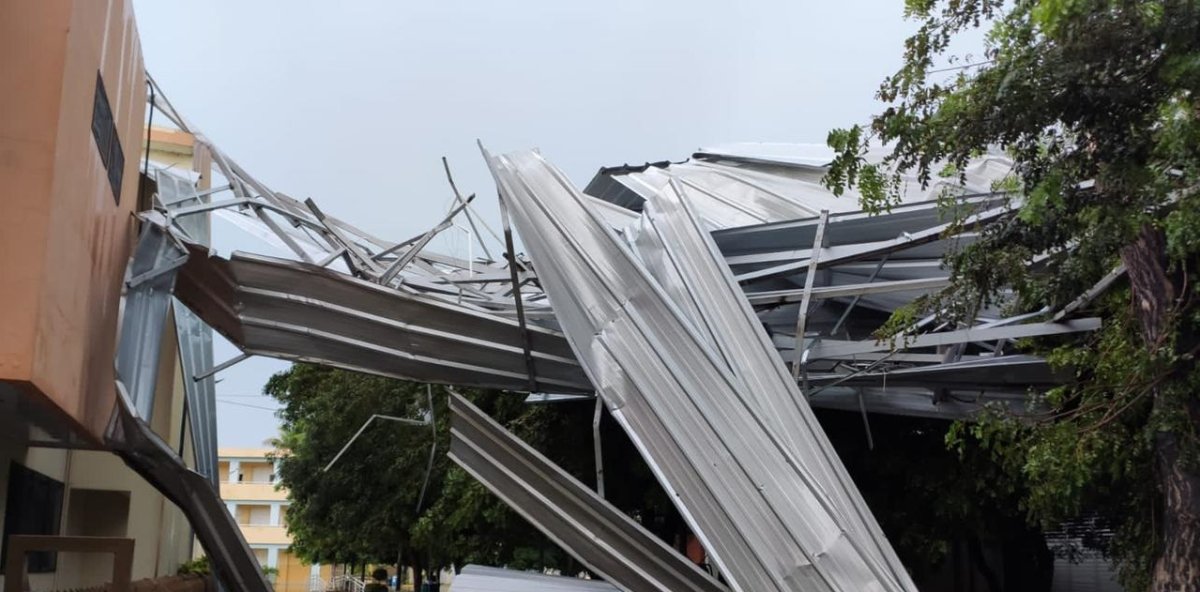
Disaster! Strong winds in Mao knock down houses and trees
On Saturday afternoon, a powerful gust of wind swept through the municipality of Mao in Valverde province, Dominican Republic, causing significant damage to homes and uprooting numerous trees. Meteorological analyst Jean Suriel attributed the phenomenon to a trough that had been affecting various regions of the country since early morning, bringing with it rain, lightning, and intense wind gusts. Suriel noted that the wind was so forceful that it tore roofs off several houses and even led to the formation of a funnel cloud, resembling a tornado, during the event. Meanwhile, the Emergency Operations Center (COE) has issued a green alert for the provinces of Samaná, Santiago, Puerto Plata, and Monseñor Nouel, warning of potential flooding in rivers, streams, and ravines, as well as flash floods. The Dominican Institute of Meteorology (Indomet) predicts a mostly sunny morning for Sunday, with scattered clouds and no significant rainfall. However, conditions are expected to worsen in the afternoon, with increased cloud cover, downpours, thunderstorms, and strong wind gusts forecasted for several provinces, including La Altagracia, El Seibo, Hato Mayor, Monte Plata, Monseñor Nouel, San José de Ocoa, Santiago, Espaillat, Santiago Rodríguez, Dajabón, San Juan, Barahona, Independencia, Elías Piña, Pedernales, San Cristóbal, and the northern part of Greater Santo Domingo. These adverse weather conditions may persist into the early evening.
-

Four provinces remain on alert The weather will take a turn this Sunday: stable morning and turbulent afternoon
Sunday’s weather forecast indicates a shift from calm morning conditions to severe afternoon storms across various regions of the country. The Dominican Institute of Meteorology (Indomet) reported a decrease in rainfall during the early morning hours, with partly cloudy skies prevailing initially. However, as the day progresses, significant changes are anticipated. By evening, cloud development is expected to bring heavy downpours, thunderstorms, and gusty winds to several areas, including La Altagracia, El Seibo, Hato Mayor, Monte Plata, Monseñor Nouel, San José de Ocoa, Santiago, Espaillat, Santiago Rodríguez, Dajabón, San Juan, Barahona, Independencia, Elías Piña, Pedernales, San Cristóbal, and the northern part of Greater Santo Domingo. These adverse weather conditions are projected to persist into the early night hours. Indomet attributes this weather pattern to the influence of a surface trough and the remnants of a frontal system lingering near the country. In response, Indomet and the Emergency Operations Center (COE) have issued a weather alert, warning of potential urban flooding in Samaná, Santiago, Puerto Plata, and Monseñor Nouel. Residents in affected areas are advised to take precautionary measures.
-
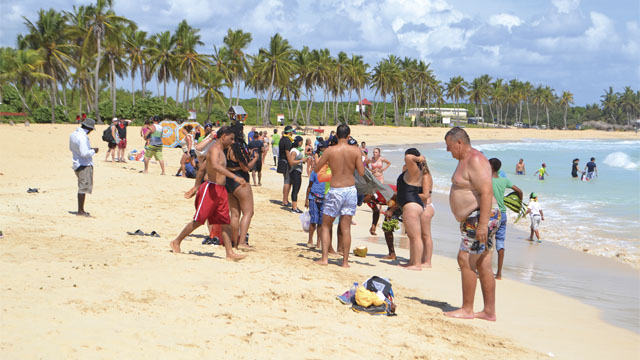
The Dominican Republic projects to close 2025 with a record 11.7 million visitors
The Dominican Republic is poised to achieve a historic milestone in tourism, with an anticipated 11.7 million visitors in 2024, marking a record high for the nation. This surge underscores the sector’s critical role as a primary driver of foreign exchange. Tourism Minister David Collado emphasized this achievement, noting its significance despite challenges such as recent storms and air travel disruptions in the United States. In 2023, the country welcomed 11,192,047 tourists, according to data from the Ministry of Tourism (Mitur). By October 2024, over nine million visitors had already arrived, including 2.1 million via cruise ships. Collado highlighted that these figures exclude tourism from Russia and Ukraine, which previously contributed approximately 500,000 annual visitors. President Luis Abinader announced plans to promote the Pedernales region at the Madrid Tourism Fair (Fitur) in January 2026, aiming to transform it into a second Punta Cana due to its stunning beaches. Additionally, Abinader addressed the issue of tourist misconduct, stating that 99.1% of visitors comply with the law. The government is intensifying efforts to prosecute the remaining 0.9% involved in harmful practices, particularly child sexual exploitation, with notable progress in areas like Sosúa.
-

Dominican Republic shatters record: attracts 9.2 million visitors through October
The Dominican Republic has achieved a remarkable milestone in tourism, welcoming 9,283,767 visitors between January and October 2025. This surge in tourism has not only generated 815,000 jobs but also contributed over $15 billion to the nation’s economy. Minister of Tourism David Collado emphasized the profound impact of this growth, stating, ‘What we are presenting is more than statistics; it’s employment and better living conditions for Dominicans.’ Collado highlighted that the tourism sector added $15.562 billion in value, $5.475 billion in net external income, and RD$19.984 billion in taxes, underscoring its significant role in the economy. The period saw 7,168,505 air travelers, marking a 34% increase from 2019 and a 3% rise from the previous year. Additionally, 2,115,262 cruise passengers arrived, a 153% jump from 2019 and a 25% increase from 2023. October alone witnessed 691,073 visitors, with the U.S., Canada, and Argentina being the top contributors. Punta Cana Airport led in arrivals, handling 60% of the traffic. This record-breaking performance underscores tourism’s vital role in the Dominican Republic’s economic and social development.
-

Three provinces account for 95% of malaria cases
The Dominican Republic is grappling with a significant public health challenge as the Ministry of Public Health (MSP) reports a sharp rise in malaria and dengue cases. As of this year, 46,218 suspected cases of malaria have been recorded, marking a 20% increase compared to the same period in 2024. Despite this alarming rise, confirmed malaria cases have decreased by over 15%, from 962 to 810, with no fatalities reported. The southwestern provinces, including Azua, San Juan, and Elías Piña, remain the primary transmission hotspots, accounting for 95% of cases. The MSP attributes this concentration to the region’s endemic corridor, exacerbated by poverty, inadequate housing, limited access to clean water, and the presence of Anopheles mosquito breeding sites. On the dengue front, health authorities have identified 1,672 suspected cases, 258 confirmed cases, and 15 severe cases, with no deaths reported. The disease predominantly affects school-age and adolescent males, particularly those aged 10 to 19, due to greater outdoor exposure and limited preventive measures. In response, the MSP has urged the public to eliminate mosquito breeding sites, enhance health education, and strengthen community surveillance. Additionally, the country has recorded 144 maternal deaths, with Santo Domingo, Santiago, and La Altagracia reporting the highest numbers. Infant and neonatal deaths have also been noted, with cumulative totals of 1,542 and 1,323, respectively.
-

Health officials report three suspected cases of cholera
The Dominican Republic remains on high alert as it reports three suspected cases of cholera in the final week of the year, according to the Ministry of Public Health (MSP). While no confirmed cases or deaths have been recorded, the country faces significant risk due to the ongoing cholera outbreak in neighboring Haiti. Health authorities emphasized that Haiti continues to report community outbreaks of cholera, with confirmed circulation of the Vibrio cholerae O1 bacterium, raising concerns about potential imported cases through land and river routes. To date, 30 suspected cases have been identified, primarily concentrated in Santo Domingo, Santiago, the National District, Barahona, and Monte Cristi. In response, the Dominican Republic has activated its National Contingency Plan to strengthen prevention and control measures. This includes active surveillance of acute diarrhea, screening at border points and binational markets, water and food sampling, and distribution of essential supplies like oral rehydration salts, chlorine, and emergency kits. Public health officials are also conducting health education campaigns on hygiene, handwashing, and safe water use. Cholera, a bacterial intestinal infection transmitted through contaminated water or food, can cause severe watery diarrhea and vomiting, leading to dehydration and, in extreme cases, death. Authorities urge individuals experiencing these symptoms to seek immediate medical attention. Preventive measures include proper handwashing, consuming safe food and water, and maintaining optimal sanitary conditions. The Dominican Republic has intensified surveillance in border provinces such as Dajabón, Elías Piña, Independencia, and Pedernales to mitigate the risk of cholera spreading from Haiti. The crisis in Haiti, exacerbated by poor sanitation and heavy rains, has resulted in 17 confirmed deaths since September, with fears of further escalation due to the country’s extreme vulnerability and internal displacement caused by armed gang violence. Despite these challenges, Dominican health authorities remain confident in their ability to prevent the spread of cholera within their borders.
-

Wrap up warm tonight! The coldest weather of the season is coming this weekend: temperatures by location
Residents of the Dominican Republic are set to experience a notable shift in weather conditions as the first polar air mass of the season sweeps across the region. Weather analyst Jean Suriel has forecasted that Saturday night and early Sunday morning will bring the most pronounced cold spell of the weekend, particularly in mountainous areas and the Cibao region. Temperatures are expected to drop significantly between 6:00 p.m. and 9:00 a.m. over the coming days, offering a welcome respite from the usual heat. This cooling effect is attributed to the arrival of polar air from the north, which has already caused sub-zero temperatures in parts of the United States. The Dominican Republic will feel the full impact of this phenomenon tonight, with temperatures plummeting to unusually low levels. Additionally, a stationary cold front in the northern Caribbean and an advancing frontal system are further intensifying the chill. Suriel provided detailed minimum temperature forecasts for various locations, including Pico Duarte at -1 °C, Valle Nuevo at 2 °C, and Santo Domingo at 20 °C. This weather event is linked to two cold fronts that have recently affected the United States, with the polar air now extending its reach into the Caribbean. The Dominican Republic is expected to experience the strongest effects of this cold spell tonight, marking a significant departure from its typical tropical climate.