标签: Dominican Republic

多米尼加共和国

  • Cap Cana expands sports tourism with international events

    Cap Cana expands sports tourism with international events

    The Caribbean tourism landscape is seeing a major player solidify its standing as a go-to destination for sports-focused travel, as Cap Cana advances a targeted strategy centered on hosting elite international athletic competitions. This initiative not only draws globetrotting visitors to the Dominican Republic but also adds critical diversity to the country’s core tourism sector.

    Over the past 24 years, Cap Cana has poured more than $4.7 billion into developing its infrastructure and event capabilities, according to Chief Executive Officer Jorge Subero Medina. Today, the destination plays host to a roster of globally renowned competitions spanning multiple sports disciplines. These include the ATP Challenger 175 tennis tour, Ironman 70.3 triathlon, MICFootball youth soccer tournament, international deep-sea fishing championships, and a series of prestigious professional golf events.

    Medina emphasized that these high-profile competitions bring in thousands of elite athletes and traveling spectators from dozens of countries around the world. Unlike many casual tourist getaways, sports-focused visitors tend to extend their trips to accommodate event schedules, leading to longer average stays, increased per-capita spending at local businesses, and a measurable boost to overall regional economic activity.

    Moving forward, Cap Cana has laid out clear plans to grow its existing lineup of international sporting events, while leaning into its already world-class facilities purpose-built for golf, tennis, soccer, equestrian sports, padel tennis, and competitive sport fishing. Medina explained that the overarching goal is to cement Cap Cana’s status as the Caribbean’s unrivaled premier sports tourism hub. This ambition aligns with broader national efforts to boost the Dominican Republic’s global competitiveness as a top-tier travel destination, while simultaneously creating new local job opportunities and growing overall tourism revenue for the country.

  • Dominican Republic strengthens climate goals with NDC 3.0

    Dominican Republic strengthens climate goals with NDC 3.0

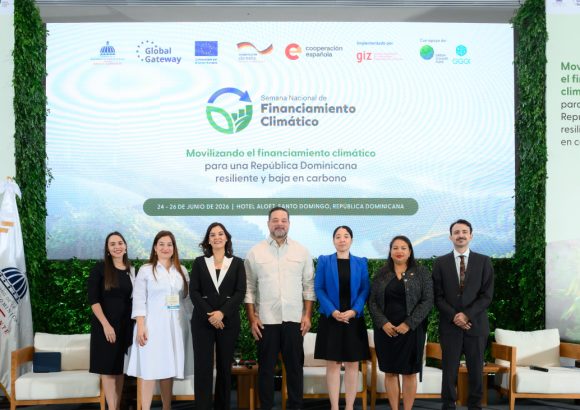
    In an important step forward for global climate action, the Dominican Republic has launched its updated Nationally Determined Contribution, dubbed NDC 3.0 RD-2025, boosting the country’s climate ambition while centering adaptation to counter its high vulnerability to climate shifts.

    The new climate strategy was formally presented during the nation’s First Climate Finance Week, an event designed to catalyze support for climate investment and action across the country. Compared to the business-as-usual emissions trajectory that would occur without targeted intervention, the updated plan sets far more ambitious reduction targets: a 27% cut to greenhouse gas output by 2030, followed by a 32% reduction by 2035.

    Beyond emissions cuts, the framework prioritizes building resilience across seven high-priority sectors that are critical to the Dominican Republic’s population and economy. In total, it outlines 41 distinct adaptation measures tied to 155 measurable targets, covering water resource management, agricultural production, public health, the nation’s core tourism industry, coastal and marine ecosystem protection, biodiversity conservation, and forest management.

    Government officials estimate that full implementation of this comprehensive strategy will require more than $23.7 billion in total investment. To meet this funding need, the nation is pursuing a multi-source financing model that draws on domestic public resources, international climate cooperation, private sector investment, and global climate finance mechanisms.

    Dominican authorities emphasized that the revised plan reaffirms the country’s unwavering commitment to the goals of the Paris Climate Agreement. Crucially, it also integrates climate action into the nation’s core national development strategy, public investment planning, and long-term efforts to boost economic competitiveness, aligning sustainability and growth goals for the coming decades.

  • Government seeks sustainable funding for national HIV response

    Government seeks sustainable funding for national HIV response

    In Santo Domingo, two leading Dominican public health bodies—the Ministry of Health and the National Council for HIV and AIDS (Conavihsida)—have kicked off a nationwide collaborative dialogue focused on crafting the country’s groundbreaking Transition and Sustainability Plan for the National HIV Response, covering the 2026 to 2030 period. The initiative’s core mission is to secure consistent, long-term delivery of critical HIV-related services across prevention, clinical treatment, and ongoing patient care for communities across the Dominican Republic.

    Speaking at the launch, Health Minister Víctor Atallah outlined the Dominican government’s formal commitment to embedding long-term financial stability into national HIV programming. A central plank of the upcoming plan is a managed gradual transition: moving away from heavy reliance on international donor funding toward growing domestic investment and national self-sufficiency. Atallah emphasized that the transition will not disrupt patient access to essential resources, underscoring the government’s pledge to keep lifesaving medications, cutting-edge modern treatments, and pre-exposure prophylaxis (PrEP) widely available, while also scaling up nationwide diagnostic testing efforts.

    Addressing a common point of public concern, Atallah clarified that the recent uptick in officially reported HIV cases across the country is not evidence of growing transmission rates. Instead, he explained, the increase is a direct outcome of expanded testing reach, which allows public health authorities to identify more existing undiagnosed cases and connect those individuals to care faster.

    In a key milestone update, officials confirmed that the Dominican Republic has already exceeded the ambitious 95% treatment coverage target set by UNAIDS, the United Nations program for HIV/AIDS response. Currently, more than 57,700 people living with HIV in the country are receiving life-extending antiretroviral therapy, and more than 51,000 of those patients have achieved durable viral suppression—an achievement that improves individual health outcomes and reduces community transmission risk.

    The national dialogue brings together a diverse cross-section of stakeholders, including senior government representatives, civil society organizations focused on HIV advocacy and care, academic public health researchers, and leading international health partners. Over the course of the forum, participants will collaborate to define clear strategic priorities and design robust financing mechanisms that will guide the Dominican Republic’s national HIV strategy through the end of the decade.

  • Marileidy Paulino wins Paris Diamond League with season’s best time

    Marileidy Paulino wins Paris Diamond League with season’s best time

    On Sunday at the Paris Diamond League, Dominican Republic Olympic gold medalist Marileidy Paulino delivered yet another masterclass in the women’s 400-meter event, clocking a staggering world-leading time of 48.48 seconds to extend her undefeated streak at the start of the 2026 athletics season.

    Competing in front of a packed crowd of nearly 20,000 spectators at Paris’ iconic Charléty Stadium, Paulino seized control of the race from the very first step. She maintained a blistering, steady pace throughout all four laps of the track, and crossed the finish line with clear room to spare ahead of her closest competitors. Czech rising star Lurdes Gloria Manuel claimed second place, crossing the line in 49.37 seconds – a new personal best that marked a career breakthrough for the young runner. Jamaica’s Stacey Ann Williams rounded out the top three, finishing just behind Manuel with a time of 49.51 seconds.

    This latest victory marks Paulino’s 23rd career win on the Diamond League circuit, and her second triumph of the 2026 season. She kicked off her 2026 campaign with a win at the Doha Diamond League stop on June 19, and has not dropped a race since. In addition to extending her winning streak, Paulino’s Sunday run broke three significant records: it set a new meet record for the Paris Diamond League, a new all-time circuit record for the entire Diamond League series, and stands as the fastest women’s 400-meter time recorded globally in 2026 so far.

    The dominant win has widened Paulino’s already substantial lead in the 2026 Diamond League overall standings, and cemented her position as the overwhelming favorite to claim another overall series title this year. A native of Nizao, Dominican Republic, Paulino also shaved nearly half a second off her own previous 2026 season-best time of 48.91 seconds. As she continues to build competitive momentum ahead of this year’s major global athletics championships, her unbroken run of consecutive victories remains one of the most remarkable stories in elite track and field this season.

  • Dominican Republic to join Beata Submarine Ridge expedition

    Dominican Republic to join Beata Submarine Ridge expedition

    In a major step forward for Caribbean marine conservation, the Dominican Republic’s Ministry of Environment and Natural Resources has announced it will participate in a groundbreaking international scientific expedition set for 2028. The mission will focus on the Beata Submarine Ridge, a unique deep-sea geological formation and ecosystem that lies in shared territorial waters between the Dominican Republic and neighboring Colombia.

    The entire expedition will be hosted aboard REV Ocean, the world’s largest purpose-built ocean research vessel, which is equipped with cutting-edge instrumentation for deep-ocean exploration that far outpaces many standard research vessels. Collaborating teams of scientists from both the Dominican Republic and Colombia will lead on-site investigations into three core areas: deep-sea biodiversity, dynamic oceanographic processes, and the structure of fragile underwater habitats across the ridge.

    To build a holistic understanding of this understudied ecosystem, the research team will deploy advanced sampling techniques to collect a wide range of critical data. This includes sequencing environmental DNA to map hidden species populations, measuring the prevalence of microplastic pollution in a remote deep-sea environment, and analyzing ecological connectivity between the ridge and surrounding shallow marine habitats.

    Per the Dominican Ministry of Environment, the data and insights generated by this expedition will directly inform evidence-based conservation planning for the Orlando Jorge Mera Marine Sanctuary and other established protected marine areas across the country’s Caribbean coast. This work also aligns with the global 30×30 conservation initiative, a widely adopted international target that aims to place at least 30% of the world’s oceans under effective protection by 2030.

    Dominican government officials emphasized that the participation in this cross-border scientific mission highlights the nation’s ongoing commitment to advancing marine biodiversity research and advancing sustainable, collaborative ocean management across the Caribbean region.

  • Somos Pueblo files constitutional challenge against new Penal Code

    Somos Pueblo files constitutional challenge against new Penal Code

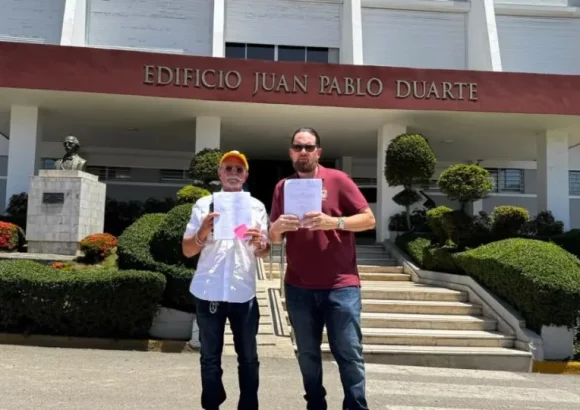
    In Santo Domingo, a prominent Dominican digital media platform, Somos Pueblo Media, has launched a formal legal challenge against key provisions of the nation’s newly enacted Penal Code. The outlet, which is led by founders Ricardo Augusto Ripoll García and Eduardo Daniel Sánchez Tolentino, has filed a direct unconstitutionality action with the country’s Constitutional Court targeting Organic Law No. 74-25.

    The core of the legal appeal centers on six specific articles of the new penal legislation: Articles 192, 208, 209, 210, 210 and 310. Legal representatives for the outlet argue that these sections run counter to foundational constitutional principles enshrined in the country’s governing charter, and that they unlawfully restrict core civil liberties. The most significant concerns raised center on two critical rights for independent media: the constitutional guarantee of freedom of expression, and the public’s right to access government-held information.

    The challenge has been brought before the high court with the backing of experienced legal counsel, attorneys Pedro Virginio Balbuena and Francisco Alejandro Aristy. The pair are formally representing Somos Pueblo Media and its leadership throughout the constitutional review process, as the outlet pushes for the contested provisions to be struck from the new penal code. The outcome of this case is widely expected to set a key precedent for press freedom and civil liberties in the Dominican Republic moving forward.

  • Dominican Republic joins CABEI’s Series A shareholders, expanding investment opportunities

    Dominican Republic joins CABEI’s Series A shareholders, expanding investment opportunities

    The Central American Bank for Economic Integration (CABEI) has formally approved the Dominican Republic’s entry as a Series A shareholder, marking a landmark shift in the institution’s ownership structure that places the Caribbean nation alongside the bank’s founding members as part of its majority ownership bloc. The historic decision was reached during the 66th Ordinary Meeting of CABEI’s Assembly of Governors, held this year in Oviedo, Spain, where Dominican Finance and Economy Minister Magín Díaz led the country’s delegation to the gathering.

    Alongside approving the Dominican Republic’s shareholder membership, CABEI’s governing body passed a second key resolution to expand the bank’s total authorized capital from its previous level of US$7 billion to a new total of US$10 billion. This capital injection is designed to substantially boost CABEI’s lending capacity, enabling the institution to fund a broader pipeline of high-priority public investment and large-scale infrastructure projects across all its member nations.

    Dominican government officials have emphasized that the country’s new Series A shareholder status will unlock expanded access to flexible financing for development-focused projects that drive inclusive economic growth and address pressing social needs across the Dominican Republic. On the sidelines of the Oviedo meeting, Minister Díaz also held a series of one-on-one bilateral discussions with CABEI’s senior leadership and delegation heads from other member countries. These talks focused on deepening cross-border financial cooperation and laying the groundwork for new strategic investment initiatives in the coming years.

  • Dominican immigration inspector arrested in alleged bribery scheme at Punta Cana Airport

    Dominican immigration inspector arrested in alleged bribery scheme at Punta Cana Airport

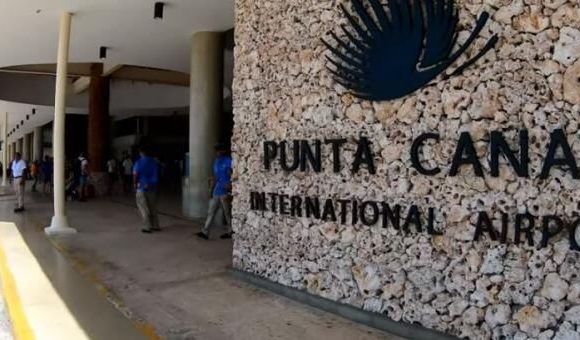
    In a coordinated anti-corruption operation in the Dominican Republic’s top tourist hub of Punta Cana, law enforcement agencies have taken into custody an immigration control inspector caught in the act of soliciting a large bribe from a traveler seeking to depart for Spain. The accused, named Carlos Javier Sánchez, was arrested during a court-sanctioned controlled delivery sting, which was staged when he arrived to collect the demanded 100,000 Dominican pesos payoff from the female traveler. The investigation is a joint effort led by four key Dominican law enforcement bodies: the national Public Prosecutor’s Office, the Specialized Prosecutor’s Office for the Prosecution of Administrative Corruption (known locally by its acronym Pepca), the regional La Altagracia Prosecutor’s Office, and the country’s General Directorate of Migration. Prosecutors have emphasized that the arrest, which was carried out under a formal judicial warrant, is part of a sustained, systemic push by Dominican authorities to root out public sector corruption and crack down on transnational organized crime that operates through the country’s major border and airport entry points. Over the coming hours, officials will bring Sánchez before a local court to formally file a request for pretrial detention measures, which will remain in place while investigators continue to build their case and explore potential connections to other corrupt activities tied to the accused inspector.

  • Milan welcomes hundreds for Dominican Parade 2026 celebration

    Milan welcomes hundreds for Dominican Parade 2026 celebration

    MILAN, Italy — Hundreds of members of Italy’s Dominican diaspora filled the city’s central thoroughfares on Sunday for the 2026 edition of the annual Dominican Parade, turning a routine weekend into a vibrant showcase of Caribbean heritage and community solidarity.

    Now in its fifth year, the procession is far more than a public celebration: it has grown into a cornerstone cultural event that binds together the Dominican community spread across Italy and wider Europe. This year’s gathering was collectively organized by three leading institutions: the Dominican Cultural House, the Dominican Republic Chamber of Commerce in Italy, and the Association of Dominican Professionals in Europe. The event drew a diverse cross-section of participants, including sitting Dominican legislators, long-serving community leaders, and a range of local and international Dominican cultural collectives, all marching together under a shared celebration of national identity.

    The colorful procession set off from the bustling Piazza San Babila in Milan’s city center, winding through popular downtown streets before concluding at the city’s world-famous Duomo di Milano, one of Italy’s most recognizable architectural landmarks. After the march ended, attendees and onlookers alike gathered to enjoy immersive displays of Dominican cultural expression, including live sets of the island’s iconic merengue and bachata music, alongside a lineup of traditional folk performances that brought the historical roots of Dominican culture to life for attendees from all backgrounds.

    The day’s festivities wrapped up with a full concluding cultural showcase staged at Chiesa Rossa Square, featuring cross-cultural performances from two notable artists: award-winning Italian singer Annalisa Minetti and prominent Dominican urban creative Lomiiel. In post-event comments, organizing representatives emphasized that the annual parade serves a dual purpose: it fosters closer connection and mutual support among the tens of thousands of Dominican people living across the European diaspora, while also building greater international awareness and appreciation for the rich cultural heritage of the Dominican Republic beyond the country’s borders.

  • Nayib Bukele files to seek a third consecutive presidential term

    Nayib Bukele files to seek a third consecutive presidential term

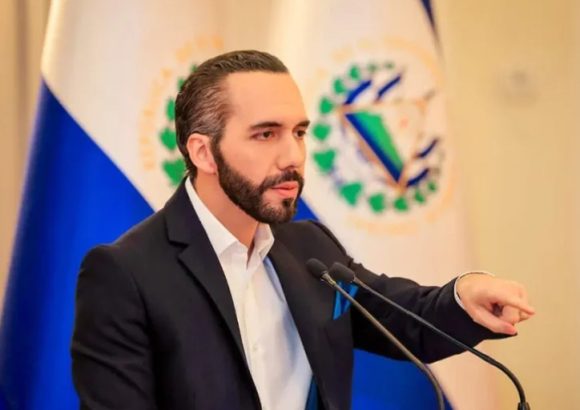
    In a historic development for El Salvador’s political landscape, President Nayib Bukele has formally submitted his pre-candidacy to run for a third consecutive presidential term in the 2027 general election. This step comes just months after a controversial constitutional revision cleared the way for unlimited presidential re-election, rewriting the rules of the country’s democratic process.

    The ruling Nuevas Ideas party made the official announcement of the candidacy filing on Sunday, confirming that incumbent Vice President Félix Ulloa has also put forward his name to seek another term in office. Xavi Bukele, head of the Nuevas Ideas party, posted images of the completed registration documents across multiple social media platforms, making the news public for supporters and observers alike. Following the registration, Ulloa released a statement expressing gratitude to the party for the chance to continue advancing their shared political agenda. For his part, Bukele has yet to make any public statement addressing his pre-candidacy, and political analysts widely agree he will not face any serious challengers during the party’s upcoming primary selection process.

    The constitutional changes that made Bukele’s third-term run possible were approved by the country’s Legislative Assembly back in July 2025. In addition to eliminating term limits for the presidency, the reform package also pushed the date of the next presidential election forward to 2027, and extended all future presidential terms from five years to six. The reform has drawn sharp criticism from domestic opposition groups and international democracy watchdogs, who argue that removing term limits undermines the checks and balances core to democratic governance. Despite this backlash, Bukele maintains sky-high approval ratings among the Salvadoran public, a popularity built largely on his aggressive, widely supported crackdown on violent gang activity that once terrorized communities across the country. Even so, growing economic uncertainty and rising cost-of-living concerns have become increasingly top-of-mind for Salvadoran voters in recent months, creating an undercurrent of unease heading into the 2027 campaign cycle.