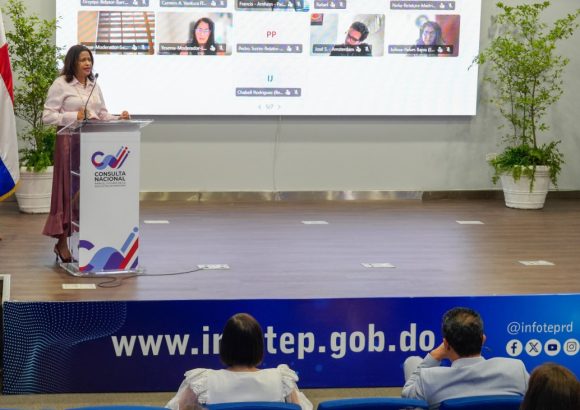
In a groundbreaking move to build a inclusive, forward-looking national education framework, the government of the Dominican Republic has opened its landmark Great National Consultation for the Future of Education to Dominicans living around the world. The first global virtual gathering drew hundreds of participants from seven European nations—Spain, Germany, France, the Netherlands, Italy, the United Kingdom, and Switzerland—all eager to share their perspectives and actionable ideas for overhauling the country’s education system.
标签: Dominican Republic
多米尼加共和国
-
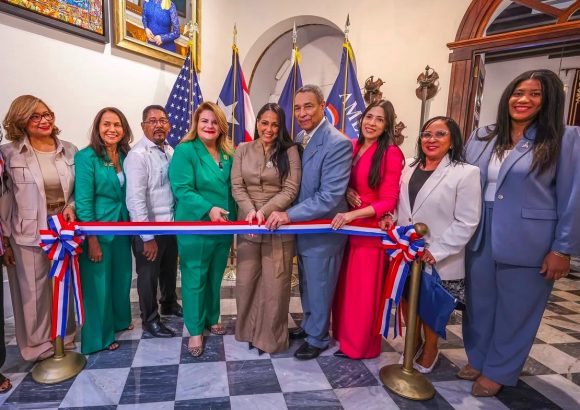
INDEX celebrates Dominican Heritage Week in Puerto Rico
After a week filled with cross-community celebration and collaborative exchange, the Institute of Dominicans Abroad (INDEX) has wrapped up the second iteration of Dominican Heritage Week in San Juan, Puerto Rico. This annual initiative was crafted to celebrate Dominican cultural heritage, nurture collective identity, foster diaspora integration, and honor the profound social and cultural contributions that the Dominican community has made across Puerto Rico.
Organized under the leadership of Celinés Toribio, who holds dual roles as Vice Minister of Foreign Affairs for Dominican Communities Abroad and INDEX Executive Director, the 2024 event brought together a diverse cross-section of stakeholders: senior government officials from both jurisdictions, prominent cultural leaders, academic researchers, and hundreds of members of the Dominican diaspora based on the island. The opening ceremony, hosted at the historic La Fortaleza, welcomed Puerto Rico Governor Jenniffer González Colón, who used her remarks to publicly reaffirm the Puerto Rican government’s steadfast backing for cultural and community programs that deepen the long-standing connection between Puerto Rico and the neighboring Dominican Republic.
Unlike the inaugural edition, this year’s Heritage Week expanded its programming to cover a broad spectrum of activities spanning cultural, educational, community-focused, and sporting categories. Highlights of the schedule included a formal awards ceremony to recognize 12 Dominicans who have made exceptional contributions to Puerto Rican society, targeted outreach programs hosted at leading Puerto Rican universities to connect with Dominican student communities, hands-on cultural workshops for local children, panel discussions exploring the history of Dominican migration to Puerto Rico and shared Caribbean identity, and the signing of a new strategic cooperation agreement between INDEX and regional entertainment chain Caribbean Cinemas. The event also featured a special exclusive screening of *Teacher Mechy*, a critically acclaimed Dominican feature film that explores the life of a beloved rural educator.
The week-long celebration came to a close at the iconic La Placita de Santurce in San Juan, where hundreds of attendees — both Dominican diaspora members and local Puerto Ricans — gathered to share in a closing cultural festival. Attendees enjoyed traditional Dominican and Puerto Rican folk music, viewed displays of handcrafted traditional costumes, and watched live performances of folkloric dance that highlighted the shared and distinct cultural traditions of both nations. Organizers noted that the event successfully reinforced the deep, centuries-old bond of friendship between the two Caribbean nations, creating new opportunities for ongoing cross-cultural exchange and collaboration in the years ahead.
-
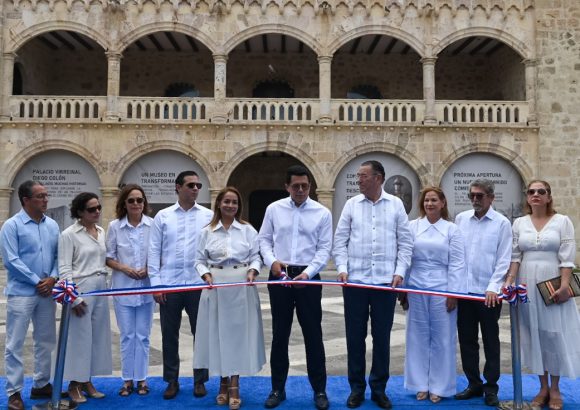
David Collado inaugurates restored Alcázar de Colón Museum in Santo Domingo
SANTO DOMINGO — A major milestone in the Dominican Republic’s multi-year effort to revitalize its most iconic historic district has been reached, with tourism officials formally opening the fully restored Alcázar de Colón Museum and breaking ground on a sweeping public lighting modernization project for Santo Domingo’s Colonial City.
Led by the country’s Ministry of Tourism, the museum restoration project carried a total investment of more than 100 million Dominican pesos, with upgrades spanning nearly every aspect of the landmark site. Work included critical structural conservation to shore up the aging building, full interior and exterior cosmetic renovations, expanded accessibility features for visitors with disabilities, and full overhauls of the museum’s outdated electrical and climate-control systems. Additional upgrades integrated new fire protection infrastructure, a 21st-century network of security cameras, refreshed surrounding landscaping, and pre-installation work to support a upcoming interactive digital exhibition that will bring the site’s history to life for modern guests.
In remarks at the inauguration ceremony, Tourism Minister David Collado emphasized that the museum’s restoration is just one component of a far larger preservation partnership between the Dominican Ministry of Tourism and the Inter-American Development Bank (IDB), focused on protecting the Cultural City’s unique heritage for future generations. Collado noted that the historic district draws roughly 10 percent of all international tourists visiting the Dominican Republic, making preservation investments far more than cultural work: they are core drivers of national economic activity that support local jobs, small businesses, and long-term tourism growth.
Alongside opening the restored museum, Collado officially launched an 86 million Dominican peso public lighting initiative that will modernize and expand illumination across the entire Colonial City, covering public streets, green parks, historic plazas, and all shared public spaces in the district. The project will see the installation and refurbishment of more than 2,000 colonial-style LED light fixtures, designed to match the area’s historic architectural aesthetic while delivering modern benefits. Upgraded lighting is expected to boost public safety for both residents and visitors, cut energy consumption and utility costs through efficient LED technology, and enhance the overall visitor experience after dark, all without compromising the district’s centuries-old historic character.
-
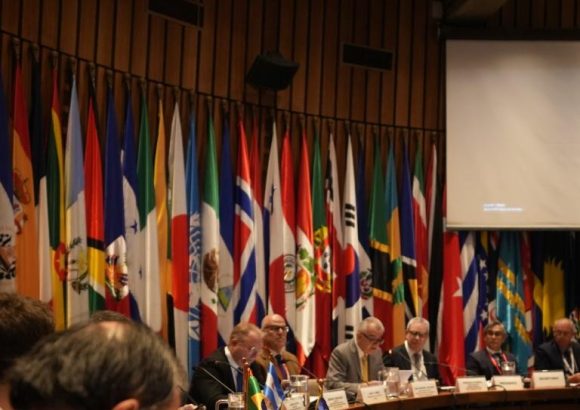
ECLAC: Rising oil prices threaten economies in Central America and the Dominican Republic
The ongoing military conflict in the Middle East has triggered a fresh wave of global energy market volatility, and the United Nations’ Economic Commission for Latin America and the Caribbean (ECLAC) has issued a new warning about the spillover risks that threaten regional economic stability. While the bloc notes that Latin America and the Caribbean (LAC) enters this period of uncertainty with a more resilient macroeconomic footing than most other global regions, the ripple effects of elevated fuel costs still pose significant downside risks for inflation, fiscal health, and trade balances across the bloc.
At the core of ECLAC’s assessment is the uneven impact of soaring oil and fertilizer prices, which have been pushed upward by the Middle East conflict. As energy costs rise, transportation and logistics expenses across regional supply chains increase, passing higher costs to consumers and eroding household purchasing power across the board. But the economic fallout is not shared equally: net hydrocarbon-exporting nations stand to gain from inflated export revenues, while energy-importing countries face deepening economic pressures.
Among the most vulnerable economies are those in Central America, plus Haiti and the Dominican Republic. ECLAC projects that if crude oil prices hold at 25% above 2025 levels through 2026, the combined trade balance for these three groups of economies could deteriorate by an amount equal to 0.9% of total gross domestic product. For governments that already maintain broad consumer fuel subsidies to soften price shocks, the sustained higher energy prices will add new, unsustainable pressure to national budgets, further straining fiscal positions already weakened by years of post-pandemic recovery efforts.
Even amid these risks, ECLAC has stood by its baseline regional economic projections for 2026. The organization forecasts that average regional GDP will grow by 2.2% next year, with annual inflation settling at around 3%. Critically, the commission also noted that current projections assume average energy prices will remain at least 25% higher than 2025 levels through 2026, no matter what progress is made in Middle East peace negotiations. This expectation of persistent energy price elevation underscores the long-term uncertainty that regional economies must prepare for in the coming months.
-

Dominican Republic recognized with WSIS Prize 2026 for regional digital transformation
At the 2026 World Summit on the Information Society (WSIS) Forum held in Geneva, a landmark recognition was awarded to cross-regional digital governance efforts that are reshaping public sector innovation across the Americas. The Inter-American Digital Government Network (GEALC), currently chaired by the Dominican Republic via the nation’s Government Office of Information and Communication Technologies (OGTIC), has been named the 2026 WSIS Prize winner in the International and Regional Cooperation category.
The honor, conferred by WSIS forum organizers, celebrates GEALC’s years of consistent work to deepen collaborative ties across member states, expand accessible knowledge sharing between public sector digital leaders, and accelerate inclusive digital transformation initiatives across Latin America and the Caribbean. Accepting the award on behalf of the entire GEALC network was Iván Ogando, the Dominican Republic’s ambassador to the International Telecommunication Union (ITU), the United Nations agency that co-organizes the annual WSIS Forum.
Under the current leadership of OGTIC Director Edgar Batista, who leads GEALC alongside the Dominican Republic’s administration, the network has prioritized targeted initiatives to advance digital government infrastructure, cross-system interoperability, people-centered public innovation, and peer-to-peer collaboration between national governments. Batista emphasized that the international award serves as a powerful reaffirmation of the Dominican Republic’s longstanding commitment to fostering multilateral cooperation and advancing digital transformation that prioritizes the needs of ordinary citizens.
Per an official statement from OGTIC, the recognition also brings global attention to the Dominican Republic’s own domestic work to modernize public administration and upgrade core government services through strategic digital innovation. A core function of GEALC is to create structured spaces for member states to exchange tested best practices across a range of high-priority digital governance areas. These include cybersecurity frameworks, trusted digital identity systems, comprehensive data protection regulation, secure electronic signature infrastructure, cross-agency interoperability standards, and guidelines for the ethical and responsible deployment of emerging technologies across the public sector.
The WSIS Prizes, established to highlight outstanding projects and initiatives that advance inclusive information and communication technology (ICT) development around the world, have become a leading global benchmark for impactful digital cooperation. GEALC’s win underscores the growing importance of regional collaboration in addressing shared digital governance challenges and ensuring that digital transformation delivers broad public benefits across the Latin American and Caribbean region.
-

Marileidy Paulino breaks Monaco Diamond League record in 400 meters
On a crisp Friday evening at Monaco’s iconic Stade Louis II, Dominican Olympic champion Marileidy Paulino delivered another masterclass in sprinting to extend her unbeaten 2026 season, clinching gold in the women’s 400-meter event and shattering the venue’s long-standing meeting record.
Paulino crossed the finish line in a blistering 48.67 seconds, knocking 0.30 seconds off the previous meeting mark of 48.97 seconds set by Bahamian Olympic champion Shaunae Miller-Uibo. The win marks Paulino’s second consecutive 400m title at the Monaco Diamond League, solidifying her dominance at one of track and field’s most prestigious annual stops.
American sprinter Aaliyah Butler put up a fierce fight, finishing just 0.17 seconds behind Paulino to take silver with a time of 48.84 seconds. Czech rising star Lurdes Gloria Manuel rounded out the top three, clocking 49.44 seconds to claim bronze.
This latest victory is just one in a string of record-breaking performances for the Nizao-born runner this season, further building on an already stellar campaign. Just weeks before her Monaco win, Paulino set another meeting record at the Paris Diamond League, clocking a personal season-best time of 48.48 seconds that signaled her outstanding form ahead of upcoming major championships.
Widely ranked as the top 400-meter sprinter in the world today, Paulino continues to cement her status as a modern legend of the event with every race on the international circuit. Her consistent record-breaking results this season have sent a clear warning to competitors, establishing her as the undeniable favorite heading into the year’s biggest global track and field competitions.
-
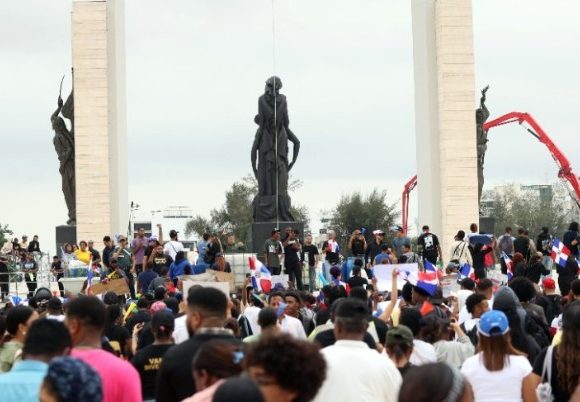
Protesters rally at Plaza de la Bandera, denounce high living costs and defend free speech
On a Thursday in Santo Domingo, more than 30 demonstrators assembled at the iconic Plaza de la Bandera to voice collective opposition to the policy agenda of the country’s governing Modern Revolutionary Party (PRM). The demonstration centered on two core grievances: the sharp upward trajectory of the cost of living that has strained household budgets across the nation, and the urgent need for stronger legal safeguards to protect freedom of expression.
Protesters marched through the public space holding aloft Dominican national flags and hand-painted banners, interspersing passionate speeches calling out government actions with collective chants that reaffirmed their commitment to peaceful dissent. Event organizers framed the plaza as a historically significant, symbolic venue for civic action, emphasizing that the gathering was intended to push for sweeping reforms across the country’s economic, social, and governing institutions.
A core rallying point for attendees was opposition to what they see as restrictive speech legislation. Many carried handwritten signs carrying clear, uncompromising messages: “No to the Gag Law,” “Freedom of expression is not negotiable,” and “Do not criminalize opinion.” The group called directly on the Dominican National Congress to amend existing legislative measures that protesters argue pose a growing threat to both independent press freedom and the fundamental right of ordinary citizens to share their perspectives without legal repercussions.
In preparation for the demonstration, local law enforcement deployed a substantial security contingent across the area. Officers from the Dominican National Police were tasked with maintaining public order, while personnel from the General Directorate of Traffic and Land Transport Safety (Digesett) worked to manage vehicle flow around the protest site. While no clashes, property damage, or violent incidents were documented throughout the event, the large gathering created major traffic gridlock along Luperón Avenue and all adjacent intersections. In response, local transportation authorities quickly implemented a series of temporary traffic detours to ease congestion and redirect vehicles away from the affected area.
-

Remittances to Dominican Republic top US$6.2 billion through June
Santo Domingo – The Dominican Republic has recorded solid growth in cross-border remittance inflows for the opening half of 2026, defying widespread global economic uncertainty to hit a new half-year milestone, new data from the Central Bank of the Dominican Republic (BCRD) confirms.
According to the BCRD’s latest balance of payments report, total remittances received between January and June 2026 reached more than $6.219 billion, representing a 6.7% year-over-year increase compared to the same six-month period in 2025. Growth accelerated notably through the second quarter, with June alone seeing inflows hit $1.049 billion – a 13.6% annual jump that outpaced the 10.6% growth recorded in May.
The central bank highlighted that this resilient growth is particularly notable against a backdrop of persistent global economic challenges. Geopolitical tensions across the Middle East have driven up global crude oil prices, kept broad inflationary pressures elevated in most major economies, and eroded household disposable purchasing power for Dominican expatriates across the globe. Even with these headwinds, remittance flows – a core pillar of the Dominican Republic’s external economy – have continued to expand at a steady pace.
Geographically, the United States remains the dominant source of formal remittance flows to the country. In June, 81.4% of all formal transfers originated from the U.S., totaling $780.7 million. Spain took second place, contributing $61.8 million, equal to 6.4% of June’s total remittances. Italy followed with 1.3% of total inflows, while Haiti and Switzerland each accounted for 1.2% respectively. Smaller but consistent remittance flows also arrived from other European and North American economies including France, Canada, and Germany.
-
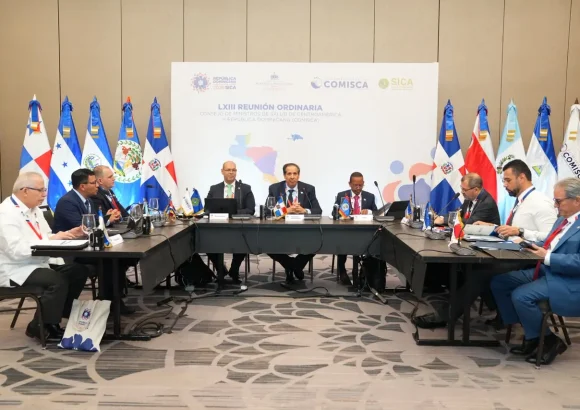
Dominican Republic highlights achievements of its Pro Tempore Presidency of COMISCA
After six months at the helm of one of Central America and the Caribbean’s most critical regional health bodies, the Dominican Republic has officially concluded its tenure as Pro Tempore President of the Council of Ministers of Health of Central America and the Dominican Republic (COMISCA), capping a term marked by substantial advances in cross-border public health cooperation and institutional governance.
The handover milestone was marked by Dominican Republic Health Minister Dr. Víctor Atallah, who launched the 63rd Ordinary Meeting of COMISCA as his final official act in the leadership role. The gathering brought together sitting health ministers and top-ranking public health officials from all member states of the Central American Integration System (SICA), providing a collaborative platform to reflect on the tangible achievements delivered over the past six months and map out forward-looking strategies to deepen regional coordination on shared health challenges.
Over the course of its presidency, the Dominican Republic prioritized and advanced a targeted portfolio of initiatives spanning key priority areas. These included strengthening regional health governance frameworks, expanding cross-border technical assistance partnerships, accelerating digital transformation across national health systems, boosting collaborative scientific research efforts, investing in professional development for the regional health workforce, and upgrading collective preparedness to respond to fast-moving public health emergencies.
Addressing delegates at the opening of the 63rd Ordinary Meeting, Dr. Atallah underscored that the interconnected health challenges facing the region cannot be addressed through isolated national action. He emphasized that coordinated, evidence and science-driven responses are the only effective path forward, and reiterated that deeper regional integration remains essential to building healthcare systems across the bloc that are both more resilient to shocks and more equitable in access to care for all populations.
-
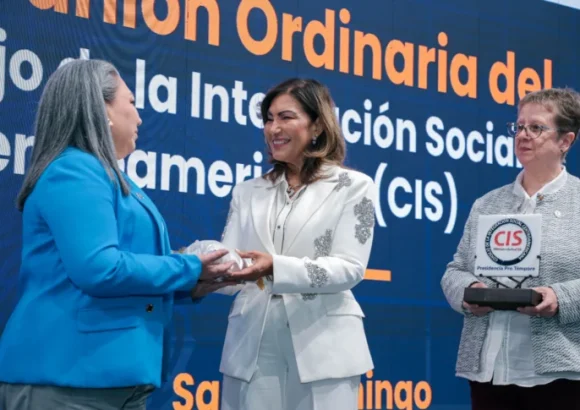
Dominican Republic hands CIS presidency to Belize
At the 83rd ordinary session of the Central American Social Integration Council (CIS) held in Santo Domingo, a key leadership transition and landmark institutional planning decision have advanced regional social cooperation across Central America. The Dominican Republic formally completed its six-month tenure holding the bloc’s Pro Tempore Presidency and officially handed over the leadership role to Belize during the gathering.
Geanilda Vásquez, general coordinator of the Dominican Republic’s Social Policy Coordination Cabinet, led the handover ceremony on behalf of her country, which had held the rotating presidency from January to June 2026. She formally passed the ceremonial and operational leadership of the council to Thea García Ramírez, the official representative of Belize to CIS.
During its time at the helm of the regional body, the Dominican Republic prioritized and advanced a suite of cross-border initiatives centered on five core priorities: building adaptive social protection frameworks that can respond to shifting regional challenges, strengthening accessible and inclusive care systems across member states, improving collective food security, fostering a shared regional culture of peace, and boosting coordinated preparedness for climate-related disasters and disruptions.
After accepting the presidency, Belize’s delegation pledged to build on the progress made by the Dominican Republic, outlining its commitment to pushing forward the shared regional social agenda through three key approaches: deepening high-level political dialogue between member states, expanding the use of data-driven, evidence-based public policy design across the bloc, and cultivating more robust cross-border cooperation between all participating nations.
Beyond the leadership transition, the 83rd ordinary meeting delivered a range of other key outcomes for the bloc. Council members conducted a comprehensive review of institutional progress delivered by the Secretariat for Central American Social Integration (SISCA), the council’s administrative and operational body, and formally approved SISCA’s three-year Institutional Strategic Plan covering 2027 to 2029. Attendees also held in-depth discussions on the far-reaching social and economic impacts of the El Niño climate phenomenon across the region, conducted a detailed review of El Salvador’s recently implemented National Care System as a case study for regional policy, and adopted a new set of coordinated measures designed to strengthen cross-national collaboration on social policy alignment and sustainable development goals.