标签: Dominican Republic

多米尼加共和国

  • Dominican Republic officially enters international padel circuit

    Dominican Republic officially enters international padel circuit

    In a landmark development for Caribbean sports, the Royal Dominican Padel Federation (RFDP) has achieved formal integration into the International Padel Federation (FIP) and Padel America. This strategic affiliation, finalized during the 35th FIP Assembly in Acapulco, Mexico, positions the Dominican Republic among over 100 member federations worldwide, marking a transformative moment for the nation’s sporting landscape.

    RFDP President Josep Isern heralded the achievement as a historic milestone that fundamentally integrates the Dominican Republic into padel’s global framework. This integration unlocks unprecedented opportunities for athletes, clubs, referees, and the broader sporting community, effectively connecting the nation to the sport’s international mainstream.

    The affiliation grants the Dominican padel community access to internationally sanctioned competitions, official FIP ranking systems, and professional development programs for judges, coaches, and players. This access is expected to significantly elevate the standard of play and administrative expertise within the country.

    This development coincides with padel’s explosive growth across the Dominican Republic. The sport has seen a remarkable surge in popularity in urban centers including Santo Domingo, Punta Cana, Bávaro, and Santiago, characterized by a rapid increase in dedicated courts, active players, and competitive tournaments. This domestic boom, heavily fueled by strong visibility and engagement on social media platforms, has now been matched with formal international recognition.

    The RFDP, as the national regulatory body for padel, oversees the racket sport that has captivated both young people and adults nationwide. This new international status is projected to strengthen the national high-performance pathway and pave the way for future Dominican success on the global padel stage.


  • Abinader orders Senasa to act as civil plaintiff to recover “Every last peso stolen”

    Abinader orders Senasa to act as civil plaintiff to recover “Every last peso stolen”

    SANTO DOMINGO – In a decisive move against systemic corruption, Dominican President Luis Abinader has mobilized the National Health Insurance (Senasa) as a civil plaintiff to reclaim billions of pesos allegedly embezzled through an elaborate fraud scheme. The announcement came Sunday following the unveiling of Operation Cobra, a sweeping prosecutorial initiative targeting corruption networks within the public health system.

    The investigation centers on former Senasa director Santiago Hazim and multiple associates who allegedly orchestrated a sophisticated embezzlement operation. President Abinader revealed that his administration initiated an immediate internal probe upon detecting preliminary signs of irregularities, which subsequently uncovered compelling evidence of serious corruption within the state health insurer.

    “I have instructed that every last peso stolen be recovered,” Abinader declared, emphasizing his commitment to applying “the full weight of the law” against those who defraud the state. The president expressed satisfaction that justice is now pursuing the implicated individuals while acknowledging additional suspects remain under scrutiny.

    Operation Cobra has already yielded eight arrests, including former director Santiago Marcelo F. Hazim Albainy and associates Gustavo Enrique Messina Cruz, Germán Rafael Robles Quiñones, Francisco Iván Minaya Pérez, Eduardo Read Estrella, Cinty Acosta Sención, Ramón Alan Speakler Mateo, and Ada Ledesma Ubiera. The Public Prosecutor’s Office confirmed the investigation remains active, with additional individuals and corporations potentially facing charges as evidence develops.

    The case represents one of the most significant corruption prosecutions in recent Dominican history, demonstrating the administration’s strengthened approach to combating graft within public institutions. Legal experts suggest the civil plaintiff strategy could establish important precedents for recovering stolen public assets through judicial channels.

  • Process in development Santiago Hazim, former director of Senasa, is arrested

    Process in development Santiago Hazim, former director of Senasa, is arrested

    In a significant development within the Dominican Republic’s ongoing corruption investigation, former National Health Insurance (Senasa) director Santiago Hazín was taken into custody on Saturday evening. His legal counsel, Attorney Miguel Valerio, confirmed the arrest and indicated that judicial authorities will determine coercive measures within the next 48-hour period.

    Valerio stated that the defense team maintains a reserved position pending formal presentation of the prosecution’s coercion request. “We await the coercive measure filing within the established 48-hour window, at which juncture we shall articulate our definitive stance,” the attorney declared.

    The legal representative emphasized his client’s cooperative posture throughout the investigative process, noting that Hazín underwent extensive questioning for approximately five hours prior to his detention. Valerio reiterated that the former official has consistently demonstrated willingness to collaborate with judicial authorities, asserting, “My client has perpetually remained at the disposal of the justice system.”

    This arrest occurs within the broader context of the Senasa scandal that has captivated national attention. Multiple sectors have raised alarms regarding administrative deficiencies, delayed payments, and controversial operational determinations that precipitated widespread concern across the healthcare ecosystem. Political representatives, medical associations, and civil society organizations have collectively highlighted deteriorating management practices, prompting opposition forces to demand comprehensive audits and allege potential irregularities.

    Despite governmental assurances regarding institutional stability, grievances concerning service interruptions and payment delays intensified public discourse, ultimately compelling official action. The unfolding situation triggered initiated audits, managerial restructuring, and a formal prosecutorial investigation into contractual arrangements between Senasa and various state-affiliated entities.

    While implicated corporations have defended their operational legality, and former officials have sought to justify their decisions, allegations of fund misappropriation and supervisory body interventions have transformed this case into one of the most closely monitored proceedings in the public sector. The Attorney General’s Office has indicated additional investigative actions are anticipated as the probe continues to evolve.

  • Immigration announces eased entry for tourists from several countries, only with a valid passport.

    Immigration announces eased entry for tourists from several countries, only with a valid passport.

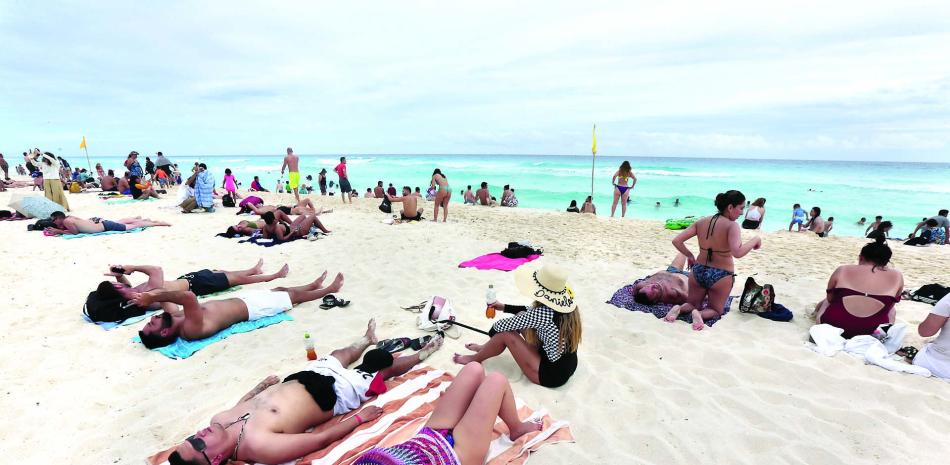
    In a significant move to enhance tourism accessibility, the Dominican Republic’s General Directorate of Migration (DGM) has officially extended a landmark immigration facilitation measure. Effective from December 1, 2025, through December 31, 2026, tourists from a specified list of nations will be permitted entry without meeting the conventional six-month passport validity requirement.

    The policy applies to citizens of Argentina, Brazil, Canada, Chile, Colombia, Ecuador, the United States, the United Kingdom, and all European Union member states. The only stipulation is that travelers must possess a passport that remains valid for the entire duration of their stay and until their departure from Dominican territory. This directive, formalized through a memorandum continuing Resolution No. DGM-01-2024, also extends to foreigners from other countries who hold valid documentation for entry into the aforementioned nations.

    In an official communiqué, the DGM framed this one-year extension as a reaffirmation of the national government’s commitment to stimulating international tourism and modernizing border control procedures. The initiative is strategically designed to dismantle administrative barriers and guarantee a more fluid and welcoming arrival experience for visitors originating from the country’s most critical tourism markets. This policy shift underscores a global trend where destination countries are streamlining entry protocols to remain competitive in the post-pandemic travel landscape.

  • Government blocks entry of pork from Spain due to swine fever; restriction includes processed products

    Government blocks entry of pork from Spain due to swine fever; restriction includes processed products

    SANTO DOMINGO, Dominican Republic – The Dominican government has enacted an urgent prohibition on all imports of pork and related commodities from Spain in response to a confirmed African Swine Fever (ASF) outbreak within the European nation. The decisive action was formally declared on Thursday by Abel Madera, Director of the General Directorate of Livestock (DIGEGA).

    The preventative suspension was triggered by an official notification from the World Organization for Animal Health (OIE), which verified the detection of the highly contagious viral disease in wild boar populations located in Spain’s Catalonia region on November 28. Although the Dominican Republic is not a primary market for Spanish fresh pork, authorities emphasized that the move is a critical safeguard to insulate the Caribbean nation’s domestic swine industry and territory from potential contamination.

    Director Madera clarified that the comprehensive ban extends beyond fresh and frozen meat to encompass a wide range of products. This includes sausages, all other processed pork items, by-products, and genetic material. The restrictions will remain enforced until international and Spanish veterinary authorities can successfully contain the outbreak and provide certification that the threat has been entirely mitigated.

    Madera further noted that the majority of the Dominican Republic’s imported pork supply is sourced from the United States, not Spain. To bolster this defensive measure, the nation is maintaining its stringent inspection protocols at all ports and airports, with heightened vigilance on agricultural shipments deemed high-risk. Technical teams from DIGEGA have been placed on high alert to intensify epidemiological surveillance efforts across local farms and production zones.

  • Push for reform of the law on the protection of minors

    Push for reform of the law on the protection of minors

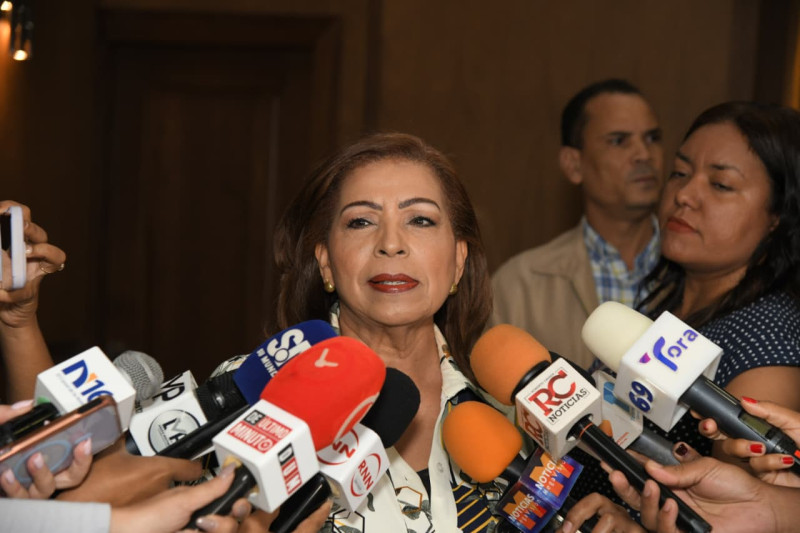
    SANTO DOMINGO – The Dominican Republic has initiated a major legislative overhaul of its child protection framework, targeting Law 136-03 which established the National Council for Children and Adolescents (CONANI) over two decades ago. CONANI President Ligia Pérez announced the comprehensive reform during the International Forum for the Protection of Children, highlighting the urgent need to modernize legislation in response to evolving societal challenges.

    The reform initiative operates through a three-phase process currently concluding its initial diagnostic stage. A high-level commission led by First Lady Raquel Arbaje and Minister of the Presidency José Ignacio Paliza is steering this collaborative effort involving government agencies, civil society organizations, and international experts. Chilean children’s rights attorney Esther Valenzuela contributed specialized expertise through a keynote address at the international forum.

    Pérez emphasized CONANI’s multidisciplinary approach to child protection, describing coordinated operations with the Attorney General’s Office, Ministry of Labor, Interior and Police, and Tourist Police. These joint efforts focus on rescuing children from street situations, hazardous labor conditions, and exploitation scenarios. The organization implements rigorous follow-up procedures with families to address underlying factors contributing to children’s vulnerability.

    Regarding institutional jurisdiction, Pérez clarified that CONANI doesn’t oversee correctional facilities, redirecting inquiries about juvenile detention conditions to the Attorney General’s Office. The organization’s primary mission centers on family welfare preservation through environmental monitoring and ensuring living spaces meet safety standards for children’s development.

    The ongoing legislative revision represents the most significant update to the country’s child protection system since its establishment 22 years ago, aiming to create more responsive mechanisms for contemporary protection challenges.

  • Climate Passing showers and pleasant temperatures in several provinces

    Climate Passing showers and pleasant temperatures in several provinces

    Meteorological conditions across the Dominican Republic indicate a week commencing with varied weather patterns, according to the latest forecast from the Dominican Institute of Meteorology (Indomet). A weak atmospheric trough is currently influencing weather systems, generating intermittent light to moderate rainfall across multiple provinces including Samaná, María Trinidad Sánchez, Sánchez Ramírez, Monseñor Nouel, Santo Domingo, La Altagracia, El Seibo, and Barahona. Precipitation events are anticipated to intensify during afternoon hours throughout these regions.

    Meanwhile, the remainder of the country can expect predominantly sunny conditions with isolated cloud formations. Temperature readings remain seasonally appropriate, with minimums ranging between 21°C and 23°C and maximums between 30°C and 32°C, creating particularly pleasant conditions during nighttime and early morning hours. These conditions will be most pronounced in mountainous zones and valleys of the Cibao region, especially throughout Santiago, La Vega, and Monseñor Nouel, where periods of fog or mist are forecast for tomorrow.

    The Greater Santo Domingo area, encompassing the National District along with North, East, and West sectors, will experience similar meteorological patterns—sunny skies with intermittent cloud cover and occasional passing showers.

    Weather systems are expected to shift noticeably by Monday with the arrival of a drier air mass combining with an anticyclonic system. This combination will produce predominantly clear skies with minimal rainfall across nearly all territories. However, isolated showers may develop in Monseñor Nouel, Monte Plata, Hato Mayor, and El Seibo provinces during afternoon hours due to orographic effects and specific wind patterns, particularly in elevated terrain.

    Tuesday’s forecast maintains consistency with existing conditions as the dry air mass and high-pressure system (anticyclonic circulation) continue to dominate, resulting in partially cloudy skies nationwide without significant meteorological variations.

  • Winter ball Luis García Jr. shines and leads the Gigantes to victory over the Tigres del Licey

    Winter ball Luis García Jr. shines and leads the Gigantes to victory over the Tigres del Licey

    In a pivotal matchup within the Dominican Winter League, the Gigantes del Cibao secured a 4-2 victory against the Tigres del Licey this Saturday. The win, powered by strategic offense and dominant pitching, temporarily elevates the Gigantes to sole possession of fourth place in the tournament standings, dedicated to legendary pitcher Juan Marichal and contested for the Banreservas Cup.

    The game’s narrative unfolded in distinct chapters. The Gigantes established an early lead, plating two runs in the opening inning. Capitalizing on defensive miscues by Licey, Samad Taylor scored the first run on a sacrifice fly from Luis García Jr., who would later drive in another. The Tigers mounted a comeback in the seventh inning, leveling the score at 2-2 against reliever Yaqui Rivera with key contributions from Francisco Mejía and a sacrifice fly from Armando Álvarez.

    Refusing to relent, the Gigantes immediately responded in the bottom of the frame. Luis García Jr. ignited the rally with a single, setting the stage for Deyvison de los Santos, whose crucial sacrifice fly drove in the decisive runs, reclaiming a lead the bullpen would not surrender.

    Pitching proved to be the cornerstone of the Gigantes’ triumph, as their staff effectively neutralized the Licey lineup, limiting them to a mere three hits throughout the contest. Offensive standouts for the winners included Samad Taylor, who finished 3-for-4 with three runs scored, and Luis García Jr., who went 2-for-2 with two RBIs.

    The result reshuffles the league’s hierarchy. The Águilas Cibaeñas continue their commanding reign at the top with a 25-10 record. The Toros del Este hold firm in second place at 20-16, while the Gigantes (16-19) now sit in fourth. The loss drops Licey to a 15-20 record, placing them in a tie for fifth and situating them ten games behind the league-leading Águilas.

  • November 2025 was the driest in four years: causes that broke the cycle of tragedies

    November 2025 was the driest in four years: causes that broke the cycle of tragedies

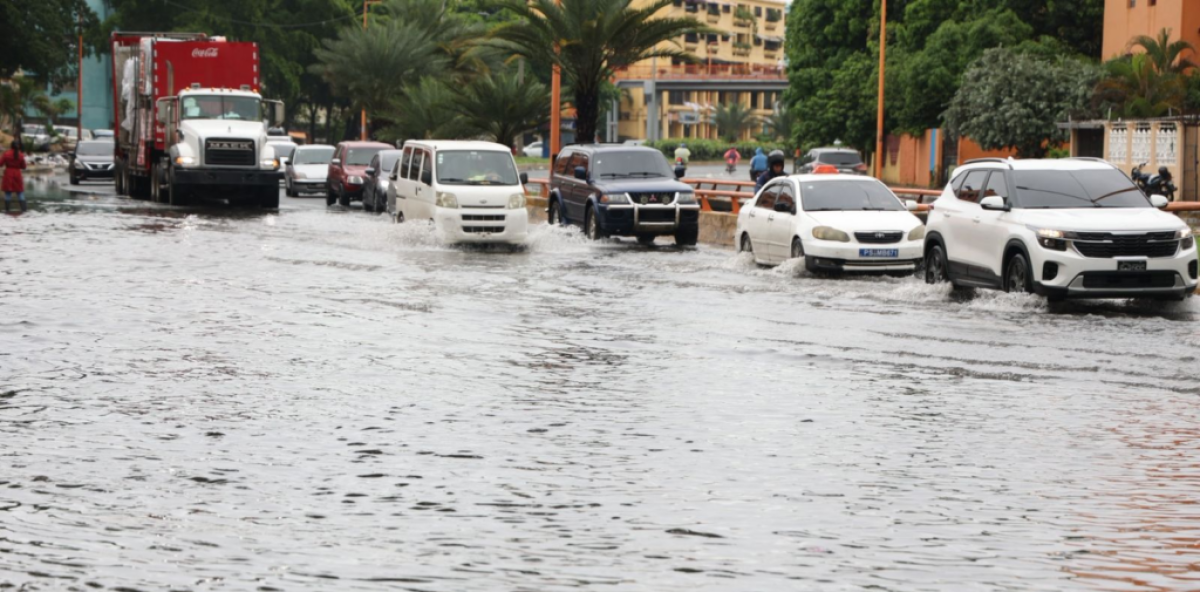
    The Dominican Republic has dramatically broken its November rainfall pattern, with 2025 recording the driest November in four years—a stark contrast to the catastrophic flooding events that previously defined this month. Meteorological analysis reveals a significant departure from the extreme weather conditions that caused substantial loss of life and property damage in recent years.

    According to Saddan Font-Frías Montero, head of the National Forecast Center at the Dominican Institute of Meteorology (INDOMET), November 2025 behaved climatologically as a transition month from wet to dry season rather than maintaining its historical pattern of extreme precipitation. The data shows rainfall totals fell below normal at 54% of the country’s monitoring stations, with particularly pronounced negative deviations along the northern coast.

    The contrast with previous years is striking. November 2022 witnessed one of the most devastating weather events when a trough combined with a tropical wave dropped 266 millimeters of rain within just four hours—equivalent to the entire November average—resulting in nine fatalities, submerged vehicles, and widespread urban flooding. The following year, 2023 brought another extreme event associated with potential tropical cyclone number 22 and an upper-level trough that caused more than 20 deaths, isolated 55 communities, and required the evacuation of 7,060 people to safe areas.

    Meteorological experts attribute the unusually dry conditions of November 2025 to the absence of upper atmospheric troughs (TUTT) and the lack of weather disturbances such as tropical waves or low-pressure centers that typically generate extraordinary rainfall during this period. This break from pattern offers the Caribbean nation respite from the seasonal tragedies that have historically transformed streets into rivers and claimed numerous lives during November.

  • Hospitals with high volume of patients with respiratory viruses

    Hospitals with high volume of patients with respiratory viruses

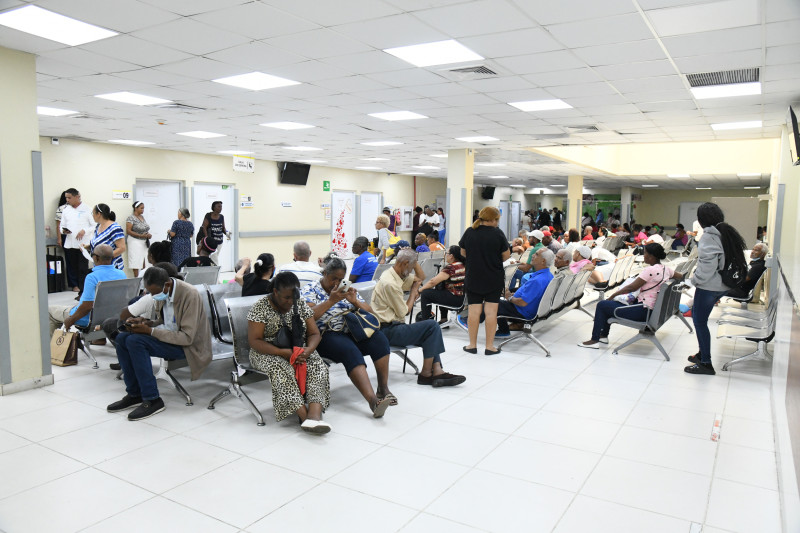
    The Dominican Republic is confronting a severe pediatric health emergency as hospitals nationwide report dramatic increases in respiratory illness hospitalizations and consultations. Sentinel surveillance data reveals an unprecedented surge in Respiratory Syncytial Virus (RSV) infections, reaching the highest levels recorded this year and significantly exceeding 2024 case numbers.

    Health authorities attribute this alarming pattern to unusual meteorological conditions, with recent heavy rainfall, persistent humidity, and temperature fluctuations creating ideal transmission conditions for respiratory pathogens. The epidemic has manifested through substantially higher cases of bronchiolitis and pneumonia in children, displaying an earlier, more intense, and prolonged seasonal pattern than typically observed.

    While RSV dominates the current health crisis, multiple other respiratory viruses continue circulating at moderate levels, including influenza strains A(H3N2), A(H1N1)pdm09, influenza B/Victoria, SARS-CoV-2, adenovirus, metapneumovirus, and parainfluenza. This viral co-circulation elevates risks of coinfections, exacerbates chronic respiratory conditions like asthma and COPD, and increases complication likelihood among vulnerable populations.

    The epidemiological pattern mirrors regional trends, with the United States, Canada, Mexico, and Southern Cone nations reporting similarly early and intense RSV seasons. In response, the Ministry of Public Health has implemented enhanced virological surveillance, expanded sentinel sampling, and strengthened neonatal and pediatric ICU capacity monitoring. Rapid referral pathways for severe cases have been activated to manage the increased healthcare demand.

    Concurrently, health officials are intensifying influenza vaccination campaigns targeting priority groups including pregnant women, older adults, young children, and healthcare personnel. Community-level preventive measures emphasize adequate ventilation, mask usage during respiratory symptoms, proper respiratory hygiene, frequent handwashing, and reduced overcrowding in educational and childcare facilities.

    Concerning severe respiratory infections, the latest epidemiological week recorded 40 suspected Severe Acute Respiratory Infection (SARI) cases, slightly exceeding 2024’s 35 cases. The highest hospital demand originates from Santo Domingo, San Cristóbal, the National District, and Santiago provinces. The national cumulative total reaches 1,559 suspected SARI cases with 54 fatalities recorded this year.

    Regarding other diseases, dengue surveillance shows 38 suspected cases in the latest reporting week with no confirmations, maintaining a significant decrease from 2024 figures. Malaria maintains localized transmission with 836 confirmed cases among 50,365 suspected instances, while leptospirosis reports 156 confirmed cases and 15 fatalities, primarily linked to recent flooding from Tropical Storm Melissa.