
In Santo Domingo, former Dominican Republic President Hipólito Mejía has publicly weighed in on the recent suspension of the country’s mango shipments to the United States, tying the trade restriction to potential weaknesses in the nation’s plant health monitoring infrastructure. The export halt was triggered after inspectors detected the presence of the Mediterranean fruit fly, a notorious agricultural pest that poses major risks to commercial fruit production. Mejía argued that the detection of the invasive insect makes a compelling case for a full audit of existing phytosanitary control protocols. He called for a thorough review to pinpoint any systemic failures that allowed the pest to establish a presence and slip through pre-export screening measures. At the same time, the former leader was careful to put the outbreak in broader context, noting that the Mediterranean fruit fly is not an isolated problem limited to the Dominican Republic. The pest has been recorded in a number of other producing nations around the world, he emphasized. Instead of dwelling on blame, Mejía urged the country’s current agricultural and public health authorities to prioritize immediate containment efforts. The top priority, he said, must be stopping the pest from spreading further and cutting the financial and trade damage to the Dominican mango sector, a key agricultural export that supports thousands of livelihoods across the country. In a separate political development addressed during the same public remarks, Mejía pushed back against circulating claims that he was behind a push to install his son-in-law, Juan Garrigó, as the candidate for secretary general of the ruling Modern Revolutionary Party (PRM). Mejía acknowledged that he holds no personal opposition to Garrigó seeking and serving in the influential party position, but stressed that any potential candidacy is not being driven or orchestrated by him. The clarifications come as the Dominican Republic navigates both a critical agricultural trade challenge and ongoing internal party organizing ahead of upcoming political cycles.
标签: Dominican Republic
多米尼加共和国
-
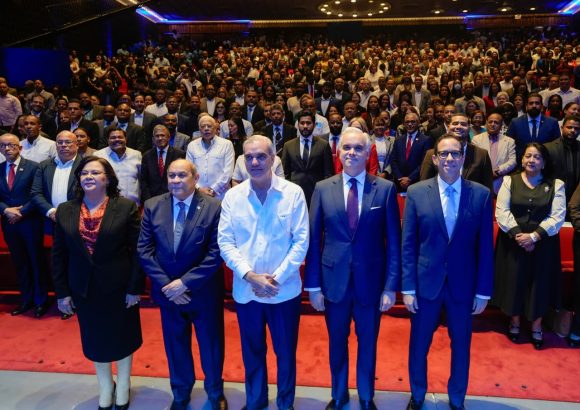
Abinader commits to turn national education consultation into public policy
SANTO DOMINGO — On Wednesday, Dominican Republic President Luis Abinader formally accepted the final results of the country’s landmark National Consultation on the Future of Education, promising to translate the widespread public consensus forged through the multi-stakeholder process into actionable policy that will reshape the nation’s education landscape for decades to come.
The handover ceremony, held at the National Palace, marked a key milestone in the government’s push for systemic educational reform. The consultation, organized and executed by the Executive Commission for Educational Transformation, represents one of the broadest exercises in citizen engagement in Dominican education policy in recent history. Stakeholders from every corner of society — including classroom educators, higher education institutions, private sector leaders, civil society groups, local families, and Dominican citizens residing overseas — contributed insights and recommendations that were consolidated into the final report.
Speaking at the event, President Abinader highlighted that the consultation’s outcomes reflect a unified national vision for the future of education, and will act as the foundational blueprint for a completely updated legal framework governing the sector. “The law we will draft will not codify the outdated system we currently operate under; it will pave the way for the modern, responsive system our country will need for future generations,” Abinader stated.
The president outlined five core priorities that will guide the upcoming reform process: expanding and strengthening early childhood education, growing access to inclusive education for marginalized groups, upgrading technical and vocational training programs to meet labor market demands, reinforcing the quality of higher education, and equipping students with the adaptable skill sets required to thrive in a fast-evolving global economy.
The final report codifies a clear set of priorities identified through the consultation process. Key among these are revisions to outdated school curricula, more rigorous and ongoing teacher training initiatives, and the deeper integration of digital technology, artificial intelligence, innovation practices and academic research into daily learning. The report also emphasizes the urgent need to foster critical thinking, creative problem-solving, ethical reasoning, and strong civic values among students.
Moving forward, the consultation’s findings will form the backbone of new national public education policies, as well as the drafting of an updated General Law on Education, Science, and Technology. The overarching goal of the reform push is to modernize the Dominican education system and create a skilled, competitive workforce that will drive long-term, inclusive national development.
-
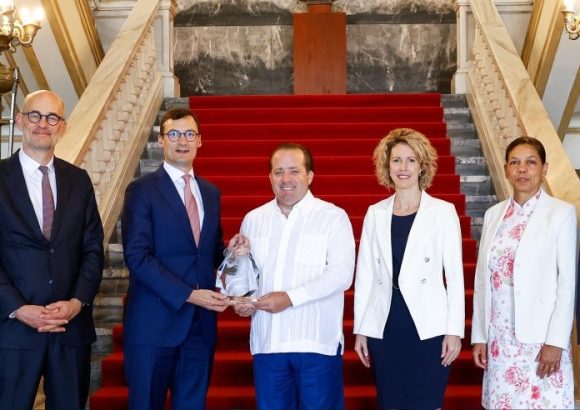
Puerto Plata Airport wins fourth ASQ Award for passenger service
In a major milestone for Dominican Republic’s aviation and tourism sectors, Puerto Plata’s Gregorio Luperón International Airport has earned its fourth Airport Service Quality (ASQ) Award, securing a ranking among the top regional airports serving up to two million annual departing passengers across Latin America and the Caribbean.
The official award presentation took place at a ceremony attended by key stakeholders, including delegates from the Airports Council International for Latin America and the Caribbean (ACI-LAC) and French Ambassador Sonia Barbry. VINCI Airports Chief Executive Officer Rémi Maumon de Longevialle handed the honor to José Ignacio Paliza, the Dominican Minister of the Presidency, marking a formal recognition of the airport’s consistent service excellence.
Unlike many industry awards that rely on subjective judging, this distinction is rooted entirely in independent, anonymous passenger surveys collected through ACI’s global ASQ program. Widely regarded as one of the aviation sector’s most trusted and authoritative benchmarks for customer experience, the ASQ framework measures traveler satisfaction across dozens of service touchpoints, from check-in and security to terminal amenities and overall travel flow.
In a statement following the ceremony, VINCI Airports emphasized that the repeat award is a direct reflection of sustained, collaborative work across multiple groups. Aerodom, the Dominican Republic’s leading airport operator, national government authorities, and the entire on-site airport community have worked in lockstep to upgrade service standards, refine traveler experiences, and lay a stronger foundation for the country’s fast-growing tourism and aviation industries. This fourth win confirms that Gregorio Luperón International Airport’s commitment to quality is not a one-time effort, but an embedded part of its operations that benefits both leisure and business travelers visiting the Dominican Republic.
-

Bridgeport Dominican Parade to celebrate Puerto Plata and Taíno heritage
BRIDGEPORT, Conn. — Two prominent community-focused education and advocacy organizations, Leaders for the Defense and Diversity of Education and Dominican Leaders in Education (DR-LEAD), have entered the final stages of planning for the highly anticipated Second Dominican Parade and Festival, scheduled to take place Sunday, Aug. 2, at Seaside Park in Bridgeport, Connecticut.
This year’s gathering carries a special thematic focus, with organizers dedicating the entire celebration to Puerto Plata province, a cultural gem on the Dominican Republic’s northern coast. The dedication aims to center the region’s rich layered history, vibrant cultural traditions, and indigenous Taíno heritage, weaving these narratives into a broader exploration of core Dominican national identity.
Event organizers are projecting a robust turnout for 2025, forecasting that more than 70,000 people will attend the day’s activities. Attendees are expected to span a broad cross-section of local and regional groups, including Dominican diaspora community members, civic leadership figures, representatives of diaspora advocacy organizations, and local government authorities.
The day’s lineup is packed with immersive cultural experiences, anchored by iconic traditional Dominican folk performances. Attendees will get to see celebrated traditional character troupes including Diablos Cojuelos (Limping Devils) and Roba la Gallina (the Hen Thief), elaborately decorated themed floats, a full schedule of diverse cultural performances, and sets from invited guest live music artists. Beyond the parade and stage performances, the festival will host dozens of local Dominican food vendors serving classic dishes from across the country, booths showcasing handcrafted Dominican arts and crafts, and family-focused activities designed to connect younger generations of the local Connecticut Dominican community to their cultural roots.
The celebration is designed to be accessible and welcoming for guests of all ages. Gates open to the public at 11 a.m., with the main parade stepping off at noon. Procession will wind through the scenic grounds of Seaside Park before concluding at Park Avenue.
-
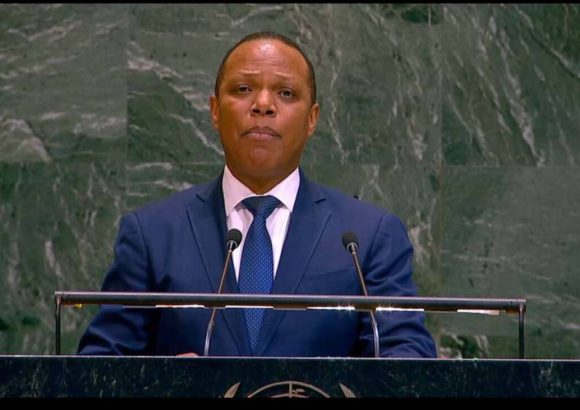
Dominican Republic reaffirms road safety commitment at UN General Assembly
Against the backdrop of a global reckoning with rising road traffic fatalities, representatives from the Dominican Republic took the stage at the United Nations General Assembly High-Level Meeting on Road Safety this week to reaffirm the nation’s commitment to cutting preventable road deaths and lay out a sweeping multi-pronged strategy to overhaul national road safety. Milton Morrison, executive director of the Dominican Institute of Transit (Intrant), used his address to the international gathering to frame road safety as a non-negotiable national priority for the Dominican government, backed by targeted public policy, cross-sector partnerships and sustained infrastructure investment all centered on one core goal: protecting the lives of all road users.
-
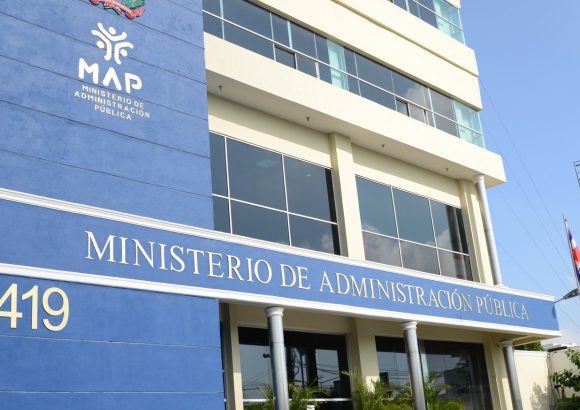
Dominican government shortens workday ahead of Santo Domingo 2026 opening ceremony
In preparation for the official launch of the 25th Central American and Caribbean Games, authorities in the Dominican Republic have implemented a temporary workplace adjustment to smooth transportation flows across the nation’s capital region.
The Ministry of Public Administration (MAP) issued a formal mandate through Circular No. 0022855, signed by department head Sigmund Freund, requiring all state-run agencies based in Greater Santo Domingo to wrap up their workday by 1:00 p.m. this coming Friday. The policy explicitly builds in flexibility for government entities, allowing them to adjust operational schedules to guarantee that critical public services remain available to citizens without interruption throughout the event.
This multi-sport gathering, branded as Santo Domingo 2026, will kick off on Friday and continue through August 9, with athletic competitions hosted at venues spread across the entire country. The much-anticipated opening ceremony is scheduled to take place at the Félix Sánchez Olympic Stadium, starting at 7:00 p.m. local time. Venue gates will open to attendees three hours earlier, at 4:00 p.m., to accommodate the large expected crowd.
Event organizers project that roughly 45,000 people will be on site for the opening celebration. This total breaks down to 30,000 paying spectators, more than 6,000 participating athletes from across the region, and around 9,000 additional individuals including performers, technical staff, and logistics teams working to bring the ceremony to life. The early work closure is designed to reduce peak-hour road congestion as attendees travel to the stadium, easing overall mobility for both event-goers and local residents.
-
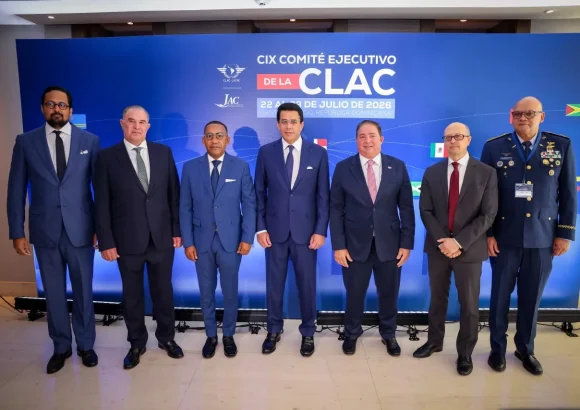
Dominican Republic hosts CLAC aviation summit to strengthen regional air connectivity
The Dominican capital of Santo Domingo opened its doors this Wednesday to a pivotal regional aviation gathering, hosting the 19th Meeting of the Executive Committee of the Latin American Civil Aviation Commission (CLAC). The event brings together top civil aviation regulators and leaders from across Latin America and the Caribbean, centered on three core priorities: boosting cross-regional air connectivity, advancing aviation market liberalization, and aligning regional preparations for the upcoming ICAO World Air Transport Conference.
Presiding over the two-day summit is Héctor Porcella, who leads both the Dominican Republic’s Civil Aviation Board (JAC) and currently holds the CLAC presidency. In his opening remarks, Porcella emphasized that the meeting will serve as a critical platform to shape the commission’s strategic agenda for the next two years. Under the agreed framework, the organization will prioritize expanding accessible air travel across the region, deepening institutional and regulatory collaboration between member states, and closing gaps in regional connectivity that have long hindered economic and tourism growth.
Porcella outlined the Dominican Republic’s own proactive approach to aviation development, noting that the country has implemented a series of market-opening policies designed to streamline airline operations, expand cross-carrier codeshare partnerships, and build stronger air links with major global markets including South America, Canada, Europe, and Asia. He added that the coordinated partnership between the country’s public sector regulators and private aviation and tourism stakeholders has driven consistent growth, with the Dominican Republic consistently hitting new records for both passenger volumes and total flight operations in recent months.
david Collado, the Dominican Republic’s Minister of Tourism, reinforced the interconnected nature of aviation and national economic growth, noting that robust air connectivity is the fundamental bedrock of the country’s booming tourism sector. Collado confirmed that the national government will maintain close collaboration with civil aviation authorities, airport operators, and commercial airlines to continue expanding the country’s network of international routes. This ongoing effort is designed to cement the Dominican Republic’s standing as the top tourism destination in the Caribbean, attracting record numbers of leisure and business travelers from across the globe.
Over the course of the two-day meeting, participating delegates will conduct in-depth reviews of a wide range of pressing industry issues, ranging from the negotiation and implementation of open skies agreements to global aviation safety standards, cross-border technical cooperation programs, industry sustainability initiatives, and the modernization of outdated civil aviation regulatory frameworks across the region. In a key announcement, Porcella confirmed that delegates are set to sign more than eight new regional air transport agreements before the meeting concludes, a development that will significantly deepen institutional and operational aviation ties across Latin America and the Caribbean.
-

Trump imposes 12.5% tariff on Dominican Republic imports
In a major escalation of its trade policy agenda, the second Trump administration unveiled new tariffs Thursday that will impose a 12.5% duty on imports arriving from the Dominican Republic. The measure is part of a sweeping trade enforcement initiative targeting 60 countries and economies worldwide, with the U.S. government justifying the move by claiming these nations have not done enough to crack down on forced labor in global supply chains.
Announced by U.S. Trade Representative Jamieson Greer, the new tariff will replace an expiring temporary 10% global tariff that is set to lapse this Friday. This updated duty marks the latest step in the administration’s aggressive reshaping of U.S. trade relations after returning to power in January 2025.
The tariffs stem from formal investigations launched this past March under Section 301 of the U.S. Trade Act. These probes were tasked with determining whether inadequate policies to block forced-labor-produced imports from the affected countries have caused harm to American workers and domestic businesses. Across Latin America, the new tariff structure varies by nation: Mexico, Guatemala, Honduras, and El Salvador will face a 10% import duty, while Costa Rica, Panama, and the Dominican Republic will shoulder the higher 12.5% rate. For other countries included in the action, tariff rates are adjusted based on product category and national origin.
U.S. trade officials confirmed that investigation outcomes confirmed the need for new trade restrictions, noting the policy shift came after the U.S. Supreme Court struck down the majority of Trump’s earlier round of global tariffs. That ruling forced the White House to reframe its trade agenda, leaning on Section 301 as the new legal foundation for imposing additional import duties. This latest round of tariffs aligns with President Trump’s long-stated broader trade goals, which prioritize targeted pressure on trading partners to rewrite trade rules and advance what the administration frames as U.S. economic interests.
-

Dominican Republic condemns Ortega’s claim that Nicaragua will hold no more elections
In an official release issued Wednesday, the government of the Dominican Republic delivered a forceful rebuke of recent remarks by Nicaraguan President Daniel Ortega, in which he claimed there would be no future elections held in his Central American country. The Dominican government characterized Ortega’s comments as a direct rejection of the core foundational values that underpin representative democratic systems across the hemisphere.\n\nThe Dominican statement makes clear that Ortega’s public comments openly dismiss the fundamental right of the Nicaraguan people to select their own governing leaders through regular, free, impartial, transparent and inclusive electoral processes. In grounding its position, the Dominican government invoked the first article of the Inter-American Democratic Charter, a regional agreement that enshrines the principle that all peoples of the Americas hold an inherent right to democracy, and that all member governments bear a binding obligation to both promote and protect this fundamental right.\n\nBeyond citing the regional charter, the Dominican Republic further emphasized that free and fair electoral processes, universal suffrage with secret balloting, protection for political pluralism, consistent respect for universal human rights, and adherence to the rule of law are all non-negotiable, inalienable components of legitimate representative democracy. No national government, the Dominican statement stressed, holds the legitimate authority to strip its citizens of the chance to express their sovereign will at regular intervals through the ballot box, nor can any government unilaterally eliminate elections as the recognized legal mechanism for the peaceful transfer of political power.\n\nThe government closed its statement by urging Nicaraguan state officials to abandon their current stance and move immediately to fully uphold and protect the political rights and fundamental freedoms guaranteed to all Nicaraguan people, including the critical right to participate in genuine, competitive democratic elections. It ended by reaffirming the Dominican Republic’s longstanding commitment to the collective defense of democracy, human rights and the rule of law across the Americas, framing these values as shared responsibilities that all regional nations have agreed to uphold.
-

CAASD announces temporary water outages in parts of Greater Santo Domingo
A persistent drought across the Dominican Republic’s capital region has forced authorities to implement temporary water service interruptions and pressure reductions in multiple areas around Santo Domingo, according to an official announcement from the local water and wastewater utility.
The Santo Domingo Water and Sewerage Corporation (CAASD) confirmed that neighborhoods across Los Alcarrizos, Pedro Brand, Pantoja, Los Girasoles, and residential zones stretching along República de Colombia Avenue will be the first to feel the impacts of reduced distribution. The root cause of the disruption is a steep drop in water production, directly tied to weeks of below-average rainfall that has dried up key regional water sources.
CAASD Director Fellito Suberví explained that the two primary river basins that feed the capital’s drinking water systems — the Duey and Isa-Mana basins — have experienced dramatic declines in water flow amid the dry spell. This production shortfall hits hardest at higher-elevation communities, where existing water pressure is already lower than in low-lying neighborhoods, leaving many households without consistent access to piped drinking water.
To ease the burden on affected residents, the utility has mobilized a full fleet of tanker trucks to deliver potable water directly to the hardest-hit areas. Distribution efforts are being prioritized to support high-elevation neighborhoods first, as well as households that face structural barriers accessing water through the city’s existing distribution network.
Suberví noted that CAASD’s emergency operations team is maintaining around-the-clock monitoring of river flows and local water demand as the dry conditions continue. The agency is adjusting its mitigation measures as needed to preserve as much consistent access to drinking water as possible for the broader region. In addition to emergency response actions, the director has issued a public appeal to all residents across the affected zone to use water intentionally and responsibly, cutting out non-essential usage and avoiding waste to stretch limited supplies to meet all households’ core needs.