标签: Dominican Republic

多米尼加共和国

  • Dominican Republic reinforces fruit fly controls to maintain mango exports

    Dominican Republic reinforces fruit fly controls to maintain mango exports

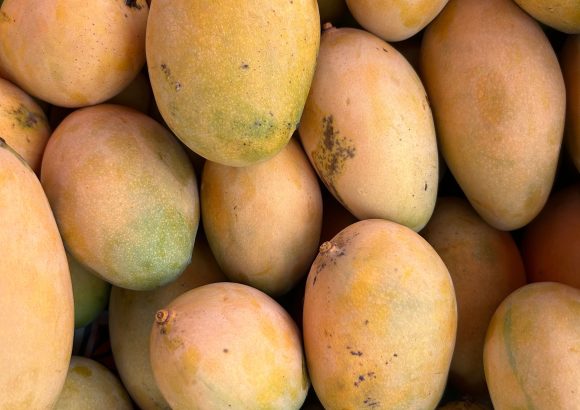
    Santo Domingo, Dominican Republic – The Dominican Ministry of Agriculture has launched a suite of updated phytosanitary protocols designed to solidify the country’s position as a reliable mango exporter to the United States and the European Union, with a core focus on bolstering fruit fly surveillance and aligning with global food safety standards. The new regulatory framework comes in direct response to gaps identified by international agricultural health authorities last year, and is aimed at preserving critical market access for one of the country’s most high-value agricultural export commodities.

    Under the new measures, the ministry has appointed agricultural engineer Jeurys Arias to head the national fruit fly monitoring initiative. A key immediate priority for the new program is a full systematic inspection of all 2,089 detection traps deployed across Peravia province, the Dominican Republic’s export mango heartland that accounts for roughly 80% of the nation’s total mango output destined for international markets. Beyond inspections, the initiative also includes upgrades to surveillance infrastructure, georeferencing tracking capabilities, and centralized data management systems to improve transparency and traceability across the pre-export inspection process.

    Agriculture Minister Francisco Oliverio Espaillat confirmed that the reinstatement of stricter phytosanitary controls follows recommendations issued in 2023 by the United States Department of Agriculture’s Animal and Plant Health Inspection Service (APHIS), which flagged procedural weaknesses in the country’s pre-export inspection protocols. By addressing these gaps, the Dominican government aims to ensure uninterrupted tariff and market access for Dominican mangoes entering the $2 billion U.S. fresh mango market.

    Emidio Gómez, director of the Ministry of Agriculture’s Health and Food Safety division, provided an update on the current harvest season, noting that between 85% and 90% of the country’s yellow-skinned mango crop had already been shipped to the United States before the new measures were implemented, leaving just 10% of the total harvest still pending export. For European markets, Gómez added that exports of green- and red-skinned mango varieties, which launched in early May, are proceeding on their scheduled timeline. He also emphasized that the Dominican Republic remains officially free of the Mediterranean fruit fly (*Ceratitis capitata*), a key pest that would threaten export access if detected.

    To support small and large scale mango producers through the transition, the Ministry of Agriculture has pledged ongoing technical assistance and training to help operations adapt to the new protocols. This support is designed to help maintain the Dominican Republic’s price and quality competitiveness in global fresh fruit markets, where demand for Caribbean mangoes continues to grow year over year.


  • Energy Ministry: Larimar exports won’t reduce supply for Dominican artisans

    Energy Ministry: Larimar exports won’t reduce supply for Dominican artisans

    In a public statement released Sunday, the Dominican Republic’s Ministry of Energy and Mines moved to clear up widespread misconceptions surrounding raw larimar exports, emphasizing that shipments of the rare blue gemstone do not come at the expense of local Dominican artisans who rely on the material for their work.

    According to ministry officials, current production data shows 60 percent of all larimar extracted from the country’s Barahona region mines remains within Dominican borders, leaving only 40 percent of total output designated for international export. The exported share is explicitly surplus material that the local jewelry manufacturing sector does not need, with the highest quality first- and second-grade larimar — stones celebrated for their vivid, intense blue hue and premium market value — reserved exclusively for domestic artisans and independent jewelry workshops.

    Officials also addressed a common point of confusion in national trade data: most export aggregated statistics group raw, semi-processed, and fully finished larimar products under a single tariff heading. This means a large portion of the reported total export value actually comes from high-value finished larimar jewelry, not unprocessed raw stone, countering claims that the country is exporting most of its most valuable raw material.

    To further strengthen the entire larimar value chain and connect key domestic stakeholders, the ministry has announced a new initiative: the 2026 Larimar Miners-Artisans Direct Sales Fair, scheduled to take place August 21 at the Larimar Museum Workshop School in Bahoruco, Barahona. The core goal of the event is to cut out unnecessary intermediaries by linking larimar miners directly to the artisans who use the stone, creating more equitable revenue distribution and supporting growth for small businesses across the sector.

    In the statement, the ministry warned that imposing arbitrary restrictions on surplus larimar exports would carry severe economic consequences for local mining communities. Such a policy would cut off primary income for small-scale miners, undermine the long-term financial stability of local mining cooperatives, and put hundreds of working positions at risk across the region. Alongside addressing export policy, officials also highlighted ongoing improvements to the larimar mining sector, including upgrades to mine safety regulations and formalization efforts. Recent upgrades include enhanced ventilation systems, improved electrical infrastructure, and overall safer working conditions for mining employees.

    New production data from the Dominican Directorate of Mining Promotion confirms that total larimar output reached 188,696 pounds across the first half of 2026, solidifying the country’s position as the only commercial source of the unique gemstone in the global market.

  • Casa del Cordón welcomes 150 archaeology and history experts from 25 countries

    Casa del Cordón welcomes 150 archaeology and history experts from 25 countries

    The Dominican Republic’s capital of Santo Domingo has become the global hub for Caribbean heritage research this week, as the XXXI International Congress of Caribbean Archaeology kicked off with an official welcome reception hosted by the Taíno Cultural Center Casa del Cordón. Backed as an initiative by Banco Popular Dominicano, the venue brings together over 150 leading professionals spanning archaeology, anthropology, history, and cultural preservation, with attendees traveling from 25 countries across the globe to take part in the event.

    As a key co-sponsor of the week-long academic gathering, Banco Popular welcomed participating researchers ahead of the launch of the congress’s packed schedule of lectures, working sessions, and collaborative workshops. During the opening welcome ceremony, José Mármol, executive vice president of Corporate Communications, Reputation and Responsible Banking at Grupo Popular, highlighted the critical role that cultural and archaeological preservation plays in driving long-term, meaningful sustainable development for communities across the region. Mármol emphasized that anchoring development in a clear understanding of shared heritage creates stronger, more connected societies rooted in their own history.

    The venue for the opening reception, the Taíno Cultural Center Casa del Cordón, holds deep significance for the event’s mission. The center hosts a permanent public exhibition of archaeological artifacts sourced from the García Arévalo Foundation, curated to highlight the rich legacy of the Taíno people – the first known inhabitants of the island that now holds the Dominican Republic and Haiti. Beyond displaying historic objects, the center works year-round to expand public awareness of the Dominican Republic’s indigenous roots and the enduring impact of Taíno culture on modern national identity.

    Scheduled to run from July 13 to 18, the congress stands as one of the Caribbean’s most prestigious and long-standing academic forums dedicated to archaeological research. Beyond sharing new findings and cutting-edge analysis, the core goals of the 2024 gathering include strengthening cross-border collaborative research networks, facilitating open exchange of innovative methodologies, and advancing collective action to protect the Caribbean’s at-risk archaeological and cultural heritage for future generations.

  • Dominican Republic to continue chairing Central American women’s council

    Dominican Republic to continue chairing Central American women’s council

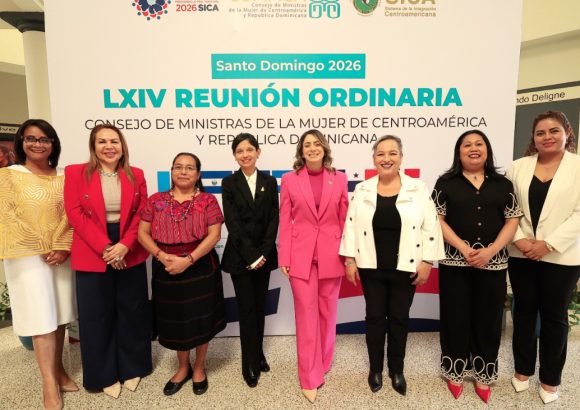
    At the 64th Ordinary Meeting of the Council of Ministers of Women of Central America and the Dominican Republic (COMMCA), held recently, member states have formally voted to confirm Gloria Reyes, the Dominican Republic’s Minister of Women’s Affairs, as the body’s pro tempore president for the second half of 2026, spanning July through December.

    The unanimous endorsement of Dominican leadership under Reyes came as no surprise to regional observers, following tangible progress delivered during her previous tenure. Delegations highlighted three key areas of achievement: strengthened cross-border coordination between member states, expanded strategic partnerships with regional and international stakeholders, and growing collective influence to push forward progressive policies that benefit women, girls, and adolescent populations across Central America and the Caribbean.

    Before the confirmation vote, the Dominican delegation presented a full progress report on its work plan for the first six months of 2026. The report outlined major milestones in three core priorities: strengthening COMMCA’s institutional framework to operate more efficiently, advancing targeted advocacy for gender-focused policy reforms at the regional level, and deepening collaborative projects with neighboring member states.

    Beyond leadership appointments, the three-day meeting produced a series of actionable agreements that will shape the council’s work for the coming years. One of the most significant outcomes was the formal approval of a new strategic policy framework designed to reinforce COMMCA’s role within the Central American Integration System (SICA). The framework sets out clear priorities across eight critical issue areas: gender equality and equity, migrant rights, climate justice, the formalization of the care economy, gender-based security, access to digital technology, and inclusive education.

    Member states also signed off on a structured monitoring roadmap to track the implementation of SICA’s existing Regional Gender Equality and Equity Policy, which covers the 2024–2026 period. The roadmap includes regular progress reviews and policy updates, alongside early planning work for the next three-year policy cycle running from 2027 to 2029.

    In another key agenda item, ministers reviewed ongoing progress for the “Safe Mobility: Regional Protocol for Migrant Women” initiative, a project supported by funding from the Korea-SICA Cooperation Fund. The initiative works to establish standardized cross-border protections and targeted support services for migrant women moving through the region, addressing unique vulnerabilities they face during transit and resettlement.

    The LXIV Ordinary Meeting brought together official delegations from all seven COMMCA member states: Guatemala, El Salvador, Honduras, Nicaragua, Costa Rica, Panama, and the Dominican Republic. The gathering concluded with a joint commitment from all participants to continue deepening regional cooperation, remove barriers to gender equity, and advance shared initiatives that uplift women across the Central American region.

  • Supérate showcases Dominican poverty reduction efforts at UN sustainable development forum

    Supérate showcases Dominican poverty reduction efforts at UN sustainable development forum

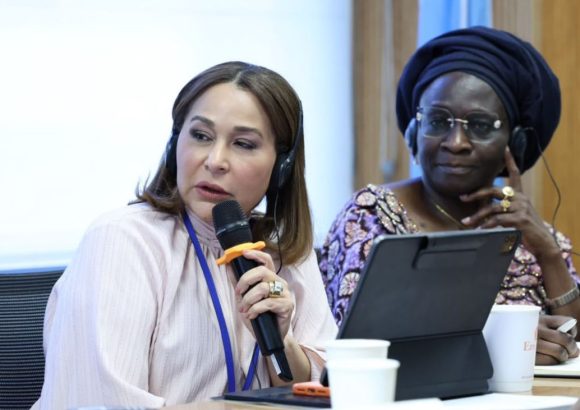
    At the United Nations High-Level Political Forum on Sustainable Development hosted by the UN Economic and Social Council in New York, Mayra Jiménez, director general of the Dominican Republic’s Social Development Directorate Supérate, took the global stage to outline the Caribbean nation’s significant strides in building inclusive, impact-driven social protection systems.

    In her address to forum attendees, Jiménez emphasized that targeted social protection has emerged as one of the most effective tools for lifting vulnerable households out of intergenerational poverty. By connecting marginalized communities to direct financial support, market-aligned employment opportunities, and life-sustaining essential public services, these policies create tangible, long-term change rather than temporary relief, she explained.

    Under the administration of President Luis Abinader, the Supérate program has scaled its reach dramatically, Jiménez reported. Currently, the initiative provides steady support to more than 1.4 million Dominican households through a combination of direct social subsidies and skills-based employment programs. Beyond direct financial aid, the government has also made major progress advancing the country’s national care strategy, expanding accessible home care services for citizens in need across the nation.

    A core marker of the policy’s success, Jiménez noted, is the country’s sharp reduction in national poverty rates. Between 2020 and 2025, the overall poverty rate fell from 25% to 17%, a drop Jiménez attributes to coordinated, cross-sector public policies centered on expanding social protection access and accelerating inclusive job creation across all economic sectors.

    During a dedicated panel discussion focused on global energy vulnerability and a just energy transition, Jiménez also detailed two targeted energy subsidy programs that have eased financial strain for low-income households: the Bono Gas and Bono Luz initiatives. These programs currently provide monthly energy-related subsidies to 1.2 million households and 620,000 households respectively, helping vulnerable families offset rising energy costs while the country advances its broader transition goals.

    The 2025 forum also featured a high-level strategic dialogue co-chaired by UN Deputy Secretary-General Amina Mohammed and UNDP Administrator Alexander De Croo, where attendees centered discussions on how robust social protection frameworks can help at-risk populations build resilience to the growing impacts of climate change and ongoing global economic and social crises.

    For additional coverage of local developments from the Dominican Republic, readers can visit the dedicated Dominican Republic news portal.

  • Flights between Dominican Republic and U.S. cities canceled due to severe weather

    Flights between Dominican Republic and U.S. cities canceled due to severe weather

    Travel plans have been thrown into disarray for passengers flying through one of the Dominican Republic’s busiest aviation hubs, after a wave of extreme weather in the United States forced widespread flight cancellations over the weekend.

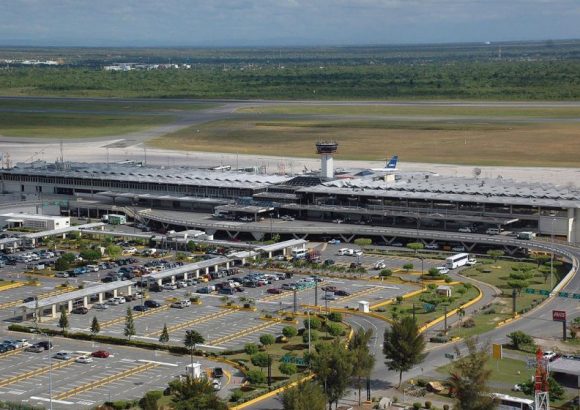
    Aeropuertos Dominicanos Siglo XXI (Aerodom), the operator managing the country’s main airport network, confirmed this week that several scheduled services at Las Américas International Airport (AILA), located just outside the capital Santo Domingo, have been scrapped amid ongoing travel chaos across the U.S. East Coast and Southeast.

    The cancellations are a direct knock-on effect of intense rainfall and sudden flash flooding that has battered large swathes of the U.S. this week, overwhelming infrastructure and forcing major air carriers to suspend operations across affected hubs. Spokesperson Luis José López, speaking on behalf of Aerodom, confirmed that three major airlines – U.S.-based carriers JetBlue and Delta Air Lines, and low-cost Caribbean carrier Arajet – are among the operators that have pulled their flights for the time being. The affected routes connect Santo Domingo to major U.S. destinations: New York, Boston, Orlando and Newark, all of which are currently grappling with the impacts of the severe weather system.

    Local airport officials have moved quickly to advise impacted travelers, urging anyone planning to fly to or from Las Américas International Airport to reach out directly to their airline for real-time updates on their booking before heading to the terminal. In a statement, authorities stressed that even as disruptions continue to inconvenience passengers, preserving the safety of all passengers and crew remains the number one priority through the duration of the adverse weather event. Many passengers have taken to social media to share updates on their rebooking struggles, as carriers work through a backlog of disrupted trips once weather conditions improve.

  • Bayahibe 10K to attract more than 600 runners in La Romana

    Bayahibe 10K to attract more than 600 runners in La Romana

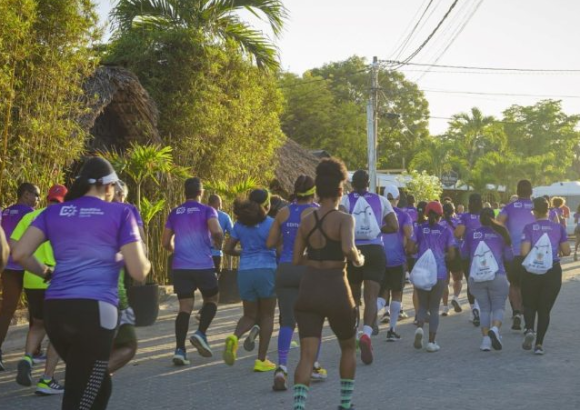
    The coastal Dominican town of Bayahibe is preparing to welcome hundreds of competitive runners and recreational athletes from across the Dominican Republic and abroad for the 11th edition of the popular Bayahibe 10K road race, scheduled to kick off on September 6. Organized jointly by the La Romana-Bayahibe Hotel Association (AHRB) and the La Romana-Bayahibe Tourism Cluster (CTRB), the race has grown into one of the nation’s premier sports tourism events, designed to raise the global profile of the La Romana region while delivering tangible economic benefits to local businesses.

    Unlike previous editions, this year’s race will start 15 to 30 minutes earlier at 6:30 a.m., a timed adjustment crafted to help participants avoid the sweltering peak mid-morning temperatures that often challenge runners on the Caribbean coast. The 10-kilometer route will follow the same beloved starting point at La Punta de Bayahibe, winding along a picturesque seaside path that balances fast, flat stretches ideal for runners targeting personal bests with more challenging hilly sections that test endurance and highlight the region’s natural coastal beauty.

    To ensure athlete safety and event smoothness, organizers have arranged comprehensive on-course support, including multiple hydration stations, on-site medical teams, and a multi-agency security detail. More than 80 personnel from six Dominican public institutions—Civil Defense, the 911 national emergency system, the Dominican Navy, the National Police, the Dominican Tourism Police (Politur), and the General Directorate of Traffic Safety (Digesett)—will be deployed across the course to respond to any incidents and manage crowd control.

    Regional tourism officials emphasize that the annual race has evolved into far more than a one-day athletic event: it has become a core strategic platform for positioning the La Romana-Bayahibe area as a top global destination for sports and wellness tourism. By attracting athletes and their traveling companions who combine competitive racing with leisure travel, the race drives consistent growth in local hotel bookings, restaurant visits, and participation in other regional tourism activities, creating long-term economic opportunity for the coastal community.

  • Dominican Republic calls for faster deployment of Haiti security force

    Dominican Republic calls for faster deployment of Haiti security force

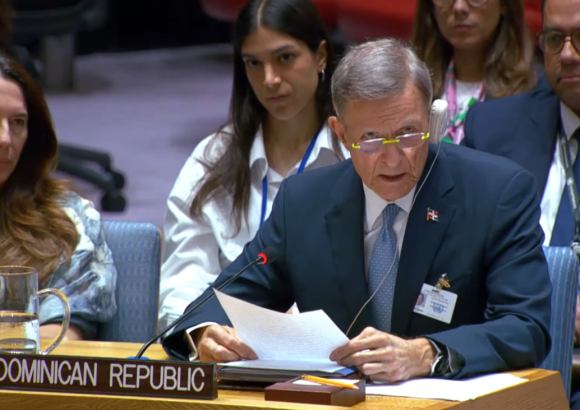
    Speaking before the United Nations Security Council at a high-stakes session focused on the escalating Haitian security crisis, Dominican Republic Foreign Minister Roberto Álvarez has delivered a clear, urgent appeal for the world body to extend two critical mandates: that of the Gang Suppression Force (GSF) and the UN Support Office in Haiti. Álvarez stressed that moving full steam ahead with already agreed-upon international measures is the only viable path to reestablishing widespread security across the violence-battered Caribbean nation.

    Álvarez opened his remarks by acknowledging tangible milestones delivered under UN Resolution 2793, the framework that greenlit the multinational security mission to Haiti. He noted that critical foundational steps have already been completed: the multinational force has been formally established, its command hierarchy has been put in place, and frontline operational activities have officially kicked off. Despite this early progress, the foreign minister pushed for faster action, calling for the immediate deployment of additional mission personnel and issuing a targeted appeal to nations with strategic airlift capacity to contribute much-needed logistical backing to the effort.

    A core pillar of Álvarez’s address centered on the inextricable link between security and democratic renewal for Haiti. He emphasized that no meaningful progress toward free governance can occur until widespread gang violence is brought under control, arguing that “security will make elections possible.” He went on to reaffirm the Dominican Republic’s unwavering backing for the holding of free, inclusive, and internationally credible elections that reflect the will of the Haitian people, a critical step toward long-term political stability.

    Álvarez also turned his attention to the enforcement of existing UN sanctions, calling for full and rigorous implementation of UN Resolution 2653. He pushed for far stronger punitive measures that target not only top gang leaders themselves but also the sprawling network of enablers that keep criminal operations running: individuals and groups that finance gang activity, facilitate the flow of illegal arms into Haiti, launder billions in illicit proceeds, or provide political cover and material support to violent criminal factions.

    The foreign minister was careful to draw a distinction between short-term security gains and long-lasting stability. While he recognized that the deployed international force is critical to helping Haitian authorities retake control of territory lost to gangs, he stressed that sustained peace can only be achieved by building up Haiti’s own domestic institutions. This includes strengthening the Haitian National Police, overhauling and reinforcing the country’s crumbling judicial system, and shoring up core state functions that have collapsed amid years of crisis.

    In closing, Álvarez reiterated the Dominican Republic’s firm commitment to supporting the renewal of the international security mission in Haiti. He outlined the Caribbean nation’s key priorities for the next mandate phase: ensuring the full deployment of the GSF across the country, strengthening enforcement of the existing arms embargo and sanctions regime, and sustaining ongoing efforts to build capacity within Haiti’s national institutions.

  • Puerto Plata temporarily closes Paseo Doña Blanca for restoration work

    Puerto Plata temporarily closes Paseo Doña Blanca for restoration work

    One of Puerto Plata’s most recognizable and frequently photographed tourist destinations is set to close for nearly three weeks starting next year, as local municipal leaders move forward with long-awaited preservation repairs to the beloved historic site.

    The Puerto Plata City Council announced that Paseo Doña Blanca, the vibrant pedestrian promenade that draws thousands of visitors annually for its picturesque views and cultural heritage, will be closed to all foot traffic between July 20 and August 5, 2026. While the closure is in effect, contracted work crews will carry out a full slate of upgrades: touching up faded paint on the promenade’s signature features, making structural repairs to damaged sections, and completing general maintenance across the entire site to reverse years of wear.

    In an official statement shared with the public, city authorities framed the temporary shutdown as a core part of the municipality’s ongoing commitment to protecting and revitalizing Puerto Plata’s array of historic and cultural landmarks. They urged local residents, tour guides, tourism operators, and out-of-town visitors to plan alternate itineraries during the work period and extended appreciation for public patience as the project moves forward.

    The restoration effort was launched in direct response to growing concerns raised by local residents and regional media outlets over visible deterioration of the site, most notably damage to the statue of Doña Blanca Franceschini de Rainieri. Doña Blanca holds a key place in Puerto Plata’s hospitality history: alongside her husband Isidoro Rainieri, she owned the former Hospedaje del Comercio, an inn that was later renamed Hotel Europa and stands as one of the earliest commercial hotels in the Dominican Republic.

    Municipal officials emphasized that the overarching goal of the project is to retain the one-of-a-kind charm that has made Paseo Doña Blanca a can’t-miss stop for travelers to the region. Known affectionately as the “Bride of the Atlantic,” Puerto Plata has long built its global reputation as a top historic Caribbean destination, and city leaders say the upgrades will ensure the site continues to meet visitor expectations for well-cared-for, culturally significant attractions for years to come.

  • Fenatrano’s Juan Hubieres accuses Senator Antonio Marte of targeting union routes

    Fenatrano’s Juan Hubieres accuses Senator Antonio Marte of targeting union routes

    escalating tensions between rival transport groups in the Dominican Republic have thrown the country’s public transportation system into a fresh round of conflict, with the head of one major union leveling serious accusations against a sitting senator who leads a competing organization.

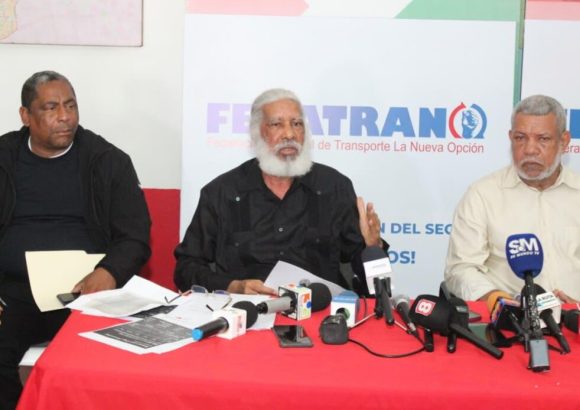
    Juan Hubieres, president of the National Federation of Public Transportation Workers (Fenatrano), has publicly charged Senator Antonio Marte, who also leads the National Confederation of Transportation (Conatra), with orchestrating a power grab to seize control of key public transit corridors that are currently operated by Fenatrano-affiliated route holders. At the core of the dispute is a fight over government-authorized route permissions, which are critical for operators to run legal and profitable bus services across the country.

    According to Hubieres, Marte has been applying heavy pressure on national transportation authorities to revoke the legally granted operating rights of Fenatrano’s affiliated transport providers. The end goal of this pressure campaign, Hubieres claims, is to clear the way for Conatra to take over additional government-approved transit corridors, expanding Marte’s influence and control over the sector. Beyond the route grab, the Fenatrano leader has also alleged that the senator has received improper benefits through favorable government transportation contracts and access to heavily subsidized fuel. To address these claims, Hubieres is calling for a full, independent investigation into Marte’s business arrangements within the public transportation system.

    Hubieres also turned his criticism to the National Institute of Transit and Land Transportation (Intrant), the country’s top regulatory body for land transport. He specifically called out the recent detention of Fenatrano vehicles operating along the heavily trafficked Mella corridor, arguing that the move directly violates the legally recognized operating rights held by his organization’s members. In an effort to push the regulator back to neutrality, Hubieres has urged Intrant Director Milton Morrison to refrain from aligning with either side in the ongoing conflict and to uphold the rule of law for all transport operators.

    In sharp warnings against what he frames as a monopolistic power play, Hubieres stated that Marte is actively working to consolidate full control of the country’s major transit corridors. He made clear that Fenatrano will mount robust opposition to any attempt to displace its affiliated operators and revoke their legally held route rights. Hubieres also pointed to a history of violent conflict within the Dominican transport sector, emphasizing that the aggressive, intimidation-based tactics that marred past disputes must not be allowed to resurface in the current standoff.

    The latest public accusations are just the most recent development in a long-running, high-stakes conflict over how public transportation corridors are allocated and managed across the Dominican Republic, with control of these routes translating directly to significant economic and political influence for the groups that hold them.