标签: Dominican Republic

多米尼加共和国

  • Today marks 67 years after June 14: the feat that broke the dictatorship from within

    Today marks 67 years after June 14: the feat that broke the dictatorship from within

    Sixty-seven years after the landmark Constanza, Maimón, and Estero Hondo expedition touched Dominican soil, this defining moment in the nation’s fight for democratic rule remains a cornerstone of the country’s modern political history. What began as a coordinated armed incursion against the long-standing authoritarian regime of Rafael Leonidas Trujillo ultimately failed as a direct military operation, but its legacy sparked the popular opposition that would topple Trujillo’s decades-long dictatorship years later.

    Decades after the event, historians and storytellers have preserved the memory of the expeditionaries’ patriotic mission through published histories, oral anecdotes, and investigative journalistic work, cementing the uprising’s role as the catalyst that restored Dominican democracy. On the afternoon of June 14, 1959, a modified Curtiss C-46 cargo plane rolled down a runway in El Aguacate, Cuba, carrying 54 armed fighters toward the Dominican Republic. To evade detection by Trujillo’s border forces, the aircraft had been repainted to match the colors and official insignia of the Dominican Air Force, with Captain Juan de Dios Ventura Simón – a defector from Trujillo’s own Air Force – at the controls.

    Leading the ground operation was Dominican commander Enrique Jiménez Moya, at the head of a multinational coalition of volunteers committed to ending Trujillo’s 29-year authoritarian rule. Fighters from Cuba, Venezuela, Puerto Rico, Spain, the United States, and Guatemala joined Dominican rebels, uniting disparate ideological backgrounds and personal circumstances around a single shared goal of ousting the dictator. The airborne insertion was only one part of a far larger coordinated plan: two speedboats, the *Carmen Elsa* and *Tinima*, had departed a day earlier from La Chiva dock in Nipe Bay, Cuba, carrying 144 additional expeditionaries scheduled to land on June 14 at two northern Dominican coastal sites, Maimón and Estero Hondo. However, a combination of internal sabotage and severe bad weather delayed the boats’ arrival by six full days, forcing them to miss the planned coordinated landing.

    Despite the setback to the full plan, the C-46 touched down on schedule at a small remote airstrip outside Constanza. Trujillo’s garrison soldiers stationed nearby had no advance warning of the incoming flight, and the initial confusion among defending forces played into the rebels’ hands. After a brief firefight with a local patrol that left several soldiers and one officer dead, the expeditionaries unloaded their gear and slipped off the airstrip as the plane returned to Cuba. Back in the capital of Santo Domingo, Trujillo moved quickly to crush the incursion, deploying nearly 3,000 ground troops supported by truck convoys and air support. By dawn on June 15, Constanza had been turned into a war zone, with regime aircraft carrying out continuous bombing runs; the rebels were forced to retreat into the surrounding mountains to evade the assault.

    Six days behind schedule, the two expeditionary speedboats finally reached Dominican shores. The *Carmen Elsa* landed at Maimón under the command of José Horacio Rodríguez, while the *Tinima* put ashore at Estero Hondo led by José Antonio Campos Navarro. Trujillo’s military had already prepared for the delayed landing, and an additional 3,000 troops backed by air and ground fire repelled the incursion, leaving no survivors from the maritime expeditionary force. After suppressing the uprising, the Trujillo regime launched a deliberate propaganda campaign claiming that the invasion had been defeated not by its professional military, but by ordinary Dominican peasants armed only with machetes, clubs, and hand-thrown stones. The regime built this narrative into a massive public relations push, producing heroic folk songs, merengues, poetry, public rallies and competitions to celebrate the supposed popular victory over the rebels. But the truth of the aftermath was far grimmer: dozens of captured expeditionaries were secretly taken to Trujillo’s torture facilities and extrajudicially executed.

    Only a tiny handful of rebels survived the crackdown: three Dominican fighters, Poncio Pou Saleta, Mayobanex Vargas, and Francisco Medardo Germán, along with two Cuban volunteers – Delio Gómez Ochoa, a veteran of the Cuban Sierra Maestra insurgency, and teenage fighter Pablito Mirabal. While the 1959 expedition was a total military defeat, it reshaped the future of Dominican opposition politics as a powerful symbolic spark. The brutal, indiscriminate repression the regime unleashed against the uprising and its sympathizers generated widespread national outrage, amplifying deep existing discontent with Trujillo’s authoritarian rule.

    In the months following the incursion, a small group of young Dominican opponents began organizing secretly, inspired by the expeditionaries’ sacrifice. Led by Manolo Tavárez Justo and Minerva Mirabal, the group named itself after the June 14 uprising, founding the 14 June Revolutionary Movement (1J4). Within just a few years, the movement grew into one of the most powerful anti-regime political forces in the country, playing a critical role in the eventual collapse of Trujillo’s dictatorship. To honor the expeditionaries’ legacy, the Dominican government passed Law 264-97, which officially designated June 14 as the Day of the Immortal Race, and a mausoleum at the Center of Heroes in Santo Domingo now holds the remains of the fallen fighters, preserving their memory for future generations.

  • Two French tourists killed and five others injured in traffic accident in Samaná

    Two French tourists killed and five others injured in traffic accident in Samaná

    A devastating head-on traffic collision in the Dominican Republic’s Samaná Province has claimed the lives of two French citizens and left multiple people with injuries, according to official preliminary accounts of the incident. The crash unfolded Saturday night on the key Sánchez–Samaná highway in the El Catey community, a stretch of road that links the province’s most popular tourism hubs, when a tourist minibus carrying passengers collided directly with a pickup truck.

    Local authorities have formally identified the two deceased victims as Jean Phillippe Champeaux and Severine Yvette Claudette Leuk. Medical examiners’ reports detail the fatal injuries each sustained: Champeaux died from extensive blunt force trauma to his closed skull and abdomen, while Leuk passed away due to catastrophic head damage, including a basal skull fracture.

    Multiple other people were hurt in the impact, including the driver of the tourist minibus, Jorge Thomas Dishmey Amparo. Two other casualties include Victoriana Altagracia and her 14-year-old daughter, who were riding a motorcycle near the collision site when the crash occurred and also suffered injuries. Additionally, two Haitian nationals are among those wounded, though their full identities remain unknown as of Monday, as neither individual carried official identification at the time of the incident.

    Preliminary investigations into the crash point to reckless driving as the likely cause: authorities say the pickup truck attempted an unsafe overtaking maneuver that put it directly in the path of the oncoming tourist minibus, triggering the fatal collision. Formal investigations are still ongoing to confirm all contributing factors and the full sequence of events leading to the tragedy.

    Following the fatal crash, regional observers and community leaders have renewed longstanding concerns about inadequate road safety protocols on Dominican highways, especially along corridors that see heavy traffic from tourists visiting popular coastal and scenic destinations across the country.

  • Dreams Dominicus: “La Romana is experiencing a historic level of occupancy”

    Dreams Dominicus: “La Romana is experiencing a historic level of occupancy”

    The Caribbean tourism hub of La Romana-Bayahibe is enjoying an unprecedented boom in its hospitality sector, with industry leaders reporting some of the strongest performance in the destination’s modern history. Amando Pozo, general manager of the prominent Dreams Dominicus La Romana resort, says the region’s hotel industry is reaping the benefits of shifting global travel patterns paired with unique natural advantages that set it apart from competing Caribbean getaways.

    According to Pozo, post-pandemic traveler mindsets have reshaped international vacation demand, driving the impressive surge in occupancy. “Since the pandemic passed it seems that worldwide everyone has reflected that they have to enjoy themselves, travel, have a good time and not be stingy on their vacations,” he explained in an interview with areca.com. This shift in consumer priorities has delivered widespread economic gains to the Dominican Republic’s tourism sector, amplified by external socio-political and environmental developments impacting neighboring destination rivals.

    Unusual environmental challenges in parts of coastal Mexico, which has struggled with widespread sargassum blooms on popular beaches, along with ongoing socio-political uncertainty in Cuba, have redirected growing volumes of international travelers to the Dominican Republic’s La Romana region. Pozo emphasized that these external factors, combined with the area’s pristine natural offerings, have pushed occupancy to all-time highs that outperform every pre-pandemic season on record.

    At Pozo’s own property, a 488-room resort belonging to Inclusive Collection, part of World Hyatt, current occupancy sits at a robust 92%. That strong figure comes in large part from the destination’s biggest selling point: untouched, sargassum-free shorelines. “La Romana is indeed very popular because we are grateful to have clean beaches, there is no sargassum, no seaweed and this benefits us greatly,” Pozo noted.

    Beyond its natural advantages, the resort offers convenient access to key travel infrastructure, located just 20 minutes from La Romana International Airport. It also features a purpose-built pier that can host private events ranging from weddings to birthday gatherings, accommodating up to 50 guests for standing events or 30 guests for seated occasions. With occupancy rates holding steadily above 90% and demand continuing to climb, La Romana-Bayahibe is cementing its status as one of the most sought-after tourist destinations in the entire Caribbean, with the hospitality sector positioned for sustained growth into coming travel seasons.

  • Amber Highway: the project that will change the economic map of Santiago and Puerto Plata

    Amber Highway: the project that will change the economic map of Santiago and Puerto Plata

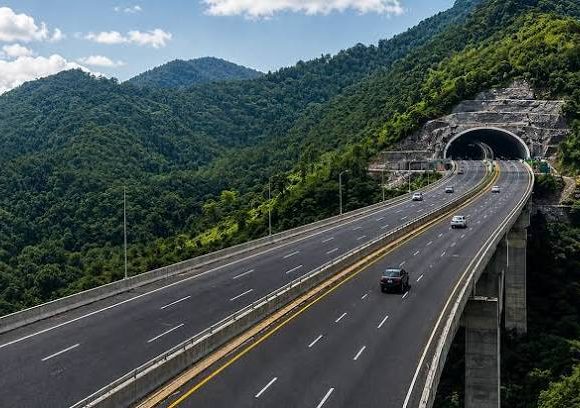
    For the Dominican Republic’s northern corridor, the Amber Highway is far more than an uncompleted public works project tucked into a list of pending initiatives. This long-planned infrastructure venture stands as a transformative strategic link that, if delivered to the promised technical specifications, has the potential to reshape connectivity, trade, tourism, and long-term economic growth across Santiago, Puerto Plata and the entire North Coast for generations to come. The project has recently reemerged at the center of public debate, driven by advancing bidding processes, ongoing evaluation of technical proposals, and mounting expectations from communities across the region, including Santiago, Puerto Plata, Montellano, Sosúa, Cabarete, the Gregorio Luperón International Airport and the wider North Coast tourism corridor. While most public discussion frames the highway as a simple solution to cut travel time between Santiago and Puerto Plata, its purpose extends far beyond reduced commute times: it will directly connect Cibao’s primary economic heartland to a major tourist province that is actively working to reposition itself through new hotels, large-scale real estate developments, expanded airport infrastructure and commercial growth projects. According to official data reviewed by local outlet InfoENN – El Nuevo Norte, the completed highway will stretch between 32 and 32.7 kilometers, featuring four total lanes (two in each direction) and a designed operating speed of 100 kilometers per hour. Its core goal is to establish a modern, more direct and far safer connection between the existing Santiago Northern Bypass and the Puerto Plata–Sosúa highway. A critical detail that has gone largely undiscussed in public discourse is the highway’s alignment: rather than terminating directly in central Puerto Plata, it will route to the Montellano area, linking to the Puerto Plata–Sosúa corridor near the existing transport axis that connects Puerto Plata city, Gran Parada, Gregorio Luperón Airport, Sosúa and Cabarete. This routing fundamentally changes the project’s impact, repositioning Montellano from a forgotten transit town to a strategic hub for road transport, tourism, logistics and real estate development. From this new hub, vehicles departing Santiago will be able to access Puerto Plata, Sosúa, Cabarete, Playa Dorada, Maimón, the airport, Punta Bergantín and other key North Coast destinations without being forced onto crowded, outdated traditional routes. Traversing a rugged mountainous region, the Amber Highway breaks from the pattern of narrow, slow, curve-heavy mountain roads common to the area. Available technical plans outline a mixed engineering approach that incorporates open roadway sections, terrain cuts, embankments, retaining walls, bridges, viaducts, interchanges, overpasses and two purpose-built tunnels. The tunnels stand as one of the project’s most defining features: one will measure approximately 1.8 kilometers long, while the second will span roughly 0.7 kilometers, engineered to cut through mountain barriers, minimize sharp curves and steep grades, and reduce overall driving hazards. This modern design sets the new highway apart from the existing Gregorio Luperón Tourist Highway, a long-serving but notoriously challenging route marked by tight curves, steep slopes and elevated driving risks. The new corridor is designed to deliver a smoother, faster and safer route for passenger vehicles, tourist shuttles, intercity buses, commercial trade, cargo transport, business services and airport connections. The project’s greatest potential impact lies in broad regional economic development, rather than just improved transport. It promises to deliver direct, lasting benefits to the economies of both Santiago and Puerto Plata: Santiago acts as the commercial and industrial core of the Cibao region, while Puerto Plata ranks among the Dominican Republic’s top tourist destinations, with world-class beaches, established hotel infrastructure, commercial ports, an international airport, growing real estate development and a coastal corridor with massive untapped expansion potential. A high-speed link between the two provinces will boost domestic visitor flows, streamline freight transport, ease commutes for workers, cut overall logistics costs, and lift land and property values across corridor-adjacent areas. In Puerto Plata, growth will likely be concentrated in Montellano, Gran Parada, Sosúa, Cabarete, the zone surrounding Gregorio Luperón International Airport and developments tied to the Punta Bergantín project. A wide range of local stakeholders stand to benefit, including suppliers, construction firms, tour operators, transport companies, investors, merchants, hoteliers, restaurateurs and residential real estate developers that rely on improved connectivity to Santiago and the rest of the country. One largely underreported aspect of the project is how the Amber Highway aligns with Puerto Plata’s planned new regional tourism map. Punta Bergantín has been positioned as one of the most ambitious projects to revitalize tourism across the North Coast, and large-scale success for the development hinges on reliable, high-speed land connectivity. A modern highway from Santiago will streamline access for investors, visitors, employees, suppliers, construction contractors and supporting service providers heading to the development, while also strengthening Gregorio Luperón International Airport’s position as a more convenient travel terminal for residents and visitors across the Cibao region. If the airport can establish an effective high-speed link to Santiago, Puerto Plata will be able to compete far more effectively as a combined air and tourism gateway for much of the Dominican Republic’s northern territory. The project is being advanced by the Dominican Ministry of Public Works and Communications through the RD Vial Trust. The national public tender, identified as FIDEICOMISO-CCC-LPN-2025-0010, aims to award a contract for both the design and construction of the full highway. Initially, the deadline for proposal submission was set for March 2026, but officials extended the deadline to May to encourage broader participation and strengthen competition among interested construction groups. Following the extension, RD Vial confirmed that it had received and opened technical proposals (Envelope A of the bidding process) from three competing consortia: Consorcio Autopista del Ámbar, Consorcio AutoAmbar, and Consorcio Ruta del Ámbar. To ensure transparency, the bid opening stage included oversight from a Citizen Oversight Commission, public notaries, bidder representatives and members of the Purchasing and Contracting Committee. As of the latest update, no final award has been announced. The process has advanced to evaluation of the submitted technical proposals, with opening of financial bids from qualified participants and the final contract award still pending. The total estimated cost of the Amber Highway project exceeds RD$32 billion, making it one of the largest and most impactful road infrastructure investments in the Dominican Republic’s recent history. However, the project’s value extends far beyond its construction price tag. Its true significance lies in its potential to reshape economic development across the North, integrate two of the country’s most important provinces, and unlock tourism growth in a region rich with natural, cultural and real estate assets. For Santiago, the highway delivers a long-sought direct route to the Atlantic coast. For Puerto Plata, it creates a far stronger connection to the Cibao region’s economic engine. For Sosúa, Cabarete and Montellano, it could open the door to an entirely new era of growth and development. Even as regional stakeholders express enthusiasm for the project, success will require proactive planning to address emerging challenges. A project of this scale will bring transformative development, but also complex new pressures. Municipalities across Montellano, Gran Parada, Sosúa and Cabarete will need to update land use planning, enforce zoning controls, upgrade drainage infrastructure, expand road safety measures, regulate new access points, strengthen environmental protections and expand public services to accommodate incoming growth. As connectivity improves, pressure from real estate, commercial and tourism development will rise. When managed strategically, this growth can deliver a once-in-a-generation economic boost, but unplanned growth can lead to urban disorder if local governments are not prepared to accommodate new development. The Amber Highway has the potential to redraw the Dominican Republic’s northern economic map, but its long-term success will depend on far more than just asphalt. It will require intentional planning, sustained transparency, high-quality construction, and collaborative effort to help local communities integrate new development opportunities effectively.

  • Merchants support restricting daytime traffic of heavy vehicles

    Merchants support restricting daytime traffic of heavy vehicles

    A top business leader in the Dominican Republic has thrown his organization’s full weight behind a public advocacy campaign from leading national newspaper Listin Diario, which calls for strict restrictions on heavy truck and trailer movement during peak daytime working hours to cut down on crippling traffic congestion in the country’s two largest urban areas, Greater Santo Domingo and Santiago. The proposal, outlined in the outlet’s recent editorial titled “Heavy Vehicles in Peak Hours,” has earned clear backing from Iván García, president of the Dominican Federation of Merchants (FDC).

    García highlighted that national transit agencies Intrant and RD Vial, the governing bodies responsible for managing the country’s highway network, have long had the authority to regulate movement of large heavy-duty vehicles including flatbed trucks, double-axle trucks and double-van trucks. He pointed to recurring public safety and traffic problems linked to unregulated heavy truck passage through urban and town centers across the country, specifically naming the central towns of Mao and Esperanza as locations that have seen repeated collisions involving large freight trucks hauling construction materials and food supplies toward the capital.

    After the town of Esperanza banned through traffic for heavy trucks, most vehicles were rerouted through the Guayacanes intersection – a shift that did little to resolve underlying safety and gridlock issues that plague communities across the nation, according to García. He emphasized that large freight vehicles create persistent, unnecessary congestion in urban cores, particularly in Santo Domingo, the country’s capital and most populous urban center.

    García argued that the geographic constraints of the Dominican Republic make off-peak overnight travel entirely feasible for long-haul heavy freight operators. The longest intercity route for trucks heading to the capital stretches just 130 kilometers, a trip that can easily be completed if drivers depart by 10:00 p.m., arriving at their destination between 3:00 a.m. and 4:00 a.m. This shift would keep both highway and urban street traffic flowing freely for passenger vehicles and smaller commercial vehicles during daylight working hours, he explained.

    The FDC president also drew a key distinction between large long-haul freight trucks and smaller local delivery vehicles. He noted that long-haul flatbed trucks typically measure 40 feet in length, and double-axle configurations can stretch up to 80 feet total. By contrast, smaller delivery trucks used for last-mile distribution to local businesses are only around 15 feet long, and do not create the same major traffic disruptions as their larger long-haul counterparts.

    García said the Dominican Federation of Merchants has long been aware of this public safety and traffic crisis, having first discussed the issue with the National Federation of Transport Workers (Fenatrado) two decades ago. He expressed hope that the high-profile campaign from Listin Diario, the country’s most enduring and well-established media outlet, would draw meaningful attention from both national regulatory authorities and private business and transport sectors. The FDC stands fully behind the outlet’s proposal, he confirmed.

    While García acknowledged that implementing the new restrictions would require domestic merchants to adjust their own operational schedules to coordinate overnight dispatches and goodsreceipts, he stressed that the commercial sector is fully willing to make this adjustment for the public good. “This will even require us to get up earlier to receive the goods, but I understand that we all have to pay the price, the cost of this sacrifice, for the benefit of the majority of the country,” García stated. He added that the commercial sector is already prepared to open warehouse facilities as early as 5:00 a.m. to accept incoming freight shipments from overnight long-haul runs.

    Listin Diario’s editorial clarifies that the current crisis is not the result of a lack of existing regulation. The National Institute of Transit and Land Transportation (INTRANT) has already put formal restricted hours in place for heavy vehicle traffic in urban areas, but the existing rules are not being enforced by authorities, leaving congestion and safety risks unaddressed.

  • Solar energy leads the renewable energy expansion in the Dominican Republic

    Solar energy leads the renewable energy expansion in the Dominican Republic

    Renewable energy, derived from naturally replenishing, widely available sources ranging from sunlight to wind, has emerged as a critical solution to global energy insecurity and climate risks, with the Dominican Republic posting striking expansion of its solar generation capacity in recent years. New data from the country’s National Interconnected Electric System (SENI) reveals that between 2025 and June 2026 alone, the Dominican Republic added 100 megawatts (MW) of new installed solar capacity, boosting the share of clean energy in the national energy grid.

    Over the longer six-year period from 2020 to June 2026, SENI figures show cumulative installed solar capacity has skyrocketed by 806.6%, cementing solar as the fastest-growing renewable technology in the country. This growth outpaces all other clean energy sources in the nation: wind energy recorded a far more moderate 30.2% capacity increase over the same period, while both biomass and hydroelectric power saw no growth in installed capacity at all. Across all renewable technologies combined, the Dominican Republic’s total installed renewable capacity has now crossed the 2,000 MW threshold, a milestone that comes amid ongoing geopolitical instability in the Middle East that has roiled global fossil fuel markets.

    As the Dominican Energy and Mines Ministry notes, nations that remain heavily reliant on imported fossil fuels face acute vulnerability to global price swings, particularly during periods of geopolitical conflict and global economic uncertainty. Any disruption to global fossil fuel supply quickly translates to higher costs for electricity generation, domestic manufacturing, and transportation, putting sustained pressure on national economies. To insulate itself from these risks, the Dominican government has prioritized rapid expansion of renewable energy development, a policy that has already lifted the share of clean energy in the country’s total consumption to roughly 25%.

    The Dominican Republic’s progress aligns with a broader global shift away from fossil fuels outlined by leading international energy bodies. United Nations data shows that roughly 80% of the global population—around 6 billion people—reside in countries that depend on imported fossil fuels, leaving billions exposed to the market volatility and supply risks triggered by geopolitical crises including the ongoing conflict in the Middle East. In response to this systemic risk, the International Renewable Energy Agency (IRENA) has set a target for 90% of global electricity to come from renewable sources by 2050, with the UN projecting that renewables could become the world’s largest source of electricity generation as early as 2030, supplying around 65% of total global electricity demand.

    Currently, fossil fuels including coal, oil, and natural gas still account for more than 80% of total global energy production, though renewables have steadily gained market share and now supply 29% of global electricity. Beyond strengthening energy security, a full transition to renewables would allow the global energy sector to cut its carbon emissions by as much as 90% by 2050 through deep decarbonization, delivering a critical blow to slowing the progression of catastrophic climate change.

    For Latin America and the Caribbean, the regional energy landscape retains a heavy reliance on fossil fuel production and exports, according to the Latin American and Caribbean Energy Organization (OLADE). The region accounts for 11% of global crude oil output and 6% of global natural gas production, with Brazil, Mexico, and Venezuela leading regional crude production, and Argentina, Trinidad and Tobago, and Brazil topping the rankings for natural gas output. Roughly 46% of the region’s oil production is exported: 22% goes to other markets within Latin America and the Caribbean, 31% to China, 18% to the United States, and 15% to the European Union.

    As renewable capacity expands across the globe and the region, energy storage has emerged as the next critical growth market for the sector. Data from Solis Latam and the International Energy Agency (IEA) shows battery storage was already one of the world’s fastest-growing energy technologies in 2025, with total global installed capacity hitting 108 gigawatts, up from 2024 levels. Solis Latam projects that global energy storage capacity growth will match the 40% expansion seen in 2025 in 2026, positioning the storage sector as a key competitive arena for solar and renewable energy firms globally and across Latin America. Alba Min Ye, CEO of Solis Latam, notes that analysis from research firm Grand View Research projects the regional battery energy storage market will surge from $890 million in 2024 to more than $6.3 billion by 2030, underscoring the massive growth potential for clean energy infrastructure across the Americas.

  • Mission IMF says country’s economy will grow by 4%, suggests prudent fiscal policy

    Mission IMF says country’s economy will grow by 4%, suggests prudent fiscal policy

    Following a concluding staff evaluation mission led by senior official Ricardo Llaudes, the International Monetary Fund (IMF) has released an upbeat yet cautious economic outlook for the Dominican Republic, forecasting 4% gross domestic product growth for the current year. The multilateral lender also projects that the nation’s inflation will hold steady within a targeted range of 3% to 5%, a forecast that signals relative macroeconomic stability for the Caribbean economy. The mission, which held in-depth talks with Central Bank Governor Héctor Valdez Albizu and senior leadership from the Ministry of Finance and Economy, collected and analyzed preliminary economic performance data from both public and private sector stakeholders across the country.

    Llaudes emphasized that the Dominican economy has outperformed many peer economies even amid persistent global economic headwinds, pointing to sustained strong cross-border income streams that continue to drive expansion. Key growth engines, including export activity, the critical tourism sector, and inflows of foreign direct investment, all remain at healthy high levels, according to the IMF assessment. These robust sectors are expected to keep the nation’s current account deficit contained to just slightly above 1.5% of GDP, a manageable gap that poses little immediate threat to macroeconomic stability.

    On the financial sector front, the IMF delegation confirmed that Dominican Republic’s banking and financial system remains strongly resilient, bolstered by solid capitalization levels that meet international regulatory requirements and consistent healthy profitability across institutions. To lock in this stability and support long-term expansion, the organization stressed that continuing a cautious, prudent fiscal policy framework remains non-negotiable. This strategy, the IMF notes, must be rooted in strict adherence to the nation’s existing fiscal rule while prioritizing the protection of critical capital spending that drives long-term infrastructure and productivity growth.

    Central Bank Governor Valdez Albizu echoed the IMF’s assessment, reaffirming that the Dominican central bank is closely tracking the spillover effects of external economic shocks to proactively adjust monetary policy as needed. He also highlighted the Dominican economy’s proven ability to withstand volatility in global markets, and confirmed that the central bank aligns with the IMF’s 4% growth projection for the current year.

  • Is this your route? Santo Domingo cable car suspends service on key section: Which users should know?

    Is this your route? Santo Domingo cable car suspends service on key section: Which users should know?

    In a public announcement released this Saturday, the Metropolitan Transportation Company has confirmed that a key segment of the Santo Domingo Cable Car network will be taken out of service temporarily for mandatory inspection work. Specifically, Section 2 of Line 1, which connects the Charles de Gaulle and Sabana Perdida stations, will be closed to passengers as part of the transit system’s routine planned upkeep program.

    The transportation authority stressed that the temporary closure only impacts this specific 2-station stretch, and all other segments of Line 1 will continue running according to their regular schedules with no service adjustments. To minimize disruption to daily commuters who rely on the affected section, the company has arranged for complementary transit support from OMSA, which will deploy additional buses to pick up and drop off passengers along the closed route.

    In an official statement shared with the public, the Metropolitan Transportation Company extended its gratitude to riders for their patience during the maintenance period, and offered a formal apology for any disruption to travel plans that the temporary closure may cause. Routine maintenance work like this is standard practice for public transit systems worldwide, carried out to identify potential safety hazards, address minor wear and tear, and ensure long-term reliable operation for all passengers.

  • 6 bloody months June is stained with blood, nearly 10 dead including teenagers

    6 bloody months June is stained with blood, nearly 10 dead including teenagers

    Just 13 days into June 2026, the Dominican Republic has been rocked by an alarming wave of violence that has left an average of one person dead by violent means every day so far this month, with preliminary official counts and local press reports tallying nearly a dozen homicides across multiple provinces. This surge in fatal violence has sown widespread fear and unease across the Caribbean nation, as communities grapple with the frequency and brutality of the latest killings.

    Among the most distressing cases that have captured national attention is the death of a 14-year-old girl held in custody at a youth shelter operated by the National Council for Children and Adolescents (Conani) in San Antonio de Guerra. The circumstances surrounding the teen’s killing remain unclear, with the Public Prosecutor’s Office and the National Police currently leading a joint investigation into the incident. In response to the tragedy, the victim’s family has publicly demanded full accountability and justice for their daughter’s death.

    Another high-profile incident that has deepened public consternation occurred in the Valiente sector of Boca Chica, where two teenage boys were murdered in a targeted attack. The killing has sparked renewed outcry over the persistent lack of safety for minors growing up in the country’s most socioeconomically vulnerable neighborhoods. Beyond these cases of underage fatalities, the mid-June violence includes a string of other deadly incidents: the femicide of young mother Sugeldy Arias in San Cristóbal, the fatal shooting of a man in Bahoruco at the hands of his own father-in-law, and multiple additional violent deaths across working-class neighborhoods in Greater Santo Domingo and Santiago. These killings have been tied to a range of root causes, from personal disputes and street fights to widespread organized criminal activity.

    A consistent and troubling pattern linking nearly all these recent violent deaths is the widespread use of illegal firearms and bladed weapons, a trend that experts say highlights the systemic failure of authorities to regulate arms circulation and restrict access to deadly weapons across the country. Clinical psychologist Marcel Santos, a specialist on community violence, has warned that the Dominican Republic is currently navigating a period of extreme public vulnerability, where three interconnected crises—domestic abuse, transnational organized crime, and unresolved intercommunal conflict—have combined to drive the spike in fatal violence.

    Santos added that seasonal factors and ongoing economic strain have exacerbated the already tense security landscape, noting that rising temperatures and widespread financial precarity tend to increase the frequency of violent confrontations. The specialist emphasized that no single policy fix will address the crisis, calling on national and local governments to implement holistic, cross-sector policies that tackle both public safety gaps and the unaddressed mental health needs of at-risk communities. With more than half of June still remaining, the early surge in violence has made clear that urgent action to strengthen violence prevention and citizen protection measures is needed to reverse the dangerous trend gripping the nation.

  • Young man killed during alleged shootout in Tábara Arriba, Azua

    Young man killed during alleged shootout in Tábara Arriba, Azua

    A fatal confrontation between a wanted suspect and law enforcement unfolded in the Dominican Republic’s southwestern province of Azua Friday afternoon, ending in the death of 31-year-old Junior Alexander Peña following an alleged gun battle with operatives from the Central Directorate of Criminal Investigation (Dicrim).

    The incident took place on the main thoroughfare of the La Palmita neighborhood, located within Tábara Arriba municipality, according to initial official statements. Peña was already the target of five active arrest warrants at the time of the planned operation, law enforcement officials confirmed.

    Preliminary accounts from authorities, backed by a forensic certificate from the Dominican National Institute of Forensic Science (INACIF), outline that the suspect spotted the Dicrim agents approaching before drawing a loaded firearm and opening fire multiple times. After exchanging gunfire, Peña barricaded himself inside a local residence with a zinc roof. In response to the attack, Dicrim agents returned fire, inflicting life-threatening injuries on the suspect that ultimately proved fatal.

    Following the conclusion of the operation, law enforcement personnel secured two illicit firearms from the scene: a semi-automatic pistol manufactured by Browning, and a second unbranded black pistol. Investigators also recovered a collection of spent 9mm caliber shell casings as evidence for ongoing procedural review.