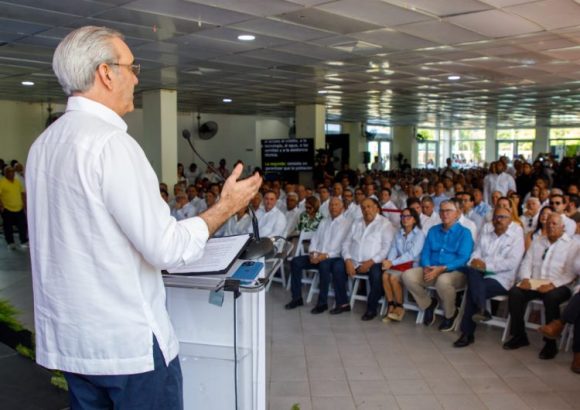
In a celebratory public gathering held in Moca, Dominican Republic, President Luis Abinader publicly extended gratitude to the nation’s agricultural producers for their foundational role in securing a landmark achievement: the country’s removal from the United Nations Food and Agriculture Organization’s (FAO) global Hunger Map. The president framed the milestone not as the victory of a single group, but as a collective success that unites every segment of Dominican society.
Abinader detailed that the country has cut the rate of undernourishment across its population to less than 2.5 percent, a threshold that qualified it for removal from the high-priority Hunger Map. He attributed this progress to two interconnected pillars: steady growth in domestic food production, and targeted government policies designed to expand equitable access to nutritious food. These policy measures include direct support for small and large-scale farming operations, broad wage increases for working households, sustained job creation across sectors, and a major expansion of social protection programs that reach vulnerable communities.
“The Dominican Republic is off the Hunger Map because its producers never stopped feeding and working for this country,” Abinader told attendees. Following this recognition, the president reaffirmed his administration’s ongoing commitment to advancing the agricultural sector, outlining a continued agenda of investment in key priorities: expanded access to affordable financing for farmers, upgraded national irrigation systems, hands-on technical assistance for producers, expanded agricultural insurance coverage, and broad improvements to agricultural infrastructure from roads to storage facilities.
Speaking on behalf of the Dominican agricultural sector, industry representative Dionis Fernández echoed the president’s remarks, noting that the FAO’s decision to remove the country from the Hunger Map is more than a symbolic win—it serves as clear proof that long-term structural reforms have meaningfully improved the nation’s overall food security. Fernández called for sustained public and private investment in financing, advanced agricultural technology, infrastructure development, insurance frameworks, and expanded access to domestic and international markets, arguing these investments are critical to boosting both the competitiveness and long-term sustainability of Dominican agriculture.