标签: Dominican Republic

多米尼加共和国

  • Faride Raful: Government will respect court ruling on alcohol sales restrictions

    Faride Raful: Government will respect court ruling on alcohol sales restrictions

    On Wednesday, Dominican Republic’s Interior and Police Minister Faride Raful confirmed that the national government will honor a recent ruling from the Constitutional Court that struck down a decades-old executive decree regulating alcohol sales hours, announcing plans to partner with the National Congress to craft a replacement piece of legislation.

    In a public statement shared across major social media platforms, Raful emphasized that the executive branch maintains unwavering respect for the judicial branch’s independent decision. She outlined that the government will work closely with sitting legislators while soliciting input from broader Dominican society to develop a regulatory framework that is both up-to-date and effective at achieving its core goals. Reaffirming the government’s core priorities, Raful noted that protecting public safety and fostering peaceful community coexistence will remain at the center of the new regulatory efforts.

    The Constitutional Court’s ruling centers on a 2006 executive decree that set binding restrictions on when alcohol could be sold across the country. According to the court’s judgment, permanent regulatory restrictions of this nature must be enacted through formal legislation passed by the legislative branch, rather than via executive decree, making the 2001 rule unconstitutional on structural separation of powers grounds.

    The court did not immediately invalidate the existing restrictions, however. Instead, it ruled that the current rules will remain in force for a 2-year transition period, giving the National Congress adequate time to deliberate and pass new permanent legislation to replace the struck-down decree. The ruling was issued in response to a constitutional challenge brought by Dominican attorney Víctor Eddy Mateo Vásquez, who questioned the legal foundation of the executive’s regulatory measure.

    Under the terms of the existing 2006 decree still in effect, alcohol sales are prohibited after midnight on Sunday through Thursday, and after 2:00 a.m. on Fridays and Saturdays. Businesses that violate these restrictions face stiff penalties, ranging from temporary suspension of operations to permanent closure of the offending establishment.

  • Dominican Republic and ITF partner to improve tourism transportation

    Dominican Republic and ITF partner to improve tourism transportation

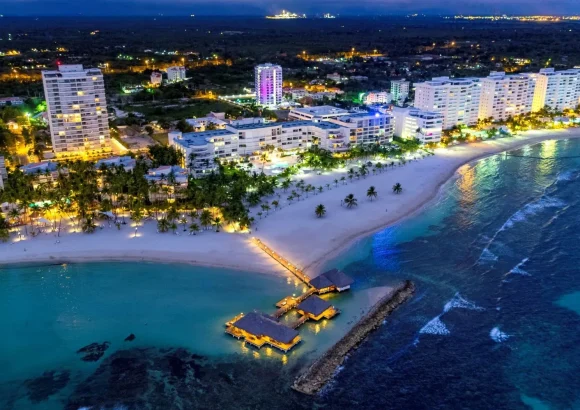
    PUNTA CANA — The Dominican Republic has formalized a new collaborative agreement with the International Transport Workers’ Federation (ITF) aimed at elevating safety benchmarks, service quality and long-term sustainability of the transportation networks that underpin one of the Caribbean’s most robust tourism economies.

    The memorandum of understanding was signed by Dominican Tourism Minister David Collado and ITF Secretary General Stephen Cotton on the sidelines of the Caribbean National Coordinating Committee’s regional gathering. The signing marks a deliberate step to align the country’s critical tourism transportation sector with global best practices, addressing a core component of the visitor experience that shapes international perceptions of the destination.

    Under the partnership, the two parties will advance targeted technical cooperation and cross-border knowledge sharing to strengthen land transportation services across the nation. The work will center on upskilling and supporting the frontline professionals who form the backbone of Dominican tourism: commercial drivers, transportation operators, tour guides and other staff who facilitate the movement of millions of international and domestic visitors to the country’s top beach resorts, cultural sites and adventure attractions each year.

    The overarching goal of the initiative is to raise industry standards across four key pillars: road safety, customer service quality, operational innovation and environmental sustainability. By upgrading transportation services, the partnership seeks to reinforce the sector’s role as a foundational strength of the country’s tourism offering, rather than a secondary support function.

    “Increasing the capacity and professionalism of our transportation sector means lifting the entire quality of the tourism experience we offer visitors,” Collado stated in comments following the signing. He emphasized that transportation workers are often the first point of contact for tourists arriving in the country, and the last interaction before they depart, making their performance critical to shaping visitor satisfaction.

    Collado added that the formal agreement will accelerate ongoing efforts to professionalize the transportation sector, helping local operators and workers adopt globally recognized standards that deliver better working conditions for employees and smoother, more reliable services for travelers.

    As part of the signing ceremony, ITF leadership presented Collado with a special leadership award, honoring his work to advance sustainable tourism development and build closer, more productive collaboration between the nation’s tourism and transportation sectors. Collado dedicated the award to the thousands of transportation workers across the Dominican Republic whose consistent professionalism and warm hospitality have cemented the country’s standing as one of the Caribbean’s top travel destinations.

  • Drivers advised of road closures ahead of Santo Domingo 2026 cycling event

    Drivers advised of road closures ahead of Santo Domingo 2026 cycling event

    Motorists commuting through the coastal Malecón districts of Santo Domingo and Santo Domingo Este on Friday, July 31, will need to adjust their travel plans to accommodate pre-event preparations for the upcoming XXV Central American and Caribbean (CAC) Games Santo Domingo 2026.

    The scheduled activity prompting the road adjustments is a mandatory pre-race course reconnaissance for participating cycling competitors, which will bring short-term traffic restrictions and partial lane closures to key routes across the two cities. These traffic adjustments will be enforced between 9:00 a.m. and 11:00 a.m. local time, impacting heavily traveled corridors including segments of 30 de Mayo Highway, George Washington Avenue, Paseo Presidente Billini, and Avenida España.

    Local traffic management officials have published a list of suggested alternative routes to help motorists avoid affected zones. For travelers navigating central Santo Domingo, recommended alternate paths include Rómulo Betancourt Avenue, México Avenue, Mella Avenue, and Simón Bolívar Avenue. Drivers based in or traveling through Santo Domingo Este are directed to use Las Américas Avenue, 26 de Enero Avenue, Estados Unidos Avenue, and Mirador del Este Avenue to bypass congested areas.

    To help road users plan ahead, updates to the temporary route restrictions have already been shared with popular navigation platform Waze, meaning app users will receive real-time alerts about closures and suggested detours. Additionally, uniformed officers from the General Directorate of Traffic Safety and Land Transportation (Digesett) will be stationed at key points along the affected reconnaissance route to guide motorists, resolve bottlenecks, and keep alternate routes moving as smoothly as possible.

    Games organizers have stressed that advance trip planning is critical for minimizing travel disruptions on the day of the reconnaissance. They are urging all motorists to check route updates before departing, stick to the designated alternate routes, and comply with instructions from on-site traffic officers to support safe, orderly mobility during this key preparation step for the 2026 CAC Games.

  • Dominican authorities raid luxury villas in Las Terrenas in drug money laundering investigation

    Dominican authorities raid luxury villas in Las Terrenas in drug money laundering investigation

    In a coordinated law enforcement operation targeting transnational drug trafficking and money laundering, Dominican legal authorities have executed multiple search warrants at high-end luxury properties in the popular coastal town of Las Terrenas, located in Samaná province. The action centers on an ongoing criminal investigation into Martin Marleau (also known as Polcari), a Canadian national who was taken into custody by Dominican officials in December 2025.

    The raid was jointly carried out by the Specialized Prosecutor’s Office Against Money Laundering and Terrorism Financing and the local Samaná Prosecutor’s Office, with critical backup from the Financial Investigation Directorate under the National Drug Control Directorate (DNCD). At the time of Marleau’s initial arrest, law enforcement officers seized approximately 30 kilograms of cocaine hydrochloride, 2.42 kilograms of liquid marijuana, and 97 THC-infused electronic cigarettes. Officials also confiscated specialized equipment that investigators allege was used to process and prepare illegal narcotics for distribution.

    According to official statements from the Dominican Public Prosecutor’s Office, Marleau has resided in the country since 2022. Over his stay in the Dominican Republic, investigators have documented a sudden and unexplained surge in his personal wealth, which allowed him to purchase multiple luxury villas, high-performance vehicles, and other high-value assets. Despite extensive financial probes, prosecutors have yet to uncover any verifiable legitimate sources of income that could support this lavish lifestyle. No records of large bank transfers or regular deposits from Canada have been found to explain Marleau’s ability to acquire these expensive assets.

    During the recent searches of the exclusive Las Terrenas properties, authorities recovered a range of physical documents and digital records deemed relevant to the money laundering investigation, alongside detailed ownership records for the luxury real estate and vehicles linked to the suspect. All seized evidence is now set to undergo forensic and financial forensic analysis, as investigators work to trace the full network of assets allegedly derived from criminal activity.

    The sprawling investigation is being overseen by appellate prosecutor Ramona Nova and Samaná prosecutor Erika Pujols, with lead coordination handled by lead prosecutor Claudio Cordero Jiménez. In a press statement following the raids, Cordero confirmed that investigative teams remain fully focused on uncovering the true origin of the suspect’s assets and holding all connected parties accountable for any criminal or financial violations. Cordero emphasized that the operation is part of a broader push by the Dominican Public Prosecutor’s Office to dismantle entire transnational criminal networks operating within the country, reaffirming the institution’s unwavering commitment to rooting out organized crime, drug trafficking, and illicit money laundering across the Dominican Republic.

  • Constitutional Court strikes down decree restricting alcohol sales hours

    Constitutional Court strikes down decree restricting alcohol sales hours

    In a landmark ruling with major implications for separation of powers in the Dominican Republic, the nation’s highest constitutional court has invalidated a long-standing executive order that set permanent limits on alcohol sales hours across entertainment and hospitality businesses. The challenged measure, Decree 308-06, was issued back in 2006 by then-president Leonel Fernández, and placed permanent operating hour restrictions on venues ranging from neighborhood colmados and bars to nightclubs and casinos. The court’s ruling concluded that permanent regulations impacting economic activity and citizen rights must be enacted by legislative bodies, not imposed via unilateral executive decree, aligning with the country’s 2010 updated constitution.

    The legal challenge that led to this decision was brought forward by Víctor Eddy Mateo Vásquez, who argued that the indefinite restriction violated core Dominican constitutional principles. Vásquez contended that because the National Congress – the nation’s legislative body – never approved the permanent limit, the executive branch overstepped its authority by enacting it through administrative order.

    While the court explicitly recognized that the original decree was crafted with the legitimate public interest goal of safeguarding public order and community safety, it ultimately found the measure out of step with current constitutional requirements. Justices emphasized that the 2010 Constitution explicitly requires any permanent restriction that alters economic activity or touches on fundamental rights to be passed through formal congressional legislation, not executive action. The court further noted that the executive branch’s authority to issue decrees does not extend to enacting broad, indefinite regulatory restrictions. Even with its legitimate public safety purpose, the court ruled the decree failed the constitutional test of proportionality: the order had remained in force for nearly two decades with no clear expiration date and no ongoing justification for its permanent status.

    Importantly, the ruling does not eliminate all executive authority to regulate alcohol sales hours. The court clarified that the executive branch retains the power to implement temporary restrictions on alcohol sales via decree during specific, time-bound events or circumstances. These include seasonal high-traffic periods such as Holy Week and Christmas, national holidays, and ongoing public security operations that require targeted short-term regulation. Only permanent, long-standing regulatory frameworks must be approved by the National Congress.

    The legal proceedings exposed a split among government bodies on the issue: the Executive Branch’s Legal Counsel publicly supported overturning the decree, and called on congressional lawmakers to draft and pass a comprehensive, formal piece of legislation to regulate alcohol sales and consumption across the country. In contrast, the Dominican Attorney General’s Office defended the decree, arguing that it was constitutional and should remain in effect.

  • Senate advances bill to create Dominican Republic health tourism council

    Senate advances bill to create Dominican Republic health tourism council

    On July 24, the Dominican Republic Senate held an extraordinary legislative session to advance a key piece of economic development legislation, giving initial approval to a bill that would establish the National Council for the Development of Health Tourism, known by its Spanish acronym Condetusa. The proposed advisory body is designed to bring structured governance to the Caribbean nation’s fast-expanding health tourism sector, balancing targeted promotion with clear regulatory guardrails.

    The bill was put forward by Senator Daniel Rivera of the Santiago province, a lawmaker who brings deep sectoral expertise to the proposal from his prior tenure as the country’s health minister. At its core, the legislation aims to formally position health tourism as a national development priority, while laying out a formal institutional structure to lift industry standards. Specifically, the framework would codify new requirements for quality assurance, patient safety protocols, and official certification for providers treating international patients seeking medical care in the country.

    Notably, this marked Rivera’s second push to pass similar health tourism reform in less than a year. Back in April 2025, the Senate already approved a nearly identical piece of legislation on first reading, but no public documentation exists to explain whether that earlier bill failed to advance to a required second reading, was pulled by sponsors, or has been consolidated into this new proposal. The current iteration also marks a targeted shift in scope from the 2025 draft: while the original bill sought to create a broad, overarching legal framework for regulating the entire national health tourism industry, the new proposal centers its efforts exclusively on standing up Condetusa, which will take on responsibilities for cross-stakeholder coordination and policy advocacy for the sector.

    With first reading complete, the bill now moves into the next stage of the Dominican legislative process, where it will face additional debate and possible amendments before it can be signed into law. If enacted, industry analysts expect the new council to help streamline growth in the health tourism sector, which has become an increasingly important contributor to the Dominican Republic’s service economy in recent years.

  • Dominican Republic sets new electricity demand record for second straight day

    Dominican Republic sets new electricity demand record for second straight day

    Santo Domingo – The Dominican Republic’s power sector hit a fresh milestone this week, as record-breaking electricity demand surged for the second straight day amid a confluence of seasonal warmth, growing economic output and accelerating national electrification. Energy and Mines Minister Joel Santos confirmed Tuesday evening that the National Interconnected Electric System (SENI) hit an instantaneous peak consumption of 4,277 megawatts at 8:36 p.m. local time, marking a new all-time high for the Caribbean nation.

    This latest record represents a 74 megawatt jump from the previous historic peak set just 24 hours prior on Monday, when demand hit 4,203 megawatts. Monday’s reading itself already broke the prior record that had stood for just over 11 months, which was the 4,185.11 megawatt peak registered last July 22.

    In a public update posted to the social platform X, Minister Santos explained that the consistent upward trajectory of national power consumption underscores a steady, ongoing increase in overall demand across the Dominican Republic. He outlined three core drivers behind this accelerating trend: unseasonably or elevated high summer temperatures that push increased use of cooling systems, expanding and strengthening economic activity across multiple industries that require greater power inputs, and the continuing spread of electrification to more residential households and productive commercial and industrial sectors.

    Looking ahead, Santos cautioned that current projections point to electricity demand continuing its upward climb through the coming weeks, as elevated seasonal consumption patterns are expected to hold through the remainder of the hot summer period.

  • Dominican Republic wins 22 medals in one day, climbs to 48 at Santo Domingo 2026

    Dominican Republic wins 22 medals in one day, climbs to 48 at Santo Domingo 2026

    As the XXV Central American and Caribbean Games enter its fourth day of competition in Santo Domingo, the Dominican Republic has turned in another dominant performance on the tournament’s second Tuesday, boosting its overall medal haul and holding its ground among the top-ranked competing nations.

    On this single day of competition, the Dominican delegation secured 22 medals: four gold, four silver, and 14 bronze. This result pushed the nation’s cumulative tally across the first four days to 48 total medals, split between 10 gold, nine silver, and 29 bronze, enough to keep the country in fifth place on the overall medal standings.

    Leading the charge for Tuesday’s success was the Dominican water skiing team, which captured two of the day’s gold medals. By the close of all water skiing events at the Games, the team finished with an impressive 12 total medals, including three gold, three silver, and six bronze – cementing its status as one of the Dominican Republic’s most reliable and high-performing sports in this year’s tournament.

    In tennis, Dominican athlete Nick Hardt achieved a career milestone by successfully defending his men’s singles Central American and Caribbean Games title, claiming another gold medal after his final opponent, Juan Sebastián Gómez of Colombia, was forced to retire mid-match due to an unexpected injury. On the women’s side, Dominican competitor Ana Zamburek delivered a stunning comeback, rallying from a one-set deficit to secure a bronze medal in the women’s singles draw.

    The day also brought a historic first for Dominican surfing: 22-year-old athlete Leoni Perthold claimed bronze in the women’s SUP surf competition, marking the first time any Dominican surfer has won a medal at the Central American and Caribbean Games in the sport’s history.

    Additional medals for the delegation came from a wide range of other disciplines, including rowing, taekwondo, badminton, gymnastics, judo, and swimming, demonstrating the depth of talent the Dominican team has brought to this year’s Games. The mixed taekwondo TK3 team took home a silver medal, while the national judo team finished its run at the tournament with 12 total medals – three gold, two silver, and seven bronze. In the pool, Dominican swimmer Javier Núñez added another podium finish to the nation’s tally, taking bronze in the men’s 50-meter freestyle event.

    As competition continues across venues in Santo Domingo, the Dominican Republic holds steady in fifth place on the overall medal table with 48 total medals, with more events still to come in the remaining days of the 2026 Games.

  • JetBlue cancels flights between Santo Domingo and New York as storms disrupt air travel

    JetBlue cancels flights between Santo Domingo and New York as storms disrupt air travel

    Extreme storm activity across the New York metropolitan region has triggered widespread travel chaos, forcing the cancellation of at least six round-trip JetBlue services connecting Las Américas International Airport (AILA) in Santo Domingo and John F. Kennedy International Airport (JFK) in New York. The disruption has left hundreds of passengers with interrupted travel plans, stranding many at both airports.

    Aerodom, the government-authorized operator of AILA, confirmed that the service suspensions stem directly from dangerous weather conditions in the northeastern U.S. A dangerous mix of intense downpours, severe thunderstorms and elevated flash flood risk has rippled across the region’s air traffic network, bringing broad delays and cancellations to flights operating in and out of major Northeast hubs.

    Among the canceled services departing Santo Domingo were JetBlue flights 710 and 1850. Multiple inbound flights originating from JFK, including flight 1849, were also scrapped. One additional planned arrival, flight 2709, was placed on alert, with its status dependent on shifting weather patterns and last-minute operational adjustments from the airline.

    As airlines work to reposition aircraft and sort through backlogs, hundreds of passengers have been left stranded at both AILA and JFK, with many facing long waits to secure rebooking on alternative services. To avoid further unnecessary inconvenience for travelers, Aerodom has issued an official advisory urging all passengers planning to travel on this route to confirm their flight status directly with JetBlue or their booked travel agent before departing for the airport.

    This latest round of weather-driven cancellations is not an isolated incident. It marks the second time this month that extreme weather in the U.S. Northeast has caused major disruptions to commercial air travel links between the Dominican Republic and the United States, with hundreds of other flight delays and cancellations already recorded across Northeast U.S. airports this week alone.

  • Dominican Republic ranks as Latin America’s second most-visited destination

    Dominican Republic ranks as Latin America’s second most-visited destination

    Fresh data published by the United Nations World Tourism Organization (UN Tourism) has cemented the Dominican Republic’s place as a tourism powerhouse in Latin America, after the nation welcomed 11.6 million international travelers in 2025. This milestone pushes the Caribbean nation ahead of Brazil to claim the second spot in regional visitor rankings, with only Mexico recording higher international tourist arrivals.

    The impressive result caps off a period of consistent, robust expansion for the Dominican tourism sector that has followed the global rebound of international travel. Against a backdrop of widespread economic volatility, soaring inflation in the country’s key source markets, and ongoing geopolitical disruptions that have dampened travel activity across much of the globe, the Dominican Republic has defied headwinds to break visitor arrival records year after year.

    Industry analysts and tourism leaders point to two interconnected strategic investments as the core drivers of the country’s runaway success. First, the Dominican Republic has rapidly expanded its international air connectivity, building an extensive network of direct flights that links major tourism markets across the United States, Canada, Europe, and neighboring Latin American nations directly to its popular gateways. Second, sustained private and public investment in new hotel and resort infrastructure, paired with the intentional development of underpromoted coastal and inland destinations, has broadened the nation’s appeal to a diverse range of traveler preferences.

    Long known for its iconic flagship beach destination of Punta Cana, which still draws the largest share of annual visitors, the country has diversified its tourism offerings dramatically in recent years. Tourism authorities have ramped up global marketing campaigns for emerging destinations including Samaná, Miches, Puerto Plata, Pedernales, Jarabacoa, Constanza, and La Romana. These spots cater to travelers seeking experiences beyond traditional all-inclusive beach getaways, with options spanning rainforest ecotourism, mountain adventure travel, authentic local gastronomy, immersive cultural tourism, luxury boutique getaways, and international-caliber sporting events.

    For the Dominican national economy, the tourism sector remains an indispensable engine of growth. It supports hundreds of thousands of direct and indirect jobs across the country, and drives concurrent expansion across adjacent industries including hospitality, ground and air transportation, local dining, retail, construction, and a wide range of consumer and business services. The sector’s consistent strong performance has also drawn billions in new domestic and foreign direct investment, further solidifying the Dominican Republic’s reputation as one of the most stable and high-growth tourism markets in the entire Caribbean.

    Early data for 2026 indicates that this positive growth trajectory shows no signs of slowing down. Between January and May of this year, the nation already recorded 5.6 million international visitor arrivals. January alone saw more than 1.2 million travelers enter the country, marking a new all-time record for monthly arrivals and signaling that 2026 is on track to be another banner year for the Dominican tourism industry.