标签: Dominican Republic

多米尼加共和国

  • Court authorizes US$5 million asset freeze in Azua power project contract case

    Court authorizes US$5 million asset freeze in Azua power project contract case

    A legal dispute centered on the Azua power generation project in the Dominican Republic has taken a key step forward, after a local court approved nearly $5 million in precautionary restrictive measures targeting Dynex Energy Group, its Dominican subsidiary Dynex Energy RD, and Carlos Matamoros Bregni, the local representative of the Karpowership Dominican Republic project.

    The ruling came from the Second Chamber of the Criminal Court of First Instance of the National District. The approved measures include the authorization of asset seizures and a provisional judicial mortgage, which will remain in effect throughout the duration of the ongoing litigation. In a balanced decision, however, the court declined to grant a requested travel ban against Matamoros Bregni. Judges concluded there was not enough credible evidence to support the claim that he posed a flight risk that would require restricting his movement.

    The conflict stems from a lawsuit filed by Transcaribbean Energy Partners & Consulting (TEPC), the plaintiff in the case. TEPC’s legal argument centers on a 2018 exclusivity agreement that the firm says guarantees it 55% of all profits generated by the Azua power project. According to TEPC’s allegations, even after the project entered full commercial operation, the company has never received the share of profits it was promised. The plaintiff further claims that Dynex Energy has collected millions of dollars in payments linked to the joint venture that have not been distributed as agreed.

    Presiding Judge Clara Luz Almonte Gómez justified the approval of precautionary measures by noting that the prosecution presented sufficient preliminary evidence to support the measures. The court also found that the restrictions are necessary to prevent the potential for insolvency that could leave any eventual ruling in TEPC’s favor unenforceable.

    It is important to note that the court’s current action is only a precautionary step, not a final ruling on the underlying merits of the contract dispute. The case remains open and unresolved as legal proceedings move forward. As of the time of this report, none of the named respondents—Dynex Energy Group, Dynex Energy RD, Carlos Matamoros Bregni, nor Karpowership’s parent firm Karadeniz Holding—have issued any public statement responding to TEPC’s allegations.

  • Santo Domingo 2026: Dominican Republic wins 13 medals in strong opening

    Santo Domingo 2026: Dominican Republic wins 13 medals in strong opening

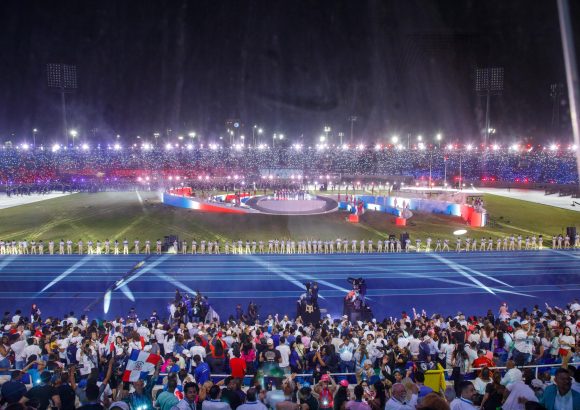
    As the XXV Central American and Caribbean Games — branded the Centennial Games to mark a major regional sporting milestone — unfold in Santo Domingo, host nation the Dominican Republic has emerged as one of the early standout competitors, racking up an impressive 13 total medals to claim fifth position in the event’s overall medal standings. Through the first several days of competition, Dominican athletes have secured three gold medals, two silver medals, and eight bronze medals, putting them just a few podium finishes shy of cracking the tournament’s top four rankings.

    Competing in front of cheering home crowds across Santo Domingo’s competition venues, the Dominican delegation has delivered particularly strong results in two combat sports: taekwondo and judo. Though athletes have added medals to the host nation’s tally across a wide range of disciplines, the first gold medal win for the Dominican Republic came from taekwondo, when competitor Ana Rosa claimed the women’s individual title. The landmark win sparked widespread celebrations among local fans, and set the tone for the delegation’s subsequent run of strong performances as competition intensity has ramped up across all 40 hosted sports.

    Currently, Mexico sits atop the overall medal standings with an undisputed lead, holding a total of 43 medals split between 16 gold, 15 silver, and 12 bronze finishes. Following Mexico in the top four rankings are Colombia, Cuba, and Venezuela, respectively. With dozens of medal events still scheduled to take place before the Games wrap up on August 8, the Dominican Republic remains well within striking distance of overtaking one of the top four nations to climb higher in the standings.

    Officially kicking off on July 24, the 2026 Centennial Games is set to run through August 8 across multiple competition hubs in the Dominican capital. More than 6,000 athletes hailing from 31 countries and territories across the Central American and Caribbean region are participating in the two-week event, which organizers note is one of the largest international multi-sport competitions the Dominican Republic has ever hosted.

  • Dominican Republic to host Latin American food security summit in August

    Dominican Republic to host Latin American food security summit in August

    The Dominican Republic’s capital of Santo Domingo is gearing up to welcome hundreds of government representatives and food security specialists from across Latin America and the Caribbean next month, as it takes on the role of host for the 11th annual gathering of the Network of Public Food Supply and Marketing Systems (Red SPAA). The three-day event, scheduled to run from August 11 to 13, marks a key collaborative moment for regional stakeholders working to address persistent food security challenges across the hemisphere.

    This landmark conference is the product of a joint organizational effort between four major entities: the Dominican Republic’s Presidency, the country’s national Price Stabilization Institute (known locally as Inespre), the United Nations Food and Agriculture Organization (FAO), and the Red SPAA network itself. Unlike many routine regional gatherings, the summit is designed as an interactive working platform, where attending nations can share tested policy approaches, successful operational models, and actionable strategies designed to reinforce public food distribution infrastructure and shore up collective food security outcomes across the region.

    Inespre’s top leader, Executive Director David Herrera Díaz, has confirmed that delegations from 14 regional nations have signaled their intention to participate in the event. The attending countries include major regional economies such as Brazil and Mexico, alongside Bolivia, Chile, Colombia, Costa Rica, Cuba, El Salvador, Guatemala, Honduras, Panama, Paraguay, Peru, and Uruguay, bringing a diverse range of national contexts and food system models to the discussion table.

    The summit will kick off with an official opening ceremony on the morning of August 11, which will feature head-of-state level participation from Dominican Republic President Luis Abinader. The opening event will also be attended by senior Dominican government authorities, high-ranking international organization officials, and lead delegates from all participating Red SPAA member countries, setting a collaborative tone for the three days of working sessions to follow.

  • Santo Domingo 2026 opening ceremony generates 134.8 million digital impressions

    Santo Domingo 2026 opening ceremony generates 134.8 million digital impressions

    The opening ceremony of the XXV Central American and Caribbean Games, hosted in Santo Domingo for the 2026 centennial edition of the regional multi-sport event, has delivered unprecedented digital traction, racking up an estimated total of 134.8 million impressions across online platforms, new data from leading analytics firm Brand24 confirms.

    Brand24’s comprehensive monitoring of digital conversation around the event breaks down the reach across different online channels: roughly 82% of all impressions—more than 110.5 million in total—originated from social media platforms, while an additional 24.3 million impressions came from digital news outlets, independent blogs and other online channels outside of mainstream social networks.

    Beyond raw reach metrics, the analysis also captured a significant upswing in positive organic discourse around the Games. Thousands of attendees, sports fans and viewers across the region took to their personal accounts to share original photos, on-the-ground video clips, personal reactions and commentary about the opening ceremony. This user-generated content expanded the event’s visibility far beyond what was generated by official event accounts and traditional media coverage, turning casual interest into widespread public engagement.

    The opening ceremony also delivered staggering media value, with Brand24 calculating its advertising value equivalent (AVE) at $15.7 million. This figure marks a 203% increase in cumulative media value compared to recent previous editions of the Games. Additionally, the event earned a 69/100 Presence Score, a metric that measures overall digital visibility and audience interaction, confirming its strong standing as a major talking point among global and regional sports audiences.

    In its final assessment, Brand24 highlighted that organic audience participation was the core driving force behind the opening ceremony’s viral success. As the Dominican Republic welcomed thousands of competing athletes from 30+ countries and territories across Central America and the Caribbean for the 100-year anniversary of the regional games, public enthusiasm translated into one of the most widely discussed digital sports events in the region’s recent history.

  • Verón-Punta Cana planning proposal focuses on sustainable transportation

    Verón-Punta Cana planning proposal focuses on sustainable transportation

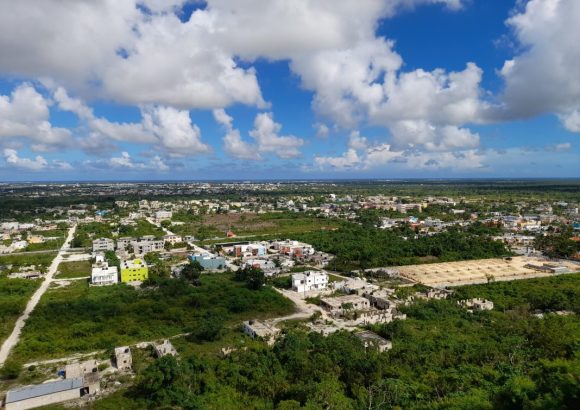
    In the Verón-Punta Cana region of the Dominican Republic, a bold new urban development framework is set to transform the country’s most high-profile tourism destination, reorienting all future growth around the core principle of sustainable mobility. The Verón-Punta Cana Territorial Planning Plan (POT) proposes a systemic overhaul of the area’s transportation infrastructure, addressing growing mobility challenges that have come with the region’s rapid tourism and residential expansion.

    At the heart of the proposal is a redesigned hierarchical road network that categorizes routes into four functional tiers: expressways, arterial roads, collector roads, and local roads. This clear functional separation is designed to streamline traffic flow, cut down on chronic congestion, and improve overall road safety for all users. Beyond motor vehicle infrastructure, the plan prioritizes expanding accessibility and infrastructure for non-motorized travel and shared public transit, with the explicit goal of reducing the region’s overwhelming dependence on private passenger vehicles.

    Aligned with global best practices for Sustainable Transit-Oriented Development (TOD), the initiative aims to build a more interconnected, walkable community. The plan maps out integrated pedestrian paths and cycling corridors that link residential neighborhoods directly to employment hubs, commercial districts, public service facilities, and major transit stops, eliminating the common disconnect between where people live and where they work, shop, and access services.

    One of the most notable innovations in the proposal is the creation of Verón-Punta Cana’s first formal, integrated bicycle lane network. Unlike recreational cycling paths that are common in many tourist regions, this network is designed to function as a core part of the area’s public transportation system. The routes will connect residential areas, workplaces, public facilities, and transit stations, and will meet strict international standards for safety, including adequate width, nighttime lighting, clear signage, and physical barriers separating cyclists from motor vehicle traffic.

    To further advance the plan’s safety and sustainability goals, the proposal designates protected mobility corridors along two major regional routes: Frank Rainieri Boulevard and the Verón-Bávaro Ring Road. Within these corridors, developers will be prohibited from constructing permanent structures or adding parallel service roads, a restriction intended to preserve the corridors’ primary transportation function, reduce encroachment on public right-of-way, and create a safer, more pleasant environment for pedestrians and cyclists. The corridors will feature purpose-built pedestrian paths, separated bike lanes, and added public urban amenities to enhance user experience.

  • DNCD chief reaffirms U.S. alliance in fight against drug trafficking and transnational crime

    DNCD chief reaffirms U.S. alliance in fight against drug trafficking and transnational crime

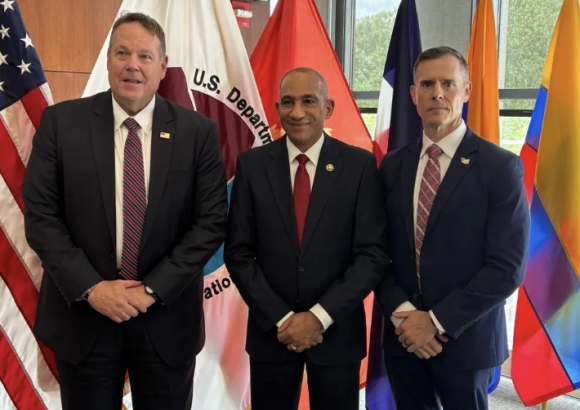
    At a formal graduation ceremony held at the Marine Corps Base in Quantico, Virginia, a senior Dominican security official has underscored the irreplaceable value of bilateral cooperation between the Dominican Republic and the United States in disrupting transnational drug trafficking and organized criminal activity across the Caribbean. Vice Admiral José M. Cabrera Ulloa, president of the Dominican National Drug Control Directorate (DNCD), described the ongoing security alliance between the two nations’ law enforcement agencies as a foundational pillar for more effective counter-narcotics operations throughout the strategically vital region.

    The event marked the completion of the Sensitive Investigations Unit (SIU) Basic Course, an intensive specialized training program designed and supported by the United States Drug Enforcement Administration (DEA). Addressing the graduating class and assembled officials, Cabrera Ulloa publicly extended gratitude to the DEA for its longstanding commitment to building operational capacity for security partners across the Americas and the Caribbean.

    In his remarks, the DNCD chief pushed back against the narrow framing of international law enforcement cooperation as limited to simple information exchanges. He explained that effective collaboration against transnational threats requires much more: it relies on cultivating mutual trust between partner agencies, nurturing capable leadership across institutions, and equipping frontline law enforcement personnel with the skills and ethics needed to tackle evolving 21st-century security challenges.

    Forty officers representing six regional nations crossed the stage at Quantico to receive their certifications following the completion of the course. The training curriculum centered on four core pillars: advanced techniques for conducting sensitive criminal investigations, uncompromising personal and institutional integrity, adherence to strict global professional law enforcement standards, and the practice of coordinated regional security cooperation.

    Cabrera Ulloa stressed that selection and graduation into a Sensitive Investigations Unit is not merely a professional milestone, but a profound public commitment. Graduates pledge to safeguard sensitive operational information, reinforce public and institutional trust in law enforcement, and uphold the highest possible ethical and professional standards throughout their work confronting transnational organized crime.

    Closing his address, the Dominican official reaffirmed his country’s unwavering commitment to deepening its existing strategic partnership with the DEA, and to expanding collaborative work with other regional security allies through coordinated joint action and targeted strategic cooperation to counter shared security threats.

  • Canada’s PanamFest 2026 spotlights Dominican Republic as guest of honor

    Canada’s PanamFest 2026 spotlights Dominican Republic as guest of honor

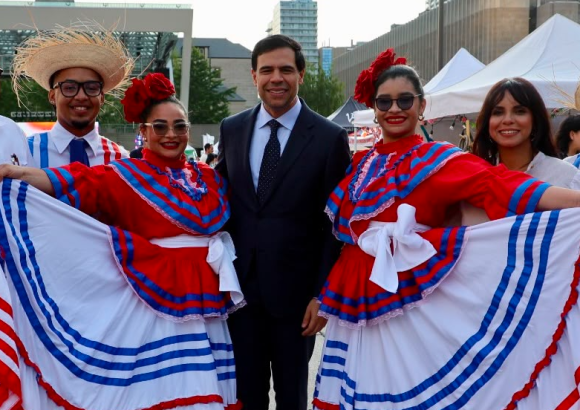
    One of North America’s most vibrant celebrations of pan-American culture kicked off this week in downtown Toronto, with the Dominican Republic stepping into the global spotlight as the official guest of honor for the 14th edition of the Panamerican Food and Music Festival, widely known as PanamFest. Canada’s largest multicultural gathering focused on the Americas, the event brings hundreds of creators, culinary artists, and performers together to highlight the rich diversity of cultural traditions across the western hemisphere, running through Sunday at the iconic Nathan Phillips Square in the heart of the city.

    The festival was formally opened by Roberto Ángel Salcedo, the Dominican Republic’s Minister of Culture, who marked the occasion by emphasizing what the invitation means for the Caribbean nation. Salcedo noted that being selected as guest of honor represents a critical opportunity to share the country’s centuries-old cultural legacy with international audiences, while also deepening people-to-people connections with the large and thriving Dominican diaspora community based across Canada.

    For attendees wandering the festival grounds, the Dominican showcase offers a fully immersive deep dive into the country’s unique cultural identity. Top local and Dominican performers are bringing the iconic sounds of merengue and bachata, the nation’s most beloved traditional music genres, to life every day, alongside displays of handcrafted traditional art and striking jewelry made from larimar, the rare blue stone found only in the Dominican Republic. Tourism industry exhibits are also on hand to highlight the country’s world-famous beaches, historic sites, and eco-tourism offerings, while food stalls serve up iconic Dominican dishes that draw long lines of hungry visitors. Menu staples include mangú, the beloved green plantain staple, hearty traditional sancocho stew, crispy fried sides paired with salami, and a range of homemade traditional desserts that offer a sweet taste of Caribbean cuisine.

    Beyond the featured Dominican showcases, the three-day gathering packs a full schedule of events celebrating the full breadth of pan-American culture. More than 600 artists from 35 countries across North, Central, and South America and the Caribbean are taking part in this year’s program, alongside the World Food Cup, a competition that pits elite international chefs against one another to create standout regional dishes. The event also includes lively cultural parades representing dozens of national and Indigenous communities, plus a full lineup of all-ages performances designed to welcome families and visitors of all backgrounds.

    First launched in 2012, PanamFest has grown steadily over the past 12 years to become one of Toronto’s most anticipated annual summer events. It has earned a reputation across Canada for its core mission: advancing multiculturalism, fostering social inclusion, and building meaningful cross-cultural exchange through the universal languages of music, food, and visual and performing arts.

  • Environment Ministry highlights progress in protecting Yaque del Norte River

    Environment Ministry highlights progress in protecting Yaque del Norte River

    In Santo Domingo, the Dominican Republic’s Ministry of Environment and Natural Resources has announced notable progress in the multi-stakeholder protection and restoration of the Yaque del Norte River basin, one of the country’s most critical hydrological systems. The initiative, led by Environment Minister Paíno Henríquez, is a core component of a sweeping national plan designed to shore up long-term water security across the Dominican Republic’s most important river basins, which also include the Haina and Nizao watersheds.

    Officials emphasize that the Yaque del Norte basin fulfills irreplaceable roles for the nation, supplying drinking water to millions of residents, supporting large-scale agricultural production, providing input for hydroelectric power generation, and sustaining a wide range of unique native biodiversity. To advance restoration goals, the Ministry of Environment is coordinating implementation of targeted projects across multiple priority areas: reforestation of degraded riparian zones, soil conservation to reduce sediment runoff, comprehensive watershed restoration work, and integrated cross-sector water resource management.

    Partners in these efforts include the National Institute of Hydraulic Resources (INDRHI), local municipal governments, agricultural producers, grassroots community organizations, and international environmental and development partners. Beyond on-the-ground restoration work, authorities have also strengthened regulatory oversight, conducting mandatory technical environmental reviews for all proposed projects that could impact rivers and other surface water bodies. This step ensures that all development activities adhere strictly to national environmental regulations while still supporting balanced, sustainable economic growth across the region.

    One of the most high-profile undertakings in this national strategy is the Watersheds and Climate-Resilient Communities (CReW-RD) project, a $90 million initiative funded by the Green Climate Fund. The program focuses on restoring ecologically critical hydrological ecosystems, boosting local communities’ ability to withstand the impacts of climate change, and scaling up nature-based solutions to water and climate challenges. The Yaque del Norte River basin has been designated as one of the primary intervention zones for the large-scale program.

    Ministry leadership reaffirmed that strategic investment in the protection of the Dominican Republic’s watersheds is a foundational requirement to guarantee stable long-term water supplies, reduce land degradation and erosion, restore damaged native ecosystems, and lay the groundwork for inclusive, sustainable economic development across the country for decades to come.

  • Dominican Republic showcases first locally built Van’s RV-8 aircraft at AirVenture Oshkosh 2026

    Dominican Republic showcases first locally built Van’s RV-8 aircraft at AirVenture Oshkosh 2026

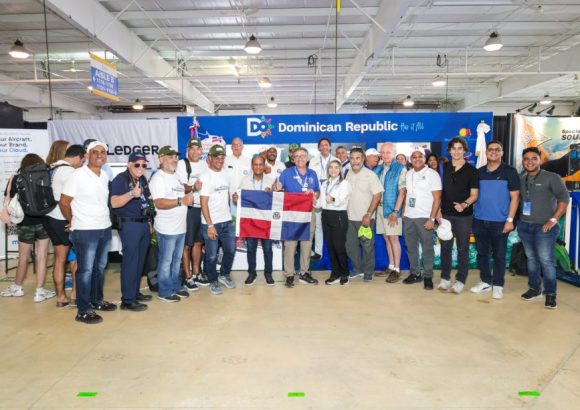
    Oshkosh, Wisconsin – The Dominican Republic is stepping onto the global general aviation stage in a big way at EAA AirVenture Oshkosh 2026, the world’s most prestigious and largest annual aviation gathering. The Caribbean nation is using the high-profile event to position itself as a top-tier destination for general aviation travel and operations, while showcasing a major milestone in its domestic aviation industry: the first locally assembled Van’s RV-8 experimental aircraft.

    Running from July 20 through 26 at its traditional Wisconsin venue, the 2026 AirVenture features a dedicated national pavilion organized jointly by the Dominican Republic’s Airport Department (DA) and Ministry of Tourism. At the booth, delegation representatives have been highlighting the country’s expanding network of airports, investor- and pilot-friendly aviation regulations, and the newly implemented Protocol for Non-Commercial Private Aviation, a framework crafted specifically to streamline entry and transit for private and general aviation pilots visiting the country.

    The undisputed centerpiece of the Dominican Republic’s showcase is the debut of the first Van’s RV-8 ever fully built and certified within the country’s borders. Crafted by a team of Dominican aviators – Carlos Sanlley, Alejandro Marranzini, and Andrés Sánchez – the aircraft made history even before arriving at AirVenture: it completed an international cross-border flight from the Dominican Republic to Oshkosh, marking only the second time a Dominican-built experimental aircraft has completed such a journey.

    In comments on the project, Sanlley shared that the team invested five years of work from the early conceptual planning stage to the aircraft’s successful maiden flight. He noted that the completed plane stands as tangible proof of the expanding technical and industrial capabilities of the Dominican Republic’s fast-growing domestic aircraft assembly sector, which has emerged as a new area of economic opportunity for the country.

    Beyond promoting the country’s aviation sector and unveiling the new aircraft, the Dominican delegation also took time during the event to honor the legacy of Franklin Polanco, a late Dominican aviator widely celebrated as a founding pioneer of modern aviation in the country for his decades of contributions to the industry’s growth.

    As the world’s leading gathering for aviation professionals and enthusiasts alike, this year’s AirVenture Oshkosh is drawing tens of thousands of attendees from across the globe, including active pilots, aircraft manufacturers, industry stakeholders, and casual fans. The week-long event features a packed schedule of static aircraft displays, high-flying aerobatic performances, professional development and educational workshops, and showcases of the latest cutting-edge aviation technology.

  • National Assets to hold second public auction of 2026 with more than 180 lots available

    National Assets to hold second public auction of 2026 with more than 180 lots available

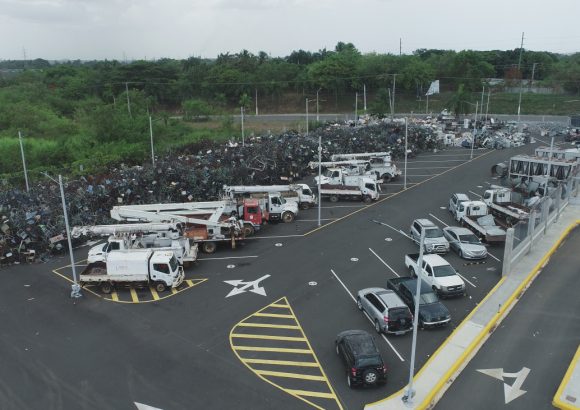
    Authorities in Santo Domingo have announced plans for a major public surplus auction, organized by the nation’s General Directorate of National Assets (Bienes Nacionales), scheduled to launch on July 31 of 2026. The event will put 184 distinct lots of state-owned assets up for open bidding, with inventory ranging from fully transferable road vehicles and raw vehicle chassis to assorted office furniture, motorcycles stripped for reusable parts, miscellaneous mechanical components, and bulk scrap metal.

    The auction will kick off at 9:00 a.m. local time, hosted in the auditorium of the Higher Education Police Institute (commonly abbreviated IPES). Ahead of the bidding process, all items included in the auction will be open to pre-sale public inspection at two dedicated National Assets storage facilities: one situated along the Mella Highway corridor, and a second located at Merca Santo Domingo. Nelson Gómez, head of the directorate’s Auction Department, confirmed the inspection arrangements in public comments.

    For prospective bidders hoping to participate in the event, the directorate has outlined clear eligibility requirements: all interested parties must pay a non-refundable registration fee of 2,000 Dominican pesos (RD$2,000) and finalize their registration paperwork at the National Assets Auction Department no later than July 29, two full days ahead of the auction start.

    Once bidding concludes, successful buyers will follow a structured payment and pickup timeline. Winners are required to settle the full cost of their purchases within five business days of the auction, via certified check made out directly to the Dominican National Treasury. After payment is confirmed, buyers receive an additional five business days to transport their won items out of the designated storage warehouses.

    To guarantee full transparency and strict adherence to national public auction regulations, the entire event will be overseen by Rafael Burgos Gómez, Director General of National Assets and Honorary Executive Director of the State Sugar Council (CEA). Additional oversight will be provided by an independent public auctioneer, a licensed notary public, and voting members of the National Assets Sales Commission, all of whom will be present throughout the bidding process.