标签: Dominican Republic

多米尼加共和国

  • Tragedy strikes San Gerónimo: elderly man dies after being hit by a motorcyclist

    Tragedy strikes San Gerónimo: elderly man dies after being hit by a motorcyclist

    Residents of the San Gerónimo neighborhood in Santo Domingo’s National District are reeling from a preventable fatal traffic incident that claimed the life of a beloved local elder just weeks shy of his 90th birthday. Leslis Santana, 89, died Thursday afternoon after being struck by a motorcyclist while crossing Núñez de Cáceres avenue, a tragedy that was fully captured on nearby security camera footage.

    Witness accounts confirm that Santana had been returning home from a routine grocery run at a neighborhood supermarket when the collision unfolded. Multiple motorcyclists traveling along the route had already slowed and stopped to grant the elderly pedestrian right of way to cross safely. But a separate motorcyclist, ignoring basic road safety rules, attempted a reckless overtake of the stopped vehicles with no advance warning or caution, directly striking Santana before any evasive action could be taken.

    For the tight-knit San Gerónimo community and Santana’s family, the loss cuts especially deep. Santana was just two months away from celebrating his 90th birthday in July, and neighbors and loved ones remembered him as an active, independent, and exemplary member of the neighborhood who maintained his vibrancy late into life.

    In the wake of the crash, Santana’s relatives have framed the incident not as an unavoidable accident, but as a deadly consequence of widespread reckless driving and a lack of respect for pedestrian safety. “This is an irreparable loss caused by a lack of road safety awareness. It wasn’t a simple accident, but the result of the irresponsibility of those who don’t respect the lives of pedestrians,” a family member stated.

    The Santana family has issued a formal demand for a full, transparent investigation into the collision, calling for full legal accountability for the motorcyclist responsible for the death of their loved one.

  • SIP report notes stable climate of press freedom in the country

    SIP report notes stable climate of press freedom in the country

    Santo Domingo, Dominican Republic – A new mid-year assessment from the Inter-American Press Association (IAPA) has confirmed that press freedom conditions across the Dominican Republic have held steady between October 2025 and April 2026, with no documented cases of direct state censorship or coercive regulatory changes targeting independent journalism. The finding aligns with the country’s strong 2025 performance in the IAPA’s Chapultepec Index, a global benchmark for measuring press freedom respect, where the Dominican Republic earned a top score of 82.17. Researchers confirm that none of the core metrics tracked by the index have shifted significantly over the past six months. The assessment centers on the ongoing debate over a planned overhaul of the country’s decades-old Law 6132, the foundational legislation governing freedom of expression and the dissemination of thought in the Dominican Republic. The proposed reform bill is designed to expand legal protections for working journalists, but it has stalled in the National Congress amid unresolved partisan and stakeholder disagreement. The most contentious provision calls for the creation of a new National Institute of Communication, which critics argue could be weaponized as a tool for indirect censorship, derailing broader consensus on the bill that has widespread support for its other guardrails for press freedom. Authored by Miguel Franjul, director of leading Dominican outlet Listin Diario and vice president of IAPA’s Dominican Republic Press Freedom Commission, the report also acknowledges that while the overall climate for independent reporting remains stable, a handful of isolated but alarming incidents have disrupted journalistic work in recent months. In December 2025, two reporters – María Tejeda of CDN News and Natalia Estrella of Teleuniverso – were physically attacked by staff of the Santiago Water and Sewerage Corporation (Coraasan) while on assignment. The journalists were covering a public water distribution operation in a neighborhood that had been without piped service for weeks following a major pipe rupture, a story that drew public frustration over government response delays. More recently, in March 2026, a confrontation between law enforcement and reporters unfolded during an arrest operation in eastern Santo Domingo. The operation targeted a local teacher accused of assaulting a child at a nearby daycare center, and when journalists arrived to cover the incident, a uniformed National Police officer cocked a firearm and pointed it directly at the assembled press corps. Other officers deployed pepper spray to block reporters from documenting the arrest, and relatives of the accused teacher also allegedly joined in attacking the journalists. The IAPA report reaffirms that these isolated incidents do not represent a systemic rollback of press freedom gains in the country, but urges Dominican authorities to address the attacks, hold responsible parties accountable, and resolve the ongoing impasse over media law reform to cement the country’s status as one of the region’s strongest performers for free expression.

  • Concho motorcyclists Who are the motoconchistas: how they are organized and why they continue to be stigmatized in the Dominican Republic

    Concho motorcyclists Who are the motoconchistas: how they are organized and why they continue to be stigmatized in the Dominican Republic

    The tragic death of Deivy Carlos Abreu Quezada, a Santiago-based garbage collection truck driver on Sunday, April 19, has pulled a long-buried, contentious conversation back into the national spotlight: the pervasive question of motorcyclist and motorcycle taxi (locally known as motoconchista) behavior, and its ties to road violence and systemic traffic chaos across the Dominican Republic.

    For millions of Dominican citizens, motorcycle taxis have evolved from an informal transit option to an absolute daily necessity. Riders rely on the compact two-wheelers to cut through congested urban streets, cutting commute times and reaching destinations that larger public vehicles cannot access easily. But the fatal incident in Santiago has reframed public anger toward the sector, leading to widespread condemnation that has split opinions across transportation groups, unions, and everyday road users.

    Hoy Digital interviewed dozens of stakeholders from motorcyclist unions, public and private driver associations, and regular passengers to unpack competing perspectives on the role of motoconchistas on Dominican roads, and why the broader community has come to vilify the majority of workers in the sector.

    Óscar Almánzar, president of the National Federation of Motorcycle Taxi Drivers (Fenamoto), the country’s largest union for motoconchistas, outlined the strict vetting process his organization uses to regulate registered riders. All members are required to submit formal registrations with government-issued ID, contact information, and residential addresses, before undergoing a background screening. “Then, they have to bring a certificate of good conduct, they have to have a valid license, they have to have active insurance and all their paperwork up to date,” Almánzar explained. When conflicts arise between riders and passengers or other road users, incidents are reported directly to federation headquarters, where a formal investigation is launched to resolve the case through the local stop’s general secretary.

    In response to widespread public outrage sparked by Abreu Quezada’s death, Almánzar announced Fenamoto is re-evaluating its 26-year-old motto “One blow to one, one blow to all” that has long defined the group’s culture of solidarity. The slogan will be put to a vote at a national assembly of union leaders, with a proposed replacement already under discussion: “One person’s cause is everyone’s cause,” rebranded to signal the group’s commitment to unity without the implication of retaliatory violence that the original slogan has come to represent in public discourse. “It’s not a matter of violence, but of solidarity among us,” Almánzar clarified of the original motto.

    Other organized motoconchista leaders echoed the pushback against broad-brush condemnation of the entire sector. Manuel García, a member of the Los Prados Motorcycle Taxi Drivers Union in the National District, emphasized that registered, organized riders are simply everyday workers, not inherently violent actors. “We’re not all the same,” García said while waiting for passengers on Doctor Defilló Street, at the corner of John F. Kennedy. “Now, because of what happened in Santiago, they want to blame all the motorcyclists in the entire country,” he complained.

    This sentiment was echoed by an anonymous member of the Núñez de Cáceres Avenue Motorcycle Taxi Drivers Association (Asomonuca), who noted that long-serving organized riders have developed into transit professionals who prioritize safety and compliance. The source explained that members of his association strictly adhere to speed limits and traffic light regulations to avoid endangering themselves, their passengers, and other road users.

    Despite these assurances from organized labor groups, many private and public vehicle drivers say disorder rooted in reckless motorcycle behavior remains a daily hazard on Dominican roads. Venancio Urbino, a private car driver, described unregulated motorcycle operation as “a cancer” that plagues every trip. “Every time I see and hear them, I stay calm until they pass. If I hit them, I’m in trouble; if they hit me, I’m in trouble,” he said.

    Anthony Ariel, a public bus driver who operates the route from the Santo Domingo Zoo to Duarte Avenue, acknowledged that “not all of them are the same” but still described most motorcyclists as fundamentally reckless. Even passengers shared critical perspectives: Wellington Contreras, a regular motorcycle taxi passenger, argued that poor road behavior stems from a lack of systemic and rider education, placing partial blame on both the government and unions for failing to enforce stricter standards. “Although the government bears some of the blame, I believe it’s an issue of education. Unions also need to better regulate their members,” Contreras said.

    As Hoy’s reporting team canvassed the National District to collect public perspectives, a new crash illustrated the ongoing scope of the problem: a multiple collision involving four motorcyclists at the intersection of Núñez de Cáceres Avenue and Font Bernard in the San Gerónimo sector left multiple people injured, underscoring the immediate risk of unregulated road behavior.

    National statistics paint a grim long-term picture: data from the Dominican Republic’s National Statistics Office shows that between 2019 and 2023, the country recorded an average of 1,711 fatal traffic accidents per year, many of which are tied to motorcycle incidents.

    When asked for comment on the growing national outcry, the National Institute of Transit and Land Transportation (Intrant) clarified its regulatory role, noting that on-the-ground oversight, enforcement, and penalties for traffic violations fall under the jurisdiction of the General Directorate of Transit and Land Transportation Safety (Digesett).

    Intrant officials emphasized that the Dominican Republic already has a robust regulatory framework for motorcycle operation: Law 63-17 on Mobility, Land Transportation, and Transit mandates helmets, valid driver licenses, active insurance, and compliance with all traffic rules, while Intrant has established additional standards for approved helmets and legal motorcycle taxi stops. “Therefore, the main challenge is not the absence of rules, but their effective enforcement,” the agency said.

    As the national regulatory body, Intrant stated it continues to advance road safety initiatives including public education campaigns, driver training programs, and system reforms to reduce fatal incidents. The agency added that long-term improvement will require coordinated cross-institutional action, combining regulation, public education, and consistent enforcement to change risky driver behavior across all sectors.

  • Ministry of Defense delivers equipment to the Army to strengthen operational capabilities

    Ministry of Defense delivers equipment to the Army to strengthen operational capabilities

    In a formal ceremony held at the Dominican Republic’s “August 16th” Military Camp, the nation’s Ministry of Defense has formally transferred a large shipment of upgraded military gear to the Dominican Republic Army, marking a key milestone in the government’s ongoing campaign to modernize and strengthen the country’s national defense institutions.

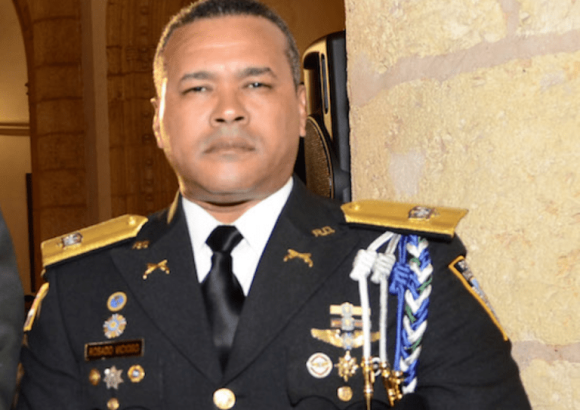
    The handover ceremony was led by Defense Minister Lieutenant General Carlos Antonio Fernández Onofre of the Dominican Republic Army, with the shipment officially accepted by Army Commanding General Major General Jorge Iván Camino Pérez. Senior defense officials including Deputy Defense Ministers, the Armed Forces Inspector General, and members of the Armed Forces General Staff and high military command were in attendance, signaling broad institutional backing for the armed forces’ modernization agenda.

    Per an official press statement from the defense ministry, the equipment delivery is executed in full alignment with directives issued by Dominican Republic President Luis Rodolfo Abinader Corona, who serves as the supreme authority over the nation’s Armed Forces and National Police. The shipment forms a core component of the administration’s broader institutional strengthening and modernization drive for the country’s military.

    The new equipment will be distributed to seven key frontline units critical to national defense and internal security: the 1st Battalion “Juan Pablo Duarte”, 2nd Battalion “Francisco del Rosario Sánchez”, 3rd Battalion “Matías Ramón Mella” under the First Infantry Brigade, as well as the Army’s elite Commando Battalion.

    The full shipment includes a range of advanced firearms: IWI ARAD 5.56-caliber assault rifles, Negev 7.62-caliber machine guns designed for integration with patrol vehicles and transport platforms, precision rifles from Barrett and Daniel Defense, alongside more than 11,000 custom work uniforms manufactured domestically by the Dominican Military Industry, plus a range of additional operational supplies.

    This deployment of new equipment is rooted in the administration’s long-term strategic vision to build a more modern, efficient, and rapidly responsive Dominican Armed Forces. The upgrade is designed to boost the operational readiness of frontline troops and optimize their performance across a wide range of operational scenarios.

    Military officials note that the integration of these new weapons and systems represents a substantial leap forward in military technology for the Dominican Army, bringing improvements to operational reliability and adaptability that will directly enhance the effectiveness of military units as they carry out their core national defense and security missions.

  • Mario Díaz proposes halting motorcycle imports

    Mario Díaz proposes halting motorcycle imports

    In Santo Domingo, Dominican Republic, prominent union leader and legal professional Mario Díaz has doubled down on his demands for urgent nationwide action to address growing public safety threats tied to the country’s vehicle fleet. Speaking on long-unenforced provisions of national traffic legislation, Díaz has stressed that full, immediate implementation of mandatory technical vehicle inspections for all registered vehicles on Dominican roads is non-negotiable as a foundational first step.

    Beyond mandatory inspections, Díaz is pushing for two additional sweeping policy changes to tackle growing risks tied to two-wheeled vehicles: an indefinite ban on all new motorcycle imports into the country, and far stricter, more consistent oversight of the existing national motorcycle fleet. These enhanced controls, he argues, would ensure that every motorcycle on the road meets proper safety standards, holds valid registration, and remains subject to consistent regulatory oversight — gaps that he says have created widespread public risk.

    Díaz has explicitly linked the unregulated proliferation and indiscriminate use of motorcycles across the Dominican Republic to two pressing national crises: a steady rise in criminal activity and a persistently high rate of fatal and injurious traffic accidents. He emphasized that these unaddressed issues have caused irreversible harm to innocent lives and eroded public confidence in citizen safety across the country, calling the ongoing situation an unacceptable public scourge.

    To move toward meaningful reform, Díaz confirmed that the sector he represents stands ready to partner fully with national law enforcement agencies and the Dominican government to design and roll out effective, evidence-based solutions. Even as he offers collaboration, however, he has made clear that no comprehensive fix can succeed without starting with the core priorities he has outlined: full implementation of mandatory technical vehicle inspections and uniform, strict oversight of the entire national motorcycle fleet.

  • Dominican Republic, Costa Rica and Ecuador condemn Iran’s seizure of MSC Francesca

    Dominican Republic, Costa Rica and Ecuador condemn Iran’s seizure of MSC Francesca

    In a rare coordinated display of diplomatic pushback, three Latin American nations — the Dominican Republic, Costa Rica, and Ecuador — have publicly condemned Iran’s seizure of the Panama-flagged commercial vessel MSC Francesca in the strategically critical Strait of Hormuz, issuing a unified call for the immediate release of both the ship and its crew.

    The joint statement released by the three governments outlines key details of the incident: the container ship, which is owned by an Italian shipping firm and registered under Panama’s flag, was intercepted by Iranian authorities while making a routine transit through the busy international waterway. Beyond demanding the vessel’s release, the three nations are calling for an immediate halt to all actions that put unimpeded, free navigation through international waters at risk.

    Senior officials from the three countries argue that the seizure does not merely run counter to established international norms, but constitutes a clear violation of binding international law. They frame the action as a direct challenge to the long-recognized principle of freedom of navigation, a right explicitly enshrined and protected under the United Nations Convention on the Law of the Sea. The statement also notes that Iran’s actions infringe on the sovereign rights of Panama, the flag state of the seized vessel, and amplify long-simmering security concerns across one of the globe’s most vital trade and energy chokepoints. Roughly 20% of the world’s daily oil supplies pass through the Strait of Hormuz, making consistent, unthreatened access critical to global energy markets and economic stability.

    The joint communique further warns against the escalating trend of coercive actions targeting civilian shipping engaged in legitimate international transit, emphasizing that such moves are fundamentally incompatible with the global legal obligations all signatory nations are bound to uphold. In closing, the three governments called on the broader international community to stand against any behavior that erodes maritime security, reaffirmed their unwavering solidarity with Panama, and reiterated their full commitment to upholding the framework of international maritime law.

  • Abinader oversees progress on República de Colombia Avenue project

    Abinader oversees progress on República de Colombia Avenue project

    SANTO DOMINGO – Dominican Republic President Luis Abinader recently conducted an on-site inspection of the ongoing expansion and redevelopment work on Avenida República de Colombia, a flagship government infrastructure initiative designed to tackle chronic traffic congestion and boost urban mobility across the National District.

    Valued at nearly 12 billion Dominican pesos (approximately $213 million USD), the entire project is funded through revenue generated from the Aerodrom concession contract, a deal that grants the private airport operator management rights over the country’s primary air facilities. The total budget also covers all land expropriation costs required to clear space for the expanded roadway and associated infrastructure.

    Joining the president during the site visit was Eduardo Estrella, the nation’s Minister of Public Works, alongside lead project engineers and senior ministry officials. During the walkthrough, government representatives outlined the core goals of the initiative: the project targets one of the capital’s most gridlocked traffic corridors, where daily commutes often stretch for hours due to outdated road design and rising vehicle ownership. By upgrading the roadway and creating new connecting infrastructure, officials aim to cut travel times, reduce vehicular emissions from idling traffic, and ultimately improve the daily quality of life for thousands of area residents.

    As of the inspection, the project has already hit key early milestones: several new U-turn lanes along the corridor leading toward La Monumental have been completed and opened to the public, providing early relief for local drivers. The full scope of work includes the construction of a new bridge spanning a local ravine, which will connect directly to a newly built tunnel system. When complete, the project will create a seamless, uninterrupted through-route that eliminates the need for traffic lights and repeated stops along the busy corridor. The upgraded road will establish direct, high-speed connections between three of the capital’s major arterial routes: Avenida Jacobo Majluta, the existing República de Colombia Avenue, and Avenida Monumental.

    Authorities confirmed the project will be delivered in sequential phases to minimize disruption to daily traffic in the area. The first completed section of the new roadway is on track to open to the public by the end of the current calendar year, with full construction completion projected for the third quarter of 2025. During his visit, President Abinader toured multiple active construction zones, reviewed progress against the project timeline, and received detailed technical briefings from the engineering team and public works leadership on outstanding work and upcoming milestones.

  • Dominican Republic promotes UNESCO World Heritage nomination for La Isabela

    Dominican Republic promotes UNESCO World Heritage nomination for La Isabela

    In a step forward for cultural preservation and international collaboration, the Dominican Republic is actively moving closer to its goal of securing UNESCO World Heritage designation for La Isabela, a landmark colonial-era site on the nation’s northern coast. To strengthen the site’s nomination dossier and tap into global specialized expertise, the country has welcomed a delegation of Turkish cultural heritage professionals, led by veteran underwater archaeologist Harun Özdaş, for an in-depth technical assessment of the historic location.

    The Turkish delegation also included senior diplomatic representatives, headed by Ambassador Emriye Bağdagül Ormancı of Turkey’s diplomatic mission to the Dominican Republic, alongside senior cultural heritage officials from the Dominican Republic’s Ministry of Culture. During the visit, participating authorities repeatedly highlighted the critical role that the site’s submerged archaeological remains play in establishing its global cultural significance. Underwater cultural artifacts and structural remnants, they noted, are not just secondary additions to the site’s history—they are a core component that will help prove La Isabela’s ‘outstanding universal value,’ the key requirement for UNESCO World Heritage inscription.

    La Isabela holds a unique place in modern global history: founded in 1493 by Christopher Columbus during his second voyage to the Americas, it was the first permanent European settlement established across the entire Western Hemisphere. Today, the site preserves irreplaceable archaeological evidence from the earliest days of transatlantic colonization, including foundational urban planning traces, intact structural foundations, and a vast collection of period artifacts that offer unparalleled insight into the earliest interactions between European colonizers and Indigenous populations of the Caribbean. For years, La Isabela has held a spot on the Dominican Republic’s tentative UNESCO nomination list, a preliminary step toward formal consideration for the coveted global designation.

    The technical partnership with Turkish archaeologists is part of a broader strategy by the Dominican Ministry of Culture to expand global collaboration in heritage conservation. Beyond advancing the UNESCO bid, the cooperation facilitates cross-border knowledge sharing, builds capacity for specialized underwater heritage preservation, and allows both nations to exchange evidence-based best practices for protecting vulnerable submerged cultural assets. Dominican cultural officials noted that this international collaboration strengthens not only La Isabela’s nomination prospects but also the country’s broader national efforts to preserve and promote its unique historic and cultural legacy to the world.

  • Senate approves first reading of real estate regulation bill in the Dominican Republic

    Senate approves first reading of real estate regulation bill in the Dominican Republic

    In a key step to clean up the Dominican Republic’s property market, the national Senate has given preliminary approval to a sweeping piece of legislation designed to oversee real estate brokerage services and crack down on deceptive advertising. The reform is rooted in growing concerns over unethical practices and rising consumer fraud in the country’s booming real estate sector, with lawmakers aiming to bring clearer accountability and structure to property transactions.

    The bill was put forward by a cross-group trio of sitting senators: Rafael Barón Duluc, Félix Ramón Bautista, and Eduard Alexis Espiritusanto. At its core, the legislation sets mandatory ethical and transparency benchmarks that cover every stage of real estate activity, from initial property promotion and marketing through to the final execution of sales or rental agreements. Unlike loose existing guidelines, the new framework is built to protect all stakeholders in the sector – not just prospective home buyers and tenants, but also licensed agents and registered agencies, while fostering sustainable, orderly growth across the industry.

    To align the new rules with existing national consumer protection legislation, the bill formalizes a clear definition of misleading advertising. Any commercial messaging that misleads consumers about core property details – including structural features, unit availability, listed pricing, purchase agreement terms, or promised move-in deadlines – will be classified as a violation, matching the standards already set out in the country’s existing Law 358-05 on Consumer Protection. The legislation carves out key exceptions to avoid overreach: it does not apply to private property owners selling their personal residences directly, nor to legal professionals carrying out their standard advisory duties during property transfer processes.

    To enforce the new standards, the bill outlines a tiered system of penalties for violators. Sanctions range from temporary operational shutdowns and license suspensions to financial fines that can reach as high as 50 times the country’s current minimum wage. Oversight and enforcement of the new rules, if the bill passes its final reading, will be assigned to the Dominican Republic’s Ministry of Housing, Habitat and Buildings, which will set up a dedicated specialized department to handle agent registration, ongoing regulatory compliance, and regular monitoring of all real estate intermediation activities across the country.

  • Dominican Republic and Guatemala create bilateral forum to strengthen economic relations

    Dominican Republic and Guatemala create bilateral forum to strengthen economic relations

    In a landmark step to boost cross-border economic collaboration, the foreign ministries of the Dominican Republic and Guatemala have formalized an agreement to establish a joint Political and Business Forum, designed to deepen trade ties and unlock new investment opportunities between the two Latin American nations.

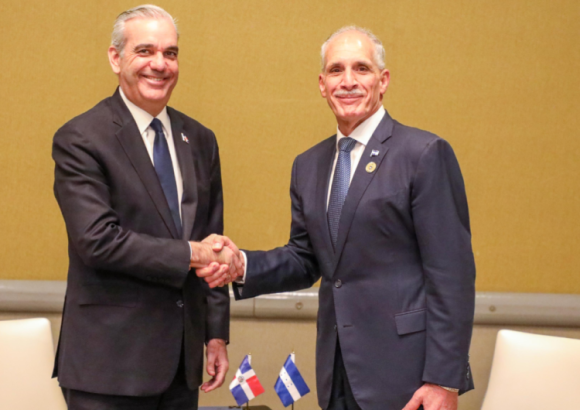
    The memorandum of understanding was signed during an official ceremony by Roberto Álvarez, Dominican Minister of Foreign Affairs, and his Guatemalan counterpart Carlos Ramiro Martínez Alvarado. Once operational, the forum will serve as a structured, recurring platform that brings together public sector leaders and private business delegates from both countries. Its core mandates include mapping untapped commercial opportunities, streamlining access to each nation’s consumer and industrial markets, and advancing collaborative investment projects that benefit both economies.

    Beyond facilitating direct business connections, the new bilateral mechanism will also promote the sharing of critical industry data, practical policy experiences, and proven regulatory best practices across three key areas: trade process simplification, national commercial promotion strategies, and the design of competitive investment incentive frameworks.

    Per the terms of the agreement, the forum will hold full plenary meetings once every year, with the host nation rotating between the Dominican Republic and Guatemala. A permanent dedicated working group will also be established to monitor progress on agreed initiatives, coordinate follow-up actions, and ensure consistent implementation of forum outcomes.

    Lead officials from both governments have framed the new forum as a transformative milestone in bilateral relations, noting that it will not only deepen longstanding economic ties but also create more pathways for private sector engagement in shaping cross-border cooperation. Notably, the initiative is structured to maximize the trade and investment benefits already available under the Dominican Republic–Central America Free Trade Agreement (DR-CAFTA), marking the first time the two countries have launched a standalone bilateral framework exclusively focused on expanding trade and investment collaboration.