In a high-stakes bilateral gathering held in Santo Domingo, top diplomatic leaders from the Dominican Republic and Spain have converged to address a range of pressing regional and bilateral issues, anchored by discussions on the ongoing instability in neighboring Haiti. Dominican Foreign Minister Roberto Álvarez and his Spanish counterpart José Manuel Albares used the official meeting to align on international strategy for Haiti, while deepening long-standing cooperative ties between their two nations. During the session, Albavers reiterated Spain’s unwavering commitment to contributing to multilateral international efforts working toward long-term stabilization in Haiti, emphasizing that sustained coordinated global support is non-negotiable to reverse the country’s deteriorating security and humanitarian situation. The Spanish minister’s remarks underscored the European nation’s role as a engaged partner in Caribbean regional security. Moving past the urgent crisis in Haiti, the two diplomats turned their attention to the robust bilateral relationship that has evolved between the Dominican Republic and Spain. Both leaders highlighted the steady progress of ongoing collaboration across key sectors, including cross-border trade, foreign direct investment, and joint sustainable development projects that have delivered mutual benefits to both populations. Álvarez took the opportunity to draw attention to the critical role of the Dominican diaspora in Spain, noting that the community, which numbers more than 200,000 people, stands as the second-largest Dominican expatriate population in any country worldwide. For his part, Albares praised the successful social and economic integration of Dominican residents into Spanish society, and revealed that new regularization programs led by the Spanish government could open pathways to legal status for additional Dominican migrants moving forward. These programs are structured to ensure that all participating migrants receive full legal rights and state protections while residing and working in Spain. To cap off the official bilateral meeting, Albares formally extended an invitation on behalf of the Spanish government to Dominican President Luis Abinader to attend the XXX Ibero-American Summit, which is scheduled to be hosted in Madrid this coming November. The upcoming summit will bring together heads of state from across the Ibero-American community to discuss shared political, economic, and social priorities for the region.
标签: Dominican Republic
多米尼加共和国
-

Dominican Writing Festival closes with new distribution agreements and calls for stronger Caribbean literary ties
The fourth edition of the Dominican Writing Festival drew to a close on Sunday in Santo Domingo, wrapping up two days of dynamic dialogue, professional networking, and collaborative progress that solidified its growing role as a central hub for Caribbean literary communities. Held on April 25 and 26 at Santo Domingo’s Galería 360, the 2026 gathering brought together over 50 cross-sector literary stakeholders—including writers, independent publishers, academics, booksellers, and literary agents—from across the Caribbean: the Dominican Republic, Haiti, Cuba, Puerto Rico, and Venezuela. Over the course of the event, participants took part in panel discussions, author readings, live performances, and industry exchange sessions that addressed both the creative cultural work and practical business challenges shaping regional literature today.
This year’s programming centered on a persistent, pressing question that echoed through every session: How can Caribbean literary markets, fractured for decades by geographic distance, language divides, and underdeveloped distribution infrastructure, build stronger interconnected networks? In his opening remarks, Rafael José Rodríguez Pérez, president of Río de Oro Editores and co-founder of CuentaRD, called for intentional, cross-border cooperation among publishers and expanded access to Caribbean literary works across the region. Festival founder Roxanna Marte framed the gathering as a core component of a larger movement to nurture a robust, self-sustaining regional literary ecosystem—and this year, that collaborative vision moved beyond words to tangible action.
Organizers announced new book distribution partnerships with Puerto Rico’s Editorial Pulpo, and organized structured business matching sessions that connected independent publishers, regional distributors, and working authors directly. These practical industry-focused initiatives have become an increasingly central pillar of the festival’s mission, distinguishing it from traditional literary gatherings.
The roster of featured participants reflected the region’s diverse literary landscape: Puerto Rican publisher Carlos A. Colón, Haitian writer Jacques Alix Louis, and Dominican authors Miguel Yarull, Manuel Chapuseaux, Ingrid Luciano, Clara Morel, Jhak Valcourt, Bismar Galán, Celestino Esquerré, and Siddharta Mata were among the creative voices in attendance. Academic contributors including Keturah Nichols, Rosa Calosso, Meaghan Coogan, María Carla Picón, and Ibeth Guzmán led conversations that tied literary production to broader regional conversations around history, identity, and cultural politics.
Unlike earlier iterations that followed a more conventional literary festival format, the 2026 edition deliberately expanded its scope to act as a platform for critical debate and intentional industry-building. Panels delved into timely, cross-cutting themes including transnational migration, Afro-diasporic identity, colonial legacy, and digital humanities. The special dialogue *Haiti in Words: Identity, Resistance and Hope in Literature* centered the urgent need for deeper cultural exchange between Haiti and the Dominican Republic, a historically divided neighboring nation.
Adding Venezuela as an official participating country extended the festival’s regional reach, with dedicated sessions exploring diaspora writing and displacement, such as the panel *Reading a New Country* featuring authors Siddharta Mata and Aída Magallanes. A standout session titled *From Paper to Screen* explored the expanding opportunities to adapt Caribbean literary works for film and stage, highlighting growing global demand for Caribbean stories outside of the publishing sector. A roundtable focused on cross-sector alliances between publishers, distributors, and local bookstores—bringing together stakeholders including Mary Claudia Pérez, Víctor Vidal, Francis Santos, and Luis Reynaldo Pérez—returned to the festival’s core theme, brainstorming solutions for independent Caribbean publishers to build stronger collective markets through collaboration, rather than competition.
Beyond industry-focused work, the festival also featured inclusive programming for audiences of all ages, including dedicated children’s literature sessions, public poetry readings, theatrical performances, and live music, showcasing the event’s broader cultural impact across the Dominican Republic. During the closing ceremony, organizers awarded honors to María Carla Picón, Ibeth Guzmán, and Claudio Pérez for their decades-long contributions to Caribbean literary and editorial work. The ceremony also included a tribute to foundational Caribbean literary figures Julia de Burgos, Aída Cartagena Portalatín, and Teresa de la Parra.
Four editions in, the Dominican Writing Festival has evolved far beyond a simple showcase for new literary work. This year’s gathering made clear that the event is now a driving force shaping the future of Caribbean publishing, as much as a space to celebrate the region’s rich existing literary legacy.
-

Spain launches regularization process to recognize rights of Dominicans
In a high-profile diplomatic meeting held in Santo Domingo, Spanish Foreign Minister José Manuel Albares has announced a landmark new regularization scheme that will grant formal legal status to Dominican residents living in Spain, marking a significant step forward in recognizing the rights of one of the country’s largest migrant communities from the Caribbean.
Following extensive talks with his Dominican counterpart, Roberto Álvarez, Albares publicly acknowledged the far-reaching contributions the Dominican diaspora has made to Spain’s economic dynamism and social diversity over decades. The minister confirmed that the program will expand in the coming weeks, allowing a growing number of undocumented Dominican residents to formalize their status and access full legal protections.
Beyond migration policy, the two top diplomats used the meeting to align on a range of shared regional priorities, most notably coordinated action to promote long-term stabilization in neighboring Haiti, which has grappled with years of political collapse and humanitarian crisis. Albares underlined Spain’s long-standing commitment to nurturing close strategic collaboration with the Dominican Republic, emphasizing that both nations view their bilateral partnership as a cornerstone of their foreign policy in the Latin American and Caribbean region.
Albares also reaffirmed Spain’s consistent support for inclusive development initiatives across the Dominican Republic, highlighting the shared Spanish language as a foundational cultural and political bridge that fosters constructive dialogue and peaceful cooperation amid an increasingly fragmented global order. Looking ahead, the Spanish foreign chief drew particular attention to the upcoming Ibero-American Summit, set to take place in Madrid on November 4 and 5, framing the gathering as a critical multilateral platform for advancing regional integration and addressing pressing geopolitical challenges facing Spanish-speaking nations worldwide.
-

Dominican Army strengthens border oversight through regional tour
SANTO DOMINGO – In a proactive move to shore up national border defenses, Dominican Army Commander Jorge Iván Camino Pérez has completed a multi-day inspection tour of high-priority border zones across three northern provinces: Independencia, Elías Piña, and Dajabón. The operational review was designed to strengthen on-ground oversight of border activities and reinforce the country’s territorial security protocols.
The inspection kicked off in Jimaní, where the commander first stopped at El Rodeo Fortress, the central command base for the 14th Infantry Battalion. During his stop, he held briefings with battalion leadership to review current operational protocols and address any emerging challenges facing on-duty troops. Following the fortress visit, Camino Pérez traveled to several frontline military posts and official border checkpoints to assess day-to-day operations firsthand, speaking with deployed soldiers to understand working conditions and security gaps.
From Jimaní, the commander moved to Pedro Santana, a municipality in Elías Piña province, to inspect security arrangements at the Artibonito River bridge. This crossing is a critical infrastructure link on the main international highway connecting the Dominican Republic and neighboring Haiti, making it a high-priority site for border monitoring and security management.
The tour then proceeded to military facilities across the municipalities of Restauración and Dajabón, with stops at the Libón River bridge, the Villa Anacaona military detachment, and dozens of remote border outposts positioned along the dividing line. Many of these outposts are located in isolated terrain, making regular oversight critical to ensuring consistent security enforcement.
Camino Pérez wrapped up his inspection at Beller Fortress, the main military installation in Dajabón, where he addressed assembled troops. In his remarks, he emphasized the strategic importance of the Dominican border and urged all service members to maintain constant, heightened vigilance to counter unauthorized activity and uphold the country’s territorial integrity.
Army spokesperson later clarified that the series of inspections is not an ad-hoc measure, but part of a sustained, ongoing monitoring program rolled out by the Dominican armed forces. The program has two core objectives: first, to safeguard the country’s national territory from incursions and cross-border illicit activity, and second, to improve security conditions that support and protect communities living along the border line.
-

DGCINE announces temporary road closures in Samaná for filming
Local film production activities are set to bring short-term traffic disruptions to the popular coastal region of Samaná, after the Dominican Republic’s General Directorate of Cinema (DGCINE) officially announced planned road closures to accommodate on-location shooting.
Two separate closure windows have been confirmed for the coming days, both aligned to the logistics of the ongoing audiovisual project. The first closure will go into effect on Tuesday, April 28, affecting Avenida de la Marina, commonly known as the Malecón. The restricted stretch will run from the location of Taberna Mediterránea through to Hacienda Samaná, with no through traffic allowed between 4:00 a.m. and 7:00 p.m. that day.
A second closure is scheduled two days later, on Thursday, April 30, impacting William Johnson Avenue. This segment will be shut down from the junction with Galera Samaná road in the La Aguada sector all the way to the Marina Avenue roundabout, operating during the exact same 15-hour time frame as the first closure.
In a public statement, DGCINE clarified that these temporary traffic restrictions are a necessary part of coordinating on-location logistics for the audiovisual production currently being filmed across the Samaná area. The agency has issued a formal advisory to all local residents, commuters and visitors planning to travel through the affected zones, urging them to map out alternate routes well in advance of their trips and to exercise additional caution when moving around the perimeter of the closed areas. The agency also noted that all restrictions will be lifted promptly once filming activities wrap up for the day on each scheduled date.
-

Weather system brings heavy downpours and storms to Dominican Republic
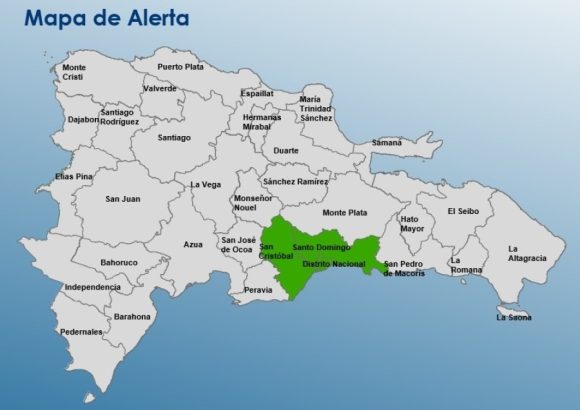
Residents of the Dominican Republic are preparing for disruptive severe weather on Tuesday, as the country’s national meteorological agency, the Dominican Institute of Meteorology (Indomet), has issued a series of alerts for widespread heavy rainfall, thunderstorms, and powerful wind gusts driven by overlapping atmospheric systems. According to the official forecast, the unstable conditions stem from two converging weather patterns: an approaching surface trough connected to a frontal system positioned northeast of the island, combined with a separate disturbance in the upper atmosphere. This combination is expected to create favorable conditions for intense precipitation and storm activity across large swathes of the country.
Early morning cloud cover will kick off the weather event, with scattered to moderate showers forecast to hit more than 10 provinces from the earliest hours of Tuesday. The list of regions expecting early precipitation includes the eastern tourist hubs of La Altagracia, San Pedro de Macorís, and La Romana, as well as inland and central provinces El Seibo, Monte Plata, San Cristóbal, Sánchez Ramírez, Monseñor Nouel, La Vega, and Santiago. Forecasters project that storm activity will build steadily through the day, with a sharp intensification expected during the afternoon and evening hours. As the systems develop, heavier downpours and stronger thunderstorms will expand coverage to reach the North, Northeast, and Southeast regions, the high-elevation Central Mountain Range, and the country’s border regions with neighboring Haiti.
To prepare residents for potential hazards, Indomet has put in place two tiers of official weather notifications. Active weather alerts are currently in effect for the provinces of Espaillat, Hermanas Mirabal, La Vega, Monseñor Nouel, Santiago Rodríguez, Samaná, Hato Mayor, and Puerto Plata. Higher-level weather warnings, indicating elevated immediate risk, remain in force for Santiago, María Trinidad Sánchez, Duarte, and Sánchez Ramírez. The elevated risk levels stem from forecasts of multiple potential hazards: flash flooding, sudden rises in water levels along rivers and smaller streams, and an increased possibility of soil displacement and landslides in vulnerable hilly and mountainous areas.
National and local authorities have issued public guidance urging all residents in affected regions to prioritize safety over the coming 24 hours. Officials have reminded communities to monitor official Indomet weather updates closely for any changes to the forecast or risk level, and to follow all public safety guidance issued by the country’s civil protection agency as the weather event unfolds.
-

Government assumes medical expenses after crash linked to presidential escort
A Monday morning traffic collision on the Maimón–Puerto Plata highway in the Dominican Republic has left three people injured, including two members of the presidential advance security detail and one civilian, according to the top commander of the country’s Presidential Security Corps (CUSEP).
Major General Jimmy Arias, head of CUSEP, shared updated details on the victims’ care arrangements following the incident, which took place as the advance team was en route to a planned official presidential event in Puerto Plata province. The crash occurred between one of the team’s official escort vehicles and a privately owned civilian automobile.
Following the collision, emergency responders quickly transported all three injured parties to medical facilities for urgent care. To access more specialized medical treatment unavailable locally, the two wounded soldiers were evacuated via air ambulance to Cedimat, a leading medical center located in the capital city of Santo Domingo. Arias confirmed that medical providers made the clinical decision to leave the injured civilian at the Bournigal Clinic in Puerto Plata for ongoing care, rather than transferring them to the capital.
In a statement highlighting the administration’s commitment to supporting the affected civilian, Arias noted that all of the civilian’s medical treatment costs will be fully covered by the Dominican government. This full funding arrangement was directly ordered by sitting Dominican President Luis Abinader, underscoring the presidential administration’s proactive response to the incident involving the official presidential motorcade advance team.
-

Dominican government reinforces efforts to eradicate child labor
In Santo Domingo, top Dominican labor officials have doubled down on the national government’s long-standing pledge to wipe out child labor, announcing a sweeping strategy that combines expanded prevention frameworks, tighter monitoring systems, and enhanced protective support for vulnerable minors across the country.
Over the coming six months, the Dominican Ministry of Labor is set to grow its specialized cross-disciplinary task force dedicated to combating child exploitation. The expansion will bring on additional psychologists, social workers, legal experts, and translators, equipping the agency to improve both early detection of at-risk children and rapid, effective intervention when cases are uncovered.
Officials spotlighted the success of ongoing prevention initiatives spearheaded by the country’s Directorate for the Eradication of Child Labor. To date, the directorate has run 138 community-focused DARSE workshops, which have delivered education and outreach to more than 6,300 people. This turnout far surpasses the program’s original participation goals, marking a significant win for public engagement on the issue.
A core focus of ongoing enforcement work remains the Dominican agricultural sector, which includes major domestic commodity industries such as sugar cane, rice, banana, tomato, coffee, and cocoa production. Labor regulators have prioritized consistent inspections across these agricultural areas, given historical risks of child labor exploitation in rural commodity work.
Official inspection data shows that regulators carried out more than 5,000 targeted inspections in agricultural zones across the country in 2025. That momentum has continued into 2026, with nearly 2,000 additional inspections completed in just the first quarter of the year.
While no confirmed child labor cases were uncovered during 2025’s enforcement rounds, two cases involving underage workers were detected in 2026 in the Azua and Higüey regions. In both instances, authorities launched immediate, coordinated response measures: the minors were reintegrated into formal schooling, their families received targeted support, and complementary community awareness programming was rolled out in the affected areas, in close coordination with other relevant public institutions.
ddzGoing forward, government officials stress that sustained cross-sector cooperation across national and local levels will remain the critical foundation for upholding children’s rights and stopping child labor exploitation before it occurs.
-

Spanish Foreign Minister arrives in Dominican Republic for official visit
Diplomatic activity kicked off in Santo Domingo on Monday, as Dominican Republic officials formally welcomed Spain’s top diplomat to the country for a working official visit. Deputy Minister of Bilateral Foreign Policy Francisco A. Caraballo extended the greeting on behalf of Dominican Foreign Minister Roberto Álvarez, opening the high-profile bilateral engagement.
The welcome ceremony included senior diplomatic representatives from both nations: Dominican Ambassador to Spain Tony Raful and Lorea Arribalzaga, Spain’s sitting ambassador to the Dominican Republic, joined the opening proceedings alongside the two lead officials.
Over the course of the visit, Dominican Foreign Minister Álvarez and visiting Spanish Foreign Minister Albares are set to convene a structured working meeting to deliberate on shared priorities. After their closed-door talks, the pair will appear at a joint press conference to outline key takeaways and outcomes from their discussions to the public.
This official trip was planned as a follow-up to the bilateral meeting the two foreign ministers held in Madrid back in May 2025. Its core objective is to move forward on the mutual commitments the two leaders agreed to during that earlier gathering.
The Dominican Republic and Spain have cultivated and maintained long-standing, robust diplomatic relations spanning decades. Both countries sustain ongoing cooperation across a wide range of sectors aligned with their mutual interests, supported by a consistent framework of institutional dialogue.
-

Abinader ranks fourth in Latin American presidential approval ranking
A new public opinion survey from leading Latin American research firm CB Consultora Opinión Pública has placed Dominican Republic President Luis Abinader among the most popular chief executives across the region, holding the fourth spot in the latest regional approval rankings.
Released for the start of Abinader’s second term in office, the poll recorded a 57.3% overall approval rating for the Dominican leader, with 39.6% of respondents indicating they disapproved of his performance. This strong showing cements his position as one of the most favorably viewed incumbent presidents in Latin America.
Topping the 2026 regional ranking is El Salvador’s Nayib Bukele, who claimed the number one position with an impressive 70.1% approval rating. Mexico’s Claudia Sheinbaum followed close behind in second place, just three-tenths of a percentage point behind Bukele at 69.8%. Costa Rica’s Rodrigo Chaves took third place with a 59.5% approval rating, leaving Abinader to slot into fourth, just ahead of Bolivia’s Rodrigo Paz, who recorded a 52.9% approval score.
A range of regional leaders landed in the middle of the approval table. Nicaragua’s Daniel Ortega, Brazil’s Luiz Inácio Lula da Silva, Chile’s José Antonio Kast, and Paraguay’s Santiago Peña all fell within this mid-tier grouping. Toward the lower end of the rankings were Colombian President Gustavo Petro, Guatemala’s Bernardo Arévalo, Argentina’s Javier Milei, and Ecuador’s Daniel Noboa, all of whom posted below-average approval numbers. Bringing up the bottom of the 18-country ranking were Venezuela’s Delcy Rodríguez and Peru’s interim president José María Balcázar.
The survey, fielded between April 13 and 18 of 2026, collected responses from more than 40,000 people across all 18 surveyed Latin American nations. Researchers designed the study to meet rigorous statistical standards, achieving a 95% confidence level and a narrow margin of error ranging between just ±1.9% and 2.2% across the sample.