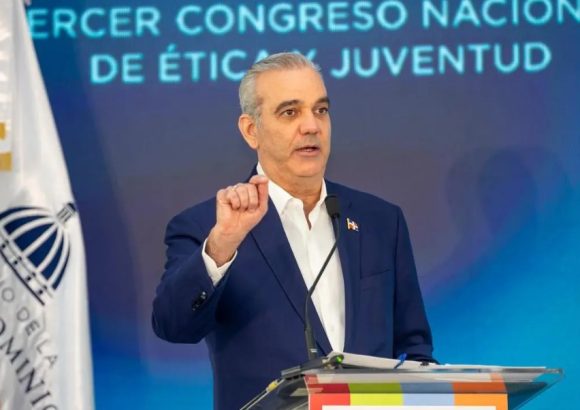
In a significant push to embed integrity across public life in the Dominican Republic, President Luis Abinader has doubled down on his administration’s pledges to root out corruption and cultivate ethical leadership, speaking to hundreds of young emerging leaders at the Third National Congress of Ethics and Youth held at the Ministry of Defense in Santo Domingo.
During the gathering, which centered on empowering the next generation to shape transparent governance, Abinader announced a landmark personal commitment: he will step into the role of president of the newly launched National Youth Ethics System. This nationwide initiative is designed to embed core values of honesty, ethical decision-making, and servant leadership among Dominican youth, laying the foundation for more responsible public engagement for years to come. The first gathering of the system is scheduled for next week, with regular monthly sessions planned to coordinate cross-sector efforts and scale the initiative’s reach across every region of the country.
In his keynote address, the president emphasized that ethical practice cannot remain a rhetorical talking point — it must be integrated into every aspect of daily public and civic life. He issued a direct call to the country’s young people, urging them to step into active roles as guardians of public trust, serve as watchdogs for accountability, and cultivate a new standard of responsible citizenship across the nation. Rejecting the idea that professional status or academic credentials outweigh moral character, Abinader stressed that unwavering ethical conduct is the non-negotiable foundational requirement for anyone seeking to lead or serve the Dominican people.
The president also used the platform to reiterate his administration’s long-stated zero-tolerance policy toward corruption at every level of government. He made clear that law enforcement and anti-corruption bodies will continue to investigate and prosecute all cases of official wrongdoing, no matter the rank of the individual involved. Broadening the common definition of corrupt acts, Abinader noted that corruption extends far beyond high-profile financial embezzlement schemes. It also encompasses small but corrosive acts including nepotism, influence-peddling, and preferential treatment that erode equal access to public services for all Dominican citizens.
“We must be relentless in addressing everything from the smallest acts to the most significant ones,” Abinader told the crowd of young leaders. “Our work does not end with prosecutions. We must build a lasting national culture rooted in transparency, equal fairness, and respect for our democratic institutions, and young people are the key to making that vision a reality.”