After weeks of unaddressed public complaints about ongoing desecration and theft at one of San Pedro de Macorís’ most exclusive burial grounds, local law enforcement has finally stepped in to clear out trespassing vandals who had been terrorizing the site. The targeted operation, carried out by agents of the Municipal Police, focused on the municipal site colloquially known as “the cemetery of the rich,” a final resting place for the community’s wealthy and prominent residents that had been overrun by destructive trespassers in recent months.
Local reports confirm that the intruders engaged in deeply disrespectful and criminal activity across the grounds, desecrating graves, damaging cemetery structures, and stealing valuable decorative and personal items from burial plots. This wave of criminal activity left family members of the deceased afraid to visit their loved ones’ resting places, creating a persistent climate of fear and insecurity for grieving residents across the community.
For an extended period, local community groups in San Pedro de Macorís repeatedly raised alarm about the escalating vandalism crisis, demanding action from municipal leaders. For reasons that have not been made public, local municipal authorities failed to respond to these calls until the recent police intervention. According to an official statement from law enforcement, the primary goal of this clearing operation is to restore the three core values that any burial ground should uphold: safety, respect, and peaceful tranquility for visitors.
In the wake of the police action, neighbors living near the cemetery and local residents have already voiced widespread approval of the intervention, expressing satisfaction that the long-running problem has finally been addressed. Many note that they hope the action will permanently end the wave of destruction and allow families to once again visit their loved ones in peace.
标签: Dominican Republic
多米尼加共和国
-

Homeless are removed “cemetery of the rich.”
-

Dominican Republic could absorb U.S. slowdown
New data released by the U.S. Department of Commerce’s Bureau of Economic Analysis shows that American economic expansion cooled notably in the second quarter of 2026, with gross domestic product posting just a 0.4% quarterly gain. This translates to an annualized growth rate of 1.5%, a clear downshift from the 2.1% annual expansion recorded in the first quarter of the year. For the Dominican Republic, which maintains deep economic ties to the U.S. market, this slowdown has triggered a yellow alert rather than a full red crisis warning, as the deceleration has not yet reached a scale that would severely damage the Caribbean nation’s core foreign currency earning sectors, local economic analysts note.
Economic observers point out that a gradual moderation in U.S. growth can be absorbed smoothly by the Dominican economy, as long as U.S. labor market conditions and household income levels remain strong enough to sustain consumer spending. So far, key indicators tracking the Dominican Republic’s most critical dollar-generating sectors continue to show resilience, offering a degree of reassurance to policymakers and market participants.
Remittances, one of the largest private sources of foreign currency for the Dominican Republic, have held up well through the first seven months of 2026. Total inflows hit $7.3164 billion between January and July, marking a 6.4% increase compared to the same period in 2025. While growth in remittances softened to 4.7% year-on-year in July, the ongoing expansion confirms that the U.S. economy still has enough momentum to support this key capital flow, though the July slowdown bears close monitoring in coming months. This dynamic highlights that the critical question for the Dominican Republic moving forward is not whether U.S. GDP grows at 1.5% or 2% annually, but how U.S. employment and household incomes evolve – especially for Hispanic workers, who make up the large majority of U.S.-based workers sending remittances back to the Caribbean nation.
The same dynamic applies to the Dominican Republic’s tourism sector, another top generator of foreign exchange. From January to July 2026, the country welcomed 7.7 million international visitors, representing a 7% year-on-year increase. In July alone, 754,413 tourists entered the country, with nearly half – 363,502 travelers – arriving from the United States. As long as U.S. consumers maintain their disposable income and ability to travel, Dominican hotels, airlines, restaurants and the entire sprawling tourism supply chain will continue to benefit.
U.S. demand for goods from the Dominican Republic has also remained resilient, supporting the country’s export-focused sectors, particularly free-trade zone manufacturing and the medical device industry. The country’s Monthly Economic Activity Index (IMAE) rose 5.5% in July, pushing the aggregate January-July growth for the export sector up to 3.1%, from 2.6% recorded in the first half of the year. Analysts note that the Dominican Republic could unlock even stronger growth by deepening its integration into U.S. supply chains, a shift that aligns with the global nearshoring trend of relocating production closer to major consumer markets.
This current economic landscape reinforces the urgency for the Dominican Republic to maximize the benefits of nearshoring. Experts argue that it is not enough for U.S. demand to rise; the country must ensure that a growing share of U.S. spending on goods and services translates to increased domestic production and job creation within the Dominican Republic.
The shifting U.S. growth trajectory also has implications for the Dominican peso’s exchange rate. If the U.S. slows down but avoids a full recession, and the Dominican Republic continues to see strong inflows of foreign currency from remittances, tourism, foreign direct investment and exports, the sustained surplus of foreign currency will likely continue to put upward pressure on the peso’s value.
That said, the current yellow alert could escalate to a higher warning level if the U.S. slowdown spreads beyond GDP growth to erode American employment and household incomes. If the cooling of the U.S. economy deepens enough to pull down consumer spending, remittances and tourism would be the first two channels through which economic deterioration would spill over to the Dominican Republic.
For the moment, however, analysts agree that the situation calls for careful caution rather than widespread alarm. While risks are clearly on the table, key indicators remain positive enough to avoid immediate concern.
-
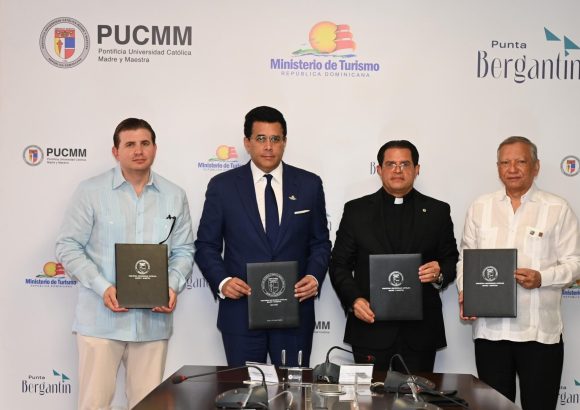
Program designed to measure the economic and social impact of Punta Bergantín
A new landmark partnership between academia, government, and a private development trust is set to launch a long-term research initiative to track the full impacts of the Punta Bergantín tourism and real estate development across northern Dominican Republic, centered in Villa Montellano, Puerto Plata.
The collaborative agreement brings together three key stakeholders: Pontificia Universidad Católica Madre y Maestra (PUCMM), the Dominican Republic’s Ministry of Tourism (Mitur), and the Trust for the Economic and Social Development of Punta Bergantín. The partnership will deliver two core outcomes: a permanent monitoring program measuring the project’s economic, social, and territorial changes across local communities, and tailored workforce training to meet the growing labor demands of the new tourism hub.
The rector of PUCMM emphasized that the cross-sector alliance serves as a powerful model for advancing inclusive national development. “This agreement is clear proof of what effective collaboration looks like: the state, academic institutions, and the private productive sector align their goals and build partnerships to drive meaningful development across the country,” he stated. Under the terms of the partnership, PUCMM will contribute specialized research capabilities, academic training programs, and community outreach initiatives to address the evolving needs of the emerging tourism pole.
Mitur Minister David Collado noted that the Dominican Republic’s successful tourism growth strategy has long depended on data-driven decision-making, rather than improvisation, to shape international promotion efforts and understand visitor demographics. “We have not improvised – we have worked hand in hand with data,” Collado said, adding that this evidence-based approach has been central to the sector’s sustained expansion and the successful diversification of international source markets.
Andrés Marranzini, executive director of the Punta Bergantín trust, framed the agreement as the official starting point for a long-term collaboration that will document and measure the project’s transformative impact across Puerto Plata and the broader northern region. Marranzini explained that the large-scale development is already delivering widespread economic benefits, and is positioned to act as a core catalyst for regional progress. He highlighted that PUCMM’s experienced faculty and engaged student body will play a critical role in collecting empirical evidence of the project’s community impacts and identifying untapped growth opportunities for the region.
A key component of the partnership is workforce development: the agreement includes plans to strengthen human capital training to meet the labor demands generated by new tourism growth, including a hotel school that will be managed by PUCMM’s hospitality students. Marranzini noted that investing in skilled labor creates benefits that extend far beyond local communities, pointing out that Dominican professionals already hold leading roles across the Caribbean hospitality industry. The first phase of the Punta Bergantín project will deliver 1,600 new hotel rooms, a development that Marranzini says will help establish a new driver of progress for the entire northern region.
### Study Framework and Scope
The permanent research program will track a core set of development indicators including new job creation, household income levels, local entrepreneurship growth, total investment inflows, and changes to community quality of life. Data will be organized in a longitudinal ongoing database, with interim analysis published in semi-annual reports and a comprehensive full annual report. PUCMM’s School of Economics will lead all work on research methodology, data collection, analysis, and report preparation.The overarching goal of the initiative is to generate objective, actionable evidence that illustrates how large-scale tourism development transforms community livelihoods. These insights will then be used to refine public policy and advance the project’s core mission of driving sustainable, inclusive economic growth across the region. Additional components of the partnership include independent academic research opportunities, hands-on training for PUCMM students and local industry professionals, and potential participation from the university’s School of Tourism and Gastronomy in managing the new on-site hotel school.
The research program’s area of influence covers Villa Montellano, all communities directly or indirectly impacted by the project, and other key regions across the northern Dominican Republic, including Santiago when relevant. All three partnering institutions have reaffirmed their shared commitment to combining their unique capabilities, specialized knowledge, and collective efforts to advance sustainable development in the region, creating expanded opportunities that deliver broad, positive benefits for tourism activity, local economies, and communities across northern Dominican Republic.
-

The CAASD asks to rationalize water in the face of drought affects the Dominican Republic
A severe drought fueled by the El Niño climate phenomenon has left the Dominican Republic’s capital region facing a critical water shortage, prompting the top local water official to issue an urgent call for widespread public conservation. Felipe “Fellito” Suberví, director of the Santo Domingo Aqueduct and Sewerage Corporation (CAASD), announced this week that key aqueduct systems serving the entire Greater Santo Domingo area are operating far below their typical output, currently producing only 30 to 35 percent of their normal water volume. The sharp decline is directly tied to prolonged lack of rainfall across the major river basins that supply the region’s drinking water, he explained. Suberví noted that the below-average precipitation trend began as early as May this year, with dramatic drops recorded across all major source basins, including those feeding the Haina, Isa Mana, Duey, Isabela, and Nizao rivers – the latter of which supplies the critical Valdesia reservoir. One of the hardest-hit local sources, the Haina Manoguayabo basin, has seen its water flow plummet by 68 percent compared to average levels, according to CAASD data. The CAASD director emphasized that this water crisis is not an isolated issue for the Dominican Republic. The El Niño phenomenon has triggered similar drought conditions and public water shortages across the Caribbean and Latin America, with neighboring Puerto Rico already grappling with its own severe drinking water crisis right now. In a public statement, Suberví stressed that voluntary, consistent water rationing by area residents is the most immediate step to avoid more severe shortages as the region waits for much-needed rainfall. Without widespread public cooperation to cut unnecessary water use, the capital region could face more disruptive supply gaps in the coming weeks, he warned.
-
Health safety: a strategy to strengthen trust and transform the healthcare system
Santo Domingo is set to host a pivotal gathering for global healthcare stakeholders next month, as the third edition of the International Health Quality and Safety Forum prepares to bring patient safety to the top of the regional health policy agenda. Organized jointly by two leading Dominican health entities, CEMDOE and INTEGRA, the one-day event is scheduled for September 16, built around the core thematic focus “Safety as a System Strategy.”
Unlike fragmented approaches that frame patient safety as a narrow clinical concern, this year’s forum is designed to foster cross-sector dialogue that embeds safety protocols into every layer of healthcare operations. Attendees will include senior government health officials, private healthcare industry leaders, and recognized clinical and policy experts from both the Dominican Republic and across the globe. Over the course of the day, participants will dive into actionable strategies for integrating safety standards into the management, governance, innovation and large-scale transformation of healthcare organizations.
Key discussion topics will unpack the interconnected relationship between consistent safety practices, overall care quality and sustained public trust in national health systems. Attendees will also explore the critical responsibility of institutional leaders in building healthcare entities that can proactively anticipate emerging risks, draw actionable insights from past adverse events, and implement continuous iterative improvements to clinical and operational processes.
Beyond systemic safety frameworks, the forum will carve out dedicated space to address the future trajectory of clinical research within the Dominican Republic. Central to this conversation will be a focus on upholding rigorous scientific, ethical, regulatory and safety benchmarks that prioritize patient protection while generating the high-quality evidence needed to guide evidence-based care.
Organizers have also added institutional transformation to the agenda, inviting participants to unpack the persistent challenges of building healthcare systems that are more resilient to public health shocks, operationally efficient, and adaptable to shifting patient needs and global health trends.
Overall, CEMDOE and INTEGRA frame the third forum as a step toward advancing a holistic, system-wide vision of patient safety that extends far beyond individual clinical encounters. Through cross-sector collaboration and shared learning, the event aims to strengthen core health system management, rebuild and reinforce public trust in healthcare, support responsible medical innovation, and advance the long-term sustainability of Dominican and regional health systems.
-
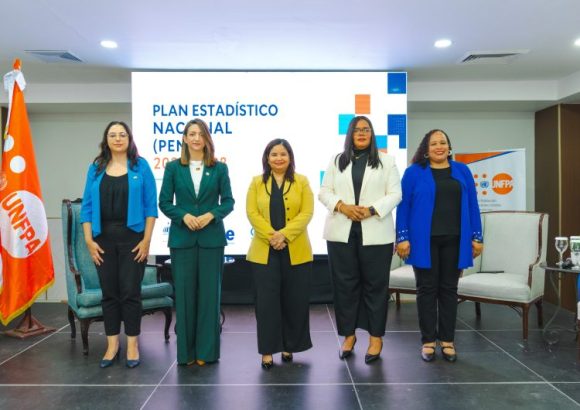
ONE launches National Statistical Plan 2025-2028 to strengthen official data
In a formal ceremony held in Santo Domingo, the Dominican Republic’s National Statistics Office (ONE) has unveiled its third iteration of the National Statistical Plan (PEN) for the 2025-2028 period, a comprehensive strategic framework designed to unify and elevate the nation’s official statistical production, ensuring all public policy decisions are rooted in verifiable, high-quality data.
As the successor to the 2013-2016 and 2021-2024 national statistical plans, this four-year initiative was developed in compliance with the requirements of Law 1-12, which governs the country’s 2030 National Development Strategy. The planning process included systematic updates to national inventories of statistical operations and administrative records, as well as broad consultation and validation workshops that brought together stakeholders from across the entire National Statistical System.
A core foundational contribution of the new PEN is a country-wide gap assessment that mapped 880 high-priority indicators aligned with four key national and global frameworks: the National Development Strategy 2030, the National Multi-Year Public Sector Plan, the United Nations’ Sustainable Development Goals, and the Montevideo Consensus on Population and Development. The assessment delivered clear insights into the current state of Dominican statistical production: 47% of the mapped indicators can already be fully measured using existing data resources, 33% require incremental upgrades to current collection and processing systems, and 20% suffer from substantial data gaps. The most severe gaps are concentrated in under prioritized areas including cultural statistics, construction and infrastructure tracking, social security reporting, and cross-cutting demographic and social statistics.
ONE officials frame the identification of these unaddressed gaps as a core component of the institution’s commitment to governmental transparency and continuous improvement of the national statistical ecosystem. The entire plan is structured around three overarching strategic priorities that address the gaps and weaknesses uncovered in the assessment.
The first priority is boosting the production and public dissemination of timely, accurate statistics. Key actions under this goal include expanding the use of existing administrative records and integrating non-traditional data sources into official production, as well as generating far more granular data disaggregated by sex, age, and geographic territory. Currently, administrative records already support 65% of the Dominican Republic’s official statistical operations, making expanded use of these resources a cost-effective path to improvement.
The second priority centers on strengthening the legal and institutional foundation of the National Statistical System through the adoption of a nationwide quality assurance framework that standardizes practices across all participating institutions. The plan formally integrates the National Code of Good Practices for Official Statistics and adopts guidelines aligned with the Generic Statistical Business Process Model to bring consistency to data production workflows across all agencies.
The third and final priority targets the expansion of technical capacity across the public sector, delivered through ongoing professional training for statistical personnel hosted by the National School of Statistics.
A public perception survey conducted during the plan’s development process underscored broad confidence in the national statistical system: 94% of responding institutions, academic researchers, and regular data users reported that they trust the output produced by Dominican statistical bodies.
Speaking at the launch event, ONE Director General Mildred Martínez emphasized that sustained high quality in official statistics is a collective responsibility. Beyond the work of ONE itself, she noted, reliable data depends on consistent standards and careful work across all public institutions and individual professionals tasked with collecting, processing, and documenting raw information.
Representatives from the Dominican Ministry of Finance and Economy and the United Nations System used the launch to reaffirm the critical link between robust national development planning and trustworthy statistical information. They noted that the PEN will directly strengthen the monitoring and evaluation of all public policies by providing consistent, granular data to track progress toward national development objectives, including the country’s commitments under the 2030 Agenda for Sustainable Development.
The initiative has received ongoing support from the United Nations Population Fund (UNFPA), which has provided targeted technical assistance to strengthen Dominican statistical capacity and advance the use of disaggregated data that captures disparities across demographic and geographic groups.
-

UN Security Council to hold emergency meeting on Haiti after Kenscoff massacre
In the wake of a brutal gang massacre that claimed 47 lives and sent thousands fleeing their homes, the United Nations Security Council has scheduled an emergency open meeting this Friday to address Haiti’s spiraling security and humanitarian catastrophe. Scheduled to convene at 3:00 p.m. Eastern Time, the gathering will bring global diplomats together to review rapidly unfolding developments on the ground and weigh coordinated intervention options to curb out-of-control gang violence, as the Caribbean nation braces for long-delayed general elections in the coming months.
The horrific attack that triggered the international response unfolded in the pre-dawn hours of Monday in Kenscoff, a quiet mountainous community located just southeast of Haiti’s capital, Port-au-Prince. Armed gang members stormed a camp for internally displaced persons that was established on the grounds of a local church, leaving a trail of death and destruction in their wake. Official UN casualty reports confirm 47 civilians were killed in the assault, dozens more were abducted and held hostage, and more than 2,600 local residents and camp inhabitants have been displaced to safer areas outside the community.
The massacre has sparked sharp public criticism of Haitian authorities over the chronic lack of police presence in high-risk outlying areas like Kenscoff, prompting the Haitian National Police to launch an urgent full investigation into the attack. Top government officials have vowed a robust, decisive response to the violence and confirmed that active operations are already underway to reestablish stable security in the affected region.
Acting Director General of the Haitian National Police Vladimir Paraison moved quickly to defend the force’s operational capacity, stating that key security checkpoints across the country remain fully functional, staffed by trained officers and supported by armored military vehicles. Meanwhile, Haiti’s Minister of Justice and Public Security Patrick Pélissier has assembled an emergency strategic working group to coordinate a whole-of-government response to the deepening security crisis.
International leaders have swiftly condemned the deadly attack, with UN Secretary-General António Guterres and the Organization of American States issuing formal statements denouncing the violence. The massacre has amplified growing international pressure on global bodies to adopt more aggressive, concrete measures to reverse the catastrophic security collapse that has gripped Haiti for months, ahead of the country’s planned democratic transition.
-
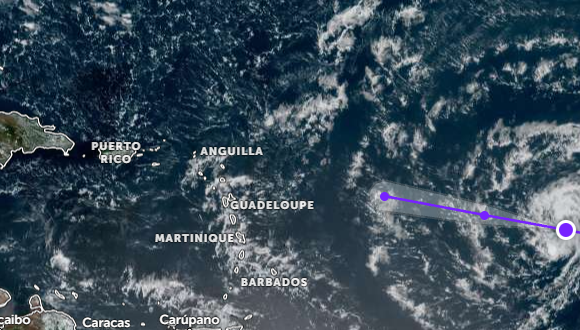
INDOMET tracks Tropical Storm Dolly while showers affect parts of Dominican Republic
Weather officials in the Dominican Republic have issued an updated regional forecast, noting that a passing tropical wave will bring only minimal disruptions to most of the country even as it drifts toward western neighboring Haiti. While the system itself is moving away, residual atmospheric moisture and persistent regional wind patterns will continue to generate precipitation across multiple Dominican provinces through the day, according to the Dominican Institute of Meteorology (INDOMET).
Early-day showers are projected to hit a swath of coastal and inland territories, including Samaná, María Trinidad Sánchez, Duarte, Hato Mayor, El Seibo, San Cristóbal, San José de Ocoa, Barahona, Azua, and Pedernales, with additional scattered precipitation expected in adjacent zones. As temperatures rise through the afternoon, the weather pattern will shift to bring concentrated, localized heavy downpours and a heightened risk of thunderstorms to central and southwestern regions, namely Monte Plata, Sánchez Ramírez, La Vega, San Juan, Santiago Rodríguez, and Elías Piña.
In a separate update on active Atlantic weather systems, INDOMET confirmed it is continuing close surveillance of Tropical Storm Dolly, which is currently churning across the open Atlantic Ocean. As of the latest advisory, the storm sits roughly 1,840 kilometers east of Martinique, part of the Lesser Antilles island chain, and has registered maximum sustained wind speeds of 65 kilometers per hour. Dolly is currently tracking westward across the ocean at a forward speed of 39 kilometers per hour. Meteorological authorities have urged local residents and visitors to keep up to date with official forecast bulletins as the storm system evolves during its Atlantic traverse.
-
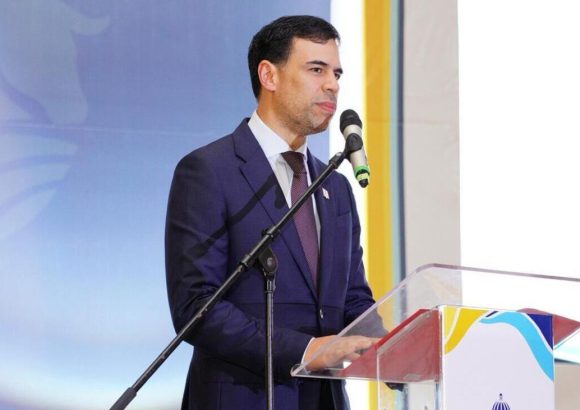
Este Festival 2026 opens in Higüey with celebration of eastern Dominican culture
HIGÜEY, DOMINICAN REPUBLIC – A new landmark celebration of eastern Dominican cultural identity officially kicked off this week, as Culture Minister Roberto Ángel Salcedo presided over the inauguration of Este Festival 2026. The three-day event, running from August 28 to 30, is hosted at the Higüey campus of the Autonomous University of Santo Domingo (UASD), marking a key step forward in the country’s push for decentralized cultural engagement.
Unlike many national cultural events concentrated in capital urban centers, Este Festival 2026 was designed specifically to center the unique creative and historical traditions of the Dominican Republic’s six eastern provinces: El Seibo, Hato Mayor, La Altagracia, La Romana, Monte Plata, and San Pedro de Macorís. Across the weekend, attendees will have opportunities to explore everything from traditional craftwork to contemporary artistic performances, alongside a curated showcase of the region’s signature local gastronomy.
Speaking at the opening ceremony, Minister Salcedo emphasized the event’s core mission: to advance cultural decentralization by creating a dedicated public space where local communities can amplify their own diverse cultural expressions, rather than relying on capital-centric national platforms. The festival fills a longstanding gap in regional cultural programming, connecting emerging and established local artists directly with audiences from across the country.
In a gesture of recognition for his ongoing contributions to advancing and elevating Dominican national culture, the Higüey municipal government presented Salcedo with the official Coat of Arms of Villa Salvaleón de Higüey during the ceremony.
The opening day’s program kicked off with a moving performance by the Sueño Musical Children’s Choir, followed by a comprehensive preview of the full slate of activities planned across the festival’s three days. This year’s edition holds special meaning, as it is dedicated to Genaro “Cayuco” Reyes, a beloved local artisan who has shaped the region’s cultural craft legacy for decades.
Bringing together working artists, leading cultural organizations, government authorities, and grassroots community representatives, Este Festival 2026 aims to not only celebrate the eastern region’s rich cultural diversity but also deepen the vital ties between local communities, their cultural heritage, and their home territory.
-
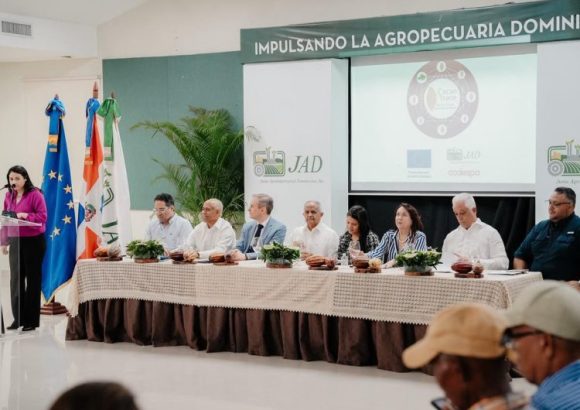
Cacao Trace strengthens sustainable cocoa production in the Dominican Republic
After two and a half years of targeted implementation, the Cacao Trace Project — a sustainability-focused initiative funded by the European Union and jointly led by the Dominican Agribusiness Board (JAD) and the Codespa Foundation — has officially concluded, delivering transformative results for small-scale cocoa producers in the Monte Plata region.
First launched in February 2024, the project was designed from its inception to address rising global market expectations for ethically sourced, fully traceable, and deforestation-free cocoa. From the start, it exceeded all core participation targets: organizers initially set out to train 700 producers across seven local producer organizations, but ultimately extended capacity-building support to more than 740 producers spread across 19 separate groups.
The comprehensive training curriculum covered a wide range of critical skills tailored to both producer success and global regulatory compliance. Participants learned advanced sustainable cultivation methods, industry-leading good agricultural practices, end-to-end supply chain traceability protocols, modern marketing strategies, small enterprise financial management, and the specific requirements of EU Regulation 2023/1115 — the new European rule mandating deforestation-free imports of key agricultural commodities.
Beyond direct training, the initiative delivered a series of tangible, long-lasting achievements for the Dominican cocoa sector. Four local producer organizations successfully completed full legal formalization, opening up new access to formal markets and funding. The project also drove a notable increase in participation from women and young people, building a more inclusive and resilient cocoa community. Beneficiary producers gained valuable opportunities to showcase their products at agricultural fairs, participate in cross-sector technical exchanges, and connect with buyers at both national and international industry events.
To modernize traceability systems across the cocoa value chain, the project developed an innovative blockchain-powered digital platform. This tool enhances transparency at every stage of production and distribution, allowing buyers and regulators to verify the origin and sustainability credentials of Dominican cocoa from farm to export.
One of the most significant institutional outcomes of the collaboration is the development of the Dominican Republic’s first national compliance protocol for EU Regulation 2023/1115, created through coordinated work between producers, export companies, government agencies, private sector actors, and international cooperation partners. The protocol was formally enshrined by the Dominican Ministry of Agriculture via Resolution 2026-38, and officially presented to the national cocoa sector on June 26. It now serves as a standardized national framework to help all Dominican cocoa producers align their operations with European market entry requirements.
Leaders from JAD and Codespa have publicly extended gratitude to all participating institutions, private companies, field technicians, and producer organizations for their collaborative work, as well as to the European Union for its financial investment and ongoing institutional support for the initiative.
As the project wraps up, it leaves behind a strengthened national cocoa sector: upgraded producer capacities, expanded cross-sector partnerships, cutting-edge traceability infrastructure, and a clear regulatory pathway to meet global sustainability demands. These gains position Dominican cocoa as a more competitive, transparent, and sustainable player in the global marketplace.