标签: Dominican Republic

多米尼加共和国

  • Commercial flights between Dominican Republic and Venezuela resume operations

    Commercial flights between Dominican Republic and Venezuela resume operations

    In a significant development for Caribbean aviation and bilateral relations, direct commercial flights between the Dominican Republic and Venezuela officially resumed operations this Wednesday. Laser Airlines successfully restored this crucial air connection after an approximately two-year suspension that commenced in July 2024.

    The revival commenced with the arrival of flight QL 2968 from Caracas at Las Américas International Airport in Santo Domingo, followed by its subsequent departure. This reestablished direct link between the capitals of both nations operates under a structured tri-weekly schedule—Wednesdays, Fridays, and Sundays—as the carrier methodically rebuilds passenger capacity and operational frequency.

    While the Civil Aviation Board had granted official authorization for route reactivation back in February, operational implementation only achieved tangible progress this week. The resumption forms part of broader diplomatic agreements between the two governments, signaling a mutual intent to normalize transportation links and enhance regional mobility. Aviation analysts highlight this as a critical step in reconnecting business, tourism, and diaspora communities separated by the prolonged air service interruption.

  • Dominican Republic strengthens economic ties with Japan

    Dominican Republic strengthens economic ties with Japan

    Santo Domingo – In a significant move to enhance international economic relations, the Dominican Republic’s Export and Investment Center (ProDominicana) has entered into a strategic partnership with the Japan External Trade Organization (JETRO) through a newly signed Memorandum of Cooperation. This landmark agreement establishes a comprehensive framework designed to strengthen bilateral trade relations and expand investment opportunities between the Caribbean nation and the Asian economic powerhouse.

    The collaborative framework encompasses multiple strategic initiatives including export promotion, foreign investment attraction, and the development of joint programs aimed at boosting commercial exchanges. Key components of the agreement involve facilitating business matchmaking services, organizing specialized trade forums and educational seminars, and implementing technical cooperation programs to enhance market competitiveness for both nations.

    Authorities from both sides emphasized the transformative potential of this alliance. Biviana Riveiro, representing ProDominicana, highlighted how this partnership will create unprecedented access for Dominican companies to enter high-value markets in Asia. Meanwhile, Mio Kawada of JETRO emphasized the agreement’s role in deepening economic integration and fostering sustainable business exchanges between the two economies.

    The economic context underscores the timing of this agreement: bilateral trade reached an impressive US$3.34 billion between 2019 and 2025. Dominican exports to Japan saw a notable 15.3% increase in 2025 alone, reaching US$80.2 million, driven primarily by medical instruments, copper scrap, and cocoa products. Complementing this trade growth, Japanese investment in the Dominican Republic has accumulated approximately US$60 million since 2019, demonstrating sustained confidence in the country’s economic landscape and strategic position in the Caribbean region.

  • Santo Domingo to host regional energy summit with 27 countries

    Santo Domingo to host regional energy summit with 27 countries

    Santo Domingo prepares to host the pivotal 11th Energy Week of the Latin American Energy Organization (OLADE) this October, marking a significant gathering for regional energy cooperation. The event will convene an estimated 3,000 participants, including high-level delegations from 27 member nations, alongside over 200 expert panelists representing government institutions, private sector corporations, and global energy organizations.

    Co-organized with the Dominican government, the summit’s strategic agenda prioritizes critical pathways for a sustainable energy future. Core discussion themes encompass accelerating renewable energy deployment, fortifying regional energy security frameworks, fostering technological innovation in clean energy, and enhancing cross-border electrical integration. The official program will feature the high-profile Meeting of Energy Ministers alongside dedicated business forums designed to translate policy dialogue into actionable investment and collaboration opportunities.

    Dominican Energy Minister Joel Santos utilized the platform to outline ambitious national strategies, declaring the country’s objective to emerge as a definitive Caribbean energy hub. He unveiled forthcoming initiatives to substantially boost national generation capacity and develop large-scale battery storage systems. A flagship infrastructure project, a submarine electrical interconnector to Puerto Rico, was announced to advance regional grid stability. Officials further reported a milestone achievement, with renewable sources now constituting 25% of the nation’s electricity matrix, cementing its leadership role in the Caribbean’s energy transition.

  • Duartian Institute urges caution on Haiti crisis

    Duartian Institute urges caution on Haiti crisis

    SANTO DOMINGO – A prominent Dominican intellectual institution has issued a strong recommendation for national authorities to maintain a prudent approach toward neighboring Haiti’s escalating security crisis, explicitly opposing any form of direct military engagement against armed factions.

    The Duartian Institute, through its president Gómez Ramírez, articulated that primary responsibility for resolving Haiti’s gang violence rests with global and regional bodies including the United Nations and the Organization of American States. Ramírez emphasized that the Dominican Republic has historically adhered to a foreign policy grounded in sovereignty and non-intervention in other states’ domestic affairs.

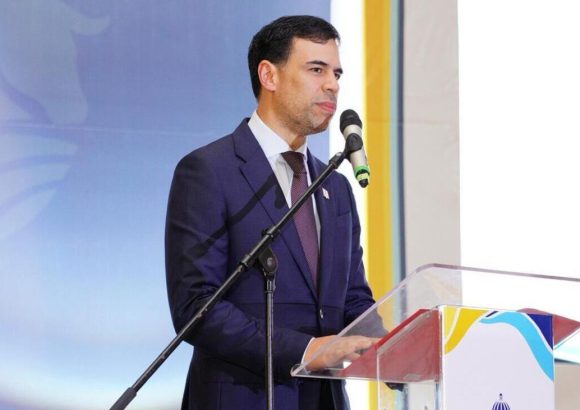
    In a significant critique of current diplomatic maneuvers, the institute openly questioned Foreign Minister Roberto Álvarez’s involvement in international dialogues concerning Haiti. The organization reaffirmed that the Dominican constitution explicitly prioritizes national sovereignty and cautions that any departure from this principle could jeopardize the nation’s institutional integrity and stability. The statement serves as both a policy recommendation and a constitutional reminder to government officials.

  • Child support defaulters could face travel and license renewal restrictions

    Child support defaulters could face travel and license renewal restrictions

    Santo Domingo is poised for a significant overhaul of its child support enforcement mechanisms through groundbreaking legislation introduced in the Chamber of Deputies. Legislator Carlos De Pérez has proposed a comprehensive reform bill that would establish one of the most rigorous child support compliance systems in the region, featuring severe consequences for delinquent parents including travel restrictions, license renewals prohibitions, and potential deportation for those residing overseas.

    The legislative proposal centers on the creation of a National Registry of Child Support Providers (RENADA), an integrated digital platform that would enable real-time monitoring through sophisticated interagency coordination. This system would connect with the Central Electoral Board and national financial institutions, triggering automatic enforcement actions within merely five days of missed payments. The implementation of mandatory bank transactions would further ensure complete transparency and financial traceability.

    Additional revolutionary measures include inflation-adjusted payment structures, retroactive debt collection protocols, and the extension of support obligations until age 21 for students pursuing education. The legislation introduces nighttime detention for persistent defaulters, establishes international cooperation mechanisms for tracking overseas obligors, and creates an emergency fund for cases of genuine insolvency. In a notable provision, the bill mandates full reimbursement of previously paid support if paternity is subsequently disproven, creating a balanced system of accountability for all parties involved.

  • U.S. to require US$15,000 visa bond for 12 countries

    U.S. to require US$15,000 visa bond for 12 countries

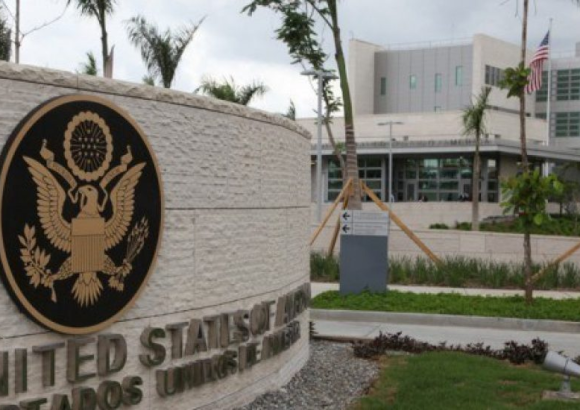
    In a significant expansion of immigration policy, the U.S. State Department has unveiled plans to implement a $15,000 bond requirement for B1/B2 visa applicants from twelve additional countries effective April 2. The newly designated nations include Nicaragua, Cambodia, Ethiopia, Georgia, and Tunisia, joining an existing list of countries subject to the financial guarantee program originally initiated during the Trump administration.

    The controversial measure functions as a refundable security deposit, with the full amount returned to travelers who adhere to all visa conditions and depart the United States within their authorized period. However, applicants who overstay their visas will forfeit the bond, with the funds being allocated toward covering deportation expenses.

    According to official estimates from U.S. immigration authorities, the average cost of deporting an individual exceeds $18,000. The administration projects that this expanded bond requirement could generate approximately $800 million in annual savings for taxpayers while simultaneously creating a stronger financial disincentive against visa violations. The policy represents the latest effort by U.S. officials to address chronic issues of visa overstays through economic mechanisms rather than solely relying on enforcement actions.

  • Carolina Mejía welcomes delegations for Santo Domingo 2026 Games

    Carolina Mejía welcomes delegations for Santo Domingo 2026 Games

    Santo Domingo rolled out the welcome mat for international sports officials as Mayor Carolina Mejía hosted a pivotal gathering at the revitalized Taíno Park. The event brought together delegation leaders from 37 participating nations ahead of the Central American and Caribbean Games Santo Domingo 2026.

    The reception, attended by organizing committee chairman José Monegro and other distinguished officials, served as a ceremonial precursor to the major sporting event. During the proceedings, Mejía emphasized the transformative potential of hosting the Games, characterizing them as a monumental opportunity for national development and international recognition.

    The newly renovated Taíno Park will function as both a competition venue and a symbolic centerpiece for the Games. In a unique display of unity and environmental consciousness, organizers revealed that each national delegation will plant a native tree within the park grounds when the Games commence on July 24, 2026.

    This arboreal ceremony will establish a living legacy of the international gathering, representing both cultural exchange and environmental stewardship. The planting ritual will precede the athletic competitions that will continue through August 8, creating a permanent green monument to regional cooperation and sporting camaraderie.

  • Kenyan police begin withdrawal from Haiti

    Kenyan police begin withdrawal from Haiti

    Nairobi will commence the repatriation of its security personnel from Haiti starting Tuesday, marking the initial phase of a strategic drawdown from the international stabilization mission. This transition occurs simultaneously with preparations to deploy Chadian forces as part of a newly structured United Nations-backed security initiative.

    Dominican Foreign Minister Roberto Álvarez confirmed the progressive withdrawal plan, indicating that the Gang Suppression Force (GSF)—the mission’s successor—is projected to achieve full operational capacity by October. This staggered timeline facilitates an orderly handover, allowing incoming troops adequate preparation for Haiti’s complex security environment.

    The GSF represents an evolution of the previous Multinational Security Support (MSS) mission, which Kenya spearheaded to bolster the Haitian National Police against powerful criminal organizations controlling significant territories. Despite its authorization last year, the MSS operation remained predominantly Kenyan, with minimal reinforcements from Central American and Caribbean nations.

    The predecessor mission confronted substantial operational hurdles, including critical shortages in personnel, financial resources, and tactical equipment. Originally conceptualized for 2,500 deployed personnel, the force reached only approximately 970 members—primarily from Kenya. After more than a year of operations targeting gang leadership, the mission proved unable to reclaim territory from armed factions, underscoring the challenges of international security interventions in Haiti’s volatile landscape.

  • Balearic president visits Abinader to strengthen tourism support

    Balearic president visits Abinader to strengthen tourism support

    SANTO DOMINGO – In a significant diplomatic engagement, President Marga Prohens of Spain’s Balearic Islands and Dominican Republic President Luis Abinader convened in Santo Domingo to reinforce bilateral relations with particular emphasis on tourism collaboration. The high-level meeting served as a strategic precursor to the 26th Plenary Session of the Council of the Balearic Islands Abroad, scheduled to convene in Punta Cana with delegates from throughout Latin America.

    The discussions centered on implementing the tourism agreement initially established at FITUR (International Tourism Fair), with both nations committing to enhanced training protocols and service quality improvement within the Dominican tourism sector. Through the esteemed Balearic Islands Hospitality School, Spain will provide comprehensive educational support to both instructors and students at the technical institute in Sabana de la Mar, creating a sustainable framework for industry-wide standards elevation.

    President Prohens underscored the dual significance of preserving cultural connections with the Balearic diaspora across Latin America while simultaneously advancing tourism quality through professional development. ‘Excellence in tourism services fundamentally relies on well-qualified human capital,’ Prohens stated during the meetings. The Spanish delegation is scheduled to visit the training facility to monitor program implementation, signaling deepened cooperation in both educational exchange and tourism development between the two nations.

  • Aerodom deploys new digital platform across Dominican airports

    Aerodom deploys new digital platform across Dominican airports

    The Dominican Republic’s airport network is undergoing a significant technological modernization with the implementation of a new digital operations platform. Aeropuertos Dominicanos Siglo XXI (Aerodom), the airport operator, has initiated a comprehensive rollout across its six national airports, marking a strategic shift towards data-driven aviation management.

    This advanced platform, developed in collaboration with technology firm AirportLabs, integrates an airport operational database with sophisticated real-time resource management tools. The system is designed to optimize flight coordination, gate assignments, and passenger service delivery through centralized information systems and automated processes.

    The deployment commenced with Las Américas International Airport (SDQ) in Santo Domingo on March 2, followed by Gregorio Luperón International Airport (POP) in Puerto Plata on March 16. The implementation will extend to airports in Samaná, Barahona, and other locations within Aerodom’s network, creating a unified operational ecosystem.

    Key benefits include enhanced communication channels between airlines, ground handling crews, and airport personnel, facilitating smoother turnaround operations. The platform’s predictive planning capabilities will enable proactive resource allocation, potentially reducing delays and improving overall operational resilience.

    This initiative represents a cornerstone of Aerodom’s broader modernization strategy to accommodate the Dominican Republic’s growing tourism sector and increasing passenger volumes. The technology investment aims to maintain service quality standards while supporting the country’s position as a leading Caribbean aviation hub.