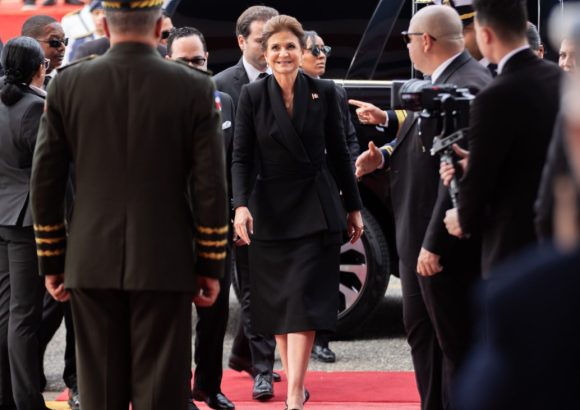
A high-stakes diplomatic visit focused on global public health collaboration is set to get underway this week, as Dominican Republic Vice President Raquel Peña prepares to depart for Washington, D.C. on Tuesday for a scheduled meeting with U.S. Secretary of Health and Human Services Robert F. Kennedy Jr.
The upcoming discussions are not an ad-hoc engagement, but rather a key milestone in the ongoing work of the Dominican Republic’s Health Cabinet, which is led by Peña. The trip underscores the Caribbean nation’s proactive strategy to strengthen its domestic public health framework by building deeper partnerships with major international allies. The core agenda of the meetings centers on co-developing actionable strategies to reinforce national public health infrastructure, scale up cross-border disease prevention efforts, and expand mutually beneficial bilateral cooperation in the health sector.
Joining the talks on the U.S. side will be Leah Campos, the current U.S. Ambassador to the Dominican Republic, while Dominican Minister of Public Health Víctor Atallah will represent his country’s domestic health leadership. Over the course of the discussions, delegations will zero in on three priority areas: expanding equitable access to healthcare services across the Dominican Republic, embedding prevention-focused approaches into national health policy, and boosting the country’s ability to respond to large-scale public health challenges that impact regional and global health security.
One of the central topics on the meeting agenda will be a deep dive into the United States’ Make America Healthy Again (MAHA) initiative, a policy framework designed to tackle the rapidly growing global burden of chronic diseases. The MAHA agenda prioritizes three core pillars: expanding access to preventive care, supporting widespread adoption of healthier lifestyles, and increasing public access to evidence-based health information to empower communities to make informed wellness choices.
Beyond reviewing the MAHA initiative, both delegations plan to hold structured knowledge-sharing sessions on a range of shared health priorities. These include evidence-based strategies to reduce modifiable risk factors for non-communicable diseases, methods for strengthening primary healthcare systems as the foundation of universal health coverage, approaches to scaling up effective public health education, and the design and implementation of policies proven to improve population-level health outcomes.
Peña’s departure is scheduled for Tuesday morning from San Isidro Air Base, located in the Dominican Republic’s national capital region of Santo Domingo. Beyond the formal talks on health policy, the visit carries a broader strategic goal: to deepen long-standing collaboration between the Dominican Republic and the United States across public health practice, health policy innovation, and technical expertise exchange. These efforts ultimately aim to support the development of more resilient, sustainable healthcare systems that can serve Dominican communities for generations to come.