标签: Dominican Republic

多米尼加共和国

  • Dominican Republic and Secrets Playa Esmeralda win top honors at 2026 Wave Awards

    Dominican Republic and Secrets Playa Esmeralda win top honors at 2026 Wave Awards

    Marina del Rey, California — The global travel industry gathered this year at The Ritz-Carlton, Marina del Rey, to celebrate outstanding achievement at the 2026 Wave Awards, where the Dominican Republic walked away with two major honors that cement its status as a premier Caribbean tourism powerhouse.

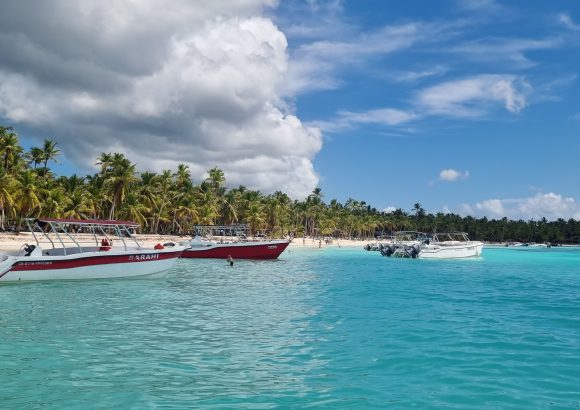
    For the third year in a row, following back-to-back wins in 2024 and 2025, the Dominican Republic claimed the top title of Caribbean Destination with the Highest Visitor Satisfaction. This repeat recognition underscores the nation’s consistent delivery of standout travel experiences, drawing international visitors year after year with its powdery white-sand coastlines, warm, welcoming hospitality, robust modern tourism infrastructure, and customer-centric travel offerings.

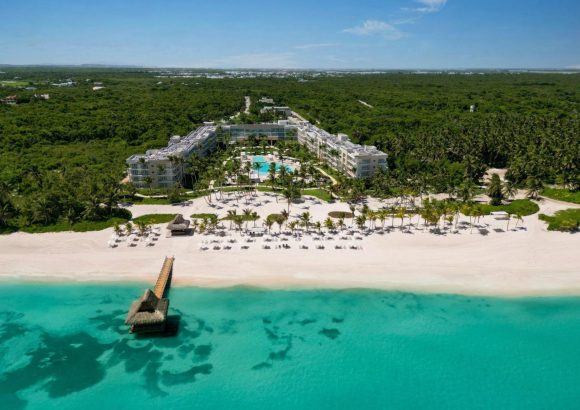
    Adding to the country’s haul of accolades, one of its premier luxury properties, Secrets Playa Esmeralda Resort & Spa, took home the award for Best New or Renovated Resort in the Caribbean. This separate honor further boosts the Dominican Republic’s growing reputation as a leading hub for high-end luxury tourism, showcasing its ability to deliver world-class accommodation that meets global traveler expectations.

    Hosted annually by leading travel industry publication TravelAge West, the Wave Awards stand as one of the most respected recognitions of excellence across the international travel and tourism sector. The 2026 edition of the ceremony honored more than 230 destinations, hospitality companies, and travel professionals from around the globe. Winners are selected through a rigorous, multi-stage evaluation process that combines in-depth product assessments, on-site inspection visits, surveys of seasoned industry advisors, and comprehensive independent online research, lending significant authority to the awards given out each year.

  • Abinader appoints Héctor Pastor Vásquez as Consul in Venezuela

    Abinader appoints Héctor Pastor Vásquez as Consul in Venezuela

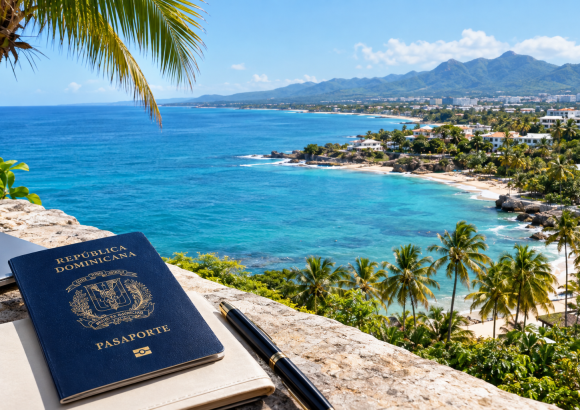
    SANTO DOMINGO — The Dominican Republic has formalized a key diplomatic appointment aimed at reinvigorating its bilateral relationship with Venezuela, with President Luis Abinader tapping veteran career diplomat Héctor Pastor Vásquez Frías to serve as the nation’s new Consul General in Caracas. The appointment was codified in Decree 351-26, a document first signed by the president on June 1 that was officially released to the public one week later on June 8.

    This senior diplomatic posting is far from a routine personnel change: it forms a core part of the Dominican government’s broader strategic push to reinforce its consular presence across key international locations, and specifically to advance ongoing work to rebuild and strengthen formal consular connections between the Dominican Republic and Venezuela. Per the terms laid out in the presidential decree, multiple leading state institutions have been directed to carry out the necessary administrative steps to finalize the appointment. These bodies include the Dominican Ministry of Foreign Affairs, the national Chamber of Accounts, the Office of the Comptroller General, the Ministry of Public Administration, and any other relevant agencies with oversight of diplomatic appointments.

    Vásquez Frías brings a diverse and well-established professional background to the new role, with a decades-long career spanning diplomacy, historical scholarship, and journalism. Prior to taking on the Caracas posting, he held multiple diplomatic assignments across the Caribbean, completing previous tours of service at Dominican diplomatic missions in neighboring Haiti and Cuba, alongside holding internal roles within the Dominican Ministry of Foreign Affairs. Analysts view the appointment as a clear signal of the Dominican Republic’s commitment to deepening engagement with Venezuela after a period of strained bilateral relations, framing the move as a step toward expanded people-to-people and official cooperation between the two Caribbean nations.

  • Costa Rican Security Minister studies Dominican Republic’s security model

    Costa Rican Security Minister studies Dominican Republic’s security model

    In a step aimed at boosting public safety cooperation across Central America and the Caribbean, Costa Rica’s Minister of Public Security Gerald Campos has completed an official working visit to the Dominican Republic, focused on studying the Caribbean nation’s award-winning approach to combating transnational and domestic crime. The core focus of Campos’ trip was examining the Dominican Republic’s landmark Joint Task Force coordination model, a integrated governance framework widely recognized for driving measurable reductions in the country’s overall crime and homicide rates over recent years.

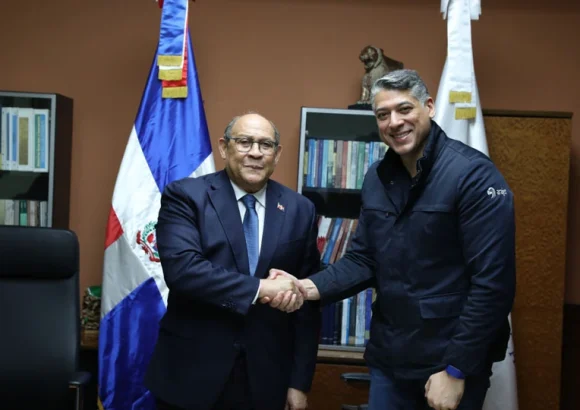
    During the visit, Campos held in-depth working meetings with Dominican Republic’s Minister of Interior and Police Faride Raful, alongside a cohort of senior national security officials. The talks created a collaborative space for both nations to share on-the-ground experiences across critical public safety domains, including community-focused crime prevention, protection of civilian citizens, and the expansion of frontline operational response capabilities. Beyond formal discussions, the Costa Rican delegation was invited to attend an operational monitoring session of the Joint Task Force hosted at Dominican National Police headquarters, giving delegates a first-hand opportunity to observe how civilian government agencies, national police units, and military branches synchronize their efforts to disrupt organized criminal activity.

    In remarks following the site visit, Campos offered high praise for the tangible outcomes delivered by the Dominican Republic’s integrated public security system. He specifically noted that Costa Rica is in the process of developing its own dedicated national anti-crime task force, and his government is eager to adapt key successful components of the Dominican model to fit Costa Rica’s domestic security context. Campos’ packed official agenda also included separate talks with Dominican Defense Minister Carlos Antonio Fernández Onofre, as well as a guided tour of the Armed Forces’ advanced C5i command center. During the tour, the Costa Rican team explored cutting-edge technological and intelligence tools that Dominican security forces rely on to plan and execute targeted security operations.

    Security analysts note that this bilateral visit does more than just share policy knowledge: it strengthens long-standing cooperative ties between the Dominican Republic and Costa Rica, as both nations work together to tackle shared regional security challenges. Rising transnational organized crime, drug trafficking, and public safety threats have created a growing need for cross-border knowledge sharing in the region, making this exchange a timely step toward more effective regional public safety governance.

  • Gonzalo Castillo meets U.S. Ambassador after visa reinstatement

    Gonzalo Castillo meets U.S. Ambassador after visa reinstatement

    In a significant development reshaping the political trajectory of Dominican Republic presidential candidate Gonzalo Castillo, the former public works minister and nominee of the Dominican Liberation Party (PLD) has concluded a high-stakes meeting with United States Ambassador Leah Francis Campos that both sides frame as a breakthrough for cross-border collaboration.

    The closed-door gathering in Santo Domingo comes on the heels of two pivotal wins for Castillo: a recent court acquittal in the high-profile Calamar corruption case, and the U.S. government’s decision to reverse a prior revocation and reinstate his 10-year non-immigrant visa. Castillo opened up about the talks following the meeting, emphasizing that the discussion centered on aligning shared visions for the Dominican Republic’s future and unlocking new avenues of bilateral cooperation that would deliver concrete economic and social gains for both the Dominican and American peoples.

    Castillo first went public with news of his visa restoration on May 26, using the announcement to extend formal gratitude to the U.S. government, then-President Donald Trump, and Ambassador Campos personally for facilitating the decision. The sequence of recent positive outcomes—ranging from the clearing of his name in the corruption investigation to the visa reinstatement and now the high-level diplomatic meeting—marks a clear turning point in Castillo’s bid for the presidency, reigniting momentum for his political campaign after months of legal and diplomatic setbacks. Analysts note that the restored U.S. travel access and formal diplomatic meeting signal a shift in international standing for the candidate, strengthening his position ahead of upcoming electoral contests.

  • Leonel Fernández urges Latin America to embrace a knowledge-based economy

    Leonel Fernández urges Latin America to embrace a knowledge-based economy

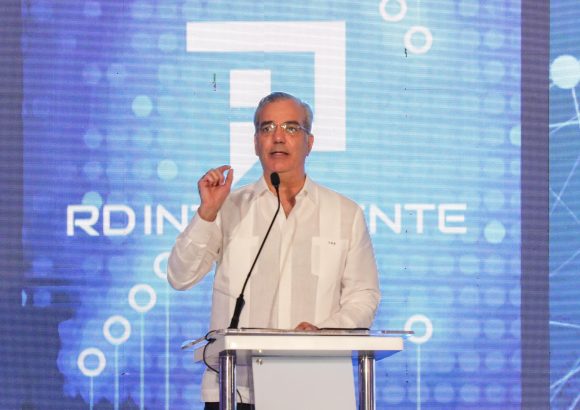
    MADRID — Against a backdrop of shifting global power dynamics and rapid technological advancement, former Dominican President Leonel Fernández has sounded a clarion call for Latin America to step out of its passive role and shape its own destiny amid a sweeping reordering of the post-Cold War international system. Delivering his address at the Funglode Ibero-American Forum held in the Spanish capital, Fernández argued that the global framework constructed at the close of the 20th century is now in the throes of deep, irreversible transformation, giving rise to a far more fragmented and unpredictable global landscape than the region has ever faced.

    In his keynote remarks, the former leader outlined the most pressing challenge confronting Latin America: breaking away from its long-standing reliance on a raw material export-led economic model to build a new growth paradigm rooted in knowledge, innovation, advanced technology, digital transformation and artificial intelligence. Fernández framed the persistent digital gap across the region as a modern iteration of illiteracy, warning that nations that delay widespread adoption of emerging cutting-edge technologies will face marginalization in the competitive 21st century global economy, unable to keep pace with more digitally advanced economies.

    Fernández further emphasized that meaningful progress requires coordinated effort across key sectors, calling for strengthened strategic collaboration between higher education institutions, private industry, and national governments. This tripartite partnership, he argued, is critical to advancing groundbreaking research, scaling innovative solutions, and crafting effective public policies that drive inclusive growth. The three-day forum brought together policymakers, academics, and business leaders from across the Ibero-American community to deliberate on a broad slate of pressing shared issues, from shifting geopolitical alignments and cross-border migration to the defense of democratic institutions, sustainable economic expansion, cross-regional academic collaboration, and the opportunities and risks of new technological innovation.

    Closing his remarks, Fernández reiterated that targeted investment in artificial intelligence and the intentional development of regional innovation ecosystems are non-negotiable steps for Latin America to boost its global competitiveness, unlock new economic opportunities, and secure a prosperous foothold in an increasingly digitized global economy.

  • Abinader meets with private sector to discuss global price volatility

    Abinader meets with private sector to discuss global price volatility

    SANTO DOMINGO – On Monday, Dominican Republic President Luis Abinader gathered top leaders from the country’s key productive sectors for a high-stakes meeting at the National Palace, where officials and private representatives aligned on strategies to buffer the national economy and everyday consumers from the ripple effects of unpredictable global market shifts.

    The closed-door working session centered on three core priorities: updating the national standardized price table, evaluating the latest trends unfolding across international commodity markets, and coordinating targeted interventions that can curb the spillover damage of global economic volatility. A particular focus of the discussion was addressing ongoing swings in global oil and natural gas prices, a key driver of inflation and cost of living pressures that have impacted economies around the world in recent years.

    Speaking after the meeting, Abinader highlighted that sustained, open dialogue between the national government and the country’s commercial, industrial, agricultural, and broader business communities has already proven instrumental in forging broad consensus. These cross-sector discussions have also produced actionable recommendations that reinforce existing government policies aimed at insulating the Dominican economy from external economic shocks, he noted.

    The president emphasized that ongoing collaboration between public officials and leading organizations representing business, manufacturing, trade, and agriculture remains non-negotiable for protecting the nation’s hard-won economic stability, and shielding household budgets from the weight of international economic pressures. Attendees at the gathering included multiple senior government officials, alongside leadership representatives from the Dominican Republic’s most prominent industry groups: the National Business Council (CONEP), the Association of Industries of the Dominican Republic (AIRD), the National Business Owners Organization (ONEC), the National Union of Agricultural Producers (ÚNASE), and the Dominican Agribusiness Board.

  • Dominican Republic strengthens airport health controls to prevent Ebola entry

    Dominican Republic strengthens airport health controls to prevent Ebola entry

    In response to ongoing global Ebola outbreak alerts, the Dominican Republic has rolled out strict new mandatory health surveillance protocols designed to stop high-risk infectious diseases like Ebola from entering the country via international air routes. The policy, formally adopted as Resolution 144-2026 by the nation’s Civil Aviation Board (JAC), aligns with directives from the Dominican Ministry of Public Health focused on shoring up epidemiological monitoring across all points of entry, including international airports, seaports, and land border crossings.

    Under the updated regulatory framework, all commercial airlines operating inbound flights to the Dominican Republic are legally required to deny boarding to any passenger or crew member who has been classified by public health officials as a confirmed, probable, or suspected Ebola case. The boarding ban also extends to individuals who have documented recent exposure to the virus in regions currently experiencing active outbreaks.

    Beyond the boarding restriction, air carriers are mandated to collaborate closely with local public health agencies and airport security teams to carry out enhanced entry screening. They are also required to immediately report any passenger who develops visible Ebola-compatible symptoms mid-flight to ground health authorities before arrival.

    Officials have emphasized that the new rules do not bar Dominican citizens from returning to their home country. Any returning national who may have been exposed to the virus will, however, be required to complete a full public health evaluation, and may be subject to quarantine, isolation, or other control measures as outlined in existing Ministry of Public Health guidelines. The surveillance package is framed as a proactive, adaptive measure that will be updated regularly to reflect changing global epidemiological conditions as the international Ebola situation evolves.

  • Dominican Republic concludes first Dominican Week in Europe

    Dominican Republic concludes first Dominican Week in Europe

    After a week of targeted diplomatic, economic, and cultural engagement across Belgium and the Netherlands, the Dominican Republic has successfully concluded its first-ever Dominican Week initiative, closing out the event with an official ceremonial reception in The Hague. The landmark gathering was designed to advance the Caribbean nation’s strategic goal of deepening multifaceted ties with European partners across political, commercial, academic, and cultural spheres.

    Helmed by Carlos de la Mota, the Dominican Ambassador to the host nations, the week-long series of events worked to highlight the Dominican Republic’s attractiveness as a global trade and investment partner, while advancing shared priorities including innovation, climate action, and cross-border institutional collaboration. The initiative also successfully positioned the country as a reliable, strategic ally for European countries seeking new partnerships in the Caribbean and Latin America.

    Throughout the week, the official Dominican delegation held productive working sessions with senior Dutch government officials to strengthen bilateral political dialogue. It also moved forward with new collaborative frameworks tied to the Port of Rotterdam, one of the world’s largest and most strategically important maritime hubs, opening new avenues for trade and logistics cooperation between the two sides. A centerpiece of the agenda was the Dominican Republic–Netherlands Business Forum, which brought together private sector leaders and policymakers to explore opportunities in cross-border investment, export expansion, the blue economy, sustainable development, and the global energy transition.

    Beyond economic and trade cooperation, the initiative yielded tangible progress in academic and scientific exchange. Two of the Netherlands’ top research institutions, Wageningen University & Research and the IHE Delft Institute for Water Education, formalized new research and training partnerships with Dominican stakeholders. These new collaborations will focus on critical shared challenges including agricultural innovation, global food security, climate adaptation and resilience, sustainable water resource management, and workforce capacity building.

    To cap off the week of engagement, organizers hosted a vibrant cultural showcase that brought authentic Dominican culture to European audiences. The event featured live performances of iconic Dominican musical genres including merengue and bachata, alongside tastings of local gastronomy and premium Dominican rum. The showcase underscored the Dominican Republic’s commitment to leveraging cultural diplomacy as a core tool for building people-to-people connections and strengthening long-term bilateral ties.

    Event organizers and senior Dominican officials have described the inaugural Dominican Week as a defining milestone in the country’s efforts to expand its diplomatic, economic, and cultural footprint across Europe, laying the groundwork for years of expanded strategic partnership with European nations.

  • David Collado says air connectivity and new hotels will drive tourism growth

    David Collado says air connectivity and new hotels will drive tourism growth

    Against a backdrop of mounting industry headwinds ranging from persistent sargassum inundations to shifting global geopolitical instability, the Dominican Republic is prioritizing two key strategic priorities to lock in long-term tourism growth: expanding international air access and scaling up national hotel capacity, according to Tourism Minister David Collado.

    One of the most promising recent developments for the country’s tourism sector comes from Canada, a top source market for Caribbean leisure travelers. Collado confirmed that bilateral engagement has yielded a major boost in air access, with major Canadian carriers agreeing to add more than 100,000 extra airline seats for routes connecting Canada to the Dominican Republic. The expansion follows official visits by tourism officials to Toronto and Montreal, where collaboration with leading airline partners was deepened, laying the groundwork for higher visitor volumes in the coming months.

    Collado emphasized that reliable, expanded air connectivity is the non-negotiable foundation for sustained tourism growth, but matching that increased access with additional accommodation infrastructure is equally critical to meet rising global demand. Even in the face of unforeseen market disruption – specifically the total loss of Russian and Ukrainian visitor markets triggered by the ongoing Eastern European conflict – the Dominican Republic’s tourism industry has maintained remarkable resilience. Current hotel occupancy rates across the country hold between 95% and 98%, a figure that underscores the unmet demand for additional accommodation.

    To keep pace with projected growth over the coming years, industry estimates indicate the Dominican Republic will need to add roughly 30,000 new hotel rooms to its national inventory. As of now, approximately 16,000 of those required rooms are already under active construction. One high-profile project set to open soon that will move the needle on expansion is Moon Palace Punta Cana, a major resort that will contribute 2,500 new rooms to the country’s tourism offering and support the sector’s continued upward trajectory, Collado noted.

  • Embassy of Israel relaunches Dominican-Israeli Chamber of Commerce

    Embassy of Israel relaunches Dominican-Israeli Chamber of Commerce

    In a landmark event held in Santo Domingo, the Embassy of Israel in the Dominican Republic has formally relaunched the binational Dominican-Israeli Chamber of Commerce, opening a new phase of collaborative engagement that spans economic, commercial, technological and cultural exchanges between the two nations.

    The relaunch ceremony doubled as an inauguration for the chamber’s newly assembled board of directors, a cohort that brings together seasoned business leaders with deep, specialized expertise across the finance, technology, and corporate sectors. Unlike a traditional trade association, the reactivated chamber is designed to function as a dynamic, centralized platform that proactively highlights untapped investment opportunities in both markets, streamlines connections for potential business partnerships, and cultivates long-term, mutually beneficial cooperation between Dominican and private sector enterprises from Israel.

    Speaking at the ceremony, Raslan Abu Rukun underscored the transformative potential of the revamped chamber, noting that it is positioned to emerge as a core catalyst for advancing bilateral economic ties. By turning scattered market opportunities into formal strategic alliances and driving inclusive, sustainable economic growth for both sides, the organization can deliver tangible benefits to business communities on both sides, he explained.

    For his part, Ilan Dabara, the newly inaugurated president of the chamber, outlined the institution’s core mission: to act as a reliable bridging institution for companies of all sizes seeking to expand into new geographic markets. Under his leadership, the chamber will prioritize encouraging cross-border innovation, facilitating inbound and outbound investment, and working toward shared, long-lasting prosperity for business communities in both the Dominican Republic and Israel.

    The high-profile gathering drew a diverse crowd of key stakeholders, including senior government officials from the Dominican Republic, C-suite executives from leading regional and international firms, and representatives from both the Dominican and Israeli local communities, reflecting broad interest in deepening the bilateral relationship across sectors.