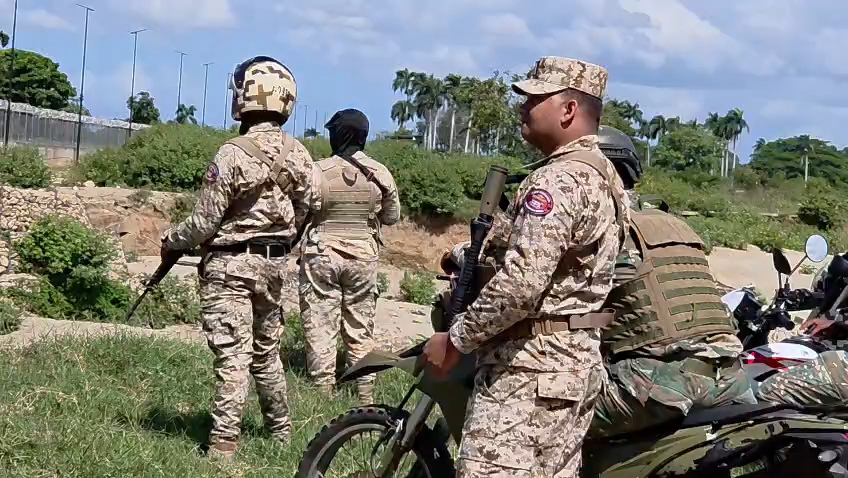
Escalating gang violence and spreading political instability in neighboring Haiti have prompted the Dominican Republic to implement strict new surveillance measures along their shared border, a response directly triggered by Haiti’s recent declaration of a maximum national alert and the deployment of a UN-supported Gang Suppression Force.
Following a high-stakes emergency meeting of the Dominican Republic’s National Security and Defense Council, held to evaluate the rapidly deteriorating security situation across the border, President Luis Abinader reaffirmed the country’s unwavering commitment to protecting its sovereignty. In a public statement, Abinader stressed that defending national territory, preserving community safety and upholding public order are “non-negotiable priorities,” confirming that all units of the Dominican Armed Forces are fully deployed and on standby to address any unexpected contingency that may arise.
On the Haitian side of the border, security officials have enacted their own sweeping emergency measures. The Armed Forces of Haiti issued an order requiring all military personnel to immediately report to their assigned barracks, canceled all ongoing leave, and placed the entire force on highest alert. This order comes in the wake of surging gang-related attacks, including deadly armed clashes and a recent large-scale massacre in Haiti’s Artibonite region that has been linked to the notorious armed faction Grand Grif.
Haiti’s ongoing security collapse stretches back to 2018, when political fragmentation and institutional weakening allowed armed gangs to seize control of large swathes of territory, including most of the capital Port-au-Prince and its surrounding suburbs. New data from the United Nations Integrated Office in Haiti underscores the severity of the crisis: in 2025 alone, gang violence and counter-violence security operations left at least 5,915 people dead and another 2,708 injured across the country.
The unfolding chaos has sent ripples of concern across the Caribbean region, with policymakers warning of risks to cross-border security, unregulated migration flows, and broader regional stability. For the Dominican Republic, which shares the entire island of Hispaniola with Haiti, the enhanced border deployment represents a critical proactive step to shield its national security and maintain firm territorial control as the Haitian crisis continues to unfold.