
In a distressing incident that has unsettled the local community, a three-month-old female infant was discovered abandoned on Anacaona Street in San Juan de la Maguana this past Sunday. The child was found carefully wrapped in a small blanket and appropriately dressed, left unattended on a neighborhood curb. Alert residents promptly notified municipal authorities, who swiftly responded to secure the infant’s safety. Emergency services transported the baby to a nearby medical facility for comprehensive health evaluation, where physicians confirmed the child remains in stable condition despite the traumatic circumstances. The identity of those responsible for abandoning the infant remains unknown as investigations continue. The case has been formally referred to the National Council for Children and Adolescents (Conani), the Dominican Republic’s primary agency responsible for protecting vulnerable minors. Community members expressed profound shock regarding the incident, highlighting ongoing concerns about child welfare in the region.
标签: Dominican Republic
多米尼加共和国
-
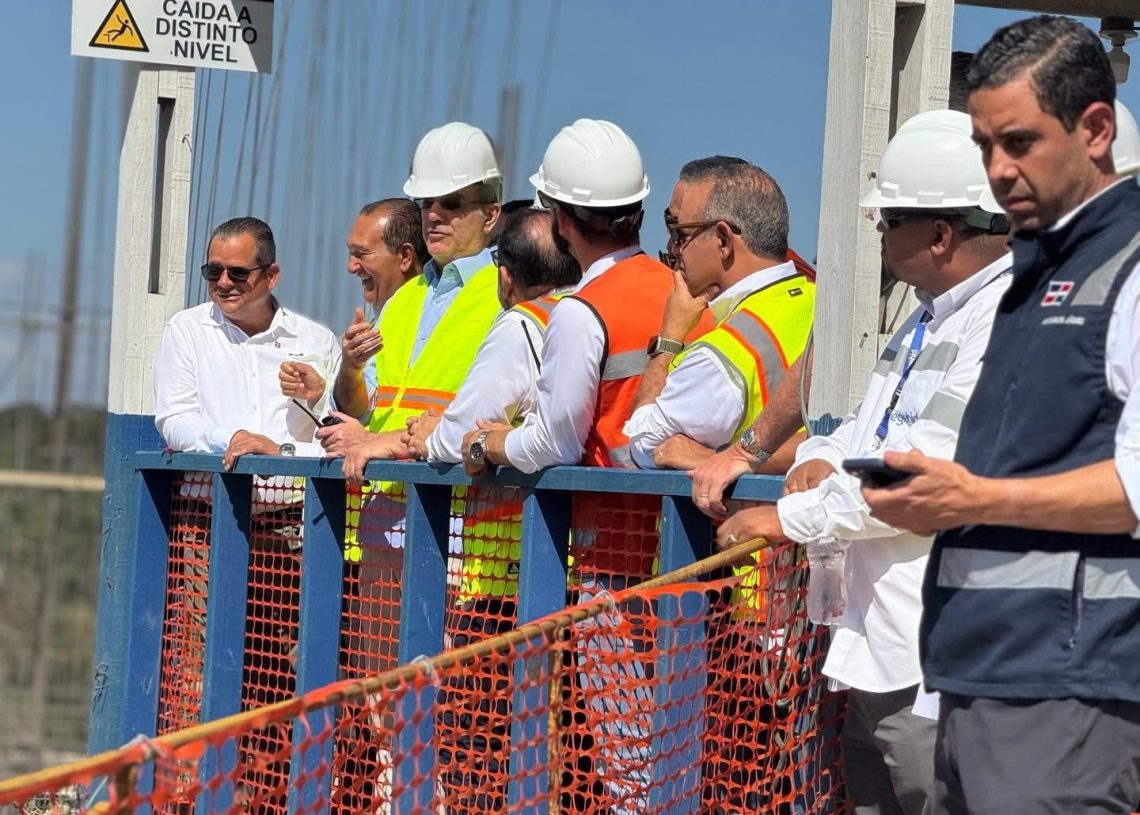
Abinader leads second diversion of Guayubín River at Boca de los Ríos Dam
SANTIAGO RODRÍGUEZ – In a significant development for national infrastructure, Dominican President Luis Abinader presided over a pivotal ceremony for the Boca de los Ríos Dam project. The event centered on the second strategic diversion of the Guayubín River, signaling the final construction phase of this major hydroelectric initiative managed by the Dominican Hydroelectric Generation Company (Egehid).
At the project site, President Abinader initiated the removal of a temporary cofferdam. This action authorized heavy machinery to carve a new channel, redirecting the river’s flow into specially constructed diversion galleries. This engineered pathway will guide water toward the emerging dam structure for the remainder of the construction period.
José Augusto Caputo, the Project Director, emphasized the operation’s critical nature, stating, ‘This second river diversion represents a fundamental milestone for the project’s advancement and denotes a crucial transition within the construction sequence.’
Egehid’s General Manager, Rafael Salazar, provided technical context, noting that an initial diversion in March 2023 enabled construction crews to build the dam’s primary structure on dry land. He clarified that this latest maneuver will temporarily restore the river to its natural course, channeled through the concrete diversion galleries. Upon project completion, these galleries will be permanently sealed, initiating the reservoir filling process.
Concurrently, this phase enables construction to commence on a lower segment of the closure dam adjoining the main wall. The project also progresses with the arrival of the first three massive radial spillway gates. Each gate, an engineering feat in itself, measures 12 meters in width, 14 meters in height, and weighs roughly 110 tons, with installation preparations now underway.
-
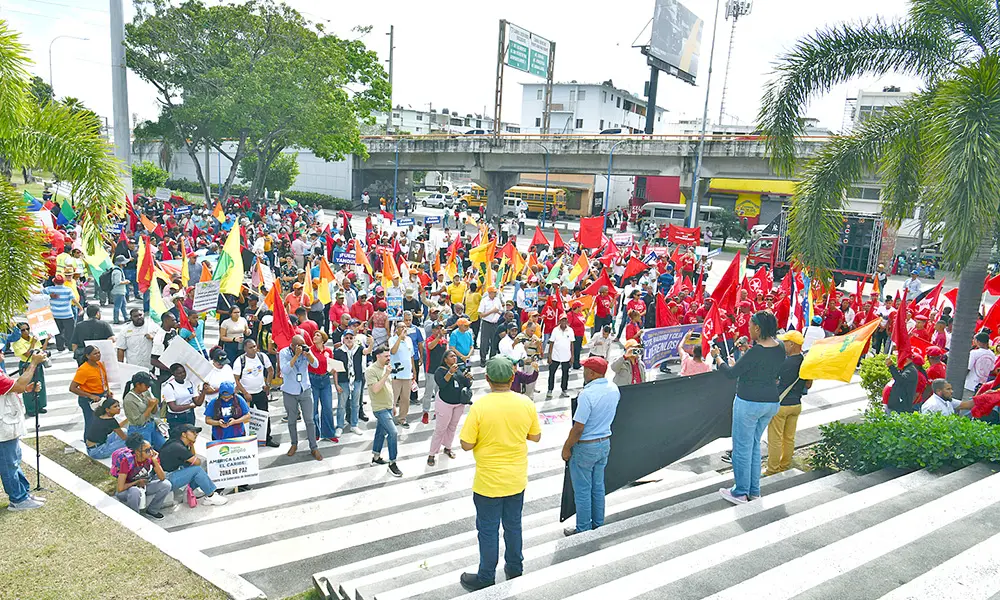
Leftist groups march in National District calling for national sovereignty
Hundreds of activists converged at Plaza La Trinitaria in Santo Domingo’s National District early Thursday morning, launching a significant demonstration organized by a coalition of leftist political organizations. The protest saw participants marching through key thoroughfares including Josefa Brea, Francisco Henríquez y Carvajal, Jacinto de la Concha, and José Reyes streets, culminating at the statue of revolutionary leader Francisco Alberto Caamaño on El Conde.
The diverse coalition included the Communist Party of Labor, Dominican Popular Movement, Caamañista Movement, Force of the Revolution, Homeland for All Party, and Dominican Leftist Front, with additional support from the United Left Movement, Broad Front, and People for Political and Social Change.
Protesters voiced strong opposition to foreign intervention, specifically demanding the immediate withdrawal of U.S. military personnel and aircraft from Dominican airports. The demonstration also featured international solidarity appeals, with participants calling for the release of Venezuelan President Nicolás Maduro and his wife Cilia Flores. Chants of ‘Yankees out of the country and the Caribbean’ and ‘Freedom for Maduro and Cilia’ echoed through the streets, alongside calls for regional peace and opposition to Canadian mining company Barrick Gold’s operations.
The event concluded with the reading of a joint proclamation by organizers and a poetic recitation by Ernesto Vantroi, emphasizing cultural resistance and national sovereignty protections.
-

Plan International presents results of “Down To Zero” child protection project
After more than ten years of dedicated intervention, Plan International’s groundbreaking Down To Zero initiative has concluded its operations in the Dominican Republic, establishing a robust child-protection framework across 14 high-risk communities in the nation’s southern region. The comprehensive program specifically targeted areas severely impacted by tourism development and heightened social mobility, which have historically contributed to increased vulnerabilities.
The project achieved remarkable reach, directly impacting over 650 individuals across the provinces of Azua, Elías Piña, San Juan, Pedernales, and Barahona. Its prevention strategy centered on community empowerment, training 100 adolescents as prevention promoters and equipping 153 local leaders with skills to activate reporting and response mechanisms. Institutional capabilities were significantly enhanced through the engagement of 90 public and private sector representatives who collaborated on developing standardized case management protocols.
A cornerstone of the initiative involved confronting the cultural normalization of sexual exploitation through 24 distinct educational interventions. These included community film screenings and structured dialogues designed to break longstanding silences surrounding exploitation while building sustainable local capacity.
Project coordinator Luis Toledo emphasized the transformative outcomes, stating, ‘Today we witness more conscious communities, youth spearheading prevention initiatives, and local systems significantly better prepared to address cases effectively.’ He identified the establishment of self-sustaining protective ecosystems as the program’s most profound accomplishment.
Plan International, with over 35 years of operational presence in the Dominican Republic and outreach across 120 communities, has reaffirmed its institutional commitment to fostering secure and equitable environments for the nation’s children and adolescents. The concluding ceremonies, held February 17 in Barahona and February 19 in San Juan de la Maguana, marked the formal transition of protection responsibilities to strengthened local institutions.
-

Nuria Piera urges review of unverified autism therapies
SANTO DOMINGO – Prominent journalist Nuria Piera has launched a public critique against Ernesto Fadul, a practitioner claiming to cure autism through scientifically unvalidated treatments. The controversy centers on medical ethics, evidence-based practice, and the potential exploitation of vulnerable families.
Piera clarified that the core issue transcends personal disputes, focusing instead on the absence of peer-reviewed research supporting Fadul’s methods. She highlighted that his treatment protocol—reportedly involving vitamin B complexes and amino acids—lacks clinical validation, noting that professional credentials cannot substitute for rigorous scientific trials.
Concerns have been amplified by testimonies from U.S. specialists who observed a rising trend of families seeking Fadul’s services. Piera revealed that supplements provided under his care, identified as common vitamin compounds, are being sold for $500 to $2,000—far exceeding pharmacy prices—while allegedly lacking proper labeling or health registrations.
The program featured an emotional account from Adriano Suárez, an Arizona father who traveled to Santiago with his 9-year-old autistic daughter. He described a brief evaluation in substandard clinical conditions and paid $525 for a three-month treatment. Contrary to promises, his daughter experienced developmental regression. Suárez criticized the uniform medication approach for all patients and urged the Ministry of Public Health to investigate.
Piera concluded by urging health authorities to mandate scientific review of these claims, emphasizing that unproven treatments risk wasting critical developmental windows. Despite Fadul’s defense of his altruistic intentions, public debate intensifies over regulatory oversight and patient safety.
-

National District Carnival 2026 fills the Malecón with color, music, and tradition
The iconic Malecón waterfront of Santo Domingo transformed into a spectacular canvas of cultural expression during the National District Carnival 2026, where an estimated crowd of thousands gathered for a celebration marked by vibrant displays and impeccable organization. Under the meticulous coordination of the Mayor’s Office of the National District, the event unfolded as a testament to both tradition and community spirit.
A procession of more than seventy elaborately costumed dance troupes captivated attendees as they paraded along the capital’s coastline. Their performances, rich in creativity and rhythmic precision, served as a dynamic exhibition of local identity. The afternoon festivities, commencing at approximately 3:30 p.m., were safeguarded by a comprehensive inter-agency security and logistics operation, ensuring a secure and orderly environment for all families and visitors.
Mayor Carolina Mejía articulated the profound significance of the carnival, framing it not merely as a festive occasion but as an essential manifestation of the city’s collective heritage and social fabric. This year’s edition carried a special dedication to José Guillermo ‘Pepe’ Mieses, a revered physician, athlete, and folklorist recognized for founding the legendary troupe Los Leones del Diablo and for his pivotal role in institutionalizing the carnival’s framework.
The ceremonial opening was led by the newly crowned King and Queen of Carnival, Francisco Taveras Benítez and Santa Valdez, both honored for their lifelong dedication to the tradition. The parade featured diverse participants, including the National District Fire Department Band and the renowned Los Guloyas de Propagas, with competitive categories spanning Grand Troupe, Best Floats, and various traditional character groups.
The event drew a distinguished audience of municipal authorities, council members, and prominent figures from the cultural and artistic sectors, who universally praised the event’s superior organization and artistic merit. As daylight faded, the celebration reached its crescendo at Eugenio María de Hostos Park with a powerful concert. Headlining artists Toño Rosario, Omega, Sexappeal, Jandy Ventura, and Steffany Constanza delivered an electrifying musical finale that energized the massive crowd.
Through this highly successful execution, the Mayor’s Office has powerfully reaffirmed its commitment to preserving cultural legacy, fostering safe public spaces for family entertainment, and cementing the National District Carnival’s status as a premier, anticipated event in Santo Domingo’s cultural calendar.
-

The “fridge” struck again: Valle Nuevo woke up almost below zero and covered in white.
Valle Nuevo National Park, renowned as the Dominican Republic’s natural “icebox,” experienced a dramatic return of Arctic conditions early Saturday morning. The protected area witnessed temperatures plunging to near-freezing levels, compelling campers to abandon their tents in search of warmth around crackling campfires.
According to park administrator Julio César de los Santos, the Automatic Meteorological Station operated by the Dominican Institute of Meteorology (Indomet) recorded a startling 0.2°C at 5:58 AM at its Rancho en Medio location. This temperature reading proved sufficient to generate widespread frost formation across the park’s vegetation as dew particles crystallized into delicate ice formations.
Meteorological data revealed that even by 7:10 AM, temperatures remained at a frigid 1.6°C with a wind chill factor making it feel like 0.5°C. The mercury gradually climbed to 3.1°C by 7:59 AM, though the persistent wind chill maintained a biting sensation of 1.9°C throughout the morning hours.
Photographic evidence captured the extraordinary transformation of the typically tropical landscape. Vegetation appeared dusted with hoarfrost—a thin, crystalline layer of ice—while metal containers and exposed surfaces developed freezer-like coatings. The mountainous terrain temporarily adopted the appearance of a winter wonderland, creating surreal visual contrasts against the Caribbean backdrop.
This meteorological phenomenon represents a recurring weather pattern for Valle Nuevo, which maintains its reputation as one of the coldest regions in the Caribbean nation. The park’s high elevation and unique microclimate regularly produce temperature inversions that create these uncharacteristically cold conditions for the tropical region, offering both challenges for visitors and opportunities for unique ecological observations.
-
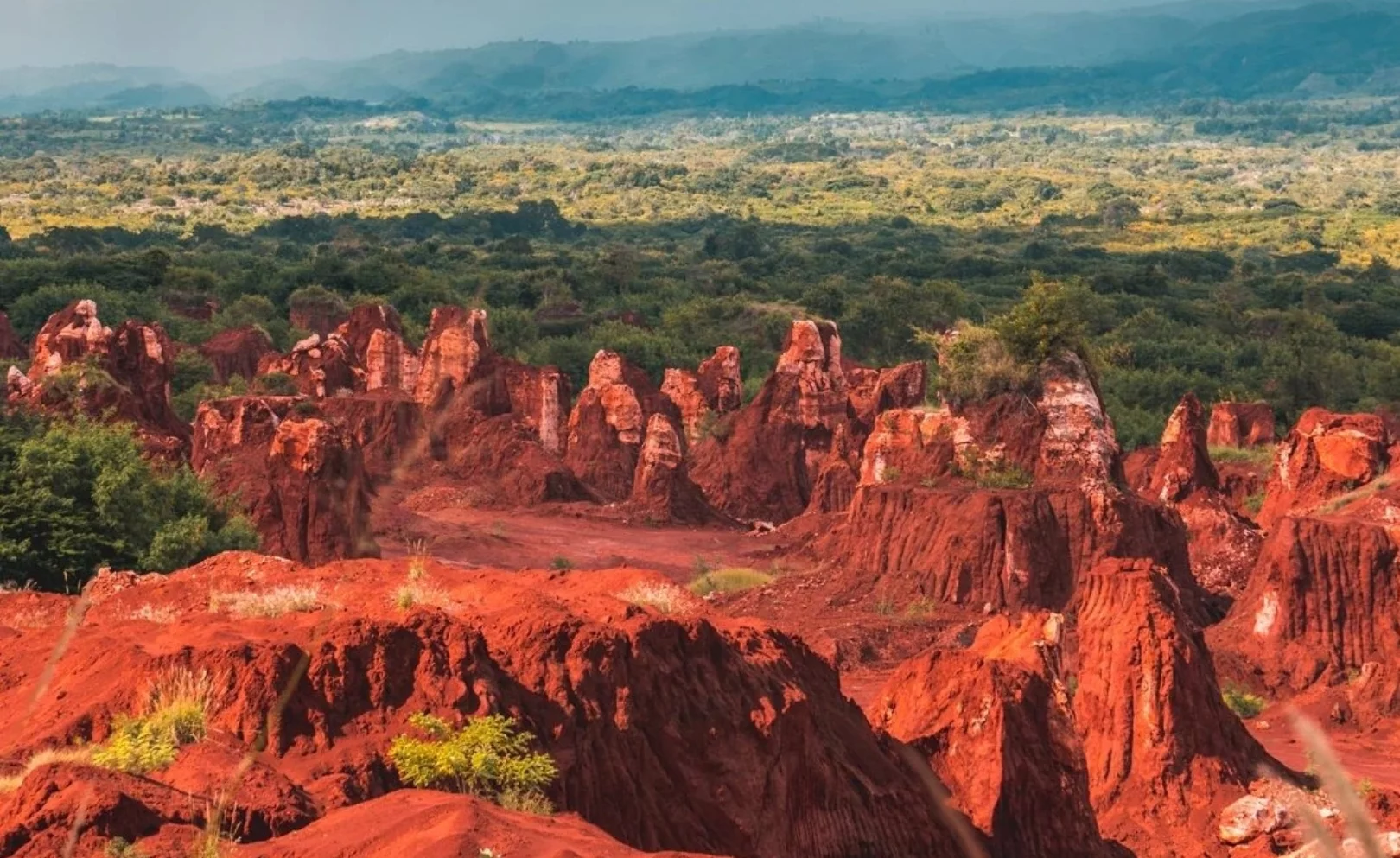
Critical minerals and rare earths: the Dominican Republic’s new strategic bet
SANTO DOMINGO, Dominican Republic – In a strategic address that positions the Caribbean nation at the center of global resource geopolitics, Foreign Minister Roberto Álvarez has articulated the Dominican Republic’s emerging role in the critical minerals sector. Speaking at the Corripio Communications Group Luncheon, Álvarez provided crucial conceptual distinctions while outlining the nation’s substantial geological advantages.
The diplomatic leader clarified the fundamental difference between rare earth elements and critical minerals, noting that while all 17 rare earth elements fall under the critical minerals umbrella, the broader category encompasses any mineral deemed strategically vital to national security and industrial needs by individual countries.
These resources form the backbone of advanced technological manufacturing, enabling production across aerospace, defense, automotive, computing, semiconductor, and quantum computing industries. Minister Álvarez illustrated this critical dependency with a compelling example: a single sophisticated aircraft may require up to 2,000 mineral-dependent components, with the absence of just one rendering the entire system inoperable.
Among the most prized elements discussed were neodymium for permanent magnets in electric motors and wind turbines, scandium for ultra-strong lightweight aluminum alloys, and gallium for semiconductor applications – each representing specialized niches within the broader critical minerals spectrum.
The address revealed significant international developments, including a U.S.-led initiative involving 55 nations working to secure critical mineral supply chains. This collaboration may yield an international framework agreement potentially establishing minimum price floors for certain minerals – a stabilization mechanism historically applied to commodities like sugar that would enable producing nations to make secure economic projections and attract investment under predictable conditions.
Geological surveys have identified exceptional Dominican potential, particularly in the Pedernales province where 84 deposits have been documented, though only 15 have undergone comprehensive exploration. Preliminary estimates suggest approximately 65 million metric tons of resources, primarily rare earth elements, alongside other internationally recognized critical minerals including bauxite and strategic metals.
Minister Álvarez emphasized that the nation faces “very carefully considered” decisions regarding exploration and exploitation frameworks, given the escalating strategic value of these resources. The initiative enjoys presidential endorsement, with President Luis Abinader reportedly committed to developing this sector as a cornerstone of the nation’s economic and geopolitical future.
-
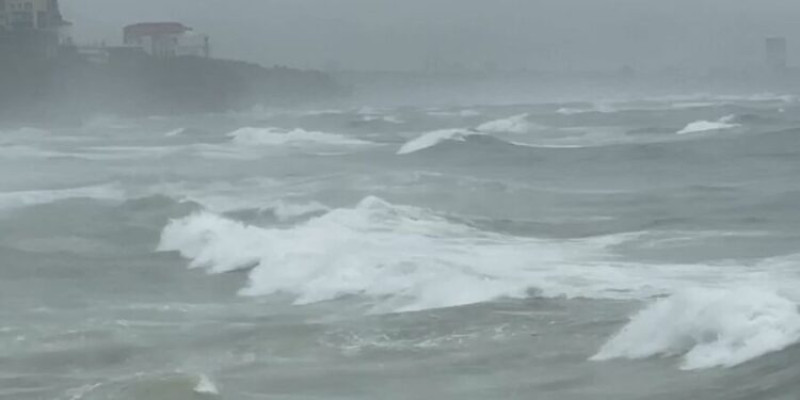
COE warns of high levels of maritime risk due to abnormal swells on the North coast
Santo Domingo, Dominican Republic — Maritime conditions have shown significant improvement along the nation’s Caribbean coastline, prompting authorities to revise navigational advisories this Saturday. The Dominican Institute of Meteorology (Indomet), through its latest weather bulletin, confirmed that previously hazardous sea conditions have substantially normalized.
The Emergency Operations Center (COE), acting upon Indomet’s meteorological assessment, officially discontinued the port restriction mandate for fragile, small, and medium-sized vessels operating along the North coast. This decision was formally executed under the legal framework established in Article 2, Chapter 1 of Law 147-02, which governs emergency maritime protocols.
While conditions have stabilized for most regions, the COE issued specific precautions for vessel operators navigating the Atlantic coastal stretch between Miches (El Seibo) and Cabo Engaño (La Altagracia). Meteorological monitoring indicates persistent abnormal wind patterns and wave activity in this sector, requiring heightened navigational vigilance.
The national meteorological service confirms that all remaining coastal areas currently experience normal maritime conditions, providing relief to the maritime industry and coastal communities following recent weather disturbances.
-

Domínguez Brito: “The behavioral crisis of our adolescents is a national alarm”
SANTO DOMINGO, DR – Prominent political figure Francisco Domínguez Brito has issued a stark warning regarding escalating violence and disrespect within educational institutions, characterizing the situation as a national emergency that demands immediate state and societal intervention.
Addressing recent disturbing incidents at schools across Santo Domingo, San Francisco de Macorís, and Santiago, Domínguez Brito condemned the current climate as profoundly unacceptable. “Educators increasingly confront threats, verbal abuse, and physical violence without adequate institutional backing,” he stated. “The erosion of teacher authority and their resulting vulnerability directly undermines educational institutions and disrupts the broader social fabric of communities.”
Domínguez Brito presented a nuanced analysis, asserting that this behavioral crisis among adolescents stems from complex societal failures rather than individual student culpability. He identified key contributing factors including family disintegration, insufficient community support systems, premature exposure to alcohol and narcotics, and a critical deficiency in effective preventive government strategies. “This represents a pervasive social dilemma that our nation has neglected for far too long,” he emphasized.
In response to this multifaceted challenge, the leader proposed a comprehensive action plan. His recommendations include reinforcing school psychological and guidance services, implementing definitive protocols for educator protection, developing robust mechanisms for violence reporting and resolution, and enhancing collaborative social outreach programs to identify at-risk youth vulnerable to substance abuse and academic abandonment.
Concluding his appeal, Domínguez Brito underscored the fundamental importance of safeguarding educators: “Ensuring teacher security is synonymous with protecting our nation’s future. Our schools must transform into secure environments where educators operate with respected authority, dignity, and substantive institutional support.”