The Dominican Republic has reported a 2.2% economic growth from January to September 2025, as announced by the Central Bank (BCRD). This growth, compared to the same period in 2024, has been fueled by robust performances in several critical sectors. Agriculture led the charge with a 3.9% increase, closely followed by mining at 3.7%, financial services at 7.4%, and tourism at 3.3%. The tourism sector, in particular, saw a significant boost with 8.6 million visitors, marking a 2.7% rise from the previous year. Governor Héctor Valdez Albizu emphasized the role of these sectors in driving the nation’s economic momentum. Additionally, exports surged by 11.7% to reach US$11.6 billion, while tourism revenues and remittances contributed US$8.5 billion and US$8.9 billion, respectively. Foreign direct investment also played a crucial role, amounting to US$4 billion, primarily directed towards mining, energy, and communications projects. The Central Bank anticipates a gradual return to potential growth in the upcoming quarters, supported by stabilizing global conditions and increased investment. The Economic Commission for Latin America and the Caribbean (ECLAC) projects an overall growth rate of 3.4% for the Dominican Republic by the end of 2025.
标签: Dominican Republic
多米尼加共和国
-

Dominican ports fully operational after Hurricane Melissa
In the wake of Hurricane Melissa, the Dominican Port Authority (Apordom) has confirmed that all ports across the Dominican Republic are fully operational and have sustained no significant damage. Comprehensive technical inspections and structural evaluations conducted at major cargo, container, and cruise terminals have verified the stability of port infrastructure, as well as the uninterrupted functionality of electrical systems and access routes.
Jean Luis Rodríguez, Apordom’s executive director, attributed this resilience to the institution’s proactive preventive measures and unwavering commitment to port safety. He detailed that emergency protocols were activated well before the hurricane’s arrival, safeguarding docks, equipment, vessels, and personnel. This strategic preparedness facilitated a swift return to normal operations.
Rodríguez also underscored the Port Authority’s advancements in modernization and climate resilience, which have significantly bolstered its capacity to maintain seamless maritime activities. Apordom has reaffirmed that cargo, coastal shipping, and cruise operations are proceeding without disruption nationwide, highlighting its dedication to ensuring the security, stability, and competitiveness of the Dominican port system.
-

Abinader opens International Transport Policy Dialogue 2025 in Santo Domingo
Santo Domingo, Dominican Republic – President Luis Abinader officially launched the 2025 International Transport Policy Dialogue, a pivotal two-day regional conference co-organized by the Inter-American Development Bank (IDB) and the International Transport Forum (ITF). Held under the theme “Transportation as a Driver of Development for Resilience and Competitiveness,” the event convened ministers, industry leaders, and experts from Latin America, the Caribbean, and Europe to address pressing challenges in the transport sector.
In his opening address, President Abinader emphasized the critical role of transportation as the foundation of economic and social progress. He articulated that investments in mobility are investments in equity, productivity, and future growth. Abinader showcased significant infrastructure advancements under his administration, including the rehabilitation of highways and rural roads, the modernization of the Manzanillo port, and the expansion of integrated Metro, Cable Car, and Monorail systems in Santo Domingo and Santiago. He described these initiatives as transformative milestones in the Dominican Republic’s mobility landscape.
The forum aims to tackle key issues such as sustainable financing, the adoption of electric and clean mobility solutions, the integration of artificial intelligence (AI), climate resilience, and road safety. Abinader expressed gratitude to the IDB and ITF for their ongoing partnership and called for a unified regional action pact to promote sustainable, safe, and accessible transportation systems. This dialogue follows the Dominican Republic’s 2024 accession as a full member of the ITF, a significant step in aligning the nation with global sustainable development goals.
-

Indotel and ABA launch financial education campaign for Dominican diaspora in the U.S.
The Dominican Telecommunications Institute (Indotel) and the Association of Multiple Banks of the Dominican Republic (ABA) have unveiled a groundbreaking financial education initiative targeting Dominican expatriates in the United States. The campaign, set to commence on November 1, aims to educate individuals on the benefits of digital bank transfers as a more efficient, secure, and cost-effective method for sending remittances to their homeland. Training sessions will be conducted at Dominican consulates in major U.S. cities, including New York, New Jersey, Philadelphia, Boston, and Miami, to facilitate the adoption of digital financial tools. During the campaign’s launch at the Dominican House of Culture in New York, Indotel chairman Guido Gómez Mazara and ABA executive president Rosanna Ruiz highlighted the program’s dual objectives: advancing financial inclusion and reducing dependency on cash-based remittance systems. Gómez Mazara pointed out that while 80% of remittances originate from the U.S., a significant portion is still sent in cash. Despite 40% of senders possessing bank accounts, only 14% utilize digital transfer services. The initiative seeks to bridge this gap through collaborative public-private sector efforts, emphasizing security, efficiency, and traceability in remittance transactions.
-

Dominican Embassy holds Third EMBAJADOM-HN 2025 in Honduras
The Dominican Embassy in Honduras successfully organized the Third Business Meeting EMBAJADOM-HN 2025, themed ‘Export, Import, Investment, and Tourism.’ The event convened government officials, business leaders, academics, students, and entrepreneurs from both nations to enhance bilateral economic collaboration and explore investment prospects. Ambassador Luis García underscored the remarkable growth in trade between the Dominican Republic and Honduras, which surged to nearly US$937.7 million by May 2025, marking a 9.3% year-over-year increase. Additionally, Dominican direct investment in Honduras amounted to US$6.7 million, reflecting growing economic confidence. Significant progress was also noted in trade agreements facilitating Honduran exports, particularly citrus and pork products. The event featured high-level panels, business roundtables, and product exhibitions, focusing on technology transfer, public-private partnerships, and best practices. Key discussion topics included export diversification, AI integration in customs, foreign investment policies, MSME participation in international markets, business sustainability, tourism, and e-commerce opportunities. Notable attendees included Honduran and Dominican customs and economic officials, alongside representatives from business chambers and development organizations. Honduras’ Secretary of Foreign Affairs, Javier Bu Soto, and Fedecámara president Manuel Hernández commended the embassy’s efforts in fostering economic synergy. Coordinated with the Dominican Ministry of Foreign Affairs, Prodominicana, and the General Directorate of Customs, the meeting reinforced both nations’ commitment to economic cooperation, innovation, talent development, and sustainable growth, paving the way for strengthened bilateral relations.
-

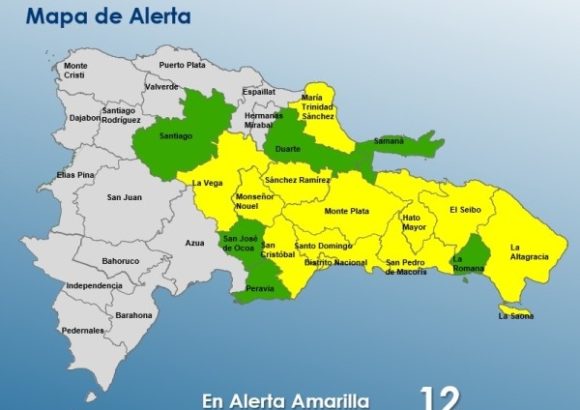
COE warns of continued rainfall and flood risks until Thursday
Santo Domingo, Dominican Republic – Juan Manuel Méndez-Gracia, the director of the Emergency Operations Center (COE), issued a stark warning on Tuesday regarding the continuation of heavy rainfall across the country until Thursday. The forecast, provided by the National Institute of Meteorology (INDOMET), underscores the urgency for residents to remain prepared, especially in provinces under red and yellow alerts. Méndez emphasized that the already saturated soil significantly heightens the risk of landslides and flash floods, posing threats to both urban and rural communities. He urged the public to stay vigilant and maintain contingency plans, even if temporary weather improvements occur, to safeguard lives and property. The COE continues to monitor the situation closely, coordinating efforts to mitigate potential disasters.
-

Cuban ambassador confident in UN support to end U.S. embargo
In a recent interview with La Red Habla, Ángel Arzuaga, Cuba’s ambassador to the Dominican Republic, expressed unwavering confidence that the international community will continue to back Cuba’s annual United Nations resolution advocating for the termination of the U.S. embargo. The resolution, titled ‘Necessity of ending the economic, commercial, and financial blockade imposed by the United States of America against Cuba,’ is set to be presented at the UN General Assembly on October 28-29. This marks the continuation of a tradition that began in 1992. Arzuaga condemned the embargo as an aggressive and unjust policy that severely hampers Cuba’s economic and social progress while violating the fundamental rights of its citizens. He underscored the embargo’s economic toll, equating one month of its enforcement to the cost of Cuba’s solar energy investment plan and four months to the price of all national public transportation buses. The ambassador also criticized U.S. efforts to diminish international support for the resolution. Reflecting on last year’s vote, Arzuaga highlighted that 187 countries supported ending the embargo, with only the U.S. and Israel opposing it. He reiterated Cuba’s dedication to peaceful dialogue, regional stability, and solidarity with oppressed communities, including Palestinians. Arzuaga extended gratitude to nations like Mexico for their steadfast opposition to the blockade and affirmed Cuba’s commitment to defending just causes and fostering international collaborations, particularly in medical initiatives.
-

Public Health activates cholera prevention protocol amid outbreak in Haiti
Santo Domingo – In response to the recent cholera outbreak in neighboring Haiti, the Dominican Republic has implemented comprehensive prevention and surveillance protocols to safeguard public health. Public Health Minister Víctor Atallah revealed that the government has intensified epidemiological monitoring in border regions, with support from the Ministries of Defense and Immigration. A team of 86 health professionals has been deployed to conduct water quality tests, distribute hygiene kits, and provide educational materials in both Creole and Spanish. Additionally, medications have been prepared for potential suspected cases, though none have been reported so far.
Minister Atallah confirmed that no active cholera cases have been detected within the country. However, the aftermath of Hurricane Melissa, which brought heavy rains and widespread flooding, has prompted health authorities to enhance nationwide surveillance. This effort aims to curb the spread of water- and vector-borne diseases such as diarrhea, hepatitis A, leptospirosis, dengue, and respiratory infections. The Ministry is collaborating with the Emergency Operations Center (COE), INDRHI, and regional water authorities to ensure clean water supply and strengthen chlorination and disinfection systems.
Citizens have been advised to adopt precautionary measures, including avoiding contact with stagnant or contaminated water, boiling water before consumption, covering storage containers, and maintaining proper hygiene. The Ministry is conducting daily monitoring of high-risk provinces and sampling water sources as part of the national health response plan. Atallah emphasized that the government’s primary focus is on protecting lives and preventing disease, underscoring the importance of prevention and public cooperation during the post-hurricane recovery phase.
-

Government evaluates Hurricane Melissa damage to determine possible state of emergency
Santo Domingo, Dominican Republic – President Luis Abinader revealed on Monday that the government is actively assessing the extensive damage inflicted by Hurricane Melissa to determine the necessity of declaring a state of emergency. Such a declaration, which would require congressional approval for additional funding, hinges on the ongoing evaluation of the storm’s lingering effects. Abinader stressed that the full impact of the hurricane, which brought torrential rains, widespread flooding, and significant property damage across the nation, is still being analyzed.
In a public address, the president reaffirmed the government’s unwavering commitment to supporting affected families and communities. “As we have demonstrated in past storms, we stand firmly with our people and will not abandon them in their time of need,” he declared. Emergency response teams are currently deployed in the hardest-hit regions, providing aid and assessing infrastructural damage.
According to the latest update from the Emergency Operations Center (COE), the aftermath of Hurricane Melissa has left 3,785 individuals displaced, 737 homes damaged, and critical infrastructure such as two roads and two bridges compromised. Additionally, 38 people remain in shelters, and 48 communities are isolated due to the storm’s devastation. Hurricane Melissa, the 13th cyclone of the Atlantic hurricane season, has already claimed one life in the Dominican Republic, further exacerbating the region’s challenges in a year marked by a series of destructive storms.
-

Dominican and Israeli authorities launch joint risk management training in Israel
The Israeli Embassy in the Dominican Republic, in partnership with the Ministry of Public Health and Social Assistance (Mispas), has facilitated the participation of a multidisciplinary Dominican team in the international course “Emergency Situations Management.” This training, scheduled from October 19 to 31, 2025, in Israel, is a joint effort supported by Israel’s Ministry of Foreign Affairs and Mispas’s Department of Risk Management and Environmental Health. The initiative underscores the deepening collaboration between the two nations in emergency healthcare and disaster response. The program offers a comprehensive curriculum on emergency management, encompassing hospital and community response systems, coordination with security forces, and strategies for community resilience. Participants will engage in both theoretical and practical sessions, focusing on mass casualty incidents, hazardous materials management, and hospital organization. Additionally, they will exchange insights with Israeli health authorities, rescue teams, and hospitals to bolster national and international crisis response capabilities. The delegation includes representatives from key Dominican institutions such as Mispas, the National Emergency Operations Center (COE), the Directorate of Emergency and Disaster Assistance (DAEH), the Dominican Red Cross, the National Police Hospital, Plaza de la Salud General Hospital, and the Dominican Air Force. The Israeli Embassy emphasized that this initiative enhances bilateral cooperation in public safety and health preparedness. Mispas further highlighted that the knowledge acquired will be disseminated nationwide to refine hospital response plans, rapid action protocols, and inter-institutional coordination.