标签: Dominican Republic

多米尼加共和国

  • Central Bank projects tourism revenues to surpass US$12.5 billion in 2026

    Central Bank projects tourism revenues to surpass US$12.5 billion in 2026

    Against a backdrop of mounting global geopolitical tension and economic volatility, the Dominican Republic’s tourism sector is emerging as a surprisingly resilient powerhouse, new projections from the Central Bank of the Dominican Republic (BCRD) show. The country’s central bank forecasts that total tourism-generated revenue will cross the $12.5 billion threshold by the end of 2026, cementing the industry’s position as the foundational pillar of the nation’s economic stability and primary source of foreign exchange.

    In a recent report titled “Dominican Republic Facing an Oil Shock of Uncertain Nature: An Analysis of the Impact of the Middle East War on the Economy,” BCRD outlined the strong early-year performance that is driving this optimistic forecast. Data from the first quarter of 2026 reveals the Dominican Republic welcomed 3,710,374 international visitors between January and March — a new all-time record for the first three months of any year. Of that total, 2,603,777 guests arrived via commercial air travel, while another 1,106,597 came through cruise ship ports.

    The growth trend accelerated through the first quarter, with March 2026 marking a historic milestone for the country: for the first time ever, air arrivals topped 900,000 in a single month. This surge was fueled by robust expansion in key European source markets. Tourist arrivals from Germany jumped 36% year-over-year, while France and the United Kingdom both posted 17% growth, outperforming expectations for travel demand amid global headwinds.

    The Dominican Republic Hotel and Tourism Association (Asonahores) has embraced BCRD’s analysis, noting the sector’s outperformance comes even as global shocks, including the ongoing armed conflict in the Middle East and rising global oil prices, threaten economic stability across much of the developing world. Asonahores emphasized that tourism has acted as a critical economic buffer insulating the Dominican Republic from broader global uncertainty.

    These strong numbers are more than just a win for the travel industry — they signal widespread international confidence in the Dominican Republic’s standing as a safe, competitively priced, and high-demand travel destination, the association said. “Tourism continues to demonstrate that it is much more than an economic activity; it is an engine of stability, foreign exchange earnings, jobs, and investment for the entire nation,” Asonahores said in a statement.

    Beyond tourism metrics, the broader Dominican economy has also retained investor confidence amid global turmoil. As of May 20, BCRD data shows the country’s Emerging Markets Bond Index (EMBI) spread stood at 177 basis points — well below the Latin American regional average of 264 basis points. This stable sovereign risk rating further confirms global investors’ positive outlook for the Dominican economy, industry leaders noted.

    Asonahores attributed the tourism sector’s consistent strong performance to sustained collaborative work between the Dominican public and private sectors. Targeted policy investments in international tourism promotion, expanded air connectivity with major global markets, upgraded tourism infrastructure, and pro-investment regulation have all combined to boost the country’s competitiveness as a top Caribbean travel destination, the association added.
  • Fedomu claims electricity companies owe municipalities millions

    Fedomu claims electricity companies owe municipalities millions

    A public dispute over reciprocal financial obligations has erupted between Dominican Republic’s municipal governments and the country’s main electricity distribution companies (EDEs), with the nation’s top municipal association leader challenging recent claims that local governments owe hundreds of millions in unpaid power bills.

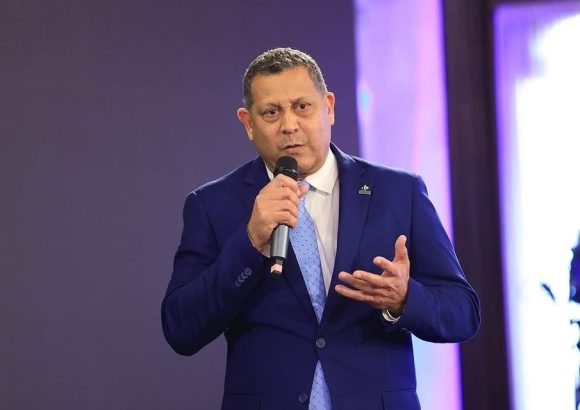
    Speaking publicly this Wednesday, Nelson Núñez — who leads the Dominican Federation of Municipalities (Fedomu) and also holds the position of mayor of Samaná — pushed back against recent remarks from economist and former public official Celso Marranzini. Marranzini recently drew attention to the growing debt of municipal governments, arguing that unpaid electricity bills from local councils have become a massive strain on Dominican public finances, hitting a total of roughly US$300 million by last year.

    While Núñez does not dismiss the existence of outstanding municipal payments for power used by public infrastructure and street lighting, he says the narrative that only local governments are in debt is deeply one-sided. He argues that the EDEs have themselves failed to uphold binding legal requirements laid out both in the country’s General Electricity Law 125-01 and a 2013 landmark ruling from the Dominican Constitutional Court.

    That specific ruling, labeled TC/0100/13, establishes a clear reciprocal framework: electricity distributors are required to transfer 3% of all revenue they collect from customers within each municipal jurisdiction and municipal district to local governments every month. In exchange, local governments are legally obligated to cover the cost of electricity for public streetlights and municipal-owned public facilities.

    Crucially, Núñez clarified that the 3% transfer is not an arbitrary tax imposed on power providers, as some critics have framed it. The Constitutional Court itself explicitly confirmed that the payment qualifies as a legally authorized compensation fee for municipalities, he noted.

    Yet according to Fedomu’s records, the EDEs have failed to comply with this ruling consistently ever since it was issued in 2013. The cumulative sum that power distributors owe to municipalities across the country is “incalculable,” Núñez stated, and this long-running noncompliance has been a major contributing factor to the tight financial straits many local councils now face. The missing funds have made it especially difficult for municipalities to cover the very street lighting costs they are obligated to pay, exacerbating the current standoff over mutual debts.

    Núñez closed by emphasizing that financial responsibilities run both ways: if municipalities owe the EDEs for power delivered, the power distributors owe municipalities for the legally mandated funds they have withheld for more than a decade.

  • Dominican Republic, Trinidad and Tobago sign Air Services Agreement

    Dominican Republic, Trinidad and Tobago sign Air Services Agreement

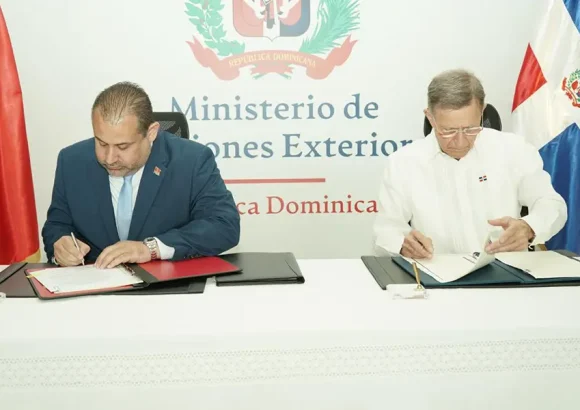
    Two Caribbean nations, the Dominican Republic and Trinidad and Tobago, have formalized a new Air Services Agreement designed to unlock expanded economic and connectivity ties between them, with a focus on growing trade, tourism and cross-border investment. The official signing ceremony brought together lead negotiators Roberto Álvarez, representing the Dominican Republic, and Eli Zakour for Trinidad and Tobago, marking a key milestone in bilateral relations between the two countries.

    This new agreement is structured to align with and complement the existing Chicago Convention on International Civil Aviation, the global framework that governs standards for international air travel. It incorporates a series of critical provisions that lay the groundwork for more flexible air connectivity: it grants formal overflight and emergency landing rights for airlines from both nations, authorizes the operation of non-scheduled and multi-destination air transport services, and puts in place rigorous shared standards for aviation safety to protect passengers and cargo.

    Speaking at the signing event, Álvarez outlined the Dominican Republic’s expanding position as a leading aviation hub across the Caribbean region. He attributed this growth to three core drivers: major investments in expanding and modernizing airport infrastructure across the country, the continuous launch of new domestic and international air routes, and proactive government policies that support the expansion of commercial aviation. He also emphasized that Trinidad and Tobago holds the status of a strategic partner for the Dominican Republic, with shared goals to advance broader integration across the entire Caribbean in multiple priority sectors, including trade, tourism, logistics, energy, and climate-focused sustainable development.

  • Suriname President Jennifer Geerlings-Simons to visit Dominican Republic

    Suriname President Jennifer Geerlings-Simons to visit Dominican Republic

    One of the highest-profile diplomatic engagements between two Caribbean nations is set to kick off this weekend, as the President of Suriname, Jennifer Geerlings-Simons, travels to the Dominican Republic for an official working visit that will run through June 2.

    Geerlings-Simons and her official delegation are scheduled to touch down at Punta Cana International Airport on Saturday morning, kicking off a packed three-day schedule of formal diplomatic activities set to launch on Monday. The official welcome will be held at the Dominican Republic’s National Palace, where the visiting head of state will receive full military honors before entering a closed-door private meeting with her Dominican counterpart, President Luis Abinader.

    Following the one-on-one discussion, delegations from both countries will hold expanded bilateral talks focused on deepening cross-national cooperation. The morning’s official events will conclude with a formal signing ceremony for new bilateral agreements and a shared joint statement outlining shared priorities for the two nations moving forward.

    Later on Monday, Geerlings-Simons will join Dominican Republic Foreign Minister Roberto Álvarez for a commemorative visit to the Altar of the Fatherland, where the pair will lay a wreath to honor the Dominican Republic’s national heritage. On Tuesday, the final day of the visit, the Surinamese president will meet with the Dominican Republic’s top congressional leaders — Senate President Ricardo de los Santos and Chamber of Deputies President Alfredo Pacheco — at the National Congress. She is scheduled to depart the country from Las Américas International Airport later that same afternoon, bringing the official visit to a close.

  • Leonel Fernández leads OAS Electoral Observation Mission in Colombia

    Leonel Fernández leads OAS Electoral Observation Mission in Colombia

    Colombia is preparing to hold its national presidential election on May 31, and a high-stakes international observation effort led by former Dominican Republic President Leonel Fernández has officially launched its work on the ground. This deployment marks a landmark milestone for the Organization of American States (OAS), as it stands as the 25th electoral observation mission the regional body has conducted in Colombia over recent decades.

    Fernández now assumes leadership of a robust team consisting of 96 experienced observers and technical specialists drawn from 24 different nations across the globe. To ensure comprehensive oversight of every stage of the electoral process, the mission has distributed its personnel across all major voting regions in Colombia: covering 26 of the country’s administrative departments, the national Capital District, and even five major international cities that host large Colombian expatriate communities. Those overseas locations include Madrid and Barcelona in Spain, plus New York, Miami, and Washington, D.C. in the United States, where Colombian citizens living abroad will cast their ballots in the election.

    Technical preparations for the observation work began more than a week before election day, on May 19. From that date, OAS technical experts have already engaged in a range of hands-on activities tied to the mechanics of the vote, including participating in full simulations and independent testing of Colombia’s vote-counting and results transmission digital systems. Moving through election day and the post-vote tabulation period, the mission’s mandate covers far more than just in-person voting monitoring. Observers will conduct a full evaluation of six core components of the electoral process: overall election administration, overseas voting operations, the performance of electoral technology systems, compliance with campaign finance regulations, the work of electoral judicial bodies, and the security measures put in place to protect voters and polling sites.

    In addition to technical and procedural evaluations, Fernández and his observation team will also carry out broader assessments of the electoral environment. This includes tracking the progress of all presidential candidates’ campaigns, reviewing how media outlets across the country cover the election, and analyzing the role of digital communication strategies used by campaign teams. To gather input from all stakeholders, the mission has scheduled a full program of meetings with national electoral authorities, senior Colombian government officials, all competing presidential candidates, representatives from domestic civil society organizations, and foreign diplomatic delegations based in the country.

    The entire observation mission is funded through contributions from a group of six foreign governments: Brazil, Canada, Spain, the United States, France, and Italy, reflecting broad international interest in ensuring the Colombian presidential election proceeds in a free, fair, and transparent manner.

  • Faride Raful leads security meeting with governors from all 32 provinces to combat crime and disorder

    Faride Raful leads security meeting with governors from all 32 provinces to combat crime and disorder

    In a key gathering focused on shoring up public safety across the Dominican Republic, Interior and Police Minister Faride Raful convened governors from all 32 of the country’s provinces in Santo Domingo to align cross-regional strategies targeting a suite of pressing criminal threats. The high-level meeting operated under the umbrella of the national security framework advanced by sitting President Luis Abinader, bringing together local and national authorities to map out coordinated responses to challenges ranging from drug micro-trafficking and illegal street motorcycle racing to rampant cattle rustling and frequent traffic accidents that have eroded community safety.

    During the day-long discussions, provincial leaders opened up about the tangible harm that persistent crime has inflicted on their local populations, and outlined critical unmet needs for frontline security and emergency services. These gaps included updated equipment for police and fire departments, additional operational vehicles, and upgrades to aging institutional infrastructure that hampers effective response.

    Minister Raful centered part of her remarks on the urgent need for formal reporting of cattle rustling incidents, a crime that hits agricultural communities particularly hard in provinces like La Altagracia. She stressed that official complaints are the foundational first step that allows law enforcement to launch thorough investigations and successfully prosecute offenders who steal livestock, a crime that costs rural producers thousands of dollars in losses annually. Echoing this focus on cracking down on livestock crime, Deputy Minister Angela Jáquez called for tighter, more consistent regulatory controls over both livestock transportation and commercial slaughter operations, noting that weak oversight creates open pathways for illegal rustling rings to operate undetected.

    On the topic of long-term security system reform, Andrés Modesto Cruz Cruz outlined steady progress in the administration’s flagship police expansion initiative, which has set a target of adding 20,000 new uniformed officers to national ranks by 2028. To date, he confirmed that nearly 13,000 new recruits have already completed training and joined active duty, with a cohort of more than 2,500 additional trainees on track to graduate in the near future to boost security presence across every region of the country. Attendees also dedicated time to reviewing a newly designed motorcycle regulation plan, which specifically targets the dangerous, unauthorized illegal street racing events that have become a public safety hazard in many urban and suburban areas.

    Beyond violent and organized crime, the agenda also covered less high-profile but equally disruptive community issues: excessive public noise and permitting protocols for large public events. Officials from the southwestern province of Barahona brought forward a proposal to enforce stricter time limits on outdoor events and amplified music to reduce quality of life disruptions for local residents. Separately, Delsa de Óleo, governor of La Altagracia, raised urgent alarms over rising youth violence in the resort area of Verón, specifically pointing to the presence of unsupervised foreign minors who have been tied to local criminal activity in the region.

  • Malecón Deportivo draws 40,000 visitors in first month

    Malecón Deportivo draws 40,000 visitors in first month

    Just one month after opening to the public, Santo Domingo’s newly redeveloped Malecón Deportivo has emerged as a hit among local residents and visitors alike, with the National District Mayor’s Office confirming the recreational waterfront space has attracted roughly 40,000 visitors since its inauguration. The strong turnout underscores broad public enthusiasm for a project that has transformed the capital’s southern coastline into a vibrant hub for community activity.

    First opened to the public on April 23, the nearly two-kilometer waterfront revitalization project was a joint initiative led by National District Mayor Carolina Mejía and Dominican Republic President Luis Abinader. In its first 30 days of operation, the space has already hosted a diverse range of events, from intimate private gatherings including weddings and birthday celebrations to large-scale community activities and competitive sporting events. Two major running events, the Ofit SDRun5K and the Carrefour 10K, were among the standout activities, drawing thousands of runners and spectators to the new waterfront venue over the past month.

    City officials emphasized that the completed Malecón Deportivo is a key component of a much larger coastal recovery effort. When combined with adjacent revitalized areas, the project brings the total length of reclaimed public coastal space in the capital to 5.8 kilometers, marking the largest single urban renewal initiative ever undertaken along Santo Domingo’s southern coastline. Looking ahead, the popular local group Bonyé will return to the venue for a second free public concert on May 29, following a massively well-attended performance during the site’s inaugural celebration that drew thousands of music fans.

    As Malecón Deportio settles into its role as a go-to community space, work is already progressing on the next major phase of the capital’s waterfront renewal: the upcoming Paseo 30 de Mayo project. Planned improvements for that initiative include new additional sports facilities, expanded public green spaces, dedicated bike paths, and a state-of-the-art speed skating rink built to meet international competition standards. The rink will be used as a competition venue for the 2026 Central American and Caribbean Games, which Santo Domingo is set to host.

    Overall, the two projects form part of a coordinated, long-term strategy by local and national authorities to reconnect Santo Domingo’s urban core with its historic waterfront, expand access to free public recreational and sports infrastructure for residents, and drive inclusive urban renewal across the capital region.

  • Gonzalo Castillo announces reinstatement of U.S. visa

    Gonzalo Castillo announces reinstatement of U.S. visa

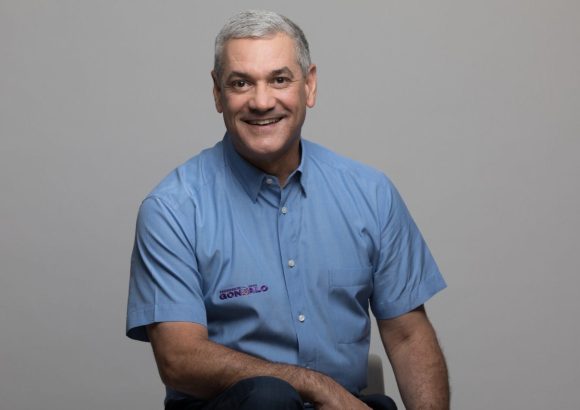
    In a public announcement shared via social media on Tuesday, Gonzalo Castillo, a one-time presidential contender from the Dominican Liberation Party, revealed that U.S. authorities have restored his 10-year non-immigrant visa, a move he has openly praised.

    Castillo took to the platform X, formerly Twitter, to extend his gratitude to the U.S. government, current U.S. President Donald Trump, and Leah Francis Campos, the U.S. Ambassador to the Dominican Republic, for facilitating the decision. According to Castillo, the reinstatement of his travel document embodies the core principles of freedom, due process, and respect for fundamental rights that the United States is globally recognized for upholding. He particularly noted the significance of this ruling coming as the U.S. marks the 250th anniversary of its founding.

    The visa had been revoked by U.S. authorities years earlier, following the launch of Operation Calamar, a high-profile Dominican corruption investigation. In this sprawling case, Dominican public prosecutors have leveled allegations against a group of former government officials, claiming they diverted billions of Dominican pesos through fraudulent and irregular payments for land expropriation projects. Prosecutors also allege that illegal bribes from the scheme were used to improperly fund political campaigns during the 2020 Dominican presidential election, in which Castillo ran as the Dominican Liberation Party’s candidate.

  • UNICEF calls for improved menstrual health conditions in Dominican schools

    UNICEF calls for improved menstrual health conditions in Dominican schools

    In the Dominican Republic, a concerning new data analysis from UNICEF has brought widespread systemic gaps in menstrual health management into sharp focus. Drawing on official survey data collected through the 2019 Enhogar-MICS initiative, the United Nations children’s agency found that more than one in five Dominican women are forced to halt their regular daily routines when they are menstruating, a statistic that underscores deep, persistent barriers to accessing dignified care for this basic biological need.

    As the global community marked Menstrual Hygiene Day on May 28, UNICEF issued a pressing call for expanded, targeted interventions to ensure all girls and adolescent women across the country can manage their menstruation with dignity. The organization outlined that overlapping challenges—from restricted access to affordable, reliable hygiene products and inadequate sanitation infrastructure to a lack of evidence-based health education and supportive social environments—are actively undermining women and girls’ fundamental rights to health, equal access to education, and full participation in public and community life.

    Carlos Carrera, UNICEF’s top representative in the Dominican Republic, stressed that equitable access to comprehensive menstrual health support is a non-negotiable foundation for advancing gender equality across the Latin American and Caribbean region. Carrera added that barriers to care have tangible, harmful consequences: a significant number of girls across the region skip school entirely during their menstrual periods, creating long-term gaps in educational attainment that entrench gender inequality. The report also shines a spotlight on the compounded challenges faced by adolescents living with menstruation-related health conditions such as endometriosis, which often amplifies pain and functional limitations that further restrict school attendance and engagement in daily activities.

    To address these gaps, UNICEF has laid out a clear set of recommendations for national and local stakeholders, singling out the Dominican Ministry of Education as a key actor in driving change. The agency calls for urgent investments to upgrade school infrastructure, including expanding access to clean drinking water and individual, private toilet facilities for students, alongside ensuring free or low-cost menstrual hygiene products are readily available on school campuses. It also urges the integration of comprehensive, age-appropriate sexual education that covers menstrual health into national school curricula.

    Beyond infrastructure and curriculum changes, UNICEF is pushing for targeted training to equip teachers to support students navigating menstrual health challenges, the development of robust gender-centered national public policies, widespread community outreach campaigns to reduce harmful stigma, and accessible psychological support for those navigating painful or disabling menstrual health conditions. A key, often overlooked component of the agency’s proposal is a call to actively engage boys and young men in open conversations about menstruation, an approach designed to break down social stigma, build broader community empathy, and foster a more inclusive, supportive environment for all.

  • INFOTEP and Asonahores discuss new training initiatives for tourism and gastronomy

    INFOTEP and Asonahores discuss new training initiatives for tourism and gastronomy

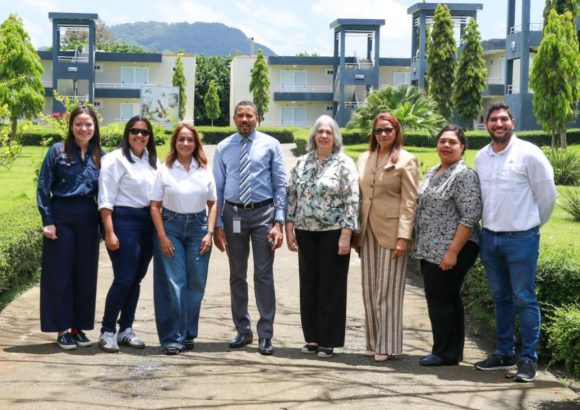
    HERMANAS MIRABAL, DOMINICAN REPUBLIC — Two leading Dominican institutions have opened strategic negotiations to form a new partnership that aims to upgrade skills training for the fast-growing tourism and gastronomy sectors, a key economic pillar of the Caribbean nation. The National Institute of Technical and Professional Training (INFOTEP) and the Dominican Republic Association of Hotels and Tourism (Asonahores) gathered at the Hermanas Mirabal Technological Center to outline their collaborative goals, bringing together senior leadership from both organizations to advance the initiative.

    Leading the INFOTEP delegation was Rayza Pichardo, the institute’s Director of Business Competitiveness, while Asonahores was represented at the talks by its Executive Vice President Aguie Lendor. At the core of the proposed alliance is a shared commitment to modernize existing technical training curricula and adjust educational frameworks to align with the shifting trends and growing demands of the global hospitality and tourism industry. As international travel continues its post-pandemic recovery, Dominican tourism stakeholders have pushed for more targeted workforce development to maintain the country’s competitive edge in the Caribbean travel market.

    Participants put forward a range of actionable proposals to advance the collaboration during the introductory meeting. One of the flagship initial plans calls for selecting five existing INFOTEP training centers to operate as pilot sites, where new educational approaches can be tested, performance can be assessed, and gaps in current programming can be identified for iterative improvement. Asonahores also put forward a proposal to integrate active industry professionals from local hotels and restaurants into instructor retraining programs, allowing INFOTEP teaching staff to gain first-hand insight into the latest operational dynamics, service standards, and emerging trends shaping the sector today.

    Lendor outlined details for a particularly high-priority project: the development of a cutting-edge culinary training hub hosted at the Hermanas Mirabal Technological Center. The proposed center is designed to become a national reference point for innovation in Dominican gastronomy and haute cuisine, helping to elevate the country’s culinary profile both domestically and internationally as a food tourism destination. Another key proposal put forward during the talks is the creation of a dedicated digital job placement platform that will connect INFOTEP’s trained graduates directly with hotels and restaurants across the country that are struggling to fill open positions with qualified, skilled workers.

    Representatives from INFOTEP emphasized the far-reaching benefits of the proposed partnership, noting that the aligned training framework will not only strengthen the overall business competitiveness of the Dominican tourism sector but also improve employment outcomes for young people and job seekers across the country. By matching technical education directly to the on-the-ground needs of employers, the alliance aims to reduce skills gaps and create more sustainable, formal employment in one of the nation’s largest employment-generating sectors. INFOTEP officials reaffirmed their commitment to moving forward quickly to formalize the strategic alliance and advance the joint projects focused on innovation and specialized workforce development in the coming months.