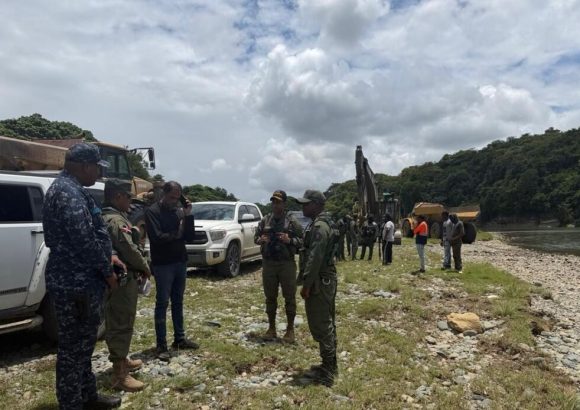
In Santo Domingo, recent active construction along the Haina River in the Manoguayabo district sparked widespread rumor and resident anxiety, with many local community members claiming the activity was unregulated illegal material mining. On Wednesday, the Dominican Republic’s Ministry of Environment and Natural Resources issued an official statement to dispel these claims, confirming that the ongoing operations form part of a state-backed environmental recovery and sanitation initiative for the degraded river basin.
The intervention is authorized under Resolution No. 0002-2026, which designated the full-scale restoration of the Haina River basin as an official environmental emergency. For decades, unmanaged development and pollution have left the river system in worsening condition, prompting the government to fast-track a coordinated intervention to reverse damage and protect at-risk local populations. The project focuses on high-priority zones of the basin, including Palavé and adjacent stretches along the Haina industrial corridor. Preliminary technical surveys have documented a range of critical hazards in these areas: extreme sediment accumulation that clogs water flow, accelerated riverbank erosion, severely diminished drainage capacity, and unauthorized human settlement inside designated river protection zones.
According to ministry officials, the scope of work extends far beyond basic cleanup. Crews are conducting full riverbed restoration, implementing engineered bank stabilization measures, replanting native riparian vegetation, and removing accumulated waste and debris. All works are designed explicitly to cut flood risk for nearby residential areas and critical infrastructure, a pressing concern during the region’s annual heavy rainfall seasons. A key sustainable innovation of the stabilization work is the use of gabion structures constructed from repurposed recycled tires, turning waste material into a cost-effective, eco-friendly flood defense tool.
The official clarification was triggered after residents of Palavé, Lechería, and other nearby Manoguayabo neighborhoods raised public alarms over the presence of heavy construction equipment along the river. In response, the ministry stressed that all operations are carried out under constant official oversight, with backing from multiple partner agencies including SENPA, the national Environmental Prosecutor’s Office, and other institutions tasked with preventing and enforcing environmental crime. Officials have called on local residents to set aside their concerns, noting that the Haina River restoration project is one of the regional government’s top priorities for both environmental recovery and community safety.