标签: Dominican Republic

多米尼加共和国

  • Dominican Republic achieves Category 2 ranking in Global Labor Rights Index

    Dominican Republic achieves Category 2 ranking in Global Labor Rights Index

    In a landmark recognition for regional labor rights progress, the Dominican Republic has secured placement in Category 2 of the 2026 Global Rights Index released by the International Trade Union Confederation (ITUC), cementing its status among the top three countries in the Americas for the protection of collective labor rights.

    The Caribbean nation shares this strong standing with Barbados, while Uruguay remains the sole regional economy to hold the highest classification of Category 1, according to statements from the Dominican Ministry of Labor.

    Developed to benchmark global labor conditions, the ITUC index assesses four core pillars of international labor standards: freedom of association for workers, the right to collective bargaining, legal protection for strike action, and equitable access to labor justice systems. Across more than 150 nations, the index has emerged as one of the most widely referenced global yardsticks for measuring institutional commitment to workers’ rights, guiding decision-making for cross-border investors, multilateral organizations, and labor industry stakeholders worldwide.

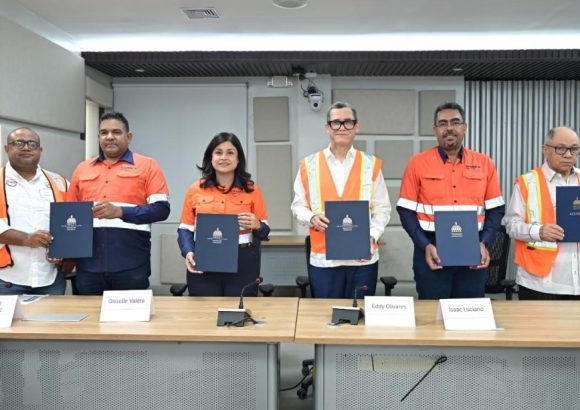
    Dominican Labor Minister Eddy Olivares Ortega emphasized that the new ranking reflects tangible, sustained progress across the country’s efforts to strengthen labor governing institutions, expand inclusive social dialogue between workers, employers and the state, and align domestic regulations with the core international labor principles advanced by the International Labour Organization (ILO).

    Olivares credited the improved outcome to collaborative cross-sector work, noting that the achievement would not have been possible without coordinated efforts from the national government, organized worker groups, employer associations, and public labor institutions, all of which have aligned to advance fair employment relations and broader social justice across the Dominican workforce.

    Notably, the 2026 ranking marks an upgrade in the Dominican Republic’s standing compared to previous ITUC evaluations. This improvement comes at a time when the global landscape has seen widespread rollbacks of labor protections, with many nations recording setbacks in workers’ rights amid post-pandemic economic shifts and evolving labor market pressures.

    Moving forward, the Dominican Ministry of Labor has reaffirmed its long-term commitment to advancing policy reforms that further strengthen core labor rights. Key priority areas include expanding protections for freedom of association, improving collective bargaining frameworks, enhancing workplace safety standards, increasing the reach and efficacy of labor inspections, and upholding balanced protections for both workers and employers across all sectors of the national economy.

  • Dominican Republic opens Latin America and Caribbean Week at UNESCO

    Dominican Republic opens Latin America and Caribbean Week at UNESCO

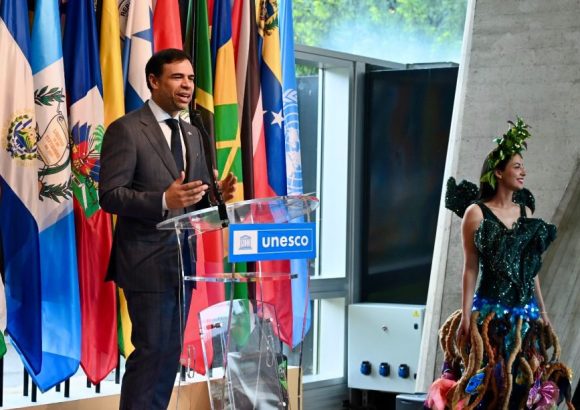
    PARIS — A major new regional cultural gathering kicked off this week at UNESCO’s iconic Paris headquarters, with Dominican Republic’s Culture Minister Roberto Ángel Salcedo leading the inaugural ceremony for 2026 Latin America and Caribbean Week. The landmark four-day event, running from June 2 to 5 under the organizational leadership of the Group of Latin America and the Caribbean (GRULAC), gathers cultural delegates, community leaders, and industry stakeholders from across 33 countries in the region to advance cross-cultural exchange, collaborative cultural policy, and culture-centered sustainable development. Over the course of the event, attendees will engage with a diverse program spanning visual art exhibitions, gastronomic showcases, film screenings, academic roundtables, and creative industry networking sessions.

    In his opening address to delegates and UNESCO officials, Minister Salcedo centered his remarks on the unifying threads and remarkable diversity that define Latin America and the Caribbean. He framed the region as a dynamic, living tapestry of overlapping histories, Indigenous knowledge, and evolving identities forged through centuries of cultural exchange. Turning the spotlight to his home country, he highlighted the Dominican Republic’s globally celebrated cultural legacy, spotlighting five traditions formally inscribed on UNESCO’s Intangible Cultural Heritage List: the Brotherhood of the Holy Spirit of the Congos of Villa Mella, the traditional performance practice of the Guloyas of San Pedro de Macorís, the iconic national dances of merengue and bachata, and the centuries-old traditional knowledge tied to producing and enjoying casabe, or cassava bread.

    Salcedo went on to reaffirm the critical role of cultural preservation and exchange as a foundational driver of global peace, inclusive social cohesion, and long-term sustainable development. He also credited UNESCO with its decades-long leadership in protecting vulnerable cultural heritage sites and practices across the world. A key announcement during his address was the formal promotion of the Dominican Republic’s candidacy for a seat on the UNESCO World Heritage Committee for the 2027–2031 term. This influential governing body is tasked with reviewing new global heritage nominations, monitoring the conservation status of existing inscribed sites, and setting global standards for heritage protection.

    To mark the opening of the week, the Dominican Republic debuted a special exhibition of traditional carnival hand-carved masks, each originating from distinct regions across the country. The curated display traces the blended origins of Dominican national identity, illustrating how Indigenous, African, and European cultural influences have merged over centuries to create the country’s distinct, rich cultural landscape that endures today. The event will wrap up on June 5 with the annual Caribbean Day celebration, a full day of programming dedicated to highlighting the region’s dynamic music, contemporary and traditional dance, authentic culinary traditions, and fast-growing creative sectors.

    For the Dominican Republic, this high-profile participation in one of the region’s most influential cultural forums does more than showcase its cultural offerings: it further solidifies the country’s standing as a premier cultural destination across the Caribbean, and demonstrates its expanding commitment to global collaborative efforts to protect, preserve, and promote shared cultural heritage for future generations.

  • Dominican Republic competes for top Caribbean destination honor at Wave Awards

    Dominican Republic competes for top Caribbean destination honor at Wave Awards

    The Caribbean’s tourism landscape continues to see the Dominican Republic emerge as a standout contender, with the nation and a roster of leading hospitality brands operating within its borders picking up an array of prestigious nominations for the 2026 Wave Awards. Organized by TravelAge West, a leading trade publication serving the North American travel advisor community, the annual awards recognize excellence across the global travel and hospitality sector.

    One of the most high-profile nods for the Dominican Republic comes in the category for Caribbean Destination with the Highest Visitor Satisfaction, a nomination that reaffirms the country’s long-standing reputation as a top-tier leisure spot in the region. This recognition underscores the consistent work the nation has put into elevating visitor experiences and cementing its position as a go-to choice for international travelers seeking Caribbean getaways.

    Beyond the national destination nomination, a number of the Dominican Republic’s top properties have earned spots on the shortlist for Best New or Renovated Resort in the Caribbean. These include three standout properties: Club Med Punta Cana, Secrets Playa Esmeralda Resort & Spa, and the adults-only all-inclusive W Punta Cana.

    Major hotel groups with extensive footprints across the Dominican Republic have also racked up nominations across a range of brand-focused categories, which cover everything from top all-inclusive operators to leading options for romantic getaways and family vacations. The full list of nominated brands includes Club Med, Hyatt Inclusive Collection, Majestic Resorts, Meliá Hotels International, Princess Hotels & Resorts, The Excellence Collection, plus a suite of family-focused hospitality names: Dreams Resorts & Spas, Finest Resorts, Grand Palladium Hotels & Resorts, Hyatt Ziva, and Nickelodeon Hotels & Resorts.

    Unlike many industry awards that rely on public voting, Wave Awards recipients are chosen through a rigorous, multi-stage evaluation process led by TravelAge West’s experienced editorial team. The selection process combines on-site property inspections, in-depth product reviews, surveys of professional travel advisors, and comprehensive market analysis to ensure winners represent the highest standard of quality in the industry. All winners are set to be revealed during a black-tie gala ceremony scheduled for June 4 in Los Angeles, where the leading names in travel will gather to celebrate this year’s top performers.

  • Boca Chica to receive new boardwalk, plaza and park in major tourism upgrade

    Boca Chica to receive new boardwalk, plaza and park in major tourism upgrade

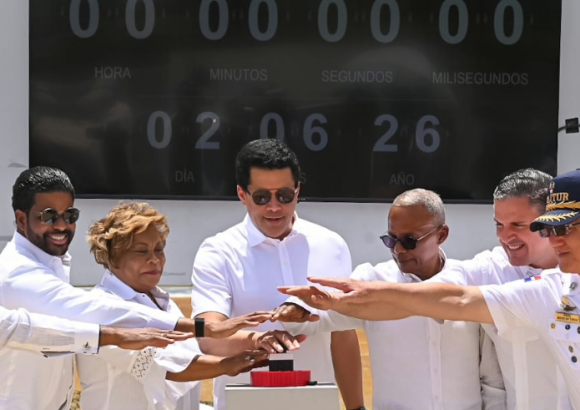
    BOCA CHICA – A sweeping multi-project infrastructure upgrade is underway in the popular coastal community of Boca Chica, after Dominican Republic Tourism Minister David Collado officially launched construction on three major public space developments. Together, the Andrés boardwalk, Plaza Caracoles, and Central Park renovation projects represent a total public investment exceeding RD$414 million, forming a core pillar of the national tourism ministry’s long-term strategy to reposition Boca Chica as a more sustainable, accessible, and economically vibrant destination for both local residents and international visitors.

    The centerpiece of the development package is the new Andrés boardwalk, the largest and most well-funded of the three initiatives. With a total investment allocation of RD$380.7 million, the project will span more than 53,800 square meters, running continuously from Brisas del Caucedo Street to the far end of Boca Chica’s beach corridor. Planned improvements extend far beyond a new pedestrian promenade: the scope includes full reconstruction of the waterfront, comprehensive overhauls of local roads and stormwater drainage systems, structural rehabilitation of the aging seawall, and the addition of new public amenities ranging from expanded parking lots and modern public lighting to curated landscaping, multi-use recreational facilities, public sports courts, dedicated children’s play areas, accessible public restrooms, and zoned commercial spaces for local businesses. The project also includes targeted upgrades to a key stretch of the Puerto Caucedo roadway, designed to cut congestion and improve overall traffic mobility for residents and visitors alike.

    Beyond the flagship boardwalk project, the tourism ministry has earmarked an additional RD$16.7 million for the complete reconstruction of Plaza Caracoles. The redesigned public space will prioritize pedestrian access and green infrastructure, adding expanded parkland, wider walkable corridors, updated lighting, new urban furniture, enhanced landscaping, and improved accessibility for visitors with disabilities. The third initiative, a full renovation of Boca Chica’s Central Park, carries a separate RD$17 million budget. Planned upgrades for the community’s central green space include expanded native plantings, resurfaced paved walkways, new accessibility ramps, and a complete modernization of the park’s shared public areas.

    In comments marking the launch of construction, Minister Collado emphasized that the three projects are more than just infrastructure upgrades: they are designed to drive long-term economic and social revitalization for the Andrés neighborhood, while supporting Boca Chica’s broader destination development strategy. That wider plan includes additional investments across the region, covering beach infrastructure, expanded public security facilities, preservation and restoration of local historic landmarks, and continued upgrades to shared public spaces that benefit both the local community and the tourism economy.

  • INPOSDOM issues commemorative stamp marking 50 years of Dominican Republic-Guyana relations

    INPOSDOM issues commemorative stamp marking 50 years of Dominican Republic-Guyana relations

    SANTO DOMINGO — A new chapter of public commemoration for Caribbean bilateral friendship has opened, as the Dominican Postal Institute (INPOSDOM) has unveiled a special commemorative stamp to mark the golden jubilee of formal diplomatic relations between the Dominican Republic and the Cooperative Republic of Guyana. The limited-edition release is designed to honor five decades of mutual cooperation, deep-rooted friendship, and collaborative regional partnership between the two Caribbean nations, which first established official diplomatic ties in 1970.

    At the official launch ceremony held to introduce the new stamp, INPOSDOM Director General Erick Guzmán framed the collectible issue as more than a postal item: it stands as a tangible symbol of the enduring, robust bonds that connect the two countries. Guzmán further highlighted that the stamp reflects both nations’ shared dedication to three core goals: advancing regional integration across the Caribbean bloc, pursuing inclusive sustainable development, and expanding cross-border collaboration on shared priorities.

    Ernesto Torres, the Dominican Republic’s ambassador to Guyana, also spoke at the event, echoing the significance of the commemorative project. He emphasized that the stamp launch is not just a symbolic gesture, but a clear reflection of the ongoing expansion of ties across diplomatic, commercial, and cultural spheres between the two nations. This growing partnership has hit key milestones in recent years, most notably the opening of the Dominican Republic’s permanent embassy in Georgetown, Guyana’s capital, in 2023.

    The special stamp issue totals 7,500 individual units, and its design draws on the distinct cultural heritage of both countries to celebrate their shared history. The artwork features two of the nations’ most iconic architectural landmarks: the Dominican Republic’s Santa María de la Encarnación Cathedral, and Guyana’s St. George’s Cathedral. Officials from both countries note that the release comes as both sides continue to work toward deepening bilateral cooperation across multiple sectors, building on 50 years of positive relations to create new opportunities for collaboration in the years ahead.

  • Civil Defense prepares 2,742 shelters for 2026 hurricane season

    Civil Defense prepares 2,742 shelters for 2026 hurricane season

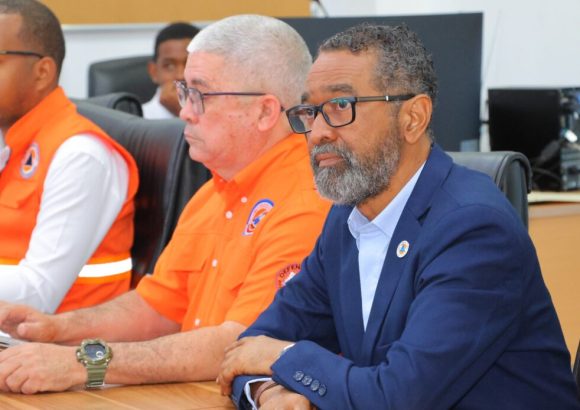
    Top disaster response leaders in the Dominican Republic have launched coordinated pre-season readiness initiatives ahead of the 2026 Atlantic hurricane season, bringing together regional authorities to shore up the nation’s emergency response infrastructure. In a high-stakes strategic gathering held in Santo Domingo, Juan Salas — who serves dual roles as executive director of the Dominican Civil Defense and president of the National Emergency Commission (CNE) — met with all 32 of the organization’s provincial directors to align preparedness protocols and response strategies across every region of the country.

    During the meeting, Salas outlined the robust resources the nation has already mobilized to protect communities against potential storm-related hazards. He confirmed that the Dominican Civil Defense currently maintains a network of 2,742 fully operational shelters spread across all 32 provinces, capable of housing tens of thousands of residents displaced by flooding, high winds or other hurricane-related damage. Complementing this physical infrastructure is a large, trained volunteer corps of more than 15,000 local residents, who stand ready to deploy across affected areas to support emergency response, search and rescue, and relief distribution operations when hydrometeorological events strike.

    Salas placed heavy emphasis on the critical role of proactive prevention rather than reactive response, noting that community-level readiness is the foundation of successful disaster risk reduction. He issued formal instructions to provincial and local authorities to strengthen collaborative partnerships with local Disaster Prevention, Mitigation, and Response Committees, closing gaps in preparedness at the neighborhood and municipal levels to ensure rapid, coordinated action when a storm threatens.

    The meeting also focused on empowering individual citizens to take personal responsibility for their own safety ahead of the season. Salas urged the public to proactively download and use the AlertaDO mobile application, the official emergency reporting tool developed by the Dominican government, to submit real-time reports of developing hazards and active emergencies. He also encouraged all residents to use digital and physical information platforms managed by the Dominican Civil Defense to locate the nearest official shelter to their home well before a storm approaches, eliminating last-minute confusion during emergency evacuations.

    Closing the meeting, Salas reaffirmed that consistent preparation, intentional prevention, and strict adherence to official emergency guidance remain the three core pillars of any effective hurricane risk management strategy. By taking these steps well in advance of the 2026 season, the nation aims to cut storm-related casualties, minimize property damage, and protect the lives and livelihoods of Dominican communities across the country.

  • Dominican Republic and European Union strengthen ties at Fifth Political Dialogue

    Dominican Republic and European Union strengthen ties at Fifth Political Dialogue

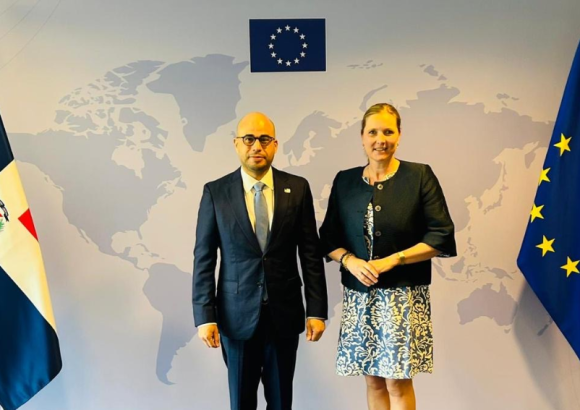
    BRUSSELS, Belgium — The Dominican Republic and the European Union have wrapped up their fifth high-level political dialogue in Brussels, using the occasion to reaffirm their shared commitment to core global principles including democratic governance, inclusive multilateralism, transnational security, equitable sustainable development, and cross-border international collaboration.

    The talks were hosted at the headquarters of the European External Action Service, and formed a central pillar of Dominican Week, a series of diplomatic and cultural events held across Belgium and the Netherlands designed to deepen ties between the Caribbean nation and Western European partners.

    Leading the Dominican delegation was Francisco Caraballo, Vice Minister of Bilateral Foreign Policy, who sat down with senior EU representatives to work through a packed agenda of pressing bilateral and regional priorities. Core discussion topics included the full implementation of the Samoa Agreement, the landmark pact that governs relations between the EU and African, Caribbean and Pacific (ACP) states, as well as frameworks for orderly international mobility, expanded regional integration initiatives, and the ongoing operation of the Economic Partnership Agreement (EPA) between the Caribbean Forum (CARIFORUM) bloc and the European Union. Both negotiating teams underlined their mutual dedication to unlocking new trade flows, attracting targeted foreign investment, and expanding inclusive development opportunities for communities across the Dominican Republic and the Caribbean region.

    Beyond economic and trade issues, the dialogue also centered heavily on deepening transnational security cooperation. Participants aligned on the urgent need to ramp up joint efforts to counter a range of cross-border threats, including transnational organized crime, international drug trafficking, human and migrant smuggling networks, and rapidly evolving cybercrime. The two sides also held an in-depth exchange of perspectives on the ongoing humanitarian and political crisis in neighboring Haiti, where the Dominican Republic has long shouldered the brunt of regional spillover effects. Dominican representatives stressed that only a coordinated, well-resourced international response can effectively address the instability and suffering unfolding in the country.

    By the close of the talks, both delegations reached a shared agreement to continue strengthening and expanding formal political dialogue and institutional cooperation mechanisms moving forward. To lock in this commitment, they officially confirmed that the sixth high-level political dialogue will take place in the Dominican Republic in 2027, marking a key milestone in the deepening relationship between the Caribbean nation and the European bloc.

  • Dominican Republic and Suriname expand trade, tourism and education ties

    Dominican Republic and Suriname expand trade, tourism and education ties

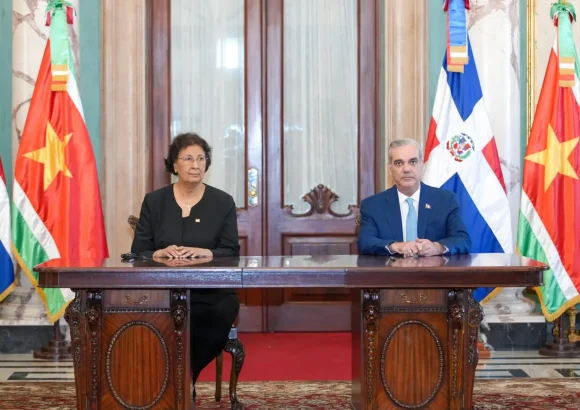
    In a high-level diplomatic gathering held in Santo Domingo, the capital of the Dominican Republic, leaders from the Dominican Republic and Suriname have marked a historic turning point in bilateral relations, signing a sweeping package of cooperation pacts covering key sectors from tourism and agriculture to trade and education. Dominican Republic President Luis Abinader and Suriname President Jennifer Geerlings-Simons led the discussions that capped off with a landmark agreement to elevate the two nations’ ties to the level of a formal strategic economic partnership.

    Beyond economic alignment, the two heads of state have committed to holding consistent, structured political consultations on pressing cross-border and global challenges that impact the Caribbean region. These priority topics include regional security coordination, collective action against climate change, strengthening global food security frameworks, and building more robust national and regional economic resilience against external shocks.

    Transport and connectivity emerged as a core pillar of the new partnership, with both leaders celebrating the launch of the new Sky High Dominicana air route connecting Santo Domingo and Suriname’s capital Paramaribo. The route is widely expected to act as a key catalyst for unlocking growth in both bilateral tourism and cross-border trade, making travel and commerce faster and more accessible for people and businesses in both countries. In a separate move to boost people-to-people ties, Suriname announced a new visa policy that will allow Dominican citizens holding valid United States or Schengen Area visas to enter Suriname for tourism purposes without an additional visa.

    On the economic and trade front, the two governments have made clear commitments to expand mutual trade and investment opportunities, slash unnecessary bureaucratic and regulatory barriers to cross-border commerce, and create a more welcoming environment for increased collaboration between the two nations’ private sectors. A formal memorandum of understanding was signed between Suriname’s official Trade and Investment Agency and ProDominicana, the Dominican Republic’s national trade and investment promotion body, to formalize and strengthen commercial cooperation. Additional agreements signed during the summit cover targeted cooperation in tourism marketing and promotion, sustainable agricultural development, and diplomatic education through expanded academic exchange and professional training programs.

    Speaking at the conclusion of the meeting, both presidents described President Geerlings-Simons’ visit to Santo Domingo as a defining milestone in the history of bilateral relations between the two Caribbean nations. They both reaffirmed their shared commitment to deepening all areas of cooperation and advancing inclusive, sustainable development across the Caribbean region.

  • Suriname President Jennifer Geerlings-Simons arrives in Dominican Republic for official visit

    Suriname President Jennifer Geerlings-Simons arrives in Dominican Republic for official visit

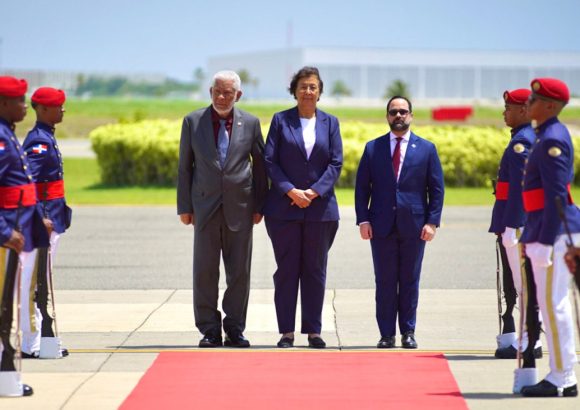
    PUNTA CANA – Surinamese President Jennifer Geerlings-Simons touched down in the Dominican Republic Saturday, kicking off an official working visit that will extend through June 2. The visiting head of state was greeted with full military honors upon arrival, and received by high-ranking Dominican government representatives, including senior officials from the Dominican Ministry of Foreign Affairs and members of the Dominican diplomatic mission stationed in Suriname. Geerlings-Simons is not traveling alone; a delegation of senior Surinamese government officials, including Foreign Minister Melvin Bouva and Transport, Communications and Tourism Minister Raymond Landveld, is accompanying her throughout the visit.

    On Monday, the diplomatic schedule will center on high-level talks at the Dominican National Palace, where Geerlings-Simons is set to hold a full slate of official meetings with Dominican President Luis Abinader. The packed agenda opens with a closed-door private bilateral discussion between the two leaders, followed by plenary talks between the full delegations from both nations. After the discussions, the two sides will hold a formal signing ceremony for multiple new cooperation agreements, before issuing a joint official declaration outlining shared priorities. Following the meetings, Geerlings-Simons will join Dominican Foreign Minister Roberto Álvarez to lay a wreath and pay respects at the Altar of the Fatherland, a prominent national memorial in the country.

    Tuesday will bring the next phase of diplomatic engagement: the Surinamese president is scheduled to hold talks with top Dominican congressional leaders before delivering a landmark address to a joint session of the Dominican bicameral legislature.

    This official visit marks a key milestone in the steadily growing bilateral relationship between the Dominican Republic and Suriname. Over recent years, the two Caribbean nations have actively expanded collaborative frameworks across a range of high-priority sectors, including energy, hydrocarbon development, agriculture, and commercial air services. Recent diplomatic efforts and existing agreements have centered on three core mutual goals: increasing bilateral trade volumes, advancing shared progress in sustainable energy development, and deepening cross-sector collaboration that benefits both nations’ populations and economies.

  • U.S. Deputy Secretary visits AES Dominicana to strengthen energy cooperation

    U.S. Deputy Secretary visits AES Dominicana to strengthen energy cooperation

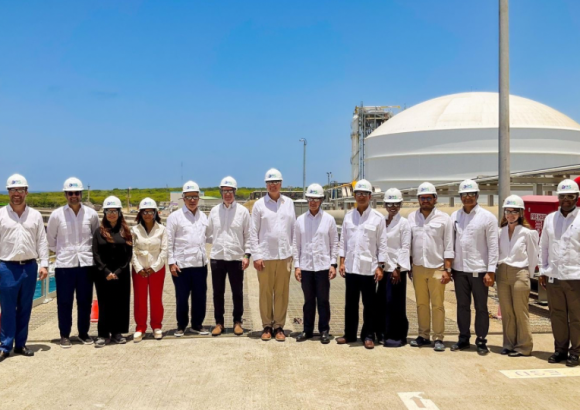
    In a high-profile visit to Boca Chica this week, AES Dominicana welcomed former U.S. Ambassador to Mexico Christopher Landau, current U.S. Ambassador to the Dominican Republic Leah Campos, and a cross-official delegation to the company’s sprawling Andrés energy complex, a cornerstone of transatlantic energy trade between the United States and the Caribbean. The meeting offered senior U.S. officials an up-close look at one of the most critical energy infrastructure projects in the region, which serves as the primary entry point for U.S.-sourced liquefied natural gas entering the Dominican market.

    During the facility tour, the delegation explored the complex’s core operational zones: cutting-edge LNG storage tanks, advanced regasification units, and the integrated power generation facility that powers a significant share of the Dominican Republic’s domestic energy grid. All of the natural gas processed at the site is sourced from U.S. export terminals located along the Gulf Coast in Louisiana and Texas, tying the two nations’ energy sectors closely together.

    Company leadership shared key trade data with the delegation, noting that the Dominican Republic is on track to import over 4 million cubic meters of LNG from the United States in 2025. This import volume cements the country’s standing as the largest importer of North American natural gas across all of Latin America, a milestone that underscores the growing integration of U.S. energy markets with the Caribbean and Central American regions.

    AES executives emphasized that the Andrés complex fills a unique strategic role beyond the Dominican Republic’s borders. The infrastructure not only strengthens regional energy security by reducing reliance on single-source energy supplies but also creates a stable foundation for sustained economic growth across neighboring markets. It also enables greater energy diversification, helping nations across the Caribbean and Central America transition away from heavier fossil fuels while scaling up cleaner energy options.

    Beyond its operational impact, the project stands as the single largest U.S. capital investment in the Dominican Republic, with total accumulated investment exceeding $2.4 billion in energy infrastructure to date. AES confirmed it continues to expand its footprint across the region, investing not only in natural gas infrastructure but also in utility-scale renewable energy projects and advanced energy storage solutions that will support the region’s long-term clean energy transition.