标签: Dominican Republic

多米尼加共和国

  • New York to host 2026 Dominican Book and Culture Festival

    New York to host 2026 Dominican Book and Culture Festival

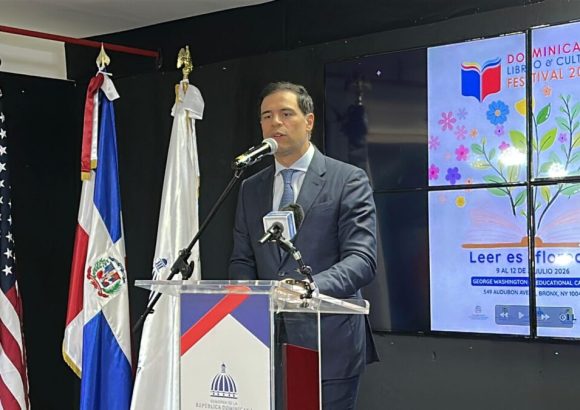
    A landmark celebration of Dominican art, literature and identity is set to take over New York City next summer, as the Dominican Republic prepares to host the 2026 Dominican Book and Culture Festival from July 10 to 12. Convening a diverse cross-section of creative minds, industry builders and cultural stewards from both the Dominican diaspora and the broader global community, the three-day event will be hosted at the George Washington Educational Campus, located in the heart of Washington Heights – a neighborhood long rooted in Dominican American life. Overseeing the festival is Dominican Republic Culture Minister Roberto Ángel Salcedo, who has spearheaded efforts to expand the nation’s cultural outreach to communities abroad.

    Rey Andújar, a key organizer of the gathering, outlined that the festival’s multidisciplinary programming centers on four core pillars: literature, visual and performing arts, entrepreneurship, and the exploration of shared cultural identity. Under the unifying official theme “reading is flourishing,” the event sets out to achieve two interconnected goals: shine a well-deserved spotlight on the breadth of Dominican talent and growing cultural industries based in the United States, while forging stronger, more lasting bonds between the Dominican government and its vast community of citizens and descendants living overseas.

    Attendees will have access to a packed schedule of immersive activities, ranging from intimate literary panels and in-person author readings to a bustling open-air artisan bazaar showcasing handcrafted traditional goods. A dedicated pavilion highlighting women-owned Dominican businesses will offer networking and exhibition opportunities for female entrepreneurs, alongside curated fashion exhibitions highlighting contemporary Dominican design and vibrant live cultural performances that bring folk and modern traditions to life. Delegations of published writers from across the Caribbean, Europe and the United States – including contingents from the Dominican Republic, Puerto Rico, Spain and multiple U.S. regions – will travel to New York to take part in the festival’s programming.

    In a nod to Dominican history and national legacy, special curated exhibits and presentations will honor three iconic national figures: founding father Juan Pablo Duarte, his activist sister Rosa Duarte, and pioneering educator Ercilia Pepín, ensuring their contributions to Dominican identity and progress are centered for new generations of attendees.

    Organizers have emphasized that engaging younger members of the diaspora is a top priority for the 2026 festival. To that end, a full slate of age-specific literary and educational activities has been designed specifically for children and young people, with the dual goal of fostering a love of reading and creative expression while helping younger attendees connect to their Dominican cultural heritage.
  • Dominican Republic hands over ICPEN presidency to Georgia

    Dominican Republic hands over ICPEN presidency to Georgia

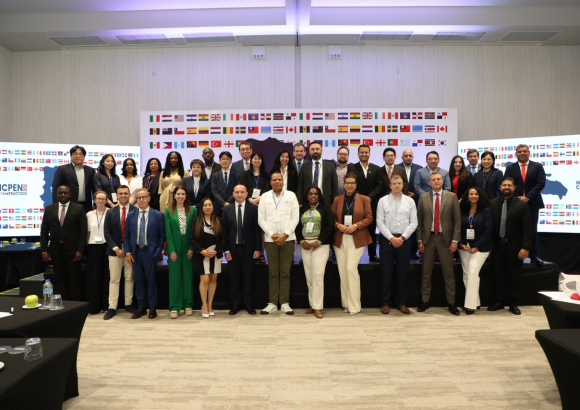
    PUNTA CANA — A pivotal moment for global consumer advocacy unfolded this week as the Dominican Republic formally completed its tenure as president of the International Consumer Protection and Enforcement Network (ICPEN), passing the mantle of global leadership to Georgia during the closing plenary of the network’s annual assembly. The high-profile gathering drew regulatory delegates and consumer protection experts from close to 50 member nations, gathering to review global progress and set priorities for the year ahead.

    The formal handover ceremony saw Eddy Alcántara, who led the global network as ICPEN president throughout the 2025-2026 term, officially transfer leadership responsibilities to his successor Irakli Lekvinadze from Georgia. In his farewell address to the assembly, Alcántara outlined the signature achievements advanced under Dominican leadership, highlighting three core areas of progress: deepened cross-border collaboration between consumer protection bodies, enhanced coordinated enforcement action between national regulatory agencies, and targeted new initiatives designed to shield consumers navigating the fast-evolving digital and cross-border commercial landscapes.

    Alcántara explained that the Dominican administration prioritized elevating shared global best practices during its tenure, working to create conditions for fairer, more transparent international markets and strengthen uniform enforcement of existing consumer protection regulations across national borders. Beyond policy gains, he emphasized that leading the 50-plus member global network has significantly boosted the Dominican Republic’s standing in international regulatory circles, while reaffirming the nation’s longstanding commitment to upholding fundamental consumer rights for both domestic and cross-border shoppers.

    Beyond the leadership transition, this year’s annual assembly provided a critical forum for member states to address the most pressing challenges facing consumers across the globe. Delegates held in-depth discussions on high-priority topics ranging from modern e-commerce regulation and crackdowns on deceptive cross-border business practices to global product safety standards and the consumer risks and opportunities posed by emerging technologies. In a show of widespread approval for the Dominican Republic’s two-year leadership, delegates from multiple member nations publicly praised its proactive policy agenda, and many have already signaled their intention to adopt the consumer protection frameworks developed during its tenure, pointing to the proven positive impacts of those initiatives both in the Dominican Republic and in pilot programs across other member states.

  • Dominican authorities dismantle transnational fraud ring targeting U.S. residents

    Dominican authorities dismantle transnational fraud ring targeting U.S. residents

    In a major coordinated crackdown on cross-border illicit activity, Dominican security agencies have taken down a transnational criminal network that allegedly ran a prolonged campaign of extortion, blackmail, and fraud against United States residents to generate hundreds of thousands in illicit proceeds that were then laundered through local financial channels.

    The multi-agency enforcement action, codenamed Operation XL526, unfolded across two northern Dominican provinces, ending with 20 people taken into custody after law enforcement executed 28 synchronized search and arrest warrants. Raids were concentrated in the provinces of Santiago and Puerto Plata, the two core operating hubs of the criminal organization.

    The operation was spearheaded by the Dominican Public Prosecutor’s Office, with operational coordination from the General Directorate of Prosecution and the Santiago regional Prosecutor’s Office. Critical support was provided by the Dominican National Police, Homeland Security Investigations (HSI) out of its Santo Domingo office, and the country’s specialized Organized Crime Task Force, highlighting the collaborative nature of efforts to combat transnational crime that impacts multiple countries.

    Prosecutors have laid out detailed allegations that the group systematically targeted victims based in the United States, building out a structured fraud model that generated illegal revenue before the proceeds were moved through Dominican financial systems and concealed to hide their criminal origin via complex money laundering processes.

    Five men are identified as the alleged top leaders of the network: Carlos José Parra Lantigua, Eliardo Peña Almonte, Renso Darío González Almonte, Josiel Pichardo Cabrera, and Walinton Sosa Almonte, all of whom were among those arrested during the raids.

    Authorities confirmed the criminal operation was run out of the municipality of Jacagua, located within Santiago province. From that base, group members would first lure potential victims through deceptive public advertisements, then shift to extortion and blackmail using pre-written, rehearsed scripts designed to pressure targets into sending money to the organization.

    As of the latest updates, investigations remain active. Investigators are continuing to question persons of interest connected to the network as they build out the full scope of the criminal scheme and pursue additional potential charges against unindicted co-conspirators.

  • Suriname and Dominican Republic seek greater parliamentary exchange

    Suriname and Dominican Republic seek greater parliamentary exchange

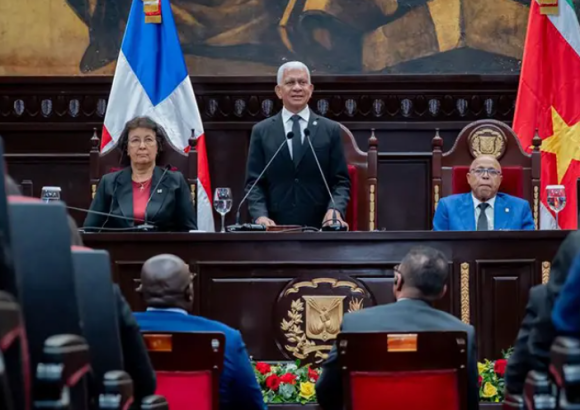
    During an official visit to the Dominican Republic’s capital Santo Domingo, Suriname President Jennifer Geerlings-Simons has laid out a clear vision for deeper collaboration between the two Caribbean nations, addressing a joint gathering of the Dominican National Congress to outline priority areas for partnership.

    Geerlings-Simons emphasized that the two countries share not just overlapping development goals, but also common systemic challenges, positioning targeted collaboration as a pathway to shared long-term prosperity. The head of state identified five core sectors ripe for expanded cooperation: renewable energy development, agricultural innovation, tourism growth, sustainable development initiatives, and cross-parliamentary knowledge exchanges.

    As small developing states with large stretches of vulnerable coastal territory, both Suriname and the Dominican Republic face disproportionate threats from climate change, Geerlings-Simons noted. She used the address to reinforce the shared values that underpin potential partnership, including a collective commitment to open dialogue, democratic governance, global peace, and the rule of law.

    Beyond laying out policy priorities, the Surinamese president expressed sincere gratitude for the warm welcome extended by Dominican government officials, and extended a reciprocal invitation to Dominican citizens and leaders to visit her country. Receiving Geerlings-Simons, Dominican Senate President Ricardo de los Santos framed the official visit as a landmark milestone in advancing bilateral relations.

    De los Santos highlighted that the talks open new doors for cooperation across an even broader range of mutual interests, spanning trade, education, tourism, public security, environmental sustainability, technological development, energy, agriculture, and cultural exchange. The visit is part of a sustained series of diplomatic efforts between the two Caribbean nations to expand collaborative frameworks and strengthen long-standing diplomatic ties.

  • Dominican Republic strengthens oversight of foreign healthcare credentials

    Dominican Republic strengthens oversight of foreign healthcare credentials

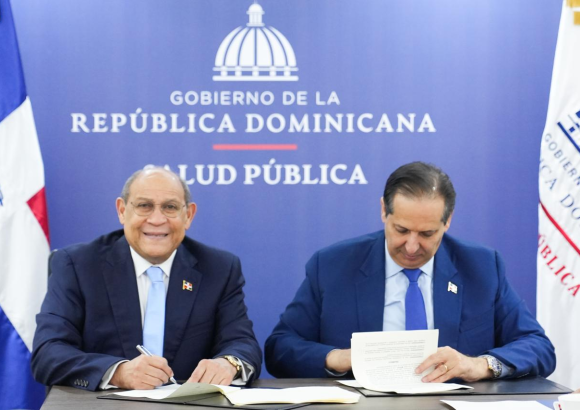
    In a move designed to shore up quality standards for clinical care across the country, two key Dominican government ministries have implemented new, more rigorous regulations governing the certification of foreign academic credentials held by local health care workers. The joint resolution was signed by the Ministry of Public Health and the Ministry of Higher Education, Science and Technology (MESCyT), with targeted provisions placing extra scrutiny on medical specialty degrees and credentials earned through online or hybrid learning pathways.

    The core goal of the updated regulatory framework is to guarantee that every health professional practicing in the Dominican Republic meets the nation’s strict benchmarks for both academic preparation and hands-on clinical skill development. Under the new rules, clear, standardized evaluation protocols have been established for all foreign credentials, with explicit requirements covering cumulative academic workload, mandatory supervised clinical experience, demonstrated professional competencies, and formal equivalency to matching domestic degree programs.

    A standout addition to the policy is the set of specific requirements tailored to degrees earned through remote or blended learning programs outside the country. This targeted attention stems from the widely recognized need for in-person practical training for medical specialties, where hands-on skill building is non-negotiable for safe patient care. Speaking on the new initiative, Health Minister Víctor Atallah and Higher Education Minister Rafael Santos emphasized that the tighter rules will strengthen systemic oversight of clinical practice, directly protect patient safety, and elevate the overall quality of medical services available to Dominican communities. The resolution went into immediate effect the moment it was signed, with both ministries set to collaborate on full implementation and ongoing enforcement of the new standards.

  • Dominican government delivers equipment to combat sargassum on Boca Chica beaches

    Dominican government delivers equipment to combat sargassum on Boca Chica beaches

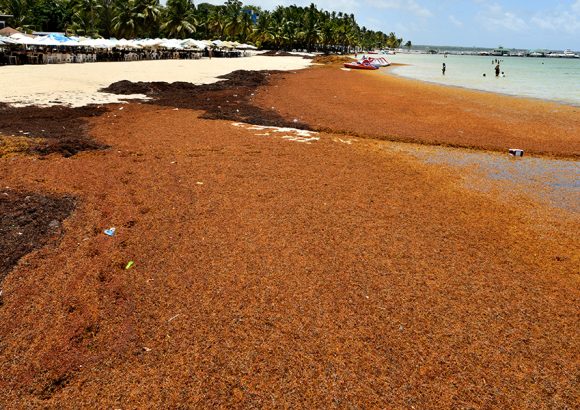
    BOCA CHICA — As seasonal sargassum blooms continue to threaten one of the Dominican Republic’s most beloved coastal destinations, the national Ministry of Tourism has handed over a fleet of 42 heavy-duty machinery units to local authorities to scale up cleanup operations against the persistent invasive algae. The new resource package, tailored to boost the region’s long-standing battle against annual sargassum surges, includes 30 cargo trucks, six heavy tractors, and six specialized beach sweepers, all designed to streamline maintenance and debris removal across Boca Chica’s popular shoreline.

    At the official handover event held this week, Tourism Minister David Collado underscored a key guiding principle behind the resource allocation: the distribution was conducted entirely outside of partisan political lines. Collado confirmed that mayors representing a range of political affiliations, including members of opposition parties, were included as beneficiaries of the new equipment. He went on to emphasize that public support for local municipal governments must center on community-wide needs rather than narrow partisan advantage, framing the sargassum response as a shared public interest that transcends political divides.

    For years, massive seasonal influxes of sargassum have stood as one of the most pressing environmental and economic threats to Boca Chica. The brown algae piles up along the territory’s beaches, ruining the scenic coastal environment that draws millions of visitors each year, crippling tourism activity, and eroding the livelihoods of hundreds of local families whose incomes are directly tied to the area’s visitor economy. With the arrival of the new heavy equipment, national authorities project that local municipal teams will see a marked improvement in their ability to respond to sargassum surges, keeping shorelines clean, accessible, and attractive for both local residents and the international tourists that power the local economy.

  • ITA Airways launches direct Rome–Santo Domingo flights

    ITA Airways launches direct Rome–Santo Domingo flights

    In a move set to reshape air travel links between the Caribbean and Southern Europe, Aeropuertos Dominicanos Siglo XXI (Aerodom), the operator of Dominican Republic’s key airport infrastructure, has praised ITA Airways’ launch of a new nonstop service connecting Rome and Santo Domingo. This strategic connectivity addition is projected to drive meaningful growth in both European inbound tourism and cross-border business travel between the two nations.

    The new route is scheduled to commence operations on November 30, initially running as one weekly flight every Monday. To meet projected demand, ITA Airways will ramp up service to two weekly rotations starting December 14, adding a Sunday flight that will remain in the schedule through March 2027. All services on this route will be operated using state-of-the-art Airbus A330neo aircraft, a modern, fuel-efficient jet configured with three cabin classes: Business, Premium Economy, and Economy, to cater to the diverse needs of leisure and business travelers alike.

    For Aerodom, the addition of Rome to Las Américas International Airport’s expanding route network delivers tangible value to the Dominican Republic’s aviation ecosystem. It further solidifies Santo Domingo’s standing as the country’s leading international entry point for global visitors and trade. Aerodom Chief Executive Officer Cyril Girot emphasized that the new connection will go beyond simple air travel: it will deepen longstanding cultural, economic, and political ties between the Dominican Republic and Italy, while also boosting the country’s appeal as a top-tier destination for both international tourism and foreign business investment.

    This new route forms a core component of ITA Airways’ broader strategic expansion plan across the Americas, as the carrier seeks to capture growing demand for transatlantic travel between Europe and the Caribbean. Industry stakeholders on both sides anticipate the service will unlock new opportunities for reciprocal tourism growth, expanded bilateral trade, and increased people-to-people cultural exchange between Italy and the Dominican Republic.

  • Dominican commission recommends new MLB-standard stadium in Santo Domingo

    Dominican commission recommends new MLB-standard stadium in Santo Domingo

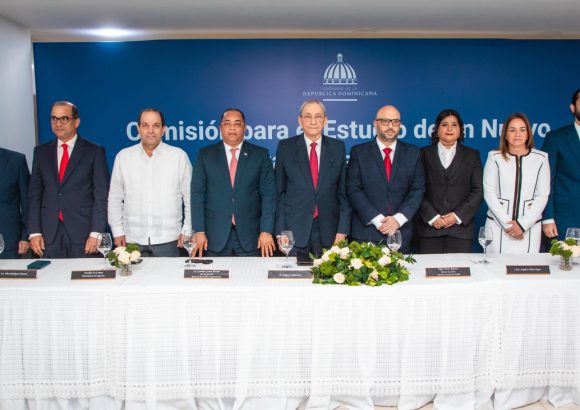
    SANTO DOMINGO — The Dominican Republic took a major step forward this week to upgrade its national baseball infrastructure, as an official government-appointed commission has formally submitted a proposal to President Luis Abinader calling for the construction of a new, Major League Baseball-compliant stadium in the capital’s Ensanche La Fe neighborhood. The planned project goes far beyond a standalone athletic venue, integrating the ballpark into a sprawling mixed-use development that combines commercial, residential, tourism and entertainment offerings to lock in long-term financial viability for the entire initiative.

  • Dominican Republic promotes premium cocoa at Brussels industry forum

    Dominican Republic promotes premium cocoa at Brussels industry forum

    The Dominican Republic has stepped onto the global stage to highlight the exceptional quality and untapped international potential of its cocoa sector, hosting the Dominican Cocoa Forum in Brussels. The event forms a key part of the inaugural Dominican Week, a cultural and trade initiative taking place across Belgium and the Netherlands, designed to open new doors for Dominican agricultural products in European markets.

    Stakeholders from across the global cocoa supply chain gathered at the forum, bringing together local Dominican cocoa producers, award-winning European chocolatiers, trade entrepreneurs, institutional trade representatives, and senior decision-makers from the European cocoa sector. The core goals of the gathering were twofold: to strengthen long-term bilateral trade relationships between the Dominican Republic and European markets, and to raise the international profile of Dominican cocoa among global buyers.

    One of the central agenda items for the forum was a detailed update on the rollout of the official “Dominican Cocoa” Geographical Indication (GI) Seal. This certification initiative is crafted to do more than just verify and protect the national origin of Dominican cocoa; it is also positioned to boost the product’s global brand recognition and elevate its market value. Event organizers stressed that the GI certification will reinforce the already strong reputation Dominican cocoa holds for consistent quality, ethical sustainable production, full supply chain traceability, and the unique flavor profiles tied to the country’s distinct growing regions.

    Joan Margarita Cedano, the Dominican Ambassador to Belgium, addressed attendees during the opening session, framing Dominican cocoa as a global gold standard for fine-flavor cocoa. She noted that the product has long been recognized for its one-of-a-kind taste characteristics and rigorous adherence to international production standards. Beyond formal speeches, the forum included a full schedule of expert-led presentations, panel discussions focused on sustainable production practices and origin certification protocols, and guided product tastings. These activities gave European buyers and large chocolate manufacturers a hands-on opportunity to experience the unique qualities that have secured the Dominican Republic’s place among the world’s top premium cocoa producing nations.

  • Abinader swears in new committee to strengthen mental health care in prisons

    Abinader swears in new committee to strengthen mental health care in prisons

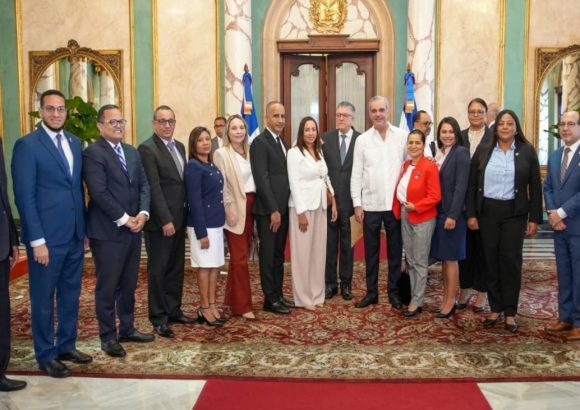
    In a formal ceremony held at Santo Domingo’s National Palace, Dominican Republic President Luis Abinader has officially inaugurated the Dominican Committee for Penitentiary Mental Health, a groundbreaking intersectoral body designed to elevate mental health care for three key groups impacted by the country’s correctional system: incarcerated people, prison staff, and the families of both groups. This launch marks the latest milestone in the Dominican Republic’s multi-year effort to overhaul and reform its national prison system.

    Speaking to attendees at the inauguration, President Abinader framed the new committee as a critical step forward in the country’s work to humanize correctional facilities and upgrade the rehabilitation services at the core of incarceration. He went on to outline the significant progress the nation has already made under its overarching National Mental Health Policy, pointing to tangible developments that include adding 105 specialized psychiatric hospital beds across the country, completing construction on new regional psychosocial care centers, and advancing plans for a dedicated national neuroscience research institute in the coming years.

    In addition to launching the new oversight committee, Abinader announced that three purpose-built, specialized mental health correctional facilities located in Azua, La Vega, and San Pedro de Macorís will welcome their first patients this very week. This rollout cements the Dominican Republic’s position as one of the first nations across Latin America and the Caribbean to build a fully integrated, comprehensive system for addressing severe mental health disorders within a correctional setting.

    The newly seated committee draws expertise and collaboration from a wide range of stakeholders, pulling together representatives from multiple government agencies, leading national universities, established healthcare institutions, and leading professional mental health associations. Its core mandates include upgrading the quality of clinical mental health care across all correctional facilities, expanding academic and clinical research on penitentiary mental health needs, increasing specialized training for correctional and medical staff working in prisons, and modernizing outdated service delivery models across the entire prison system.

    Officials involved in the initiative emphasize that its overarching priorities center on upholding the human dignity of all people connected to the correctional system, boosting long-term rehabilitation outcomes for incarcerated individuals, strengthening broader community public safety, and guaranteeing consistent access to specialized mental health support for both inmates and the correctional staff who supervise and care for them. Moving forward, the committee also plans to launch two additional long-term projects: a dedicated Penitentiary Health Teaching Center to train the next generation of care providers, and a national centralized research repository that will collect data to guide future evidence-based policy changes for the prison system.