The Dominican Republic’s Ministry of Foreign Affairs has confirmed the passing of Ricardo Tomás Polanco Reinoso, the nation’s sitting ambassador to Guatemala, in an official statement released this week. Having stepped into the diplomatic post in January 2025, Polanco Reinoso died on the evening of June 4 following unexpected health complications, according to the government ministry. In the announcement, the Ministry of Foreign Affairs extended its deepest condolences to the late ambassador’s family, close friends, professional colleagues, and the broader international diplomatic community. The statement formally acknowledged Polanco Reinoso’s years of dedicated service and unwavering commitment to advancing the Dominican Republic’s interests and diplomatic standing abroad. As of Wednesday, funeral rites for the late diplomat are underway at Jardín Memorial Cemetery, situated along Jacobo Majluta Avenue in the nation’s capital of Santo Domingo. The ministry has once again affirmed its full solidarity with Polanco Reinoso’s family and loved ones, offering support to them throughout this period of grief.
标签: Dominican Republic
多米尼加共和国
-
Dominican Republic to host UNDP Democracy and Development Report Launch
Next month, a landmark United Nations Development Programme (UNDP) regional analysis focused on democratic resilience will be unveiled in the Dominican capital of Santo Domingo. Scheduled for June 8 at the country’s Ministry of Foreign Affairs, the launch event of the report *Democracies under Pressure: Reimagining the Futures of Democracy and Development in Latin America and the Caribbean* will gather a diverse cross-section of key stakeholders, including senior national government officials, representatives of international bodies, and leading development practitioners from across the hemisphere.
The event will feature opening and keynote participation from some of the highest ranking figures in both the Dominican government and UNDP’s regional leadership. Dominican President Luis Abinader and Foreign Minister Roberto Álvarez will join UNDP Regional Director Michelle Muschett and UNDP Chief Economist Almudena Fernández for the presentation, with independent analyst Ana María Díaz set to moderate the post-presentation discussion that will follow the official launch.
The 2024 report dives deep into a cascade of interconnected challenges that have put growing strain on democratic systems across every corner of Latin America and the Caribbean. Its research covers six of the most pressing stressors testing regional democracies today: deepening political polarization, the rapid spread of harmful disinformation across public discourse, the uneven impacts of widespread digital transformation, stubborn systemic social inequality, the accelerating fallout of climate change, and ongoing large-scale migration movements. Beyond identifying these growing pressures, the UNDP analysis also puts forward a set of actionable, evidence-based strategies designed to strengthen democratic institutions, boost the operational capacity of state bodies, and foster more inclusive, resilient, and socially cohesive communities across the entire region.
-
Guyana expands agricultural cooperation with Dominican Republic
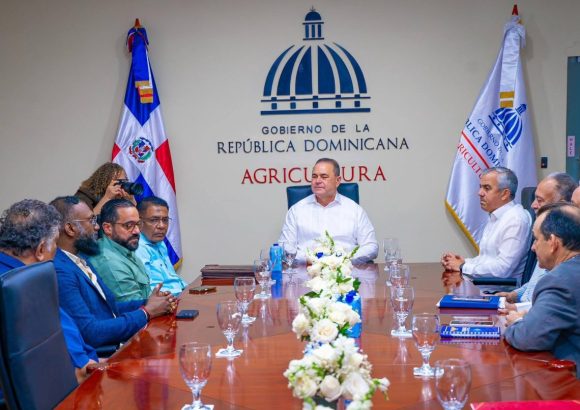
A new chapter of cross-border agricultural collaboration is opening between Guyana and the Dominican Republic, as Guyana’s top agriculture official travels to the Caribbean nation to deepen ties and unlock new joint development opportunities. Zulfikar Mustapha, Guyana’s Agriculture Minister, launched the official visit to Santo Domingo, with a clear agenda of advancing shared agricultural priorities between the two governments.
During his stay in the Dominican capital, Mustapha held formal, in-depth talks with Francisco Oliverio Espaillat Bencosme, his counterpart from the Dominican Republic. The pair centered their discussions on a series of actionable initiatives designed to ramp up overall agricultural output and raise sector-wide productivity across both nations. Core topics of the dialogue included structured technical cooperation, cross-border transfer of climate-smart and modern agricultural technologies, exchange of evidence-based knowledge, and collaborative strategies to add greater value to locally produced agricultural goods. Both leaders also assessed targeted pathways to strengthen partnership in key sub-sectors, with the ultimate goal of delivering tangible benefits to smallholder and commercial farmers as well as agricultural industries in both Guyana and the Dominican Republic.
Beyond discussions with sitting government officials, Mustapha also met with Hipólito Mejía, the former president of the Dominican Republic, who has long-standing ties to the Dominican agricultural sector. During that closed meeting, the two parties exchanged insights on the long-term development trajectory of Guyana’s agricultural industry, and explored mutually beneficial opportunities to scale up production and expand sector diversification.
This visit is not an isolated diplomatic engagement, but rather a key component of the broader outward-focused cooperation agenda advanced by Guyana’s sitting President Irfaan Ali. Ali’s administration has prioritized expanding bilateral collaboration across agriculture, agricultural product processing, innovative technology adoption, and institutional capacity building, positioning this visit as a critical step forward in delivering on that national strategy.
-
Duartian Institute honors Ramón Matías Mella on 162nd anniversary of his death
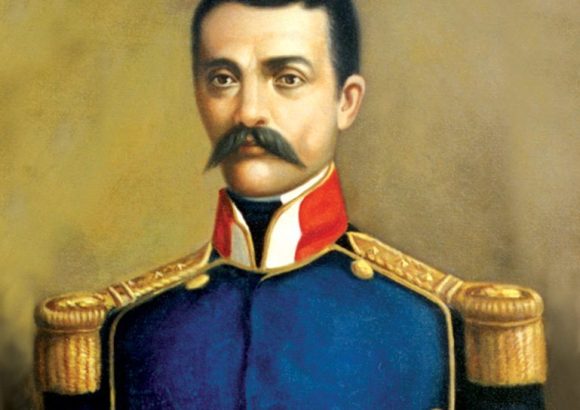
In a solemn ceremony held at the Altar of the Fatherland in the heart of Santo Domingo, the Duartian Institute gathered this week to pay tribute to one of the Dominican Republic’s most revered founding fathers, Ramón Matías Mella, marking the 162nd anniversary of his passing. The floral commemoration was organized to celebrate and preserve Mella’s irreplaceable contributions to Dominican sovereignty, from his defining work in the push for national independence to his strategic leadership during the Restoration War against Spanish annexation.
Speaking at the memorial event, Duartian Institute President Wilson Gómez Ramírez centered his remarks on Mella’s extraordinary courage, strategic acumen, and unwavering commitment to the Dominican people. He emphasized that when movement founder Juan Pablo Duarte was forced to leave the country amid rising political pressure, Mella stepped into a critical leadership role to keep the Trinitarian independence movement advancing toward its goal of sovereign statehood. Gómez Ramírez also recalled one of Mella’s most important, often understated diplomatic achievements: his mission to secure backing from Charles Hérard, the liberal Haitian leader whose support proved to be a foundational turning point for the Dominican independence project.
Beyond his political and military leadership, the Institute highlighted the lasting institutional and symbolic contributions Mella left to the nation. During the Restoration War, Mella compiled and wrote the Guerrilla Warfare Manual, a text that shaped Dominican resistance efforts against occupying forces and remains a key document in the country’s military history. Perhaps his most iconic act came at Puerta de la Misericordia, where his historic firing of the trabucazo (blunderbuss) served as the official signal that the fight for Dominican independence had begun.
Event speakers also took a moment to reflect on a poignant, little-known chapter of Mella’s life: his final meeting with Duarte in 1864, as his health declined rapidly. In that emotional encounter, the dying patriot made one last request: that he be buried wrapped in the flag of the independent nation he had fought so hard to establish. Today’s tribute organizers stressed that Mella’s legacy remains deeply woven into the national identity of the Dominican Republic, and that annual commemorations like this are critical to ensuring new generations understand the sacrifice and vision that built the modern Dominican state.
-
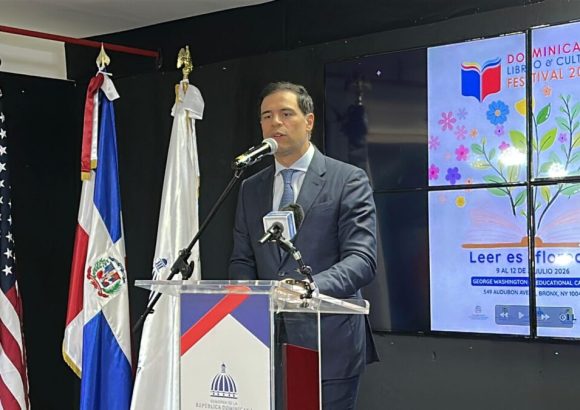
New York to host 2026 Dominican Book and Culture Festival
A landmark celebration of Dominican art, literature and identity is set to take over New York City next summer, as the Dominican Republic prepares to host the 2026 Dominican Book and Culture Festival from July 10 to 12. Convening a diverse cross-section of creative minds, industry builders and cultural stewards from both the Dominican diaspora and the broader global community, the three-day event will be hosted at the George Washington Educational Campus, located in the heart of Washington Heights – a neighborhood long rooted in Dominican American life. Overseeing the festival is Dominican Republic Culture Minister Roberto Ángel Salcedo, who has spearheaded efforts to expand the nation’s cultural outreach to communities abroad.
Rey Andújar, a key organizer of the gathering, outlined that the festival’s multidisciplinary programming centers on four core pillars: literature, visual and performing arts, entrepreneurship, and the exploration of shared cultural identity. Under the unifying official theme “reading is flourishing,” the event sets out to achieve two interconnected goals: shine a well-deserved spotlight on the breadth of Dominican talent and growing cultural industries based in the United States, while forging stronger, more lasting bonds between the Dominican government and its vast community of citizens and descendants living overseas.
Attendees will have access to a packed schedule of immersive activities, ranging from intimate literary panels and in-person author readings to a bustling open-air artisan bazaar showcasing handcrafted traditional goods. A dedicated pavilion highlighting women-owned Dominican businesses will offer networking and exhibition opportunities for female entrepreneurs, alongside curated fashion exhibitions highlighting contemporary Dominican design and vibrant live cultural performances that bring folk and modern traditions to life. Delegations of published writers from across the Caribbean, Europe and the United States – including contingents from the Dominican Republic, Puerto Rico, Spain and multiple U.S. regions – will travel to New York to take part in the festival’s programming.
In a nod to Dominican history and national legacy, special curated exhibits and presentations will honor three iconic national figures: founding father Juan Pablo Duarte, his activist sister Rosa Duarte, and pioneering educator Ercilia Pepín, ensuring their contributions to Dominican identity and progress are centered for new generations of attendees.
Organizers have emphasized that engaging younger members of the diaspora is a top priority for the 2026 festival. To that end, a full slate of age-specific literary and educational activities has been designed specifically for children and young people, with the dual goal of fostering a love of reading and creative expression while helping younger attendees connect to their Dominican cultural heritage.
-
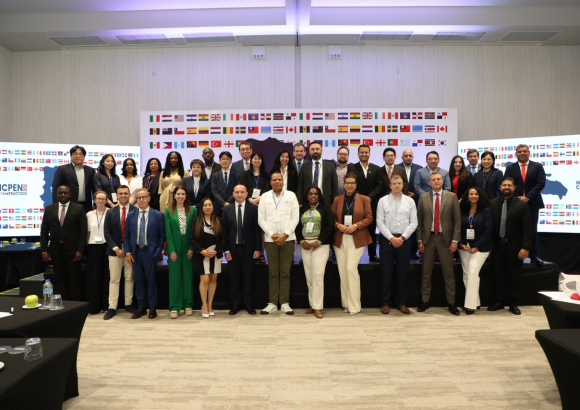
Dominican Republic hands over ICPEN presidency to Georgia
PUNTA CANA — A pivotal moment for global consumer advocacy unfolded this week as the Dominican Republic formally completed its tenure as president of the International Consumer Protection and Enforcement Network (ICPEN), passing the mantle of global leadership to Georgia during the closing plenary of the network’s annual assembly. The high-profile gathering drew regulatory delegates and consumer protection experts from close to 50 member nations, gathering to review global progress and set priorities for the year ahead.
The formal handover ceremony saw Eddy Alcántara, who led the global network as ICPEN president throughout the 2025-2026 term, officially transfer leadership responsibilities to his successor Irakli Lekvinadze from Georgia. In his farewell address to the assembly, Alcántara outlined the signature achievements advanced under Dominican leadership, highlighting three core areas of progress: deepened cross-border collaboration between consumer protection bodies, enhanced coordinated enforcement action between national regulatory agencies, and targeted new initiatives designed to shield consumers navigating the fast-evolving digital and cross-border commercial landscapes.
Alcántara explained that the Dominican administration prioritized elevating shared global best practices during its tenure, working to create conditions for fairer, more transparent international markets and strengthen uniform enforcement of existing consumer protection regulations across national borders. Beyond policy gains, he emphasized that leading the 50-plus member global network has significantly boosted the Dominican Republic’s standing in international regulatory circles, while reaffirming the nation’s longstanding commitment to upholding fundamental consumer rights for both domestic and cross-border shoppers.
Beyond the leadership transition, this year’s annual assembly provided a critical forum for member states to address the most pressing challenges facing consumers across the globe. Delegates held in-depth discussions on high-priority topics ranging from modern e-commerce regulation and crackdowns on deceptive cross-border business practices to global product safety standards and the consumer risks and opportunities posed by emerging technologies. In a show of widespread approval for the Dominican Republic’s two-year leadership, delegates from multiple member nations publicly praised its proactive policy agenda, and many have already signaled their intention to adopt the consumer protection frameworks developed during its tenure, pointing to the proven positive impacts of those initiatives both in the Dominican Republic and in pilot programs across other member states.
-
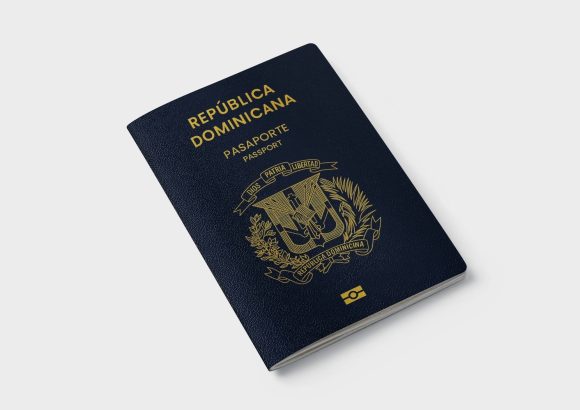
Dominican electronic passport wins international award for security and innovation
In a landmark win that underscores the Caribbean nation’s progress in digital identity innovation, the Dominican Republic’s next-generation electronic passport has secured international recognition by taking home the High Security Printing Latin America Award in the competitive Best New ID/Travel Document Series category. The honor was awarded during the annual High Security Printing Latin America Conference, the most influential regional gathering focused exclusively on cutting-edge security technologies for government-issued official documents.
A panel of independent industry judges rigorously assessed hundreds of entries across multiple categories, scrutinizing each submission on a range of critical metrics. For the Dominican electronic passport, reviewers highlighted its forward-thinking user-centric design, layered combination of advanced electronic and physical anti-counterfeiting features, cutting-edge identity protection frameworks, and unwavering adherence to the strictest global benchmarks for document authentication and fraud mitigation. No other entry in the category matched the passport’s combination of innovation and security compliance, judges noted.
The award was formally accepted on behalf of the relevant stakeholders by Lorenzo Ramírez, the Dominican Republic’s Passport Director, and Daniel Ureña, president of Midas, the local partner of the international consortium that developed the passport’s integrated security solutions. In his acceptance remarks, Ramírez stressed that the prestigious distinction does more than honor the passport itself—it serves as independent validation of the Dominican government’s years of targeted investment and strategic efforts to modernize its national identity and travel document systems.
Ramírez added that the award officially confirms the Dominican Republic now produces and issues a travel document that meets the highest world-class security standards, positioning the country among global leaders in secure electronic travel documentation. Beyond the technical recognition, industry analysts note the honor will reinforce the Dominican Republic’s standing as a trailblazer for secure identity documents across the Latin America and Caribbean region, while also boosting global trust and confidence in the integrity of the Dominican electronic passport among immigration authorities and international partners worldwide.
-

Abinader enacts Alertas RD Law to accelerate search for missing persons
In a significant step forward for citizen protection and public safety in the Dominican Republic, President Luis Abinader has signed Law 25-26 into effect, formally establishing the National Alert for the Search for Missing Persons, widely known as Alertas RD. This newly launched integrated system is engineered to deliver fast, well-coordinated responses to cases of missing people across every region of the country.
The new legislation lays out a clear legal foundation that enables immediate, widespread sharing of information about individuals who have been reported missing, by uniting the efforts of three key stakeholder groups: national and local government agencies, print, broadcast and digital media outlets, and civil society organizations focused on public safety. Per the requirements outlined in the statute, the Dominican National Police and the Public Ministry are mandated to jointly issue a public alert no later than 24 hours after a disappearance report is filed or a case of imminent danger is confirmed.
To address the unique risks facing different vulnerable groups, Alertas RD operates through four targeted, specialized alert classifications. The Amber Alert category is reserved for missing or abducted children and teenagers, while the Silver Alert designation applies to missing adults over the age of 65. People living with physical or cognitive disabilities are covered under the Blue Alert framework, and Pink Alerts are issued for women facing immediate harm linked to gender-based violence or human trafficking. Once activated, alerts are distributed across a wide network of channels, including major social media platforms, traditional broadcast and print media, ports, airports and bus terminals, public digital platforms, and official police bulletins posted across communities.
Beyond the alert dissemination framework, Law 25-26 also formally establishes the National Registry of Missing Persons, a centralized national database overseen by the National Police. This repository will store critical information including up-to-date photographs of missing individuals, detailed physical descriptions, relevant medical data, and real-time updates on the status of each search, all while putting strict protocols in place to protect the personal privacy rights of everyone included in the system. The law also creates a permanent National Council for the Search for Missing Persons, which is tasked with overseeing the rollout of the new system and facilitating cross-agency coordination between key government institutions involved in search efforts.
To ensure accountability for public servants involved in the process, the new legislation outlines formal penalties for government officials who fail to properly report disappearance cases or intentionally obstruct the standardized search protocols laid out in the law. With the official enactment of Alertas RD, Dominican national officials have outlined clear core goals: to overall boost citizen security across the country, streamline and improve the effectiveness of missing person search operations, and expand protective measures for the vulnerable populations most at risk of disappearance and harm.
-
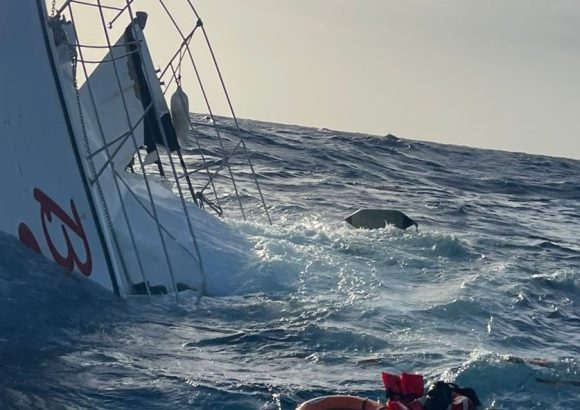
Dominican Navy rescues two foreigners from sinking vessel in Atlantic Ocean
A dramatic high-seas rescue operation off the northern Atlantic coast of the Dominican Republic has ended in success, with two foreign citizens pulled to safety after their recreational vessel suffered catastrophic mechanical failure and began flooding. The 18-meter leisure craft, identified as the *CAICOS CAT*, encountered sudden mechanical trouble roughly 23 nautical miles off the Dominican coast late last week, leaving its two-person crew stranded as water rapidly filled the vessel’s hull.
The emergency response was triggered immediately after the Maritime Operations Center received an automated distress signal from the stricken craft, prompting officials to quickly mobilize a specialized Dominican Navy rescue unit to the reported coordinates. When the naval team arrived on scene, they found the *CAICOS CAT* already partially submerged, with the two crew members clinging to the boat’s raised stern waiting for assistance. The navy personnel executed a swift evacuation, transferring both men safely to their patrol craft without incident.
Both survivors, confirmed to be citizens of the neighboring Turks and Caicos Islands, were then transported back to a coastal port in the Dominican Republic, where waiting medical teams from the country’s National Emergency and Security System 9-1-1 conducted full health evaluations. In a post-rescue briefing, government authorities confirmed that both crew members had escaped the ordeal unharmed and remained in stable condition, with no requiring hospital admission.
Following the successful operation, Dominican Navy Commander General Juan B. Crisóstomo Martínez used the incident to issue a public safety reminder to all mariners operating in Dominican territorial waters. He emphasized that all vessel operators must complete comprehensive mechanical inspections of their craft before setting out, ensure they carry a full complement of certified safety equipment including life rafts, distress beacons and personal flotation devices, and always file a detailed navigation plan with local authorities before departing. This simple preparation, he noted, can drastically reduce response times in an emergency and prevent avoidable loss of life at sea.
-

Dominican Senate approves US$600 million for climate action and Punta Cana water infrastructure
Santo Domingo – The upper legislative chamber of the Dominican Republic has given formal approval to two landmark international financing agreements that together commit $600 million to upgrade climate resilience and expand essential water and sanitation systems in Punta Cana-Bávaro, the nation’s fastest-expanding tourism hub.
The first of the two funding packages, a $200 million loan arranged through the Andean Development Corporation (CAF), is earmarked for direct budgetary support to national government programs. These initiatives focus on strengthening national climate action policy frameworks and boosting the country’s adaptive capacity to withstand the accelerating impacts of global climate change, from extreme weather events to shifting precipitation patterns.
The second agreement, valued at $400 million, was approved specifically for the Dominican Republic’s National Institute of Drinking Water and Sewerage (INAPA). Capital for this project comes from the Inter-American Development Bank (IDB), and it will advance the third phase of the Punta Cana-Bávaro Sanitation and Wastewater Reuse Program based in La Altagracia province.
Per the terms of the project design, the infrastructure upgrade targets three core outcomes: lifting community public health outcomes, safeguarding the region’s critical underground aquifer system from contamination, and expanding reliable access to potable drinking water for residents and visitors across the eastern portion of the Dominican Republic. Beyond these immediate benefits, development leaders project the investment will underpin the long-term economic and environmental sustainability of Punta Cana, which ranks among the top tourism destinations across the Caribbean, drawing millions of international visitors annually.
This major injection of infrastructure funding aligns with the Dominican government’s ongoing strategic priorities, which center on modernizing core public infrastructure and embedding environmental sustainability into growth planning to keep pace with surging tourism demand and rapid population growth in the eastern corridor of the country.
Now that the Senate has signed off on the pacts, both financing agreements will next be transmitted to President Luis Abinader and the national Executive Branch to undergo final review and formal enactment into law.