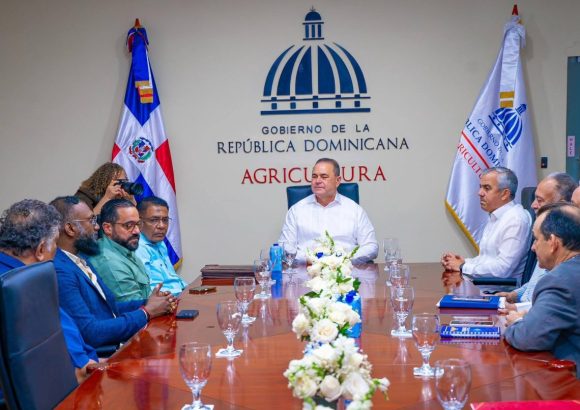
A new chapter of cross-border agricultural collaboration is opening between Guyana and the Dominican Republic, as Guyana’s top agriculture official travels to the Caribbean nation to deepen ties and unlock new joint development opportunities. Zulfikar Mustapha, Guyana’s Agriculture Minister, launched the official visit to Santo Domingo, with a clear agenda of advancing shared agricultural priorities between the two governments.
During his stay in the Dominican capital, Mustapha held formal, in-depth talks with Francisco Oliverio Espaillat Bencosme, his counterpart from the Dominican Republic. The pair centered their discussions on a series of actionable initiatives designed to ramp up overall agricultural output and raise sector-wide productivity across both nations. Core topics of the dialogue included structured technical cooperation, cross-border transfer of climate-smart and modern agricultural technologies, exchange of evidence-based knowledge, and collaborative strategies to add greater value to locally produced agricultural goods. Both leaders also assessed targeted pathways to strengthen partnership in key sub-sectors, with the ultimate goal of delivering tangible benefits to smallholder and commercial farmers as well as agricultural industries in both Guyana and the Dominican Republic.
Beyond discussions with sitting government officials, Mustapha also met with Hipólito Mejía, the former president of the Dominican Republic, who has long-standing ties to the Dominican agricultural sector. During that closed meeting, the two parties exchanged insights on the long-term development trajectory of Guyana’s agricultural industry, and explored mutually beneficial opportunities to scale up production and expand sector diversification.
This visit is not an isolated diplomatic engagement, but rather a key component of the broader outward-focused cooperation agenda advanced by Guyana’s sitting President Irfaan Ali. Ali’s administration has prioritized expanding bilateral collaboration across agriculture, agricultural product processing, innovative technology adoption, and institutional capacity building, positioning this visit as a critical step forward in delivering on that national strategy.