标签: Dominican Republic

多米尼加共和国

  • Documentary series celebrates Vela Zanetti’s legacy in Santo Domingo

    Documentary series celebrates Vela Zanetti’s legacy in Santo Domingo

    A one-of-a-kind cultural event celebrating the decades-long artistic influence of legendary Spanish muralist Vela Zanetti on the Dominican Republic is set to open its doors to the public later this month, hosted by the Meritorious and Respectable Lodge Cradle of America No. 2 in Santo Domingo. The centerpiece of the gathering is the premiere of a new documentary series, *Vela Zanetti in the Dominican Republic*, a deeply researched project directed by award-winning Dominican filmmaker and historian Manolo Rodríguez Vidal that unpacks the artist’s life, creative output, and enduring cultural imprint during his decades living and working in the Caribbean nation.

    Vela Zanetti first arrived in the Dominican Republic as a political exile in the years following the Spanish Civil War, and he quickly embedded himself into the country’s emerging visual arts scene. During his early years in Santo Domingo, he created a collection of large-scale murals that remain preserved to this day within the walls of the Masonic temple located in the city’s iconic Colonial City neighborhood. This upcoming event is designed to bring these underappreciated works back into the public spotlight, pairing screenings of the documentary with an exclusive guided walking tour of the original murals.

    The event’s schedule kicks off with a screening of selected episodes from the new documentary series, which traces how Vela Zanetti’s distinct artistic style and philosophical approach reshaped the trajectory of Dominican visual art after his arrival. Following the screening, attendees will get rare up-close access to the historic murals, which are widely regarded by art scholars as a core part of the Dominican Republic’s national artistic heritage.

    In comments shared ahead of the event, director Rodríguez Vidal explained the core mission behind the initiative: beyond simply showcasing Vela Zanetti’s creative work, the project aims to safeguard collective historical memory, amplify the muralist’s lasting contributions to Dominican art, and introduce his legacy of symbolic storytelling, commitment to universal human values, and focus on social justice to younger generations of audiences.

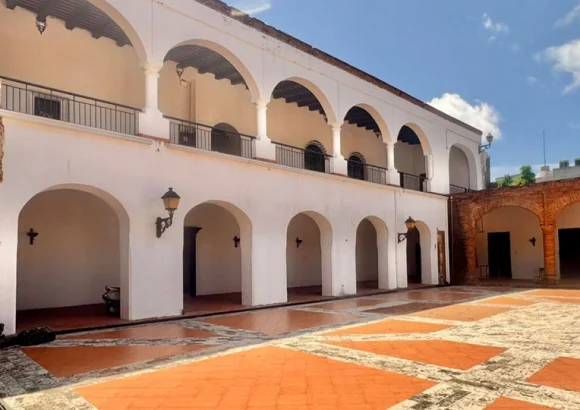
    The event will be held on the evening of June 24, beginning at 7:00 p.m., at the Cloister of Cradle of America Lodge No. 2, located on José Reyes Street in Santo Domingo’s historic Colonial Zone. Organizers confirmed that admission will be completely free and open to all interested members of the public, with entry granted on a first-come, first-served basis until the venue reaches full capacity.

    For art lovers, history researchers, students, and casual attendees alike, this gathering offers a rare chance to engage with a pivotal, often overlooked chapter of Dominican cultural history. Unlike typical gallery exhibitions or screenings, the event combines the narrative depth of a documentary with the immersive experience of viewing original works of art in person, giving audiences a comprehensive understanding of Vela Zanetti’s outsized impact on the country’s cultural identity.


  • Tax reform and the future of Dominican venture capital formation

    Tax reform and the future of Dominican venture capital formation

    As policymakers in the Dominican Republic navigate heated debates over a controversial proposed tax reform, one crucial conversation remains largely absent from the national discourse, according to regional innovation leader Jonathan Joel Mentor. The reform’s most talked-about provision centers on re-evaluating long-standing, sector-specific tax incentives that have guided decades of investment decisions, with government officials pushing for all existing tax breaks to prove their worth through measurable economic contributions. Mentor calls this scrutiny healthy and long overdue, noting that every public incentive should be held accountable to the simple standard of delivering more economic opportunity than it costs taxpayers. Yet in his view, while the government is asking the right questions about legacy incentives, it is missing a far more consequential piece of the puzzle: building the policy and structural foundation to finance the country’s next generation of economic growth.

    The current public debate has been almost entirely focused on fiscal sustainability, revenue targets, and the fate of existing industry exemptions. What is missing, Mentor argues, is a serious national discussion about venture capital formation, startup enabling infrastructure, innovation investment, intellectual property protections, and the systemic changes needed to turn the Dominican Republic into a global magnet for high-growth scalable companies. This gap is not a trivial oversight, he emphasizes: governments do not generate lasting wealth on their own; they create the conditions that allow private entrepreneurs and investors to build wealth. The companies that will expand the country’s tax base 20 years from now have not even been founded yet, so policy must prioritize building the ecosystem that will nurture them today. If policymakers are willing to audit the engines of past growth, they should be equally committed to examining the engines that will drive future prosperity, he adds.

    After a decade working with hundreds of entrepreneurs across the Dominican Republic, Latin America, and the Caribbean, Mentor highlights a core challenge that often goes unrecognized in policy circles. It is not a lack of entrepreneurial ambition across the country – he has met countless founders building companies across software, logistics, fintech, education, healthcare, and artificial intelligence who possess the creativity and resilience global investors seek. Instead, the gap lies in a shortage of investable companies: institutional venture funds, family offices, and development finance institutions do not invest based on raw ambition alone. They evaluate governance frameworks, scalability potential, market size, management maturity, and the likelihood of delivering venture-scale returns. The true bottleneck for Dominican innovation is not a shortage of entrepreneurs, it is a shortage of an enabling ecosystem that supports capital formation.

    Mentor notes that this gap also represents a unique, underappreciated opportunity for the Dominican Republic. Comparisons to established innovation hubs like Silicon Valley or Austin are unhelpful for strategic planning, he argues; the country does not need to become a smaller copy of these regions. Instead, it has the chance to claim a position no Caribbean nation currently holds: the region’s first recognized hub for venture capital formation and innovation-driven investment. The absence of a dominant regional venture hub is not a weakness, it is an open invitation.

    The Dominican Republic already holds several underutilized advantages that appeal to global investors and mobile talent, Mentor points out. It offers far greater capital efficiency than major North American startup ecosystems, sits at a strategic crossroads between North America, Latin America, and the Caribbean, and boasts a growing bilingual workforce that aligns with North American business hours. It also combines strong digital connectivity, high quality of life, and easy accessibility that is increasingly attractive in an era where top talent can live and work anywhere. Today, talent chooses where to live before choosing where to build companies, and investment follows that talent. Already, growing initiatives like the Digital Nomad Summit Santo Domingo have drawn a wave of global founders, investors, and skilled professionals to the country – talent is already arriving, even before policy has adapted to welcome it, and history shows capital rarely lags far behind, he notes.

    Mentor stresses that his argument is not a rejection of tax reform, nor a defense of every legacy incentive currently under review. Instead, he calls on policymakers and national stakeholders to broaden the scope of the conversation. Fiscal policy, sustainable public finances, and tax revenues are all critically important, but they are outcomes of a growing economy, not substitutes for growing the economy. The tax reform debate will eventually wrap up, new rules will take effect, and headlines will move on, but the question of how to build the foundation for future growth will remain. In a decade, will the Dominican Republic be known as a country that optimized its tax code to incrementally boost government revenue, or as a country that built the Caribbean’s leading venture capital hub that spawned entirely new industries? One outcome manages existing economic activity; the other generates new, transformative growth. That difference will shape where the next generation of Caribbean wealth is created, and the question of how to pursue that future is far too important to leave out of the national conversation.

  • Legal dispute over Dhario Primero’s music catalog returns to U.S. courts

    Legal dispute over Dhario Primero’s music catalog returns to U.S. courts

    A long-simmering family feud over the iconic musical legacy of celebrated Dominican singer-songwriter Dhario Primero has erupted into a fresh legal confrontation in the United States, bringing unresolved questions of ownership, administrative control, and rights to his expansive work catalog back into the courtroom.

    At the heart of the new dispute is a fractured disagreement among the artist’s nine children over which faction holds legitimate legal power to oversee his decades of musical output. This latest court filing comes months after a January ruling that favored a group led by Primero’s three eldest children—Ranphys Ortiz, Dario Jr. Ortiz, and Raphael Primero—who operate through their registered entity RR Entertainment Music Corp. That January decision dismissed a prior lawsuit brought against the eldest siblings’ group, clearing the way for their claim to catalog management.

    Now, the conflict has been revived with new legal claims submitted to a U.S. federal court, with a formal hearing scheduled for June 18. During that upcoming session, justices will begin evaluating competing arguments and evidence from both sides, centering on who holds legitimate administrative and intellectual property rights to the Primero catalog.

    The group led by the eldest siblings has repeatedly reaffirmed its commitment to protecting what it frames as the integrity of their father’s legacy. Their legal standing, they argue, derives directly from a 2008 arrangement orchestrated by Dhario Primero himself, which laid out formal terms for the transfer and ongoing management of his musical works.

    In an official statement, RR Entertainment Music Corp. emphasized that all valid authorizations, commercial transactions, and official communications related to the Primero catalog must originate directly from the corporation to be considered legally binding. The company also confirmed that the same centralized administrative framework it uses for Primero’s catalog also governs the musical works of fellow prominent Dominican composer Rafael Américo Reynoso.

    Per the corporation’s update, all official records and documentation related to Dhario Primero’s career and works are hosted exclusively on the artist’s official website. The company also clarified that as the legal process unfolds, Primero’s full discography remains off major digital streaming platforms, and no verified, official social media accounts currently operate under the artist’s name.

    As U.S. court proceedings move toward a resolution, the outcome of this dispute will carry lasting stakes: it will formally determine which party will have the final authority to manage, preserve, and share one of the most culturally significant musical legacies in the Dominican Republic’s history.

  • Spanish court summons executive behind Pedernales airport construction

    Spanish court summons executive behind Pedernales airport construction

    A high-profile legal development has unfolded in Spain, where José Manuel Entrecanales, the long-serving chairman of major construction and infrastructure giant Acciona, has been ordered to make a personal court appearance in Pamplona on September 4. The judicial action comes after Entrecanales skipped two scheduled hearings for a parliamentary investigative committee tasked with examining public contract awards in the region of Navarre.

    The sequence of events began earlier this year, when Entrecanales was first called to give evidence before the Navarre Parliament’s investigative committee on January 20, and again on February 9. On both occasions, he declined to attend in person. Instead, Acciona dispatched two senior executives — Joaquín Mollinedo, the firm’s Director of Institutional Relations, Communication and Brand, and José Julio Figueroa — to stand in for its leader. The company also submitted formal written documentation challenging the legal validity of the committee’s summons to Entrecanales, arguing it did not align with existing regulations governing parliamentary investigations.

    Parliamentary officials rejected this position, however, explicitly warning Entrecanales that neither written submissions nor proxy appearances by company representatives would satisfy the requirement for his personal testimony. After the committee concluded its work, the Bureau of the Parliament of Navarre voted in March to refer the entire case to public prosecutors, citing Entrecanales’ failure to comply with the official parliamentary summons.

    Prosecutors have since upheld the challenge to Entrecanales’ absence, concluding that there was no legally sufficient justification for his repeated non-appearance. That decision cleared the way for formal judicial proceedings to move forward, resulting in the September 4 court summons issued this week.

    The latest court order arrives as Acciona continues to face heightened scrutiny across Spain. The company has already been named in ongoing investigations led by the Central Operational Unit (UCO) of the Spanish Civil Guard, though no formal charges have been announced in connection to that probe. Beyond its domestic operations, Acciona is also the lead contractor for one of the Dominican Republic’s most high-profile infrastructure projects: the construction of a new international airport in Cabo Rojo, Pedernales, a core component of the Caribbean nation’s flagship national tourism development strategy.

    The upcoming September hearing will focus on determining whether Entrecanales’ non-compliance warrants any legal penalties, marking a key milestone in a case that underscores the tension between corporate leadership obligations and parliamentary oversight of public contracting.

  • Dominican Republic hosts regional culture ministers for CECC/SICA Meeting

    Dominican Republic hosts regional culture ministers for CECC/SICA Meeting

    On Tuesday, the capital city of Santo Domingo opened its doors to top cultural leaders from across Central America and the Caribbean, kicking off the 39th Ordinary Meeting of the Council of Ministers of Culture under the Central American Educational and Cultural Coordination of the Central American Integration System (CECC/SICA). The opening ceremony was led by Dominican Republic’s Culture Minister Roberto Ángel Salcedo, marking the start of days of targeted dialogue and collaborative planning focused on advancing regional cultural progress.

    This high-level gathering brings together senior cultural decision-makers from all CECC/SICA member states, with a core mission to deepen cross-border partnerships and move forward a shared strategic agenda centered on three key pillars: inclusive cultural development, systematic preservation of shared and national heritage, and sustainable expansion of regional creative economies. Unlike informal regional exchanges, this meeting is designed to turn collective discussion into actionable cooperation that addresses shared challenges facing cultural sectors across Central America and the Caribbean.

    In his opening address to delegates, Minister Salcedo underscored the critical role of cross-national collaboration in positioning culture as a core driver of three foundational regional goals: long-term sustainable development, deeper regional integration, and stronger social cohesion. He stressed that no single nation in the region can effectively address evolving challenges in the cultural space alone, making shared experience exchange and joint problem-solving essential to building a more resilient, vibrant cultural ecosystem across the region.

    Organizers have structured the meeting’s agenda around six priority areas identified through prior consultations with member states. These priorities include expanding and protecting the legal and economic rights of artists and cultural workers, developing more robust frameworks for safeguarding intangible and tangible cultural heritage, upgrading national cultural data and statistics systems to better track sector impact, advancing the decentralization of cultural management to expand public access to cultural resources, addressing emerging issues of digital rights and artificial intelligence’s impact on copyright, and strengthening the competitiveness of regional cultural and creative industries.

    Delegates from Belize, Costa Rica, El Salvador, Guatemala, Honduras, and Panama took active part in the first day of deliberations, each presenting successful local initiatives and public policies that have advanced goals ranging from supporting working artists to protecting centuries-old cultural traditions, and improving the accuracy and accessibility of national cultural information systems.

    Two widely cited initiatives stood out during the sharing session: Costa Rica’s targeted legislative and policy work to strengthen legal protections for cultural workers facing labor and economic insecurity, and the Dominican Republic’s innovative ARTSECURE project, which was created to provide targeted support and professional protection for working artists and cultural managers. Beyond these programs, delegations exchanged actionable insights on heritage preservation practices and methods for building cultural statistics frameworks that accurately measure the cultural sector’s full contribution to national economic growth and social progress.

    In addition to sharing existing successful programs, the Dominican delegation put forward new proposals for expanded regional cooperation in cultural innovation. Delegates also held preliminary discussions on upcoming joint initiatives tied to the Ibermedia Program, a leading fund for Ibero-American audiovisual production, and the XII Ibero-American Museum Meeting, which will bring together museum leaders from across the region next year.

    By the close of the meeting, delegates are expected to vote on and approve a series of binding cooperation agreements aimed at strengthening cultural ties across the region. These agreements will also establish permanent, ongoing collaboration mechanisms for CECC/SICA member countries, reaffirming the regional bloc’s shared commitment to positioning culture as a foundational tool for sustainable development, deeper regional integration, and the preservation of a shared regional identity.

  • Abinader seeks reform to harmonize law enforcement dates in Greater Santo Domingo

    Abinader seeks reform to harmonize law enforcement dates in Greater Santo Domingo

    In a move to bring the Dominican Republic’s core legal framework in line with modern social and technological realities, President Luis Abinader has formally tabled a groundbreaking civil code amendment bill before the national Senate. The proposal was transmitted to the upper legislative chamber by Jorge Subero Isa, the Executive Branch’s top legal advisor, marking a key step in the government’s push for institutional and legal modernization.

    At the heart of the reform is a plan to erase the long-standing one-day gap between the effective dates of new laws for the National District and Santo Domingo province. For years, this minor administrative discrepancy has created unintended inconsistencies in how legal provisions are applied across the two neighboring territories, eroding legal certainty for residents and businesses operating across both jurisdictions. Executive branch officials note that despite their separate administrative status, the two regions are deeply interconnected across every layer of daily life: residents commute daily for work, education, commerce and social activities, creating a single integrated metropolitan community. Outdated staggered effective dates, they argue, no longer reflect the on-the-ground reality of this closely linked urban area.

    The bill also includes a second critical update: formal legal recognition for the official electronic publication of new laws, equating its legal validity to the traditional printed format that has been the standard for decades. Government leaders emphasize that this shift will not only speed up the dissemination of new regulations to the public but also improve overall transparency, while expanding equitable access to legal information for Dominicans across the country.

    Overall, the administration frames the proposal as a foundational step toward updating the Dominican legal system. The reforms are designed to advance core rule of law principles including equal application of legislation, stronger institutional efficiency, and consistent legal standing for all residents. By aligning the civil code with current social integration and digital technological norms, the government says the changes will reinforce long-held legal guarantees of transparency, legal certainty, and equality before the law for all Dominican citizens.

  • Missing Dominican aircraft found in Caribbean; two crew members alive

    Missing Dominican aircraft found in Caribbean; two crew members alive

    A multi-day cross-regional search operation for a small aircraft that vanished over the Caribbean Sea has concluded in a hopeful outcome: authorities from St. Vincent and the Grenadines confirmed Monday that the missing Dominican Republic-registered plane has been located, and the two crew members on board have been pulled from the area alive and unharmed.

    The twin-engine aircraft in question is a Beech 58P Pressurized Baron, marked with the registration number HI-1145. It dropped off air traffic control radars on Friday, shortly after departing Argyle International Airport in St. Vincent and the Grenadines. The plane was en route to A.N.R. Robinson International Airport in Tobago, Trinidad and Tobago, a short flight scheduled to take just over one hour to complete. Its sudden disappearance immediately triggered a large-scale multinational search mobilization, bringing together aviation, security and emergency response agencies from across the Caribbean region.

    Clair Leacock, St. Vincent and the Grenadines’ Deputy Prime Minister and Minister of National Security, made the official announcement of the plane’s recovery in a radio address. Leacock credited the breakthrough to close coordinated collaboration between local, regional and international law enforcement and emergency teams. While he confirmed the critical positive update that both people on board had survived with no fatalities reported, he declined to release the exact location where the aircraft was located or share specific details about how the rescue operation unfolded.

    “I cannot share all the information we have on this matter,” Leacock stated during the interview. He clarified that the decision to withhold additional details comes out of concern that premature disclosure could compromise active intelligence gathering and ongoing investigative work into what caused the plane to go missing.

    Flight tracking logs give a clearer picture of the plane’s final moments before contact was lost. At approximately 11:52 a.m. on Friday, the aircraft stopped communicating with air traffic controllers. Before its signal cut out, the plane was operating under Visual Flight Rules (VFR), cruising at an altitude of around 4,025 feet with a ground speed of roughly 142 knots. Its last recorded position placed it over the southern Caribbean Sea, close to the territorial waters of either Grenada or Venezuela, a location that had stoked anxiety among aviation officials and the crew’s family members waiting for updates in the days after the disappearance.

    In the immediate aftermath of the plane going off radar, local officials maintained constant, real-time communication with leading regional security bodies to coordinate the search. The Regional Security System (RSS) and the Caribbean Community’s Implementation Agency for Crime and Security (IMPACS) both took part in the operation, alongside local emergency teams. Leacock added that investigators have already gathered additional information about the two people on board the flight, but all details will remain under wraps until the inquiry progresses further.

    This successful recovery brings a rare positive close to a high-stakes regional search that pulled resources from multiple Caribbean nations after the small plane vanished over open water. Authorities have indicated that they will publish a full update on the incident and the investigation’s findings once the inquiry is complete.

  • UN Chief António Guterres praises Dominican Republic’s key role in Haiti stabilization efforts

    UN Chief António Guterres praises Dominican Republic’s key role in Haiti stabilization efforts

    On Monday, United Nations Secretary-General António Guterres touched down in the Dominican Republic for an official visit centered on the spiraling humanitarian and security crisis in neighboring Haiti, with a core schedule that includes high-level talks with Dominican President Luis Abinader.

    Shortly after arriving at Las Américas International Airport, Guterres opened his remarks by praising the Dominican government and public for their unwavering backing of global initiatives to bring stability back to Haiti, emphasizing that the country has emerged as a linchpin for multilateral action targeting the ongoing emergency.

    “On behalf of the entire United Nations, I extend my deepest gratitude to the Dominican Republic for its extraordinary generosity,” Guterres stated. “The country’s support has enabled us to rapidly stand up a support mission for the newly activated Gang Suppression Force in Haiti. This milestone would not have been achieved at such speed without the Dominican Republic’s firm commitment, openhandedness, and seamless cooperation.”

    The UN leader specifically highlighted the Dominican Republic’s critical role in securing the passage of a United Nations Security Council resolution that greenlit the creation of the multinational Gang Suppression Force (GSF). The joint mission is tasked with aiding Haitian national authorities in cracking down on surging gang-related violence and reestablishing foundational security across the country.

    Guterres’ visit unfolds against a backdrop of deepening crisis in Haiti, where heavily armed criminal gangs currently hold sway over large swathes of national territory and have brought most essential public services to a halt. For months, the Dominican Republic has repeatedly sounded the alarm about the spillover risks of Haitian instability, urging the international community to ramp up its engagement and warning that unaddressed chaos poses severe threats to broader regional security.

    Over the past several years, the Dominican government has led an active diplomatic push at the United Nations, the Organization of American States (OAS), and other major global multilateral bodies, pushing the international community to take on greater responsibility for resolving the protracted crisis.

    Beyond diplomatic advocacy, the Dominican Republic has delivered tangible, on-the-ground support to global stabilization efforts. This includes providing medical care for personnel deployed to Haiti, offering critical logistical and transit support, and setting up a dedicated support office for the GSF on its own territory.

    During his time in the country, Guterres is scheduled to hold in-depth talks with President Abinader covering regional security frameworks, enhanced international cooperation, and ongoing work to shore up stability and support long-term development in Haiti. Following these meetings, the UN chief will proceed to Haiti to continue his official agenda.

    The high-profile visit underscores the sharp increase in international attention focused on Haiti’s worsening crisis, while also cementing the Dominican Republic’s standing as a central regional partner in global efforts to deliver security, humanitarian aid, and lasting stability to the troubled Caribbean nation.

  • Abinader and Collado inaugurate first phase of Haina Health Boulevard with RD$165 million investment

    Abinader and Collado inaugurate first phase of Haina Health Boulevard with RD$165 million investment

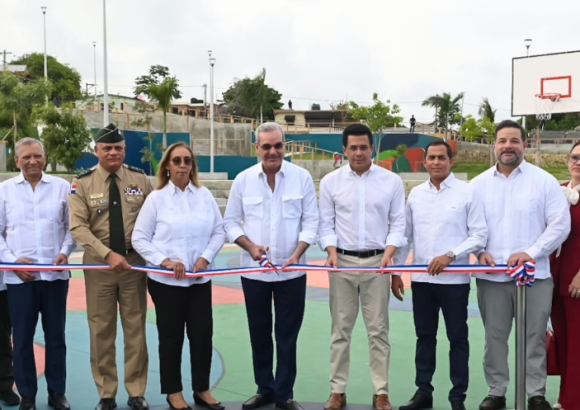
    On a formal ceremony held Monday in Bajos de Haina, Dominican Republic President Luis Abinader alongside Tourism Minister David Collado officially opened the first phase of the highly anticipated Health Boulevard public space project, a development backed by over 165 million Dominican pesos (RD$) in public investment focused on upgrading local communal infrastructure and raising living standards for area residents.

    Spanning a total development area of 27,820 square meters, the completed first phase of the project is projected to deliver tangible benefits to more than 83,000 people living in the surrounding region. Upgrades completed in this stage include new paved pedestrian pathways, expanded green belts, purpose-built recreational and sports facilities, modern urban furniture, professional landscape design, upgraded public lighting, and a large-scale local reforestation initiative.

    Speaking to attendees at the inauguration, President Abinader stressed that the Health Boulevard is far more than a conventional public construction project. Beyond its physical infrastructure, he highlighted the transformative social impact it will have on local community welfare. The new boulevard, he noted, will give local families and children a secure, welcoming space for leisure activities, while driving long-term improvements to quality of life for both permanent residents and visitors to the area.

    Minister Collado framed the new boulevard as a game-changing development for the entire municipality of Haina. Beyond serving as a much-needed recreational hub for local households, he explained, the project is also positioned to act as a key catalyst for expanding tourism activity across the region. Collado also disclosed that, as part of the national government’s broader push to revitalize public spaces and drive inclusive local development, a total of more than RD$780 million has already been allocated to a range of public projects across Haina.

    The first phase of the Health Boulevard was delivered by the Executive Committee for Infrastructure in Tourist Zones (CEIZTUR), the government body tasked with overseeing the initiative. Completed amenities included a new public access plaza, sprawling green recreational areas, dedicated zones for sports and leisure activities, 570 meters of accessible pedestrian walkways, on-site parking facilities, a modern children’s playground, an open-air amphitheater, and a regulation-size basketball court. Construction crews also installed fully upgraded sanitary and electrical infrastructure to support the long-term, reliable operation of all public facilities at the site.

    Looking ahead, government officials confirmed that the Health Boulevard initiative will advance to a second phase of development in the coming period. This upcoming stage will focus on constructing a full-service community center that will host a range of public services and community support programs for Haina residents.

  • IDAC certifies new Aircraft Maintenance Center in Punta Cana

    IDAC certifies new Aircraft Maintenance Center in Punta Cana

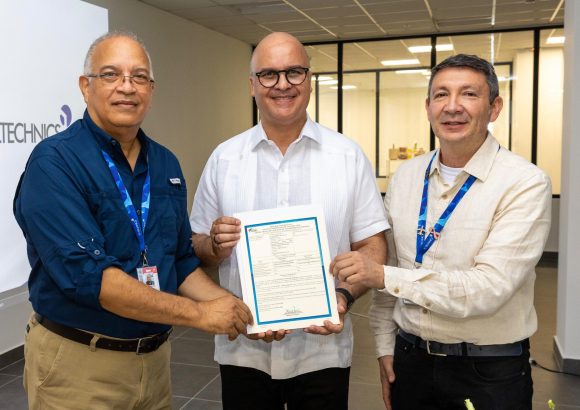
    In a landmark development for the Dominican Republic’s aviation sector, the Dominican Institute of Civil Aviation (IDAC) has formally awarded official certification to a cutting-edge Aircraft Maintenance, Repair and Overhaul (MRO) Center in Punta Cana, a move set to reshape the regional aviation services landscape. This project, developed as a joint venture between local conglomerate Puntacana Group and global aviation services provider FL Technics, received its certification paperwork from IDAC Director General Igor Rodríguez during an official ceremony with facility leadership.

    The newly certified facility is unlike any other in the Dominican Republic or the wider Caribbean region. Situated inside the Punta Cana Free Trade Zone, it is the first full-service heavy aircraft maintenance center ever established in the area. The center already holds regulatory approval to deliver advanced maintenance work for two of the world’s most popular narrow-body aircraft families: the Airbus A320 and Boeing 737. Beyond that, its purpose-built infrastructure and trained technical team also have the capability to service large wide-body aircraft, including the Airbus A330, A340, and Boeing 747 and 777 lines.

    Spread across a total development footprint of more than 71,000 square meters, the complex centers on a modern, 13,300-square-meter hangar built to the latest global aviation industry standards. In its current initial operational phase, the facility houses five dedicated maintenance bays, which allow technicians to work on multiple narrow-body jets at the same time. To accommodate growing regional demand, organizers have already laid out expansion plans that will increase the center’s capacity to 12 maintenance positions over the coming years.

    Industry regulators and project leaders alike have framed the launch as a transformative step for the Dominican Republic’s aviation economy. Rodríguez emphasized that the new MRO center does more than just add a critical service to the country’s aviation portfolio; it strengthens domestic technical capabilities, boosts the Dominican Republic’s competitiveness in the global aviation market, and unlocks new pathways for foreign investment and long-term industry growth.

    Beyond infrastructure, the project is already delivering tangible social and economic benefits for local communities. Officials project the center will generate substantial economic ripple effects, starting with the creation of dozens of high-skilled specialized jobs. To build a sustainable local talent pool, the initiative includes structured recruitment and ongoing technical training programs that open up long-term aviation career pathways for both seasoned industry professionals and new entry-level aircraft mechanics looking to start their careers in the field.