标签: Dominican Republic

多米尼加共和国

  • Banco Popular to channel US$50 million from ICO into tourism, energy, and strategic sectors

    Banco Popular to channel US$50 million from ICO into tourism, energy, and strategic sectors

    In a move designed to deepen bilateral economic cooperation between the Dominican Republic and Spain, Banco Popular Dominicano has secured a new flexible financing agreement worth up to $50 million from Spain’s state-owned Official Credit Institute (ICO). This collaboration is targeted at empowering business initiatives that strengthen commercial and investment links between the two Iberian-American nations, with core goals including boosting productive capital flows, simplifying cross-border trade operations, and opening up new accessible financing channels for enterprises active in both markets.

    This latest agreement marks the third round of financing that Banco Popular has obtained through ICO’s International Channel Line program. Cumulatively, the Spanish public financial institution has now committed a total of $150 million to the Dominican bank across the three partnership rounds. The ongoing collaboration has already helped hundreds of companies across both nations address working capital gaps, meet urgent liquidity requirements, and scale up bilateral export activities that drive job creation and economic output on both sides.

    The newly allocated $50 million will be channeled to high-priority strategic sectors that underpin both economies. Key target areas include tourism, power generation, infrastructure construction, real estate development, and hospitality – all critical growth drivers for the Dominican Republic. Additional funding will also be directed to forward-looking projects focused on environmental sustainability, improved energy efficiency, technological innovation, and widespread digital transformation across industries. Banco Popular emphasized that this financing framework aligns fully with the institution’s long-standing pledge to advance responsible banking practices and inclusive, sustainable economic development across the Dominican Republic.

    This new agreement builds on Banco Popular’s already robust track record of supporting the country’s productive sector. Official data from the Dominican Superintendency of Banks shows that as of March 2026, the institution’s total business loan portfolio hit RD$395 billion, with nearly 45 percent of that sum – equal to RD$178.3 billion – allocated to micro, small, and medium-sized enterprises (MSMEs), which form the backbone of the Dominican economy. Beyond direct financing, Banco Popular supplements its lending support with a range of auxiliary services, including user-friendly digital banking solutions for businesses, targeted skills training programs for company leaders, and dedicated initiatives to nurture new entrepreneurship across the country.


  • Dominican Defense Minister meets with U.S. Southern Command delegation

    Dominican Defense Minister meets with U.S. Southern Command delegation

    In high-level diplomatic defense talks held in Santo Domingo, senior military leaders from the Dominican Republic and the United States have moved to solidify decades of collaborative ties, reaffirming their shared commitment to deepening bilateral military cooperation. The gathering brought together Dominican Republic Defense Minister Carlos Antonio Fernández Onofre with a high-ranking delegation from United States Southern Command, headed by the command’s Deputy Commander Evan Pettus and senior enlisted leader Rafael Rodríguez.

    Discussion at the meeting centered on multiple priority areas designed to strengthen collaborative work across the two nations’ armed forces. Key agenda items included advancing joint action in regional security, expanding tailored military training opportunities, boosting the operational capacity of both defense forces, developing advanced professional military education programs, and improving tactical interoperability between the two countries’ military units. Beyond these core focus areas, participating officials also exchanged perspectives on new initiatives to upgrade military readiness, drive forward the modernization of defense infrastructure and equipment, and support continuous professional growth for service members from both nations.

    Both delegations used the meeting to restate their shared dedication to growing joint defense programs that deliver tangible benefits to regional stability. Leaders emphasized that the long-standing strategic partnership between the Dominican Republic and the United States has been carefully built over generations of collaboration, spanning everything from targeted technical assistance and large-scale training initiatives to regular professional exchanges between military personnel. This latest high-level visit serves as a public demonstration of the ongoing strength of this defense relationship, and signals both nations’ intent to continue expanding cooperative work to address shared security challenges in the region.

  • Dominican Republic to host Ibero-American film industry meetings

    Dominican Republic to host Ibero-American film industry meetings

    The Caribbean nation of the Dominican Republic is set to welcome hundreds of regional media and cultural leaders in mid-2026, after being selected to host two of Ibero-America’s most important audiovisual industry gatherings. From June 22 to 26, the Hemingway Club in the coastal community of Juan Dolio will serve as the primary venue for both the 48th Ordinary Meeting of the Conference of Audiovisual and Cinematographic Authorities of Ibero-America (CAACI) and the annual Ibermedia Program Meeting. Local organizers, led by the country’s Ministry of Culture and General Directorate of Cinema (DGCINE), say the selection cements the Dominican Republic’s rising influence across the regional film and media landscape.

    The five-day event will draw top film regulators, government cultural delegates, and independent audiovisual sector executives from more than 20 Ibero-American nations. Attendees will dedicate time to collaborative discussions across a range of pressing industry topics, including frameworks for deeper cross-border cooperation, expanded routes for regional film circulation across international markets, new avenues for collaborative co-production projects, and actionable strategies to boost the resilience and growth of the audiovisual sector across the region.

    Marianna Vargas Gurilieva, Director General of DGCINE, emphasized that the decision to hold the summits in the Dominican Republic is far more than a logistical arrangement: it represents a vote of confidence from the entire Ibero-American audiovisual community in the country’s trajectory, and formalizes its standing as a central, strategic player in the regional industry. This 2026 gathering will also mark an unprecedented milestone for the Ibermedia Program, the leading regional funding and support initiative for Ibero-American cinema. For the first time since the program’s founding in 1997, member nations will gather to elect a new technical and executive secretary, a process that will shape the program’s direction for years to come.

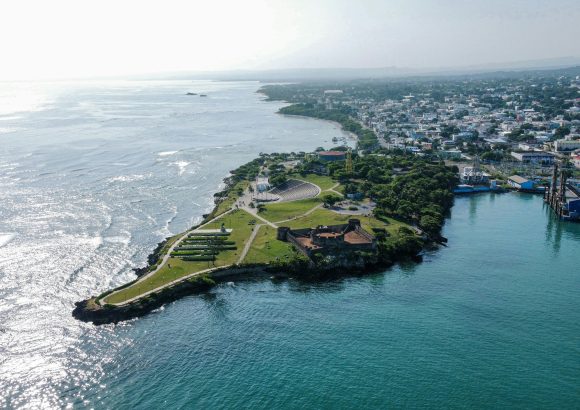
    Local cultural authorities have framed the hosting opportunity as long-overdue international recognition of the Dominican film industry’s rapid progress over the past decades, as well as the country’s expanding role in global cultural cooperation frameworks. To complement the official working meetings, organizers have planned a public-facing Ibero-American Film Series, which will screen standout productions from across the region at three iconic Dominican venues: the Cinemateca Dominicana, the historic Fortaleza Ozama, and the host venue Hemingway Club. The film series is designed to open the summits to local audiences and deepen cross-cultural connection through the shared art of cinema.

  • Puerto Plata to host PAMAC Cruise Summit 2026

    Puerto Plata to host PAMAC Cruise Summit 2026

    The Dominican Republic’s coastal city of Puerto Plata has earned the right to host the 2026 PAMAC Cruise Summit, one of the cruise sector’s most high-profile international gatherings organized by the Florida-Caribbean Cruise Association (FCCA). Scheduled to take place from June 22 to 26, 2026, the summit will draw top-level attendees from across the Caribbean and Latin America, including C-suite executives from major cruise lines, senior tourism government officials, infrastructure investors, and other core industry stakeholders.

    The official confirmation of the host selection was delivered by Carlos Atahualpa Paulino, the Dominican Republic’s Regional Tourism Director. Paulino emphasized that this designation marks a transformative milestone for both Puerto Plata and the entire country, noting that the summit will thrust the destination into the global cruise tourism spotlight. This global attention will highlight Puerto Plata’s rapidly expanding reputation as a top-tier Caribbean cruise port and sought-after travel destination.

    Local and national tourism authorities credit the successful bid to coordinated efforts spearheaded by Dominican Tourism Minister David Collado, as well as the longstanding collaborative partnership between the Dominican government and the FCCA. Economists and industry analysts project that the five-day event will deliver substantial tangible economic benefits to the region. These gains include boosted hotel occupancy rates, increased non-resident spending, and expanded revenue streams for local transportation providers, eateries, retail businesses, and tourism-focused service sectors that form the backbone of Puerto Plata’s economy.

    Beyond the immediate economic injection that the summit will bring, industry leaders expect the event to deliver long-term strategic advantages for the destination. It will elevate Puerto Plata’s international brand recognition, draw new foreign and domestic investment in cruise and general tourism infrastructure, and solidify the Dominican Republic’s standing as one of the Caribbean’s dominant cruise tourism hubs. Additionally, the summit will serve as a critical strategic platform to showcase the country’s modern tourism infrastructure to global decision-makers and deepen long-standing commercial ties with the world’s largest cruise operating companies.

  • Air Europa adjusts Havana flights, relocates fuel stop to Punta Cana

    Air Europa adjusts Havana flights, relocates fuel stop to Punta Cana

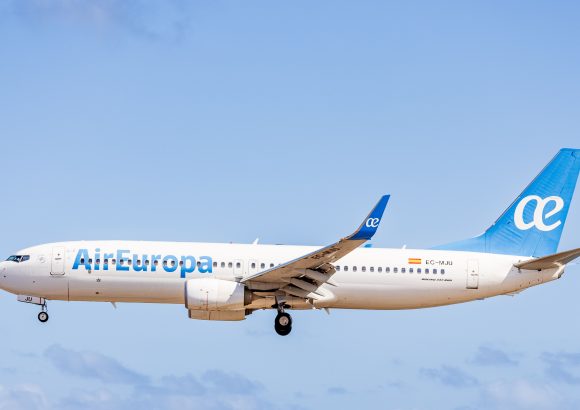
    As persistent fuel supply disruptions continue to roil Cuba’s aviation sector, Spanish airline Air Europa has announced a key operational adjustment: starting June 13, the carrier will move its technical refueling stop for the Madrid-Havana route from the Dominican Republic’s capital Santo Domingo to the popular tourist destination of Punta Cana. The change is a direct response to ongoing energy shortages that have strained fuel access across Cuba.

    This is not the first adjustment Air Europa has made to its Cuba service in 2024. Back in February, the airline first moved its mandatory refueling stop to Santo Domingo after persistent shortages developed at Havana’s José Martí International Airport. The refueling halt is a non-negotiable part of the return leg from Havana to Madrid, necessary to ensure the aircraft carries enough fuel to complete the long transatlantic crossing. Per Air Europa’s published flight schedule, the shift to Punta Cana will remain in effect through at least the end of June, with no immediate plans to revert to the original refueling arrangement.

    Notably, Air Europa is among the few major international carriers still maintaining regular service between Europe and Cuba amid the country’s deepening energy crisis. The airline continues to operate three round-trip flights per week on the Madrid-Havana corridor, a commitment that stands in stark contrast to the actions of multiple competing airlines. Industry peers including Iberia, Cuba’s state-owned flag carrier Cubana de Aviación, and Spanish leisure airline World2Fly have already suspended all their flights to Cuba since fuel and power shortages worsened across the island, disrupting all types of aviation operations.

    Beyond the immediate operational impact for Air Europa, the relocation also underscores a shifting regional dynamic in Caribbean aviation. Punta Cana, long a top destination for international leisure travel, has seen its profile as a strategic regional hub grow in recent years, and this decision by Air Europa further cements that expanding role. At the same time, the adjustment highlights the persistent operational hurdles that airlines face when trying to maintain critical air connectivity between Cuba and the rest of the world, as the island nation grapples with a prolonged period of energy and fuel scarcity that shows no immediate signs of resolution.

  • Dominican Republic reinforces regional alliance for Malaria elimination

    Dominican Republic reinforces regional alliance for Malaria elimination

    Leaders in global and regional public health have gathered in Santo Domingo, the Dominican Republic, for a landmark collaborative summit focused on one of the region’s most persistent public health challenges: ending malaria transmission by 2027. The meeting, convened under the umbrella of the Regional Initiative for Malaria Elimination (IREM), brought together top health officials from nine Latin American and Caribbean nations alongside representatives from the Inter-American Development Bank (IDB) and leading international health organizations. Delegations from Honduras, Panama, Colombia, Belize, El Salvador, Costa Rica, and Guatemala joined their Dominican hosts to share on-the-ground lessons, assess current progress, and align coordinated strategies to meet the ambitious 2027 elimination target.

    Dominican Republic’s Health Minister Víctor Atallah opened the summit by outlining his country’s recent gains in the fight against malaria. Atallah credited targeted investments in strengthened epidemiological surveillance, expanded access to early diagnostic testing, immediate access to treatment, and deep community engagement for the sharp reduction in local transmission recorded in recent years. He underscored a core truth guiding the entire summit: infectious diseases do not respect national borders, making cross-regional collaboration not just beneficial, but essential to lasting success.

    Beyond malaria-specific goals, the summit also expanded to address broader systemic public health priorities across the region. Delegates discussed coordinated action to expand equitable access to high-cost life-saving medicines, build more resilient health systems capable of withstanding emerging health threats, and scale up prevention and management programs for non-communicable chronic diseases, including diabetes and cardiovascular conditions that disproportionately impact communities across Latin America and the Caribbean.

    New data presented by IDB officials at the meeting highlights how far the region has already come through collaborative action. Across all participating nations, response capacity has improved dramatically: more than 80% of all malaria patients now receive life-saving treatment within 24 hours of receiving a diagnosis. The Dominican Republic in particular earned regional recognition for its strong performance, having already met 82% of IREM’s core performance indicators, placing it among the top-performing nations in the region for malaria control and prevention efforts.

    In closing, summit participants reached a unified consensus on the critical ingredients needed to cross the finish line for malaria elimination. Sustained high-level political commitment, long-term predictable financing, continued investment in scientific research, and ongoing expansion of robust regional surveillance systems were all identified as non-negotiable to achieving elimination goals and lifting overall public health outcomes for millions of people across the region.

  • Operation Onco14 targets alleged embezzlement of funds intended for cancer patients

    Operation Onco14 targets alleged embezzlement of funds intended for cancer patients

    In a major crackdown on public health sector corruption, law enforcement agencies in the Dominican Republic have uncovered an elaborate multimillion-peso fraud scheme that siphoned funds earmarked for cancer patient care from the country’s national insurance system. The Public Prosecutor’s Office announced the results of Operation Onco14, which led to the arrest of three high-profile former executives connected to the Cibao Regional Cancer Institute, commonly known by its Spanish acronym IORC.

    The three defendants taken into custody are Héctor Antonio Lora Cruceta, former chair of the Cibao Cancer Foundation’s governing board and a sitting member of the IORC board, along with Luisa Yasiris Guzmán and Dilcia Isabel Vargas Sánchez. Investigative authorities confirm that the group, working in coordination with a network of affiliated organizations, leveraged a series of fraudulent administrative and financial mechanisms to redirect public money from Seguro Nacional de Salud (SeNaSa), the Dominican Republic’s national health insurance system. These funds were legally allocated to cover life-saving care and treatment services for low-income cancer patients across the Cibao region.

    The inquiry was a coordinated effort between three key prosecutorial bodies: the Public Ministry’s Directorate General of Prosecution, the Specialized Prosecutor’s Office for Administrative Corruption (PEPCA), and the regional Santiago Prosecutor’s Office. Investigators have formally accused the group of operating a structured criminal enterprise that perpetrates multiple violations of Dominican law, including fraud against the state, criminal conspiracy, bribery, cybercrime, and money laundering. Prosecutors emphasize that the scheme intentionally exploited public resources dedicated to critical oncology care, inflicting substantial financial damage both to the state’s public health budget and to thousands of vulnerable patients who rely on the subsidized SeNaSa system for treatment.

    As part of the court-authorized search and seizure operations conducted during Operation Onco14, law enforcement teams recovered a range of evidence linked to the alleged fraud. Seized items include undeclared cash, multiple luxury vehicles, formal property titles for residential and commercial real estate, cell phones and other digital electronic devices, financial and administrative documents, and an unregistered firearm. Prosecutors confirmed that the core goal of the defendants’ alleged scheme was to retain permanent control over IORC’s operations and its multi-million dollar annual budget, allowing the group to continually siphon off public funds for personal gain at the expense of cancer patients.

    Investigations remain ongoing, with authorities currently working to identify and question additional current and former IORC employees and private associates who are suspected of participating in the criminal network. Prosecutors have stated that they will pursue full criminal accountability for all parties involved, and are working to recover the stolen funds to return them to the national health insurance system for their intended purpose: supporting cancer patient care.

  • Environmentalist renews criticism of Dominican Republic’s ‘sun tax’

    Environmentalist renews criticism of Dominican Republic’s ‘sun tax’

    In the Dominican capital of Santo Domingo, prominent environmental activist Enrique De León has reignited public debate over the country’s controversial distributed electricity generation rules, reiterating his fierce opposition to a long-criticized policy that imposes a 25 percent levy on residential solar power fed back into the national grid. Opponents of the charge have widely dubbed it the unfair “sun tax”, a policy that has been a major point of friction between climate advocates and national energy regulators for months.

    Speaking during a recent appearance on the current affairs radio program *Alternativa*, De León revealed that members of the RD 100% Renewable Coalition — a broad alliance of environmental groups, clean energy advocates, and community organizations pushing for a full transition to renewable power in the Dominican Republic — are deeply frustrated by the failure of the Superintendency of Electricity to follow through on its public pledges to revise the controversial regulation. He added that energy officials have cited growing uncertainty stemming from global geopolitical frictions, including the escalating tensions involving the United States, Israel, and Iran, as the official reason for delaying any planned adjustments to the policy.

    The timeline of broken promises dates back to March of this year, when Superintendent of Electricity Andrés Astacio held formal talks with representatives from the RD 100% Renewable Coalition. During that meeting, De León confirmed, Astacio explicitly committed to eliminating the 25 percent surcharge on grid-injected residential solar power, alongside a suite of other regulatory provisions that clean energy advocates have repeatedly flagged as unnecessary barriers to the expansion of renewable energy across the country. Shockingly, the revised distributed generation regulation entered into force at the end of March without any of the promised changes being implemented, leaving advocates blindsided by the regulator’s last-minute reversal.

    In a stark warning about the long-term consequences of retaining the levy, De León emphasized that keeping the “sun tax” on the books will almost certainly dissuade residential property owners and private investors from committing capital to new rooftop solar installations across the country. This slowdown in residential solar adoption, he argued, will create a major drag on the Dominican Republic’s broader push to scale up clean energy production, cut the nation’s costly and polluting dependence on imported fossil fuels, and meet the country’s legally binding and nationally stated energy transition and climate action targets. For the coalition, De León stressed, removing this and other regressive regulatory barriers remains a non-negotiable priority to advance meaningful climate action in the Dominican Republic.

  • Dominican Army Chief inspects military units along southern border

    Dominican Army Chief inspects military units along southern border

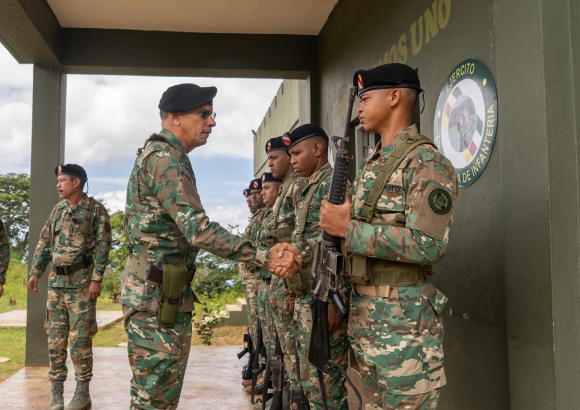
    In a strategic move to reinforce national border protection, the top commander of the Dominican Republic Army, General Jorge Iván Camino Pérez, has completed a comprehensive inspection of military assets and personnel positioned along the country’s southern border. The tour covered critical military outposts, detachments, and control checkpoints spread across two border provinces, Independencia and Pedernales, with the core goal of evaluating both operational preparedness and the on-the-ground conditions for deployed troops.

    The inspection itinerary started at the Cambronal Fortress based in Neiba, which serves as the command center for Company B of the 14th Infantry Battalion. From there, General Camino Pérez traveled through a string of remote advanced positions and detachments, including sites at El Aguacate, Don Juan, Cabeza de Agua, and strategic military positions nested within the protected terrain of Sierra de Bahoruco National Park.

    Throughout the visit, the army commanding general conducted detailed reviews of ongoing border security operations, assessed troop performance, and checked the functionality of critical infrastructure, including border surveillance systems and communications networks. He also made a stop at Loma del Toro, a key site where military units are stationed to guard critical communications antennas that provide connectivity for the entire southern border region.

    The tour wrapped up at Enriquillo Fortress in Pedernales, the headquarters location of the 16th Infantry Battalion. During a meeting with frontline soldiers stationed at the facility, General Camino Pérez underscored the non-negotiable importance of maintaining strict discipline, constant vigilance, and full adherence to official military protocols. A statement released by the Dominican Republic Army following the inspection noted that these on-site assessments play a critical role in gauging overall operational capacity, addressing unmet personnel needs, and strengthening the country’s ongoing border security initiatives.

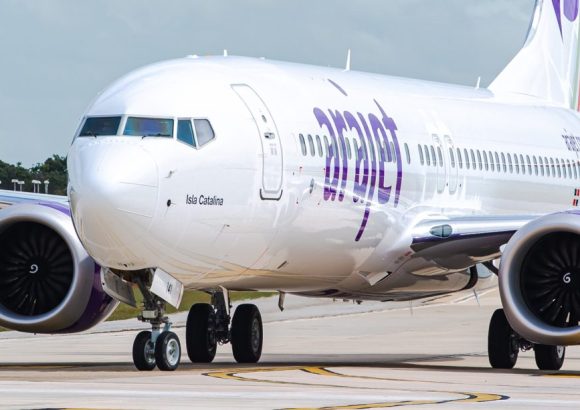
  • Arajet captured more than 10% of the Dominican air travel market in May

    Arajet captured more than 10% of the Dominican air travel market in May

    The Caribbean and Latin American aviation sector has a new standout success story: low-cost Dominican airline Arajet has announced a historic milestone, logging the highest monthly passenger volume in its entire history during May 2026. New data from the Dominican Republic’s Civil Aviation Board confirms that the carrier’s performance not only broke internal company records but also cemented its position as one of the fastest-expanding aviation players across the Caribbean and Latin American regions.

    When excluding connecting passengers, official figures show Arajet moved more than 163,000 passengers to and from Dominican Republic soil in May. That volume accounted for more than 10% of the country’s total international passenger traffic for the month, pushing Arajet to third place in the Dominican market in terms of passenger throughput. Only two major U.S. carriers – JetBlue and American Airlines – outranked the young Dominican airline in the local market, an achievement that underscores its rapid rise in just a few years of operation.

    Including passengers transferring through Arajet’s two primary hub airports in Santo Domingo and Punta Cana, total passenger traffic for the month surpassed 183,000, setting an all-time monthly record for the carrier. The milestone offers clear validation of the airline’s core operating strategy: a hub-and-spoke model centered on positioning the Dominican Republic as a premier connectivity hub linking destinations across North, South and Central America.

    A breakdown of the airline’s route network performance for May shows that Buenos Aires drew the highest number of passengers among all Arajet destinations, followed closely by key markets including New York, Miami, Medellín and Bogotá. Geographically, the United States remains Arajet’s largest single national market, accounting for roughly 23% of the carrier’s total passenger volume. Argentina follows as the second-largest market at 18%, with Colombia taking third place at 17%. Combined, these three markets generate almost 60% of Arajet’s total annual passenger traffic, highlighting the airline’s focus on high-demand regional routes.

    Beyond the company’s own success, the record-breaking May performance also highlights the growing influence of homegrown Dominican carriers in the country’s aviation sector. Of the 176,201 total passengers carried by all Dominican-based airlines in May, Arajet alone accounted for 94% of that volume. This overwhelming market share reinforces Arajet’s unchallenged leadership among local aviation operators, and directly advances the Dominican government’s long-term goal of establishing the country as the leading aviation hub in the entire Caribbean region.