标签: Dominican Republic

多米尼加共和国

  • Dominican Republic and Puerto Rico seek closer collaboration in judicial affairs

    Dominican Republic and Puerto Rico seek closer collaboration in judicial affairs

    Two Caribbean jurisdictions, the Dominican Republic and Puerto Rico, have opened a new chapter of cross-border partnership with formal discussions aimed at deepening collaborative work across their judicial sectors. The talks center on three core pillars: reciprocal exchange of specialized legal knowledge, enhanced institutional coordination, and expanded academic training opportunities for public legal servants on both sides.

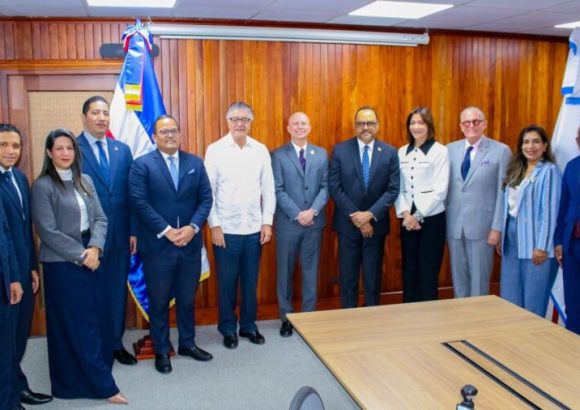
    The high-level meeting, hosted at the headquarters of the Dominican Ministry of Justice in Santo Domingo, brought together key top legal officials from both regions. Leading the Dominican delegation was Minister of Justice Antoliano Peralta, while Puerto Rico’s delegation was headed by Secretary of Justice Lourdes Gómez Torres and Attorney General Omar Andino Figueroa.

    During the closed-door discussions, participating officials conducted a comparative review of the operational frameworks and organizational structures of their respective justice institutions. Both sides expressed mutual interest in advancing a slate of joint collaborative initiatives, ranging from long-term academic exchange programs and cross-institutional internships to targeted specialized training courses for sitting judicial and legal staff.

    The Dominican delegation also included multiple vice ministers of justice, Roberto Santana, the Director of the Dominican Penitentiary Services, and Jaime Francisco Rodríguez, Rector of the Institute of Higher Education for Penitentiary Staff (ISEEPENC). Senior authorities from both sides emphasized that structured experience-sharing and the exchange of proven best practices will deliver tangible value, strengthening the efficiency and fairness of justice administration across both territories.

    After wrapping up the initial bilateral negotiations, the Puerto Rican delegation traveled to the Dominican Attorney General’s Office for a follow-up meeting with Dominican Attorney General Yeni Berenice Reynoso. Per their official itinerary, the visiting delegation will next take part in an academic forum hosted by the Dominican National School of the Judiciary, before concluding their visit with scheduled tours of other key institutions that make up the Dominican judicial system.
  • Banreservas honors Minerva Mirabal’s centenary with art exhibition

    Banreservas honors Minerva Mirabal’s centenary with art exhibition

    On the 100th anniversary of Minerva Mirabal’s birth, a groundbreaking new exhibition opened this week at the Banreservas Cultural Center in Santo Domingo, pulling back the curtain on the little-explored creative identity of one of the Dominican Republic’s most revered heroines.

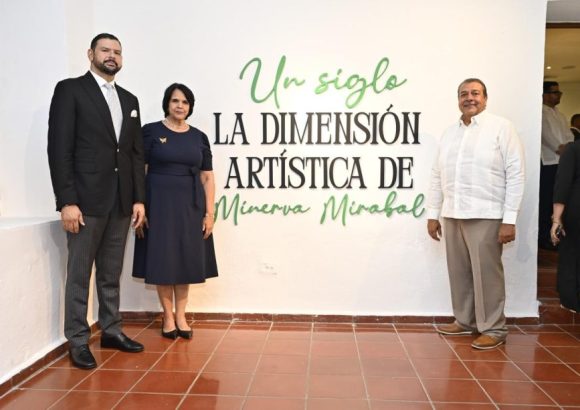
    Titled “A Century: The Artistic Dimension of Minerva Mirabal,” the showcase is a joint venture between the cultural center and the Mirabal Sisters Foundation. It marks the first time such a comprehensive collection of Mirabal’s creative output has been made available to the public, spanning a diverse range of mediums from paintings and sculptures to personal memorabilia, archival photographs, and video presentations. Each piece on display weaves together her lifelong passions for creative expression, social justice, and individual freedom.

    At the official opening ceremony, Franklin Soriano, Vice President of Communications and Social Responsibility at Banco de Reservas, underscored the institution’s longstanding dedication to expanding public understanding of iconic Dominican figures. Soriano emphasized that the exhibition pushes beyond the well-documented narrative of Mirabal’s political activism and historical importance, framing her first and foremost as a skilled visual artist whose work carries deep emotional sensitivity and unique creative vision.

    After a successful debut run in the Dominican city of Santiago, the exhibition has moved to its current venue at the Banreservas Cultural Center’s Ada Balcácer Gallery, where it will remain open to the public through August 9. The showcase features 16 original works created by Mirabal herself, paired with nine complementary pieces from prominent contemporary Dominican artists including Miguel Núñez, Pedro Pascual, Virgilio García, and Radhamés Mejía.

    To help visitors engage more deeply with Mirabal’s undertaught artistic contributions, the cultural center has planned a full roster of accompanying public programming, including guided exhibition tours, academic lectures, and hands-on educational activities. Minou Tavárez Mirabal, Minerva Mirabal’s daughter, shared her appreciation for the initiative, noting that the exhibition does more than celebrate her mother’s legacy—it honors all the activists who fought to entrench democracy and human rights across the Dominican Republic.

    Curated by veteran art critic Abil Peralta and seasoned museum specialist Guadalupe Casasnovas, the exhibition reframes public understanding of this towering Dominican historical figure. For decades, Mirabal has been celebrated globally for her fearless role in the fight against dictatorship, but this new showcase makes clear that her legacy extends far beyond political activism, cementing her place in the Dominican art world as well.

  • Adriano Espaillat backs deportation for immigrants convicted of violent crimes

    Adriano Espaillat backs deportation for immigrants convicted of violent crimes

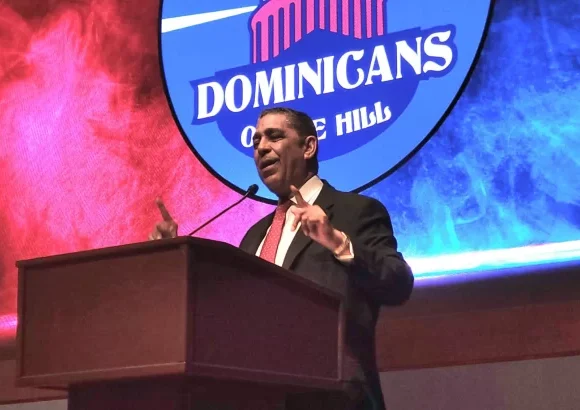
    As national conversations over U.S. immigration enforcement and deportation rules continue to roil policymakers and communities across the country, Democratic Congressman Adriano Espaillat has laid out a measured, targeted approach to how the nation should handle immigrant residents convicted of crimes. Speaking from New York in a recent televised public appearance, the lawmaker drew a clear line between immigrants who have committed violent felonies and those convicted of low-level, non-violent minor offenses, arguing that one-size-fits-all automatic deportation does not align with American legal principles.

    For immigrants convicted of severe violent crimes — including homicide and sexual assault — Espaillat affirmed that they must be held fully accountable through the existing U.S. criminal justice system. When existing federal or state law explicitly requires deportation following a conviction for such offenses, he stressed that those legal mandates must be enforced without exception. This position marks a break from more hardline progressive stances that call for sweeping rollbacks of deportation authority, positioning Espaillat as a voice seeking common ground in the polarizing immigration debate.

    When it comes to minor offenses, however, the Dominican-born congressman pushed back against mandatory automatic deportation policies. He pointed out that a large share of these low-level cases involve long-term U.S. residents and parents who have put down roots in American communities, many of whom have lived in the country for decades. Instead of permanent separation from their families and communities through deportation, Espaillat argued these individuals should be granted a meaningful chance to take accountability for their actions and rebuild their lives within the U.S.

    Espaillat brought personal context to his policy arguments, drawing on his own childhood experiences with aggressive immigration enforcement in his family. He reflected that harsh, overreaching immigration raids targeting immigrant communities were common long before the creation of U.S. Immigration and Customs Enforcement (ICE), noting that aggressive enforcement has a long and troubling history in the country that continues to shape immigrant trust in public institutions today.

    Central to Espaillat’s framework is a unwavering commitment to due process for all immigrants, regardless of the offenses they are accused of. He emphasized that deportation proceedings should never be initiated before an individual has completed their process through the criminal justice system and received a formal conviction. Any removal action, he added, must be carried out in strict compliance with existing U.S. law and the constitutional protections that apply to all people within the country’s borders, regardless of immigration status.

  • Roberto Álvarez to address Haitian crisis at OAS General Assembly in Panama

    Roberto Álvarez to address Haitian crisis at OAS General Assembly in Panama

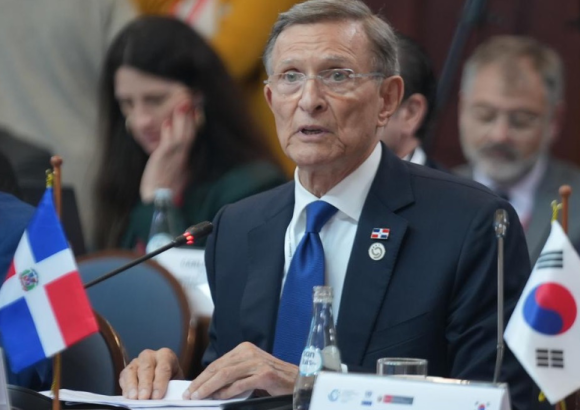
    In an upcoming diplomatic engagement that underscores the Dominican Republic’s active role in hemispheric governance, Foreign Minister Roberto Álvarez is set to depart for Panama City to take part in the 56th Regular Session of the Organization of American States (OAS) General Assembly. Running from June 21 to 24, this year’s assembly centers on a timely and ambitious theme: “Strong Multilateralism in Defense of Democracy, Hemispheric Security and Stability in Member States.”

    The high point of Álvarez’s participation will come on June 24, when he takes the assembly floor to lay out the Dominican Republic’s official stance on a range of pressing regional challenges. Chief among these topics is the protracted humanitarian and political crisis unfolding in neighboring Haiti, which the Dominican government has repeatedly identified as a top priority on its foreign policy agenda.

    Beyond the OAS General Assembly, Álvarez carries a second important diplomatic assignment: standing in for President Luis Abinader at a series of events marking the 200th anniversary of the Amphictyonic Congress of Panama. That landmark 1826 gathering, convened by iconic Latin American independence leader Simón Bolívar, aimed to forge unity among the Americas’ recently independent nations, making its bicentennial a meaningful moment for reflection on hemispheric cooperation today.

    Álvarez’s schedule also includes a slate of supplementary activities alongside the main assembly proceedings. He will join parallel forums that bring together delegates from the private sector, civil society groups, and other non-state stakeholders, creating space for broader dialogue on hemispheric issues. Additionally, he has planned a series of one-on-one bilateral meetings with senior government representatives from across the region and leaders of key international organizations. These meetings are designed to deepen existing diplomatic ties and move forward policy priorities that align with the Dominican Republic’s national interests.

    A carefully selected delegation of senior foreign policy officials will accompany Álvarez on the trip. The group includes Rubén Silié, Vice Minister of Multilateral Foreign Policy; Mayerlyn Cordero, the Dominican Republic’s Permanent Representative to the OAS; Ambassador Francina Grullón; Counselor Pamela Polanco; and other top Foreign Ministry leaders.

  • Dominican Republic guarantees free healthcare for Santo Domingo 2026 participants

    Dominican Republic guarantees free healthcare for Santo Domingo 2026 participants

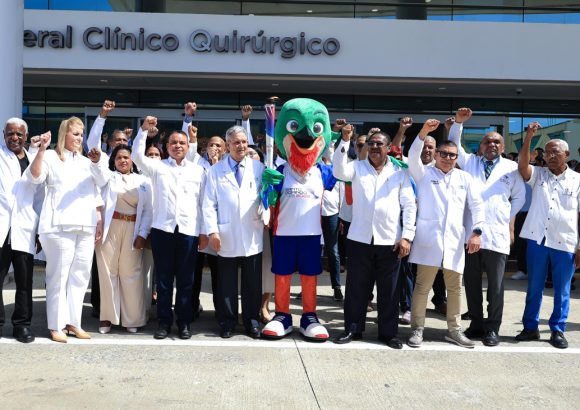
    As the Dominican Republic enters its final preparation phase for the 2026 Central American and Caribbean Games hosted in Santo Domingo, a historic symbolic gesture has put the spotlight on the country’s public health preparations: the National Health Service (SNS) has officially received the Games’ torch in a ceremony held at the Ciudad Sanitaria Dr. Luis Eduardo Aybar.

    Marking the first time the ceremonial torch has been accepted by a health institution in the history of the regional Games, the event brought together over 100 frontline and managerial healthcare professionals from the country’s public health network. In a symbolic handover, the official Santo Domingo 2026 Games mascot passed the torch to SNS Executive Director Julio Landrón, kicking off the formal rollout of the event’s medical support plan.

    During his remarks at the ceremony, Landrón emphasized the unprecedented nature of the torch handover to a health complex, noting that the moment underscores the central role the public health system will play in delivering a safe, successful competition. Scheduled to run from July 24 to August 8, 2026, the Games will draw thousands of athletes, official delegations, international visitors, and local spectators to venues across Santo Domingo, making robust and accessible medical care a top priority for organizers.

    To meet this demand, Landrón outlined that all hospitals and primary health centers located within close proximity of Games venues will be integrated into a dedicated, coordinated medical response network. This specialized system is designed to deliver rapid, efficient care in any scenario, from minor training injuries to emergency health incidents. Per explicit directives from Dominican President Luis Abinader, all medical services for participating athletes, delegation members, visiting guests, and spectators will be provided completely free of charge, reaffirming the government’s commitment to an accessible, welcoming event.

    José Joaquín Puello, a neurosurgeon and president of the Ciudad Sanitaria Dr. Luis Eduardo Aybar, echoed Landrón’s remarks, highlighting the months of advanced planning that have gone into preparing the country’s hospital network for the Games. Puello stressed that deliberate, comprehensive healthcare planning is non-negotiable for the overall success of the regional event, adding that Dominican medical teams have completed specialized training and are fully equipped to deliver high-quality care to all attendees. The goal, he noted, is to ensure every participant and visitor leaves the Games with a positive, safe experience.

    Health authorities across the country have framed infrastructure and capacity upgrades to public hospitals and specialized medical centers as one of the most critical long-term legacies of the 2026 Games. Beyond supporting the event itself, these improvements will leave a permanent enhanced health infrastructure that benefits Dominican communities for decades after the closing ceremony, turning Games preparations into a public investment that extends far beyond sports.

  • Dominican Republic welcomes 5.6 million visitors in first five months of 2026

    Dominican Republic welcomes 5.6 million visitors in first five months of 2026

    The Dominican Republic’s tourism sector has sustained its positive upward trajectory through the first five months of 2026, official data from the nation’s top tourism official confirms. Tourism Minister David Collado announced that the Caribbean destination welcomed a total of 5.64 million international visitors between January and May 2026, marking an 8% year-over-year increase compared to the same period in 2025.

    Breaking down the visitor figures, air travel accounted for the largest share of arrivals, with 4.15 million travelers entering the country via commercial and private flights — a 10.8% jump from 2025’s first five months. Cruise tourism remained a steady secondary stream, contributing nearly 1.5 million additional visitors to the annual total.

    The robust growth trend held strong into the final month of the reporting period: Collado confirmed that May 2026 alone saw 744,045 air arrivals, a 10.4% increase compared to May 2025 that outpaces growth rates recorded in pre-2025 years as well.

    When looking at source markets, the United States retains its position as the Dominican Republic’s largest supplier of tourists, accounting for 41% of all international visitors to the country in the 2026 period. Canada follows as the second-largest source market at 21%, with South American nations Argentina and Colombia rounding out the top four at 7% and 5% respectively.

    In terms of airport infrastructure distribution, Punta Cana International Airport — the primary gateway for leisure travelers to the Dominican Republic’s eastern beach resorts — handled the vast majority of air arrivals, processing 66% of all air travelers between January and May. Las Américas International Airport, Cibao International Airport, and Puerto Plata’s Gregorio Luperón International Airport followed in volume, respectively.

    Beyond raw arrival numbers, Collado highlighted strong performance across key industry indicators. Average hotel occupancy across the country hit more than 79% between January and April 2026, while overall visitor satisfaction scored 4.5 out of 5 in official surveys. Strikingly, 93% of surveyed tourists stated they would plan a return trip to the Dominican Republic, and 60% confirmed they would actively recommend the Caribbean destination to friends, family, and social media contacts.

  • Dominican Republic to host World Governments Summit Regional Dialogue again in 2026

    Dominican Republic to host World Governments Summit Regional Dialogue again in 2026

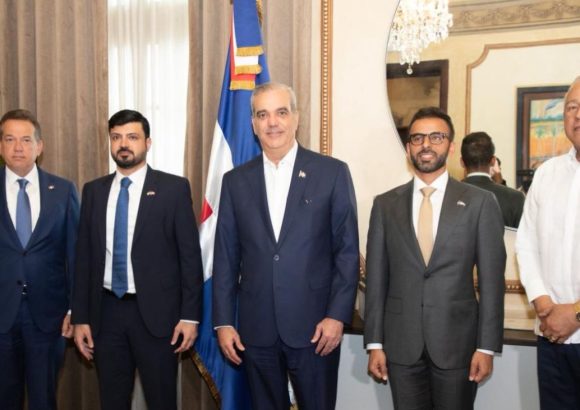
    Santo Domingo — The Dominican Republic has been selected to host the Latin America and Caribbean regional edition of the World Governments Summit (WGS) for the second consecutive time, with the high-profile gathering set to kick off at Cap Cana’s The St. Regis Cap Cana Resort on November 20 and 21, 2026. This landmark event marks only the second occasion in the summit’s history that it will be held outside its permanent home in Dubai, a distinction that underscores the Caribbean nation’s growing regional influence.

    President Luis Abinader made the official announcement, revealing that organizers project the 2026 summit will draw nearly 400 high-level attendees. The participant list is expected to include sitting heads of state, cabinet-level ministers, senior leadership from leading global intergovernmental organizations, and top C-suite executives from major international businesses. Beyond facilitating cross-sector dialogue, Abinader emphasized that the summit will solidify the Dominican Republic’s standing as the primary regional hub for cutting-edge innovation and public sector modernization.

    Víctor “Ito” Bisonó, the Dominican Republic’s Minister of Industry and Commerce, shared that preliminary planning is already well underway. Event organizers have begun extending invitations to government leaders across Latin America and the Caribbean, with a packed agenda centered on pressing shared priorities. Key discussion themes will range from forward-thinking governance models and emerging technology adoption to inclusive economic growth, sustainable tourism development, climate action, and expanding impactful public-private partnerships across the region.

    Mohamed Al Sharhan, Managing Director of the World Governments Summit Organization, explained the decision to reaward the hosting rights to the Dominican Republic. He cited the nation’s consistent, unwavering commitment to advancing innovation and driving transformative change within its public institutions as a core factor in the selection. Al Sharhan added that the 2026 summit will do more than advance regional dialogue: it will deepen the longstanding strategic ties between the Dominican Republic and the United Arab Emirates, while further positioning the Caribbean country as the primary gateway for cross-regional cooperation and global knowledge exchange in the Latin America and Caribbean space.

    Attendees will take part in a structured program of activities, including opening plenary sessions, closed-door ministerial roundtables, and interactive strategic workshops focused on addressing the future of governance and pressing shared global challenges.

  • Magín Díaz says 90% of proposed tax revenue will come from wealthiest 1%

    Magín Díaz says 90% of proposed tax revenue will come from wealthiest 1%

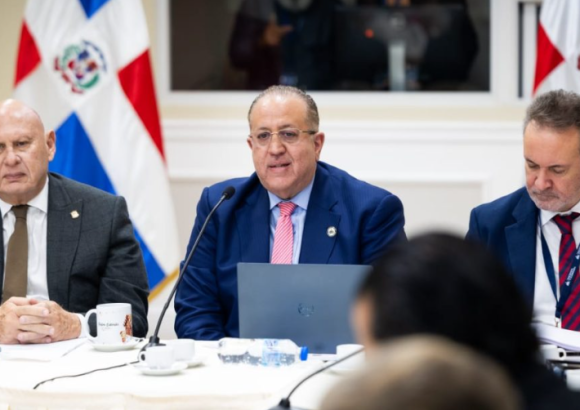
    SANTO DOMINGO – In a detailed presentation to congressional lawmakers this week, Dominican Republic Finance and Economy Minister Magín Díaz has outlined a progressive new tax reform framework that would shift nearly all new revenue collection to the nation’s wealthiest demographic. The proposal, officially named the Economic Growth, Tax Simplification and International Crisis Mitigation Bill, is crafted to shore up the country’s fiscal standing while shielding lower-income groups, the middle class, and micro, small and medium-sized enterprises (MSMEs) from additional financial strain.

    Addressing the bicameral congressional commission tasked with reviewing the legislation, Díaz confirmed that more than 90 percent of the new revenue generated by the bill would come from the top 1 percent of earners in the Dominican Republic. Unlike broad-based tax increases that have drawn public criticism in previous reform efforts, this proposal does not raise the value-added tax (locally known as ITBIS) and will not impose new tax obligations on small business operators.

    Minister Díaz projected that the adjusted tax policies would bring in between 40 billion and 50 billion Dominican pesos in new annual revenue. He framed the plan as a measured, fair solution to the ongoing economic headwinds facing the small Caribbean nation, with core goals of cutting the national fiscal deficit, keeping critical social subsidies in place, and preserving the macroeconomic stability that has supported Dominican growth in recent years.

    A key component of the government’s pitch for the bill is a commitment to full fiscal transparency. Díaz announced that the executive branch will put in place a formal accountability mechanism that will track both the real-world impact of the new tax measures and how all collected revenue is allocated and spent. During the question-and-answer portion of the commission session, the minister responded to inquiries from both ruling party and opposition legislators, and reaffirmed the administration’s openness to ongoing constructive dialogue throughout the legislative review process, backed by peer-reviewed technical data and independent economic analysis.

  • Duartian Institute calls for defense of sovereignty during UN Secretary-General visit

    Duartian Institute calls for defense of sovereignty during UN Secretary-General visit

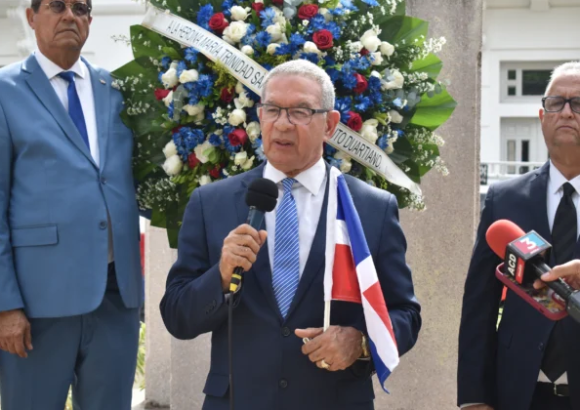
    In a solemn ceremony held in the historic Colonial District of Santo Domingo honoring a towering figure of Dominican independence, the head of the nation’s leading historical institution has issued a clear call to the country’s governing authorities, demanding unwavering defense of national sovereignty ahead of a visit by United Nations Secretary-General António Guterres. Wilson Gómez Ramírez, president of the Instituto Duartiano, used the 232nd birth anniversary commemoration of María Trinidad Sánchez to deliver his message, tying the modern challenge of migration policy to the founding principles of the Dominican state forged through its independence struggle.

    Gómez pointed to a long-running pattern of international pushback against the Dominican Republic’s approach to irregular border migration and the repatriation of undocumented Haitian nationals, noting that the United Nations has repeatedly voiced criticism of the country’s policy measures in this area. Against this backdrop, he stressed that any upcoming bilateral discussions or negotiations between Dominican officials and the UN leadership must be rooted in non-negotiable principles: full respect for the country’s domestic legislation and its inherent right to independent sovereign decision-making that prioritizes Dominican national interests.

    The venue and occasion of Gómez’s remarks were far from arbitrary. The event was a traditional wreath-laying ceremony honoring Sánchez, a female patriot who played a critical role in the 19th century La Trinitaria independence movement that fought for Dominican freedom from colonial rule. Gómez reminded attendees of Sánchez’s unshakable loyalty: even when facing execution by enemy forces, she refused to betray her fellow revolutionaries, turning down offers of leniency in exchange for information. Today, Gómez argued, her legacy of unwavering commitment to national self-determination remains as relevant as ever. He called on current and future generations of Dominicans to deepen their understanding of the country’s foundational history, and to carry forward Sánchez’s example by standing firm in defense of the nation’s sovereignty in all engagements with international actors.

  • Former Hotel Santo Domingo to be demolished in September for new convention center

    Former Hotel Santo Domingo to be demolished in September for new convention center

    SANTO DOMINGO – After years of unmet plans for the underutilized former Hotel Santo Domingo site, the Dominican government is moving forward with a transformative flagship infrastructure project set to reshape the capital’s business tourism landscape: a modern international convention center that will break ground following the three-month timeline for demolition of the aging hotel property.

    Tourism Minister David Collado has confirmed that the initiative is advancing through coordinated inter-agency planning, with the Ministry of Tourism already moving $18 million in funding to the central government to acquire the 24,000-square-meter plot. The property purchase was facilitated through the country’s National Assets agency, and the land will soon be transferred to the Dominican Development Council, which will share oversight of the full project with the Central Bank Reserve. The design phase is already underway, after a competitive bidding process selected a firm to develop architectural and structural blueprints that align with global industry standards.

    A core driver behind the project, Collado explained, is addressing a long-standing gap in the Dominican capital’s event infrastructure: currently, Santo Domingo has no venue large enough or equipped to accommodate major international conventions and large-scale industry gatherings. This gap has acted as a persistent bottleneck, holding back growth in the country’s lucrative meetings, incentives, conferences, and exhibitions (MICE) tourism segment. To ensure the new facility meets the rigorous demands of global event organizers, Dominican authorities have partnered for technical guidance with IFEMA, one of the world’s most respected and experienced convention and trade fair operators.

    Collado projected that the convention center will unlock widespread economic benefits across the capital’s hospitality sector. Drawing on data from comparable projects around the world, he noted that similar developments have driven a 6 to 7 percent jump in local hotel occupancy, a gain that will trickle down to restaurants, transportation services, retail businesses and other tourism-related industries. Beyond direct revenue gains, the new facility is expected to cement Santo Domingo’s reputation as a competitive hub for international conferences, industry exhibitions, and large-scale entertainment events, opening the door to sustained long-term growth in high-value business tourism for the Dominican Republic.