
Dominican triple jump star and reigning Olympic gold medalist Thea Lafond Gadson has added another landmark achievement to her already storied athletic career, claiming top honors at the World Athletics Continental Tour Golden Meeting in Zagreb, Croatia Friday while rewriting multiple record books. Competing against a field of elite international jumpers, Lafond Gadson delivered her career-defining leap on her sixth and final attempt of the competition, launching herself 15.25 meters to take the win. This stunning distance not only betters the 15.02-meter Dominican national record she set at the 2024 Paris Summer Olympics, but also clinches the world’s leading jump mark for the current 2026 season and marks a new personal best for the athlete, according to updates shared by Panam Sports via its official Facebook page. Beyond the national and seasonal accolades, the jump also shattered the previous meeting record for the Zagreb WACT Golden event, and pushed Lafond Gadson into an exclusive group: she now ranks among the top 10 women’s triple jump athletes in world history for the longest recorded jumps. As first reported via the Rice Man Facebook page, which shared details of the groundbreaking performance, this latest win solidifies Lafond Gadson’s standing as one of the most formidable triple jump competitors on the global circuit. More than a personal victory, the historic leap marks another high-profile moment of pride for the small Caribbean nation of Dominica, which continues to see its name elevated on the international athletics stage thanks to Lafond Gadson’s consistent, world-class performances.
标签: Dominica
多米尼克
-

COMMENTARY: A PHONE, A JAR OF SEASONING, AND 400,000 VIEWS – How Caribbean vendors are taking on the supermarkets, one TikTok at a time
It started with a simple, unplanned clip: a Barbadian spice seller propped her smartphone against a glass jar on her cluttered kitchen counter, walked viewers through her signature fish seasoning blend, and hit upload. Three days later, that unpolished home video had racked up 400,000 organic views. No professional film crew, no marketing agency, no six-figure advertising budget – reach that even a major regional supermarket chain could not purchase with a million-dollar promotional campaign.
This quiet viral success is not an isolated accident. It is part of a growing movement reshaping small business across the Caribbean, where decades-old market stall vendors are leveraging TikTok to level the playing field against multinational grocery chains that have squeezed small independent sellers out of local markets in recent years.
To unpack this unexpected trend, Guyanese-American PhD candidate Roy Naipaul spent months conducting on-the-ground interviews with vendors across the Caribbean region. Working alongside his doctoral supervisor Dr. Abdallah Elias at the International Executive School in Strasbourg, France, Naipaul set out to answer a deceptively simple question: how do cash-strapped small vendors, with no corporate backing or formal marketing budget, not just survive but grow their customer bases in the face of well-resourced retail giants? What he uncovered was not a sophisticated corporate marketing playbook, but a grassroots, community-driven model built one unscripted video at a time.
The strategy that has worked for these vendors is stubbornly simple, and defies traditional marketing logic. Budget size barely moves the needle on TikTok; what determines reach is whether viewers stay to watch an entire video. Multiple vendors described the same unwritten rule of the platform: audiences, not advertising dollars, decide which content gets amplified. The result? A single vendor with a $500 smartphone can reach just as many potential customers as a large chain with a marketing team 20 times the size of the vendor’s entire business.
The most surprising twist in Naipaul’s research is that their competitive advantage comes from what the corporate world would see as a weakness: their lack of professional polish. A doubles vendor in Trinidad found that chatting to the camera like she would chat to a regular customer while mixing her signature Indo-Caribbean dough generated far more audience engagement than any slickly produced supermarket advertisement. Customers do not want overproduced corporate content, she explained; they want to connect with real people. TikTok has upended traditional marketing rules by turning everyday creators into their brand’s most powerful advocates, with authenticity spreading organically through word-of-mouth, organic shares, clicks and views.
Vendors have intentionally leaned into characteristics that were once seen as disadvantages for mainstream marketing: thick regional accents, messy home cooking spaces, generations-old family recipes, and local creole dialects. A vendor in St. Lucia intentionally films in Kwéyòl, instantly signaling to viewers that she is a member of the local community. A Jamaican vendor calls out loyal customers by name mid-video – for example, noting she has set aside a batch of a customer’s favorite mangoes – and watches that personal touch drive shares across local social media groups.
The reach of these videos has extended far beyond Caribbean islands, exceeding even the vendors’ wildest expectations. Diaspora communities in New York, Toronto, and London have stumbled on the clips, flooding comments with nostalgia for home cooking and placing orders for specialty seasonings to be shipped internationally. Street markets that once only served customers within a few square miles now boast a global customer base.
None of these vendors had a formal guide to social media success. They learned through trial and error: posting multiple cuts of the same video, tracking which gained traction, and replicating the tactics that worked.
What stood out most to Naipaul was not one viral trick, but a repeating pattern that held across every interview: a vendor’s genuine authenticity draws viewers in, longer watch times signal to TikTok’s algorithm that the content is valuable, the algorithm pushes the video to more users, and those new viewers turn into repeat customers who follow for future content. This creates a self-reinforcing cycle: the more a vendor embraces what makes them uniquely themselves, the more their visibility grows, which in turn strengthens the personal community relationships that make the content popular in the first place.
While the organic algorithm that rewards engagement has let small vendors compete with large chains, it also carries a major, unresolvable risk. Every one of these small business owners has built their new customer base on a platform they do not control and cannot influence. A single unannounced change to TikTok’s algorithm, made to serve the platform’s own corporate goals unrelated to Caribbean small vendors, could bury their content under the same corporate marketing they have been outperforming, with no warning and no process to appeal the change. The open accessibility that let these vendors break into the global market could just as easily close the door on them, with no input from the vendors themselves.
Naipaul’s research also points to a new model for supporting small vendors that runs counter to common economic development advice. These vendors did not need paid social media training – they taught themselves, quickly and for free, by sharing tips and learning from each other’s successes. Pressuring them to adopt corporate marketing practices would backfire, because it would strip away the exact quality that makes their content work: its unapologetically non-corporate, personal feel.
For now, the story of Caribbean TikTok vendors is an unlikely underdog success. Small independent sellers are not just surviving the era of big-box supermarkets – in corners of social media, they are thriving, one unpolished video filmed with a phone propped against a spice jar at a time. Whether this momentum will last remains an open question, and it is one these vendors cannot answer on their own.
-
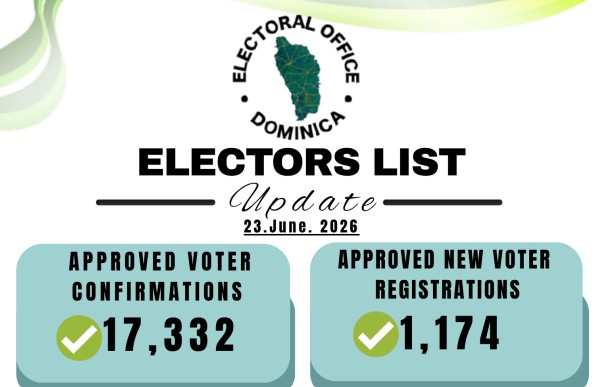
Electoral Office issues June 2026 update on electors list
As Dominica works to overhaul its electoral framework ahead of the October 2026 voter registration deadline, the island nation’s Electoral Office has reported a dramatic acceleration in voter confirmation and new registration processes, according to an official update published June 23, 2026.
Over the course of the ongoing initiative, the Electoral Office has granted final approval to 17,332 existing voter confirmations and 1,174 new voter registrations. In total, the body received 19,060 confirmation submissions and 1,474 new registration applications across the current reporting cycle. The latest numbers mark a sharp upward trend from earlier spring months, reflecting growing public participation and streamlined administrative workflows. Back in mid-May, only 8,597 confirmations had been approved; that figure crossed 11,000 by the end of May and has now surged past 17,300 in June. Approvals for new registrations have followed a similar steady upward trajectory, rising from 829 in mid-May to more than 1,100 by the end of June.
Chief Electoral Officer Anthea Joseph outlined that the ongoing voter roll update is a core component of a wider national campaign to modernize and validate Dominica’s central voter database. By cross-checking records of existing voters and adding eligible new voters, the government aims to deliver a fully accurate, up-to-date electoral roll ahead of upcoming national elections. To support the implementation of these critical reforms, the Dominica government has partnered with regional governance bodies, including the Organization of American States (OAS) and the Caribbean Community (CARICOM), which have provided technical and advisory support to strengthen electoral administrative processes and rebuild public trust in the integrity of the island’s electoral system.
Despite the progress on voter registration reform, public discourse continues around the structure of the Electoral Commission itself. Key political and civil society stakeholders, including prominent figure Gregor Nassief, have reiterated calls for full institutional restructuring of the commission to boost transparency and address long-standing public concerns over electoral governance. The Electoral Office has moved to increase openness around its work by releasing regular, periodic updates and publishing full lists of confirmed voters, with the most recent prior release covering registration activity between April 1 and April 30, 2026.
Analysts of Dominica’s electoral process note that the June 2026 update carries multiple layers of significance for the island’s reform agenda. The sharp jump in approved applications points to tangible improvements in the efficiency of voter verification workflows, while the corresponding rise in total applications submitted signals growing public awareness and engagement as the October 2026 deadline draws near. The Electoral Office’s commitment to regular public disclosure of confirmed voter rolls further underscores its pledge to uphold transparency throughout the electoral modernization process, as Dominica continues to implement changes designed to strengthen its democratic institutions.
-
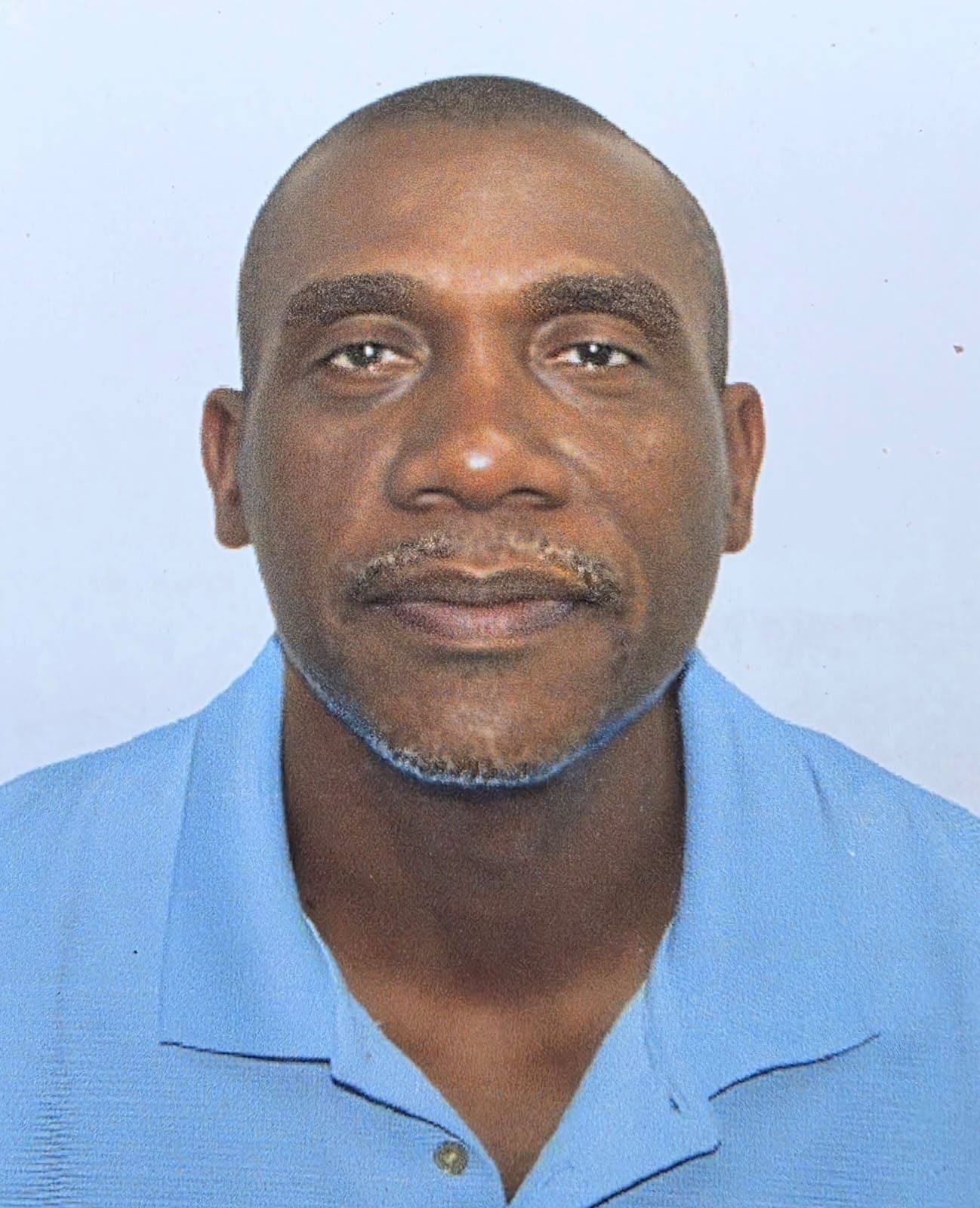
Dominica Football Association appoints Clem Bruno as Facilities Supervisor for Stockfarm
The Dominica Football Association (DFA) has made a key leadership appointment for its core training hub, announcing via an official Facebook post that Clem Bruno will take up the role of Facilities Supervisor at the DFA Technical Centre located in Stock Farm.
Bruno comes to the national football governing body with a unique professional background, having previously served as a police officer. Across his decades-long career, he has built up a robust skill set centered on strategic leadership, systematic organizational coordination, and end-to-end operational management — capabilities the DFA says align perfectly with the needs of the technical centre role.
In his new position, Bruno will carry full responsibility for steering all day-to-day activities at the Stock Farm facility, from coordinating regular upkeep and repair work to addressing operational needs as they arise. A core priority of his role will be upholding the facility’s standards to ensure it remains a secure, smoothly run, and professional space for all users and stakeholders, from national team players and youth development program participants to coaching staff and visiting football delegations.
The DFA closed its announcement with an official welcome, expressing confidence that Bruno’s professional experience will bring valuable improvements to facility management, and that he will make meaningful contributions to the ongoing development of the association’s football infrastructure across the country.
-
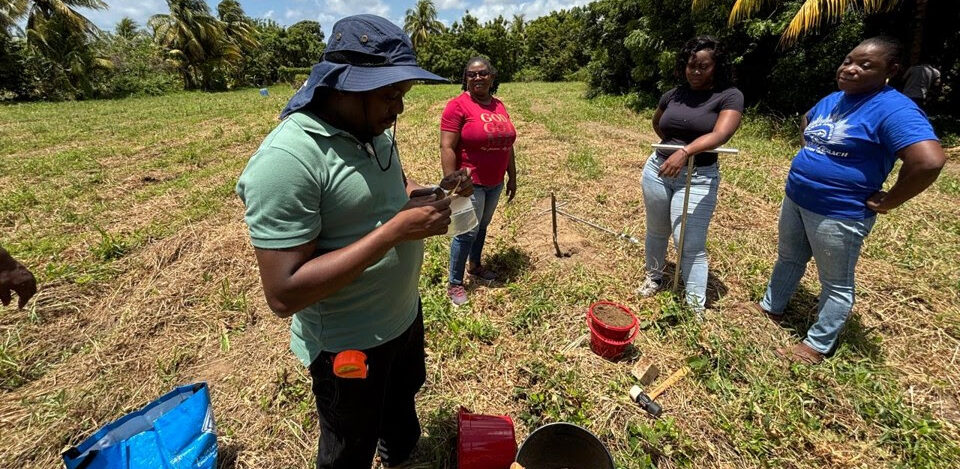
Caribbean climate-smart farming project trains 49 farmers and agricultural officers in St. Vincent
As climate change continues to intensify threats to Caribbean agricultural systems, a regional initiative centered on improving soil health and building climate resilience is rolling out targeted training to farming communities across St. Vincent and the Grenadines. Forty-nine local farmers and agricultural technical officers have recently graduated from the first round of hands-on training organized under the ADOPT Caribbean – Soil Health for Climate Resilient Agriculture project, a program designed to embed sustainable production practices and boost the agricultural sector’s ability to withstand climate shocks. The initiative is led by the Inter-American Institute for Cooperation on Agriculture (IICA) in collaboration with a network of national and regional partners, with a current focus on expanding outreach and support to small-scale farming communities in the northeast of St. Vincent and the Grenadines.
Unlike traditional theoretical-only training programs, the recent ADOPT Caribbean sessions blended structured classroom learning with immersive field-based practice to ensure participants gained both foundational knowledge and actionable, on-the-ground experience. As part of the program’s initial assessment work, technical teams collected soil samples from two key local districts—Langley Park and Orange Hill—to generate baseline data that will inform evidence-based soil management strategies for the region moving forward. Specialized training for technical officers was delivered by leading industry experts: Ronen Francis from the Partnership Initiative for Sustainable Landscape Management (PISLM) and Chaney St. Martin, IICA’s International Specialist in Water and Soil Management. Course content focused heavily on evidence-based soil health improvement techniques and the development of dedicated demonstration plots that will serve as living examples of climate-smart agriculture for local producers.
Local farmers also participated in hands-on practical workshops led by St. Martin, with support from IICA’s in-country Technical Specialist Michael Dalton and project consultant Michael Delpeche. The training curriculum covered the full cycle of crop production, from initial land preparation and optimized planting methods to ongoing crop maintenance and climate-adapted harvesting practices. According to Dalton, the program is already filling a critical gap by building specialized, context-relevant skills for both local producers and agricultural support professionals.
“ADOPT Caribbean provides an important platform for capacity building for farmers and agricultural technicians,” Dalton explained in an official IICA press statement. “We have been able to expose our local technical team to key considerations for experimental plot establishment and provided information for our farmers which gives a sound basis for their operations on their farms. We intend to further advance our interventions through forums such as these for stakeholders, with the intention to promote such practices across the country.”
Looking ahead, the next phase of the project will focus on establishing permanent demonstration plots across St. Vincent and the Grenadines, where local farmers can observe climate-smart farming techniques in action and learn how to adapt these methods to their own smallholdings. Beyond St. Vincent and the Grenadines, ADOPT Caribbean is also active in Guyana and Jamaica, forming part of a broader regional push to improve regional soil health, cut greenhouse gas emissions originating from agricultural activity, and scale up climate resilience across the Caribbean agricultural sector.
The initiative receives funding through the New Zealand Government’s Climate Smart Agriculture Initiative (NZCSA-LAC), which is New Zealand’s official contribution to the Global Research Alliance on Agricultural Greenhouse Gases (GRA). All project funding is administered through the Ag Emissions Centre. Looking forward, IICA has confirmed that the project will continue to support farmers and agricultural stakeholders across all three participating countries, with a long-term goal of mainstreaming sustainable farming practices that strengthen regional food security while preserving critical natural ecosystems.
-
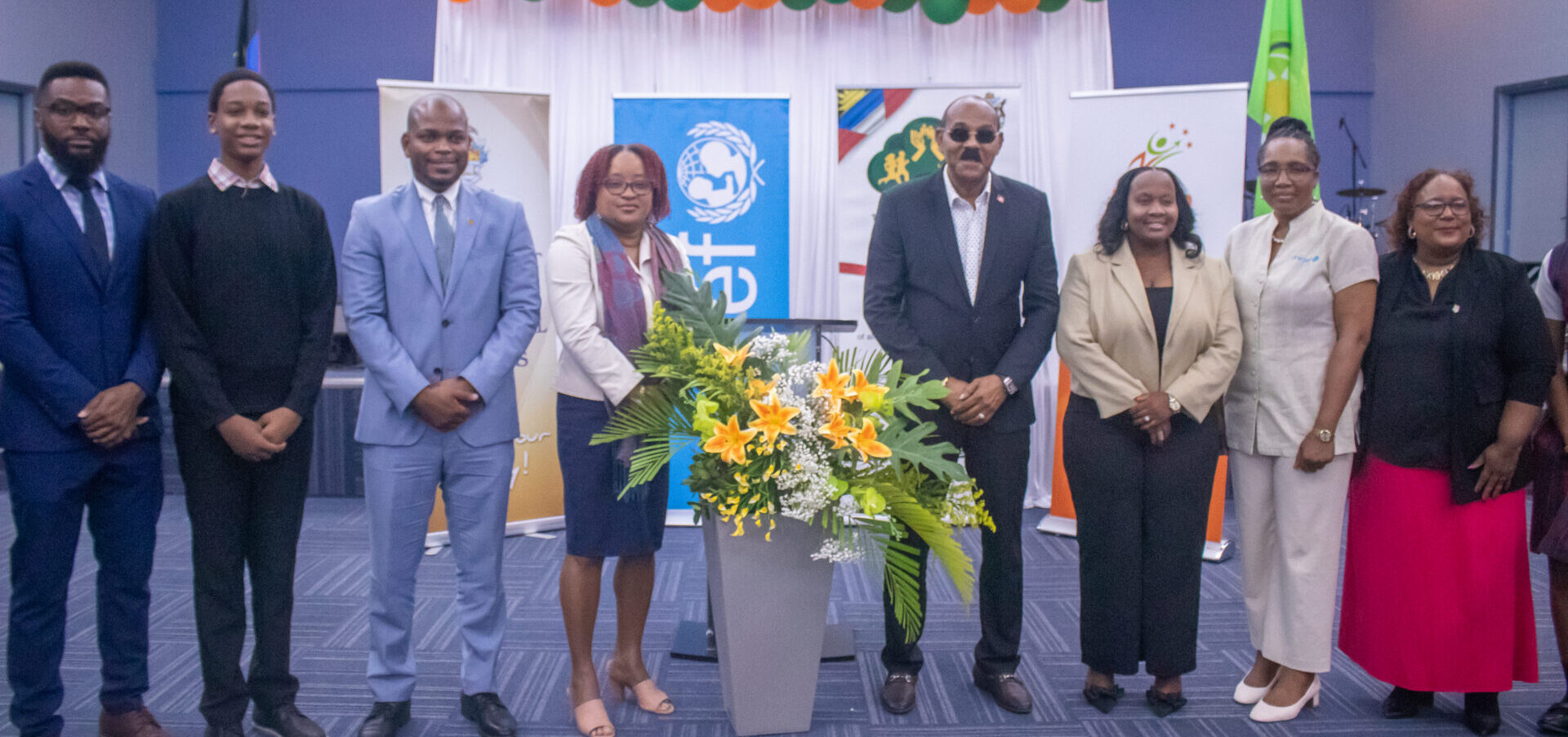
Antigua and Barbuda launches OECS’ first youth mental health chatline
A landmark new mental health support platform tailored for children and young people has officially launched in Antigua and Barbuda, marking a historic first for mental health access across the Organisation of Eastern Caribbean States (OECS). Named the Young Caribbean Minds (YCM) Chatline, this service is the region’s first free, anonymous text-based platform that integrates both mental health support and child protection resources.
The initiative is the product of a cross-sector collaborative partnership between the Government of Antigua and Barbuda, UNICEF, the University of the West Indies (UWI), the OECS Commission, and the Zenith Centre. Its dual mission is to deliver confidential psychosocial support to young people while creating a clear pathway to connect vulnerable children to formal child protection services when risk is identified.
The development of both the chatline and Antigua and Barbuda’s upcoming Mental Health Care Bill 2026 was directly informed by the largest youth mental health consultation ever held in the Eastern Caribbean. Over 1,000 children and young people contributed their perspectives through surveys, focus groups, and national dialogues, making this the first documented effort in the Caribbean to center youth input directly in shaping national mental health legislation.
The consultation’s findings are published in the *Youth Voices: Mental Health Care Bill Survey Report*, which captures feedback from respondents aged 10 to 19. Key results revealed that stigma remains the single largest barrier to youth accessing mental health care: 34.2% of respondents reported fear of judgment stopped them from seeking help. More than half of participants called for stronger safeguarding provisions in the new legislation, while nearly 90% expressed support for the bill’s rights-centered framework. Privacy was ranked the top factor for building trust in mental health services, and text-based online chat was identified as the second most preferred method of accessing support.
UNICEF confirmed that these insights directly shaped the design of the YCM Chatline. The platform operates through real-time text support delivered by trained UWI volunteers, who work under the continuous supervision of licensed professional psychologists. A core feature of the service is full anonymity: users can access support without sharing any personal identifiable information, while an integrated referral system automatically connects children flagged as at-risk to appropriate child protection authorities.
At the launch ceremony, Antigua and Barbuda Prime Minister Gaston Browne framed access to mental health care as a fundamental human right, drawing on personal experience to explain his long-standing advocacy for expanded mental health services across the country and the broader Caribbean region.
“I have been an advocate of mental health care for everyone as a fundamental right,” Browne stated. “I’ve advocated here in Antigua and Barbuda, within the region, the OECS and the United Nations, and I’m very happy to be participating in this programme, which has mental health at its epicentre.”
Addressing the persistent stigma surrounding mental illness, Browne shared, “Unfortunately, the issue of mental health has been stigmatized globally. The reason why I’m so committed to this issue is personal. Many of you may not be aware that I grew up in a single-parent home with a mentally ill mother… many times there was a crisis that could not be addressed, which made it very difficult for me and my siblings.”
Maryam Abdu, Acting UNICEF Representative for the Eastern Caribbean Area Office, called the launch a transformative milestone in expanding safe, confidential youth mental health access across the region.
“Today we reaffirm our commitment to every young person in the Caribbean: your voice matters, your feelings matter, and help is available,” Abdu said. “The Young Caribbean Minds Chatline provides a free, confidential, and accessible space so no child has to struggle alone.”
Abdu emphasized that the project reflects the Caribbean region’s commitment to centering youth needs in policy and service design: “Our region has shown the courage to listen—now we are responding. By expanding this Chatline across Eastern Caribbean member states and offering bilingual support, we are ensuring that support is truly inclusive and reaches the young people who need it most.”
She added that the initiative goes far beyond adding a new support service: “Young Caribbean Minds is more than a service—it is a promise. Built with young people’s voices and guided by local partnerships, this initiative strengthens resilience, protects children and gives families and communities the tools to help every child thrive.”
Dr. Camille Samuel, Registrar at UWI’s Five Islands Campus, highlighted the university’s role in training the chatline’s volunteer support team. “Seeing our Five Islands students step forward as volunteer chat supporters fills me with pride,” she said. “Their year-long training will build a community of empathetic, skilled peers who can change lives.”
The full public launch follows a successful five-month pilot program that delivered more than 1,000 support sessions, with 88% of pilot users reporting they would use the service again. The initiative has already earned international acclaim: it was recognized as a global best practice at the Global Conference on Child and Adolescent Mental Health in South Africa, and placed as a top three finalist in the UNICEF Global INSPIRE Awards out of more than 300 global submissions.
The official launch ceremony brought together a broad coalition of stakeholders, including Prime Minister Browne, Minister of Health, Wellness, the Environment and Civil Service Affairs Michael Joseph, Minister of Social Transformation Kiz Johnson, senior government leaders, development partners, civil society representatives, and youth delegates. Representatives from Antigua and Barbuda’s National Student Council and National Youth Parliament Association also addressed the gathering, praising the government’s commitment to expanded mental health services and calling for sustained youth inclusion in future policymaking.
The YCM Chatline received formal endorsement from OECS Health Ministers during the OECS Health Policy Forum in April 2025, and is being developed as a regional resource for all nine OECS member states. After this initial soft launch in Antigua and Barbuda, volunteer training and platform refinement will continue ahead of a phased rollout across the country and the broader Eastern Caribbean. The expansion of the initiative is set to be a key topic of discussion at the Second OECS Council of Ministers on Youth and Sports, which will be hosted by Antigua and Barbuda on August 12 and 13, 2026.
-

Joann Green’s candidacy in Roseau North by-election in doubt, says UPP leader
As the Caribbean region awaits an upcoming by-election for the Roseau North Constituency, the United Progressive Party (UPP) remains non-committal on whether community leader Joann Green will stand as the party’s official candidate, according to UPP Political Leader and Attorney Joshua Francis.
Francis shared that Green has wasted no time building connections with local voters since taking on the role of the constituency’s caretaker for the UPP. Over recent weeks, she has maintained a consistent presence on the ground, holding one-on-one meetings with constituents, attending local neighborhood gatherings, and taking part in a range of community-led initiatives across Roseau North. Her on-the-ground engagement has already laid preliminary groundwork for a potential campaign, but no final approval has been given by party leadership.
The path to a final decision is tied to a number of moving political variables, Francis emphasized. One of the most critical outstanding pieces of information is the official timeline for the contest: the UPP is still waiting for a formal announcement from the sitting Prime Minister confirming the exact date the by-election will be held. Without this key detail locked in, the party cannot move forward with cementing its candidate plans.
Beyond the election timeline, Francis also disclosed that the UPP has been holding ongoing strategic discussions with other opposition political parties across the nation. These talks are focused on coordinating opposition strategy for the by-election, and the final outcome of these negotiations will heavily influence whether Green officially appears on the ballot as the UPP’s representative. For now, the party is keeping all options open as it navigates these pre-election political negotiations.
-
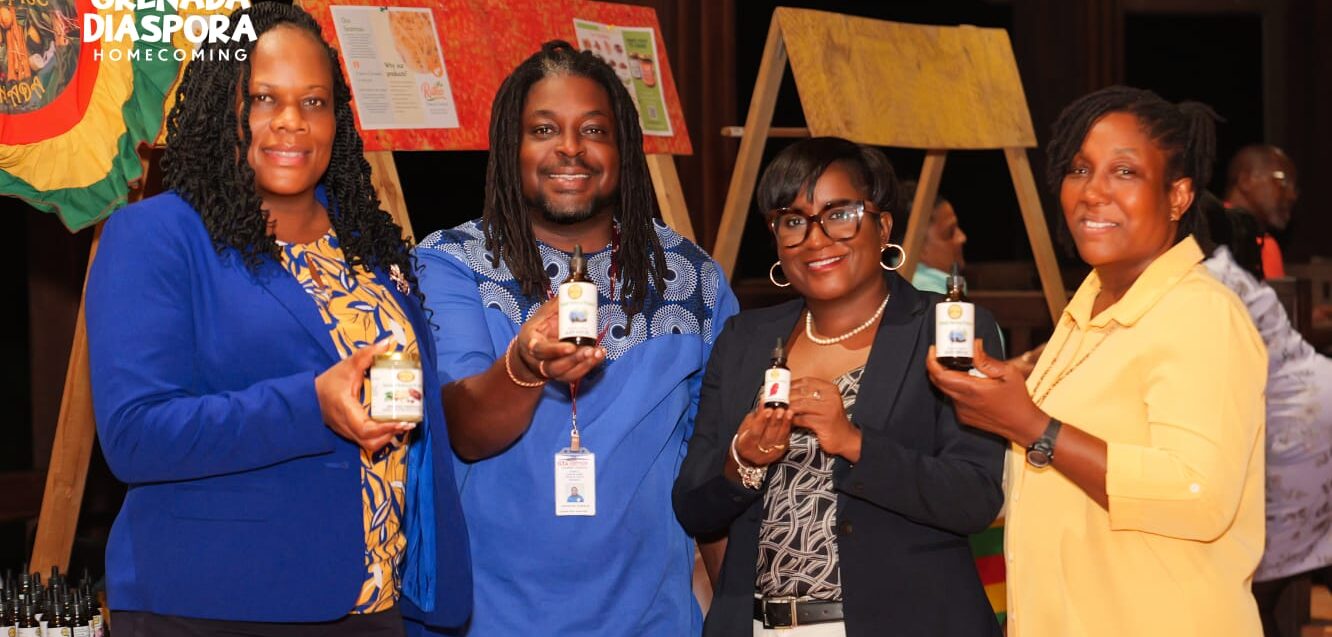
Grenada Diaspora Homecoming 2026 kicks off with warm welcome for returning nationals
Thousands of Grenadians who have built lives across the globe are now heading back to their Caribbean home, kicking off the highly anticipated Grenada Diaspora Homecoming 2026 – a two-week national event designed to celebrate shared identity, foster cross-border collaboration, and drive forward the island nation’s ongoing development. The official opening ceremony took the form of a warm Welcome Reception hosted at the iconic, history-rich Belmont Estate, where Foreign Affairs, Trade and Export Development Minister Joseph Andall personally greeted returning diaspora members and invited stakeholders.
Unlike a simple family or community reunion, this year’s Homecoming initiative is built on a deliberate, purpose-driven framework that goes far beyond nostalgic celebration. The multi-day agenda weaves together cultural immersion activities, community service projects, targeted investment roundtables, professional networking sessions, and structured opportunities for diaspora contributions to local growth. Held within the sprawling, culturally significant grounds of Belmont Estate, the opening reception brought together a diverse cross-section of attendees: returning Grenadians from every corner of the world, sitting government officials, local community leaders, domestic business partners, and other key stakeholders. The evening was rooted in core themes of reconnection and collective national pride, setting a collaborative tone for the weeks ahead.
In his opening address to attendees, Minister Andall underlined the critical, long-standing role that overseas Grenadians play in the country’s social and economic progress. “Grenada’s diaspora has never been an afterthought – it has always been a core chapter of our national story,” he told the crowd. “This Homecoming is about extending a warm welcome that is rooted in purpose. It gives us space to deepen the bonds between Grenadians at home and abroad, reinforce shared ties of identity and belonging, and explore how our collective connection can drive meaningful, lasting development across the country.”
Terrance Forrester, Ambassador for Diaspora Affairs, expanded on the initiative’s long-term goals, noting that the program was intentionally structured to build durable partnerships that deliver sustained benefits to Grenada. “Grenada Diaspora Homecoming is about far more than just coming back to visit,” Forrester explained. “It is about intentional reconnection. Our diaspora represents an incredible, untapped network of talent, global influence, specialized expertise, and untold possibility. When we create intentional spaces for Grenadians at home and abroad to meet, exchange ideas, and experience our country side by side, we unlock new doors for collaboration, foreign direct investment, global advocacy, and long-term national value that will benefit generations.”
Opening night guests got an early taste of Grenadian hospitality, traditional cultural practices, and the tight-knit community spirit that organizers have centered as a core pillar of the entire Homecoming experience. The opening reception also served as a launchpad for the full lineup of events scheduled across the two-week program, which will be hosted across Grenada and its sister islands of Carriacou and Petite Martinique. Key activities on the agenda include immersive cultural heritage experiences, grassroots community outreach projects, guided island tours highlighting ecological and historical sites, the high-profile Diaspora Forum and Marketplace, the National Spice Replanting Day environmental initiative, and dozens of smaller community-focused events.
Running from June 21 through July 5, 2026, the initiative is organized around five core pillars: reconnection, national celebration, cross-sector collaboration, business development, and national pride. Event organizers and government officials share the long-term vision of continuing to strengthen people-to-people and institutional ties between local and overseas Grenadians, while unlocking new opportunities for cross-border investment, knowledge sharing, and inclusive, sustainable national growth for the entire country.
-

CDB economists warn Caribbean faces mounting global pressures amid structural vulnerabilities
Against a backdrop of rising geopolitical friction, economic volatility, accelerating climate change and rapidly evolving global alliances, the Caribbean region faces a growing web of interconnected threats. But according to leading economists at the Caribbean Development Bank (CDB), the most critical barrier to long-term stability is not new global shocks — it is decades-old structural flaws that have left the bloc uniquely sensitive to outside disruptions.
This finding served as the core takeaway from a special policy session titled “Shockwaves: How Global Crises Are Hitting the Caribbean,” held as part of CDB’s EDGE X: Analytics Unlocked series during the Bank’s 56th Annual Meeting in Nassau, The Bahamas. The event brought together lead researchers Dr. Oronde Small and Xavier Ajani Malcolm to unpack the cascading impacts of overlapping global crises on Caribbean economies and outline actionable policy strategies to boost regional resilience.
During the presentation, Malcolm emphasized that Caribbean nations are not confronting one isolated crisis, but a perfect storm of simultaneous challenges originating both at home and abroad. On the external front, the region grapples with climate-fueled natural disasters, protectionist “America-first” trade frameworks, growing fragmentation in global multilateral institutions, the ongoing conflict in Iran, heightened U.S. military engagement in the broader Caribbean and Venezuelan region, and the long-running humanitarian crisis in Cuba.
These external pressures are amplified by deep-seated domestic weaknesses that have persisted for generations, CDB’s official press release confirms. Key structural vulnerabilities include limited economic diversification across most Caribbean states, extreme reliance on just a handful of export markets, heavy dependence on imported essential goods, chronically low productivity levels, and a large, unregulated informal economic sector that undermines government revenue and policy stability.
Trade policy uncertainty emerged as another top risk highlighted during the session. Recent shifts in global trade rules, particularly the expansion of U.S. tariffs and persistent ambiguity around future tariff adjustments, threaten to dampen cross-border investment, raise financing costs for regional governments and businesses, and slow intra-regional trade. Economists stressed that tourism-reliant economies, which form the backbone of most Caribbean national incomes, face the greatest exposure to these trade disruptions.
The region’s heavy dependence on imported food and fossil fuels creates additional volatility, leaving national budgets and consumer prices hostage to unpredictable swings in global commodity markets. This dependency makes it far more difficult for central banks and governments to control inflation and maintain steady economic growth, CDB researchers noted.
Another worrying trend raised at the meeting is the steady decline in international development assistance. Global net official development assistance dropped by more than 8% in 2024, and multiple Caribbean nations saw deep cuts to U.S. development financing in 2025. This pullback comes at a critical moment, when Caribbean countries need massive capital investment for infrastructure upgrades, development projects and climate adaptation measures. Reduced aid will likely limit access to low-interest concessional financing, putting these critical goals out of reach for many nations.
Climate change remains the single most pressing long-term threat to the region, Malcolm confirmed. Caribbean small island developing states already experience far higher levels of damage from climate-fueled natural hazards than most other small states globally. Rising sea levels, increasing average temperatures, more intense and frequent hurricanes, and regular climate-related disruptions continue to erode progress on economic growth and sustainable development.
Malcolm also pointed out that climate shocks do not need to hit the Caribbean directly to impact regional economies. Climate disasters hitting major trading partners and key source markets for tourism can cut visitor arrivals, depress consumer spending in source countries and reduce foreign direct investment, creating indirect but severe economic headwinds for the region.
Dr. Small added that recent rapid shifts in global geopolitics have added a new layer of uncertainty for a region that has always been heavily dependent on global economic and political conditions.
“It’s becoming increasingly clear that these are not episodic events. They are structural features of the global space and have potentially significant implications for [the Bank’s] Borrowing Member Countries,” he told session attendees.
Despite the long list of daunting challenges, both researchers stressed that the Caribbean has clear, actionable pathways to build greater resilience. The core policy recommendations from CDB include expanding economic diversification to broaden both export products and trading partners, accelerating the transition from imported fossil fuels to domestic renewable energy, strengthening national food security, boosting productivity through targeted investment in innovation, upgrading climate adaptation and disaster preparedness infrastructure, improving public financial management to reduce fiscal vulnerability, and deepening cross-border regional cooperation to share resources and reduce individual country risk.
In their closing remarks, the economists concluded that Caribbean countries with strong, accountable public institutions — particularly robust, transparent fiscal frameworks — will be far better positioned to weather current and future external shocks. Building long-term resilience will require proactive, forward-thinking policy choices and sustained collaborative action across the region, they emphasized, to help Caribbean economies navigate an increasingly uncertain global landscape.
-

Venezuela declares state of emergency after deadly twin earthquakes
On a Wednesday evening, Venezuela was struck by an extremely rare and devastating seismic event that has quickly escalated into one of the worst humanitarian crises the South American nation has faced in decades. Two massive earthquakes, registering magnitudes 7.2 and 7.5 respectively, hit just 39 seconds apart near the coastal town of Morón, located roughly 170 kilometers west of the capital Caracas. The U.S. Geological Survey (USGS) has classified the event as an unusual seismic doublet, marking the 7.5-magnitude tremor as the most powerful earthquake to hit Venezuela since 1900. Compounding the destruction, both quakes originated at a shallow depth of just 13 kilometers, which greatly amplified shaking and structural damage across a wide swathe of the country.
The capital Caracas bore the brunt of the destruction, with dozens of buildings reduced to rubble, including multiple high-rise residential towers in the heavily populated Baruta and Chacao districts. Critical transportation infrastructure was knocked offline: Simón Bolívar International Airport, the country’s main international gateway, was forced to completely suspend operations after suffering what officials described as severe structural damage. All metro and intercity rail services were also immediately halted, and viral social media footage captured terrified passengers running for cover as falling debris crashed through terminal walkways.
In the wake of the initial quakes, authorities recorded at least 30 aftershocks overnight, leaving communities and first responders on edge over the risk of additional building collapses. As of the latest updates, the confirmed death toll stands at 164, with nearly 1,000 people injured. Acting President Delcy Rodríguez has warned that the casualty count is expected to rise sharply as rescue teams work to reach cut-off and devastated areas, with multiple people still reported trapped under collapsed structures in Altamira district, a neighborhood that hosts multiple foreign embassies.
Local hospitals across Caracas are already overwhelmed by the influx of injured patients, prompting officials to convert unused school buildings into emergency shelters to house thousands of displaced residents. In a televised address to the nation, Rodríguez extended heartfelt condolences to families who lost loved ones, urging all citizens to evacuate any structurally damaged buildings and remain calm amid ongoing response efforts. Venezuela’s Interior Minister Diosdado Cabello further cautioned that lingering aftershocks could continue to weaken already compromised structures, raising the risk of additional collapses in the coming days.
Tremors from the quakes were felt as far away as Brazil’s Amazon basin, and regional emergency management officials issued temporary tsunami warnings for Puerto Rico and the U.S. Virgin Islands as a precaution. In the hours following the disaster, offers of urgent humanitarian assistance began pouring in from across the globe. The United States announced it would deploy specialized search and rescue teams, ship critical medical supplies, and provide full logistical support for relief operations. Former U.S. President Donald Trump stated that Washington was “ready, willing and able to help,” while then-Secretary of State Marco Rubio confirmed the deployment of American relief personnel. Spain has committed 54 specialized army rescuers to the effort, and France is preparing to deploy 85 emergency response workers. Pope Francis pledged 100,000 euros in immediate aid, and United Nations officials have called on Venezuelan authorities to maintain open communication channels, emphasizing that timely public access to information is a “life-and-death matter” during ongoing rescue operations.
With thousands of residents displaced, key national infrastructure destroyed, and rescue operations still in their early stages, Venezuela now confronts one of the gravest humanitarian challenges it has faced in modern history.