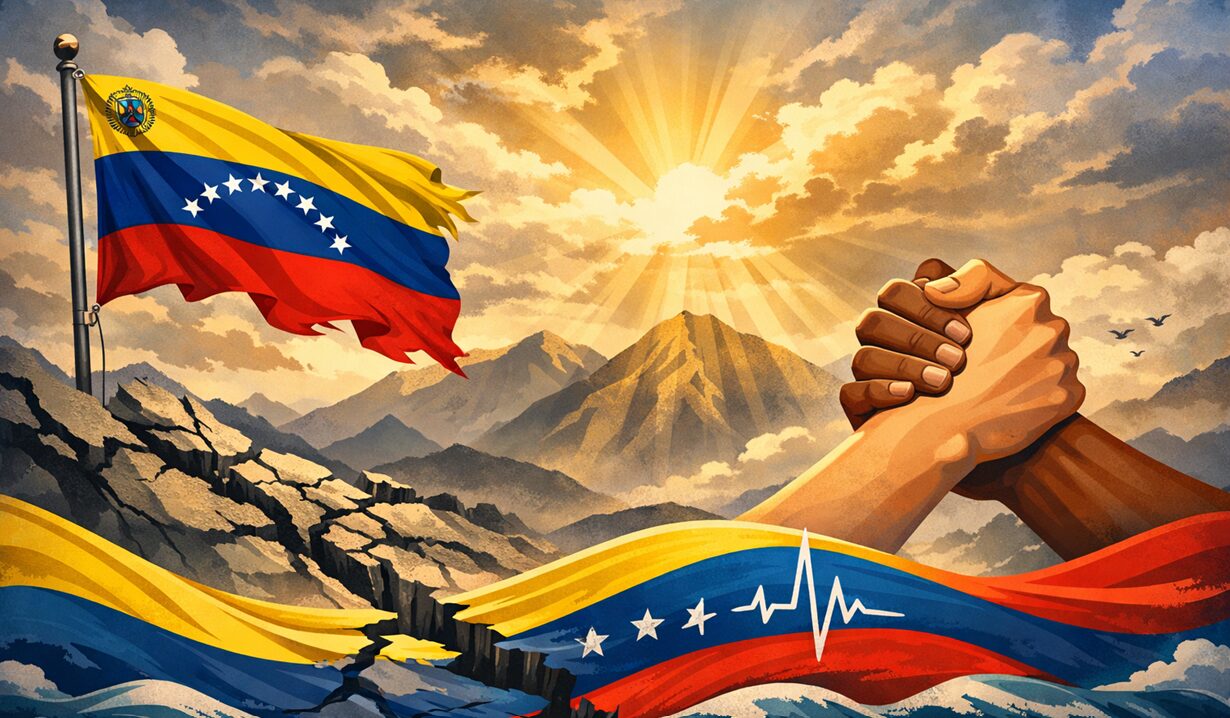
On a Wednesday evening, Venezuela was struck by an extremely rare and devastating seismic event that has quickly escalated into one of the worst humanitarian crises the South American nation has faced in decades. Two massive earthquakes, registering magnitudes 7.2 and 7.5 respectively, hit just 39 seconds apart near the coastal town of Morón, located roughly 170 kilometers west of the capital Caracas. The U.S. Geological Survey (USGS) has classified the event as an unusual seismic doublet, marking the 7.5-magnitude tremor as the most powerful earthquake to hit Venezuela since 1900. Compounding the destruction, both quakes originated at a shallow depth of just 13 kilometers, which greatly amplified shaking and structural damage across a wide swathe of the country.
The capital Caracas bore the brunt of the destruction, with dozens of buildings reduced to rubble, including multiple high-rise residential towers in the heavily populated Baruta and Chacao districts. Critical transportation infrastructure was knocked offline: Simón Bolívar International Airport, the country’s main international gateway, was forced to completely suspend operations after suffering what officials described as severe structural damage. All metro and intercity rail services were also immediately halted, and viral social media footage captured terrified passengers running for cover as falling debris crashed through terminal walkways.
In the wake of the initial quakes, authorities recorded at least 30 aftershocks overnight, leaving communities and first responders on edge over the risk of additional building collapses. As of the latest updates, the confirmed death toll stands at 164, with nearly 1,000 people injured. Acting President Delcy Rodríguez has warned that the casualty count is expected to rise sharply as rescue teams work to reach cut-off and devastated areas, with multiple people still reported trapped under collapsed structures in Altamira district, a neighborhood that hosts multiple foreign embassies.
Local hospitals across Caracas are already overwhelmed by the influx of injured patients, prompting officials to convert unused school buildings into emergency shelters to house thousands of displaced residents. In a televised address to the nation, Rodríguez extended heartfelt condolences to families who lost loved ones, urging all citizens to evacuate any structurally damaged buildings and remain calm amid ongoing response efforts. Venezuela’s Interior Minister Diosdado Cabello further cautioned that lingering aftershocks could continue to weaken already compromised structures, raising the risk of additional collapses in the coming days.
Tremors from the quakes were felt as far away as Brazil’s Amazon basin, and regional emergency management officials issued temporary tsunami warnings for Puerto Rico and the U.S. Virgin Islands as a precaution. In the hours following the disaster, offers of urgent humanitarian assistance began pouring in from across the globe. The United States announced it would deploy specialized search and rescue teams, ship critical medical supplies, and provide full logistical support for relief operations. Former U.S. President Donald Trump stated that Washington was “ready, willing and able to help,” while then-Secretary of State Marco Rubio confirmed the deployment of American relief personnel. Spain has committed 54 specialized army rescuers to the effort, and France is preparing to deploy 85 emergency response workers. Pope Francis pledged 100,000 euros in immediate aid, and United Nations officials have called on Venezuelan authorities to maintain open communication channels, emphasizing that timely public access to information is a “life-and-death matter” during ongoing rescue operations.
With thousands of residents displaced, key national infrastructure destroyed, and rescue operations still in their early stages, Venezuela now confronts one of the gravest humanitarian challenges it has faced in modern history.