标签: Dominica

多米尼克

  • CARICOM to hold regional meeting on issues affecting Rastafarians

    CARICOM to hold regional meeting on issues affecting Rastafarians

    The Caribbean Community (CARICOM) is moving forward with a landmark regional effort to confront long-standing inequities facing Rastafarian communities across the bloc, organizing a high-level gathering that will bring together member state representatives and community stakeholders to address widespread systemic challenges.

    In an official press statement announcing the initiative, CARICOM outlined that the plan was formalized during the 42nd Inter-Sessional Meeting of the Conference of Heads of Government, held on May 8, 2026. The decision comes amid sustained, growing concerns over persistent discrimination and social marginalization that Rastafarians continue to face both across Caribbean nations and on the global stage. During the leadership gathering, regional heads of government openly acknowledged that Rastafarian residents regularly encounter structural barriers that limit access to core opportunities in everyday life, spanning equitable access to education, gainful employment, and full, unhindered participation in public governance and community life. Leaders reaffirmed their unwavering commitment to upholding equal rights for Rastafarians, stressing that the community must receive the same legal protections, social recognition, and fundamental rights guaranteed to all other groups within Caribbean society.

    To turn this commitment into tangible action, CARICOM member states have voted to establish a dedicated regional committee tasked with examining the full scope of challenges impacting Rastafarian communities at both the regional and international levels. The committee will draw representation from five key CARICOM nations: Barbados, Jamaica, St. Kitts and Nevis, St Vincent and the Grenadines, and Trinidad and Tobago. It will be responsible for advancing inclusive discussions with Rastafarian stakeholders and developing evidence-based, practical policy solutions to address the harms and inequities raised by community members.

    The meeting also highlighted that a number of individual CARICOM nations have already taken unilateral steps to redress historical injustices against the Rastafarian community. These early actions include formal government apologies for past discriminatory policies, targeted land grants to Rastafarian groups, and the passage of new anti-discrimination legislation that bans unfair treatment of Rastafarians in workplaces. Regional leaders framed these national-level efforts as important examples of meaningful progress, which can now serve as a foundation for a more coordinated, bloc-wide approach to advancing equity.

    The upcoming regional discussion is expected to create a collaborative space for governments, civil society partners, and Rastafarian representatives to examine these issues in greater depth. Participants will work to identify shared strategies for strengthening legal protections for Rastafarian rights and embedding greater social inclusion across all member states of the Caribbean Community.

  • Wayne George Football Academy receives EC$5,000 support from RUBIS

    Wayne George Football Academy receives EC$5,000 support from RUBIS

    Dominica’s long-running grassroots football program, the Wayne George Football Academy, has received critical financial support from local fuel brand Team RUBIS to upgrade its athlete resources ahead of the organization’s upcoming competitive fixtures. In a recent official press statement, the academy announced the EC$5,000 donation, which will be allocated exclusively to purchasing new team uniforms and modern football training and match equipment for its young roster of players.

    The contribution from Team RUBIS is designed not just to outfit athletes for upcoming matches, but also to sustain the academy’s 15-plus-year mission of nurturing youth football talent across the island nation. Vanalda Henry-Vidal, Accounts Executive at RUBIS, noted that the company was proud to formalize this partnership with the community-focused academy.

    “Sports play a fundamental role in shaping the next generation of leaders, instilling core values like collaborative teamwork, personal discipline, and persistent resilience,” Henry-Vidal said in a statement shared alongside the announcement. “We are honored to contribute to an initiative that directly improves young lives and makes our local community stronger.”

    Wayne George, founder and head coach of the academy, expressed sincere gratitude for Team RUBIS’ investment in the program and its young athletes. He emphasized that corporate partnerships like this are instrumental to the academy’s work of growing football talent and molding well-rounded, responsible citizens out of program participants. “A huge thank you to RUBIS for partnering with us to nurture young football talent and help us build future leaders and community members. We deeply appreciate this support and look forward to continuing our collaboration moving forward,” George said.

    Founded all the way back in 2008, the Wayne George Football Academy is a legally registered, community-led football development program that has served young Dominicans for over 15 years. Headquartered in Bath Estate, the academy welcomes both boys and girls starting at age five, and currently supports more than 100 active young players across age groups. It has grown into a cornerstone of grassroots football development in Dominica, holding weekly training sessions every Saturday, organizing regular friendly matches against other local teams, and fielding senior squads that compete in official local leagues run by the Dominica Football Association.

    Over its decades of operation, the academy has helped develop dozens of promising young footballers, while embedding values of leadership, teamwork and discipline in all participants. The new funding from Team RUBIS will remove longstanding resource barriers, providing the gear and uniforms that players need to thrive both on the pitch and in their personal growth off the field, positioning the program to expand its positive impact across Dominica’s youth sports community.

  • Pearly Eusebe hits 102; three other centenarians share June birthdays

    Pearly Eusebe hits 102; three other centenarians share June birthdays

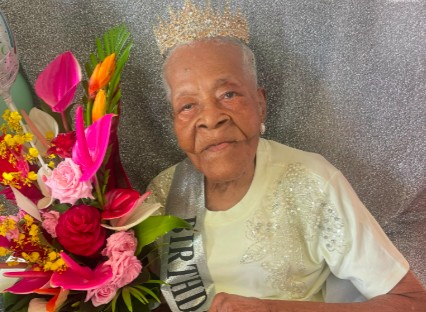
    On June 30, 2024, Pearly Paulina Ferdinand Eusebe — affectionately known to all as Auntie Pearly — marked her 102nd birthday, capping a century of life defined by unshakable resilience, quiet compassion, and a decades-long commitment to turning her childhood dream into reality. Born exactly 102 years ago in the small Dominican community of Delices, Auntie Pearly grew up as the second of seven siblings, her early years shaped by the humble, often harsh realities of rural life in the 1920s and 1930s.

    Even at age five, Auntie Pearly walked three miles barefoot to reach her local school, carrying her daily lunch in a repurposed butter tin. Her route crossed multiple rushing streams; during seasonal heavy rains, the crossings became impassable, forcing her to miss classes entirely. It was at this school that a young Auntie Pearly first learned of the Second World War: her strict headmaster, Teacher Didier, read daily newspaper updates to students, discussing Hitler, Churchill, and the conflict’s global reach. Back in the village, entire communities gathered at the local church every afternoon to pray for an Allied victory, reciting the collective chant “Down with Hitler.”

    Auntie Pearly’s lifelong calling to nursing emerged during a childhood trip to the village clinic for a vaccination. As she watched the nurse calmly care for patients, she knew immediately that she wanted to dedicate her life to helping others — a dream she would hold close through decades of setbacks. When she left school at 15, Teacher Didier helped her submit an application to a local hospital, but she never received a response. Her mother, resigned to the barriers facing poor rural girls, was not surprised. Refusing to accept her fate, Auntie Pearly moved to Dominica’s capital Roseau to live with relatives, taking a job as a live-in domestic servant that she openly disliked.

    A year later, her good character caught the attention of Cissie Caudeiron, a Dominican woman married to a French engineer based in Venezuela. Caudeiron hired Auntie Pearly as a nanny for her five children, and when Caudeiron relocated to Venezuela permanently, she left the young nanny to care for the children in her absence. When the order came to bring the children to Venezuela, 20-something Auntie Pearly set off alone on a multi-leg sea journey, first to Grenada, then to Trinidad. The ship’s captain was stunned by her youth, exclaiming, “But you are only a child!”

    Even as she cared for Caudeiron’s children through years of international relocation, first in Venezuela and later in Trinidad, Auntie Pearly never abandoned her dream of nursing. Multiple applications were met with silence, rejection rooted in her humble origins. In Venezuela, she even survived being caught in the crossfire of the national revolution; soldiers and rebels paused their fighting to let the stranger pass, a small moment of grace amid chaos that she would remember for the rest of her life. While in Trinidad, she joined the local church choir, where her soaring voice and command of Latin hymns won her widespread admiration.

    Decades after she first dreamed of becoming a nurse, Auntie Pearly finally got her chance. After stints working in Dominica and Curaçao, she moved to England to join her sister, who worked at a London hospital. Now in her early 40s, she feared she was too old to train, but a doctor she met through her sister encouraged her, telling her: “Once you have life and are prepared to learn, nothing is impossible.” Auntie Pearly threw herself into studying anatomy and physiology alongside students half her age, passed every exam, and officially qualified as a registered nurse in England.

    Her career was a testament to her warmth and devotion: patients affectionately called her “Mama,” explaining to the hospital matron that she was far more than a nurse — she was a caring maternal figure to all who relied on her. To supplement her modest nursing salary, she took extra shifts through a medical agency on her days off, saving every extra penny to buy a home back in Dominica and support her parents and siblings back home. A devout Catholic, she relied on her faith through every challenge, often praying during her daily commute through London, calling God her constant protector.

    Today, at 102, Auntie Pearly remains sharp, lucid, and in good health, with a sharp sense of humor and a memory that retains every detail of her 10 decades of life. She still maintains her independence, cooking her own meals, cleaning her own catch of fish, making her favorite cocoa tea every morning, and tending to her own household. She loves talking about her nursing career, and delights in conversing in fluent Spanish with visiting doctors, a skill she picked up during her years in Venezuela. Though she regrets no longer being able to walk the local streets, and finds modern noise like loud motorbikes and music jarring, her attitude remains positive and warm.

    Auntie Pearly’s remarkable life story is now being captured in a biography written by author Mary Isidore, giving audiences the chance to learn more about her extraordinary journey. She is not the only centenarian from Dominica celebrating a milestone birthday this June: Mathew St. Rose of Kings Hill turned 100 on June 16, Margaret Andre of Goodwill marked her 101st birthday on June 12, and Lucille Pascal of Grand Fond celebrated her 100th birthday on June 22.

  • Sperm Whale Reserve Board launches consultations with watersports operators in Dominica to advance whale reserve inititiative

    Sperm Whale Reserve Board launches consultations with watersports operators in Dominica to advance whale reserve inititiative

    The Caribbean island nation of Dominica has reached a critical early milestone in the development of its groundbreaking, world-first sperm whale conservation reserve, as the newly appointed governing board for the project has launched its first round of engagement with key local industry stakeholders.

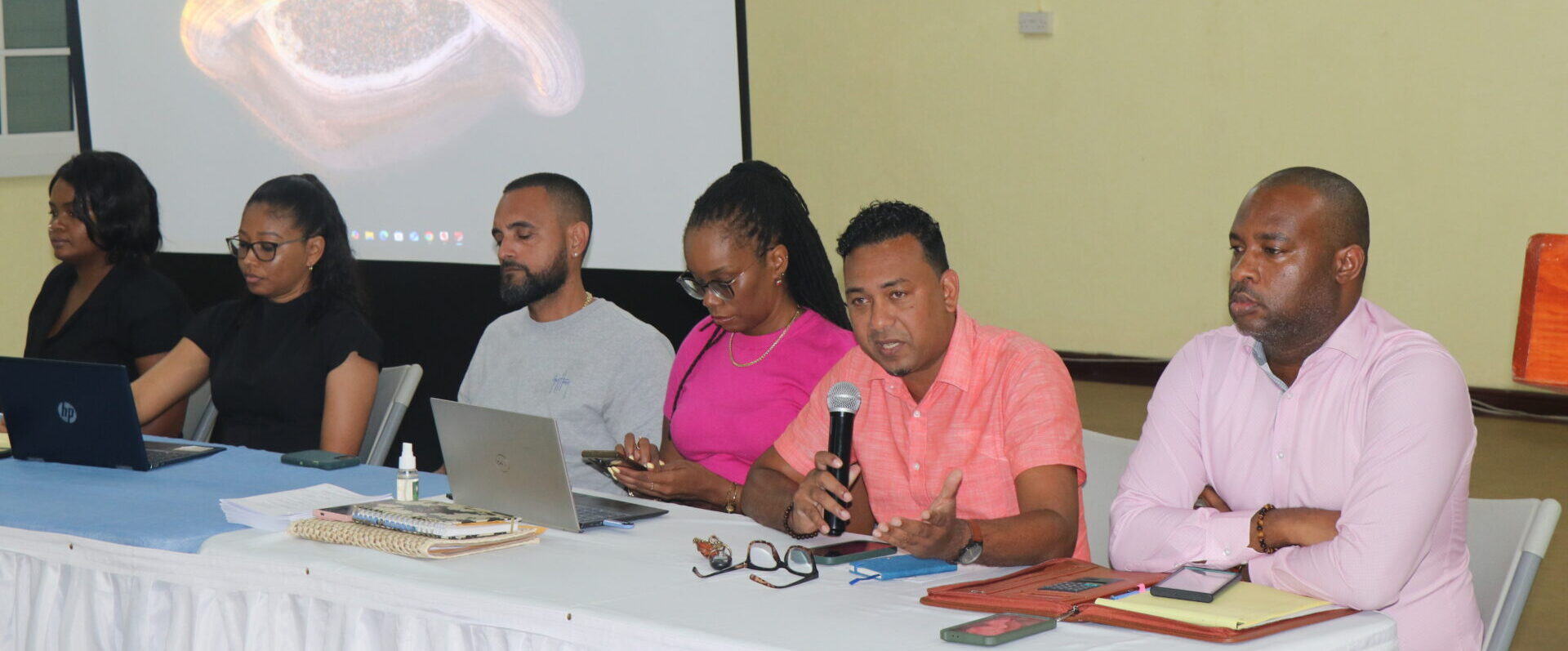
    On June 10, 2026, the 10-member Sperm Whale Reserve Board gathered with watersports and whale watching operators at the St. Alphonsus Parish Hall in Goodwill, marking the board’s first public consultation since it was formally established under the 2025 Sperm Whale Reserve Act. The gathering allowed board members to introduce their roles, share updates on the reserve’s development timeline, and lay out the core mandate and long-term objectives that will guide the body’s work.

    As the governing body tasked with strategic oversight of the unique protected area, the board draws representation from across public and private sectors to ensure diverse perspectives shape management of the reserve. Its membership includes delegates from multiple government ministries, the Dominica Air and Sea Ports Authority, the Dominica Watersports Association, two local fishermen’s cooperatives, a national scientific research institution, and the country’s Maritime Unit, creating a cross-sector governance framework designed to balance competing priorities for marine use.

    Lisa Valmond, chair of the Sperm Whale Reserve Board and Permanent Secretary in Dominica’s Ministry of Environment, opened the consultation by emphasizing the non-negotiable value of collaborative governance for the initiative. Valmond stressed that long-term conservation success depends on centering the needs and input of local stakeholders whose livelihoods are inherently tied to the health of the island’s marine ecosystems.

    Jullan Defoe, Minister of State in the Ministry of Agriculture, Fisheries, Blue and Green Economy, echoed that sentiment during his address to the gathering, noting that inclusive collaboration is the foundation of the reserve’s long-term viability. “The success of the Sperm Whale Reserve depends on meaningful collaboration with those who interact with our marine resources daily,” Defoe told attendees. “Through continued engagement and shared responsibility, we can protect this globally significant population of sperm whales while supporting sustainable economic opportunities for present and future generations.”

    The reserve itself marks a historic milestone in global marine conservation: it is the first protected area in the world created specifically for the long-term protection of sperm whales and their critical deep-water habitat off Dominica’s coast. The board’s core priorities span far beyond species protection, integrating conservation with sustainable economic development aligned with Dominica’s broader blue and green economy strategy. Key mandates include conserving the island’s resident sperm whale population and their habitat, advancing science-backed sustainable marine resource management, supporting ongoing research and population monitoring, developing standards for responsible whale watching and marine tourism, expanding public outreach on marine conservation, strengthening cross-stakeholder cooperation, and building a resilient, inclusive blue economy that benefits local communities.

    Industry representatives in attendance at the June 10 consultation responded positively to the board’s outreach. Delegates from the Dominica Watersports Association and local whale watching operators welcomed the opportunity for direct, ongoing dialogue with the reserve’s governing body, and reaffirmed their commitment to collaborative stewardship that positions Dominica as a global benchmark for responsible marine conservation.

    This first consultation is the opening of a series of ongoing engagement sessions planned by the board, designed to ensure that local stakeholders, community members, researchers, and conservation partners all have a voice in shaping the reserve’s management framework. Government officials frame the initiative as a landmark model that proves it is possible to balance rigorous species protection with inclusive, sustainable economic growth. Through intentional collaborative governance, the reserve is set to not only safeguard one of Dominica’s most iconic and ecologically valuable marine species, but also cement the island’s global reputation as a leader in innovative, community-centered marine conservation that will benefit generations to come.

  • St. Lucia’s Pierre Pledges People-Centred Agenda as He Prepares to Chair CARICOM

    St. Lucia’s Pierre Pledges People-Centred Agenda as He Prepares to Chair CARICOM

    As Saint Lucia Prime Minister Philip J. Pierre prepares to take the reins of the Caribbean Community (CARICOM) on July 1, he has laid out a bold, citizen-focused vision aimed at revitalizing regional integration, boosting collective resilience, and advancing inclusive sustainable development across the Caribbean bloc.

    In an official public statement ahead of assuming the one-year chairmanship, Pierre framed his appointment as a profound responsibility to the people of the region, saying he accepts the role with humility, unwavering determination, and a deep-rooted commitment to public service for all Caribbean nations.

    Pierre reaffirmed the core founding principle that has guided CARICOM since its establishment: that Caribbean member states are far more powerful when working in collaboration than acting independently. That foundational belief, he stressed, has not lost its relevance amid the shifting global landscape of the 21st century – it is more critical than ever.

    Against the backdrop of a rapidly evolving global order, Pierre acknowledged that Caribbean nations are currently navigating unprecedented economic shifts and complex cross-border challenges that demand deeper cooperation, innovative problem-solving, and unwavering regional unity. He noted that a growing number of ordinary Caribbean citizens are asking a pressing question that will shape his tenure: how can CARICOM deliver tangible, meaningful improvements to everyday life across the region? That inquiry, he said, will serve as the north star for all the bloc’s work during his term.

    A top priority for Pierre’s chairmanship will be making CARICOM more visible, accessible, and relevant to everyday citizens, moving beyond high-level diplomatic meetings and formal declarations to embed regional integration in communities, schools, small businesses, and family homes across all member states.

    “CARICOM must continue to move closer to the people,” Pierre said. “It must be seen and felt not only in meetings and declarations, but also in communities, schools, businesses, homes, and in the opportunities available to every Caribbean citizen.”

    He outlined six key focus areas for his term: accelerating urgent climate action to address the Caribbean’s disproportionate vulnerability to global warming; strengthening regional food and nutrition security to shield communities from global supply chain disruptions; driving inclusive, sustainable economic growth that lifts all segments of society; speeding up digital transformation to close the digital divide across the region; expanding cross-border trade and foreign direct investment opportunities; and streamlining the free movement of people, skilled labor, services, and innovative ideas across the CARICOM bloc.

    Inclusivity will be a central throughline of all policy efforts, Pierre emphasized. He insisted that every Caribbean citizen must see their needs and priorities reflected in the regional agenda, no matter their age, gender, physical ability, socioeconomic background, occupation, or personal circumstance.

    Pierre also made public safety a core priority, noting that long-term development and community security are inherently interconnected. He pledged to work collaboratively with all member states to build safer, more stable societies where all citizens can thrive.

    Ultimately, Pierre argued, the true measure of CARICOM’s success is not the number of agreements signed or summits held, but whether ordinary citizens can actually feel the benefits of regional integration in their daily lives. “Integration that our people cannot feel will not last,” he noted.

    Looking ahead to his tenure, Pierre called on all CARICOM member states to maintain unwavering solidarity in pursuit of shared goals. He expressed clear confidence that the region can emerge more united, more inclusive, more resilient, and better prepared to face future challenges.

    In closing, Pierre urged all Caribbean citizens to stand together to move from collective resilience in the face of crisis to widespread renewal and revival, building a stronger, more prosperous Caribbean Community for current and future generations.

  • Number of people living with cancer in DA is ‘alarming’, Dr. Velda Wade says

    Number of people living with cancer in DA is ‘alarming’, Dr. Velda Wade says

    In a stark warning delivered at the Dominica Cancer Society’s Annual General Meeting, held recently at the UWI Global Campus, medical practitioner Dr. Velda Wade has sounded the alarm over a growing public health crisis in the small Caribbean nation. Dr. Wade revealed that roughly 300 people across Dominica are currently living with a cancer diagnosis – a statistic that carries extraordinary weight for a country with such a limited population.

    The recorded cases cover every stage of the disease, she explained: from patients still awaiting confirmation of their diagnosis, to those actively undergoing chemotherapy treatment, individuals in remission, and patients receiving end-of-life care. Given the profound physical, emotional and financial strain that cancer places on healthcare systems and families alike, Dr. Wade emphasized that this caseload qualifies as an epidemic for Dominica.

    Calling the situation both dangerous and devastating, Dr. Wade framed the rising cancer burden as a wake-up call for the entire country. She added that the issue extends far beyond Dominica’s borders, noting that uncontrolled cancer rates are a shared challenge across the Caribbean region and the entire globe. “This is a nation under attack, a region under attack, a world of trouble,” she stated, challenging every citizen to examine what role they can play in confronting the rapidly growing burden of the disease.

    Citing global research from the World Health Organization and the International Agency for Research on Cancer, Dr. Wade highlighted that proactive prevention can drastically cut cancer rates. The data shows that as many as 40% of all cancer cases globally are preventable through targeted changes to environmental and infectious risk factors. This statistic, she explained, proves that individual and collective action holds real power to reduce the national cancer toll. Dr. Wade closed by urging greater investment in public health outreach, expanded preventive health initiatives, and coordinated community action to turn the tide on Dominica’s growing cancer crisis.

  • Supreme Court blocks Trump’s executive order to restrict birthright citizenship

    Supreme Court blocks Trump’s executive order to restrict birthright citizenship

    In a landmark 6-3 decision that upholds a century-and-a-half-old legal precedent, the U.S. Supreme Court has invalidated an executive order from former President Donald Trump that aimed to curtail the long-standing policy of birthright citizenship. The ruling reaffirms the bedrock constitutional guarantee laid out in the 14th Amendment: any child born on U.S. soil is automatically granted American citizenship, no matter the immigration status or visa classification of their parents.

    Writing for the court’s majority, the lead justice emphasized that the principle of birthright citizenship, enshrined when the 14th Amendment was ratified in the wake of the Civil War in 1868, remains an unshakable cornerstone of U.S. statutory and constitutional law. Trump first introduced the controversial executive order earlier this year, framing it as a necessary step to end automatic citizenship for infants born to parents who are either residing in the U.S. without legal authorization or holding temporary non-immigrant visas.

    In the hours after the ruling was made public, Trump voiced sharp frustration through his social media platforms. He described the high court’s decision as “too bad for our country” and argued that the U.S. Congress could pass standalone legislation to abolish the constitutional birthright citizenship provision. Leading legal scholars across the political spectrum have pushed back on this claim, noting that any modification to birthright citizenship would require a full constitutional amendment — a lengthy, high-threshold process that is far outside the scope of ordinary federal legislation, leaving Trump with no viable immediate path to advance his policy goal.

    The Supreme Court’s latest session also delivered two other consequential rulings that will reshape U.S. policy in sports and campaign finance. In the first, the court’s majority ruled that individual U.S. states have the authority to implement bans barring transgender student athletes from competing on women’s sports teams at the K-12 and collegiate levels. In the second, the justices struck down long-standing legal limits on coordinated campaign spending between candidates and outside political groups, a change that political analysts expect will dramatically reshape how federal and state campaigns approach fundraising and electoral strategy heading into future election cycles.

  • Cultural Division postpones Miss Wob Dwiyet 2026 Official Reveal

    Cultural Division postpones Miss Wob Dwiyet 2026 Official Reveal

    The Cultural Division has announced a last-minute postponement of the highly anticipated 2026 Miss Wob Dwiyet Pageant official contestant reveal, which was originally scheduled to take place on July 1. In a public statement issued on the eve of the planned event, the governing cultural body confirmed the change of plans, citing unforeseen circumstances as the core reason for the scheduling shift.

    The official statement addressed directly to media representatives and the general public expressed sincere regret for any disruption the postponement may cause to audiences and event partners. The division also emphasized its appreciation for the patience and understanding of both media partners and followers of the annual pageant, noting that a revised date for the contestant reveal will be shared publicly immediately once the new schedule is finalized.

    As one of the region’s most prominent cultural pageantry events, the Miss Wob Dwiyet Pageant holds deep cultural significance, celebrating local heritage and emerging cultural icons each year. The Cultural Division reaffirmed its ongoing commitment to upholding the long-standing high standards and professional execution that the pageant is known for. The organization added that it looks forward to formally introducing the 2026 cohort of contestants to the nation in the near future, once all logistical and planning adjustments are completed.

    Members of the public and media with additional questions about the scheduling change are encouraged to reach out directly to the Cultural Division for further clarification. The division closed its statement by thanking the community for its continued support of the event and its cultural mission.

  • OPEN LETTER: To the Chairman of the Electoral Commission and the Chief Elections Officer

    OPEN LETTER: To the Chairman of the Electoral Commission and the Chief Elections Officer

    On June 30, 2026, Dominican public figure Gregor Nassief delivered an open letter to the Chairman of Dominica’s Electoral Commission, Duncan Stowe, and Chief Elections Officer Anthea Joseph, demanding a full public accounting of the body’s handling of the 2025 landmark electoral reform legislation. The letter raises 20 targeted questions addressing persistent legal and procedural gaps that have sown widespread public uncertainty around upcoming elections, including the pending Roseau North by-election, and the overall integrity of the island’s electoral system.

    In 2025, Dominica’s legislature passed two sweeping pieces of electoral reform: the *Registration of Electors Act 2025* and the *House of Assembly Elections Act 2025*. The new framework introduced a series of critical changes designed to strengthen electoral credibility: a system of continuous voter registration, a formal confirmation process for existing registered voters, expanded powers to investigate voter residency compliance, a mandate for issuing official voter ID cards, updated rules governing polling conduct, equal access requirements for state-owned media, clearer definitions of electoral offenses, and formal accreditation processes for independent election observers. To date, Nassief argues, the Electoral Commission has failed to implement these reforms in a transparent, lawful, and independent manner, leaving core legal questions unanswered.

    Nassief’s first set of questions centers on voter registration, local elections, and voter ID card distribution. He questions why the commission suspended all new voter registration from March 19, 2025, to March 9, 2026, despite the 2025 act explicitly establishing a regime of continuous registration, and why the public received no advance warning that the body was unprepared to roll out the new law. He also asks the commission to publicly assess how this suspension impacted local government elections held during the period, which the new law explicitly covers. Additional questions address the ongoing failure to issue required voter ID cards to approved registrants, despite the law mandating ID issuance and framing oath-based voting at polling places as a limited exception, not a permanent replacement, and why the commission failed to alert parliament and the public of its lack of operational readiness before the law entered into force.

    A second block of questions probes allegations of political interference and threats to the commission’s institutional independence. Nassief asks whether the commission itself formally requested external electoral assistance from the Commonwealth Secretariat, Organization of American States, Organization of Eastern Caribbean States, and CARICOM, or whether the request originated from the prime minister’s office. He also asks what objective legal criteria the commission will use to decide whether to extend the voter confirmation period, a power the 2025 law vests exclusively in the commission. He further demands clarity on whether the recent change allowing birth certificates as an alternative form of voter identification originated from the commission or was ordered by the prime minister, and how the decision was formally documented.

    Questions related to upcoming general election preparations and longstanding electoral integrity concerns follow. Nassief asks what proactive measures the commission will take to detect and deter common electoral offenses such as bribery, voter treating, and undue influence before the next vote, and how it will enforce the new law’s requirement for equal access to state-owned media for all competing parties. He also presses for details on the concrete procedures the body has put in place to verify that all registered voters meet the legal residency requirement for their polling district, including removing voters who primarily reside overseas from the rolls through fair, lawful processes that allow affected voters to contest decisions. Nassief asks the commission to publicly commit that only voters meeting all legal eligibility requirements, including residency, will be permitted to vote in future elections, barring narrow statutory exceptions.

    The letter dedicates seven questions specifically to preparations for the upcoming Roseau North by-election, the first major electoral contest to be held under the new 2025 framework. Nassief asks the commission to confirm which version of the voter register will be used for the by-election, consistent with the legal requirements laid out in the *Registration of Electors Act*, how the register will be compiled, certified, and shared transparently with candidates, parties, and the public, and what the legal cut-off date will be for new registrations, additions, deletions, and appeals before the vote. He also highlights the major legal and operational risk created by the ongoing failure to issue voter ID cards, asking how the commission will avoid turning the exception of oath-based voting into the norm for the by-election, and what special measures it will put in place to ensure the contest adheres to all new statutory rules for voter ID, residency verification, anti-corruption, and media access. Finally, he asks whether the commission will accredit independent domestic and reputable international observer missions to monitor the by-election, and how it will ensure external technical assistance preserves, rather than undermines, its institutional independence from executive influence.

    The final questions address progress on voter registration and confirmation. Nassief asks the commission to publicly confirm or deny independent estimates that put Dominica’s voting-age resident population at approximately 55,000, and to publish its own population estimate alongside its methodology so the public can assess whether the emerging voter register aligns with the actual eligible population. He also asks whether the commission realistically expects to complete the voter confirmation process by October 14, 2026, the statutory deadline, in a manner that will meet public confidence standards, or whether an extension will be required.

    Closing the letter, Nassief emphasizes that all 20 questions go to the core of whether the Electoral Commission is upholding its constitutional and statutory duties with the independence, competence, and transparency that the Dominican people are entitled to expect. He notes that public distrust in the electoral system is rooted in longstanding concerns: lingering questions about voter list integrity, inconsistent enforcement of residency rules, the failure to issue mandated voter ID cards, and doubts about whether the commission can administer upcoming elections in a lawful and credible manner. These concerns are not unfounded, he argues: in a 2022 judgment stemming from litigation over the 2019 general election, the Caribbean Court of Justice – Dominica’s highest appellate court – highlighted “areas of grave concerns about how the process of these elections was conducted” and emphasized that future Dominican elections “ought not to proceed with these or similar taints.”

    Nassief argues that instead of addressing these historic weaknesses with urgency and accountability, the rollout of the 2025 reform laws has only generated prolonged uncertainty around registration, confirmation, ID cards, and implementation. Dominican voters are entitled to clear answers about whether the commission understands its legal duties, whether it will exercise its statutory powers independently of political pressure, and whether it can deliver a lawful, fair election that earns public confidence. A prompt, substantive public response to these questions is not just a matter of transparency, Nassief concludes, it is essential to protecting the fundamental legitimacy of Dominica’s electoral process.


  • LIVE: Disasters And You with the Office of Disaster Management 30th June 2026

    LIVE: Disasters And You with the Office of Disaster Management 30th June 2026

    The current submission of news content for processing is incomplete. What is provided consists only of social media sharing options (including share, tweet, and pin functions) and a single link pointing to an image hosted on a third-party server. No full text of the news report, no contextual details about the event being covered, and no core information related to the topic of the news are included in the original request. Without the substantive content of the news, it is impossible to conduct a full analysis, rewrite the narrative, or extract key details related to the reported event. This incomplete submission prevents any comprehensive processing of the intended news content as requested.