标签: Dominica

多米尼克

  • Research analyst for Dominica-China Friendship Hospital presents numbers for 2025

    Research analyst for Dominica-China Friendship Hospital presents numbers for 2025

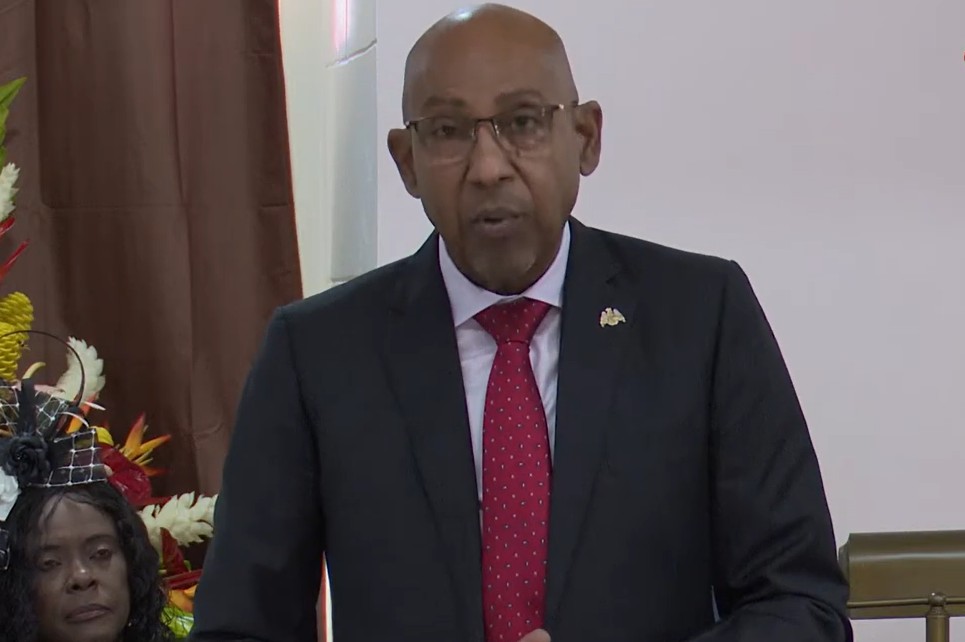
    The Dominica Hospitals Authority has demonstrated its commitment to operational transparency through a comprehensive performance review of the Dominica-China Friendship Hospital (DCFH) for 2025. Presented by Health Management Information System Manager Mrs. Sherry Shillingford-Sorhaindo, the data-rich assessment reveals both significant achievements and emerging challenges within the nation’s healthcare landscape.

    During 2025, the facility documented substantial patient engagement across multiple departments. The hospital processed 25,259 patient visits through booked clinics, with 16,494 appointments successfully completed. The Accident and Emergency Department handled 22,863 cases, while surgical teams performed 1,644 procedures. The Imaging Department processed an impressive 21,720 patients, illustrating the institution’s critical role in national healthcare delivery.

    Inpatient services accommodated 5,915 patients across nine specialized units, with surgical and medical wards accounting for 38% and 35% of admissions respectively. Maternal services represented 15% of admissions, while psychiatric and intensive care units each accounted for 3% of cases. The average patient stay duration stood at 7.2 days, though psychiatric cases extended this average to approximately two weeks due to specialized treatment requirements.

    Bed occupancy rates revealed systemic pressures, with medical wards consistently operating at optimal capacity above 85% and surgical wards experiencing high utilization. Notably, the male psychiatric unit exceeded capacity monthly throughout the year, highlighting resource constraints in mental health services.

    The hospital celebrated exceptional maternal health outcomes with zero maternal deaths and only one neonatal death among 513 live births, positioning Dominica well below the United Nations Sustainable Development Goal threshold of 12 deaths per thousand live births. However, the report identified a concerning 6% decline in births from 2024, continuing a decade-long trend potentially influenced by environmental and pandemic factors.

    Mortality analysis indicated approximately 6% of admitted patients died, with the highest rate (30%) occurring in the Intensive Care Unit. Medical wards recorded an 11% mortality rate, while neonatal services maintained a minimal 0.6% rate.

    Surgical services achieved 79% theater utilization, with 75% of procedures serving public cases and 20% addressing emergencies. The outpatient department struggled with a 35% no-show rate, particularly affecting ophthalmology, orthopedics, and oncology services, causing significant appointment delays for other patients.

    The report confirmed that Marigot Hospital continues providing 24/7 urgent care services alongside specialty clinics, with medical staff from DCFH supporting operations. Dental services initiated in late 2024 continued throughout 2025, though specific metrics for dental care were not yet available for presentation.

  • Caribbean Archbishop supports Archbishop of Canterbury in response to Project Spire criticism

    Caribbean Archbishop supports Archbishop of Canterbury in response to Project Spire criticism

    In a significant address to international religious leaders, Archbishop Philip Wright of the Church in the Province of the West Indies has championed the Church of England’s controversial Project Spire initiative while challenging the global Anglican community to move beyond symbolic gestures in addressing historical injustices.

    The Archbishop’s remarks came during the “Breaking the Chains of Injustice” International Consultation, convened by UK-based charity USPG (United Society Partners in the Gospel). The gathering brought together 40 Anglican leaders from 31 nations to examine the persistent impacts of colonialism on indigenous cultures, languages, and territories across the Caribbean region.

    Despite the formal abolition of slavery in the British Caribbean in 1834, Archbishop Wright emphasized that the region continues to grapple with profound economic disparities, social inequalities, and environmental degradation directly linked to this historical legacy. He positioned the Anglican Church at a “significant moral crossroads,” noting that while acknowledgment of institutional complicity in the transatlantic slave trade represents a transformative opportunity, empty rhetoric could ultimately prove more damaging than the original offense.

    The Archbishop’s endorsement of Project Spire—a £100 million reparative justice initiative launched by the Church of England in 2023—signals growing momentum within religious institutions to address historical wrongs. This development follows a decade of intensified reparations advocacy, including CARICOM’s 2013 “Ten Point Plan for Reparatory Justice” and the CPWI’s 2015 motion supporting Caribbean reparations claims.

    Archbishop Wright clarified that reparative justice seeks not retribution but recognition of harms caused by centuries of enslavement, requiring “deliberate and intentional redress.” He cited both Project Spire and USPG’s Codrington Project as pioneering efforts in this direction. The latter initiative, launched in 2024, addresses USPG’s historical entanglement with slavery through Christopher Codrington’s 1710 donation of a Barbados plantation. The project aims to transfer plantation ownership to descendants of enslaved individuals and commemorate burial sites of those enslaved.

    USPG General Secretary Duncan Dormor reinforced the moral imperative for action, stating that reparative justice lies “at the heart of Christian mission today.” He emphasized the Church’s deep involvement in “brutal, inhumane, and shameful activities” of the slave trade and called for work toward repair and reconciliation conducted with “openness, humility and constructive critical reflection.”

    When questioned about practical support for Caribbean communities, Archbishop Wright emphasized that meaningful change extends beyond financial compensation. He called for collaborative efforts to build schools and hospitals, enabling Caribbean peoples to “step out of the legacy of this horrendous period of history” while acknowledging the substantial good the Church has accomplished in the region over centuries.

    The gathering received encouraging words from Archbishop of Canterbury Sarah Mullally, who praised USPG’s “commitment to partnership, justice, and the flourishing of local churches” as continuing to bless the Anglican Communion in “profound and enduring ways.”

  • CWI signs  deal with official jersey sponsor

    CWI signs deal with official jersey sponsor

    Cricket West Indies (CWI) has secured a significant sponsorship agreement with Livpure, a leading water purification and home appliances brand, marking a strategic commercial partnership for the upcoming cricket season. The collaboration positions Livpure as the official jersey sponsor for the West Indies Senior Men’s Team during two major events: the ICC Men’s T20 World Cup 2026 and the team’s white-ball tour of India later this year.

    The announcement arrives during a period of competitive success for the West Indies squad, which has advanced to the Super Eight phase of the ongoing T20 World Cup. The team prepares to face Zimbabwe on February 23rd at 9:30 AM Caribbean Time, seeking to maintain their winning momentum through the knockout stages.

    CWI President Dr. Kishore Shallow welcomed the partnership, stating: ‘This collaboration reflects the enduring global appeal of West Indies cricket and our ability to attract respected international brands. Strategic partnerships such as this are critical to supporting the growth, competitiveness, and long-term sustainability of our game across the region.’

    CEO Chris Dehring emphasized the commercial significance of the agreement, particularly within the crucial Indian market: ‘This partnership reflects the strong commercial opportunities associated with West Indies cricket, particularly in key markets such as India. We look forward to working closely with Livpure to deliver value both on and off the field.’

    Under the agreement, Livpure’s branding will appear on the leading arm of the team’s jersey during the T20 World Cup in compliance with tournament regulations. During the India tour in September-October 2026, which includes three ODIs and three T20Is, the logo will be prominently displayed on the front of the team’s shirt, pending international playing condition approvals.

    Rakesh Kaul, MD & CEO of Livpure, expressed enthusiasm about associating with the iconic cricket team: ‘The passion, flair, and global fan base of West Indies cricket align strongly with our brand values. We look forward to engaging millions of cricket fans through this partnership during the T20 World Cup in India and Sri Lanka.’

    The sponsorship represents CWI’s ongoing initiative to develop sustainable commercial alliances that enhance team competitiveness while expanding the international footprint of West Indies cricket.

  • International healthcare accreditation and other improvements on the docket for Dominica, says DHA chairman

    International healthcare accreditation and other improvements on the docket for Dominica, says DHA chairman

    The Dominica Hospitals Authority (DHA) has announced a comprehensive strategic roadmap aimed at revolutionizing healthcare delivery on the island. Chairman Dr. Donald Peters revealed the multi-faceted plan during a recent press conference, outlining key priorities for the coming year.

    Foremost among these initiatives is the pursuit of international accreditation for Dominica’s medical facilities. Dr. Peters emphasized that this three-year endeavor, conducted in collaboration with Canadian authorities, would enable the hospital to serve international patients and meet global insurance requirements. “Our standards need to meet international standards to achieve this crucial recognition,” he stated.

    The chairman identified financial stabilization as perhaps the most critical challenge, noting that healthcare represents the most significant expenditure for governments worldwide. “Some governments simply cannot afford to make healthcare free due to the enormous costs involved,” Dr. Peters explained, contextualizing the global healthcare financing dilemma.

    A third pillar of the strategy involves enhanced collaboration with the Ministry of Health to address systemic inefficiencies. Dr. Peters revealed a startling statistic: 68% of Accident and Emergency department visitors present with non-urgent conditions like stomach aches or flu viruses. He made a public appeal: “Please go to your health center instead of coming all the way to Goodwill for non-emergencies so that critical cases can receive prompt attention.”

    The most technologically ambitious component involves implementing a nationwide Hospital Management Information System, with $8 million already allocated for the project. This digital transformation will digitize all medical records nationally, accelerating both diagnosis and treatment delivery while improving overall care quality.

    Dr. Peters also addressed the sensitive topic of medical fees, clarifying that the government subsidizes approximately 90% of actual costs. While the cabinet-approved charges appear modest—a $400 bill representing what should be a $4,000 service—he emphasized that these payments remain essential for the hospital’s financial viability.

    The chairman concluded by noting that the Dominican government allocates approximately $28 million daily to healthcare, with a significant portion directed to hospital operations, underscoring the substantial investment required to maintain the nation’s health infrastructure.

  • African Union again signs resolution against US-Cuba blockade

    African Union again signs resolution against US-Cuba blockade

    For the seventeenth consecutive year, the African Union (AU) has delivered a powerful diplomatic rebuke to the United States by formally condemning its protracted economic, commercial, and financial embargo against Cuba. The recently approved resolution, detailed in an official release from the Cuban Embassy in Ethiopia, characterizes the six-decade-long policy as a severe impediment to Cuban development and a profound burden on its citizenry.

    A central and recurring demand within the resolution is the urgent call for Washington to remove Cuba from its State Sponsors of Terrorism list. The AU describes this designation as both arbitrary and unjustified, framing it as a political instrument that provides a foundation for maintaining the stringent embargo. The document further emphasizes the moral and legal obligation to revoke this classification.

    The resolution articulates deep concern regarding the intensifying negative impacts of the U.S. sanctions, which have been exacerbated by global economic pressures following the COVID-19 pandemic. A significant point of condemnation is the extraterritorial application of U.S. law, specifically through Title III of the Helms-Burton Act. This provision, which allows U.S. nationals to sue entities engaging in business with Cuban assets nationalized after the 1959 revolution, effectively internationalizes the blockade and cripples Cuba’s capacity to participate in global trade and finance.

    Beyond the critique, the resolution serves to reaffirm the deep-seated historical and political bonds between African nations and Cuba, rooted in decades of solidarity and mutual support. It stands as a clear manifestation of Africa’s collective stance against a policy it deems to be in violation of international law and the fundamental principles of national sovereignty.

  • Free training course in computer repairs to begin in March

    Free training course in computer repairs to begin in March

    The Caribbean Digital Transformation Project, operating under the Ministry of Public Works, Public Utilities and the Digital Economy, has unveiled a comprehensive six-week Computer Repairs Training Course commencing March 3, 2026. This educational initiative will be hosted at the Lagoon Innovation Hub with sessions scheduled every Tuesday and Thursday from 5:30 p.m. to 7:00 p.m.

    The curriculum has been meticulously designed to provide participants with fundamental knowledge of computer systems, encompassing essential topics including computer architecture, internal hardware components, peripheral devices, software ecosystems, and operating systems. The program further delves into practical aspects such as system installation protocols, diagnostic troubleshooting techniques, and proactive maintenance strategies. The course culminates with a comprehensive review session, hands-on practical examination, and professional guidance on career development fundamentals within the technology sector.

    Prospective participants can now register through multiple channels: by scanning the QR code featured on official promotional materials or by accessing the digital registration portal at https://forms.gle/5sKWwFUpzR9LmcYm8. For individuals requiring technical assistance or additional information, the Project Implementation Unit has established dedicated support available at 266-3840. The administrative office is situated at the former First Domestic Insurance Building on King George V Street in Roseau, maintaining operational hours from 8:00 a.m. to 5:00 p.m. on Mondays and 8:00 a.m. to 4:00 p.m. Tuesday through Friday.

    Project organizers have emphasized that all educational offerings under this digital transformation initiative remain entirely tuition-free, eliminating financial barriers and creating equitable access to technical skill development in computer repair and maintenance disciplines.

  • STATEMENTS: Dominica Bar Association on voter registration and confirmation – ensuring the Integrity and inclusivity of the electoral process

    STATEMENTS: Dominica Bar Association on voter registration and confirmation – ensuring the Integrity and inclusivity of the electoral process

    The Dominica Bar Association has released a comprehensive statement emphasizing the fundamental importance of voter registration verification and its proper administration by authorities to protect the democratic rights of all citizens. The legal body has received numerous expressions of concern regarding electoral processes through both written and verbal communications.

    In an unprecedented appeal transcending political affiliations, the Association urgently calls upon every registered voter to verify their registration status to ensure participation in forthcoming electoral events, whether local or national. This represents an inclusive initiative directed at all Dominican citizens regardless of political orientation or background.

    The constitutional significance of voting rights receives particular emphasis, with reference to paragraph (c) of Dominica’s Constitution Preamble which asserts the people’s belief in a democratic society where all persons may participate in national institutions according to their capacity, thereby fostering respect for lawfully constituted authority.

    While acknowledging ongoing legal challenges to recently amended electoral legislation and concerns about the current framework, the Association stresses the necessity for eligible voters to comply with existing regulations until any formal modifications occur. This approach is presented as the most effective method to safeguard both individual voting rights and the nation’s democratic principles.

    Addressing specific concerns about identification requirements for registration confirmation, the Bar Association proposes that the Electoral Commission conduct a thorough, data-informed analysis to evaluate how ID mandates affect voter participation rates. Such statistical examination would determine whether adjustments to identification requirements are necessary to balance electoral list integrity against potential voter disenfranchisement.

    Given current legal stipulations requiring identification, the Association questions what measures the government is implementing to assist citizens lacking proper documentation or financial means to obtain it. The legal body recommends implementing non-partisan initiatives, such as temporarily suspending new passport application fees to facilitate passport acquisition as valid identification.

    To enhance the confirmation process, the Association advocates for intensified public awareness campaigns by the Electoral Office and political parties, suggesting election-level promotion efforts. Additionally, the proposal includes employers—both public and private sectors—facilitating the process through designated ‘confirmation days’ where employees receive paid time off to verify registrations, provided they submit proof of completion.

    Regarding new voter registrations, the Association notes that the Electoral Office’s temporary suspension caused significant uncertainty and disappointment across political and private sectors. With the announcement that registration will resume by March 10, 2026, the legal body anticipates this will rectify what may have constituted a breach of statutory continuous registration duties, encouraging all unregistered eligible citizens to enroll promptly.

    The statement concludes with a strong recommendation against calling elections before completing the confirmation period, warning that premature electoral proceedings could disenfranchise voters and compromise result legitimacy at national and international levels. The Association clarifies it possesses no knowledge of imminent election plans but addresses a legally permissible scenario that could undermine electoral integrity.

    Finally, the Dominica Bar Association commits to collaborating with all stakeholders—voters, state institutions, the Electoral Commission, and private sector entities—to protect the democratic rights of every citizen through enhanced confirmation processes and inclusive electoral measures.

  • CDB and CLEAR-LAC organize regional conference to enhance monitoring and evaluation frameworks across the Caribbean

    CDB and CLEAR-LAC organize regional conference to enhance monitoring and evaluation frameworks across the Caribbean

    The Caribbean Development Bank’s Office of Independent Evaluation (OIE), in partnership with the Center for Learning on Evaluation and Results for Latin America and the Caribbean (CLEAR-LAC), will host a pivotal virtual workshop on March 5, 2026. Scheduled from 11:00 AM to 12:30 PM Atlantic Standard Time, this session aims to revolutionize monitoring and evaluation frameworks across Caribbean nations.

    The event will introduce two transformative methodologies: the National Evaluation Capacities Index (INCE) and the Monitoring and Evaluation System Analysis (MESA) tools. These proven instruments enable comprehensive diagnostics of institutional vulnerabilities while pinpointing critical challenges and strategic priorities. Participants will gain exposure to adaptable best practices and cross-regional insights that have demonstrated success throughout Latin America.

    Roberto La Rovere, Head of CDB’s OIE, emphasized the workshop’s dual purpose: “Beyond introducing innovative tools, this initiative promotes substantive dialogue and regional cooperation. By disseminating INCE and MESA principles alongside successful national case studies, we empower Caribbean nations to enhance local expertise and fortify their evaluation infrastructures.”

    The workshop specifically targets evaluation professionals, M&E specialists, government officials from planning and finance ministries, public policy units, civil society representatives, and academic stakeholders. This capacity-building endeavor aligns with CDB’s strategic commitment to institutional resilience in borrowing member countries. Strengthened M&E systems enable governments to meticulously track public sector performance, assess developmental progress, and implement evidence-based policymaking.

    Registration remains open for this transformative regional workshop entitled ‘Tools for Monitoring & Evaluation,’ representing a significant advancement in the Caribbean’s journey toward data-driven governance.

  • T&T’s KestheBand featured on ABC News for Black History Month

    T&T’s KestheBand featured on ABC News for Black History Month

    In a significant moment for Caribbean music, Trinidad and Tobago’s acclaimed ensemble Kes the Band received prominent recognition from ABC News during Black History Month. The special feature, broadcast on ABC News Live, was filmed at the prestigious Jazz at Lincoln Center in New York City, symbolizing the genre’s ascending cultural stature.

    The segment, released strategically on Carnival Tuesday, February 17, provided an in-depth exploration of Soca music’s rich heritage and evolving global footprint. Lead vocalist Kees Dieffenthaller engaged in a meaningful dialogue with ABC journalist Morgan Norwood, tracing Soca’s origins to post-Emancipation celebrations and its vital function as an artistic medium for cultural identity within the African diaspora.

    Dieffenthaller offered personal reflections on his Trinidadian upbringing and Kes the Band’s two-decade musical evolution, highlighting their innovative fusion of styles that has propelled Soca onto international platforms. The discussion revealed how profound personal experiences, including periods of grief, have fundamentally shaped his songwriting methodology and creative perspective.

    The feature has achieved viral status across digital platforms, underscoring both the growing appreciation for Caribbean musical traditions within major cultural institutions and Kes the Band’s pivotal role as ambassadors bringing Soca rhythms to worldwide audiences. This mainstream media recognition marks a watershed moment for the genre’s visibility beyond its traditional Caribbean strongholds.

  • First Plenary Session of the  Caribbean-EU Parliamentary Assembly recently concluded

    First Plenary Session of the Caribbean-EU Parliamentary Assembly recently concluded

    In a landmark development for interregional cooperation, the inaugural Plenary Session of the Caribbean-EU Parliamentary Assembly concluded in Antigua and Barbuda on February 18, marking the official parliamentary activation of the Samoa Agreement. Co-President Malik Azmani characterized the gathering as historically significant for strengthening ties between the regions.

    The three-day assembly, conducted against a backdrop of complex global challenges including geopolitical tensions and pressures on international rule-based systems, demonstrated strong political commitment to enhanced dialogue and collaboration. Participants from both regions, bound by historical connections and shared values of democracy and multilateralism, engaged in substantive discussions across five strategic priority areas.

    Key deliberations focused on climate resilience and clean energy transition, with consensus emerging for a Caribbean-EU Climate Resilience and Renewable Energy Compact under the Global Gateway initiative. Parliamentarians also addressed trade and investment opportunities, combating transnational organized crime, safeguarding territorial integrity, and the critical situation in Haiti. The assembly expressed profound concern about Haiti’s deteriorating conditions while reaffirming support for Haitian-led political solutions.

    Notably, the assembly incorporated dynamic Youth and Women’s Forums that enriched the proceedings. The Youth Forum emphasized developing green skills among young people and their essential role in climate resilience, while the Women’s Forum highlighted economic empowerment through improved financial access and women’s crucial participation in shaping future Caribbean-EU relations.

    The session produced concrete recommendations directed to the Caribbean-EU Council of Ministers, establishing a roadmap for future joint initiatives. Co-President Azmani confirmed the European Parliament delegation’s strengthened conviction that sustained engagement and enhanced political dialogue are imperative for advancing shared prosperity and defending a rules-based international order.