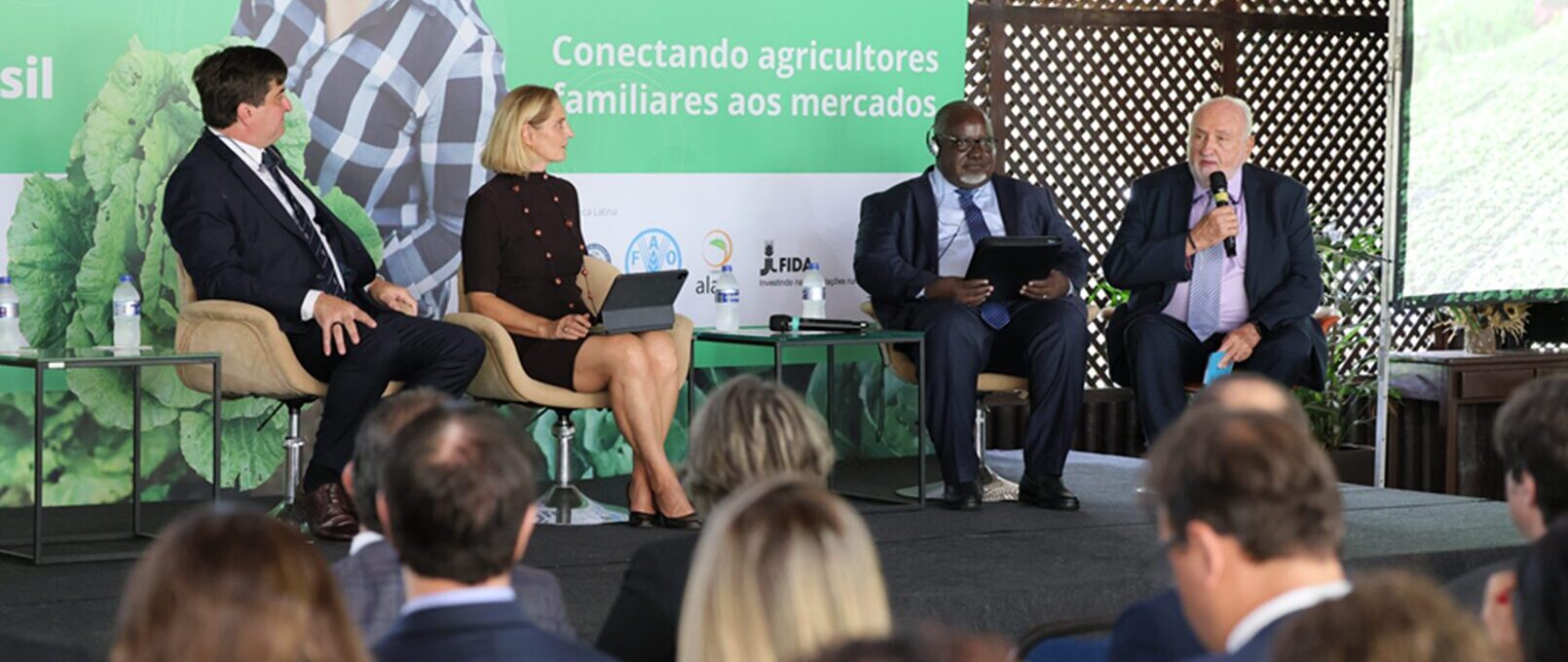
BRASÍLIA – A major agricultural digitalization initiative, AgriConnect Brasil, has been formally launched at the headquarters of the Inter-American Institute for Cooperation on Agriculture (IICA). With substantial financial and strategic backing from the World Bank Group (WBG), the program targets profound enhancements in rural connectivity and digital inclusion for Brazil’s vast network of family farmers.
The ambitious program sets its sights on directly supporting over one million family farming operations across Brazil by the year 2030. This support will be channeled through improved access to cutting-edge agricultural technologies, expanded financial services, specialized knowledge platforms, and a suite of digital tools. The primary objectives are a significant increase in farmer incomes, the generation of new employment opportunities throughout the agrifood value chain, and a marked improvement in national food security, all contributing to more sustainable and inclusive rural economic development.
AgriConnect Brasil is a critical national component of the World Bank Group’s broader global strategy to revolutionize the agri-food sector. This worldwide initiative has an ambitious target: to assist up to 300 million smallholder farmers in transitioning from subsistence-based operations to productive, market-integrated agricultural enterprises within the same timeframe.
The global effort is underpinned by an estimated annual investment of $9 billion, with the potential to mobilize an additional $5 billion in co-financing. This substantial funding is earmarked to drive innovation, develop tailored financial products, and build robust service ecosystems specifically designed for the agricultural sector.
In the Latin American context, the program’s implementation is a collaborative endeavor. Key partners include IICA, the Inter-American Development Bank (IDB), the International Fund for Agricultural Development (IFAD), the UN’s Food and Agriculture Organization (FAO), and the Latin American Association for the Development of Agricultural Insurance (ALASA). The coalition also actively incorporates financial institutions, private sector companies, philanthropic foundations, and academic partners.
The program’s focus on Brazil is strategically crucial. The country is home to approximately 3.9 million family farms, which represent about 75% of all rural properties. These operations employ nearly 10 million people and form the backbone of the nation’s domestic food supply.
Globally, the agri-food sector is recognized as a cornerstone of economic and social stability. Beyond its fundamental role in ensuring food security, it is a major source of employment, a catalyst for local economic growth, and the primary livelihood for hundreds of millions in rural communities worldwide. In this framework, digitalization and enhanced rural connectivity are now widely viewed as indispensable levers for unlocking economic potential, elevating productivity, and fortifying agricultural systems against the dual threats of climate change and market volatility.
To achieve its multifaceted goals, AgriConnect will concentrate its efforts on three strategic pillars:
1. Mitigating agricultural risks through the strengthening of climate adaptation and market risk management frameworks.
2. Enhancing value chains and logistics infrastructure to seamlessly connect producers with domestic and international commercial opportunities.
3. Accelerating digital transformation via the widespread deployment of digital tools, knowledge-sharing platforms, and technological solutions for efficient production management.
IICA emphasized that the program’s vision extends beyond mere technology adoption. A core mission is to create compelling economic opportunities for rural populations, particularly the youth, incentivizing them to remain in rural areas by engaging in innovative, productive activities that are linked to high-value global markets.
Initiatives of this scale and design are projected to be a powerful accelerant for the digital transformation of agriculture in the Americas. They are expected to drive productive inclusion, enhance the sector’s overall competitiveness, and pave the way for a new era of sustainable rural development.