标签: Dominica

多米尼克

  • Dominica State College assists student following Roseau fire loss

    Dominica State College assists student following Roseau fire loss

    In a powerful demonstration of institutional solidarity, Dominica State College (DSC) has provided crucial financial assistance to JaiQi Gu, an architecture student whose life was upended by a catastrophic fire in Roseau on March 1st. The support was extended through a formal donation handover ceremony, funded by a dedicated college-led fundraising initiative designed to aid Mr. Gu in recovering from his significant losses.

    The event, which served as a testament to the campus community’s empathy, saw strong attendance from fellow architecture students and the college’s Student Ambassadors. Their presence underscored a unified front of moral support for their peer. Further amplifying the collective nature of the response, representatives from multiple organizations attended the proceedings. Key among them were officials from the Faculty of Applied Arts and Technology (FAAT), the Student Affairs Department, and the non-profit I Love You Foundation.

    A concluding statement from the college framed the donation not as an isolated act of charity, but as a reflection of DSC’s foundational ethos. It emphasized the institution’s deep-seated commitment to nurturing the holistic well-being of its student body, affirming that its support extends far beyond academic instruction to provide a vital safety net during periods of acute personal crisis and unforeseen hardship.

  • Cadet Week 2026 commemorates 25 years in latest chapter of Dominica Cadet Corps

    Cadet Week 2026 commemorates 25 years in latest chapter of Dominica Cadet Corps

    The Dominica Cadet Corps (DCC) has launched an extensive week-long celebration commemorating its 25th anniversary since revitalization, showcasing its profound impact on youth development and national service. Running from March 22-28, 2026, the organization’s silver jubilee events demonstrate its enduring commitment to shaping young leaders through paramilitary training and community engagement.

    Established over 116 years ago and reactivated in 2001, the voluntary organization has evolved into a cornerstone of youth development in the Commonwealth of Dominica. The DCC provides comprehensive training in discipline, leadership, and civic responsibility, creating transformative opportunities for young citizens seeking personal and professional growth.

    The anniversary festivities commenced with a solemn church service at the Roman Catholic Church on March 22, followed by an impressive Cadet Day Parade at Saint Mary’s Academy Grounds reviewed by Her Excellency President Sylvanie Burton. The week’s agenda incorporates multifaceted activities including educational outreach programs across Central District and North East Division schools, media engagements through radio programming on Q95 and Kairi FM, and strategic meetings with national leadership.

    Highlight events include courtesy calls to President Burton and Prime Minister Roosevelt Skerrit alongside Youth Minister Gretta Roberts on March 25-26, emphasizing the program’s governmental recognition. The celebration features Cadet Uniform Day on March 26, followed by a public parade through Roseau on March 27 accompanied by an exhibition and barbecue at Police Headquarters. The anniversary week concludes on March 28 with community-oriented activities including a car wash and bake sale, reinforcing the Corps’ commitment to public service and community integration.

    This milestone celebration not only honors the DCC’s quarter-century of achievement but also strategically positions the organization for continued growth in developing disciplined, socially-conscious future leaders for Dominican society.

  • FAO hosts workshop as part of multi-pronged support for Grenada’s USD 2.6 million soursop industry

    FAO hosts workshop as part of multi-pronged support for Grenada’s USD 2.6 million soursop industry

    Grenada has solidified its status as the world’s sole authorized exporter of fresh, non-irradiated soursop to the United States, creating a unique agricultural niche with profound economic implications. This privileged market position, however, demands rigorous sanitary and phytosanitary (SPS) protocols to maintain compliance and ensure continued access. Recognizing this critical need, the Food and Agriculture Organization of the United Nations (FAO), in collaboration with Grenada’s Ministry of Agriculture, Lands & Forestry and the Standards and Trade Development Facility (STDF), has launched a comprehensive initiative to bolster the entire soursop value chain.

    The cornerstone of this effort was a specialized three-day capacity-building workshop held from February 9-11, 2026, at Grenada’s National Stadium. Organized through a partnership between the FAO, the national ministry, and the Caribbean Agricultural Health and Food Safety Agency (CAHFSA), the event convened 31 technical officers and stakeholders. The cohort, comprising 18 women and 13 men from various technical units including extension services, pest management, and forestry, alongside representatives from the Caribbean Agricultural Research and Development Institute (CARDI), engaged in intensive training on advanced surveillance techniques, early warning systems, and coordinated response strategies for plant health risks.

    Beyond the workshop, the multi-faceted project encompasses several strategic components. These include the development of a nationwide surveillance and emergency response program, enhancements to institutional capabilities in pest detection and certification, and the piloting of traceability systems tailored for export markets. Furthermore, the initiative will establish two farmer-owned demonstration plots in the parishes of Saint Andrew and Saint Patrick. These sites will serve as practical training hubs to promote Good Agricultural Practices (GAP) and Integrated Pest Management (IPM), directly aiming to increase on-farm productivity and long-term sustainability.

    Anne Desrochers, FAO’s Production and Plant Protection Specialist, underscored the initiative’s significance, stating, ‘Grenada’s exclusive access to the United States market for fresh soursop presents a significant and timely opportunity to strengthen the livelihoods of farmers and uplift rural communities.’ Participant feedback highlighted the value of the workshop’s blended approach, which combined theoretical knowledge with practical exercises to foster collaborative problem-solving. The session concluded with the formulation of concrete action plans designed to overcome implementation barriers and establish robust collaboration mechanisms, thereby future-proofing this vital industry against emerging biosecurity challenges.

  • Mero Association of Yachting Services partners with PAYS to welcome international yacht crews

    Mero Association of Yachting Services partners with PAYS to welcome international yacht crews

    The picturesque village of Mero is preparing to host an international maritime gathering as the Mero Association of Yachting Services (MAYS) partners with the Portsmouth Association of Yachting Services (PAYS) for the upcoming PAYS/Mero Yachting Festival. Scheduled for Tuesday, March 24, this collaborative event between west coast communities anticipates welcoming more than 23 luxury yachts and their international crews to Dominica’s shores.

    An official opening ceremony will feature distinguished speakers including representatives from the Ministry of Tourism, Discover Dominica Authority, local parliamentary leadership, and Mr. Hank, International Director of the Yachties Association. The presidents of both MAYS and PAYS, along with the President of the Mero Enhancement Committee, will deliver welcoming remarks to attendees.

    Event organizers have characterized this yachting festival as a transformative development within community tourism initiatives. “This is an area that we definitely see will grow in leaps and bounds, and it’s a twist within our community tourism endeavor,” stated an official audio announcement released to the public.

    The collaboration is expected to generate substantial economic and social benefits for both communities through engagement with international yacht crews. Organizers emphasize the event’s potential to stimulate local business activity while fostering cultural exchange between residents and visitors from diverse global backgrounds.

    Community members are enthusiastically encouraged to participate in the evening festivities, scheduled to commence at 6:30 PM. Organizers have promised an enjoyable experience for all attendees, highlighting the unique opportunity for meaningful interaction with international seafarers.

    The festival represents a strategic effort to position Dominica’s west coast as an emerging destination for luxury yachting tourism while strengthening community partnerships through shared economic development objectives.

  • NYC’s LaGuardia airport reopened after tarmac incident leaving 2 dead, massive delays

    NYC’s LaGuardia airport reopened after tarmac incident leaving 2 dead, massive delays

    A catastrophic runway collision at New York’s LaGuardia Airport has resulted in multiple casualties and significant operational disruptions after an Air Canada aircraft struck an emergency response vehicle during landing procedures late Sunday evening.

    According to aviation authorities, the incident occurred just before midnight when the commercial airliner, traveling at approximately 100 miles per hour during its final approach, made impact with a fire apparatus that had been deployed to address a separate aircraft emergency. The violent collision proved fatal for both pilots in the cockpit and caused substantial damage to the aircraft’s forward section.

    Emergency personnel discovered a remarkable survival case when they located a flight attendant still secured in her seat outside the damaged aircraft. Medical officials confirmed she sustained serious but non-life-threatening injuries among the 41 transported to area hospitals. The total onboard consisted of 72 passengers and four crew members.

    Two fire officers operating the emergency vehicle were among those injured in the devastating impact. While 32 hospitalized individuals have been released, several remain in serious condition according to the latest medical assessments.

    The airport faced complete closure for several hours following the accident, stranding numerous passengers and creating extensive flight delays that continued into Monday morning. Although limited operations have resumed, significant security checkpoint congestion and passenger frustration have been reported.

    Aviation safety experts are examining air traffic control recordings that reportedly contain urgent instructions for the fire truck to halt movement moments before the collision occurred.

    This tragedy unfolds against a backdrop of systemic challenges affecting U.S. aviation security operations. The Transportation Security Administration continues to experience staffing shortages related to the ongoing Department of Homeland Security funding impasse, which began in mid-February following congressional disputes over immigration enforcement actions in Minnesota that resulted in fatalities.

    In response to these security concerns, federal authorities have deployed additional Immigration and Customs Enforcement personnel to 13 airports nationwide, including LaGuardia, effective March 23.

    Air Canada President and CEO Michael Rousseau issued a solemn statement describing the event as “a very sombre day at Air Canada” and expressing profound condolences to all affected passengers, crew members, and their families. The airline has committed to full cooperation with the ongoing investigation while providing support to those impacted by the tragedy.

  • Agriculture minister: Dominica Gov’t actively crafting compensation plans for farmers affected by Lethal Yellowing Disease

    Agriculture minister: Dominica Gov’t actively crafting compensation plans for farmers affected by Lethal Yellowing Disease

    The Dominican government has initiated a comprehensive emergency response to combat the outbreak of Lethal Yellowing Disease (LYD) recently confirmed in coconut plantations across the island. Minister of Agriculture, Fisheries, Blue and Green Economy Roland Royer announced a multi-faceted strategy during a press conference, acknowledging the severe threat posed to agricultural livelihoods and the local economy.

    The containment protocol establishes specialized ecological zones in affected regions, beginning with Woodford Hill where the disease was first identified. These zones include an infected core area surrounded by protective buffer zones where strict containment measures are being enforced. The strategy involves systematic removal of infected plants and enhanced surveillance systems for early detection of new cases.

    Critical movement restrictions have been implemented for coconut products and palm-planting materials from affected areas to prevent further spread across the island. Minister Royer emphasized the necessity of complete compliance from farmers, vendors, traders, and homeowners to ensure the effectiveness of these measures.

    The government is developing a compensation framework for affected farmers alongside rehabilitation and replanting initiatives using disease-resistant coconut varieties. Community cooperation has been identified as essential to the success of the response, with plans to strengthen farmer engagement and public awareness campaigns.

    LYD, caused by phytoplasma bacteria transmitted by leafhoppers and plant hoppers, represents a severe threat to Caribbean agriculture. The disease causes rapid yellowing and drooping of palm fronds, premature fruit drop, and typically kills infected palms within three to six months. Previous outbreaks have caused substantial economic damage throughout the region, making Dominica’s proactive response critical for preserving its coconut industry.

  • IN PICTURES (with VIDEO): Cadet Week 2026

    IN PICTURES (with VIDEO): Cadet Week 2026

    The recently concluded Cadet Week 2026 has emerged as a significant milestone in youth development and maritime education, showcasing the next generation of potential leaders through a series of rigorous training exercises and team-building activities. This annual event, designed for young cadets aged 12-18, brought together participants from various regional training programs for an intensive week of skill development and character building.

    Held at coastal training facilities, the program featured comprehensive nautical instruction including sailing proficiency, navigation techniques, maritime safety protocols, and emergency response procedures. Beyond technical skills, the curriculum emphasized leadership development through challenging team exercises that tested decision-making capabilities under pressure and collaborative problem-solving in dynamic environments.

    The 2026 iteration introduced several innovative elements, including advanced simulator training that allowed cadets to experience complex maritime scenarios in controlled settings. Environmental stewardship formed another crucial component of the program, with dedicated sessions on marine conservation and sustainable practices on waterways.

    Organizers reported record participation levels, with attendance increasing by 15% compared to previous years, reflecting growing interest in structured youth development programs. The event culminated in a ceremonial review where cadets demonstrated their newly acquired skills before senior instructors and visiting dignitaries.

    Cadet Week continues to serve as a foundational experience for many young people considering careers in maritime industries, military service, or emergency response professions. The program’s alumni network includes numerous successful professionals who credit their initial exposure to disciplined training during Cadet Week as instrumental in their career development.

  • Government reports monthly dialogue with Kalinago Chief and Council; updates on center

    Government reports monthly dialogue with Kalinago Chief and Council; updates on center

    The Government of Dominica is deepening its collaborative governance approach with the indigenous Kalinago community through structured monthly consultations. Honorable Cozier Frederick, Minister of Kalinago Upliftment and Salybia Constituency Representative, convened his second formal meeting with Kalinago Chief and Council leadership on March 5, 2026, reinforcing institutionalized dialogue for transparent development planning.

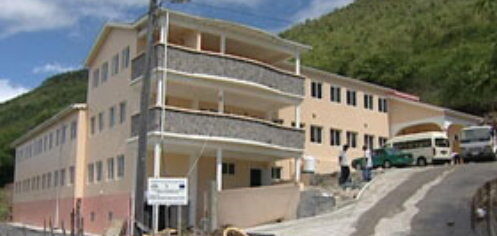
    Central to discussions was the transformative Kalinago Territory Multipurpose Centre and Emergency Shelter—a $7.6 million infrastructure project underway in Bataca. Funded by the Government of Canada through the Caribbean Development Bank’s Community Disaster Risk Reduction Fund, this facility represents a significant investment in both cultural preservation and climate adaptation.

    The climate-resilient structure is engineered to withstand Category Five hurricanes and seismic events while incorporating sustainable features including solar power generation, backup diesel generators, and a 15,000-gallon water reserve. With capacity to shelter 125 individuals during emergencies, the center will include dormitories, medical facilities, emergency operations infrastructure, and community spaces designed for cultural programming, education, and tourism activities.

    Stakeholder engagement has been integral to project development, with Kalinago representatives conducting site visits to assess progress firsthand. Current dialogues focus on operational management strategies, community programming, and the formal naming process—which will incorporate indigenous language and cultural identity through community consultations and school participation.

    The partnership also plans to expand celebrations of International Day of the World’s Indigenous Peoples (August 9) through enhanced Kalinago Day festivities featuring cultural exhibitions, traditional culinary displays, sports activities, and inter-indigenous exchanges.

    Minister Frederick emphasized the government’s commitment to development that “reflects the aspirations of the community while preserving the culture, traditions, and heritage of the Kalinago people.” Both parties have agreed to continue monthly consultations addressing additional priorities including housing, agriculture, waste management, and community beautification initiatives.

  • OECS expresses condolences after passing of its Chief Financial Officer

    OECS expresses condolences after passing of its Chief Financial Officer

    The Organisation of Eastern Caribbean States (OECS) Commission is mourning the profound loss of its Chief Financial Officer, Rojer Inglis, who passed away on March 22, 2026. The regional institution confirmed the death of its esteemed financial leader in an official communiqué released from its Castries headquarters.

    Mr. Inglis, whose career spanned several decades across media and regional institutions, joined the OECS Commission in 2023 following an impressive tenure in Caribbean financial management. His professional journey began at the Grenada Broadcasting Network, where he initially served as Finance Manager before rapidly ascending to the position of General Manager during the early 2000s.

    The OECS Commission’s statement emphasized Inglis’s significant contributions to the organization’s financial stability and development, noting his “professionalism and unwavering commitment to excellence” in overseeing the institution’s fiscal operations. Beyond his technical expertise, colleagues and associates will remember him for his collegial nature and generous sharing of knowledge throughout the regional community.

    His transition into regional leadership marked a significant chapter in Caribbean institutional development, where he applied his extensive financial acumen to enhance the operational integrity of multiple organizations across the Eastern Caribbean region.

    The Commission extended heartfelt condolences to Inglis’s family, friends, and loved ones, acknowledging that his legacy of service and leadership would remain permanently etched in the organization’s historical narrative. The statement concluded with a tribute: “May his soul rest in eternal peace.”

  • IICA supports preservation of Andean blueberry, promotes agrobiodiversity in Ecuador via the Sacha Ñawi initiative

    IICA supports preservation of Andean blueberry, promotes agrobiodiversity in Ecuador via the Sacha Ñawi initiative

    Ecuador’s páramo ecosystem, a fragile high-altitude environment, hosts the indigenous Andean blueberry (Vaccinium floribundum), known locally as agraz. This culturally significant wild fruit, related to North American blueberries, now symbolizes the ecological pressures facing this unique habitat due to agricultural expansion and commercial harvesting.

    In response to these threats, the Sacha Ñawi initiative has emerged as a comprehensive conservation effort. Spearheaded by the Inter-American Institute for Cooperation on Agriculture (IICA) in partnership with Ecuador’s Ministry of Environment and Energy and the National Agricultural Research Institute (INIAP), this program addresses the delicate balance between preservation and sustainable use.

    The project operates under the broader framework ‘Conservation and sustainable use of crop wild relatives and edible wild species,’ funded by the Global Environment Facility and implemented by FAO Ecuador with support from local universities and community organizations. Its primary objective involves strengthening institutional frameworks to protect wild species while incorporating them into national planning strategies.

    The Andean blueberry holds particular cultural importance as the key ingredient in colada morada, a traditional beverage consumed during Day of the Dead celebrations. Unlike commercially cultivated fruits, this species remains predominantly wild-harvested during September and October, with minimal domestication efforts.

    Recent increased demand for blueberry-based products—including wines, jams, and traditional drinks—has intensified harvesting pressure, threatening the species’ sustainability. The Sacha Ñawi project has initiated focused conservation work in Cotacachi canton (Imbabura province), collaborating with research institutions to map genetic diversity and identify priority conservation areas.

    Beyond research, the initiative develops sustainable harvesting regulations that protect both ecosystems and local livelihoods. Simultaneously, it works to strengthen the berry’s value chain through market access improvements, producer organization, and conservation incentives.

    The project extends to additional cantons including Archidona, Tena, and Arosemena Tola in Napo province—regions within ecologically significant Andean and Amazonian biomes containing numerous protected areas. Here, biodiversity and cultural traditions remain deeply interconnected, presenting the fundamental challenge of preserving species without disrupting the essential relationships between ecosystems and the communities that depend on them for both sustenance and cultural identity.