标签: Dominica

多米尼克

  • CARICOM urged to strengthen regional unity, implement strategy, to mitigate effects of war in Middle East

    CARICOM urged to strengthen regional unity, implement strategy, to mitigate effects of war in Middle East

    As global geopolitical instability continues to escalate, policymakers across the Caribbean region have received an urgent call to coordinate bold, collective action to counter spillovers from ongoing conflict in the Middle East. The appeal was delivered by Dr. Wendell Samuel, Acting Assistant Secretary-General of the Caribbean Community (CARICOM), during a virtual policy forum hosted on April 10, co-organized by the Food and Agriculture Organization (FAO) of the United Nations.

    During the discussion, which centered on the far-reaching impacts of Middle East tensions on nations across Latin America and the Caribbean, Dr. Samuel emphasized that forward-looking, coordinated strategy, rather than fragmented national action, is the only path to effectively counter emerging global shocks. “This moment calls for strategic thinking and regional solidarity,” he told attendees. “The decisions we take now will determine not only how CARICOM navigates this crisis, but how prepared we are for future global disruptions. Resilience, cooperation, and shared responsibility must guide our response.”

    The forum centered heavily on the region’s unique vulnerabilities to external shocks, particularly in three critical areas: food security, domestic agricultural systems, and overall macroeconomic stability. Though the Caribbean sits thousands of miles from the Middle East, Dr. Samuel noted that the region’s highly open, trade-reliant economies leave it deeply exposed to disruptions in global energy, food, and supply chain networks. He added that long-standing structural weaknesses have amplified this risk: the region remains heavily dependent on imports for core necessities including food, fuel, agricultural fertilizers, and commercial shipping services, leaving it acutely sensitive to price swings and supply interruptions driven by geopolitical tension.

    Dr. Samuel, who also leads the Economic Integration, Innovation and Development Directorate at the CARICOM Secretariat, confirmed that regional officials have already developed a preliminary draft response framework to address these risks. Outlined as a comprehensive policy matrix, the draft framework maps direct links between external global disruptions and targeted national and regional policy actions. It lays out a clear sequence and priority for interventions, balancing near-term stabilization efforts to address immediate price and supply pressures with longer-term structural reforms designed to boost regional resilience and reduce systemic risk over time. A core tenet of the framework is its requirement for coordinated action across all CARICOM member states.

    The draft framework will next be submitted for review to CARICOM’s Ministers of Agriculture, who will deliberate on its final adoption and outline a roadmap for implementation. In laying out core priorities for the region’s response, Dr. Samuel called for deeper cross-border collaboration on three foundational fronts: coordinated public and private procurement, integrated regional transportation networks, and better collective management of strategic commodity reserves to buffer against supply shocks.

    He also underscored the urgent need for accelerated investment in renewable energy infrastructure, alongside intentional investment to restructure and strengthen regional food systems to reduce import dependence. Strengthened cross-border policy coordination, he argued, will allow the region to mount faster, more effective collective responses when external pressures emerge. Finally, he flagged targeted investment to strengthen regional institutions focused on food security monitoring and macroeconomic tracking as a critical, underaddressed need for the region.

    Dr. Samuel stressed that the economic risks stemming from the current conflict are not abstract hypothetical concerns. Rising price inflation, skyrocketing food costs, and growing pressure on strained government budgets are already emerging as pressing challenges across the region, he said, requiring immediate policy intervention. Only by clearly understanding the specific channels through which global shocks impact Caribbean economies, he concluded, can the region mount practical, coordinated responses to reduce harm and build long-term stability.

  • Three Dominican writers make it to 2026 Commonwealth Short Story Prize longlist

    Three Dominican writers make it to 2026 Commonwealth Short Story Prize longlist

    In a recent announcement from the Commonwealth Foundation dated April 14, three emerging writers from the Caribbean nation of Dominica have earned a coveted spot on the 2026 Commonwealth Short Story Prize longlist, earning recognition from the award’s judging panel as standout new voices in global fiction. Launched to spotlight untapped storytelling talent across the 56-nation Commonwealth bloc, the 2026 edition of the prize drew a record-breaking 7,806 total submissions from writers around the world, with fewer than 200 works advancing to the longlist phase of the competition, per official details published on the Foundation’s website. The three Dominican authors named to the extended longlist are Michelle A. Belle, recognized for her story *Breakfast Fete*, Nadege Roach for her entry *The Names He Carried*, and Zephrine Royer for her narrative *Witness*. While the longlisted works are not slated for official publication as part of the prize’s programming, the selection cements the three writers’ places among a curated group of up-and-coming literary talents that judges have flagged as names to watch in coming years. Industry observers note that this recognition carries meaningful weight for the emerging creators: the Commonwealth Short Story Prize ranks among the most fiercely competitive international literary awards for short-form fiction, drawing entries from both established and first-time writers across every inhabited region of the Commonwealth. In its official announcement, the Commonwealth Foundation underlined that longlisted honorees are those whose work sparked vigorous, enthusiastic debate among the judging panel. Though they did not advance to the final shortlist, their creative storytelling was deemed by the panel to rank just below the top tier of selected entries. In a public post shared to the Foundation’s official Facebook page, the organization extended formal congratulations to the three Dominican writers, writing, “We say congratulations to them, and look forward to seeing them grow in their craft and continue making Dominica proud!” Readers can access the full 2026 longlist via the link published on the Commonwealth Foundation’s website.

  • Cabinet waives birth certificate fees during voter confirmation process

    Cabinet waives birth certificate fees during voter confirmation process

    In a move aimed at removing barriers to democratic participation, Dominica’s Cabinet has greenlit a temporary elimination of fees for birth certificate issuance, timed to coincide with the island nation’s ongoing voter confirmation process. The policy was formally approved during a Cabinet gathering held on Tuesday, April 14, 2026, according to an official statement released by the Cabinet Secretariat.

    The fee waiver went into effect immediately following the announcement, and will stay in place through October 14, 2026 — matching the scheduled end date of the voter confirmation period. Officials explained that the policy was crafted to address one of the most common logistical barriers for citizens seeking to update or confirm their voting eligibility: access to required foundational identification documents.

    “The entire goal of this initiative is to ensure that every eligible citizen can secure the documentation they need without financial barriers, so they can participate fully in the democratic process,” the statement noted. The Dominican government is actively encouraging all qualifying residents to take advantage of the six-month waiver to secure or replace their birth certificates and solidify their standing on voter rolls.

    For convenience, the government has offered two accessible pathways for citizens to request their birth certificates. Eligible individuals can submit applications via the country’s official government online portal, for contactless processing from anywhere in the country. Alternatively, applicants can choose to visit the in-person Registry Division, housed on Dame Eugenia Charles Boulevard in the capital city of Roseau, to submit their request directly to staff.

    This policy comes as part of broader efforts by the Dominican administration to expand access to voting and streamline voter list maintenance ahead of upcoming electoral processes, removing unnecessary financial hurdles that have historically discouraged low-income and marginalized citizens from completing their voter confirmation.

  • UPP highlights concerns over IMF report on Dominica’s economic outlook

    UPP highlights concerns over IMF report on Dominica’s economic outlook

    The International Monetary Fund’s 2026 Article IV Mission Report on the Commonwealth of Dominica has sparked intense political scrutiny from the island nation’s main opposition bloc, the United Progressive Party (UPP), led by attorney Joshua Francis. The UPP has raised sharp alarms over the report’s findings, which paint a mixed picture of Dominica’s economic trajectory and highlight deep structural vulnerabilities that the party argues have been left unaddressed by the long-ruling Dominica Labour Party.

    According to the IMF’s analysis, Dominica delivered a solid 4.5% GDP growth rate in 2025, a figure that reflects short-term expansion following recent global and regional economic disruptions. But the fund’s medium-term outlook is far from encouraging: projections show growth will slow to a range of 2% to 3% in coming years, with overall economic risks explicitly “tilted to the downside.”

    One of the most pressing issues flagged in the report is Dominica’s extreme current account deficit, which the IMF estimates has reached 38% of total GDP. This gap underscores the country’s persistent heavy dependence on imported goods and services, a structural imbalance the UPP says the current administration has failed to correct. Even more concerning for the opposition is Dominica’s public debt load, which sits at roughly 103% of GDP — far higher than standard regional benchmarks, placing the island at high risk of sovereign debt distress. The IMF’s recommendation of an additional EC$60 million in fiscal consolidation further confirms the ongoing fiscal pressure squeezing the national budget, the UPP notes.

    The report also draws attention to weaknesses in Dominica’s financial sector. Non-performing loans remain at elevated levels, and regulatory oversight has not kept pace with the rapid growth of the country’s credit union industry, which now holds more than 50% of all private sector credit in the economy. Additionally, the IMF echoes longstanding questions about Dominica’s heavy reliance on revenue from its Citizenship by Investment (CBI) program, raising concerns about both transparency and long-term fiscal sustainability. For the UPP, this overreliance is clear proof that the ruling Labour Party has neglected to build a diversified, shock-resilient national economy.

    Institutional weaknesses round out the list of risk factors: the IMF highlights gaps in public financial management systems and limited fiscal transparency, both of which the UPP says contribute to the country’s overall economic fragility. In a formal statement following the report’s release, UPP leader Joshua Francis emphasized that the IMF’s findings validate the opposition’s longstanding warnings. “The IMF report confirms that Dominica’s economy remains fragile and exposed,” Francis said. “We need responsible leadership, stronger governance, and a clear path toward sustainable economic growth.”

    The UPP has laid out its policy vision, calling for urgent nationwide reforms to cut public debt, generate new private sector jobs, expand economic diversification, tighten financial sector oversight, and improve government transparency. The party warns that without bold, immediate policy intervention, Dominica will remain trapped in a cycle of slow growth, limiting opportunity for citizens and blocking progress toward long-term economic resilience.

    For its part, the ruling administration has acknowledged the IMF’s conclusions. Prime Minister Roosevelt Skerrit recently addressed the report’s findings during a parliamentary session, noting that the government respects the fund’s conclusions and has outlined its own official position on the issues raised to provide contextual perspective for lawmakers and the public.

  • Skerrit backs IMF findings despite minor disagreements

    Skerrit backs IMF findings despite minor disagreements

    In a recent address to Dominica’s Parliament, Prime Minister Roosevelt Skerrit has publicly endorsed the methodological rigor of the International Monetary Fund’s January 2026 update to the World Economic Outlook, affirming the report was compiled diligently and properly even as he acknowledged points of disagreement with its findings.

    The latest iteration of the IMF’s flagship economic analysis revises the fund’s earlier October 2025 global growth projections upward, forecasting a 3.3% global expansion in 2026 followed by a 3.2% rise in 2027. The modest upgrade is attributed to four key drivers: growing capital allocation to technology, widespread productivity gains unlocked by artificial intelligence adoption, accommodative fiscal and monetary policy frameworks across major economies, and unexpectedly resilient activity in the global private sector.

    The report also highlights the uneven nature of the post-pandemic global recovery, noting that advanced and major emerging economies including the United States and India are on track to outperform slower-growing regions such as the eurozone and China, a gap rooted in divergent structural conditions and recovery trajectories. Domestically, the IMF’s assessment paints a largely positive picture of Dominica’s 2025 economic performance: real GDP growth accelerated to 4.5% up from 3.5% in 2024, fueled by a booming tourism sector that now sits 36% above pre-COVID-19 pandemic levels, alongside targeted public development investments across key infrastructure sectors. Skerrit outlined these investments to parliamentary representatives, noting major ongoing projects include a new airport, a cable car tourism development, a marina, expanded affordable housing, road network upgrades, support for the local hotel industry and private sector growth, and ongoing reforms to improve Dominica’s business climate and agricultural sector.

    On price stability, the report notes Dominica has successfully tamed inflation, with annual average inflation reaching 2.5% in 2025, an outcome that aligns with the broader global trend of moderating price growth. Globally, the IMF observes that while aggregate inflation is cooling, many emerging market economies still face persistent upward price pressures that demand careful, targeted monetary policy management. The fund also projects that U.S. inflation will return to the central bank’s 2% target at a more gradual pace than initially expected.

    Skerrit pushed back against domestic critics who have framed the IMF’s findings as critical to his administration, telling lawmakers “They believe that some of the things that the IMF said is a negative to the government, but I tell them no. I love the IMF report, I do not agree with some of the things they say, the kind of language they use sometimes, but I respect the report.”

    Quoting the report’s core policy recommendations, Skerrit noted the IMF emphasizes that sustained long-term growth momentum depends on fiscal consolidation, targeted structural economic reforms, and expanded multilateral cooperation. The fund advises global policymakers to rebuild depleted fiscal buffers, preserve price and financial sector stability, reduce policy uncertainty that drags on investment, and roll out focused industrial policies to boost long-term productivity.

    On one key observation — an elevated current account deficit driven largely by high volumes of construction-related imports — Skerrit offered a counterinterpretation, framing the gap as a positive indicator of ongoing economic activity. “It means Mr. Speaker, in essence, some things are happening,” he told parliament, signaling that the import surge is a byproduct of the large-scale infrastructure investments driving Dominica’s current growth phase.

  • New Roseau mayor installed this week

    New Roseau mayor installed this week

    A new chapter of local governance is set to begin for the Commonwealth of Dominica’s capital city of Roseau, after political newcomer Lucy Belle-Matthew was confirmed as the city’s next mayor in an unopposed vote by the newly seated city council this week.

    Belle-Matthew, a resident of the Roseau suburb Fond Cole, first secured her path to the mayor’s office after winning a competitive race for the city’s Ward 4 seat in the March 2026 Roseau City Council Elections. In that head-to-head contest, she earned 408 votes, defeating challenger Sherman Boston who garnered 267 ballots cast in his favor.

    Her ascension to the top municipal role brings an end to the six-year tenure of outgoing mayor Sandra Irmine Royer, who held the position for two consecutive full terms. Royer first took office in January 2020 and won re-election to a second term in the March 2023 council vote.

    In her first public remarks following her confirmation as mayor-elect, Belle-Matthew expressed deep gratitude to her fellow council members for entrusting her with the leadership role. “Profoundly grateful to my fellow councillors for having placed their confidence and given this opportunity,” she said. “As Mayor elect for the City of Roseau, with a unified approach and hard work we will make that difference to move our City and municipality forward. Sleeves rolled back… Work will start.”

    As of this week, municipal officials have not yet announced a formal inauguration date for the newly elected council and incoming mayor, leaving the timeline for the official leadership transition unconfirmed.

  • Dominica Athletics Association to host 2026 National Junior Championship in Grand Bay

    Dominica Athletics Association to host 2026 National Junior Championship in Grand Bay

    The Dominican athletics community is gearing up for a major showcase of young sporting talent, after the Dominica Athletics Association Inc. (DAA) officially confirmed the schedule and details for its 2026 National Junior Championship. Scheduled to kick off on Sunday, April 19, 2026, at the Geneva Playing Field in the southern community of Grand Bay, the one-day competition will draw the country’s most promising junior track and field athletes, all competing to represent their local athletic clubs from every corner of the island.

    In an official press statement announcing the event, DAA outlined that nurturing emerging athletic talent remains a central priority for the organization. The association emphasized that consistent engagement with young athletes, regular progress monitoring, and ongoing access to high-quality competitive opportunities across the island are foundational to growing the sport. According to DAA, structured development pathways paired with steady institutional support do more than just boost individual and team performance: they help young athletes build self-confidence and foster stronger, more connected community spirit around local athletics.

    This year’s championship will feature a broad slate of competitions divided across multiple age groups to ensure every athlete has a chance to compete at their appropriate skill level. The event lineup covers both classic and modern track and field disciplines, including fan-favorite individual sprint races over 100 meters and 200 meters, plus exciting mixed-gender relay events: the 4x100m and 4x400m mixed relays.

    The full event schedule starts with an official opening ceremony at 9:30 a.m., with all competitions concluding by 4:30 p.m. DAA has issued an open invitation to families, athletics supporters, and members of the general public to attend the event at Geneva Playing Field, encouraging locals to turn out and cheer on the young competitors as they represent their home clubs and communities. Beyond the competition itself, the association notes that the championship serves a longer-term purpose: creating a platform to expand the reach of track and field across Dominica while cultivating the next generation of elite national athletic talent.

  • NBD Celebrates 48 years of service with a month of community impact and customer appreciation

    NBD Celebrates 48 years of service with a month of community impact and customer appreciation

    ROSEAU, DOMINICA – April 14, 2026 – What began as a milestone celebration for one of Dominica’s leading financial institutions has grown into a sweeping demonstration of corporate commitment to national progress, as the National Bank of Dominica Ltd. (NBD) wrapped up a full month of community-centered activities to commemorate its 48th anniversary, which officially fell on March 15, 2026.

    Unlike conventional corporate anniversary events focused solely on internal milestones, NBD structured its 48th birthday observance around three core values that have defined its nearly five decades of operation: deep community engagement, accessible financial education, and intentional gratitude for the customers that have supported its growth. From the start, organizers framed the celebration not as a victory lap for the bank, but as an opportunity to reinforce NBD’s role as more than a financial service provider – it is a dedicated partner to local communities across the island.

    The cornerstone of the anniversary programming was a series of targeted community outreach initiatives designed to uplift two often-overlooked groups: young learners and elderly residents. NBD’s team of financial educators led interactive awareness sessions at two local institutions – Isaiah Thomas Secondary School and Oasis Preschool – introducing early foundational concepts of saving, budgeting, and long-term financial responsibility to young Dominicans. For many participants, these sessions marked their first formal introduction to healthy money management, a skill bank organizers say is critical to building long-term individual and national prosperity.

    Beyond education, NBD delivered tangible, practical support to institutions in need. Oasis Preschool received an unrestricted cash donation to fund operational and infrastructure needs, while Isaiah Thomas Secondary School added a new microwave and projector to its classroom resources, upgrades that will directly improve daily learning experiences for students. Administration and staff at both schools have publicly expressed their sincere gratitude for the bank’s targeted investment in local education.

    The bank’s outreach also extended to elderly residents at the Mahaut Senior Citizens Home, where NBD staff delivered essential grocery supplies and a cash donation to cover the facility’s daily operational costs. Team members spent hours interacting with residents, sharing conversations and creating small, joyful moments that left a lasting impression on both guests and volunteers. Organizers of the initiative noted that the widespread smiles from residents and home staff stood out as one of the most memorable highlights of the entire anniversary month.

    In a nod to NBD’s belief that corporate impact should extend far beyond traditional banking transactions, the bank’s own employees led three volunteer-driven “Beyond Banking” community improvement projects throughout the celebration period. The projects included the development of a new 4-H Club school garden at St. Mary’s Academy, a full beautification upgrade at the Social Centre Model Preschool, and a broad recreation and education enhancement initiative at Coulibistrie Primary School.

    All three projects were completed through collaborative partnerships between NBD employees, local school leaders, parents, students, and community volunteers. Each initiative was tailored to address a specific local need, from upgrading under-resourced learning spaces to fostering greater collective community pride among residents.

    To close out the month of activities, NBD hosted a dedicated Customer Appreciation Week to honor the loyalty and trust that have sustained the bank through 48 years of operation. The appreciation campaign included interactive in-branch events for visitors and engaging social media challenges that invited customers to share their own experiences with NBD, creating space for two-way connection between the bank and the community it serves.

    Reflecting on the 48-year milestone, NBD senior leadership reaffirmed the institution’s long-term commitment to strengthening local communities, empowering individual customers, and advancing inclusive, sustainable national development across Dominica through responsible banking practices.

    As NBD looks ahead to its 50th anniversary and beyond, the bank said it will remain focused on three core priorities: driving innovative financial solutions for customers, delivering exceptional service quality, and continuing to make meaningful, targeted investments in communities across the island. In closing, NBD extended heartfelt gratitude to its customers, employees, institutional partners, and the wider Dominican public for their ongoing confidence and support over the past 48 years.

  • Rotary Club of Dominica announces the winners of the 11th Annual National Secondary Schools Literacy Quiz Competition

    Rotary Club of Dominica announces the winners of the 11th Annual National Secondary Schools Literacy Quiz Competition

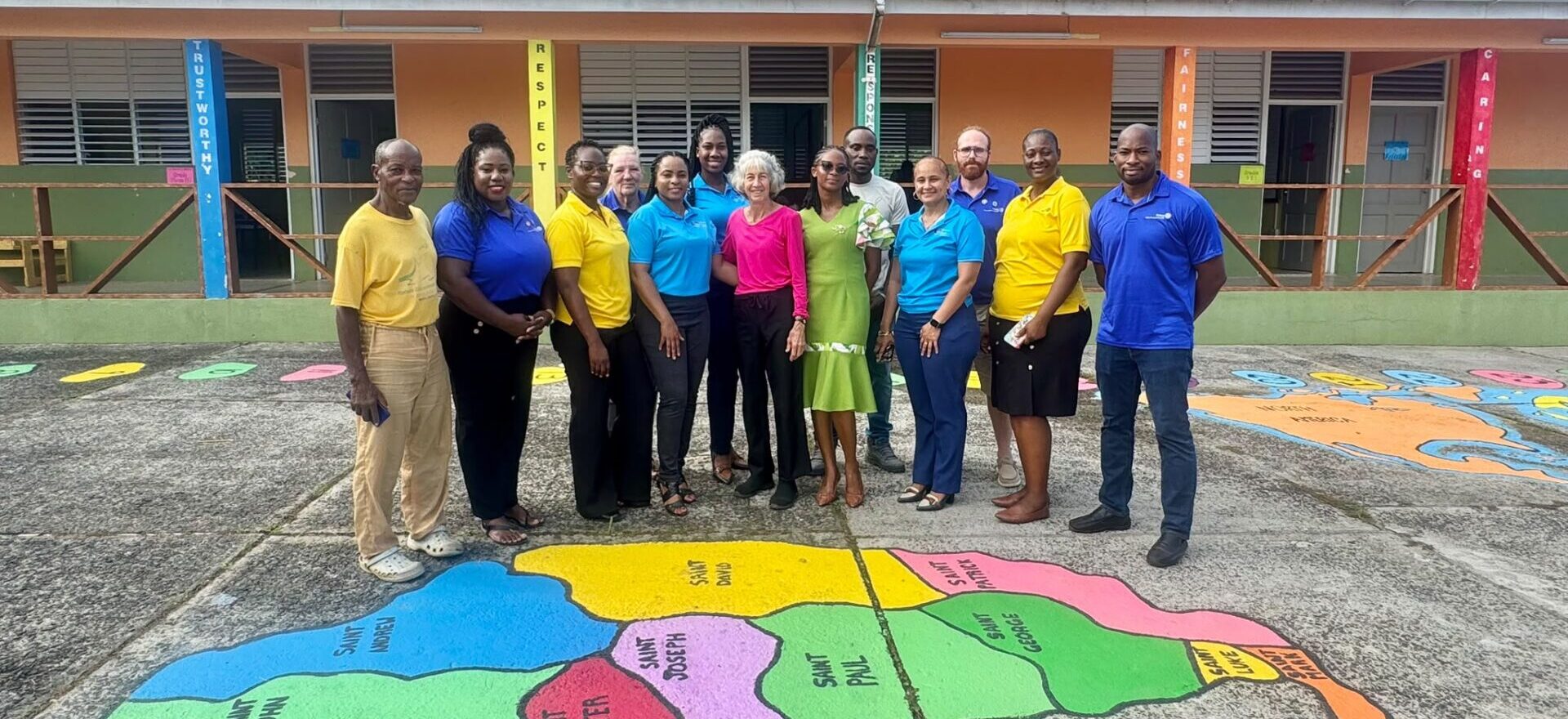
    ROSEAU, April 2026 — After a tightly contested battle of knowledge and critical thinking, the Rotary Club of Dominica has officially crowned the winners of its 11th annual National Secondary Schools Literacy Quiz Competition, held March 27 at the Prevost Cinemall Ballroom.

    Claiming the first-place title was the team from St. Mary’s Academy, made up of students Arion Bozel and Thierry Lauture. The pair secured victory by a narrow margin over runners-up from Dominica Grammar School, represented by Qitara Beaupierre and Jeanmik LaPinard. Convent High School’s team of Jaël Lloyd and Mazhira Marie rounded out the top three positions.

    Six schools advanced to the final round of the competition, selected from a pool of eight semi-finalists that competed across two qualifying rounds held on consecutive Fridays earlier in March. The other finalist teams included North East Comprehensive School’s Nai Auguiste and Nyssi Nelson, Castle Bruce Secondary School’s Micah Tyson and Mathew J. Alexander, and Isaiah Thomas Secondary School’s Ken-G Delsol and Azariah Johnson.

    Prizes were awarded to all finalists to recognize their hard work and achievement. First and second-place teams took home laptop computers alongside smaller accessory prizes, while third-place winners received tablets. All competing students also received branded participation tokens and personalized certificates of achievement for reaching the final stage of the national contest.

    The annual literacy quiz is just one of dozens of youth-focused education initiatives the Rotary Club of Dominica has organized over decades of community service. The organization has a long track record of supporting local needs across the island: it runs a popular annual Grotto lunch program during the Creole cultural season, and organizes annual holiday visits to bring gifts and cheer to residents of the Dominica Infirmary every Christmas morning. None of these service projects would be possible without the support of local residents who attend the club’s signature annual Carnival fundraiser, Souse ‘n Punch, organizers noted.

    The club also extended public gratitude to its network of corporate sponsors that made the 2026 literacy quiz possible. Gold sponsorships were provided by the National Co-operative Credit Union and the Insurance Company of the West Indies (ICWI), while Central Co-operative Credit Union joined as a silver sponsor. Bronze sponsorship came from the National Bank of Dominica and Dominica Broadcasting Corporation (DBS Radio), which also broadcast the entire final competition live for audiences across the island.

    As part of the global Rotary International network, the Rotary Club of Dominica upholds the organization’s core mission of taking local action to strengthen communities worldwide. Rotarians across the globe donate their time, energy and passion to build sustainable, meaningful projects that advance peace, expand access to healthcare, deliver clean drinking water to underserved areas, support maternal and child health, boost educational access, grow local economies, and protect the natural environment.

  • Americas’ Agriculture essential to global food security, transformation and resilience necessary, say IICA, IDB heads

    Americas’ Agriculture essential to global food security, transformation and resilience necessary, say IICA, IDB heads

    During a high-profile policy event hosted by the Inter-American Development Bank (IDB) in Washington D.C., Muhammad Ibrahim, director-general of the Inter-American Institute for Cooperation on Agriculture (IICA), delivered a stark warning that global food, energy and environmental security depends entirely on decisive action to modernize and strengthen the Americas’ agricultural sector. The event, which drew roughly 240 in-person and virtual attendees, generated lively, engaged discussion between leaders and stakeholders on the urgent need to reorient regional agricultural development for a era of growing global shocks.

    Beyond the formal presentation, Ibrahim held a closed working meeting with Pedro Martel, head of IDB’s Agriculture and Rural Development Division, where the two leaders mapped out a shared collaborative agenda for the region. Both officials centered their remarks on the outsized global importance of the Americas’ agricultural sector: the region stands as the world’s top net food exporter, accounting for more than one-fifth of total global food output. But behind this leading global position, Martel exposed a deep and persistent inequity: nearly 30 percent of the region’s rural population still struggles with chronic food insecurity, a gap that has widened amid growing global market volatility.

    Martel outlined decades of regional agricultural performance data collected by IDB, noting that while Latin America and the Caribbean saw solid agricultural productivity growth over the second half of the 20th century, productivity growth slowed dramatically between 2010 and 2020. He attributed this slowdown primarily to widespread gaps in technical efficiency across small and medium producer operations. “Our core challenge right now is to reignite productivity gains and growth, while simultaneously protecting the natural resources that our sector depends on,” Martel explained during the discussion.

    The dialogue also emphasized the complementary strengths of the two leading regional agricultural institutions, positioning them to tackle the sector’s most pressing challenges. IICA brings specialized technical expertise, cross-regional coordination capacity, and on-the-ground implementation experience across 34 member states, while IDB provides the large-scale financing tools needed to roll out large development initiatives across Latin America and the Caribbean.

    Their joint work program targets both near-term and long-term priorities. In the medium term, the two organizations will focus on addressing deep structural weaknesses across the sector, including gaps in food transport infrastructure, outdated logistics networks, lack of support for inclusive smallholder production systems, and persistent vulnerabilities in regional plant and animal health systems. Looking ahead to the next decade, both institutions have prioritized investment in the bioeconomy as a transformative pathway to rebuild rural production systems across the Western Hemisphere, balancing productivity growth with environmental sustainability.

    Ibrahim stressed that the region has an unprecedented opportunity to leverage its existing agricultural strength to lead global agrifood system transformation, but that this leadership is not a given. “IICA and the IDB have a unique opportunity to scale up our joint work and support member countries to build a more competitive and resilient productive base,” Ibrahim said. “The sheer scale, resources, and productive capacity of the Americas’ agriculture sector puts it in a position to lead the future of global agrifood systems. But this leadership will not happen automatically; it depends entirely on the bold decisions we make today.”

    Against the backdrop of ongoing geopolitical instability and post-pandemic market disruptions, Ibrahim argued that incremental, short-term policy fixes will not be enough to address the root vulnerabilities facing the sector. “Global agrifood systems are facing more frequent climate, geopolitical, logistical, and market shocks than ever before, and these events are increasingly simultaneous and interconnected,” he explained. “We cannot treat these shocks as isolated, one-off events. They are fundamentally redefining the conditions for production, trade, and food security across every region.”

    He also emphasized that these disruptions do not impact all stakeholders equally, with pre-existing inequalities magnifying harm for the most vulnerable producers and nations. “Impact and response capacity vary tremendously across the sector. Smallholder farmers suffer the most from shocks, and at the national level, technological gaps widen existing inequalities,” Ibrahim noted. “Countries that have advanced science and technology to boost productivity and resilience are in a far stronger position to absorb and respond to crises.” That is why IICA has centered its work on cross-border knowledge transfer, targeting support to the countries and producers that need it most, he added.

    One of the most critical structural vulnerabilities the discussion highlighted is the region’s heavy dependence on imported agricultural inputs, particularly fertilizers and energy. Ibrahim pointed out that even Brazil, one of the world’s largest agricultural exporters, imports more than 80 percent of the fertilizers it uses for domestic production. “Input costs make up a huge share of total agricultural expenses, and in fully mechanized production systems, they can account for as much as 70 percent of total operating costs,” Ibrahim explained. “Our current production model directly shapes how vulnerable our system is: the higher our dependence on imported strategic inputs, the more exposed we are to external price shocks and supply chain disruptions.”

    Ibrahim concluded by reaffirming that only deep structural transformation of the region’s agrifood systems can resolve these long-standing vulnerabilities. “By transforming the fundamental structure of our agrifood systems, we can cut structural vulnerabilities, boost overall productivity, and reduce our dependence on strategic external inputs,” he said. “This transformation will deliver tangible benefits for all: higher incomes for farming households, and more accessible, nutritious food for every community across the region.”