标签: Dominica

多米尼克

  • Iran ‘prepared for war’ but signals openness to US talks as protests intensify

    Iran ‘prepared for war’ but signals openness to US talks as protests intensify

    Iran stands at a critical juncture as nationwide protests enter their third week, with human rights organizations reporting a death toll exceeding 500. The regime has adopted a paradoxical stance—issuing war readiness declarations while simultaneously extending diplomatic overtures to the United States. This complex dynamic unfolds against President Donald Trump’s explicit warning that American interests would trigger retaliatory strikes.

    According to US-based monitoring group HRANA, the civil unrest has resulted in 490 protester fatalities and 48 security personnel deaths, with arrests surpassing 10,600 individuals. Iranian authorities have intensified their response through a nationwide communications blackout exceeding 72 hours, effectively isolating the country from global digital networks.

    The protests, representing the most significant challenge to Tehran’s authority since 2022, have ignited international solidarity demonstrations. These gatherings have occasionally turned confrontational—Los Angeles witnessed a vehicular assault on anti-regime protesters, while London saw the Iranian embassy’s flag desecration, prompting Tehran to summon Britain’s ambassador.

    State media broadcasted pro-government rallies featuring President Masoud Pezeshkian and Foreign Minister Abbas Araghchi, who urged citizens to demonstrate resilience against what officials termed ‘foreign-instigated riots.’ Simultaneously, security forces have escalated efforts to disrupt Starlink satellite internet services, with IranWire reporting equipment confiscations and terminal jamming operations.

    Amid the turmoil, diplomatic channels show subtle activity. Iranian diplomats have reestablished contact with US envoy Steve Witkoff through communication pathways originally created during nuclear negotiations. Though President Trump claims Iranian leaders seek direct talks, the foreign ministry only acknowledges that ‘certain points and ideas have been presented by the other side.’

    The European Parliament has taken a firm stance, announcing a comprehensive ban on Iranian diplomats from its premises. President Roberta Metsola declared the EU legislature would not ‘legitimize a regime sustained through torture, repression and murder.’

    As Israel heightens alert levels following US intervention threats, Washington prepares to evaluate response options including military strikes, cyber operations, sanctions expansion, and digital support for protesters. This multilayered crisis—combining domestic rebellion, international diplomacy, and potential armed conflict—poses the most severe test to Iran’s political stability in recent history.

  • LETTER TO THE EDITOR: Dominica’s strategic path – from vulnerable outpost to onenationalpark nation

    LETTER TO THE EDITOR: Dominica’s strategic path – from vulnerable outpost to onenationalpark nation

    In a bold vision for national transformation, Dominica stands at a crossroads between dependency and sustainable sovereignty. Recent geopolitical shifts in U.S. relations—including revised visa bonds, migration protocols, and security arrangements—have exposed the vulnerability of Caribbean nations when overly reliant on single international partners. This dependency simultaneously impacts education, healthcare, tourism, and family connections, compelling Dominica to reconsider its developmental framework.

    The island nation already possesses the foundational elements for a revolutionary approach: the UNESCO World Heritage Site Morne Trois Pitons National Park exemplifies the volcanic landscapes and biodiversity that could form the basis of an integrated conservation economy. The critical choice facing Dominica is whether to elevate its ‘Nature Island’ identity from mere slogan to organizing principle for economic and diplomatic strategy.

    Concrete steps already demonstrate this vision’s viability. The establishment of the world’s first sperm whale reserve extends environmental stewardship from mountains to marine ecosystems. Simultaneously, organic farming practices enhance food security while strengthening the nation’s ‘clean and green’ brand for export markets. These initiatives create pathways for premium tourism, scientific research, and value-added agricultural exports.

    A comprehensive conservation model would implement strict environmental regulations, establish no-go zones, and prioritize low-impact, high-value economic activities. Such transformation would necessitate fundamental changes in waste management, construction standards, agricultural practices, and transportation infrastructure, including phasing out pesticides, single-use plastics, and fossil fuel vehicles.

    Geopolitically, this approach positions Dominica advantageously. Located between French territories Martinique and Guadeloupe, the island could leverage institutional connections to Paris and Brussels while attracting climate finance from Canada and European nations seeking credible biodiversity partnerships. The strategy would also engage China’s infrastructure capabilities without creating substitute dependencies, instead insisting on stringent environmental and social safeguards across all partnerships.

    The Citizenship by Investment (CBI) program requires fundamental restructuring to align with this vision. Rather than treating citizenship as a commodity, a reformed CBI could attract ecologically-conscious investors through transparency, residency requirements, and mandatory investments in conservation projects. Similarly, major infrastructure developments—including the international airport, marina, and cable car—must undergo rigorous environmental impact assessments and community consultation processes.

    Geothermal energy development represents the paradigm’s perfect embodiment: harnessing volcanic resources for near-total renewable electricity generation while reinforcing Dominica’s climate-resilient identity. This approach recognizes that pristine watersheds and forests constitute strategic economic assets in an increasingly water-scarce world.

    Crucially, the Kalinago people must be central to this transformation as cultural guardians and knowledge-holders. Their traditional practices of restrained land use offer invaluable guidance for sustainable development, making their inclusion fundamental to any credible conservation model.

    This comprehensive strategy would require implementing unified land-use and marine spatial plans, expanding protected areas, and aligning all sectors—tourism, agriculture, fisheries, energy, and infrastructure—under a coherent vision. It represents not a short-term plan but a 20-50 year commitment to building an economy resilient enough to maintain genuine sovereignty through diversified partnerships and environmental stewardship.

    Ultimately, Dominica’s unique combination of intact ecosystems, small population, and living indigenous culture provides a narrow window for transformational change. By embracing whole-island conservation as its developmental cornerstone, the nation could achieve unprecedented economic mobility through eco-tourism, sustainable agriculture, and community-based enterprises while securing its position in the international community as a model of climate resilience and environmental integrity.

  • Cuban President Diaz-Canel responds to recent statements by Trump, affirming right to defend homeland

    Cuban President Diaz-Canel responds to recent statements by Trump, affirming right to defend homeland

    Cuban President Miguel Díaz-Canel has issued a forceful condemnation of what he characterizes as \”immoral statements\” from the United States government, reaffirming Cuba’s readiness to defend its sovereignty. The remarks came in response to recent social media posts by U.S. President Donald Trump threatening to halt all oil and financial resources to Cuba.\n\nThe diplomatic confrontation escalated following the capture of Venezuelan President Nicolas Maduro by U.S. forces, which disrupted Venezuela’s status as Cuba’s primary oil supplier. On January 11, 2026, President Trump declared via social media: \”THERE WILL BE NO MORE OIL OR MONEY GOING TO CUBA – ZERO! I strongly suggest they make a deal, BEFORE IT IS TOO LATE.\”\n\nIn his response, President Díaz-Canel questioned the moral authority of U.S. leadership, stating that those who \”turn everything into a business, even human lives\” lack standing to criticize Cuba. He attributed current economic challenges to six decades of U.S. economic sanctions rather than Cuba’s political system, suggesting critics should \”feel ashamed and choose silence instead.\”\n\nThe Cuban leader framed the tension as an issue of national sovereignty, emphasizing that Cuba \”does not attack; it has been attacked by the US for 66 years.\” He declared the nation’s preparedness to \”defend the Homeland to the last drop of blood\” under the hashtag #CubaIsCourage.\n\nCuban state media extensively covered Díaz-Canel’s statements, positioning them within broader concerns about U.S. actions in Venezuela and perceived escalating threats from the White House toward multiple nations.

  • RayAsta Foundation launches stroke awareness campaign in schools

    RayAsta Foundation launches stroke awareness campaign in schools

    The RayAsta Foundation has unveiled a comprehensive stroke awareness campaign targeting educational institutions across the Dominican Republic. This initiative, scheduled to commence on January 12, 2026, aims to educate students, faculty members, and parents about stroke recognition, prevention strategies, and emergency response protocols.

    Designed as an interactive educational program, the campaign will deliver structured presentations during regular school hours through homeroom sessions and school assemblies. Medical professionals including Jael Joseph, Dr. Shane Mc Intyre, and Dr. Gael Thomas will collaborate with the foundation to ensure accurate information delivery combined with practical guidance.

    The curriculum focuses on four critical components: identifying common stroke symptoms and warning signs, understanding risk factors and preventive measures, implementing appropriate emergency procedures, and emphasizing the vital importance of immediate medical intervention. Through these educational sessions, the foundation seeks to create a ripple effect of awareness that extends beyond school premises into broader communities.

    Campaign coordinator Cecilia St. Hilaire emphasized the universal relevance of stroke education, noting: ‘Our primary objective is to communicate that strokes can affect individuals of any age or background. Early recognition of symptoms fundamentally improves survival rates and recovery outcomes. Knowledge truly serves as the first line of defense.’

    The initiative represents a proactive approach to public health education, potentially establishing a model for other nations facing similar healthcare challenges. By integrating stroke awareness into school environments, the foundation aims to cultivate a generation better equipped to handle cardiovascular emergencies and make informed health decisions.

  • Dominica’s Creole & Culture Ambassador Leroy “Wadix” Charles honored at Haitian Music Awards (with video)

    Dominica’s Creole & Culture Ambassador Leroy “Wadix” Charles honored at Haitian Music Awards (with video)

    In a significant cross-cultural celebration, Ambassador Leroy ‘Wadix’ Charles, serving as Dominica’s official Creole & Culture Ambassador, was formally recognized at the esteemed Haitian Music Awards ceremony held on January 10, 2026. The prestigious honor acknowledges his decades-long dedication to fostering Haitian musical traditions and cultural expressions throughout the Caribbean region.

    The award ceremony, attended by prominent figures in Caribbean music and cultural diplomacy, highlighted Ambassador Charles’s exceptional work in building cultural bridges between Dominica and Haiti. His initiatives have included organizing collaborative music festivals, promoting Creole language preservation, and facilitating artistic exchanges that have enriched both nations’ cultural landscapes.

    This recognition marks a milestone in Caribbean cultural relations, demonstrating how artistic diplomacy can strengthen regional ties. Ambassador Charles’s approach has combined traditional musical preservation with contemporary interpretations, making Haitian cultural expressions more accessible to broader audiences while maintaining their authentic essence.

    The Haitian Music Awards committee specifically noted Charles’s innovative educational programs that have introduced Haitian musical heritage to new generations of Caribbean artists. His work has not only preserved important cultural traditions but has also created new opportunities for cultural exchange and economic development through the arts.

    This honor represents the growing importance of cultural ambassadors in promoting regional understanding and appreciation of diverse Caribbean traditions, setting a precedent for future cross-cultural collaborations within the region.

  • COMMENTARY: The Caribbean’s greatest export is talent. It’s time to stop giving it away

    COMMENTARY: The Caribbean’s greatest export is talent. It’s time to stop giving it away

    The Caribbean stands at a critical crossroads, confronting a pervasive brain drain phenomenon that has long deprived the region of its most valuable resource: human capital. World-class talent consistently departs Caribbean shores not from diminished patriotism, but compelled by the pursuit of professional growth and advanced learning opportunities unavailable domestically. These individuals acquire prestigious degrees, specialized skills, and global networks that earn international respect, yet they frequently remain abroad where infrastructure supports their ambitions—highlighting the region’s critical shortage of systems that enable talent to flourish.

    This exodus represents more than individual career choices; it signifies a structural deficit requiring transformative solutions. The Caribbean possesses abundant genius and potential but lacks the institutional ecosystems necessary to harness these qualities. Where other regions benefit from robust research environments, cutting-edge laboratories, and innovation-driven industries, the Caribbean faces an innovation gap that perpetuates economic dependency and vulnerability.

    The solution lies not in discouraging educational migration but in creating compelling reasons for return. The establishment of a Pan-Caribbean Applied Sciences & Innovation Institute could revolutionize the regional landscape, serving as both magnet and multiplier for local talent, diaspora returnees, and international students seeking unique academic opportunities. Such an institution would address fundamental gaps in research and development infrastructure while positioning the Caribbean as a hub for specialized knowledge creation.

    Research investments yield demonstrable economic returns—nations prioritizing R&D experience growth rates triple those that neglect innovation sectors. For the Caribbean, developing research industries represents not merely an economic alternative but a survival strategy in an era of rapid global change. Beyond diversifying from tourism dependency, research institutions would drive technological sovereignty, reduce climate vulnerability (potentially halving billion-dollar hurricane season losses), and create high-value employment opportunities.

    The emotional dimensions of return migration cannot be overlooked. Students abroad form deep social connections and professional networks that make repatriation emotionally complex. Successful reversal of brain drain requires creating professionally compelling opportunities that outweigh these attachments—leadership roles, research positions, and innovation ecosystems that recognize the unique value of internationally trained Caribbean professionals.

    Ultimately, the call to action transcends nostalgia: the Caribbean needs returning talent to build what cannot be built elsewhere, applying global expertise to local challenges. When the region matches its children’s brilliance with commensurate opportunities, it will transform from talent exporter to innovation powerhouse.

  • COMMENTARY: Fear and Fictions V Fact and Evidence

    COMMENTARY: Fear and Fictions V Fact and Evidence

    Recent data from multiple national studies challenges long-standing assumptions about the relationship between abortion legalization and adolescent sexual behavior. Evidence from Barbados, Guyana, and now Argentina demonstrates that increased access to legal abortion services correlates with significant reductions in teen fertility rates rather than promoting increased sexual activity as opponents claim.

    According to the CEDEs Annual 2022 Report analyzing Argentina’s experience with legal abortion, the country implemented a tiered approach to reproductive healthcare access. The policy granted full autonomy to teenagers aged 16-17, provided independent access for those 13-15 when no serious medical risk was present, and required adult accompaniment only for children 12 and younger.

    The results were striking: Argentina’s adolescent fertility rate among 15-19 year olds plummeted from 62.6 to 27 per 1,000 women—a dramatic 57% reduction—within just six years of implementation. This pattern mirrors experiences in Caribbean nations where abortion legalization preceded similar declines. Barbados witnessed a 53% overall reduction in abortions at Queen Elizabeth Hospital and a 58.9% decrease among teenagers in the decade following legalization in 1983. Similarly, Guyana’s abortion rate dropped 20% below pre-legalization levels after 1995.

    These findings directly contradict claims that legal abortion access encourages “licentious sexual activity” among youth. Instead, the evidence suggests that comprehensive reproductive health policies combining access with education effectively reduce adolescent pregnancy rates. The data indicates that evidence-based health policy rather than fear-based approaches produces measurable improvements in public health outcomes.

    ASPIRE, a pro-motherhood, pro-choice advocacy group operating across six Caribbean countries, emphasizes that replacing obstacles with access and ignorance with education represents a more effective approach to reproductive health policy. The organization promotes continued research and dialogue with civil society and governments to advance fairness and justice in reproductive healthcare across the region.

  • LIVE (from 3:00 p.m): Opening of Carnival 2025

    LIVE (from 3:00 p.m): Opening of Carnival 2025

    Google DeepMind has unveiled significant enhancements to its Gemini artificial intelligence ecosystem, introducing two specialized models designed to transform developer workflows and multimodal interactions. The newly launched Gemini 1.5 Flash showcases unprecedented efficiency in rapid code generation and data processing, while the advanced Gemini 1.5 Pro demonstrates sophisticated multimodal reasoning capabilities across complex datasets.

    This strategic expansion addresses the growing demand for specialized AI tools in software development and content analysis. Gemini 1.5 Flash represents a breakthrough in computational efficiency, delivering near-instantaneous code synthesis and data manipulation with minimal resource consumption. Meanwhile, Gemini 1.5 Pro establishes new benchmarks in contextual understanding, processing extensive documents, code repositories, and multimedia content with remarkable analytical precision.

    The development reflects Google’s intensified competition in the enterprise AI sector, challenging established coding assistance platforms and multimodal systems. Both models incorporate enhanced safety protocols and ethical AI frameworks, responding to increasing regulatory scrutiny of artificial intelligence technologies.

    Industry analysts note these advancements could significantly accelerate software development cycles while enabling more sophisticated AI-human collaboration in technical fields. The release timing coincides with growing enterprise investment in AI-powered development tools and content management solutions.

  • Government to train 20 air traffic controllers in preparation for completion of international airport

    Government to train 20 air traffic controllers in preparation for completion of international airport

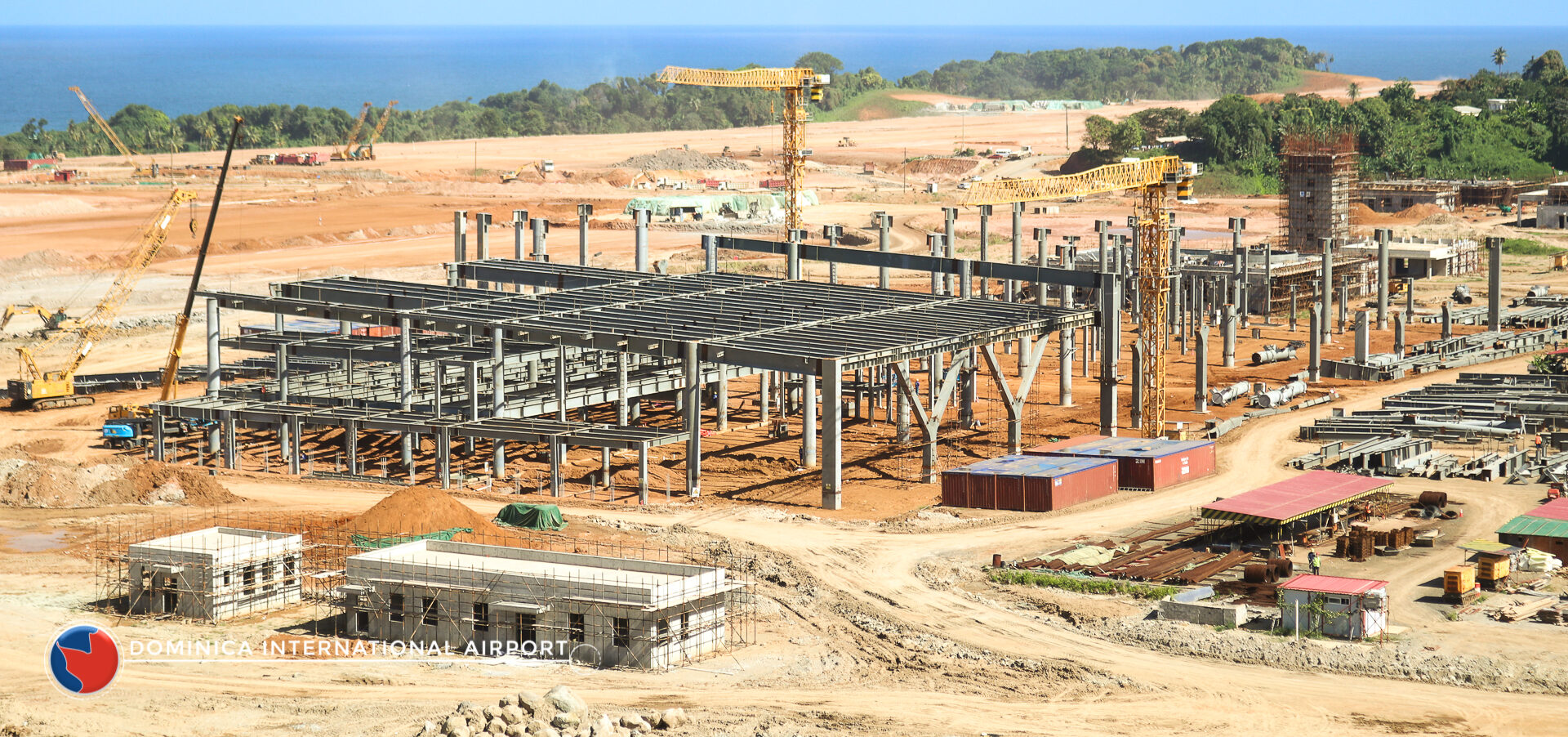
    The Government of Dominica is proactively developing specialized workforce capabilities in preparation for its forthcoming international airport, with Tourism Minister Denise Charles-Pemberton announcing comprehensive training initiatives for 20 air traffic controllers this year. This strategic move forms part of the island nation’s broader employment generation strategy tied to the airport infrastructure project.

    During an inspection tour of the International Airport Development Project site, Minister Charles-Pemberton emphasized the substantial employment potential the facility represents. “Projections indicate approximately 200 new positions will be created upon the airport’s operationalization,” she stated. “This aligns perfectly with the employment opportunities Prime Minister Roosevelt Skerrit consistently highlights. Our current focus involves meticulous assessment of existing skill inventories and identifying specific competencies required for seamless airport operations.”

    The training pipeline has already commenced with three air traffic controllers undergoing instruction, while selection processes for the remaining 17 candidates are underway. The Minister explicitly encouraged citizen participation: “We require diverse expertise including maintenance specialists, air traffic controllers, and technical staff. Interested individuals possessing relevant qualifications may submit applications through the Dominica Air and Sea Ports Authority (DASPA).”

    Complementing these aviation-specific roles, Charles-Pemberton noted parallel demand for electrical engineers, maintenance technicians, and immigration personnel, asserting that employment prospects will encompass virtually every skilled Dominican seeking airport-related careers.

    Prime Minister Skerrit, concurrently evaluating project progress, expressed considerable satisfaction with developmental milestones. Technical preparations are advancing systematically with runway foundation stabilization preceding concrete and asphalt surfacing scheduled post-2026 rainy season. Critical infrastructure including an arterial tunnel connecting Wesley to Woodford Hill and Portsmouth is progressing toward August-October 2026 completion.

    All essential facilities—terminal buildings, VIP services for private aviation, fire and rescue services, and customs infrastructure—are currently under construction. Based on contractor timelines, structural completion is anticipated by November 2026, followed immediately by interior works. Barring unforeseen circumstances, the Prime Minister projected full operational readiness by late 2027.

    Skerrit characterized the enterprise as a transformative national achievement, emphasizing its potential to catalyze socioeconomic advancement through enhanced connectivity and tourism infrastructure. The government maintains confidence that this strategic investment will substantially elevate Dominica’s global accessibility and economic prospects.

  • PRESS RELEASE: Dominica’s Mas Domnik 2026 officially opens today

    PRESS RELEASE: Dominica’s Mas Domnik 2026 officially opens today

    ROSEAU, DOMINICA – The vibrant island of Dominica has officially inaugurated its premier cultural festival, Mas Domnik 2026, with a spectacular National Parade and Opening Ceremony on Saturday, January 10th. The festivities commenced at 2:30 PM in Pottersville, situated in the parking area adjacent to St. Alphonsus Catholic Church, marking the formal commencement of the extended Carnival season, which is celebrated as ‘The Real Mas’.

    The ceremonial opening featured the official proclamation of the Carnival season, a special tribute to cultural figure Darnley Guye, the symbolic handing over of the Carnival key, and addresses from key stakeholders. This was immediately followed by the National Parade from 3:00 PM to 6:00 PM, a dynamic procession showcasing the island’s rich cultural tapestry. The parade was spearheaded by approximately 60 traditional ‘sennsés’ groups, followed by over 60 participating troupes. The spectacle featured a magnificent display of Traditional Mas, including Kalinago têt mas, big boom-boom characters, agile stilt walkers, and dramatic black devils, alongside elaborate costume bands, pageantry, and artistically designed floats.

    The parade route traversed major thoroughfares, beginning along the E.O. LeBlanc Highway at the St. Alphonsus grounds, proceeding down Goodwill Road, crossing the EC Loblack Bridge, and continuing along Independence Street, King George V Street, Dame Eugenia Charles Boulevard, and Kennedy Avenue. The daytime celebrations transitioned into the evening with performances by electronic bands and a calypso truck, offering a tantalizing preview of the energy anticipated for Carnival Monday and Tuesday on February 16th and 17th.

    Authorities issued advisories urging motorists and residents along the parade route to remove vehicles from the streets beforehand to ensure the safe and uninterrupted movement of participants. The public was encouraged to adhere to all traffic directives from law enforcement to support an orderly event.

    Gerard Cools-Lartigue, Chair of the Dominica Festivals Committee, emphasized the event’s national significance, stating, ‘Mas Domnik is one of the most anticipated events on Dominica’s calendar with direct impact on economic activity, employment and visitor arrivals.’ Echoing this sentiment, Marva Williams, Chief Executive Officer of the Discover Dominica Authority, highlighted the season’s robust foundation: ‘Last season recorded a 34 percent increase in visitor arrivals and an estimated EC twenty-five million dollars in economic activity, setting the pace for a season focused on stronger organization, greater creativity and wider participation.’

    Mas Domnik 2026, which runs from December 13, 2025, to February 26, 2026, features over forty events across the island. Residents and international visitors are invited to participate in the festivities that celebrate Dominica’s unique cultural heritage.