标签: Dominica

多米尼克

  • Team Dominica begins CARIFTA campaign in Grenada

    Team Dominica begins CARIFTA campaign in Grenada

    As the countdown to the 53rd edition of the CARIFTA Games ticks down, Team Dominica has completed its safe arrival in St. George’s, Grenada, and kicked off its first on-site training session at the Kirani James Athletic Stadium, the official competition venue for the event. Team liaisons confirmed that the opening practice was focused on helping athletes acclimate to the track and facility conditions, giving them time to adjust ahead of the three-day championship that draws top junior track and field talent from across the Caribbean region.

    Organized by the Caribbean Free Trade Association, the CARIFTA Games stand as the most prestigious annual junior track and field competition in the Caribbean, attracting hundreds of rising athletes from more than a dozen member territories each year. The 2026 tournament is scheduled to run from April 4 to 6, with opening event kicks off at 9:00 a.m. on April 4, followed by the official opening ceremony at 2:30 p.m. the same day. This year marks the fourth time Grenada has hosted the Games, having previously welcomed Caribbean athletes in 2000, 2016, and 2024. The Caribbean Athletic Association awarded hosting rights to Grenada after original host nominee Guyana withdrew from its commitment to stage the event.

    In the lead-up to the opening, delegations from across the region have been arriving in Grenada throughout the week, with most teams already confirming their final competition rosters. Host nation Grenada has assembled a 65-athlete squad to compete on home soil, while smaller territories including the British Virgin Islands have also finalized their athlete lineups and support staff, signaling full readiness for the tournament.

    For Dominica, the 2026 CARIFTA Games mark a historic milestone: the island nation is sending its largest and most competitive delegation in the history of the event, with 13 fully qualified athletes set to compete across multiple disciplines. The squad includes several current Dominica national record holders, and many of the team’s competitors are ranked as legitimate medal contenders heading into the tournament. Team morale is reportedly high following strong performances across the qualifying season, with local sporting officials optimistic that Dominica will secure one of its best-ever results at this year’s regional championship.

  • IICA launches CDB-funded AgriMSE business and regional market integration initiative with support from the CARICOM Private Sector Organization

    IICA launches CDB-funded AgriMSE business and regional market integration initiative with support from the CARICOM Private Sector Organization

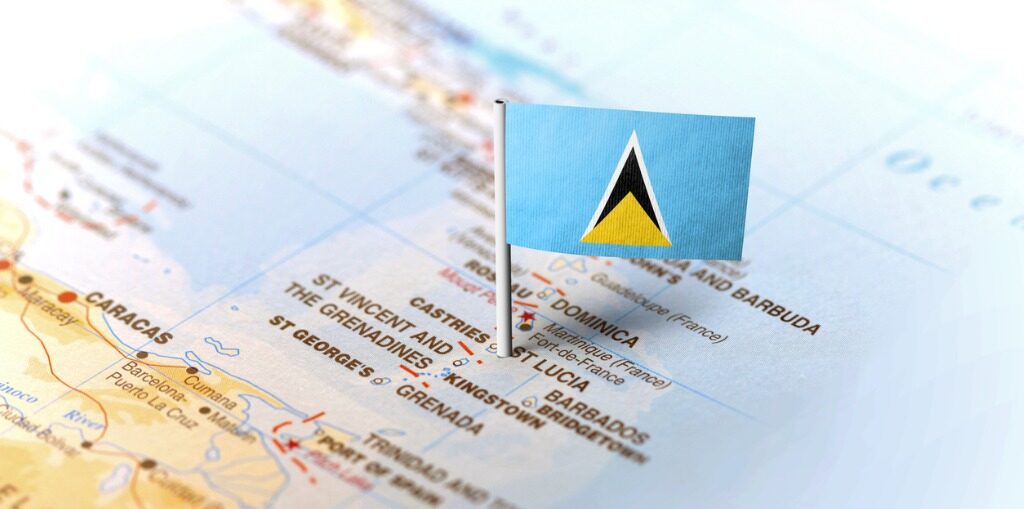
    On March 11, 2026, the Inter-American Institute for Cooperation on Agriculture (IICA) officially launched the AgriMSE Business Development and Regional Market Integration Project during a virtual regional event, bringing targeted support to small-scale agricultural producers across five Caribbean nations. Funded by the Caribbean Development Bank (CDB), the initiative focuses on strengthening the competitiveness, operational efficiency and cross-border market access of Agricultural Micro and Small Enterprises (AgriMSEs) based in Antigua and Barbuda, Dominica, Grenada, Saint Lucia, and Trinidad and Tobago. Over an 18 to 24-month implementation period, the project will deliver diagnostic business assessments, tailored technical training, and structured market development opportunities to participating AgriMSEs, with a call for interested producers who missed the launch to reach out to the project coordination team for inclusion.

    At the opening of the launch event, Diana Francis, IICA’s representative for Trinidad and Tobago, framed the project as far more than a short-term technical intervention. She emphasized that AgriMSEs are foundational pillars of regional agricultural value chains, sustainable rural livelihoods, and collective food security, making targeted investment in their growth a regional priority. To successfully integrate small-scale agricultural producers into formal domestic, regional, and global markets, Francis noted that sustained cross-sector collaboration is non-negotiable. Critical partners include regional development institutions, national governments, private sector actors, and end consumers, with logistics, distribution, and marketing firms playing an especially vital role in moving AgriMSE products from farm gates to commercial outlets across borders.

    To deliver structured, specialized support, the project is organized into three coordinated technical consultancy streams, with IICA overseeing overall integration, stakeholder outreach, and ongoing technical backstopping. The first stream, led by EconoTech Ltd., focuses on optimizing business and production operations to help AgriMSEs scale their output and meet market entry requirements. The second, headed by consultant Jai Rampersad, prioritizes streamlining intra-regional trade and removing barriers to export readiness. The third stream, managed by GBest Consulting, works to improve AgriMSE credit ratings, build investment readiness, and expand access to formal financing and capital opportunities. All three streams work in close partnership with national agricultural entities to align interventions with local needs and priorities.

    The new IICA-CDB project is complemented by longstanding agricultural development initiatives funded by the European Union (EU) across the Caribbean. Janet Lawrence, IICA’s Barbados-based agricultural health, food safety and quality specialist for the Caribbean, outlined the EU’s 10+ year track record of supporting regional agriculture, particularly through funding for sanitary and phytosanitary (SPS) capacity building and regulatory framework improvements. These EU-backed initiatives add complementary resources that support not only AgriMSEs directly, but also the policymakers and regional institutions tasked with building an enabling policy environment for agricultural growth. By addressing foundational priorities including agricultural health, food safety, quality assurance, and aligned regulatory standards, the EU projects create the necessary conditions for AgriMSEs to compete effectively in regional and international export markets, reinforcing the core objectives of the new CDB-funded project.

    Patrick Antoine, Chief Executive Officer and Technical Director of the CARICOM Private Sector Organization (CPSO), highlighted the critical role of private sector collaboration in sustaining the project’s impact beyond its implementation period. Antoine emphasized that small agricultural enterprises often face shared systemic barriers related to production scale, logistics infrastructure, and processing capacity, gaps that can be addressed through closer partnership with larger regional firms. To this end, the CPSO is establishing a permanent Regional Agribusiness Working Group, designed to carry forward the project’s objectives long after the initial consultancy phase concludes.

    “The intention behind the Regional Agribusiness Working Group is to bring together the experience, networks and technical capabilities of larger regional enterprises to directly support the growth of AgriMSEs,” Antoine explained. “Through collaboration in areas such as shared processing, logistics and packaging, we can help smaller enterprises overcome scale constraints and position themselves more effectively for regional and even international markets.”

    Antoine also shared updates on growing cross-region investment opportunities tied to deepening engagement between Caribbean and African private sectors. He confirmed that the African Export Import Bank (Afreximbank) has recently increased its investment commitment to the Caribbean from US$3 billion to US$5 billion, opening new financing avenues for regional agricultural enterprises. The new Regional Agribusiness Working Group will leverage this and other strategic partnerships, alongside a public Regional AgriMSE Database being developed as part of the project, to deliver ongoing targeted support to small producers. This long-term structure will also advance the CARICOM 25 by 2025 plus 5 food security agenda, which aims to reduce regional food import dependence by 25% by 2030.

    Early feedback from AgriMSE representatives who attended the launch has been overwhelmingly positive. One participating producer described the introductory session as insightful, noting that it brings together all the resources and support small agricultural producers have long requested in a single coordinated initiative, restoring hope and reinforcing purpose for small-scale producers across the region. Francis echoed this sentiment, reiterating that the project’s core goal is to ensure that agri-food products from Caribbean AgriMSEs meet both the quality standards and price competitiveness requirements needed to gain and sustain market share in domestic and export markets. It also seeks to build a durable collaborative ecosystem for AgriMSE support through the long-term IICA-CPSO partnership and a network of aligned stakeholders.

    As the leading specialized agricultural agency for the Inter-American system, IICA holds a mandate to support its 34 member states in advancing inclusive agricultural development and rural well-being through high-quality international technical cooperation. The CPSO, the most recently accredited associate institution of the Caribbean Community, is a member-led service organization focused on mobilizing private sector participation across the CARICOM Single Market and Economy (CSME), with membership open to private entities of all sizes including micro, small, and medium enterprises.

  • LIVE: Holy Thursday Mass at Our Lady of Fatima

    LIVE: Holy Thursday Mass at Our Lady of Fatima

    The provided text only contains social media sharing interaction prompts: “Share”, “Tweet”, “Share”, “Pin”. No complete core news content, event details, background information or relevant reporting context is included in the submitted material. It is impossible to reconstruct a complete news narrative or analyze specific event information, as the original full news content is missing from the input.

  • Whitchurch announces ferry ticket price adjustment as fuel costs rise

    Whitchurch announces ferry ticket price adjustment as fuel costs rise

    For half a decade, H.H.V. Whitchurch & Co. Ltd, the official local agent of inter-island ferry service FRS Express des Îles, has absorbed the constant volatility of global fuel markets to keep passenger ticket prices stable. That policy comes to an end this spring, as the firm announced this week that mandatory fare adjustments will go into effect starting March 31, 2026, driven by a dramatic recent spike in global fuel costs.

    In an official public statement released Tuesday, the company outlined the years of internal cost-cutting that allowed it to shield customers from shifting energy expenses. Despite those efforts, the latest, unrelenting round of fuel price increases has left leadership with no viable alternative to raising fares, the statement explained.

    “Over the past five years, fuel cost fluctuations have been absorbed without impacting fares; however, after careful consideration, this adjustment has become necessary to ensure the continued delivery of safe, reliable, and high-quality service,” the statement read.

    Whitchurch was quick to clarify that the decision to raise fares is not an internal initiative, but a response to external market pressures outside the firm’s control. In a message to loyal customers, the agent sought to reassure passengers that service quality will remain unchanged despite the price adjustment.

    “As your agents, we would like to reassure you that this decision is beyond our control and despite this change, FRS Express des Îles remains your trusted choice for safe, comfortable and dependable island-to-island travel,” the company added.

    The statement closed with a note of gratitude for passengers’ patience and ongoing support as the company navigates the transition to the new fare structure.

  • UWP begins fundraising drive ahead of next general election

    UWP begins fundraising drive ahead of next general election

    As Dominica prepares for its upcoming general election, the main opposition United Workers Party (UWP) has officially kicked off a formal fundraising initiative, a core component of its updated electoral strategy, party leader Dr. Thomson Fontaine has announced.

    In an interview with local broadcaster Q-95 Radio this week, Dr. Fontaine outlined that the party has already begun its outreach to individual potential donors and local institutional supporters, laying early groundwork to secure the financial resources that any competitive political campaign requires. “As part of our strategy we have started to approach persons, we have started to approach institutions, we have started to do the necessary work to ensure that these monies will come our way when the time comes,” he explained. “We absolutely need resources to run an election.”

    Dr. Fontaine highlighted that the shift to proactive fundraising addresses a longstanding challenge for the UWP: previous electoral campaigns were consistently hampered by insufficient financial backing, a gap the party is determined to close this cycle. “In the past we have run election, not with enough resources but we need to change that,” he said.

    Bolstering his call for support, Dr. Fontaine expressed strong optimism about the UWP’s electoral prospects, arguing that the party’s solid standing with voters will naturally translate into increased financial backing from supporters. Even so, he stressed that the party is not leaving funding outcomes to chance, and is prioritizing active, intentional outreach to meet its goals. “But I believe that given our very good chances of winning the next elections we will see a lot more support. But we are not leaving anything to chance, we are actively working, because we need those resources,” he stated.

    The UWP leader went on to confirm that he is fully confident the party will raise all the capital required to run a robust, competitive campaign, and ultimately secure victory at the polls. Beyond securing funding, Dr. Fontaine placed significant emphasis on the ethical framework guiding the party’s fundraising efforts, noting that the UWP has adopted a formal zero-tolerance stance on corruption, and is committed to full transparency and accountability in all financial dealings related to the campaign.

    “We have adopted a position of complete transparency with the Dominican public and accountability and we want to maintain that even as we go after resources to fund our campaign,” he asserted. “We want to start with the right footing because we want to carry that same desire into government where we are credible, where we are accountable, where we are transparent in every action and activity that we undertake.”

    Dr. Fontaine gave a public assurance that the UWP will never compromise its core political principles in order to secure campaign funding. “We aren’t going to ‘shake the devil tail’ to get to where it wants to get to,” he said. “We will do so in a manner that is dignified, in a manner that is above board.”

    Once secured, the funds will be allocated to core campaign operations, including public rally organizing, branded promotional merchandise such as t-shirts and hats, and paid advertising across local media platforms, Dr. Fontaine confirmed. “Ultimately we will get the resources that we need to do what is required, to put on the rallies…to get the t-shirts, the hats, the different things that people need for a good, strong campaign, to pay for their advertising…” he concluded.

  • National abattoir set to resume operations this summer after years of reconstruction

    National abattoir set to resume operations this summer after years of reconstruction

    Nearly nine years after it was destroyed by one of the Caribbean’s most destructive hurricanes, Dominica’s long-awaited rebuilt national abattoir is on track to launch full operations by early summer 2026, a landmark development set to transform the small island nation’s food security trajectory, cut crippling import dependence, and breathe new life into its stagnant livestock sector.

    During a recent media tour and readiness assessment of the Layou Park facility, National Abattoir General Manager Michael Etienne told reporters the flagship infrastructure project is now in its final phase, with full confidence in its upcoming launch. “Today’s walkthrough is a critical milestone,” Etienne shared as inspection teams tested the facility’s processing lines, safety systems and hygiene protocols. “It lets us verify what’s working, how it operates, and confirms that the years of work put into this project are enough to get the abattoir commissioned as soon as possible. We are 100 percent certain that by June, farmers will be supplying livestock, the abattoir will be running at full capacity, and the entire local meat industry will be revolutionized.”

    While Etienne acknowledged the facility could potentially wrap up final checks and open ahead of the June timeline, he noted the government has intentionally targeted early summer to ensure every processing line – including those for poultry and pork – meets all international hygiene and safety compliance standards before going live.

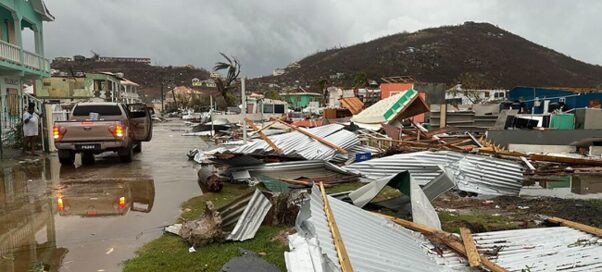
    The abattoir’s path to reopening has been marked by decades of progress, setback and renewed investment. The first iteration of the facility was built between 2012 and 2015 with financing from the Government of Venezuela, designed to modernize Dominica’s fragmented meat processing sector and give local livestock farmers a consistent, formal market. The original plant tested operations in 2015, with design capacity to process 1,000 birds per hour and 50 pigs daily. That progress was wiped out in 2017, when Category 5 Hurricane Maria swept across Dominica, leveling the Layou Park facility and bringing local commercial meat processing to a complete halt. In the years that followed, the loss of the abattoir pushed Dominica deeper into reliance on imported chicken and pork, highlighting the country’s persistent food security vulnerabilities.

    It was not until 2024 and 2025 that the government of Dominica moved forward with a full rebuilding initiative, signing construction contracts to deliver a facility built to modern global standards. The project secured a core EC$6.4 million investment, with additional funding allocated to support upstream farmer development, including construction of climate-resilient livestock pens, improved local feed production, and expansion of national livestock herds. In January 2025, at the official contract signing, Ministry of Agriculture Permanent Secretary Ryan Anselm confirmed the upgraded facility would retain the original 1,000 birds per hour processing capacity, and outlined the government’s strategy to meet demand: the ministry will partner with 20 commercial poultry producers, each required to raise a minimum of 5,000 birds per production cycle to supply the plant. By early 2026, government officials confirmed the project was 90 percent complete, with full commissioning on track for mid-year.

    In comments on the project, Prime Minister Roosevelt Skerrit emphasized the abattoir is a core pillar of the government’s broader national strategy to cut the country’s food import bill and put economic power in the hands of local agricultural producers. “Chicken parts are one of Dominica’s biggest single food imports,” Skerrit explained. “Our medium-term goal is to cut these imports by 50 percent, and eventually reach 100 percent self-reliance for all our meat needs.” The prime minister added that Dominica can first achieve full self-sufficiency in whole chicken production, with scaling up to cover processed chicken parts as local output expands in the coming years. He also noted that the new facility boasts far more advanced, modern processing equipment than the original Venezuelan-funded plant, allowing for higher quality meat processing and stricter food safety controls that will benefit both local producers and consumers.

    To ensure the new supply chain remains sustainable and viable long-term, Etienne confirmed that targeted farmer training is already underway for all producers that will supply the abattoir. “We’ve reached out first to the farmers who supplied the original abattoir, and we’re also vetting new producers who are excited to be part of this new industry,” he said. The Ministry of Agriculture has already delivered building materials and labor support to more than 200 smallholder and commercial farmers to construct climate-resilient livestock pens, part of a broader EC$7.5 million national investment in livestock sector development.

    Once fully operational, the abattoir will process both pork and poultry, giving local farmers a guaranteed formal market for their output and providing consumers with consistent access to affordably priced, hygienically processed local meat. Government economic projections estimate the facility will significantly cut the country’s annual import spending, boost rural household incomes across Dominica’s agricultural communities, and bring the country’s entire agri-food sector into line with modern global standards. With final readiness checks wrapping up and farmer training ramping up, the Layou Park abattoir is on track to welcome its first commercial processing runs this summer – almost a decade after Hurricane Maria forced its closure.

  • Eclipse, Brigidy Stars advance to grand final of islandwide domino league

    Eclipse, Brigidy Stars advance to grand final of islandwide domino league

    The semifinal round of the highly anticipated West Coast Cooperative Credit Union Islandwide Domino League delivered two contrasting showdowns this week, as two elite teams locked in their spots for the upcoming championship decider.

    Eclipse of Pottersville turned in a near-perfect performance to dominate their semifinal against One Love from Tarish Pit, holding a steady lead from the very first round of play to the last. The lopsided contest ended with a staggering 1,493-point margin of victory for Eclipse, with the final scoreboard reading 3,014 for the Pottersville side and just 1,521 for One Love.

    In the second semifinal, fans in attendance witnessed a far tighter, hard-fought battle between Brigidy Stars of Paix Bouche and Rosema White City. Competing in front of a packed, energized crowd of domino enthusiasts, Brigidy Stars held off repeated pushes from Rosema White City to secure their place in the grand final. The close contest ended with a 370-point winning margin for Brigidy Stars, who finished with a total score of 3,009 against Rosema White City’s 2,639.

    Fans will not have to wait long to see the two champions compete for the league title: the grand final, alongside the third-place playoff match, is scheduled to kick off at 6 p.m. this Saturday at the Goodwill Primary School Auditorium. The event is expected to draw a large crowd of local domino fans, as both teams vie for the coveted Islandwide Domino League championship trophy.

  • LIVE: NASA Artemis II flies around the moon

    LIVE: NASA Artemis II flies around the moon

    When reviewing the submitted news material for processing, only social media sharing options, image metadata and a link to an image hosted on an external server were included. No actual text of the news story, core event details, background context or related factual information were provided alongside the image link. Without the full textual content of the original news report, it is not possible to conduct a comprehensive analysis, rewriting, or accurate classification of the news piece. Individuals seeking processing of this news item are requested to resubmit the full complete content of the original news, including all relevant textual details about the reported event, to enable the required work to be completed.

  • LIVE: NASA Launch of Artemis II moon mission

    LIVE: NASA Launch of Artemis II moon mission

    In this incoming news submission, the only substantive content provided is a link to an image hosted on a third-party content storage server, with no accompanying textual context, event description, or core reporting details. The image link follows a timestamped directory structure dated April 6, 2026, indicating the image was likely added to the server on that date for a planned news publication. Without access to the linked image or any supporting written details about the event, topic, or individuals involved, no full factual report can be constructed. News reporting relies on clear verifiable details to maintain accuracy and authority, and the lack of contextual information leaves this submission incomplete for full journalistic processing.

  • Skerrit announces Olympic-sized pool for Pointe Round sports complex

    Skerrit announces Olympic-sized pool for Pointe Round sports complex

    In a major announcement that elevates one of the Caribbean nation’s most ambitious sporting infrastructure investments, Prime Minister Roosevelt Skerrit has confirmed that cabinet has approved expanding the planned Pointe Round synthetic track and field facility to include a full Olympic-sized swimming pool and its supporting amenities.

    Skerrit shared details of the revised project during a recent press briefing, clarifying the split of responsibilities for the development. Global governing body World Athletics has already pledged full support to deliver the certified athletics track surface, covering critical stages from engineering surveys and design work to procurement and construction contracting. The Dominican government, meanwhile, is tasked with preparing the building site, including grading and land preparation, as well as funding and delivering all supporting auxiliary infrastructure for the facility.

    “Originally, our plan centered on delivering a world-class Class 1 certified track and field facility, but cabinet made the decision to broaden the project’s scope to turn this site into a comprehensive, multi-use sports hub,” Skerrit explained. “Alongside the track, we will now add an Olympic-sized swimming pool with all required accompanying amenities, from changing facilities to spectator stands and restroom infrastructure. This will not just be a track facility – it will be a complete sports complex that serves athletes across multiple disciplines for generations.”

    The expanded development comes on the heels of a landmark win for Dominican athletics: in December 2025, the Dominica Athletics Association (DAA) officially confirmed the island had been selected as a beneficiary of World Athletics’ Project 10 initiative, a global program designed to deliver world-class certified track facilities to emerging sporting nations. The selection followed two years of intensive planning, stakeholder consultations, and rigorous technical evaluations, a milestone the DAA has called transformative for the country’s sporting community. Land for the complex has already been secured in the Pointe Round area of Portsmouth, with initial site preparations already underway.

    Project 10 is made possible through a partnership between World Athletics and the Qatar Olympic Committee, which provides funding and technical backing for new athletics infrastructure across targeted developing nations. In addition to the Pointe Round development, Skerrit also updated the public on ongoing upgrade works at the island’s existing Windsor Park Sports Stadium, reporting that visible progress is already being made on the installation of a new modern lighting system to support evening events and training.