标签: Cuba

古巴

  • Fidel and unconventional warfare: An early warning about the assault on consciousness

    Fidel and unconventional warfare: An early warning about the assault on consciousness

    Decades before modern phrases like “fake news” and “cognitive warfare” entered everyday public discourse, Fidel Castro Ruz, the iconic founding leader of the Cuban Revolution, had already mapped out the hidden mechanisms of power that major world powers would unleash through digital information and communication technologies.

    Crucially, Castro’s perspective was never rooted in opposition to technological progress itself. A close look at his legacy reveals a consistent commitment to expanding digital access and technical expertise across Cuba: he championed the development of the island’s first domestic computer, established the country’s preeminent University of Information Sciences, and launched the nationwide Joven Club de Computación (Youth Computer Club) initiative to bring digital literacy to generations of young Cubans.

    Instead, his words represented a prescient, far-sighted warning: he accurately foresaw that cyberspace would evolve into the central battlefield of a quiet, unconventional war designed to colonize the minds of people across the Global South. Castro framed the internet as inherently contested terrain. He never rejected its transformative potential for marginalized nations, noting in a 2012 address at the launch of the book *Guerrillero del Tiempo*: “The internet is a revolutionary tool that allows us to receive and transmit ideas in both directions—something we must know how to use.”

    Yet as early as 2006, when the U.S. government formally announced the creation of its Air Force Cyberspace Special Command, Castro sounded an urgent alarm that rings even louder in today’s hyper-connected world. “The internet can be used with the worst intentions in the world, as envisioned by the CIA and the Pentagon,” he warned at the time. This core duality defined his entire framework on digital power: the network itself is not the enemy; the danger lies in how U.S. imperialism and its allied powers would weaponize it for geopolitical gain.

    At the heart of Castro’s analysis was a sharp critique of mass psychological manipulation. In a landmark November 2005 address delivered at the University of Havana’s Aula Magna, he laid out a critical distinction that explains the effectiveness of 21st century unconventional conflict. “When they first emerged, the mass media took hold of people’s minds and ruled not only on the basis of lies, but also of conditioned reflexes,” he explained. “A lie is not the same as a conditioned reflex. A lie affects knowledge; a conditioned reflex affects the ability to think.”

    This core thesis exposes that the goal of this digital warfare is not merely to spread false information—it is to erase a population’s capacity for critical thought. Through endless repetition of ideological slogans that seep into the collective subconscious, adversaries can reshape public opinion without overt military intervention. Castro illustrated this dynamic with a stark, direct example: “Because they have already created reflexes in you: ‘This is bad, this is bad; socialism is bad, socialism is bad,’ and all the ignorant, all the poor, and all the exploited saying: ‘Socialism is bad.’ ‘Communism is bad,’ and all the poor, all the exploited, and all the illiterate repeating: ‘Communism is bad.’”

    Today, that dynamic has been amplified exponentially by algorithmic curation and viral social media platforms, turning this repetitive messaging into a constant, pervasive assault on independent consciousness.

    Castro’s analysis expanded further to connect digital psychological warfare to the global military-industrial complex. In an August 2009 reflection titled *The Empire and the Robots*, he denounced the stark global inequality that drives weapons development: while more than one billion people across the planet faced chronic hunger, the United States accounted for 42% of total global military spending, pouring vast resources into developing “technologies for killing.”

    The question he posed nearly 20 years ago remains as urgent as ever: “If robots in the hands of transnational corporations can replace imperial soldiers in wars of conquest, who will stop the transnational corporations in their search for markets for their devices?” This shift toward the dehumanization of war—replacing on-the-ground soldiers with drones, algorithms, and autonomous weapons—works hand in hand with psychological warfare: it turns mass destruction into a distant, abstract spectacle, making it far easier to manipulate public perception to justify military aggression. Recent examples, such as Project Maven, the partnership between the Pentagon, tech firms Palantir, Anthropic and its AI Claude, in strikes targeting Venezuela and Iran, confirm Castro’s early insight.

    All of Castro’s interconnected warnings about unconventional warfare coalesce into a overarching diagnosis he labeled “knowledge imperialism.” Repeatedly across his speeches, he framed this as the “main battlefront of the imperialist war,” with an ultimate goal of breaking the sovereign will of independent nations without firing a single shot. Instead of overt military invasion, imperial powers rely on cultural subversion and systematic information manipulation to achieve their geopolitical aims.

    In 2017, Cuban President Raúl Castro Ruz formally reaffirmed this framework before the country’s National Assembly, emphasizing that massive U.S. investments in digital and cultural tools were designed to “refine the tools of the so-called ‘unconventional war’” to provoke political destabilization and restore capitalist rule on the island.

    In the decades since Fidel Castro first issued these warnings, his early analysis has become a core part of Cuban state doctrine, and an essential lens for interpreting 21st century geopolitical conflict. In an era where social media amplifies manufactured conditioned reflexes, algorithms target and segment users to spread tailored misinformation, and autonomous weapons replace frontline soldiers, Castro’s words carry the weight of a fulfilled prophecy—one that is ultimately a call to defend popular sovereignty through critical knowledge and commitment to truth.

  • In its squares on May 1st, Cuba will not be alone either

    In its squares on May 1st, Cuba will not be alone either

    As International Workers’ Day approaches on May 1, hundreds of international solidarity activists are preparing to stand shoulder-to-shoulder with Cuban working people in mass demonstrations across the island nation’s public squares. This year’s mobilization carries extra historic weight, marking the centennial of the birth of Cuban revolutionary leader Fidel Castro Ruz, and comes as the Caribbean nation continues to navigate persistent external pressures designed to undermine its sovereignty.

    Cuba, the largest of the Antilles archipelago, has built a decades-long legacy of resistance amid external challenges. For this year’s May Day, international supporters have traveled from every corner of the globe to witness that resilience firsthand, joining working-class Cubans in reaffirming the island’s right to exist as a free, independent, peaceful and self-determining nation.

    A core contingent of 70 international visitors, organized as the second May Day Solidarity Convoy, has already spent days touring eastern Cuban communities in Santiago de Cuba and Guantánamo provinces, walking through rural hills and coastal villages to connect with local residents. The group includes activists from Italy, Venezuela, Mexico, the United States, France, Switzerland, and Cuban expatriates who have returned to show their support. Michelle Curto, from the Italian Agency for Cultural and Economic Exchange with Cuba, described the trip as an immersion in “the wellspring that is the Cuban Revolution,” adding that Cuba is “the island where we must grow and become ourselves.”

    International visitors have quickly become vocal advocates for the Cuban people after witnessing their daily determination to overcome hardship. Alejandra Chavira, a participant from Mexico, called Cubans “the most supportive people on the planet.” Italian activist Roberto Forte echoed that sentiment, noting that Cuba stands as proof “a world different from one of imposition and bombs is possible.”

    In the capital city of Havana, another group of international supporters — members of the 19th International Brigade of Voluntary Work and Solidarity with Cuba and the Che Guevara Contingent — got an up-close look at Cuban public innovation during a visit this week to the prestigious Center for Genetic Engineering and Biotechnology (CIGB).

    Josefina Guillo, a representative of the Cuba-France Association, emphasized that standing with Cuban workers on the eve of May Day and Fidel Castro’s centennial carries deep symbolic meaning for her organization. “We admire the strength of the Cuban people, their capacity for resilience despite the difficulties,” she said. Ian Müller, a student delegate from the Socialist Party of Germany, echoed that commitment, noting, “The strongest weapon the Cuban people have is international solidarity and friendship with other peoples.”

    When Cuban working masses fill the nation’s squares on May 1, these international supporters will march alongside them. Organizers note that the principles Cuba defends — sovereignty, self-determination, and dignity for working people — are universal causes shared by communities across the globe. That commitment echoes the enduring words of Cuban national hero José Martí, which remain ingrained in the identity of the Cuban people: “Homeland is humanity.”

  • “There are more of us who love and defend Cuba”

    “There are more of us who love and defend Cuba”

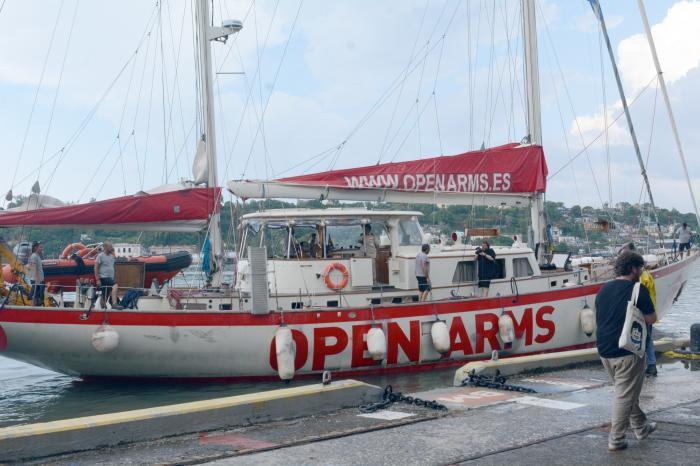
    Kicking off its multi-stop tour of Cuba’s southeastern region on April 27, 2026, the second annual May Day International Solidarity Convoy has brought tangible aid and heartfelt global support to local communities across Granma, Santiago de Cuba and Guantánamo provinces. Made up of pro-Cuba activists and supporters from Italy, France, the United States, Mexico, and Cuban expatriate communities living abroad, the convoy’s 10-day itinerary combines aid deliveries, cultural visits, and direct engagement with local residents to highlight global opposition to the decades-long U.S. blockade against the island nation.

    The delegation’s first stop was Santiago de Cuba’s University of Medical Sciences, where members met with institutional leadership, faculty, and students. In remarks to the gathering, Michele Curto, president of the Italian Agency for Cultural and Economic Exchange with Cuba and director of the joint venture BioCubaCafé, reaffirmed the international community’s unwavering commitment to the Cuban people amid ongoing external pressures. “We have come to reaffirm our commitment to the noble Cuban people, who are now under constant threat,” Curto stated, adding later that a growing global movement of Cuba supporters stands with the island: “There are many more of us who love and defend Cuba; you are not alone, and we will prevail.”

    The meeting became an emotional reunion for many in attendance. Dr. Abel Tobías Suárez Olivares, rector of the University of Medical Sciences, recalled his own deployment to Turin, Italy, as part of Cuba’s international medical brigade that responded to the crisis at the height of Europe’s COVID-19 pandemic. Ileana Núñez, a Cuban soprano who has resided in Italy for decades, was also on hand for the gathering – she had served as a translator and liaison between Dr. Suárez and local patients when the brigade worked in Italy’s COVID-19 red zones. The reunion unfolded as a warm exchange of hugs and shared memories, with Dr. Suárez emphasizing the transformative impact of the convoy’s visit: “Your visit shows that we are not alone in this battle and that solidarity is always capable of breaking the blockade.”

    Beyond the exchange of experiences, the convoy has organized a large shipment of targeted solidarity aid for Cuban health and education institutions, including life-saving medications, critical medical equipment, school supplies, and photovoltaic solar panels. The first donations were officially handed over Thursday to the University of Medical Sciences and Santiago de Cuba’s Antonio Vegues César South Children’s Hospital. Juan Carlos Vaillant Despaigne, delegate of the Cuban Institute of Friendship with the Peoples in Santiago, called the gesture far more than a material contribution: “We deeply appreciate this gesture, which goes beyond the material and touches our souls.”

    Following the Santiago opening events, delegation members traveled by bus to key stops across the region, with the explicit goal of connecting directly with Cuban communities most impacted by the U.S. blockade. One of the early stops was the historic Santa Ifigenia Cemetery, where the international delegates paid tribute to Cuba’s most iconic national figures: they honored founding father Carlos Manuel de Céspedes, national mother Mariana Grajales Cuello, national hero José Martí, and former Commander-in-Chief Fidel Castro Ruz, who is credited with building lasting bridges of friendship between Cuba and the global community.

    In Matahambre, a town that suffered severe damage from Hurricane Melissa in October 2025, the convoy delivered solar panels to the local Family Doctor and Nurse Clinic to ensure the facility can maintain consistent operations amid ongoing energy challenges. The delegation also dropped off new teaching materials for the town’s elementary school and sports equipment for the local basic secondary school, taking time to interact with students and educators during the visit.

    Curto, who leads the cross-border coffee initiative BioCubaCafé, met with local coffee growers in the region to discuss their work. Many of these smallholder producers cultivate coffee using sustainable agroecological practices, and they have recently benefited from new government policies designed to boost the traditional export sector. Curto’s meeting offered an opportunity to hear first-hand about the ongoing challenges producers face due to the tightened U.S. blockade, which restricts access to imported farm machinery and critical fertilizers.

    Further stops along the tour included the Porfirio Valiente Polyclinic in Alto Songo, where delegates observed how the facility delivers consistent patient care even amid widespread shortages caused by the blockade. One local general practitioner noted that while the facility faces supply constraints, it retains its most valuable asset: “the powerful human capital, so professional and shaped by the Revolution.” The convoy also delivered medications and medical consumables to the Emilio Bárcenas Rural Hospital in Segundo Frente, a mountainous municipality. Opened in 1961, the hospital provides urgent care, emergency services, and inpatient care to the local rural population. The tour wrapped up its first week with a meeting with local agricultural producers, who detailed the widespread economic harm caused by the intensification of the U.S. blockade.

    As the convoy continues its journey through southeastern Cuba through the end of the week, organizers say the initiative remains focused on two core goals: delivering critical support to communities in need, and demonstrating that global solidarity continues to transcend political divisions to stand with the Cuban people.

  • The Santiago de Cuba refinery also produced naphtha, fuel oil, and diesel from domestic crude oil

    The Santiago de Cuba refinery also produced naphtha, fuel oil, and diesel from domestic crude oil

    Amid decades of escalating economic and energy blockades that have squeezed the Caribbean nation’s energy sector, Cuban oil industry specialists have achieved a landmark technological breakthrough, unlocking the value of the country’s untapped domestic heavy crude reserves that were long written off as unrefinable.

  • Efforts to restore thermal power generation capacity continue unabated

    Efforts to restore thermal power generation capacity continue unabated

    Cuba’s national energy expansion and restoration initiative is making steady progress, with the full reconstruction of the Felton Thermoelectric Plant’s Unit 2 moving forward entirely through local, homegrown solutions, according to official statements from the country’s energy leadership. Once completed, the strategic unit will add 250 megawatts of stable generation capacity to Cuba’s National Electric System. This project sits at the core of the nation’s 2026 plan to restore national generation capacity relying exclusively on domestic resources and local innovation, as outlined by Minister of Energy and Mines Vicente de la O Levy during an appearance on the national television program Mesa Redonda.

    Levy explained that rather than relying on imported original factory components, the restoration initiative leverages locally developed solutions forged through domestic innovation, adaptive engineering, and targeted technological substitution. The 2026 roadmap sets a target of restoring 570 megawatts of total thermal generation capacity across the country by the end of the year. Official data shows that Cuba has already outpaced its first-quarter interim goal: while the target called for adding 365 MW by the end of March, the country successfully brought 370 MW of restored thermal capacity online in the first three months of the year.

    Levy credited key completed projects for this early overachievement, including the successful reactivation of Unit 2 at the Santa Cruz del Norte thermoelectric plant following comprehensive maintenance, and the integration of Céspedes 4 into the national grid. He noted that Céspedes 4 faced unplanned delays after a critical malfunction was detected during its synchronization process with the National Electric System, but the project still moved forward enough to contribute to the first-quarter results.

    Edier Guzmán Pacheco, Director of Thermal Generation at Unión Eléctrica, Cuba’s national electric utility, detailed the background and current progress of the Felton Unit 2 reconstruction project. The Lidio Ramón Pérez thermoelectric plant in Felton holds unique strategic importance for Cuba because it is designed to run on domestically produced crude oil, a feature that directly supports the country’s energy sovereignty efforts.

    Guzmán recalled that the unit was knocked offline after a fire broke out in its boiler several months ago. The blaze damaged a core structural component of the boiler, which in turn caused cascading damage to the rest of the facility that left the original structure unrepairable, eliminating any possibility of reusing the original boiler framework. The 250 MW unit had been a key contributor to national generation before the incident, so its outage created a significant gap in Cuba’s power supply.

    Given the extensive scope of the damage, Cuban energy officials made the decision to launch a full, complex reconstruction of the unit rather than scrapping the project. All structural components for the new boiler are being manufactured locally in Las Tunas province, even though the full restoration requires working with highly complex internal engineering parts. Guzmán emphasized that work on the reconstruction has proceeded without interruption since the project launched. Officials prioritized continuous progress to get the unit back online as quickly as possible, given its outsized role in boosting Cuba’s energy independence and sovereignty by running on local crude oil supplies.

  • Like a rifle, the pen at the ready for the Fatherland

    Like a rifle, the pen at the ready for the Fatherland

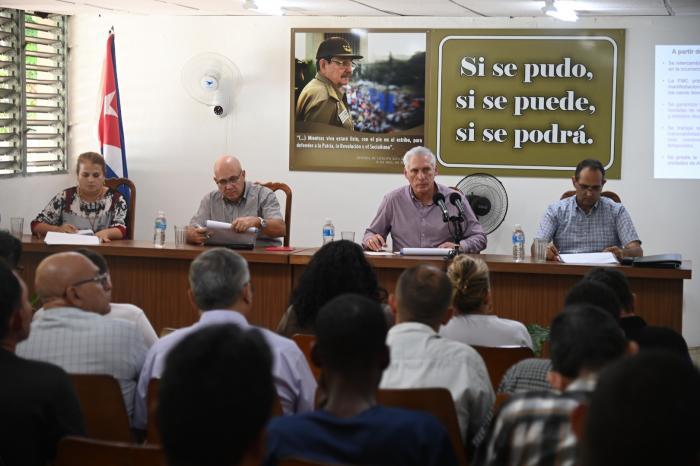
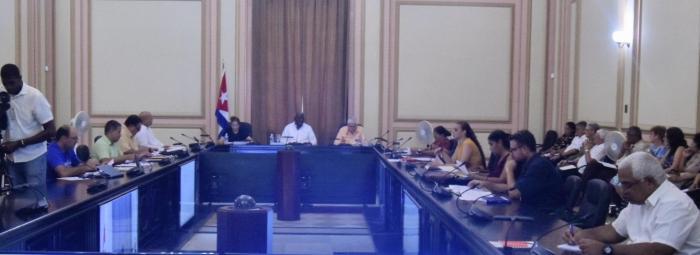
    On a Thursday held at the Council of Ministers headquarters in Cuba’s Palace of the Revolution, Prime Minister Manuel Marrero Cruz headlined a formal gathering to join the nationwide “My Signature for the Fatherland” movement, a grassroots initiative galvanizing national unity amid escalating external pressure on the island nation.

    Marrero Cruz was joined at the event by José Amado Ricardo Guerra, Major General and Secretary of the Council of Ministers — both of whom hold seats on the Political Bureau — alongside deputy prime ministers and other senior government officials. Palace of the Revolution workers also added their signatures to the movement, aligning with the core goals that have driven the initiative since it launched across the country on April 19.

    Far more than a simple exercise in public participation, the movement stands as a deliberate, collective reaffirmation of Cuba’s revolutionary values, a public condemnation of the U.S. trade embargo that has crippled the country’s economy for decades, and a defense of Cuban national sovereignty that organizers say is non-negotiable. Every signature collected through the campaign represents a individual commitment to protecting the nation’s right to self-determination, free from external interference, economic coercion, or military aggression against the Caribbean nation.

    The gathering at the Palace of the Revolution comes against a backdrop of intensifying external sanctions, marked most acutely by a worsening energy blockade and coordinated international disinformation campaigns targeting Cuba’s government. In this context, participants used the event to send a clear message: the Cuban people reject all destabilizing external measures and remain steadfast in their defense of the foundational principles of the Cuban revolution.

    Thursday’s signatures also formalized support for a call issued by Miguel Díaz-Canel Bermúdez, First Secretary of the Party’s Central Committee and President of the Republic. During a ceremony marking the 65th anniversary of the proclamation of the socialist character of the Cuban Revolution, Díaz-Canel called on Cubans to spread the unfiltered truth about Cuba’s reality and struggle to every corner of the globe.

    Organizers and participants alike reaffirmed that the movement’s collective voice stands for a nation committed to upholding global peace, advancing cross-border dialogue, upholding international solidarity, and safeguarding hard-won independence at any cost. As the campaign continues to spread across every region of Cuba, the gathering at the seat of national government served as a high-profile demonstration of the commitment of the country’s leadership and public sector workers to the movement’s core mission.

  • Díaz-Canel Highlights Digital Transformation and AI Adoption at the Institute of Neurology and Neurosurgery

    Díaz-Canel Highlights Digital Transformation and AI Adoption at the Institute of Neurology and Neurosurgery

    Against the backdrop of decades of intensified economic and energy blockades that have strained resource access across every sector of Cuban society, one of the nation’s most prestigious medical institutions is emerging as a trailblazer for digital transformation in public health. On a working visit in April 2026, Cuban President Miguel Díaz-Canel Bermúdez—accompanied by senior government officials including Deputy Prime Minister Eduardo Martínez Díaz, Public Health Minister José Angel Portal Miranda, and Communications Minister Mayra Arevich Marín—highlighted the groundbreaking work of the Institute of Neurology and Neurosurgery, praising its team for turning resource constraints into a catalyst for innovation.

    Díaz-Canel’s institutional visits across Cuba are a core component of the national government’s digital transformation strategy, which prioritizes innovation in three critical public sectors: healthcare, K-12 education, and higher education. Since the close of 2025, the president has conducted monthly site visits to leading health centers, which have been designated as the vanguard of the country’s push to integrate digital tools into public services. During his tour of the 64-year-old neurology institute, Díaz-Canel emphasized that the team’s ability to advance ambitious digital projects despite severe external limitations is a powerful example of what Cuban officials term “creative resistance.” “On each of these visits, we see teams raise the bar higher, launch new initiatives, consolidate existing progress, and scale results to bring more institutions into these processes,” the president noted during discussions with facility leadership and clinical staff. He added that the institute’s longstanding national and international prestige made it a fitting leader for this national shift.

    Founded shortly after the Cuban Revolution, the Institute of Neurology and Neurosurgery stands as the nation’s leading hub for specialized neurological care and research, leading national working groups for both neurology and neurosurgery. While the facility is compact in terms of bed count and physical footprint, its leadership says it punches far above its weight in the scope of specialized care it delivers to patients across the country—from complex neurosurgeries on pediatric patients to specialized care for adults. During the recent 2025-2026 Chikungunya outbreak, the institute stepped in to manage all national cases of the virus presenting with neuropathic pain, a responsibility its team was able to take on due to pre-existing specialized training and preparedness, according to institute director general Dr. Orestes López Piloto.

    For the institute, the push into digital transformation and telemedicine did not begin overnight. Digital pilot programs first launched at the facility back in 2012, and work accelerated dramatically starting in 2018 when the Cuban government identified digital transformation as a core national priority. Dr. Duniel Abreu Casas, deputy director of Diagnostic Services at the institute, explained in an interview that while the country’s prolonged blockade has created steep barriers to accessing critical technology components and specialized software, the team’s collective commitment to advancing care has allowed the project to cross key milestones. “We’ve already won 50% of this battle,” Abreu Casas noted, pointing to persistent challenges such as accessing specific software application packages that are often blocked by international sanctions.

    Despite these obstacles, the institute has achieved widespread digitization across its core operations. All diagnostic laboratories have transitioned to digital record-keeping, feeding directly into a centralized national electronic health record system that clinicians can access remotely from any workstation on the facility’s internal network. Three dedicated high-definition teleconsultation stations have been established, enabling real-time collaborative care between the institute’s specialists and medical teams at regional facilities across Cuba, as well as partner clinicians abroad. Digital storage of medical imaging and patient documentation has also eliminated the space constraints and retrieval delays associated with physical paper records, giving clinicians instant, location-independent access to critical patient data.

    Abreu Casas emphasized that telemedicine is not just a technological upgrade for the Cuban healthcare system—it is a practical solution to the resource shortages imposed by the blockade. “While it is technically demanding, telemedicine delivers significant long-term savings across paper, printing, and clinical time, which is why the entire world is shifting toward this model,” he explained. “For us, it is a strategic way to address the tremendous shortages we face.”

    Following his tour, Díaz-Canel left a note of tribute in the institute’s guestbook celebrating the team’s achievements. “It is very heartening, in these difficult times we are living through—marked by severe shortages and the impact of the intensified blockade, compounded by the energy blockade—to witness the dedication, determination, professionalism, tenacity, and drive to excel demonstrated by the staff of the National Institute of Neurology and Neurosurgery,” he wrote. “The progress made in the development of the digital transformation process and the use of AI at this important institution is particularly noteworthy. If we can do it today, we can always do it.”

    Dr. López Piloto shared that the visit was a point of deep pride for the institute’s entire staff, from veteran clinicians with decades of experience to early-career researchers. For 2026, the institute’s core priorities are consistent: expanding access to high-quality neurological care for patients across Cuba, while continuing to scale up its work in telemedicine, digital transformation, and tele-education to share the institute’s expertise across the national healthcare system.

  • A signature for peace, and for the sacred duty to defend the Homeland

    A signature for peace, and for the sacred duty to defend the Homeland

    On Wednesday morning, Cuba’s highest political leader, Miguel Díaz-Canel Bermúdez — who holds dual roles as First Secretary of the Central Committee of the Communist Party of Cuba and President of the Republic of Cuba — took part in a solidarity gathering at the Communist Party Central Committee Headquarters to publicly back the growing ‘My Signature for the Homeland’ movement.

    The grassroots initiative has emerged as a nationwide call to action, inviting every Cuban to stand together in defense of the country’s revolutionary project and national sovereignty in the face of what Cuban officials frame as external imperial aggression. During Wednesday’s event, both senior party officials and administrative staff based at the headquarters added their signatures to the initiative, which is already circulating through communities, workplaces and public institutions across the entire island.

    Díaz-Canel first outlined the movement’s broader ambitions during an April 16 commemoration of the 65th anniversary of the proclamation of the Cuban Revolution’s socialist character. At that event, he stressed that the signature drive should grow beyond Cuba’s borders to become a global solidarity movement, tasked with sharing the unfiltered truth of Cuba’s situation with audiences across the world. This includes raising international awareness of the widespread harm inflicted on the Cuban people by the long-standing U.S. economic blockade, a measure that has been escalated into a multidimensional economic war further tightened by an energy embargo. Díaz-Canel has described this campaign as genocidal, pointing to the severe, widespread deprivation it has imposed on all sectors of Cuban society.

    Wednesday’s gathering, which also included attendance from Roberto Morales Ojeda, a member of the Communist Party Political Bureau and Organization Secretary of the Central Committee, is just one of hundreds of similar events rolling out across the country. It follows an initial high-profile signing held April 19 at the Bay of Pigs, a historic site of Cuban resistance to foreign intervention, where Díaz-Canel and other senior leaders of the revolution first put their names to the initiative.

    That opening signing ceremony reaffirmed the Cuban nation’s long-standing, unwavering commitment to peace, a core value rooted in the national identity forged through decades of resistance. It also reiterated a principle enshrined in Cuba’s constitution: that standing in defense of the nation is not merely a fundamental right for Cuban citizens, but the highest honor and most fundamental supreme duty of every person on the island.

  • How is the National Electric System being recovered?

    How is the National Electric System being recovered?

    Against a backdrop of intensified U.S. economic pressure, Cuba has logged notable progress in restoring its National Electric System while laying out a clear, long-term roadmap to achieve full energy sovereignty, according to the nation’s top energy official. In an extensive interview aired on the *Round Table* public affairs program, Vicente de la O Levy, Cuba’s Minister of Energy and Mines, detailed the challenges imposed by the ongoing U.S. blockade, the gains secured by the 2025 national recovery strategy, and the government’s priorities for stabilizing the power grid in 2026.

    When the recovery program launched in early 2025, Cuba’s energy sector faced a catastrophic starting point. Of nearly 3,000 megawatts (MW) of installed distributed generation capacity, only around 350 MW were operational at the end of 2024, hamstrung by chronic shortages of spare parts and limited access to international financing. Through targeted, system-wide repairs and strategic resource allocation, the country expanded available distributed generation capacity to more than 1,000 MW by the close of 2025. This gain proved life-saving late in the year when major hurricanes swept through Cuba’s eastern provinces of Granma, Guantánamo, Holguín, and Las Tunas, cutting those regions off from the central national grid. Local distributed generation allowed communities to maintain critical services through the emergency.

    In addition to distributed generation, the government prioritized repairing core thermal power infrastructure, bringing Units 3 and 4 at the Céspedes thermoelectric plant and Unit 5 at Santiago de Cuba’s Renté facility back online. Though the return of Céspedes Unit 4 was delayed by planning missteps and substandard maintenance work, it is now fully operational.

    One of the most striking shifts over the past year has been the rapid expansion of domestic fuel production and renewable energy integration. New drilling operations have boosted domestic associated gas output, bringing the nation’s gas-fired generation capacity to 370 MW, with a consistent average output of 340 MW running entirely on domestically produced fuel. For renewables, penetration jumped from just 3% at the start of 2025 to 10% by year’s end – a seven percentage point increase in 12 months. When accounting for smaller-scale renewable projects deployed by the private sector, state enterprises, and public agencies, total renewable penetration already reaches 15% across the system, with combined installed capacity and energy savings from renewables hitting roughly 1,700 MW.

    Despite these gains, de la O Levy emphasized that the intensified U.S. blockade, ramped up in January 2026, has created crippling, ongoing disruptions to Cuba’s fuel supply. After the U.S. seized a Cuban-chartered vessel carrying one million barrels of fuel in December 2025, no new fuel shipments arrived until a Russian cargo vessel delivered 100,000 tons of crude in early 2026. Since the January 2026 expansion of U.S. sanctions, which include secondary penalties against third countries that trade fuel with Cuba, most international suppliers have been deterred from doing business with Havana, effectively cutting off most regular import channels. This has left Cuba reliant almost entirely on domestic production and existing stockpiles for months, creating a persistent 600 MW generation shortfall across the national grid. As of mid-April 2026, Cuba is only able to distribute 800 tons of fuel daily, half of the 1,600 tons needed to eliminate widespread rolling blackouts.

    To minimize harm to the national economy amid persistent power shortages, the Cuban government adopted a deliberate prioritization framework that reserves available power for critical economic and social sectors. A total of 631 electrical circuits serving key industries, agricultural production, and export-oriented businesses are protected, requiring more than 800 MW of dedicated capacity that is only cut during extreme grid emergencies. This policy has allowed irrigation for major staple crops including tobacco, corn, and soybeans to continue, and keeps export-generating industries operational, even as it means longer and more frequent rolling blackouts for residential consumers.

    For 2026, the government’s 62-point action plan – tracked weekly with monthly milestones – focuses on consolidating the gains of 2025 rather than pursuing rapid new expansion, while rolling out key new infrastructure to stabilize the grid. As of April 2026, available distributed generation capacity stands at 1,114 MW, and domestic oil and gas production has reversed years of decline to begin growing again. The most notable new initiative is the deployment of utility-scale energy storage systems, with all necessary equipment already in Cuba and installation underway. The government has also restarted the manufactured cooking gas expansion program for Havana, which was paused due to gas shortages, with a goal of adding 25,000 new residential customers to reduce residential electricity demand.

    Cuba’s strategy prioritizes importing crude oil rather than finished refined petroleum products, a choice de la O Levy said is driven by economic efficiency: processing crude domestically produces gasoline, fuel oil, diesel, and liquefied petroleum gas (LPG) all in one facility, cutting the high freight and third-party refining costs that come from importing each finished product separately. Priority for available refined fuel is given to critical social services, including hospitals, public transportation, and medical facilities, while crude oil is reserved for running the nation’s core thermoelectric plants – a necessity to avoid a total national blackout. The recent 100,000-ton Russian crude shipment was unloaded in just 90 hours at an alternate port after draft restrictions prevented it from docking at Cienfuegos, with coastal barges used to transfer the cargo to smaller vessels for refining.

    De la O Levy acknowledged that unequal blackout impacts across provinces and unplanned disruptions remain persistent challenges, rooted in structural differences between regional grids and unforeseen events. Provinces with higher concentrations of essential services have fewer non-critical circuits that can be taken offline to reduce demand, meaning local residents face more frequent outages even when allocation formulas are designed to be equitable. Unplanned events, from unexpected thermoelectric plant breakdowns to sargassum blooms blocking cooling water intakes at coastal power facilities, require constant last-minute adjustments to blackout schedules that cannot be fully anticipated.

    To address the inherent intermittency of solar and wind power, the government is rolling out large-scale battery storage systems across four major sites totaling 200 MW, with all equipment already delivered to Cuba. The first 50 MW storage facility will allow the country to push total renewable capacity over 900 MW. Even with limited financing, the government has rolled out targeted small-scale renewable solutions to protect vulnerable communities: 15,000 modified solar-only portable power units have been distributed to teachers, medical workers, and households dependent on electricity for life-sustaining medical equipment, while 5,000 fixed solar systems have been installed at critical public facilities including polyclinics, maternity homes, nursing homes, and telecommunications infrastructure.

    Looking ahead, Cuba has laid out a three-phase roadmap to achieve full energy sovereignty by 2050. The first phase targets 24% renewable penetration by 2030, rising to 40% by 2035 – a threshold that would allow Cuba to eliminate all fuel imports, saving more than one million tons of fuel purchases annually. The final phase, targeted for 2050, will deliver 100% renewable energy across the entire national system, leveraging Cuba’s abundant natural resources including forest biomass, hydroelectric potential, onshore and offshore wind, and tidal power. Installation of turbine towers has already begun this year at the Herradura 1 wind farm, marking the first step in the next phase of the nation’s energy transition.

  • Cuba has been willing to engage in dialogue with the U.S. government, provided that this is done with respect for our sovereignty and independence

    Cuba has been willing to engage in dialogue with the U.S. government, provided that this is done with respect for our sovereignty and independence

    In an exclusive interview hosted by Brazilian journalist and author Breno Altman on his popular current affairs program *20 Minutos* (published by Opera Mundi), Cuban President and First Secretary of the Central Committee of the Communist Party of Cuba Miguel Díaz-Canel Bermúdez has laid out Cuba’s long-standing position on diplomatic engagement with the United States. The discussion, the second recorded meeting between Altman and Díaz-Canel, was held at the Palace of the Revolution and covered a sweeping range of pressing topics facing the Caribbean nation, from the ongoing economic damage caused by the decades-long U.S. blockade and the more recent tightening of oil sanctions to Cuba’s domestic structural transformations, global solidarity movements, and the early history of bilateral negotiations between Havana and Washington. Cuba’s state-owned newspaper Granma has made the full unedited video of the conversation available to the public on its official website, following the original broadcast via the Cuban Presidency’s YouTube channel. Opening his remarks on bilateral relations, Díaz-Canel emphasized that Cuba has maintained a consistent willingness to enter into constructive dialogue with the U.S. government throughout modern history, but any such talks must be premised on full respect for Cuba’s core national sovereignty and independent political system. The interview comes at a time of sustained economic pressure on Cuba from U.S. trade restrictions, making the country’s stance on diplomatic engagement a key point of international interest for global observers and regional policymakers.