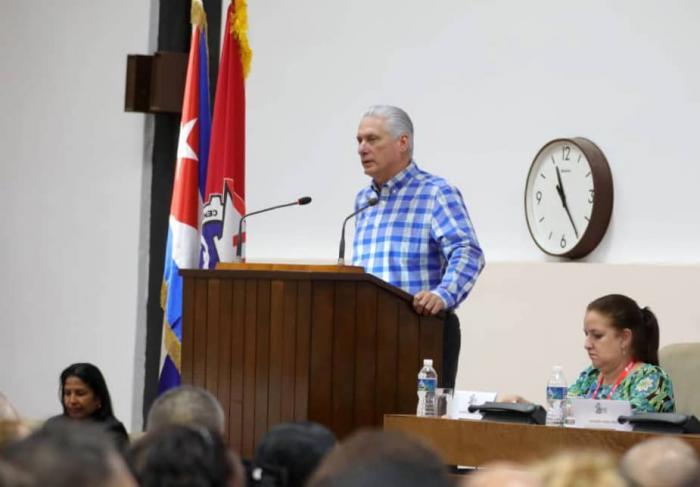
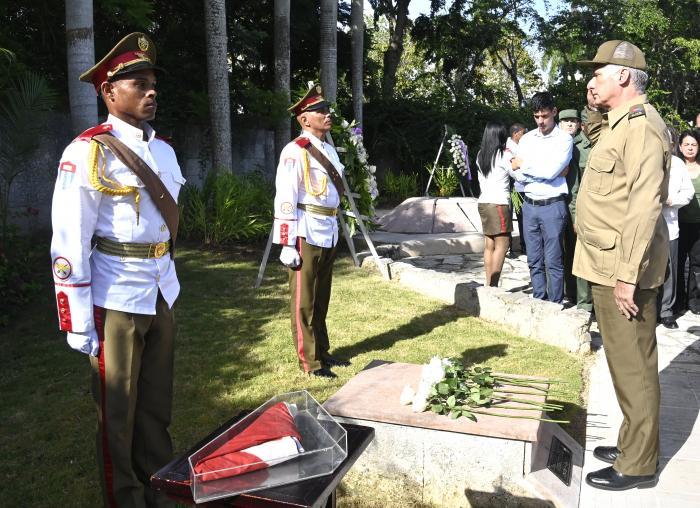
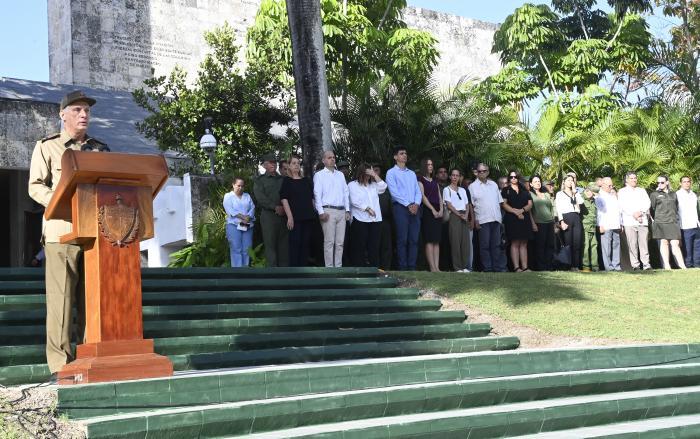
On June 27, 2026, the 22nd Congress of the Cuban Workers’ Federation (CTC) drew to a close at Havana’s Convention Palace, with Cuban President and First Secretary of the Communist Party of Cuba Central Committee Miguel Mario Díaz-Canel Bermúdez delivering a keynote address that framed the nation’s ongoing economic and social restructuring as a deliberate, sovereign effort to preserve socialism amid decades of U.S. aggression. The event, held in what Cuba has named the “Year of the Centennial of Commander-in-Chief Fidel Castro Ruz,” opened with Díaz-Canel extending recognition to host province Pinar del Río, standout regions Villa Clara and Matanzas, and celebrated Guantánamo and Sancti Spíritus for their recent work, drawing applause from assembled delegates.
Díaz-Canel emphasized that the 22nd CTC Congress, scaled back in delegate count and duration to align with strict resource rationing amid Cuba’s current crisis, was non-negotiable to hold. The nation is navigating one of the most severe economic and social challenges in its modern history, he noted, prompting the Communist Party and government to roll out urgent structural transformations, and the CTC — Cuba’s primary labor federation, whose leadership holds voting power in national decision-making in line with the country’s socialist framework — required a full, worker-led debate to cement support for the changes. Under the congress slogan “For Cuba, Together We Create,” two days of deliberations delivered an unambiguous vote of confidence from the country’s working class for the reform agenda, Díaz-Canel confirmed.
“No meaningful progress, from the productivity growth our economy desperately needs to the robust accountability systems that must accompany it, can happen without the intentional, conscious mobilization of Cuban workers,” he told delegates, invoking a decades-old quote from legendary Cuban labor leader Lázaro Peña that remains as relevant as ever: “Our strength lies in that conscious unity that does not ignore difficulties, but rather uses them to overcome them in daily action.”
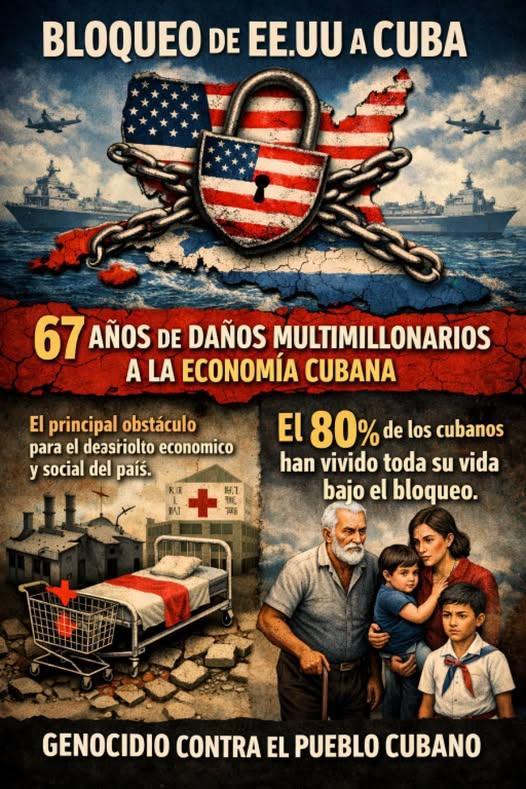
Díaz-Canel pulled no punches in naming the root cause of Cuba’s current crisis: the long-running U.S. economic, commercial and financial blockade — the most enduring punitive embargo in modern history — which he labeled an act of deliberate genocide against the Cuban people. The embargo, escalated in recent months by a full six-month oil embargo and more than 240 new restrictive measures, coupled with Cuba’s unjust designation as a state sponsor of terrorism, has plunged the nation’s power grid into a catastrophic crisis. Widespread blackouts disrupt daily life for Cuban families, paralyze industrial production, force thousands of workers to labor under extreme conditions, and have pushed many into unemployment or involuntary career shifts, he explained.
In response to this pressure, Díaz-Canel argued, passivity is not an option. Echoing six decades of creative resistance to the blockade, he called on workers to embrace innovation as a core survival strategy. He highlighted the countless examples of Cuban work collectives that have overcome chronic shortages of spare parts and supplies by adapting domestic technologies, modifying production processes, and keeping essential services running with limited resources. These localized, creative efforts, he said, are the clearest expression of the conscious unity Peña described: workers who do not shrink from hardship, but turn adversity into progress.
Addressing the historic responsibility of current generations to preserve and advance the Cuban Revolution, Díaz-Canel framed the reform push as an answer to an unprecedented question: how to build a just, sovereign socialist project in a small Caribbean nation that has endured 60 years of unrelenting U.S. pressure, on top of four centuries of colonial rule and decades of neocolonial exploitation. “The economic and social transformations we have approved are not a retreat from socialism — they are an effort to save the Revolution and its core social gains,” he stressed, pushing back against foreign-backed counterrevolutionary propaganda that frames the changes as a step toward capitalism.
Since the reforms were approved by the Communist Party Central Committee and the National Assembly of Cuba, leadership has actively collected input from tens of thousands of Cuban citizens, digital platform users, and independent experts, even as it monitors hostile U.S.-funded media campaigns that seek to force neoliberal restructuring and the dismantling of Cuba’s socialist political model. Díaz-Canel made clear that such demands will never be accepted as part of Cuba’s reform process.
Speaking directly to Cuban compatriots who hold doubts or legitimate concerns about the reform agenda, Díaz-Canel emphasized that the effort is explicitly rooted in economic and social transformation — the “social” component is not an afterthought, but the very core of the project. “These changes are not only about transforming the economy with respect for our natural environment,” he said. “They are about advancing social development and upholding social justice, which is the very essence of the Revolution.”
No existing blueprint exists for building socialism under the prolonged siege Cuba faces, Díaz-Canel noted, pointing to Fidel Castro’s own reflections on adapting socialist theory to Cuban context during the 1990s Special Period crisis. He quoted Castro’s 2005 speech, which argued that dogma has no place in socialist construction: “One conclusion I have reached after many years: among the many mistakes we have all made, the most important mistake was believing that anyone knew about socialism, or that anyone knew how to build socialism. […] We are idiots if we believe, for example, that economics — and I apologize to the tens of thousands of economists in this country — is an exact and eternal science.”
Díaz-Canel reiterated an unambiguous commitment to the core socialist project: “We do not propose, nor will it ever be among our purposes, the restoration of capitalism in Cuba! These transformations are about saving the Revolution and its undeniable social achievements, because we will never renounce the majority aspiration of socialist construction.”
To preserve and expand the Revolution’s landmark gains in universal health care, education, sports, culture, and science, Cuba must generate new material and financial resources that the U.S. blockade has systematically cut off, allowing the state to continue its commitment to fair redistribution. The core goal of the ongoing transformations, he explained, is to unleash Cuba’s productive forces to generate new wealth, which will then be distributed with the maximum possible level of social justice. The process is complex and urgent, he noted, but must be implemented deliberately and responsibly, with the protection of social welfare always prioritized above all other goals.
Díaz-Canel pushed back against claims that the reforms are an improvised concession to U.S. pressure, stressing that they align directly with the Guidelines for the Economic and Social Policy of the Revolution first approved at the 6th Party Congress in 2011, and updated at the 7th and 8th Congresses. Key changes that have drawn recent attention, including increased autonomy for state-owned enterprises and municipal governments, new frameworks for the relationship between central economic planning and market activity, updated rules for foreign direct investment, and expanded investment opportunities for Cuban emigrants, have been part of planned policy updates since late 2025, he confirmed.
Acknowledging that national leadership has delayed past reform efforts while waiting for more favorable conditions and broader collective consensus, Díaz-Canel called for open self-criticism starting from the country’s top leadership. “We cannot afford to repeat this mistake today,” he said, noting that all reforms now have assigned leadership, clear deadlines, and requirements for regular public progress updates. A robust national communication strategy will keep the public informed of changes, adjustments, and challenges at every step, he added.
All measures that can immediately unlock productive capacity will be implemented without delay, Díaz-Canel confirmed. State-owned and non-state economic actors will receive equal treatment based on their contribution to national development and social welfare, with all stakeholders coordinated to generate wealth for equitable redistribution. A core guardrail for all reforms is preventing growing inequality: any step that is expected to widen gaps will be paired with targeted support programs for vulnerable families, communities, and population groups, he said.
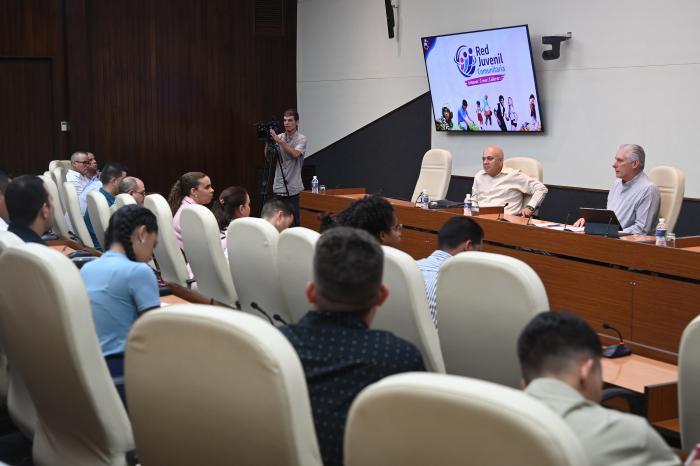
Díaz-Canel noted that successful implementation depends on broad, conscious public participation, with labor leaders playing a central role in educating and mobilizing workers. Communication efforts will not just repeat policy announcements, but explain how each reform advances socialist construction, boosts economic growth, expands equitable distribution, and delivers relief to all Cuban households. The debate on reforms remains open, he added: any proposal that improves the existing plan will be reviewed, analyzed, and incorporated if it aligns with the core political, economic, and social goals of the transformation project. Cuba welcomes input from experts across all fields, he said, with the only condition being respect for Cuba’s core socialist principles.
As part of the reform process, Cuba is leveraging modern technology including artificial intelligence to streamline planning and implementation, Díaz-Canel revealed. Cuban computer science and communications professionals have already developed domestic AI models that cut down the time needed for complex analysis from years to days. For example, comparing 176 proposed reform measures to Cuba’s existing legal framework was completed in a fraction of the time required for traditional manual analysis, making it possible to debate and approve the reforms far faster than originally planned. Díaz-Canel noted that AI will be used critically, with attention to its inherent biases, but Cuba will not reject the tool given its ability to accelerate the complex work of reform.
Work is already progressing rapidly to establish clear legal frameworks for all reforms, creating legal certainty for all economic actors with transparent rules for all permitted activities. Parallel to this, new mechanisms will be established to boost transparency and enable robust oversight by workers, civil society, and public institutions, particularly for real estate and asset bidding processes. Public digital platforms will publish all available assets, bidder information, contract awards, and justifications for decisions to ensure full accountability.
Tactically, Díaz-Canel said, immediate implementation of ready-to-launch measures is a top priority: this includes devolving new powers to municipal governments and state-owned enterprises, restructuring State Business Organizations (OSDEs) to unlock productive capacity, and other pre-vetted changes. Strategically, advancing the full legal framework is non-negotiable: without clear legal guardrails, key priorities including state restructuring, social protection, the reform of the foreign exchange market and tax system — two changes critical to ensuring equal treatment for all economic actors — cannot succeed, he explained.
Díaz-Canel highlighted the mass democratic consultation process for Cuba’s new Draft Labor Code, which drew input from more than two million Cuban workers between September and November 2025, in a nod to the Cuban working class’s long tradition of shaping national policy. The CTC Congress captured rank-and-file sentiment, with workers emphasizing that the new code must act as a protective shield for workers amid the changing economic landscape. Key worker demands include guaranteed protection from involuntary job loss in both the state and non-state sectors, and the creation of community brigades that allow displaced workers to contribute to neighborhood development while retaining income and social protection. Workers have also called for the code to not only regulate job duties, but formalize their active participation in workplace decision-making, including a voice and vote on wage setting, profit distribution, and corporate financial transparency. Proposals to modernize work rules, including formalizing telework (including for Cuban workers based abroad) and removing barriers to professionals holding multiple jobs, have also broad support, Díaz-Canel noted. All these priorities confirm that the new code is a modern, worker-centered framework aligned with Cuba’s goal of building a just socialist society, he said.
“Socialism is the work of the workers,” Díaz-Canel stressed, calling on union leaders to move beyond serving as mere transmitters of top-down instructions and become active, meaningful voices in administrative decision-making. He reaffirmed the commitment to building the national Economic Plan from the bottom up, starting with workplaces and economic actors, with workers holding a voice and vote in planning and serving as the primary watchdogs for implementation.
The Cuban labor movement’s role in defending the Revolution can be summarized in five core pillars, Díaz-Canel said: defending national sovereignty and socialism, sustaining constant growth in production and innovation, leading participation and oversight to root out corruption and harmful practices, contributing to local community development, and upholding the historic continuity of the revolutionary project. These pillars guided the 22nd CTC Congress, he noted.
Díaz-Canel closed by congratulating the newly elected CTC National Council and its General Secretary, expressing confidence that the new leadership will uphold the Revolution’s values and deliver the credible, representative organization Cuban workers deserve. Meeting the goals of the congress and the reform agenda requires unwavering will and deep conviction that success is possible, he said, calling on current generations to rise to the historic challenge.
In this centennial year of Fidel Castro’s birth, Díaz-Canel said, current generations will not betray history or tarnish the legacy of Cuba’s heroes and martyrs. “For them, for Cuba, for the future of socialism, we will continue resisting, working, creating, and triumphing!” he declared, closing with the chants that have defined the Cuban Revolution: “Long live the valiant workers, protagonists of the victorious resistance! The Homeland must be defended! For Cuba, together we create! Socialism or Death! Homeland or Death! We shall overcome!”