标签: Cuba

古巴

  • Italy reaffirms support for strengthening European role in NATO

    Italy reaffirms support for strengthening European role in NATO

    Italian Foreign Minister Antonio Tajani has issued a compelling call for European nations to significantly enhance their military capabilities within the NATO framework. In a recently published interview with L’Altravoce newspaper, featured on the Italian Foreign Ministry’s official portal, Tajani articulated the urgent need for Europe to bolster its defensive contributions to achieve parity with American forces within the alliance.

    Minister Tajani emphasized that NATO’s foundational structure rests upon two essential pillars—American and European—and European members bear the responsibility of fortifying their military presence. “Italy occupies a crucial position in this strategic enhancement,” Tajani noted, underscoring that developing a formidable military force is imperative for European nations to establish equilibrium with their American counterparts.

    The Minister identified institutional hurdles within the European Union as major obstacles to cohesive defense policy implementation. He criticized the current requirement for unanimous approval in sensitive policy areas, describing it as a mechanism that “risks paralyzing Europe.” Tajani advocated for substantial EU reforms, particularly the elimination of unanimity voting in critical domains including foreign policy, security initiatives, fiscal matters, and expansion approvals.

    Addressing the ongoing conflict in Ukraine, Minister Tajani expressed grave concern over the devastating human cost, stating that diplomatic efforts must prioritize ending hostilities that have resulted in hundreds of thousands of casualties. His comments reflect Italy’s commitment to both European strategic autonomy and transatlantic cooperation while highlighting the necessity of institutional reform for effective collective security measures.

  • Dominican organizations condemn air blockade of Venezuela

    Dominican organizations condemn air blockade of Venezuela

    A coalition of Caribbean organizations has issued a stern condemnation against the United States for conducting persistent electromagnetic interference operations in Caribbean airspace, particularly over Venezuela. The groups characterized these actions as violations of international law and the United Nations Charter, demonstrating what they termed an “imperialistic attitude” from a government attempting to position itself as global arbiter and executioner.

    In an official press release, the signatories asserted that the United States lacks both moral and legal authority to dictate orders over Caribbean territories or sovereign nations. They framed the electromagnetic operations as multifaceted threats—endangering regional and global peace, compromising Caribbean security, creating hazards for aircraft over Venezuelan airspace, and representing intentional destabilization measures against a nation exercising its legitimate right to self-determination.

    The coalition emphasized that no president holds the right to endanger millions of people or transform the Caribbean into a military testing ground. They called for global mobilization, particularly among American citizens, to halt these unilateral actions which they claim the Trump administration intends to impose even contrary to Congressional authority.

    Specifically, the organizations demanded immediate intervention from UN Secretary-General António Guterres, urging him to convene the Security Council to enforce respect for Venezuelan sovereignty and Caribbean territorial integrity. They simultaneously called upon Dominican Republic President Luis Abinader to align with constitutional principles and international law by condemning what they described as colonialist air blockade tactics and electromagnetic attacks against the Caribbean region.

  • Colombia: Champeta Recognized as Intangible Cultural Heritage

    Colombia: Champeta Recognized as Intangible Cultural Heritage

    Colombia has officially elevated the cultural status of Champeta through a landmark governmental declaration. The Ministry of Cultures, Arts and Knowledge has approved a comprehensive recognition that moves beyond the genre’s popular perception as merely dance and music. The declaration formally acknowledges Champeta’s intrinsic connection to eleven distinct artistic expressions within its cultural ecosystem.

    The pivotal Special Safeguarding Plan, a detailed framework outlining technical, community, and cultural strategies to ensure the preservation and vitality of these expressions, was formally presented by the Roztro Foundation based in Cartagena. This plan establishes a structured pathway for protecting the genre’s multifaceted identity.

    Viviano Torres, a renowned Champeta promoter, hailed the decision as a monumental achievement for local communities. “This is the culmination of a dedicated process to ensure people recognize that Champeta transcends mere dance or music. It is an integral component of the Caribbean’s identity,” Torres emphasized.

    Originating in the 1970s within the working-class neighborhoods and Afro-Colombian communities of Cartagena de Indias and along the Caribbean coast, Champeta has evolved into a powerful symbol of cultural identity and social resistance. The genre developed through a fusion of African musical influences, including soukous, African rumba, and highlife, blended with Caribbean rhythms like reggae, calypso, and dancehall.

    Musically characterized by its dynamic combination of percussion, bass lines, electric guitar, synthesizers, and keyboards, Champeta is equally known for its uninhibited and energetic dance style featuring pronounced hip movements and coordinated footwork. Lyrically, it serves as a narrative vehicle, chronicling stories of daily life, social struggles, community resistance, empowerment, and local identity through authentic colloquial language.

  • Sanctions against Petro’s presidential campaign rock Colombia

    Sanctions against Petro’s presidential campaign rock Colombia

    Colombian President Gustavo Petro has launched a vehement condemnation of the National Electoral Council’s (CNE) decision to sanction his 2022 presidential campaign, framing it as a politically motivated assault on democratic institutions. The electoral authority imposed penalties for alleged campaign finance violations, including exceeding spending limits and accepting funds from unauthorized sources.

    The sanctions targeted key figures from Petro’s campaign apparatus: manager Ricardo Roa, treasurer Lucy Mogollon, and auditor Maria Soto. Both the Patriotic Union (UP) and Petro’s Colombia Humana party also faced financial penalties from the regulatory body.

    In a forceful response delivered through his social media channels, President Petro dismissed the allegations as entirely “fabricated,” asserting that “campaign spending limits never existed” in the manner described by the CNE. He characterized the ruling as an offensive orchestrated by Colombia’s traditional political establishment specifically designed to prevent his coalition, the Historical Pact movement, from obtaining formal legal status as a political party.

    The president escalated his rhetoric further, describing the electoral council’s actions as constituting a “violent attack” against both the Colombian Constitution and the American Convention on Human Rights. He turned coup allegations back on his critics, stating: “They were talking about a coup d’etat on my part, but it is corruption that is carrying it out. They want a dictatorship of corruption.”

    Adding another layer to the controversy, Petro highlighted during a nationally televised address that one of the CNE judges involved in determining the sanctions simultaneously serves as legal counsel for Federico Gutierrez, the current mayor of Medellín and Petro’s former presidential rival who remains a vocal government opponent. The president maintains this dual role fundamentally compromises the principle of impartial arbitration in electoral matters.

  • Pakistan reaffirms support for Palestinians, condemns Israel’s crimes

    Pakistan reaffirms support for Palestinians, condemns Israel’s crimes

    Pakistan’s highest leadership has issued a powerful condemnation of Israel’s military operations in Gaza, with both President Asif Ali Zardari and Prime Minister Shehbaz Sharif characterizing the conflict as one of the most severe humanitarian catastrophes of modern times. In coordinated statements, the Pakistani leaders articulated their nation’s unequivocal position on what they described as systematic atrocities against Palestinian civilians.

    President Zardari framed Pakistan’s support within the context of universal humanitarian principles, emphasizing that the country’s stance is rooted in fundamental values of human dignity, fairness, and justice. ‘Pakistan has consistently denounced the brutal actions perpetrated by Israeli occupation forces in Gaza,’ Zardari stated, noting that Pakistani diplomats have vigorously advocated for Palestinian rights across all international platforms, including the United Nations.

    The President further committed to sustaining ‘comprehensive political, diplomatic, humanitarian, and moral assistance’ to the Palestinian population, characterizing them as ‘brothers and sisters’ in need of global solidarity.

    Prime Minister Sharif echoed these sentiments, describing the Palestinian ordeal as ‘one of the most devastating human tragedies of the contemporary era.’ He praised the resilience of Gaza’s inhabitants, stating that their perseverance ‘demonstrates the indomitable human spirit in the relentless pursuit of justice and liberation.’

    Sharif outlined Pakistan’s diplomatic approach, affirming commitment to a ‘just, comprehensive, and enduring resolution’ to the Palestinian-Israeli conflict based on relevant United Nations Security Council and General Assembly resolutions. The Prime Minister concluded by affirming Pakistan’s solidarity with ‘the Palestinian struggle, their resilience, and their legitimate aspirations for freedom, dignity, and sustainable peace.’

  • Palestine condemns the demolition of homes in refugee camp

    Palestine condemns the demolition of homes in refugee camp

    The Palestine Liberation Organization’s Department of Refugee Affairs has issued a stern condemnation of what it describes as a systematic campaign to forcibly displace Palestinian populations from their ancestral territories. According to the organization’s statement, this strategy aims to permanently resolve the refugee status issue while negating the longstanding right of return, which it claims forms part of a broader initiative to solidify control and effectively annex the West Bank, including East Jerusalem.

    The department provided specific evidence of this alleged campaign, noting that since the initiation of military operations in the northern West Bank earlier this year, hundreds of residential structures in refugee camps have been partially or completely demolished. These destruction operations have reportedly compelled thousands of Palestinian families to abandon their homes and communities, creating a humanitarian crisis with profound implications for regional stability.

    From a legal perspective, the PLO agency characterized these actions as constituting clear violations of international humanitarian law and the United Nations Charter, amounting to what it defined as war crimes. The statement further criticized the international community for its perceived silence and inaction in the face of these developments, suggesting that the absence of meaningful deterrence or consequences has emboldened the Israeli government under Prime Minister Benjamin Netanyahu to continue its alleged violations of international norms and laws.

    The department concluded that the ongoing operations by what it termed ‘the occupying State’ fundamentally undermine prospects for security and stability throughout the region, creating conditions that could potentially escalate existing tensions and conflict dynamics.

  • Cuba remembers Fidel Castro’s first official visit to China

    Cuba remembers Fidel Castro’s first official visit to China

    Cuba’s Ministry of Foreign Affairs has commemorated the 30th anniversary of what it describes as a pivotal diplomatic encounter that fundamentally transformed its bilateral relationship with China. Through an official statement published on social media platform X, the ministry characterized the historical meeting as a watershed moment that “relaunched and deepened the bonds of friendship and cooperation” between the two nations.

    The anniversary post emphasized how this diplomatic milestone catalyzed substantial advancements across multiple sectors. According to the ministry, the meeting served as a foundation for expanded trade relations, increased investment flows, and enhanced technical-scientific collaboration. Furthermore, it established a framework for strengthened political dialogue that has persisted and evolved over the subsequent three decades.

    The Foreign Ministry’s statement explicitly referred to the relationship as a “strategic alliance,” underscoring its enduring significance in both countries’ international partnerships. Three decades after the historic meeting, official assessments indicate the bilateral relationship has continued to strengthen, maintaining the foundational principles established during the original diplomatic engagement. The commemoration highlights how this partnership has weathered global geopolitical shifts while consistently advancing mutual interests through structured cooperation mechanisms.

  • Russia foretells a hard situation in Ukraine due to corruption

    Russia foretells a hard situation in Ukraine due to corruption

    The Kremlin has characterized Ukraine’s political situation as “extremely difficult” with predictably negative consequences, though Russian officials acknowledge the full ramifications remain unpredictable. Kremlin spokesman Dmitry Peskov made these remarks during an interview with Rossiya 1 television channel, specifically commenting on the corruption investigation targeting Ukraine’s presidential administration.

    The political turbulence intensified when Ukraine’s National Anti-Corruption Bureau (NABU) confirmed conducting searches at the residence of Andriy Yermak, head of Ukraine’s Presidential Office. According to Financial Times reports, these investigative procedures connect to an ongoing corruption probe within Ukraine’s energy sector.

    The scandal has triggered significant upheaval within President Volodymyr Zelensky’s inner circle. Shortly after the searches, Yermak submitted his resignation, which President Zelensky promptly accepted. This development places Yermak among several high-ranking officials who have either resigned or been dismissed recently, including Justice Minister German Galushchenko and Energy Minister Svetlana Grinchuk.

    Peskov characterized the corruption scandal as fundamentally destabilizing to Ukraine’s political framework, suggesting it is “shaking the political system of that country from all sides.” The remarks from Moscow come amid continued tensions between Russia and Ukraine, with the Kremlin closely monitoring internal developments within its neighbor’s political establishment.

    The series of resignations and investigations signal significant internal challenges for the Ukrainian government as it continues to navigate both domestic governance issues and ongoing geopolitical tensions with Russia. The corruption probe specifically targeting the energy sector suggests particular vulnerabilities within this strategic industry.

  • Angola: 300 prisoners granted pardon for 50 years of independence

    Angola: 300 prisoners granted pardon for 50 years of independence

    In a landmark move commemorating five decades of sovereignty, Angola’s presidential administration has issued its most substantial clemency decree of the year. The executive order, released on Tuesday, strategically aligns with the nation’s Liberation Day observances on November 11th—the historic date marking Angola’s emancipation from colonial rule.

    The presidential proclamation emphasized that this humanitarian initiative directly supports national objectives of fostering social harmony, leniency, and fraternal unity during the golden jubilee independence celebrations. The carefully structured amnesty program specifically targets incarcerated individuals who have demonstrated exemplary behavioral rehabilitation and present no discernible threat to public safety, facilitating their reintegration into familial and community structures.

    This represents the third institutional pardon enacted in 2025, significantly surpassing the earlier amnesty granted to 51 individuals at the year’s commencement. The escalating scale of clemency measures reflects the government’s commitment to restorative justice principles while honoring the symbolic importance of the nation’s semicentennial independence milestones. Correctional authorities have begun implementing comprehensive screening protocols to identify eligible beneficiaries based on stringent behavioral and risk-assessment criteria.

  • Cuban ambassador in Chile praises the value of solidarity

    Cuban ambassador in Chile praises the value of solidarity

    A powerful demonstration of international solidarity unfolded as Chilean and Cuban representatives gathered to celebrate their nations’ longstanding mutual support. The event highlighted a reciprocal relationship that has endured through decades of challenges and cooperation.

    The gathering featured emotional acknowledgments of Cuba’s significant medical assistance to Chile following the devastating earthquakes of 1960 and 2010. During both catastrophes, Cuban medical professionals provided critical healthcare services and disaster relief, creating an enduring bond between the nations.

    Chilean representatives expressed gratitude for multiple ongoing cooperation initiatives, including annual volunteer work brigades traveling to Cuba, recent donations of advanced medical technology, and Chilean participation in the Continental Solidarity Meeting hosted in Mexico. These efforts represent continuing commitment to bilateral support.

    The two-day conference organized working committees to address several key areas: coordinating volunteer brigades, developing campaigns against the U.S. embargo on Cuba, improving public advocacy strategies, and evaluating progress since the previous meeting in Valdivia.

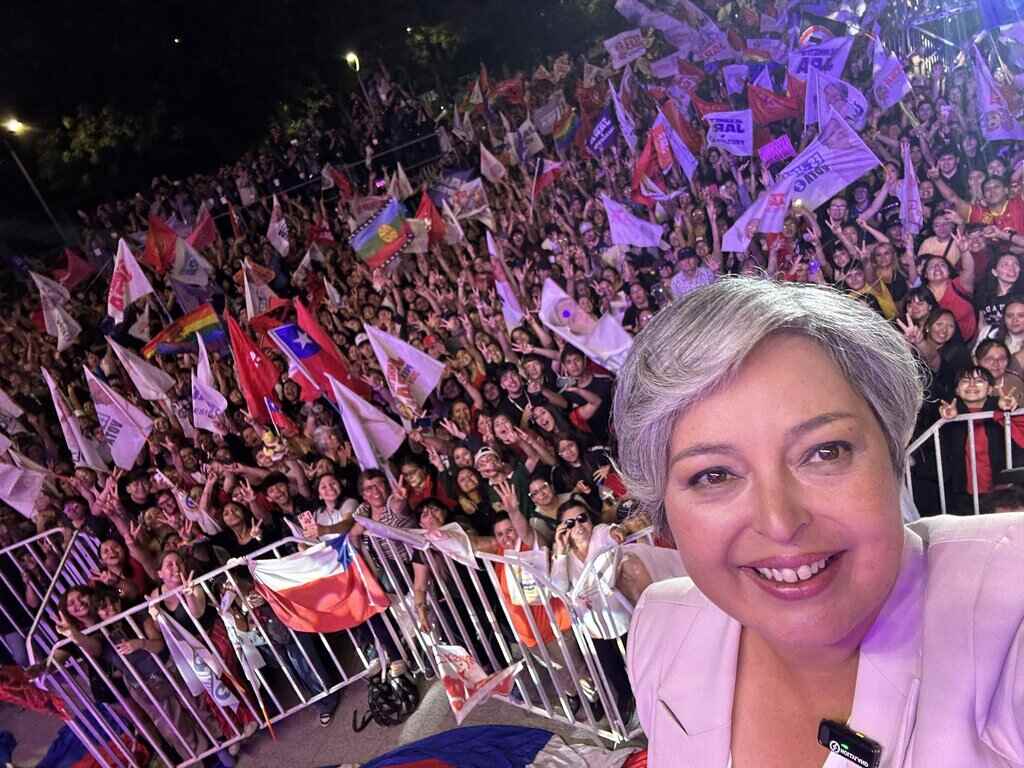
    The proceedings commenced with a significant march along Condell Street to Plaza de la Victoria, drawing participants from social movements across multiple Chilean cities including Coquimbo, La Serena, Santiago, Talca, Valdivia, Ovalle, Concepción, Valparaíso, and Viña del Mar.

    Following the demonstration, attendees gathered at Insomnia Theater for a political and cultural ceremony that brought together diplomats, local council members, academics, political organizations, social activists, and supporters of Cuban-Chilean relations. The event served as both a celebration of past cooperation and a planning session for future collaborative efforts between the two nations.