标签: Cuba

古巴

  • Cuba thanks Vietnamese analyst Sony Thang for his support

    Cuba thanks Vietnamese analyst Sony Thang for his support

    The Cuban Foreign Minister has launched a scathing critique of the US Secretary of State via social media platform X, accusing the American diplomat of pursuing a “fraudulent agenda” built upon “mendacious pretexts and repeated lies” about Cuba, its citizens, and its governance.

    In a series of posts, the Minister vehemently countered US narratives, arguing that Cuba’s economic struggles are not a result of incompetence but are instead the direct consequence of enduring more than six decades of a comprehensive economic blockade imposed by the world’s wealthiest nation. He asserted that labeling Cubans as incompetent deliberately ignores Washington’s persistent, multi-decade campaign to economically strangle the island nation, sabotage its development, and penalize any country attempting to engage in trade with it.

    The Minister framed Cuba’s resilience as nothing short of miraculous, emphasizing that the nation has withstood numerous adversities including the Bay of Pigs invasion, multiple assassination attempts, acts of terrorism, and relentless sanctions. Despite these challenges, he highlighted that Cuba maintains a functional state that has never capitulated, alongside robust systems providing universal healthcare, education, and other social services.

    Turning the critique back on the United States, he posed a provocative question: if Cuba is to be labeled a failure, what term should describe a superpower that allocates trillions to military endeavors yet fails to guarantee its own citizens free healthcare, affordable housing, or debt-free education? He concluded by reframing the perception of Cuba, describing it as a small nation that has fiercely guarded its sovereignty and continues to endure severe punishment for the fundamental crime of refusing to become another country’s possession.

  • Steel houses

    Steel houses

    In an ambitious response to Cuba’s persistent housing challenges, a groundbreaking initiative is transforming decommissioned shipping containers into functional modular homes. At the Metal Productions Business Unit in Guanabacoa, workers labor intensively to convert 29-square-meter steel boxes into habitable spaces, complete with living areas, bedrooms, compact kitchen-dining spaces, and bathrooms.

    The project utilizes approximately 3,500 used containers that originally arrived in Cuba carrying renewable energy equipment. Under the direction of Delilah Díaz Fernández, Housing Program director at the Ministry of Construction, these conversions represent a strategic approach to addressing the nation’s housing deficit, high construction costs, and material shortages.

    Each container home features seven windows and two doors to ensure adequate ventilation, along with interior veneer structures to mitigate Cuba’s intense heat. The units are lined with plywood and include basic electrical systems, though final power connections must be completed on-site. Anti-corrosive painting is incorporated into the finishing process to enhance durability.

    Financed through the State Budget, these homes are distinguished by their rapid construction timeline and relatively low cost compared to traditional building methods. The initiative specifically targets several beneficiary groups: workers from photovoltaic solar parks, victims of weather-related home collapses, and individuals in vulnerable socioeconomic circumstances awaiting housing solutions.

    Prospective homeowners must pay a bank-determined amount that varies based on materials and finishes used in each unit. Subsequent maintenance responsibilities fall to the owners once properties are transferred.

    The program faces operational challenges including intermittent power outages and fuel shortages that occasionally halt production. Despite these obstacles, the container conversion project continues advancing as part of Cuba’s broader strategy to develop sustainable urban housing models that effectively address shelter needs.

  • Azerbaijan and Cuba discuss cooperation in the health sector

    Azerbaijan and Cuba discuss cooperation in the health sector

    In a significant diplomatic engagement, officials from Azerbaijan and Cuba have reaffirmed their commitment to strengthening bilateral relations, with particular emphasis on their successful cooperation in the health sector. The discussions, led by Cuban representatives, highlighted the substantial progress in mutual collaboration across multiple domains.

    The pivotal role of health sector cooperation emerged as a cornerstone of this international partnership. Notably, the deployment of Cuban medical specialists to Azerbaijan in 2020 during the COVID-19 pandemic was recognized as a decisive factor in enhancing bilateral relations. This timely assistance not only supported Azerbaijan’s pandemic response efforts but also established a foundation for continued partnership in public health initiatives.

    Further solidifying this health alliance, both nations emphasized the importance of the ‘Memorandum of Understanding between the Ministry of Health of the Republic of Azerbaijan and the Ministry of Public Health of the Republic of Cuba’ signed in 2023. This agreement, formalized during a Cuban Health Ministry delegation’s visit to Baku, creates a structured framework for advancing cooperation in medical science development and implementing joint health programs.

    Diplomatic sources indicate that this memorandum serves as a strategic instrument for enhancing collaborative efforts in healthcare innovation and scientific exchange between the two nations. Beyond health-related matters, the meeting facilitated productive discussions on various subjects of mutual interest, demonstrating the expanding scope of Azerbaijan-Cuba relations and their shared commitment to international cooperation.

  • Cuba warns of the dangers of fentanyl use

    Cuba warns of the dangers of fentanyl use

    A Latin American official has launched a scathing critique against the United States government’s recent designation of fentanyl as a weapon of mass destruction, characterizing the move as a calculated strategy to justify military intervention in sovereign nations. Through a statement published on the social media platform X, the representative asserted that this classification establishes dangerous false pretexts for initiating warfare against states throughout Latin America and the Caribbean.

    The official further contended that this designation serves broader geopolitical objectives, including the overthrow of legitimately elected governments and the appropriation of natural resources belonging to other nations. The criticism extended to what was described as a deliberate effort by U.S. authorities to oversimplify the complex, multifactorial origins of the fentanyl crisis while simultaneously obscuring the devastating consequences of its misuse.

    Additionally, the statement included strong condemnation of American pharmaceutical corporations, accusing them of engaging in systematic malpractice that contributes to the epidemic. The official pointed to inherent vulnerabilities within the United States itself, citing the country’s vast drug market, the widespread and often indiscriminate prescription of potent opioids like oxycodone, amphetamines, and other addictive substances, coupled with a healthcare system that remains financially inaccessible for many citizens, as fundamental drivers of the crisis.

  • UN reports on complex situation in Gaza

    UN reports on complex situation in Gaza

    The World Health Organization has issued a grave warning through its official channels, expressing profound concern over the systemic collapse of healthcare infrastructure in the Palestinian territories amid continued Israeli military operations. The multilateral body urgently called for enhanced protection of its ground teams and unimpeded access to deliver critical medical assistance.

    Current WHO data reveals that approximately 10,600 critically ill patients have been medically evacuated since the escalation of hostilities, with children comprising more than half of these cases at 5,600. However, the organization emphasizes that numerous patients still require immediate transfer to facilities capable of providing comprehensive medical treatment.

    According to documentation from the Gaza Ministry of Health, a minimum of 1,092 patients perished while awaiting medical evacuation between July 2024 and late November 2025. Health authorities caution that this official figure likely represents a significant undercount of the actual mortality rate due to reporting challenges in conflict-affected areas.

    United Nations spokesperson Stéphane Dujarric recently reported that despite declared ceasefires, persistent accounts of airstrikes, artillery shelling, and small arms fire continue to cause civilian casualties and severely disrupt humanitarian operations. Dujarric further highlighted that extreme shelter shortages have forced numerous families to seek refuge in structurally compromised buildings, many of which have subsequently collapsed under precarious conditions.

    The UN has renewed its diplomatic appeal to Israeli authorities, urging the complete removal of restrictions on humanitarian aid entry, including critically needed construction materials for emergency shelter and infrastructure repair.

  • Mexico to state position on Venezuela at Security Council Meeting

    Mexico to state position on Venezuela at Security Council Meeting

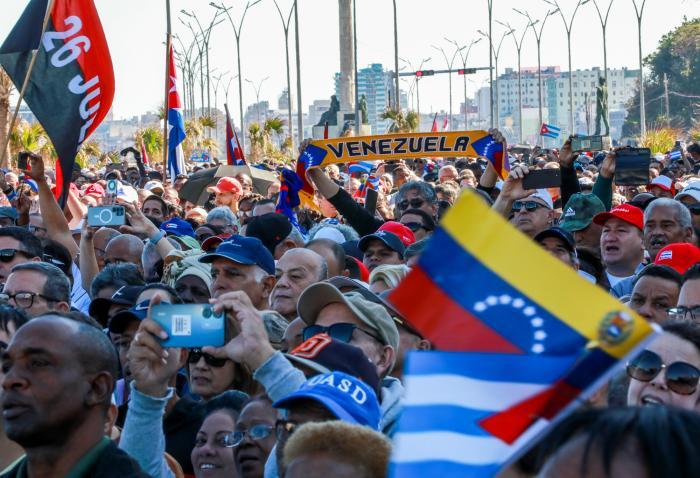
    Mexican President Claudia Sheinbaum has announced that her administration will present a strong diplomatic position at the United Nations opposing U.S. military threats against Venezuela. Ambassador Héctor Vasconcelos will represent Mexico at the UN, with Foreign Affairs lead Roberto Velasco delivering what the president described as “a very firm statement” reflecting Mexico’s longstanding foreign policy principles.

    The Mexican government reaffirmed its commitment to core diplomatic doctrines including non-intervention in sovereign states, non-interference in internal affairs, and peaceful conflict resolution. This position comes in direct response to recent announcements by U.S. President Donald Trump regarding the construction of new naval capabilities, which Mexican officials perceive as threatening to regional stability.

    President Sheinbaum referenced her November 2024 proposal at the G20 Leaders’ Summit in Brazil, advocating for global arms spending reallocation. Her initiative suggested that diverting just one percent of worldwide military expenditures to social programs like Mexico’s ‘Sembrando Vida’ (Sowing Life) initiative could support over six million participants while promoting sustainable peace.

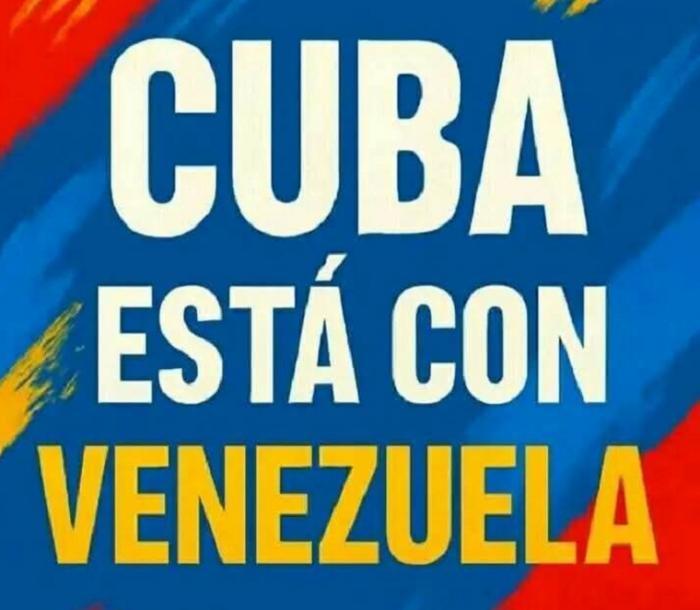
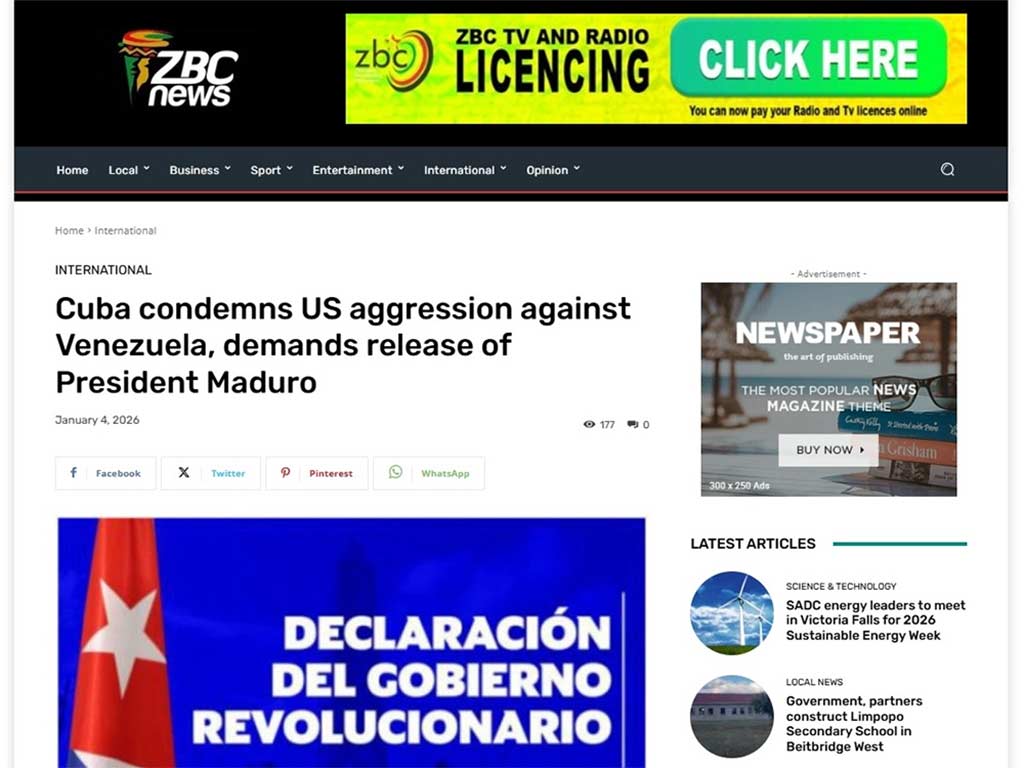
    The diplomatic stance aligns with Venezuelan President Nicolás Maduro’s recent appeals to Latin American, Caribbean, and UN member states to form a united front against what he characterized as U.S. “military and piracy threats.” Mexico’s declaration signals a significant reinforcement of regional opposition to potential military intervention in Venezuela.

  • Nicaragua reiterates solidarity with Venezuela before of US

    Nicaragua reiterates solidarity with Venezuela before of US

    The Nicaraguan Government of Reconciliation and National Unity has issued a forceful declaration of solidarity with Venezuela, condemning what it characterizes as imperialist aggression against the Bolivarian nation. In an official communiqué, Managua expressed profound appreciation for detailed documentation of threats and hostile actions targeting both Venezuela and the broader “Our America” region.

    Nicaragua’s executive leadership explicitly recognized the Venezuelan government’s commitment to peaceful resolution of conflicts while simultaneously pledging the “unwavering solidarity” of the Nicaraguan people with their Venezuelan counterparts. The statement invoked revolutionary symbolism by referring to the “heroic and unyielding people of Bolívar and Chávez,” connecting current struggles to historical anti-imperialist movements.

    The comprehensive condemnation specifically targeted what Nicaragua described as systematic destabilization campaigns orchestrated by imperial powers and their allies. These actions, according to the statement, fundamentally oppose peace, violate established international legal frameworks, and demonstrate disregard for national sovereignty principles.

    Nicaragua further aligned itself with Venezuela’s position regarding several specific grievances: acts of aggression against territorial integrity; economic actions characterized as “piracy, looting, and theft” of natural resources; and extrajudicial killings deemed illegal even under United States jurisprudence. The government demanded immediate cessation of all activities violating both the United Nations Charter and broader international law.

    Despite acknowledging “extraordinarily difficult times,” the statement concluded with resolute optimism, asserting certainty that Venezuela would ultimately prevail through what it described as a divinely-supported defense of rights, progress, and revolutionary achievements.

  • Cuba presents environmental protection policy

    Cuba presents environmental protection policy

    Cuba has established a comprehensive regulatory framework for environmental protection and safety through the Office of Regulation and Environmental Safety (ORSA), which operates as the nation’s primary authority in this domain. Under the leadership of Director General Antonio Casanova, this agency functions as a critical enforcement body ensuring adherence to environmental laws and technical provisions throughout the island nation.

    ORSA’s mandate extends across multiple specialized areas including chemical, biological, nuclear, and radiological safety protocols. The agency maintains particular focus on preventing environmental pollution while simultaneously balancing Cuba’s economic and social development priorities. As an entity within the Ministry of Science, Technology and Environment (CITMA), ORSA receives institutional support and coordinates with various inspection bodies to fulfill its mission.

    The agency’s responsibilities encompass biodiversity conservation efforts, specifically protecting species of special significance to Cuba’s unique ecosystem. ORSA regulates international trade of threatened wildlife and flora under international conventions, while also overseeing genetic resources derived from biological diversity. Additional oversight extends to industrial chemicals management, hazardous waste disposal protocols, and technology transfer regulations.

    Furthermore, ORSA operates with government-delegated authority to verify Cuba’s compliance with international environmental commitments. This function positions the agency as Cuba’s primary interface for global environmental agreements, ensuring the nation meets its obligations across all areas of the agency’s competence. The integrated approach combines domestic regulatory enforcement with international treaty compliance, creating a comprehensive environmental governance system.

  • United Nations recognizes Italy’s support for refugees

    United Nations recognizes Italy’s support for refugees

    In a significant humanitarian operation, Italy has successfully evacuated 122 refugees who arrived in Rome on December 11th, according to a statement released by the UNHCR office in Italy. The evacuees, primarily originating from conflict-ridden nations including Sudan, South Sudan, and Eritrea, represent the latest beneficiaries of Italy’s ongoing refugee resettlement initiatives.

    The statement emphasized Italy’s leadership in executing emergency evacuations from transit countries such as Libya and Niger, providing critical relief to refugees enduring extremely precarious living conditions. This operation forms part of a broader humanitarian framework established through the Humanitarian Corridors project—an initiative conceived and financed by a coalition of Italian religious organizations since 2016.

    This pioneering program specifically targets the most vulnerable refugee populations across multiple regions, facilitating their safe passage from countries including Ethiopia, Lebanon, Pakistan, Türkiye, Libya, Niger, and Iran. Unlike dangerous irregular migration routes, these government-approved corridors provide legal and protected pathways for resettlement.

    UNHCR officials highlighted the growing significance of such programs amid escalating global displacement crises. With increasing numbers of asylum seekers and migrants undertaking perilous journeys worldwide, these coordinated resettlement efforts demonstrate how alternative legal channels can offer vulnerable refugees opportunities for safety and a fresh start in host nations.

  • Israel killed 411 Palestinians and wounded 1,112 in Gaza during truce

    Israel killed 411 Palestinians and wounded 1,112 in Gaza during truce

    The Government Press Office in Gaza has issued a comprehensive report detailing what it describes as systematic violations of the ceasefire agreement by the Israeli Armed Forces. According to the official statement, military operations conducted during the truce period resulted in 875 distinct breaches of the agreed-upon peace terms.

    The documented incidents include 265 separate shooting events, 49 incursions by military vehicles into civilian residential zones, and 421 bombing operations targeting populated areas. Additionally, the report cites 150 attacks on civilian institutions and public buildings, alongside 45 cases of what it characterizes as illegal detentions.

    Officials condemned these actions as clear infringements of international legal standards and deliberate attempts to undermine both the spirit and specific provisions of the humanitarian protocol attached to the ceasefire agreement. The statement further accused Israel of failing to meet its obligations under the agreement by systematically restricting humanitarian aid shipments to Gaza.

    According to the data presented, only 17,819 aid trucks have reached Gaza over the past 73 days—representing just 41% of the 43,800 trucks that were supposed to enter under the agreement. This translates to a daily average of 244 trucks instead of the planned 600, creating critical shortages across all sectors.

    The fuel situation appears particularly dire, with only 394 fuel trucks arriving compared to the promised 3,650—a mere 11% of the committed supply. This severe shortage has paralyzed essential services including hospital operations, bakery functions, and water treatment facilities.

    The housing sector faces what officials describe as an unprecedented crisis due to the complete prohibition on entry of tents, mobile homes, caravans, and construction materials needed to address the massive destruction of buildings throughout the enclave. The statement concluded by holding Israel fully responsible for the continuing deterioration of humanitarian conditions and resulting loss of life.