标签: Cuba

古巴

  • Guatemala marks 29 years since Peace Accords

    Guatemala marks 29 years since Peace Accords

    A solemn ceremony took place at Guatemala’s National Palace of Culture, overlooking the Plaza de la Constitucion, marking the anniversary of the nation’s landmark peace agreement. The event gathered ten national leaders alongside two thousand distinguished guests and delegates representing diverse societal sectors.

    The historical significance was palpable as attendees recalled December 29, 1996, when four commanders of the Guatemalan National Revolutionary Unity (URNG) – Rolando Morán, Pablo Monsanto, Carlos González, and Jorge Rosal – formally signed the peace accord. The signing occurred in the Executive Branch headquarters with then-President Álvaro Arzú (1996-2000) serving as honorary witness to this transformative moment.

    The diplomatic achievement was further validated by signatures from four members of the Peace Commission and former United Nations Secretary-General Boutros Boutros-Ghali, whose involvement underscored the international community’s investment in Guatemala’s peaceful transition.

    Outside the palace walls, thousands of citizens had gathered twenty-eight years earlier, awaiting official proclamation of the conflict’s termination with aspirations for improved livelihoods. Their presence symbolized the collective yearning for reconciliation after thirty-six years of internal strife.

    Contemporary organizations, including the National Platform of Victims of the Internal Armed Conflict (1960-1996), used the anniversary to advocate for reactivating peace initiatives and restoring judicial integrity. Their calls emphasize the ongoing relevance of the peace agenda in addressing historical grievances.

    The devastating human cost of the civil war remains embedded in national consciousness, with official statistics documenting over 200,000 fatalities and 45,000 disappeared persons—figures that continue to shape Guatemala’s pursuit of transitional justice and social healing.

  • Dancers Marianela Nuñez and Patricio Reve dazzle in Cuba

    Dancers Marianela Nuñez and Patricio Reve dazzle in Cuba

    The highly anticipated performance by Royal Ballet principal dancer Marianela Nuñez and Queensland Ballet principal Patricio Reve, guest artist with the British company, transformed into an extraordinary artistic phenomenon that surpassed even the most ambitious expectations of capital audiences.

    Audiences witnessed a masterclass in ballet excellence characterized by breathtaking nuance and technical precision. The production showcased remarkable fluidity of movement, delicate gesture work, and a profoundly harmonious partnership between the dancers. Their performance radiated both dramatic intensity and exquisite authenticity, creating a captivating embodiment of their respective characters.

    Nuñez delivered a mesmerizing portrayal of Quiteria, infusing the character with charisma, sensuality, and tender expressiveness. Her performance was perfectly complemented by Reve’s interpretation of Basilio, which demonstrated both attentive partnership and remarkable athletic agility. Together, they brought to life the iconic characters from Miguel de Cervantes’ seminal work of Spanish literature, which has served as enduring inspiration across artistic disciplines.

    The appearance of these world-class dancers constituted a significant cultural event for the city. Their flawless technique and complete immersion in the performance created moments of pure artistic transcendence, offering a privileged experience for those fortunate enough to attend the production.

  • Mexico warns of a marked drop in temperatures

    Mexico warns of a marked drop in temperatures

    Meteorological authorities have issued a comprehensive weather alert for multiple regions across Mexico as a potent combination of weather systems converges over the nation. A cold front advancing across the Gulf of Mexico coastline is forecast to interact with a significant atmospheric river and an upper-level trough positioned over the Yucatan Peninsula, creating conditions for severe weather activity.

    The most intense precipitation, featuring isolated torrential downpours reaching 75 to 150 millimeters, is projected to impact extensive areas including Veracruz (specifically the Huasteca Baja, Totonaca, Nautla, Papaloapan, Los Tuxtlas, and Olmeca regions), Puebla (Sierra Norte and Sierra Nororiental), alongside the states of Tamaulipas, Oaxaca, Chiapas, and Tabasco.

    A secondary zone anticipating substantial rainfall between 50 to 75 millimeters encompasses Veracruz’s Huasteca Alta, Capital, Sotavento, and Las Montañas districts; Puebla’s Valle Serdan and Tehuacan-Sierra Negra areas; San Luis Potosi’s Huasteca region; multiple zones in Hidalgo including Huasteca, Sierra Alta, Sierra Baja, and Sierra de Tenango; and Queretaro’s Sierra Gorda.

    Concurrently, an Arctic air mass accompanying this frontal system will trigger a dramatic temperature decline across northern, northeastern, eastern, and central Mexican territories. The system will also generate powerful northerly winds with heightened intensity along coastal Tamaulipas and Veracruz, extending to the Isthmus and Gulf of Tehuantepec regions, potentially creating hazardous marine conditions and wind impacts.

  • Questions and answers about the foreign exchange market

    Questions and answers about the foreign exchange market

    HAVANA – Cuba’s implementation of a new foreign exchange market structure has sparked widespread public discussion and legitimate questions across social media platforms and public forums. In response to growing public inquiries, Central Bank of Cuba Director of Macroeconomic Policy Ian Pedro Carbonell Karel has provided detailed explanations regarding the country’s unconventional monetary approach.

    The temporary coexistence of three distinct exchange rates represents a strategic measure designed to simultaneously protect essential goods and services, stimulate foreign currency generation, and regulate monetary flows. This multi-tiered system, contrary to some public perceptions, was never intended as an immediate solution to eliminate Cuba’s informal currency market overnight, but rather as a gradual, progressive mechanism toward eventual exchange rate unification.

    Carbonell Karel emphasized that the floating exchange rate concept applied to Segment III allows for dynamic adjustment according to market conditions and economic environment factors, moving away from fixed exchange rate paradigms. This flexibility enables the rate to more accurately reflect economic realities while reducing distortions and diverting currency formation from speculative informal spaces.

    The macroeconomic policy director outlined several consumer benefits, including reduced volatility compared to informal alternatives, more stable price formation mechanisms, and enhanced financial security through official channels. As the market consolidates, both individuals and non-state enterprises will be able to conduct foreign currency transactions through regulated financial institutions, diminishing fraud risks and improving consumer protection.

    Regarding inflation concerns, Carbonell Karel noted that exchange rate modifications contribute to creating favorable conditions but sustained price stability requires complementary measures including monetary emission containment, increased goods and services supply in national currency, and reduced internal dollarization pressures.

    The Central Bank official also addressed specific stakeholder concerns, clarifying that international collaborators and aid workers receive the Segment III official rate for income exchange, while MLC account balances can be converted to Cuban pesos through authorized digital platforms without commercial margins.

    This gradualist approach allows economic actors sufficient time to adapt cost structures, pricing models, and investment decisions while developing sustainable economic reactivation mechanisms aligned with Cuba’s unique economic circumstances.

  • Cuba rejects U.S. arms sale to Taiwan

    Cuba rejects U.S. arms sale to Taiwan

    Cuban Foreign Minister Bruno Rodríguez Parrilla has issued a strong condemnation of the United States government’s planned $11.1 billion arms transfer to Taiwan, characterizing the move as a direct threat to Chinese sovereignty and regional stability. The high-ranking diplomat, who serves on the Political Bureau of the Central Committee of Cuba’s Communist Party, utilized his social media platform to articulate Havana’s firm opposition to the weapons deal.

    Minister Rodríguez emphasized that such military transactions severely compromise the territorial integrity of the People’s Republic of China while simultaneously destabilizing the delicate security equilibrium across the Asia-Pacific region. The Cuban diplomat reiterated his nation’s steadfast commitment to the ‘One China’ principle, explicitly recognizing Taiwan as an inseparable component of Chinese territory.

    The record-breaking arms package announcement prompted immediate countermeasures from Beijing, with Chinese authorities imposing sanctions against 20 American defense contractors and ten senior executives implicated in recent weapons sales to Taiwan. Chinese foreign ministry representatives have urgently called upon Washington to honor previous bilateral agreements, specifically referencing the three joint communiqués that have historically guided Sino-American relations.

    Official statements from Beijing further cautioned that Taiwan represents the most sensitive core interest in China’s foreign policy framework, describing it as an ‘uncrossable red line’ in diplomatic engagements with the United States. Chinese officials have vowed to implement all necessary measures to protect national sovereignty and maintain territorial integrity against external interference.

  • Young man injured during national strike dies in Ecuador

    Young man injured during national strike dies in Ecuador

    A young Ecuadorian man has become the fourth fatality resulting from security forces’ alleged excessive force during anti-government protests that shook the nation in late 2025. The victim, identified as Farinango, sustained critical injuries during demonstrations triggered by President Daniel Noboa’s controversial decision to eliminate diesel fuel subsidies.

    Medical reports indicate Farinango was struck twice by tear gas canisters—once in the leg and another near his kidneys—during clashes between protesters and security personnel. The impacts severely compromised his renal function and exacerbated pre-existing liver conditions. Despite receiving medical attention, his organs ultimately failed to withstand the trauma caused by the explosive projectiles.

    The protests, organized by the Confederation of Indigenous Nationalities of Ecuador (CONAIE) and supported by various social sectors, erupted in response to soaring diesel prices and broader discontent with the government’s economic agenda. What began as opposition to fuel subsidy elimination expanded into widespread rejection of economic policies affecting vulnerable populations.

    Human rights organizations have documented alarming patterns of violence during the unrest. The Alliance of Organizations for Human Rights has recorded 391 distinct human rights violations allegedly committed by police and military forces throughout the demonstrations.

    Prior to Farinango’s death, three other protesters lost their lives under similar circumstances. Efraín Fuerez and José Guamán, both indigenous youths, died from gunshot wounds, while Rosa Paqui succumbed to tear gas inhalation. These incidents collectively paint a troubling picture of state response to civil dissent, raising serious concerns about proportionality in public order maintenance.

    The accumulating fatalities have intensified scrutiny of security protocols regarding crowd control measures, particularly the use of tear gas canisters as projectile weapons rather than their intended purpose of dispersion. International human rights advocates are calling for independent investigations into the patterns of violence observed during the protests.

  • Cuba’s Laura Alonso Ballet remembers Fernando, Alberto, and Alicia

    Cuba’s Laura Alonso Ballet remembers Fernando, Alberto, and Alicia

    HAVANA – The Cuban ballet world gathered for an extraordinary tribute performance titled “Alonso Forever,” celebrating the monumental legacy of Alicia, Fernando, and Alberto Alonso – the revered triumvirate who established the foundational principles of Cuban dance. Orchestrated under the artistic direction of Laura Alonso, the event honored her family’s unparalleled contributions to both the Cuban School of Ballet and the National Ballet of Cuba.

    In a pre-performance documentary clip, Laura Alonso provided unique insight into her family’s artistic philosophy. “My uncle Alberto championed the integration of characteristically Latino sensuality, particularly Cuban expressive movements, into classical dance,” she revealed. “Meanwhile, my father conducted extensive research across various European schools before returning to develop Cuba’s distinctive ballet methodology. My mother then brought their collective vision to life on stage.”

    The gala presentation featured virtuosic excerpts from ballet’s most demanding repertoire, including the technically spectacular pas de deux from Don Quixote, the emotionally charged balcony scene from Romeo and Juliet, the dramatic Black Swan variation from Swan Lake, and the hauntingly beautiful Act II pas de deux from Giselle. The program also included iconic solo pieces such as The Dying Swan and excerpts from the passionate Carmen suite.

    The performance served as both historical preservation and artistic demonstration, showcasing how the Alonso family developed Cuba’s unique ballet style that merges technical precision with Caribbean expressiveness. Their methodology has produced generations of dancers recognized worldwide for their athleticism, musicality, and dramatic intensity.

  • Cuba and Venezuela, a solid foundation for regional unification

    Cuba and Venezuela, a solid foundation for regional unification

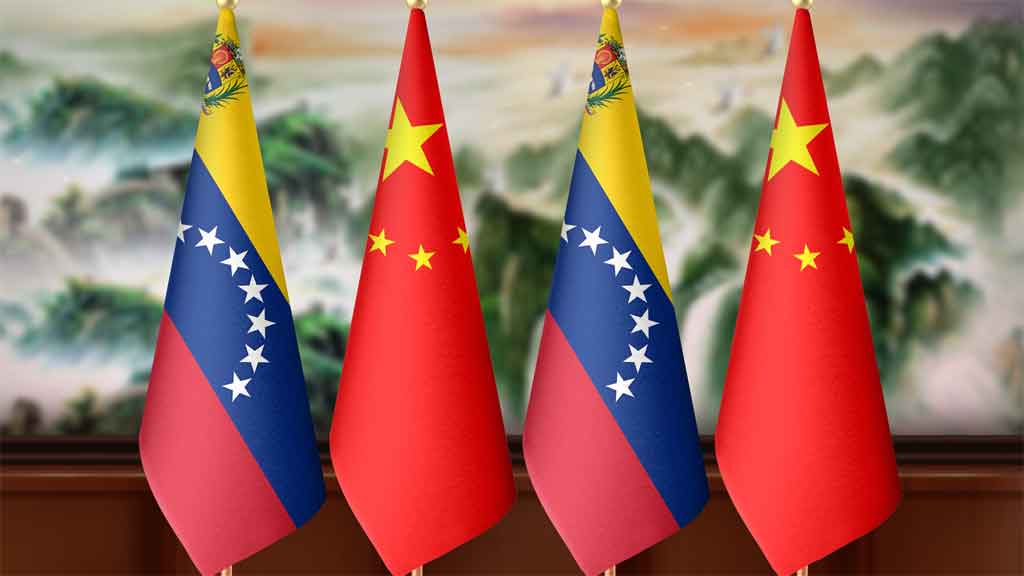
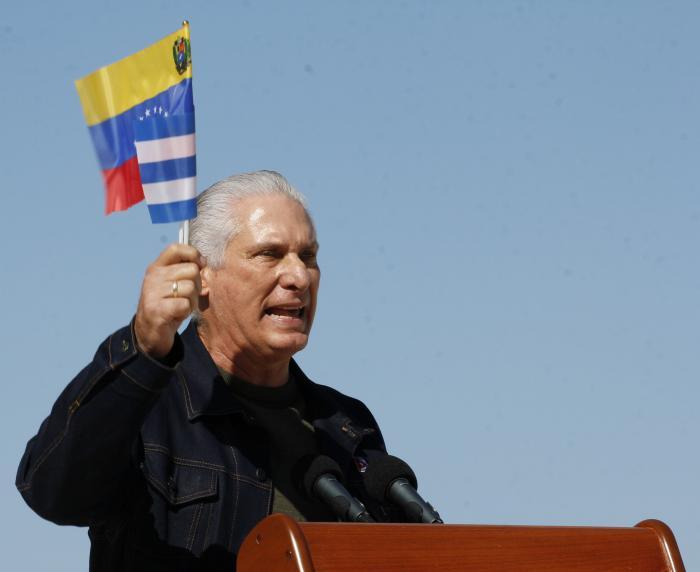
    President Nicolás Maduro of Venezuela has formally recognized the Cuba-Venezuela International Brigade with the nation’s prestigious Antonio Jose de Sucre Order of Merit for Builders of the Homeland. The ceremony, held at Miraflores Palace, celebrated the brigade’s critical role in repairing extensive damage across multiple provinces following Hurricane Melissa’s devastating path.

    The multidisciplinary team of Cuban specialists, comprising experts from electrical, transportation, and public works sectors, spent several weeks engaged in intensive recovery operations. Their deployment demonstrated exceptional technical capability and humanitarian commitment in restoring essential infrastructure and services to affected communities.

    During the official proceedings, Maduro characterized the brigade’s contribution as “profoundly inspiring” and underscored the “unquestionable brotherhood” between Caracas and Havana. He articulated a vision of international relations founded on solidarity rather than conflict, identifying Cuba as the “world champion of solidarity” for its six-decade history of providing technical and medical assistance across Africa, Asia, and Latin America.

    The Venezuelan leader further articulated that both nations share a mission to demonstrate that the future of the Western Hemisphere must be built upon cooperation rather than “war, military threats, colonialism, or slavery.” He concluded with a firm declaration that the Cuba-Venezuela alliance represents an indestructible bond capable of overcoming all adversities to ensure victory prevails.

  • Cuban province beats to the rhythm of music festival

    Cuban province beats to the rhythm of music festival

    The fifth edition of the Athens Fusion Festival culminated in a spectacular celebration of sound, transforming a chilly night in western Cuba into an electrifying musical experience. Under the artistic direction of acclaimed actress Maria Laura German, the event showcased an impressive lineup of alternative and electronic performers who captivated audiences until the early morning hours.

    Featured artists including DJ Dany, collective Karamba, DJ Wikiri, and Glens delivered powerful performances that demonstrated music’s transformative power to evoke deep emotional responses. The festival reached its emotional peak with the appearance of urban music sensation Mama estoy brillando, whose contemporary sound and widespread popularity among Cuban youth generated particularly enthusiastic crowd reactions.

    The festival’s final day promises an equally diverse and visually stunning program featuring performances by Jotabarrioz, Adrian Berazain, and Abel Gerones. Established as a premier destination for audio innovation, the Athens Fusion Festival has built its reputation on championing musical experimentation while fostering meaningful interaction between artists and audiences.

    This annual event continues to serve as a vital platform for emerging and established musicians exploring new sonic territories, prioritizing both artistic innovation and collective enjoyment within Cuba’s vibrant music scene.

  • Actress Eslinda Nunez, a face of Cuban cinema, turns 82

    Actress Eslinda Nunez, a face of Cuban cinema, turns 82

    The Cuban cultural community is celebrating the extraordinary career of acclaimed actress Eslinda Núñez, whose profound contributions to cinema have left an indelible mark on Cuban and Latin American film. Recognized with Cuba’s prestigious National Film Award in 2011 and honored with the Coral of Honor at the 44th Havana Film Festival, Núñez has established herself as a towering figure in the region’s artistic landscape.

    Born in 1943 in Santa Clara, Núñez developed an acting style characterized by remarkable dramatic intensity and unwavering dedication to her craft. Her performances in landmark films such as ‘Lucía’ (1968) and ‘La primera carga al machete’ (1969) under directors Humberto Solás and Manuel Octavio Gómez respectively, have become essential viewing in the canon of Latin American cinema.

    The Ministry of Culture extended warm congratulations to the actress, highlighting her iconic roles that have defined generations of Cuban storytelling. Meanwhile, the Cuban Film Institute (ICAIC) acknowledged that Núñez’s career represents an integral chapter in their organization’s history, noting her ability to embody complex characters with exceptional talent and dignity.

    Multiple cultural institutions including the Union of Writers and Artists of Cuba (UNEAC), the Hermanos Saiz Association, and the CubaActores project joined in celebrating Núñez’s legacy. UNEAC specifically emphasized how her screen presence has created unforgettable moments in national culture, establishing her work as a continuing benchmark for artistic authenticity and sensitivity that has inspired both viewers and creators across generations.