
In a significant development for Belize’s telecommunications sector and national economy, the Social Security Board (SSB) has postponed its decisive vote on Belize Telecommunications Limited’s (BTL) proposed acquisition of Speednet. The much-anticipated meeting, which was strategically moved from Belize City to Belmopan on February 5, 2026, to circumvent potential protests by United Democratic Party (UDP) supporters, concluded without a resolution. Board directors conducted a comprehensive review of the preliminary transaction details, paying particular attention to the potential ramifications for the social security fund and broader economic implications. Following extensive deliberations, the board determined that insufficient information was available to reach an informed decision. Officials emphasized that the deferral signifies no approval has been granted at this juncture, with the board requesting additional documentation and analysis before reconsidering the multimillion-dollar telecommunications merger that has generated substantial concern among workers and social security contributors nationwide.
标签: Belize
伯利兹
-
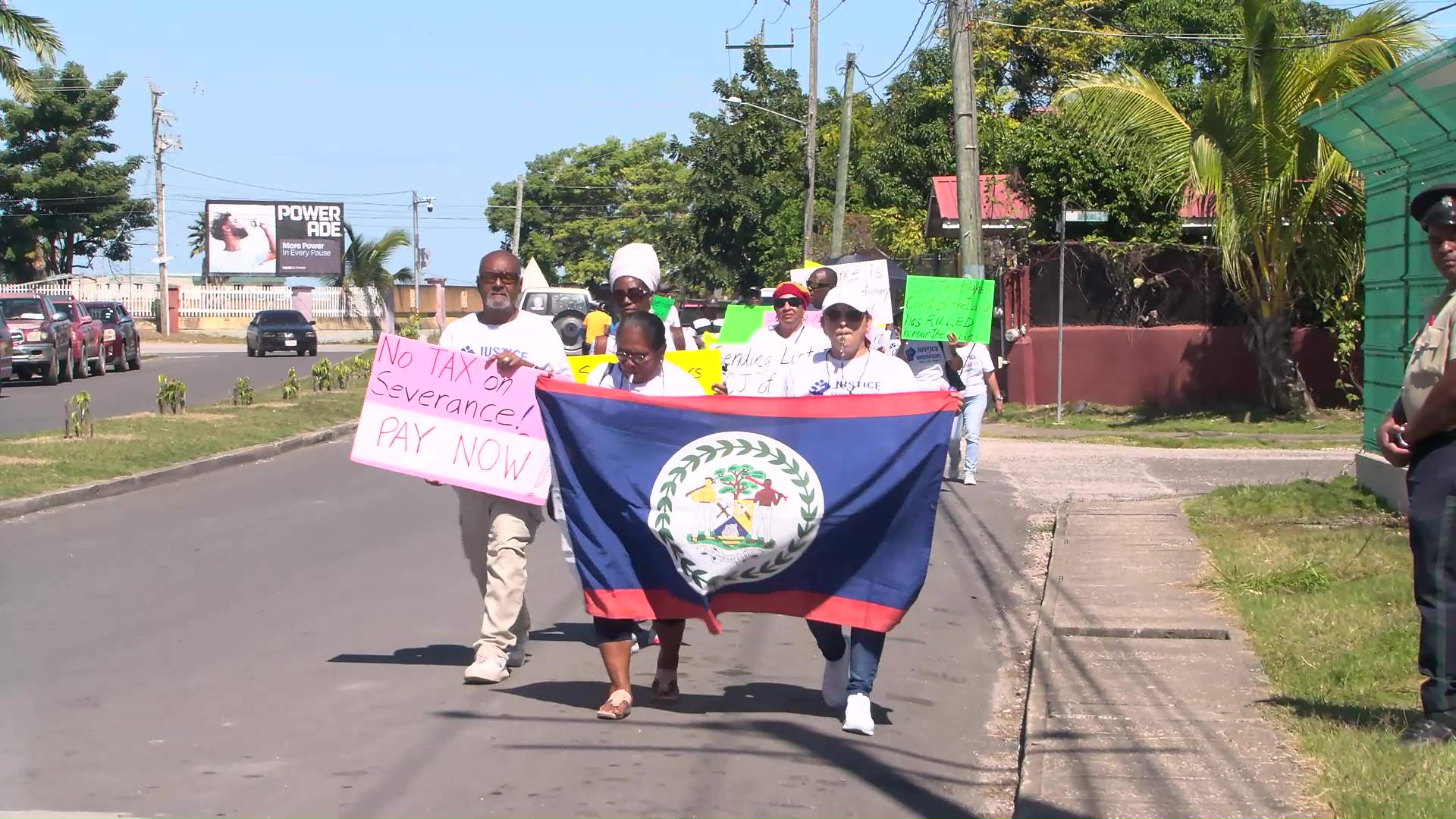
Former BTL Workers Ramp Up Pressure for Severance
Belize City, Belize – Former employees of Belize Telemedia Limited (BTL) have intensified their campaign for severance payments allegedly owed for decades, creating a significant corporate standoff. The Belize Communications Workers for Justice (BCWJ), representing over 170 former telecom workers, staged renewed protests outside BTL headquarters this week.
The dispute centers on severance entitlements that date back to 1994, when BTL transitioned to a contributory pension scheme. Despite a ruling from the Caribbean Court of Justice supporting the workers’ claims, compensation remains unresolved. Protest organizers Emily Turner and Michael Augustus, both former union presidents, delivered a clear ultimatum to management: prioritize worker settlements over corporate expansion plans, including the proposed Speednet acquisition.
Financial estimates of the liability vary considerably. While BTL Chairman Markhelm Lizarraga has cited approximately $14 million, the BCWJ contends the actual figure could approach $50 million due to accumulating obligations. The situation is further complicated by revelations that BTL may have spent over $20 million on legal fees fighting these severance claims – potentially exceeding the settlement amount itself.
Adding to the tension, protesters expressed disappointment with the current Communication Workers Union’s silence regarding their cause. Turner noted that despite formal requests for support, the union has remained observant rather than actively supportive. Augustus, who helped revitalize the union during his leadership, emphasized their determination to avoid returning to what they characterize as previous eras of union complacency.
Authorities have limited planned protest activities, denying permission for demonstrations scheduled for February 6th – the same day BTL promised to deliver a response regarding the severance payments. The developing situation highlights ongoing tensions between corporate ambitions and worker rights in Belize’s telecommunications sector.
-
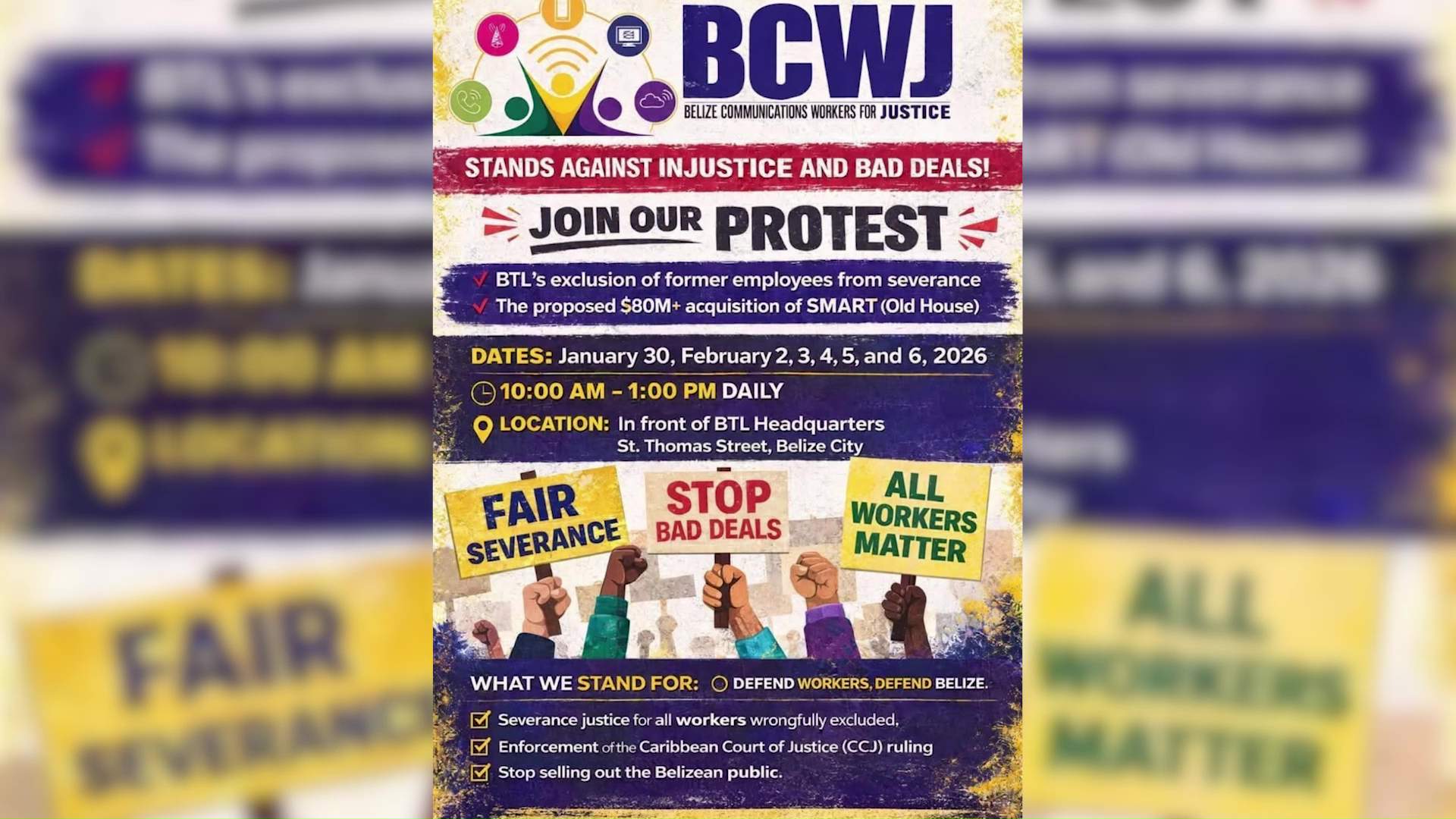
Workers’ Severance Fight Now Also About Protest Rights
A labor dispute in Belize has expanded beyond unpaid severance into a fundamental struggle for protest rights, according to the Belize Communications Workers for Justice (BCWJ). The organization claims law enforcement authorities have systematically curtailed their demonstration permissions, triggering fresh concerns about freedom of assembly.
Emily Turner, organizer for BCWJ, detailed the escalating situation during a recent address to supporters. Initially granted six days of approved protests, the group received unexpected notification from the Raccoon Street police station revoking permissions for subsequent days. According to Turner, authorities provided a formal cancellation order denying their right to protest on Tuesday and Wednesday without substantive explanation.
The labor group submitted a new application with the legally required forty-eight hour notice for Friday demonstrations, which was similarly denied. This series of rejections prompted BCWJ to file an official appeal with the Commissioner of Police, arguing that the fundamental right to peaceful protest cannot be arbitrarily revoked without justification.
Turner emphasized the organization’s commitment to peaceful demonstrations, distancing the union from other political actions while expressing frustration with the United Democratic Party’s (UDP) approach to the situation. The National Trade Union Congress of Belize (NTUCB) president reportedly expressed extreme dissatisfaction with the UDP’s handling of the protest approvals.
The developing situation represents a significant escalation from the original dispute over long-awaited severance pay for former BTL workers. Now, the confrontation has broadened to encompass constitutional rights to assembly and expression, setting a potentially far-reaching precedent for labor relations and civil liberties in Belize.
-
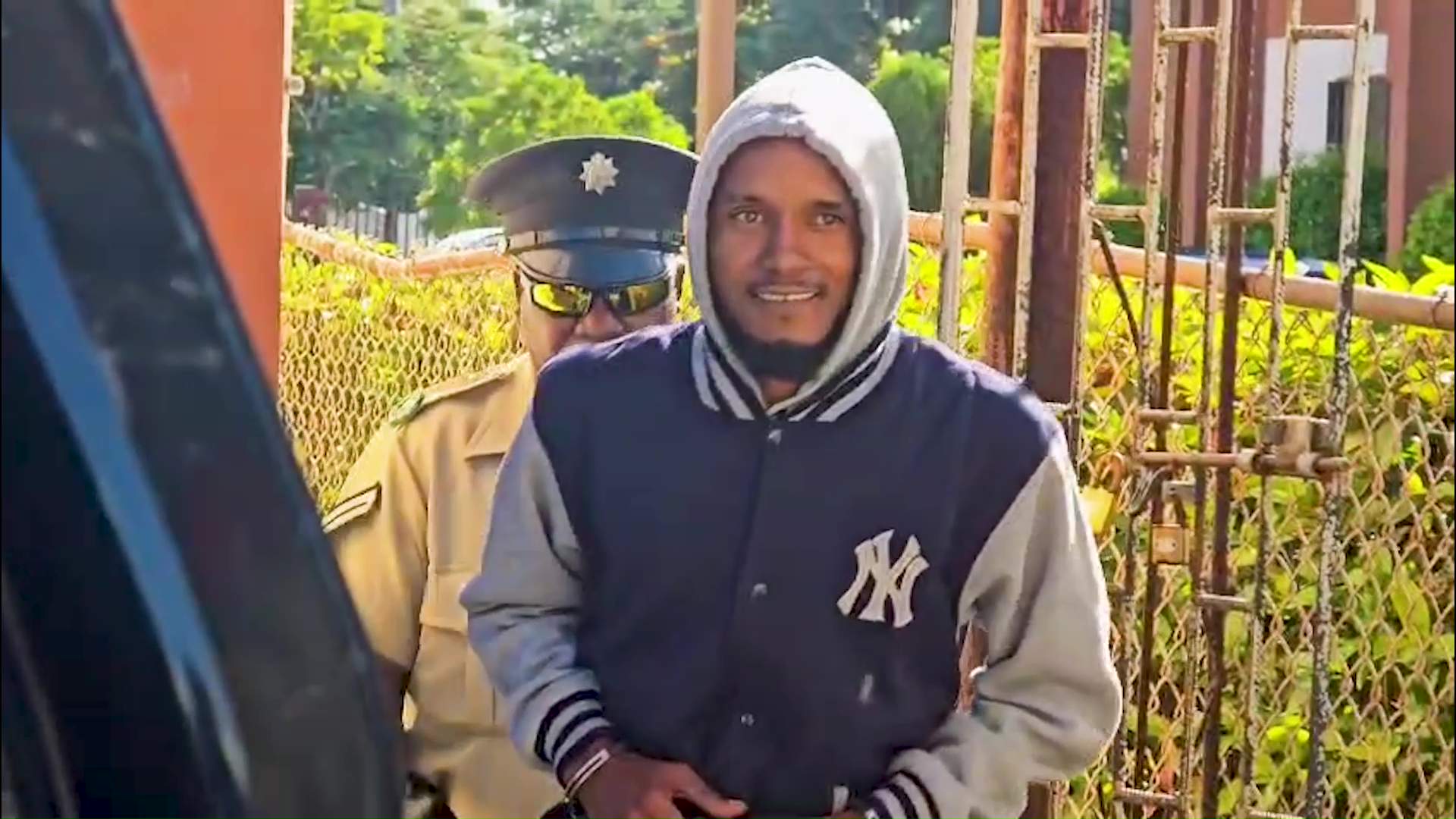
Benyati Brandon Charged for Murder of Paul Smith Jr.
In a significant development to a brutal daylight shooting, Belizean authorities have formally charged 27-year-old laborer Benyati Brandon with murder and attempted murder. The charges stem from a February 3rd incident in La Democracia Village that claimed the life of 21-year-old Paul Smith Jr. and injured 24-year-old Tyrece Lewis Allen.
The fatal encounter occurred around 10:30 a.m. when Smith was ambushed in what family members describe as a targeted attack. Relatives confirmed the victim had been out of prison for less than six months following his acquittal in a high-profile 2022 murder case, though he had previous encounters with law enforcement.
Emotional testimony from Smith’s cousin, Tamara Gillett, revealed deep-seated familial tensions that may have contributed to the tragedy. “They laid wait for him in the bush on the second lane,” Gillett stated, explaining that Smith had been in the area to meet his girlfriend following a recent altercation.
Police investigation utilized surveillance footage from the area, which ultimately led to Brandon’s apprehension. The suspect was transported from Hattieville to Belize City Magistrate’s Court, where he faced arraignment before Chief Magistrate Deborah Rogers. Represented by defense attorney Orson “OJ” Elrington, Brandon was denied bail due to the severity of the charges and remanded to Belize Central Prison until his next court appearance scheduled for May 18, 2026.
The case has highlighted ongoing concerns about violent crime and cyclical violence within communities, particularly involving individuals with previous justice system involvement.
-
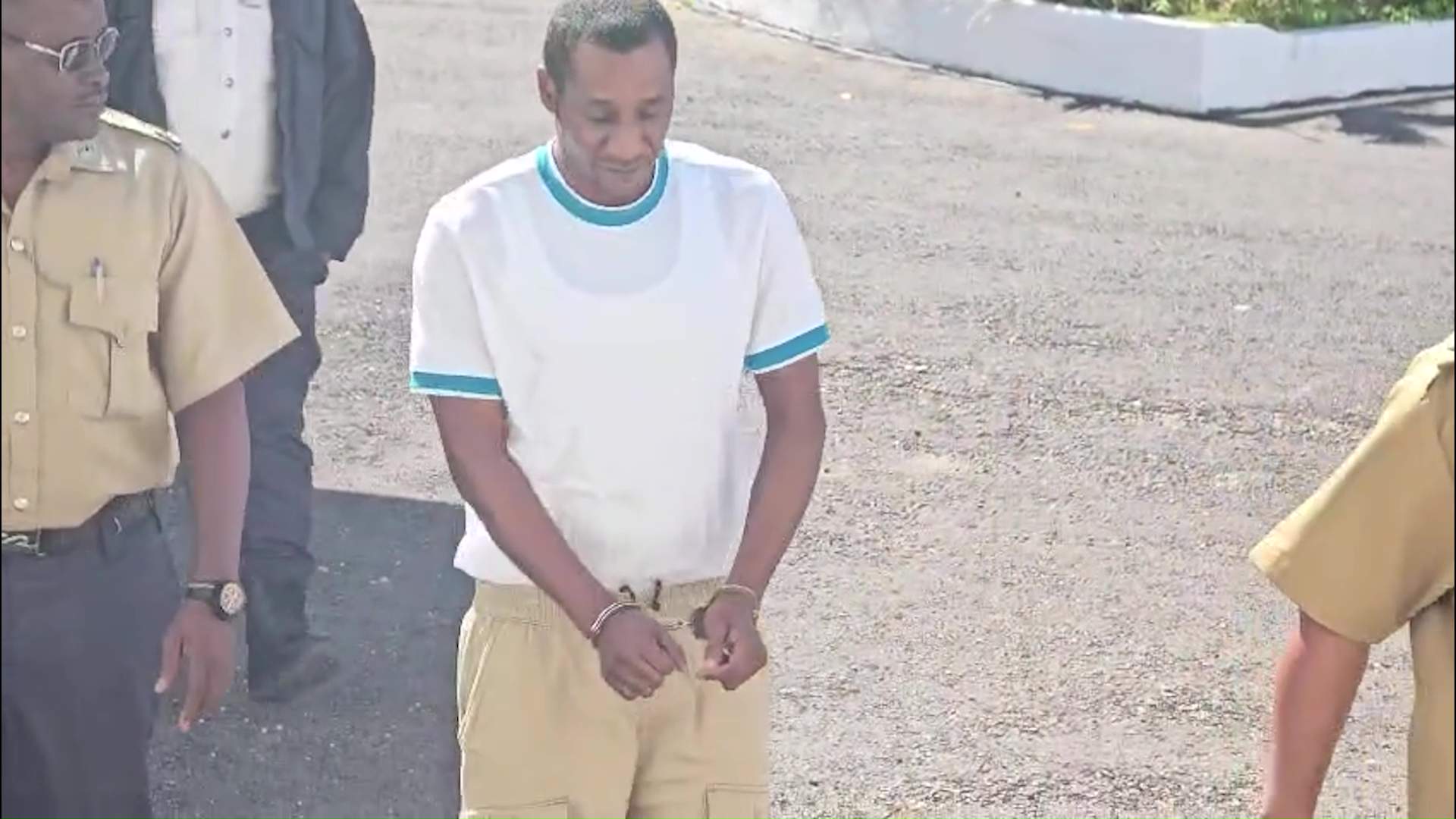
Murder Charge Reduced in Crooked Tree Case
In a significant development within Belize’s judicial proceedings, Maurice Usher Jr., 45, has formally admitted guilt to manslaughter charges concerning the death of Crooked Tree Village resident Geoffrey Crawford. The defendant’s change of plea occurred during trial proceedings before Justice Derick Sylvester, reversing his initial not guilty stance on the more severe murder charge originally filed against him.
Legal representatives indicate this strategic shift followed comprehensive consultation with court-appointed defense attorney Oscar Selgado. Judicial authorities have mandated the preparation of multiple evaluative documents prior to determining sentencing parameters. These include a comprehensive Social Inquiry Report, Psychiatric Assessment, Victim Impact Statement, and personal character testimonials.
The Supreme Court has established a February 19, 2026 deadline for submission of these crucial documents. Sentencing hearings are calendared for March 3, 2026, during which the court will consider both the circumstances of the offense and the defendant’s background. Usher remains detained pending judicial disposition.
This case originates from October 2021, when Crawford was last observed departing his residence in his distinctive red Nissan Pathfinder. The elderly victim’s disappearance prompted extensive search operations culminating in the tragic discovery of his remains concealed within a shallow burial site. Usher represents the sole individual formally implicated in connection with Crawford’s untimely death.
-
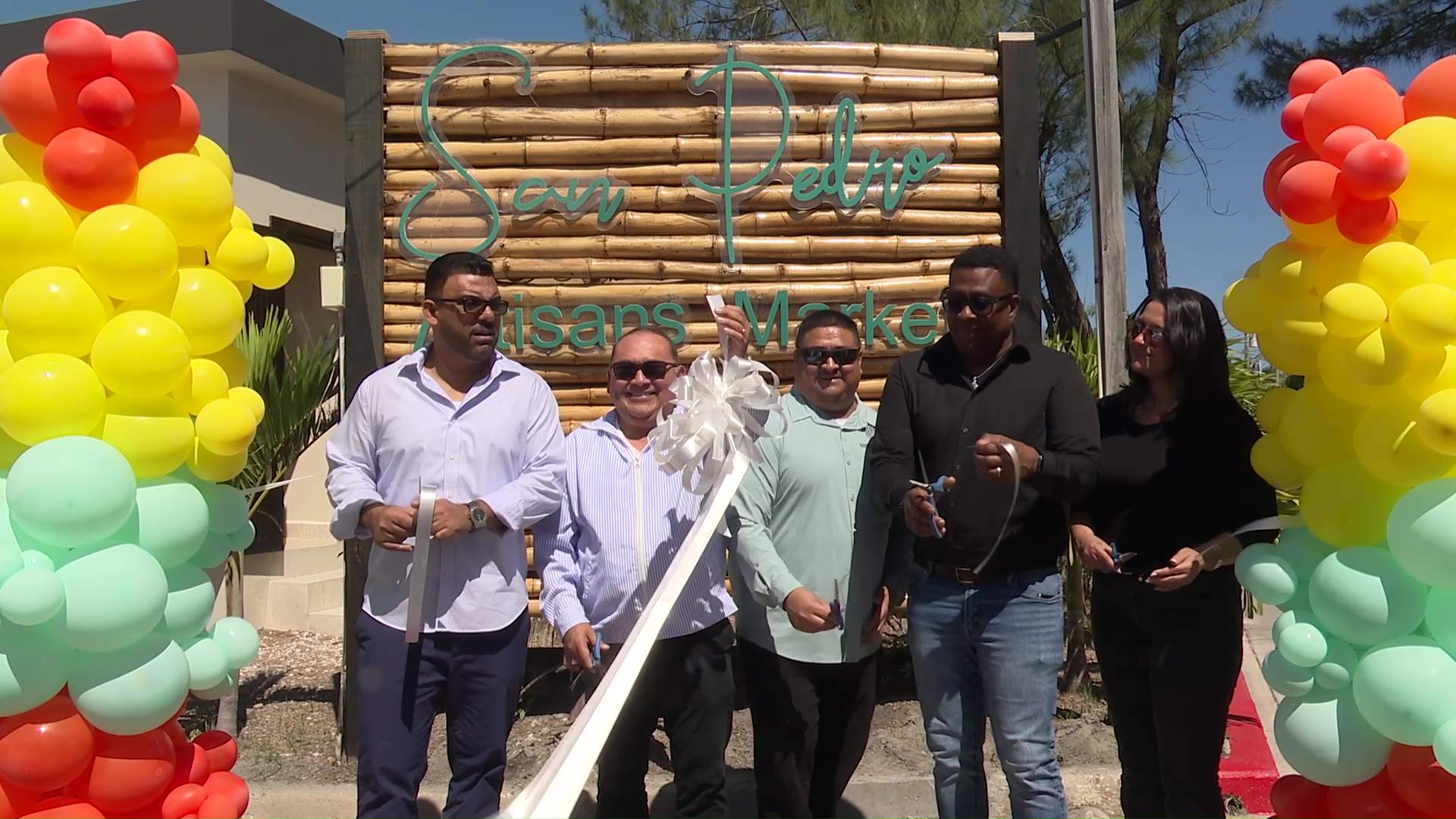
New Artisan Market Boosts Community Tourism in San Pedro
San Pedro Town has inaugurated a new artisan market, marking a significant advancement in Belize’s community-based tourism strategy. The facility, officially opened on February 5, 2026, represents a collaborative effort between local government and national tourism authorities to create sustainable economic opportunities while celebrating local culture.
Mayor Wally Nuñez emphasized the market’s role in showcasing local talent and creating genuine opportunities for residents. “This project reflects the power of partnership,” Nuñez stated during the opening ceremony, acknowledging support from the Belize Tourism Board and government ministers.
Tourism Minister Anthony Mahler contextualized the development within broader infrastructure improvements, noting that previous tourism facilities had significant deficiencies. “Most projects we’ve worked on over the last two and half to three years have been community-based initiatives like this one,” Mahler explained, highlighting the integration of local communities into the tourism economy.
Area Representative Andre Perez detailed additional infrastructure developments accompanying the market project, including nearly seven miles of paved streets, a rebuilt bridge that was near collapse, and a forthcoming hospital serving Ambergris Caye and neighboring Caye Caulker. Perez stressed the importance of sustainable growth amid rapid development, stating that while the town is “playing catchup with infrastructure, we’re coming along.”
The artisan market represents a strategic shift toward experiential tourism that benefits local residents directly. Rather than conventional tourism development, officials described the approach as prioritizing people, culture, and sustainability—what they term “growing tourism the right way.” The market provides space for artisans to sell authentic Belizean crafts and souvenirs while ensuring economic benefits remain within the community.
This initiative forms part of a comprehensive infrastructure improvement program designed to enhance the visitor experience while distributing tourism revenues more equitably among local residents. Officials view the project as a model for future community-based tourism development throughout Belize.
-
Belize Tourism Sector Surpassing Pre-COVID Benchmarks
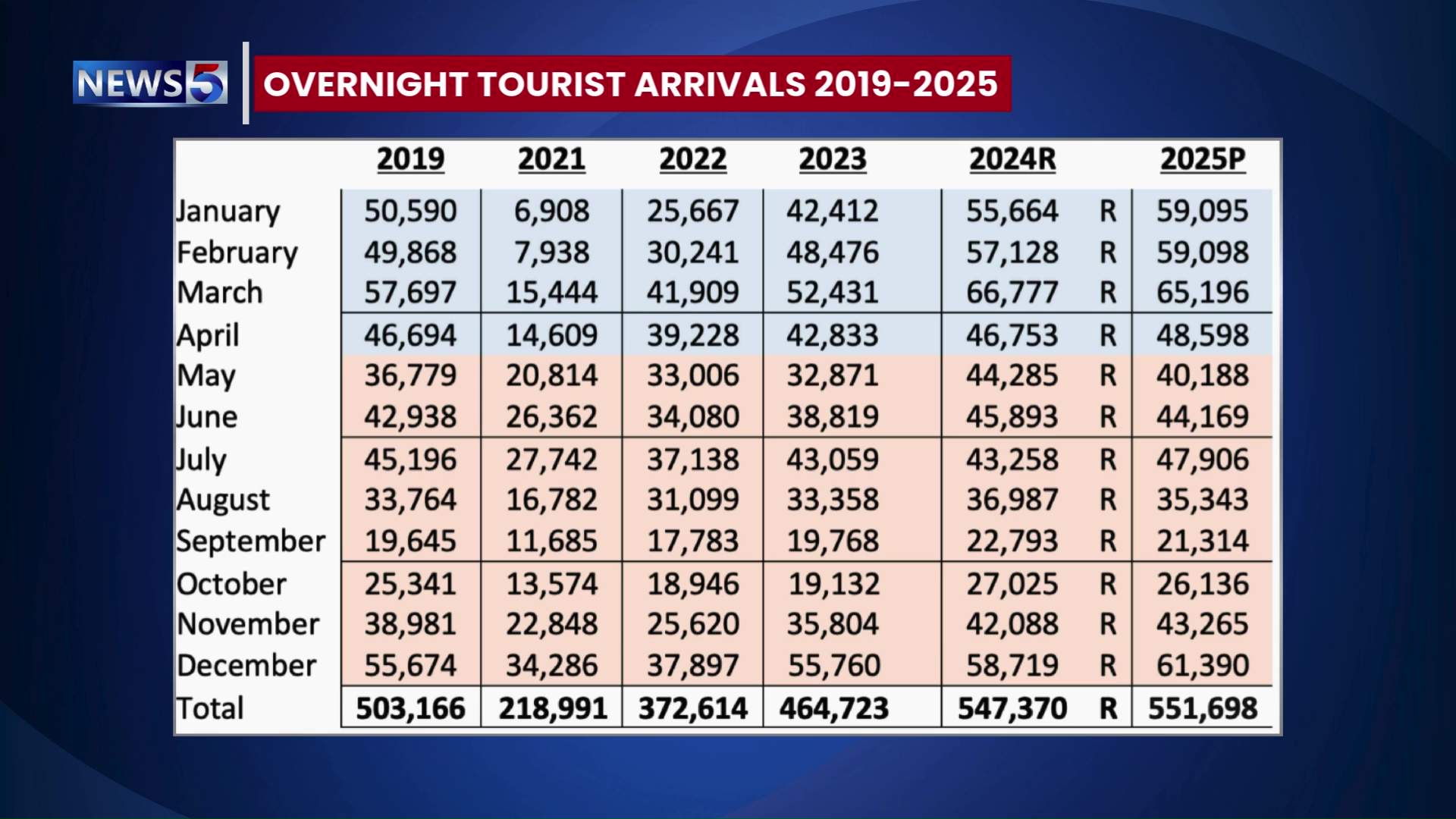
Belize’s tourism sector has achieved a remarkable recovery, now exceeding pre-COVID performance benchmarks according to latest data from the Belize Tourism Board. Both overnight stays and cruise arrivals have not only rebounded but surpassed previous records, signaling a robust resurgence in the Central American nation’s vital tourism economy.
Evan Tillett, Director of Tourism at the Belize Tourism Board, revealed the sector’s strategic approach to this success. “We have been focusing more strategically on our marketing, putting significant effort into granular targeting based on comprehensive data analysis,” Tillett explained. This data-driven marketing strategy has been complemented by continuous infrastructure development within the tourism ecosystem.
The statistics demonstrate impressive growth trajectories. Cruise arrivals for 2025 showed an 8.1% increase compared to 2024 figures, while overnight tourism grew by approximately 1%. Most significantly, 2024 established a new national benchmark with 547,000 overnight visitors—the highest in Belize’s history—with 2025 projections reaching 551,000.
The positive trend continues into 2026, with January figures showing a marginal but meaningful increase over January 2025—59,173 visitors compared to 59,095. This sustained growth reflects the effectiveness of Belize’s strategic tourism initiatives.
Concurrently, the government is emphasizing community-based tourism development as exemplified by San Pedro’s new artisan market. This project represents a conscious effort to distribute tourism benefits more broadly across local communities while maintaining sustainable development principles. Industry leaders highlight this dual approach of quantitative growth and qualitative community enrichment as central to Belize’s tourism strategy moving forward.
-

Bold, Colorful, Belizean: The Story Behind an Iconic Sign
BELIZE CITY – For countless visitors entering Belize City, the vibrant, multi-colored Belize Sign has become an indispensable photographic milestone and cultural welcome mat. More than just a tourist attraction, this iconic landmark represents national identity, artistic expression, and community pride for Belizeans worldwide.
The sign’s journey began through the visionary collaboration of attorney Steve Perrera and businessman Haisam Diab, who sponsored its construction and installation in April 2016 as a memorial tribute to Diab’s mother, Lena Quinto. The monument’s true transformation occurred five years later when visual artist Chelsea Johnston undertook a comprehensive redesign during the challenging transition period following COVID-19 lockdowns.
Johnston’s artistic revival, executed in partnership with the Belize City Council, captured the nation’s diverse characteristics through symbolic representations of marine life, local flora, and cultural landmarks. Despite facing logistical challenges including adverse weather conditions and tight deadlines, Johnston’s perseverance resulted in an immediate public sensation that generated nationwide recognition and replication requests from other municipalities.
Notably, Johnston declined subsequent commission opportunities, instead advocating for local artists across Belize’s districts to create their own community-inspired installations. This decision reinforced the sign’s philosophy as a celebration of regional artistic talent rather than a singular tourist attraction.
Belize City Mayor Bernard Wagner emphasized the sign’s symbolic importance during the post-pandemic recovery period, noting how its 2021 revitalization represented a renewed sense of optimism and cultural rejuvenation for the community. Having withstood multiple natural disasters throughout its decade-long existence, the structure continues to demonstrate remarkable resilience mirroring that of the Belizean people.
Looking forward, Johnston envisions further artistic enhancements involving collaborative efforts with fellow artists, potentially incorporating more detailed cultural elements such as traditional food and beverage representations. Mayor Wagner has expressed enthusiastic support for continuing artistic collaborations, acknowledging the unique perspective that creative professionals bring to urban landscape projects.
A decade after its initial installation, the Belize Sign remains both a photogenic destination for international visitors and a powerful symbol of national identity for local residents, continuously evolving through community engagement and artistic innovation.
-
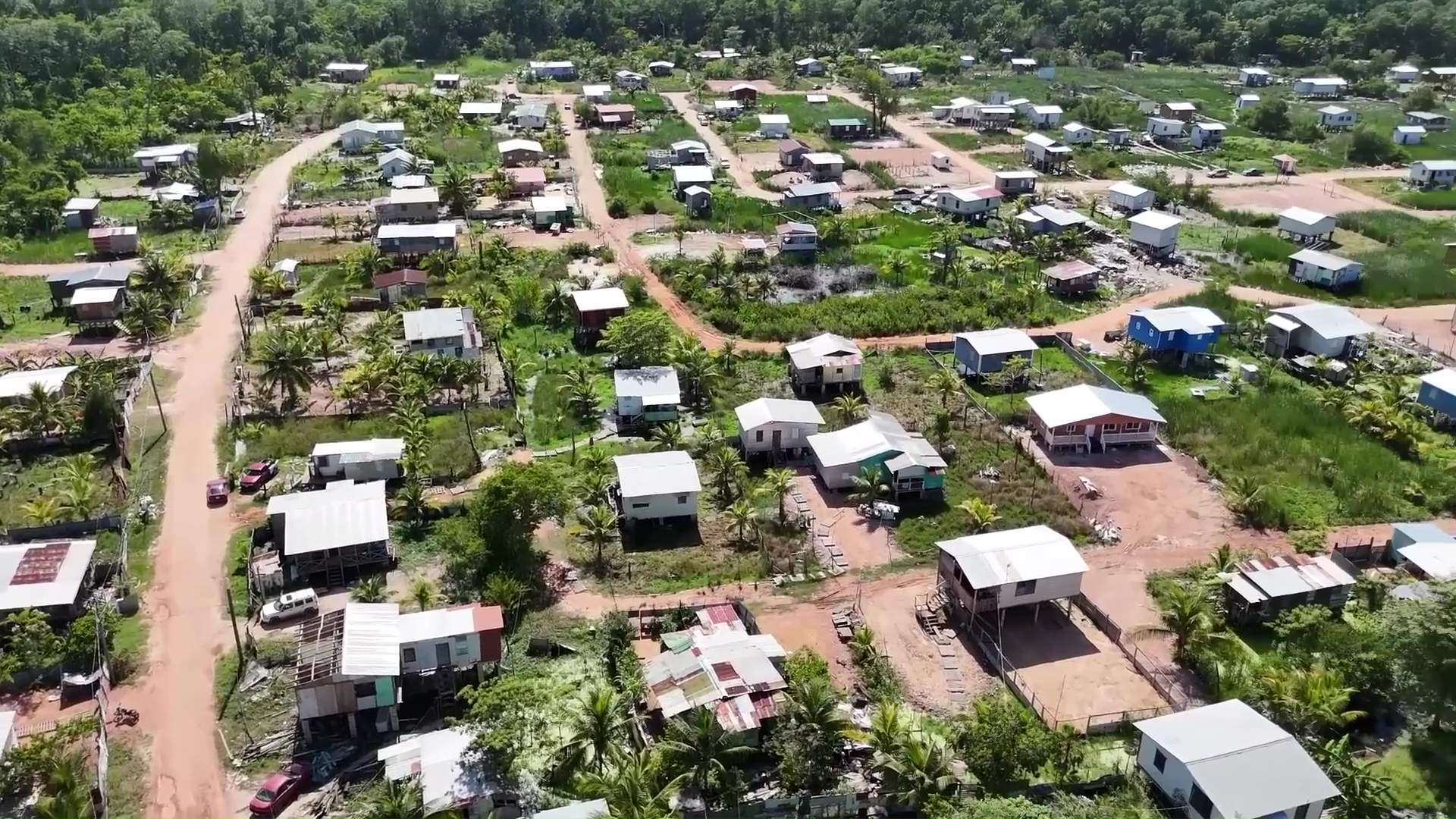
Rapid Expansion Leaves Belize City Under Pressure
Belize City faces mounting infrastructural pressures as rapid, unregulated urbanization strains municipal resources beyond sustainable limits. Mayor Bernard Wagner has issued a stark warning about the consequences of uncontrolled expansion occurring across the city’s outer neighborhoods.
The urban growth, characterized by inadequate planning oversight, has resulted in severe infrastructure deficiencies including substandard road networks, insufficient drainage systems, and recurrent flooding incidents. According to Mayor Wagner, only Belama Phases One and Two represent properly planned developments, with subsequent expansions occurring without comprehensive urban design frameworks.
This haphazard development pattern has created significant tension between municipal authorities and other governing entities. Residents increasingly turn to the Belize City Council for solutions to problems stemming from poor planning decisions made beyond the council’s direct control.
The mayor emphasized that the current model of granting land without concomitant infrastructure planning places unsustainable burdens on city resources. New residents subsequently demand municipal services including paved roads and flood mitigation systems that were not incorporated into initial development plans.
Wagner described the situation as a battle against ‘unsustainable urbanization’ that continues to consume the city’s periphery. He advocates for immediate implementation of comprehensive, long-term planning strategies to address the mounting crises in transportation infrastructure, water management, and urban livability.
The absence of coordinated planning has created a cycle of reactive problem-solving rather than proactive urban management, with municipal authorities struggling to address deficiencies after developments have already been established.
-
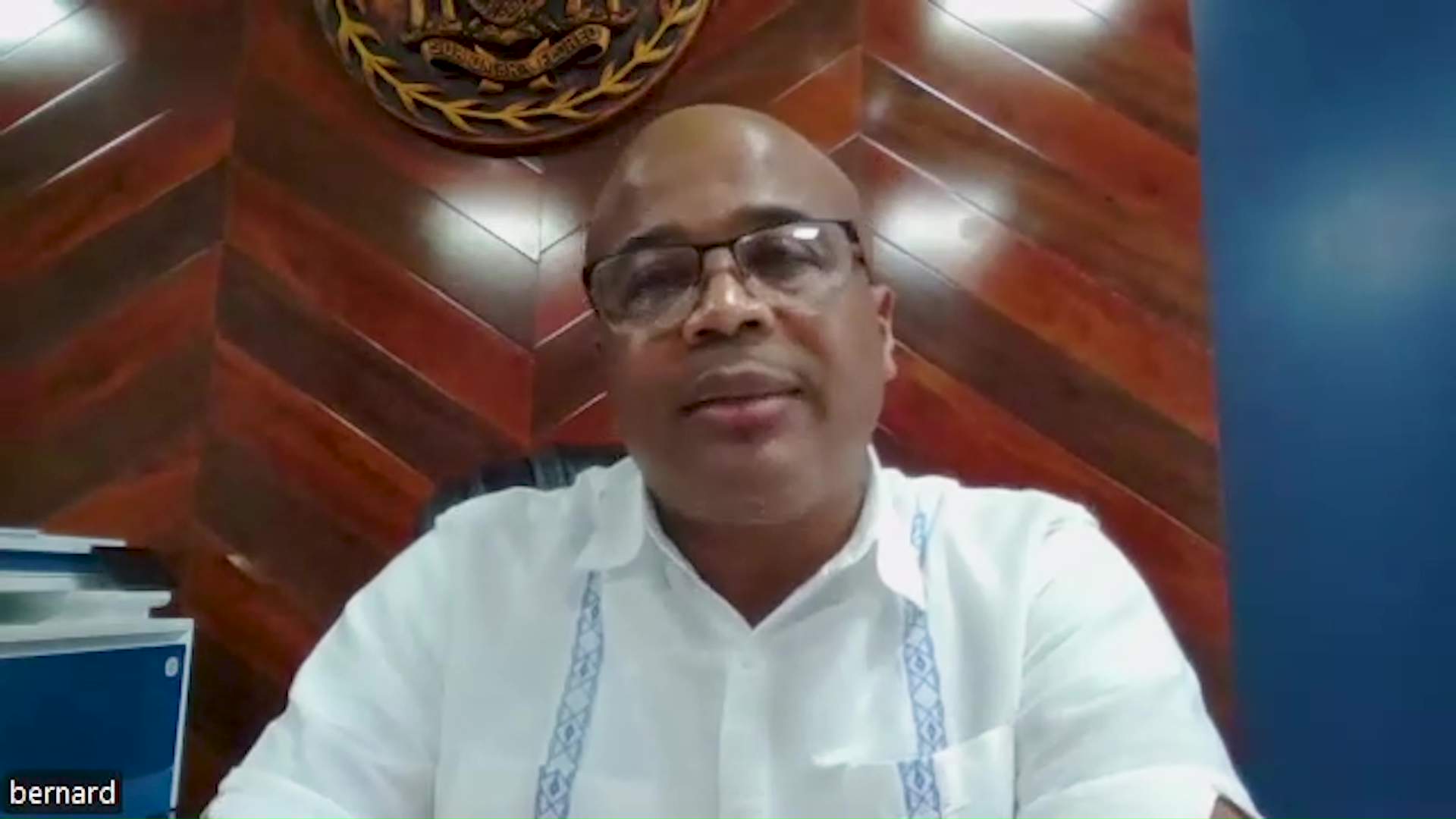
Despite City Strain, Entrepreneurship Flourishes
BELIZE CITY – Amidst the challenges of rapid urbanization and overburdened infrastructure, Belize City is experiencing a remarkable surge in entrepreneurial activity that is fundamentally transforming its economic landscape. Despite persistent issues with road networks, drainage systems, and urban planning, municipal authorities report a significant increase in business registrations, approaching nearly three thousand active trade licenses.
Mayor Bernard Wagner revealed that the current count of approximately 2,976 active trade licenses represents a substantial increase from the 2,554 recorded when his administration assumed office. This growth trajectory coincides with approximately 17,000 registered properties within the city limits, indicating a vibrant expansion of commercial activity.
The pandemic era served as a critical catalyst for this economic transformation, according to Mayor Wagner. “This growth may have been triggered by necessity,” he explained. “When COVID-19 emerged, numerous residents faced job losses and subsequently ventured into entrepreneurial pursuits, many of whom never returned to traditional employment.”
Statistical analysis demonstrates that small-scale enterprises, particularly family-operated ‘mom and pop’ businesses, constitute the overwhelming majority of these new ventures. This trend underscores a fundamental shift in the city’s economic dynamics, with a growing preference for self-employment and business ownership among residents.
As urban expansion continues both physically and economically, municipal leadership now faces the complex challenge of balancing entrepreneurial encouragement with sustainable development. The administration must address infrastructure limitations while simultaneously fostering an environment conducive to continued business growth and economic diversification.