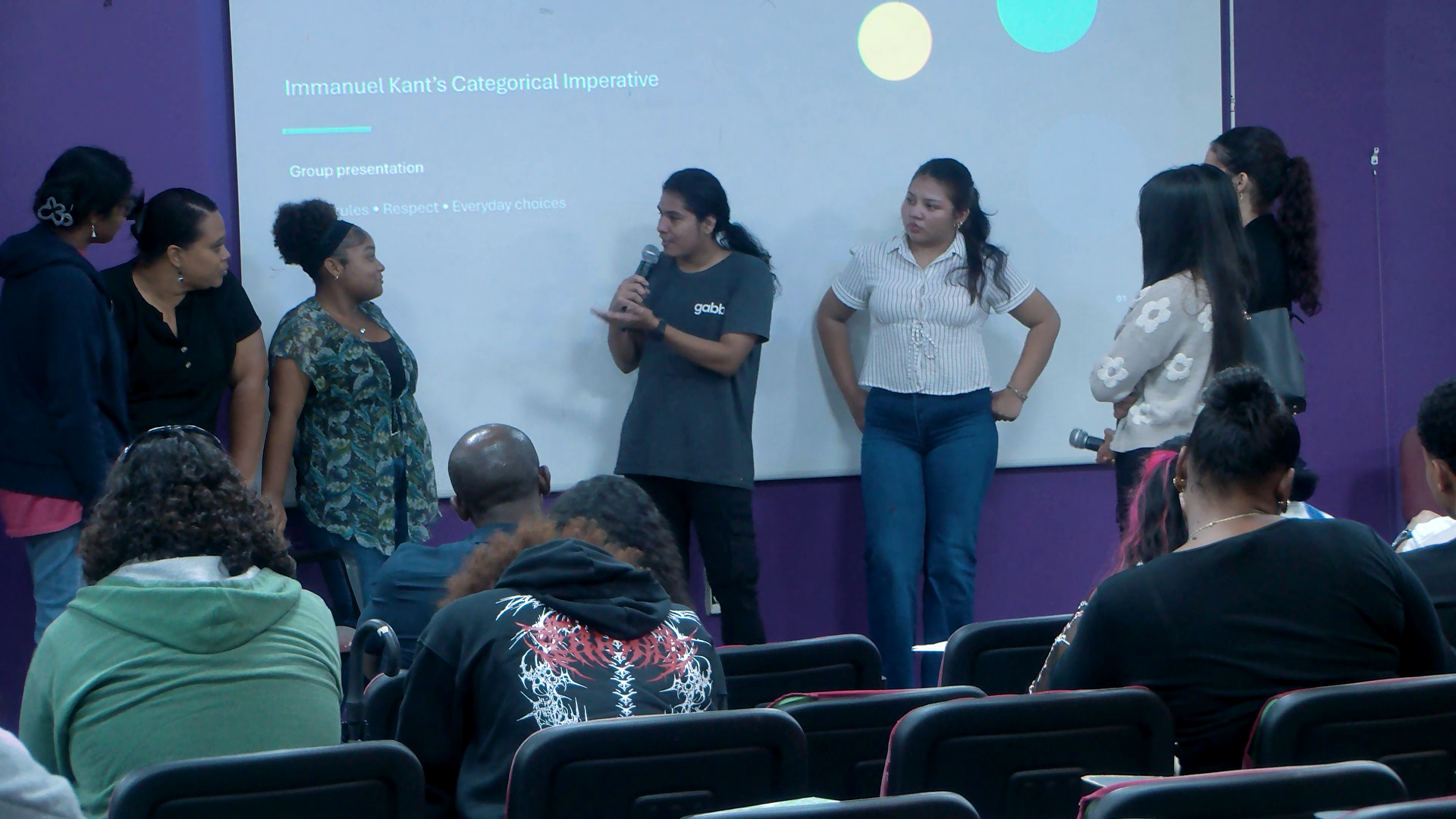
On October 16, 2026, the University of Belize (UB) hosted a one-of-a-kind Ethics Symposium in Belmopan, turning abstract academic concepts into tangible, real-world experience for students. As a core graduation requirement for all UB enrollees, ethics education moves far beyond textbook readings at the institution — and this annual event is designed to bridge the gap between classroom learning and everyday professional and civic life.
UB President Dr. Vincent Palacio explained the core mission of the symposium in an on-site interview, noting that the gathering functions as both a seminar and interactive workshop where students connect established ethical frameworks to the challenges they face in modern Belize. In one of the most engaging session activities, students took to the stage to perform original dramatic skits that brought major ethical theories to life, translating dense academic ideas into relatable, story-driven scenarios that resonated with attendees.
Beyond student-led performances, the symposium featured a cross-sector panel of experienced practitioners who regularly apply ethical principles in their high-stakes work. Panel participants included the president of Belize’s national public service union, an assistant commissioner from the Belize Police Department, and other representatives from government and organized labor. This lineup gave students direct access to insights from professionals who navigate ethical decision-making on a daily basis, helping them understand how abstract values translate to on-the-job choices and civic responsibility.
The event centered on the overarching theme of leadership, governance, and citizenship — topics that Dr. Palacio emphasized are core to the university’s mission of preparing engaged, responsible graduates. When asked why ethics is a mandatory requirement for every UB student, alongside another core course in critical thinking, Dr. Palacio explained that ethical reasoning underpins every part of personal and professional life.
“It’s in everything we do,” he said. “Everybody needs to understand the importance of being ethical, why we have rules and laws as a society, why we must uphold those standards, and what our unique roles are as active citizens of this country.” Dr. Palacio added that even as a university leader, he still finds value in revisiting core ethical theories and exploring their practical application to daily work and community life.
This symposium is part of UB’s broader curriculum reform effort to prioritize soft skills and civic engagement alongside technical and subject-specific training, ensuring that graduates leave the institution prepared not only for their careers but to contribute meaningfully to Belize’s democratic governance and social development.